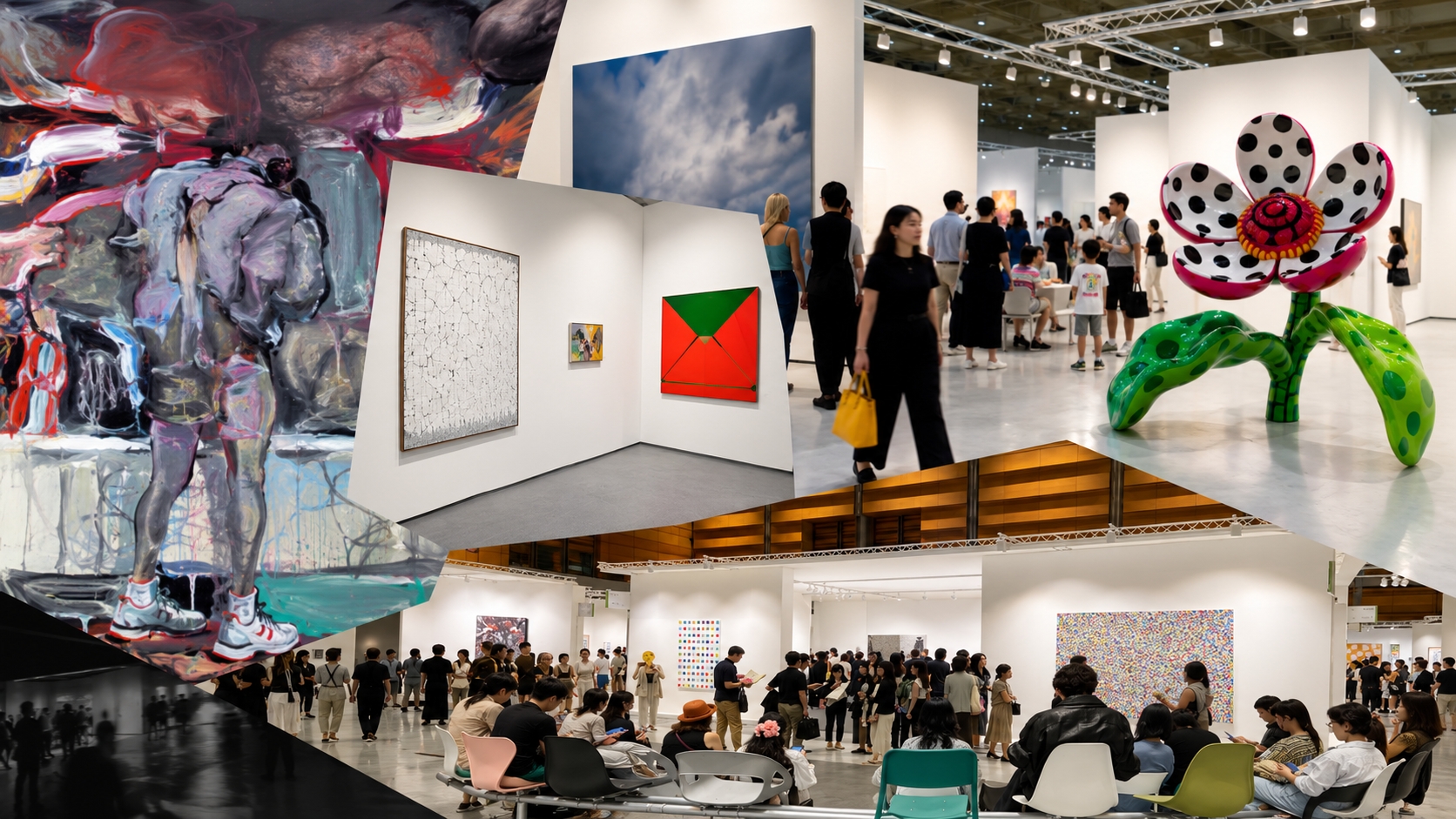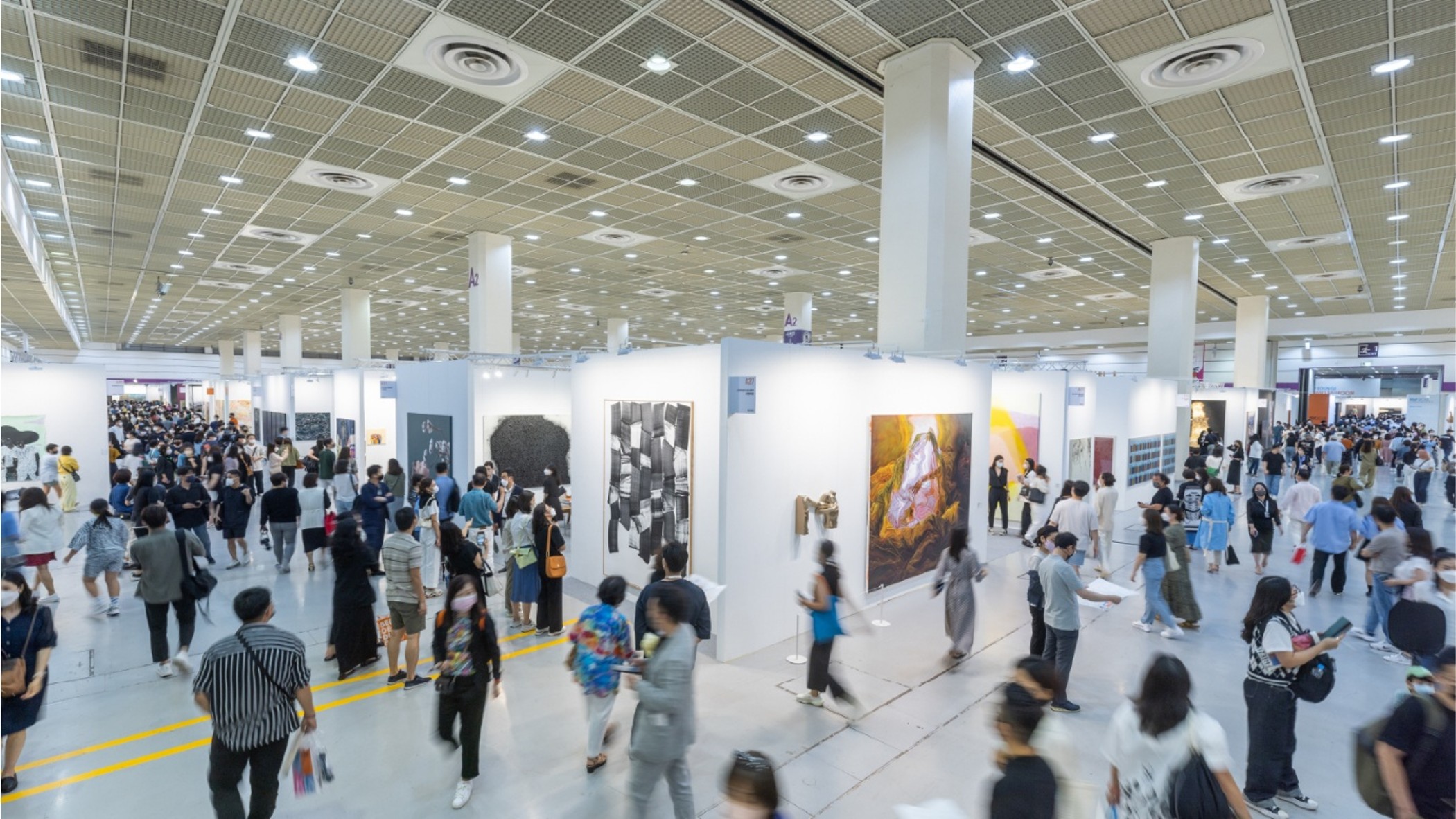
In 2026, Korea’s
art fairs form a relatively layered structure in which large-scale
international events centered in Seoul coexist with regionally grounded fairs
in cities such as Busan and Daegu. Unlike museum exhibitions curated by a
single organizer, art fairs operate through the participation of multiple
galleries, each presenting its own artists and works. As a result, a wide range
of styles, price points, and artistic approaches can be encountered within a
single fair.
This article
focuses on the major Korean art fairs taking place in 2026, explaining the
intent and character of each event and suggesting how visitors may best
approach them. It aims to provide a clear and accessible guide, allowing
readers without specialized art knowledge to understand and enjoy art fairs
through an overview of each fair’s defining features and viewing points.
BAMA (Busan
Annual Market of Art)
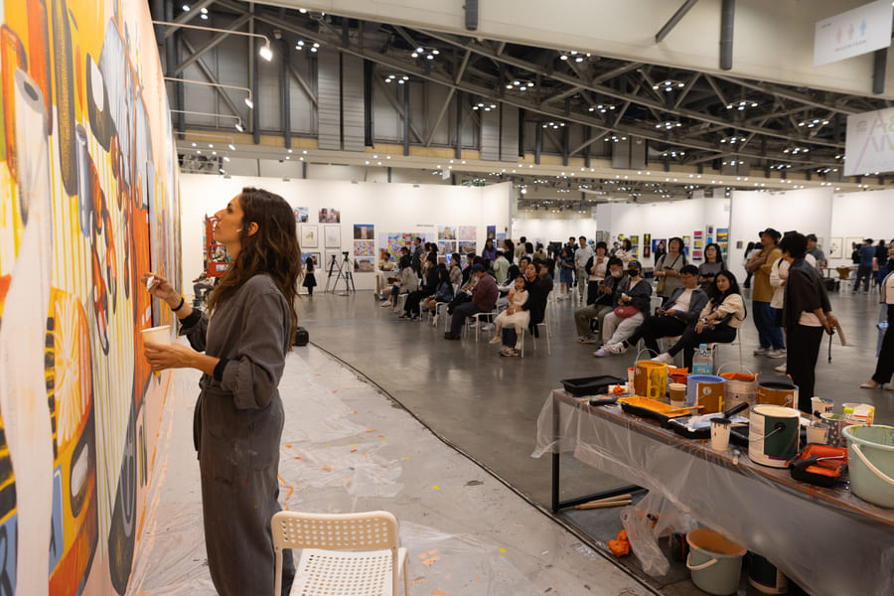
BAMA exhibition view: Rebobinart at BAMA International Art Fair / Photo: Rebobinart
BAMA is an annual
art fair held in Busan, explicitly foregrounding the concept of a “Market of
Art,” as reflected in its name. From its inception, BAMA has prioritized actual
transactions and accessibility over exhibition spectacle, continuously
exploring whether art can function as both an everyday cultural experience and
a realistic form of consumption.
Busan has long
sustained a relatively stable base of regional collectors and a
lifestyle-oriented culture of art collecting. Growing out of this environment,
BAMA has avoided excessive expansion or elaborate staging typical of large
international fairs, instead maintaining a structure that supports realistic
pricing and actual purchases.
Rather than
focusing on large-scale transactions of high-priced works, BAMA tends to see
repeated patterns of first-time purchases and collecting oriented toward lived
spaces. In past editions, steady sales have been recorded primarily in the low-
to mid-price range, with paintings and sculptures priced from several million
won up to around 20 million won. This has resulted in a relatively high
proportion of first-time buyers and has contributed to a market structure that
remains resilient even during periods of economic adjustment.
In recent years,
the number of international visitors traveling to Busan with an interest in
Korean art has also gradually increased. As BAMA functions less as a global art
spectacle and more as an event embedded in the everyday life of the city, it
offers an accessible entry point for overseas visitors encountering Korean art
for the first time. In 2026, BAMA is expected to continue demonstrating how
actual purchasing behavior unfolds within a moderated market environment.
Dates: April 2–5, 2026
Venue: BEXCO, 55 APEC-ro, Haeundae-gu, Busan
ART OnO
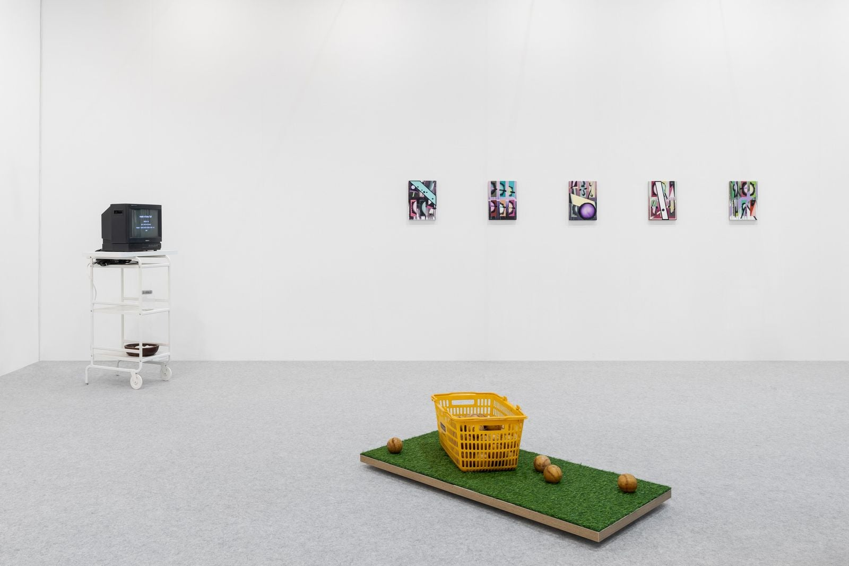
Art OnO exhibition view : Photo : Art OnO
ART OnO is a
relatively small-scale art fair held in Seoul, operating in a manner distinct
from large, market-driven fairs. The event limits both the number of
participating galleries and booth sizes, placing emphasis on exhibition quality
and concentrated viewing experiences.
Past editions of
ART OnO have shown high visitor satisfaction relative to its scale. With simple
circulation and generous spatial layouts, visitors are able to engage with
works at a slower pace, more akin to viewing an exhibition. The fair frequently
introduces emerging artists and experimental practices, allowing audiences to
encounter diverse currents in contemporary art without the pressure often
associated with larger fairs.
Rather than
emphasizing transaction volume, ART OnO is notable for revealing the early
stages of market response. Historically, it has functioned as a site where
interest in specific artists can be observed before they move on to fairs such
as Galleries Art Fair, Kiaf Seoul, or international platforms. Prices are
generally set at accessible levels, and collectors tend to focus more on
long-term artistic development than short-term returns.
Through this
role, ART OnO has established itself as a point where new artists and emerging
demand first converge within the Korean art market. It serves less as a
showcase of market scale and more as a barometer for future directions. For
visitors who find the density and noise of large art fairs overwhelming, ART
OnO offers an environment well suited to focused viewing and deeper engagement
with artists. In 2026, further clarification of its project-based and
artist-centered exhibition structure is anticipated.
Dates: April 3–5, 2026 (VIP Preview: April 2)
Venue: SETEC, 3104 Nambu Sunhwan-ro, Gangnam-gu, Seoul
Galleries Art Fair
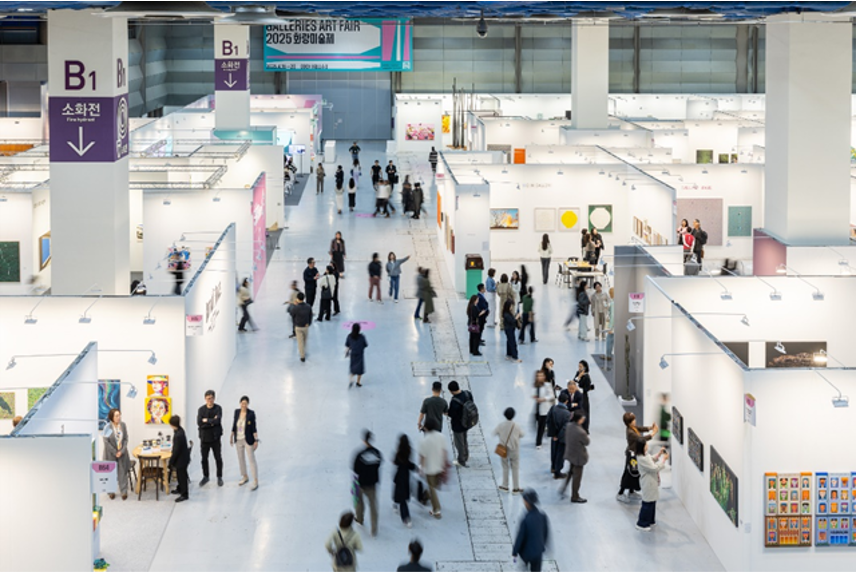
Galleries Art Fair exhibition view / Photo : Galleries Art Fair
Galleries Art
Fair is the oldest art fair in Korea and has consistently maintained a
gallery-centered operational model. Rather than prioritizing short-term
attention around individual artists, the fair emphasizes sustained
relationships between galleries and artists, as well as the long-term coherence
of gallery programs.
Historically and
in recent years alike, Galleries Art Fair has seen repeated transactions
ranging from tens of millions of won to the lower entry point of the
hundred-million-won range. This pattern has functioned as a key indicator of
the continued viability of Korea’s mid-career artist segment. Emerging artists
are also introduced not as isolated highlights but through gradual integration
into gallery programs, a process that often becomes visible at this fair at an
early stage.
A broad spectrum
of artists—from emerging to established—are presented together, spanning
painting, sculpture, and installation. With price ranges distributed across a
wide spectrum, the fair remains accessible to newcomers while still engaging
experienced collectors.
For these
reasons, Galleries Art Fair has long served as a reference point for
understanding the overall structure and dynamics of the Korean art market. In
2026, its emphasis on stability and trust is expected to continue.
Dates: April 8–12, 2026
Venue: COEX, 513 Yeongdong-daero, Gangnam-gu, Seoul
Diaf (Daegu International Art Fair)
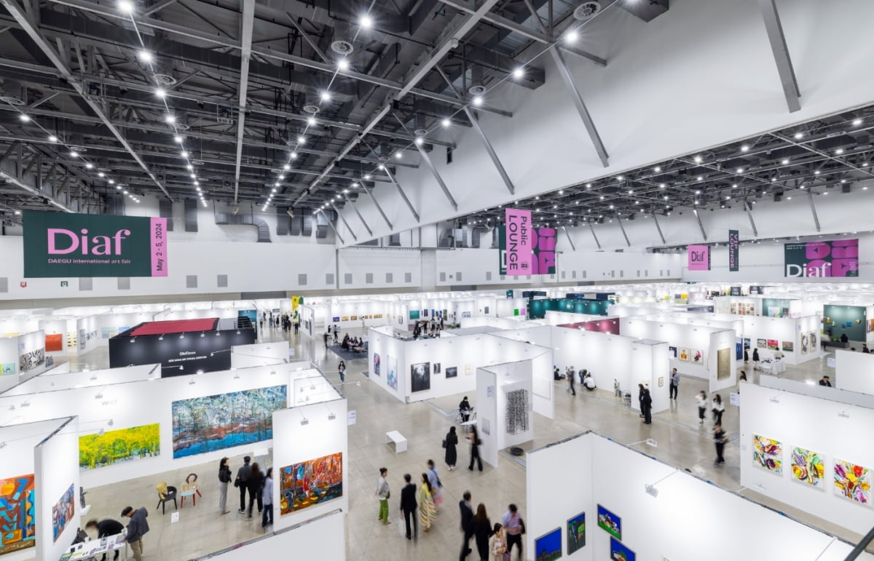
Diaf exhibition view / Photo : Diaf
Diaf operates on the foundation of the local art market and collector culture in
Daegu. The city has sustained a long-standing tradition of art patronage and
collecting, characterized by a relatively high rate of repeat purchases rather
than one-off acquisitions. This regional base has enabled the fair to maintain
steady attendance and purchasing patterns over time.
In previous
editions, Diaf has consistently favored stable presentations centered
on painting and sculpture. Rather than relying heavily on trends or
headline-driven works, the fair emphasizes the coherence of artistic practice
and the completion of individual works. A high proportion of returning
collectors allows for more extended dialogue between galleries and visitors,
contributing to a calm and focused viewing environment.
Recently, the
fair has also attracted a growing number of international visitors interested
in combining Korean art with regional cultural experiences. As such, Diaf functions not only as an exhibition venue but also as a point of entry
into the everyday cultural fabric of the city. In 2026, it is expected to
continue demonstrating the sustainability and resilience of regionally grounded
art markets.
Dates: To Be Announced
Venue: Daegu EXCO, 10 EXCO-ro, Buk-gu, Daegu
Art
Busan
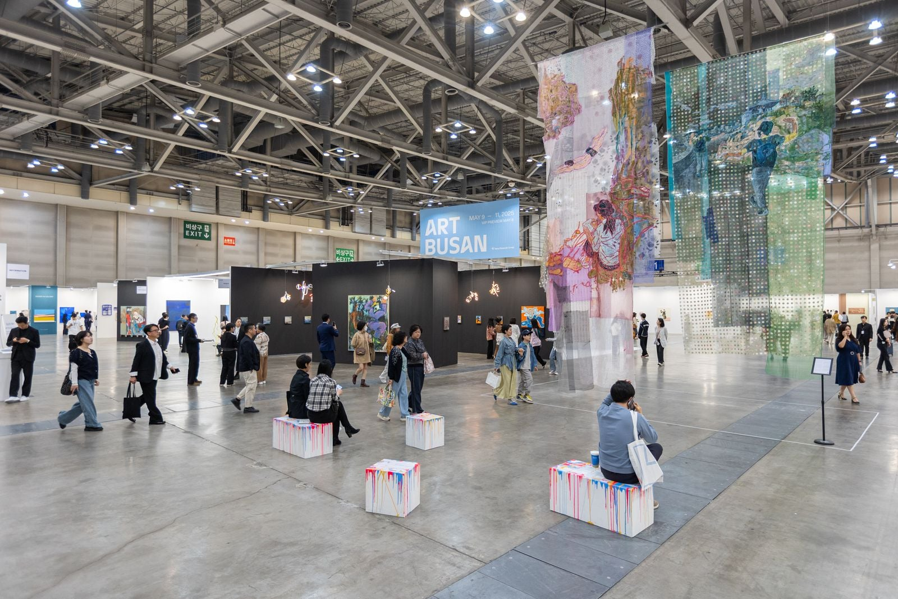
Art Busan exhibition view / Photo : Art Busan
Art Busan is
Busan’s leading international art fair and represents the most active site of
international transactions outside Seoul. Initially launched as a regional
event, it has steadily expanded its international profile through increased
participation by overseas galleries and the development of its programs.
Art Busan has
been widely regarded as the fastest-growing international fair outside the
capital. Maintaining a structure that presents both mid-career and emerging
artists, it has demonstrated relatively stable transaction flows in the upper
mid-price range, with works priced in the tens of millions of won and above.
This price segment has functioned as a meeting point between domestic
collectors seeking international artists and overseas galleries testing the
Korean market.
In recent years,
the fair has also contributed to a noticeable rise in international visitors
traveling to Busan, with last year’s edition showing continued substantive
transactions amid balanced participation by domestic and international
galleries. Art Busan thus plays a key role as a regionally distributed
international market platform that complements Seoul-centered structures.
In 2026, it is
expected to further articulate its identity as a city-oriented art fair
integrating viewing and travel experiences.
Dates: May 22–24, 2026 (VIP Preview: May 21)
Venue: Busan BEXCO, 55 APEC-ro, Haeundae-gu, Busan
Frieze Seoul
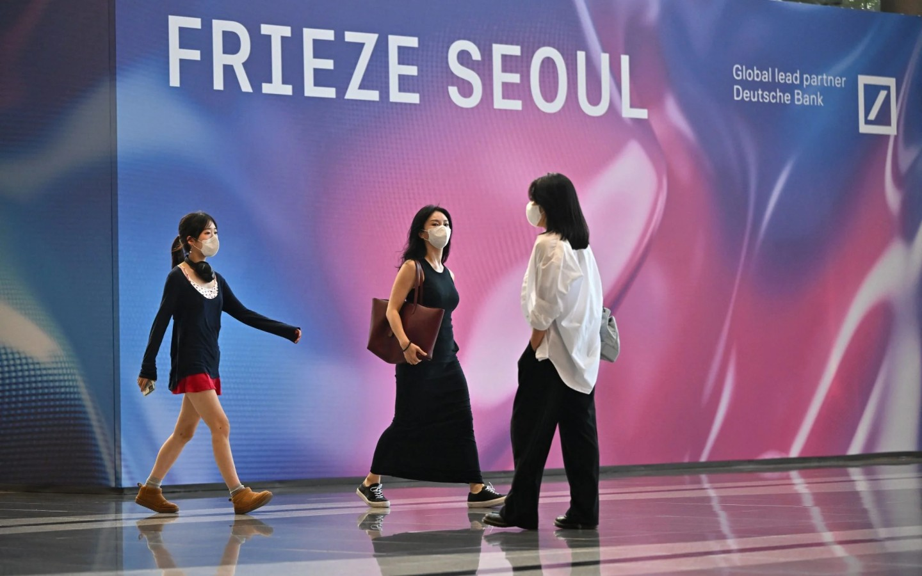
Frieze Seoul exhibition view / Photo: Frieze
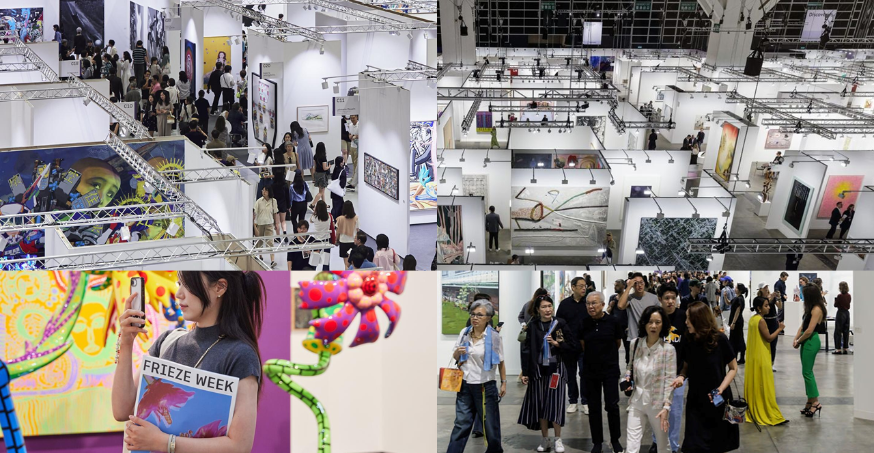
Frieze Seoul is
the most significant international art fair directly connecting the Korean art
market to the global art world. Organized by the globally recognized Frieze
brand, the fair brings together leading galleries and artists from around the
world and attracts substantial numbers of international collectors and art
professionals.
Since its
inaugural edition in 2022, Frieze Seoul has rapidly established itself as the
centerpiece of Seoul Art Week. With the participation of top-tier global
galleries, the fair concentrates high-value works, institutional acquisitions,
and transnational gallery networks, functioning as a site where the upper price
range and international benchmarks of the Korean art market become visible.
The extension of
Frieze Seoul’s hosting in Seoul for an additional five years as of 2025 has
confirmed its position as a structurally stable international market hub rather
than a temporary phenomenon. Its achievements have been measured less by
short-term sales figures than by the accumulation of long-term relationships
among institutions, collectors, galleries, and curators, as well as by the
enhancement of Seoul’s global art-market visibility.
In 2026, Frieze
Seoul is expected to operate in a more structured form, continuing to serve as
the central platform for experiencing contemporary international art networks.
Dates: September 2–5, 2026
Venue: COEX, 513 Yeongdong-daero, Gangnam-gu, Seoul
Kiaf Seoul (Korea International Art Fair)

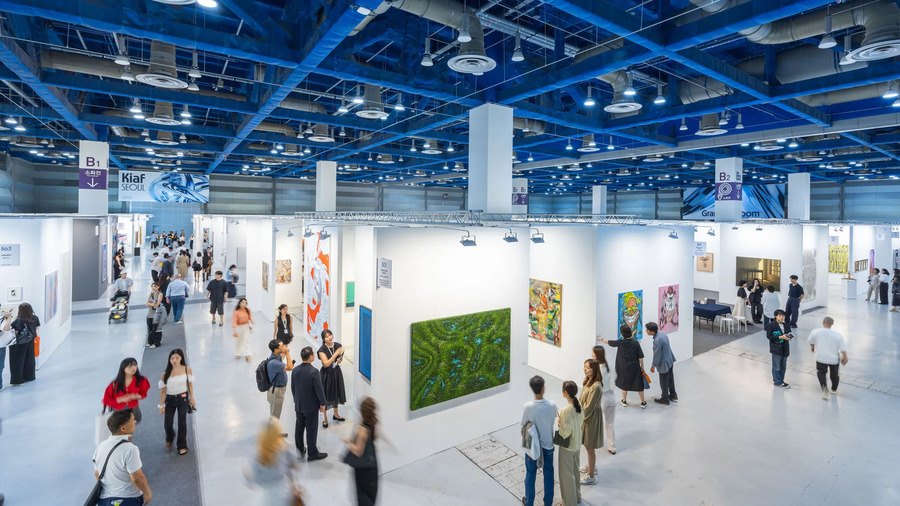
Kiaf Seoul exhibition view / Photo: Kiaf
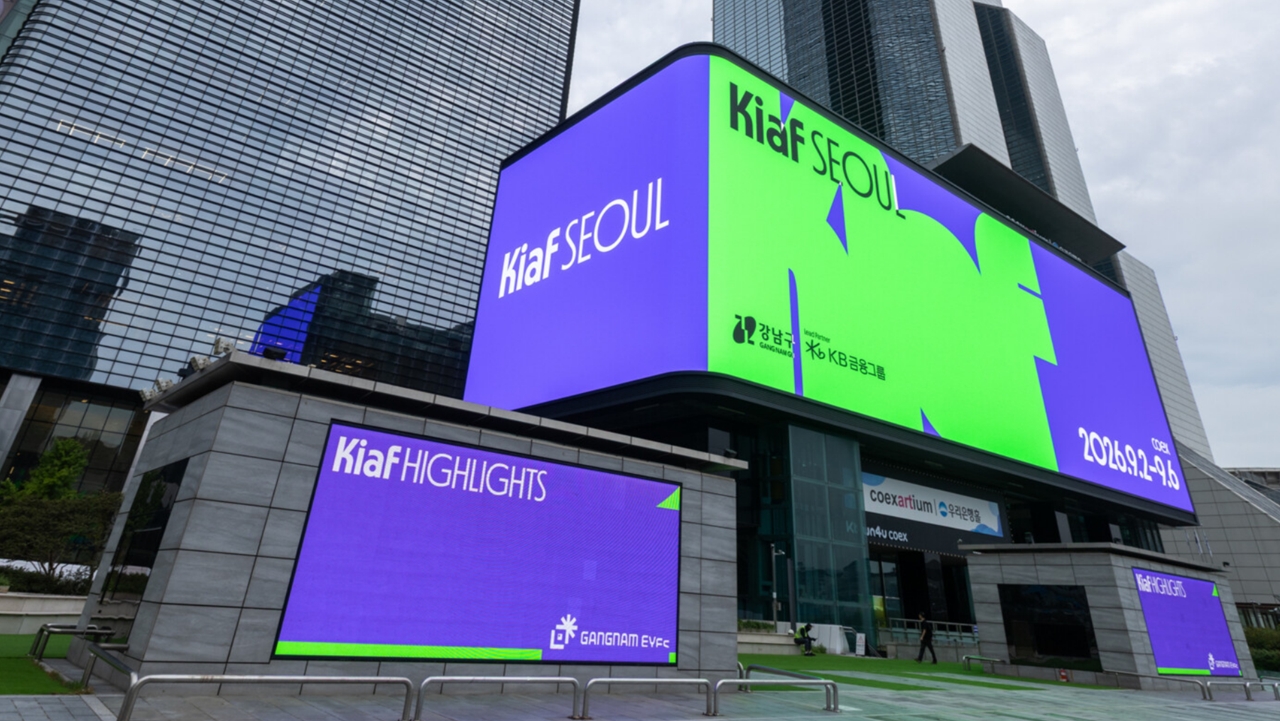
Kiaf Seoul was
launched with the aim of becoming Korea’s representative international art fair
and remains the platform where transactions involving domestic galleries and
Korean artists are most concentrated. While average price levels are lower than
those seen at Frieze Seoul, the frequency of transactions and the number of
participating collectors have shown consistent stability.
Historically,
Kiaf Seoul has facilitated sustained sales centered on Korean artists, serving
as evidence of the continued strength of the domestic art market. A relatively
high proportion of visitors attend with the intention to purchase, making Kiaf
one of the fairs with the highest transaction density. Since beginning to
coincide with Frieze Seoul, the fair has also seen a gradual increase in
international visitors.
Within this
structure, Kiaf Seoul has come to represent the axis of continuity and
practical operation within the Korean art market. In 2026, alongside its
concurrent scheduling with Frieze, Kiaf is expected to function as the platform
that most clearly reveals the depth and everyday mechanics of Korea’s art
market.
Dates: September 2–6, 2026
Venue: COEX, 513 Yeongdong-daero, Gangnam-gu, Seoul
Conclusion
In 2026, Korea’s
art fairs collectively operate not as a single annual schedule but as a map of
how the Korean art market is structured and differentiated. Each fair fulfills
a distinct function in terms of pricing, transaction patterns, collector
demographics, and modes of international connection, and together they
articulate the current state of the market.
As the global art
world continues to shift away from a single-center model toward a network of
multiple hubs, Korean art fairs demonstrate a parallel response. The
coexistence of international platforms in Seoul and regionally grounded
experiences in cities such as Busan and Daegu reflects a market capable of
accommodating diverse scales and audiences.
To view the
Korean art market through its art fairs is not simply to survey a list of
events, but to observe how art is introduced, experienced, and accumulated over
time. In this sense, the art fairs of 2026 form a practical guide to
understanding where Korean art stands today—and how it may continue to expand
within the global art landscape.