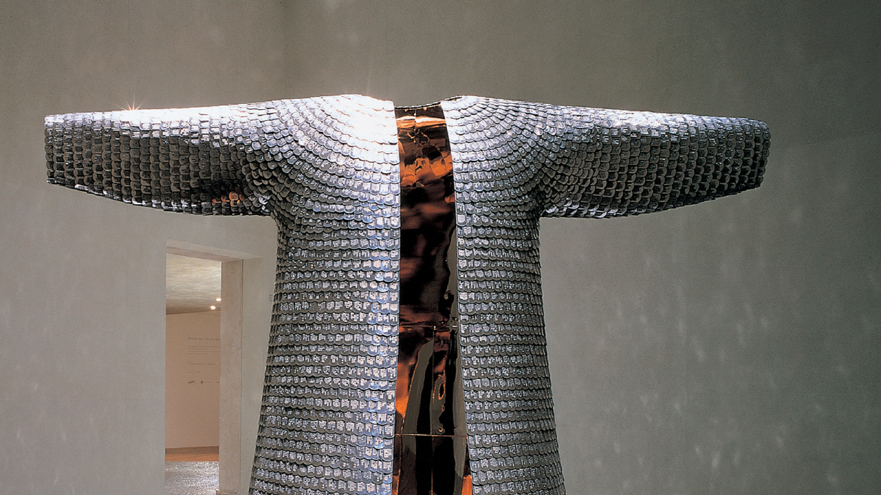

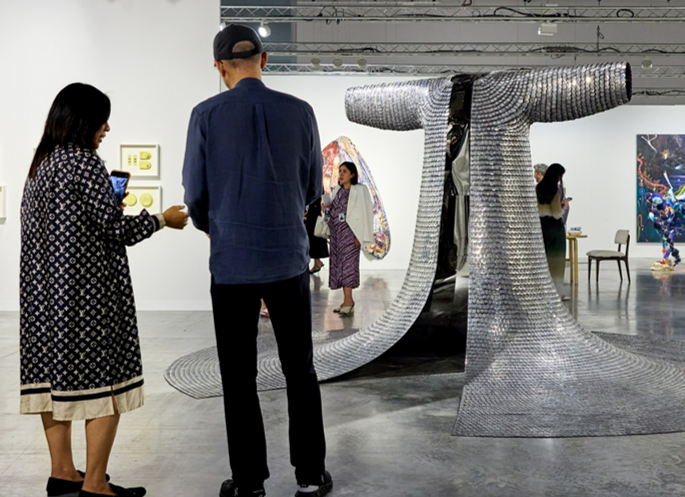
Do Ho Suh’s Some/One presented at “Art Basel Miami Beach 2025” / Photo: Art Basel Facebook
At Lehmann Maupin’s booth at last week’s “Art Basel Miami
Beach 2025”, Do Ho Suh’s seminal work Some/One (2014)
made an immediate visual impact.
The work was acquired by a collector on the fair’s second
day for 1 million USD and is reportedly destined as a promised
gift to a major American museum. Another version of this piece is
known to be in the collection of the Seattle Art Museum.
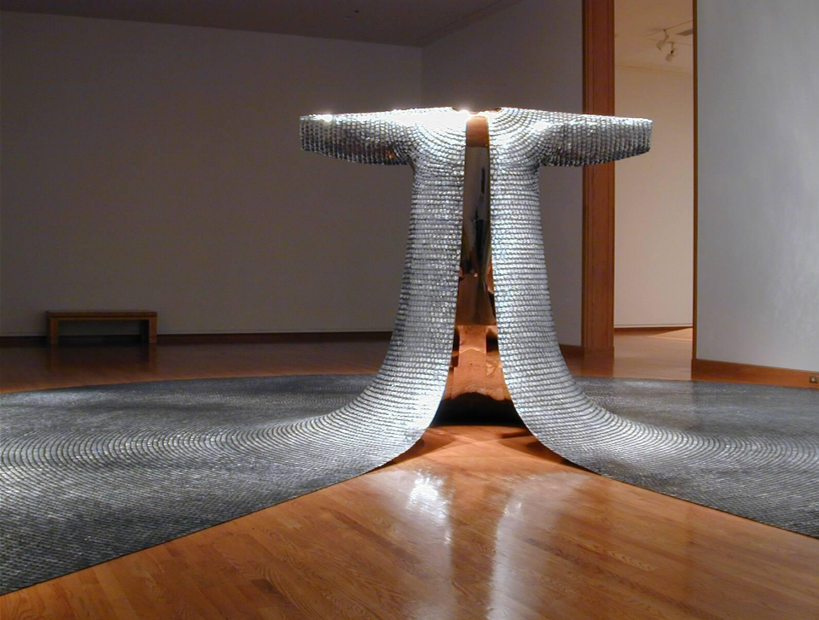
Some/One (2001), installation view at the Seattle Art Museum / Photo: Seattle Art Museum
Created in 2014, the work emerged from Suh’s attempt to move
beyond the individual and delve into questions of collective and public
identity.
The structure, which resembles a suit of armor or ceremonial
garment, is hollow inside, while its outer surface is composed of tens of
thousands of ‘dog tags’. These countless shimmering metal identity plates,
linked together into a kind of protective shell or ritual figure, embody the
tension between individual and collective, and visualize how a single
person’s existence can be revealed or erased within a larger group. Dog tags
function as devices for identifying individuals, but within this work they are
anonymized and operate as endlessly repeated units.
This sculpture does not narrate a story. It does not
explicitly reference the military, the nation-state, or any specific society.
Instead, it uses form to show how individuals are absorbed and standardized
within collective and institutional structures. While this inquiry grows out of
experiences tied to Korean society, it refuses to confine those experiences to
a single cultural case study. It is precisely at this point that Some/One
becomes a work that can be read anywhere in the world.
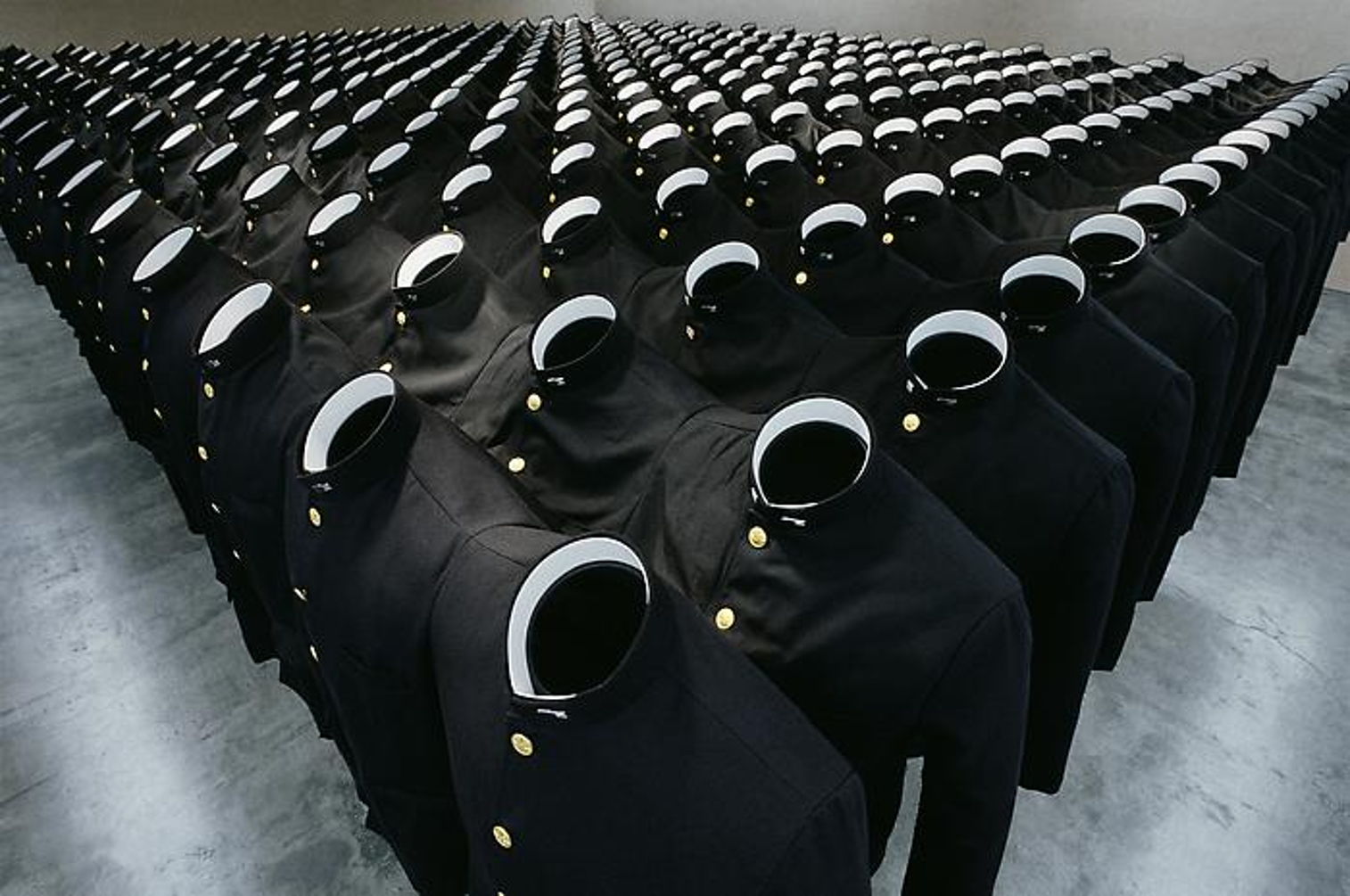 Do Ho Suh, Installation View of High School Uni-Form
(1997)
Do Ho Suh, Installation View of High School Uni-Form
(1997)Suh’s preoccupation with these issues is already evident in
his late-1990s school uniform works. In High School Uni-Form
(1997), identical uniforms are arranged in a grid, presenting a structure in
which the shape of the collective remains while the individual is conspicuously
absent. The school uniform is an institutional shell imposed during
adolescence, yet in the work it appears only as a repeated form from which the
body has been removed.
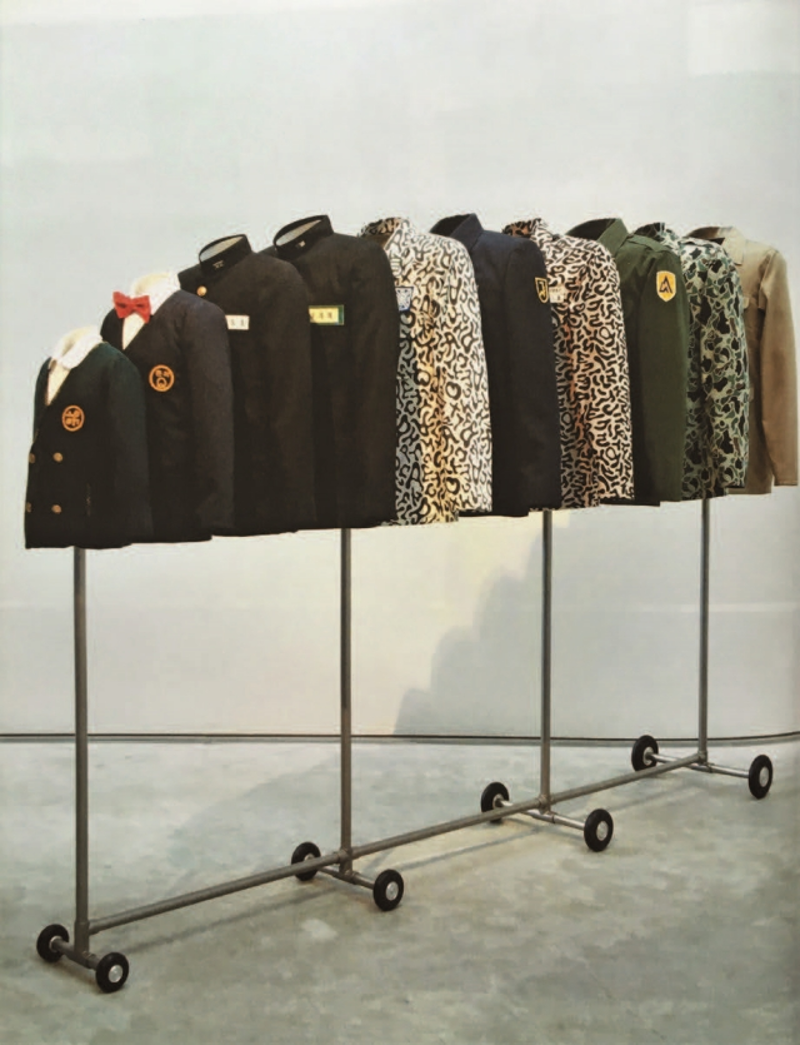 Do Ho Suh, Uni-Form/s: Self-Portrait/s: My 39 Years,
169 × 56 × 254 cm, 2006
Do Ho Suh, Uni-Form/s: Self-Portrait/s: My 39 Years,
169 × 56 × 254 cm, 2006The questions posed in the uniform works are further
condensed in Some/One. The uniform of the education
system is extended into the insignia of the nation-state, and a multitude of
discrete objects coalesce into a single bodily figure. Without emotional excess
or explanatory rhetoric, Suh pushes his inquiry forward through form alone.
This method is a consistent hallmark of his practice.
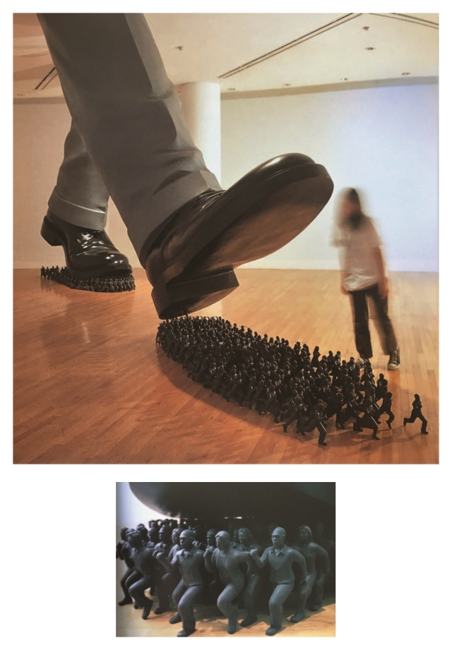
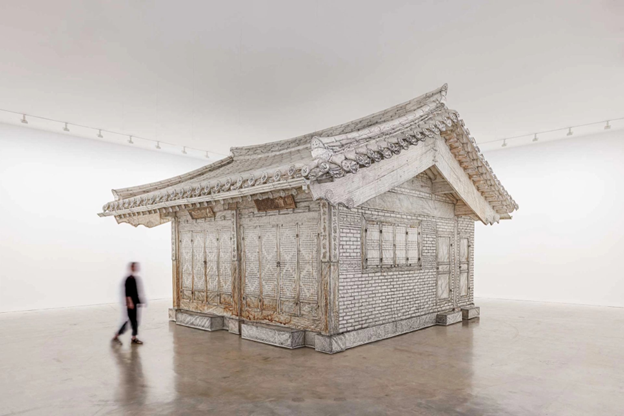
Do Ho Suh, Karma, FRP, 389.9 × 299.7 × 739.1 cm, 2003, installation view at Art Sonje Center
The reason Do Ho Suh is often cited as an artist
representative of Korea is not because he “shows Korean imagery” particularly
well. Rather, it is because he succeeds in transforming Korean experiences into
a structure of perception that can be understood universally, precisely by
refusing to foreground “Koreanness” as a theme.
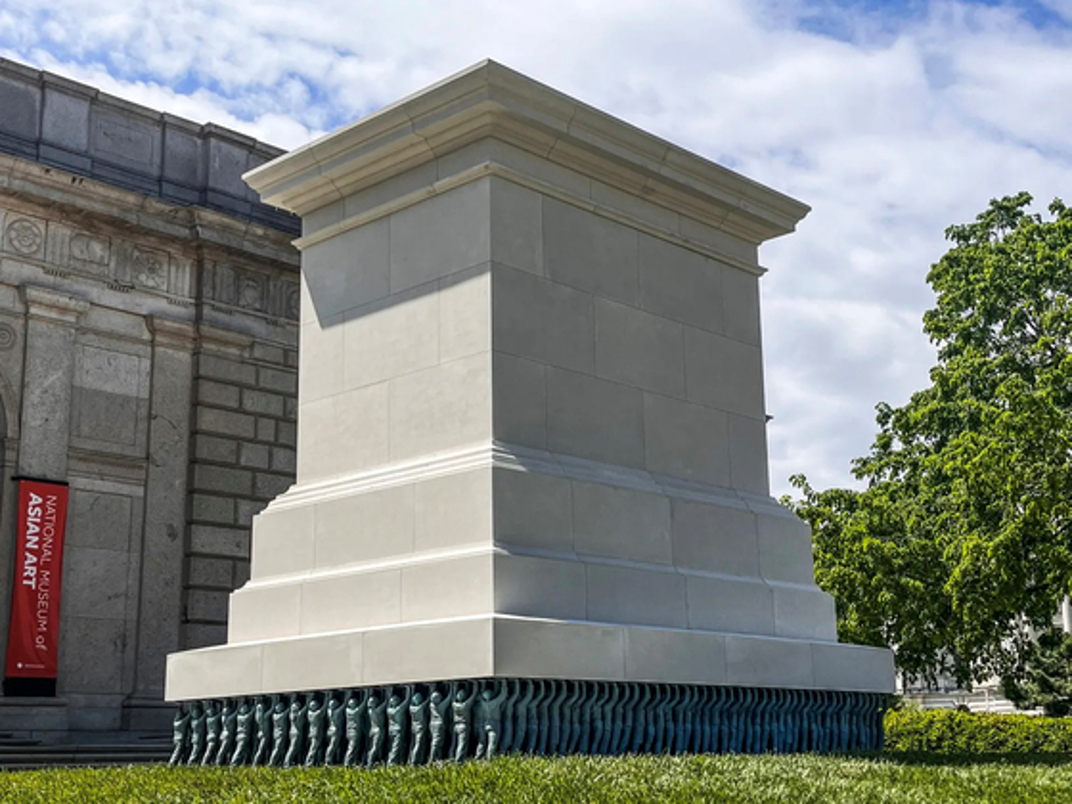
Do Ho Suh’s Public Figures were installed in the courtyard of the Smithsonian’s National Museum of Asian Art in Washington, D.C., in April this year. The work, commissioned to mark the museum’s 100th anniversary, will remain on view for five years. / Photo: Smithsonian Magazine
This carries significant implications for the overseas
expansion of Korean contemporary art. It suggests the possibility that works
can “operate on their own” without requiring additional explanation of context
or cultural difference. Suh’s practice exemplifies a mature pathway through
which Korean artists can encounter and engage with the global art world.
Some/One is not a work that
simply “represents” a particular region or issue; it can be read as a sculpture
addressing structural sensibilities shared across contemporary societies. The
tensions between the individual and the group, discipline and protection,
sameness and anonymity are questions that resonate globally, and this work
crystallizes them into form. As a result, the piece does not remain a one-off
spectacle; it is continuously revisited through major exhibitions and
collections. Its reappearance at this year’s “Art Basel Miami Beach 2025” is
part of this ongoing accumulation.
The presentation of Some/One at “Art
Basel Miami Beach 2025” signals that the overseas presence of Korean artists is
no longer an exceptional event, nor merely a matter of “going abroad.” It is an
important sign that works shaped within the Korean context are now being read
within the shared visual and conceptual language of global contemporary art.