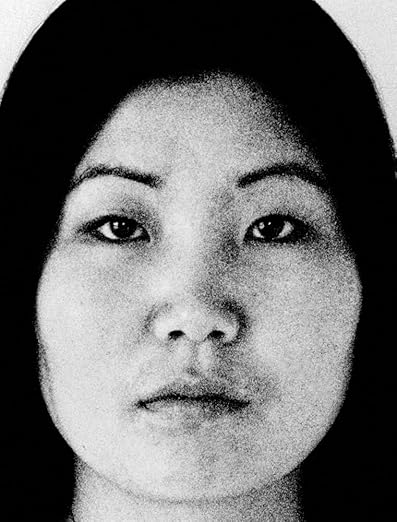

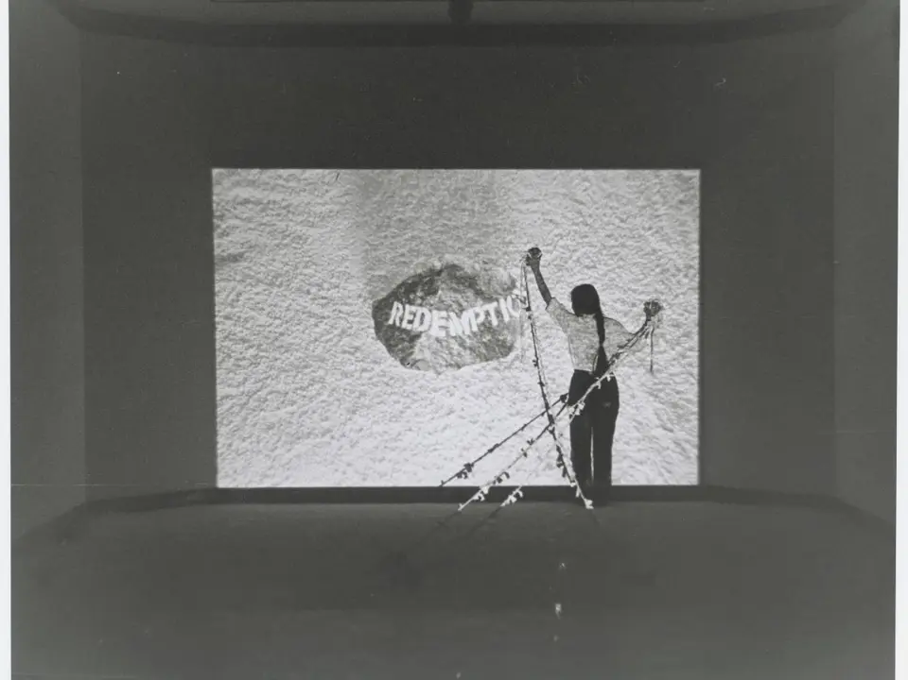
Theresa Hak Kyung Cha, Other Things Seen, Other Things Heard, 1978. Gift of the Theresa Hak Kyung Cha Memorial Foundation. / © BAMPFA
From January 24
to April 19, 2026, the Berkeley Art Museum and Pacific Film Archive (BAMPFA)
will present《Theresa Hak Kyung Cha: Multiple
Offerings》, a retrospective of the Korean American
artist Theresa Hak Kyung Cha (1951–1982).
This exhibition
marks the first major museum retrospective of Cha’s work in
twenty-five years, offering a renewed art-historical examination of
her brief yet densely articulated body of work.
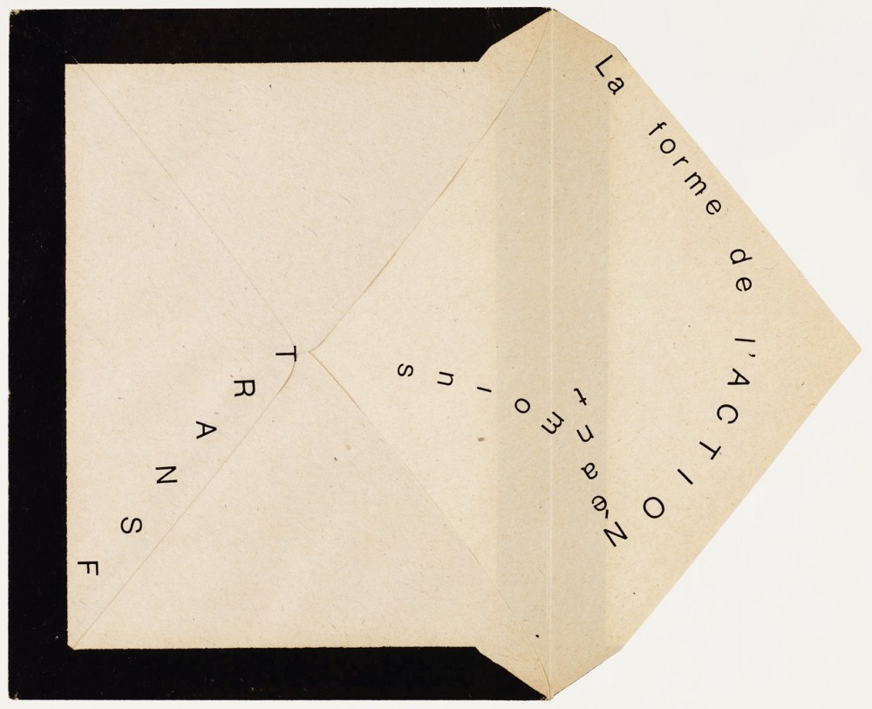
Theresa Hak Kyung Cha, Faire-Part, 1976, ink and press type on fifteen envelopes. / © BAMPFA
The exhibition
surveys Cha’s expansive multimedia practice, encompassing
text-based works, video, performance, installation, and publications. Featuring
approximately one hundred works and archival materials, it situates Cha’s
practice within the context of experimental art in the United States during the
1970s and early 1980s, revealing the complexity and scope of her artistic
position during this period.
BAMPFA has been
one of the principal institutions preserving Cha’s legacy since receiving a
significant donation of her works and archives from the Theresa Hak Kyung Cha
Memorial Foundation in 1992. This exhibition represents the most comprehensive
public presentation to date of those holdings.
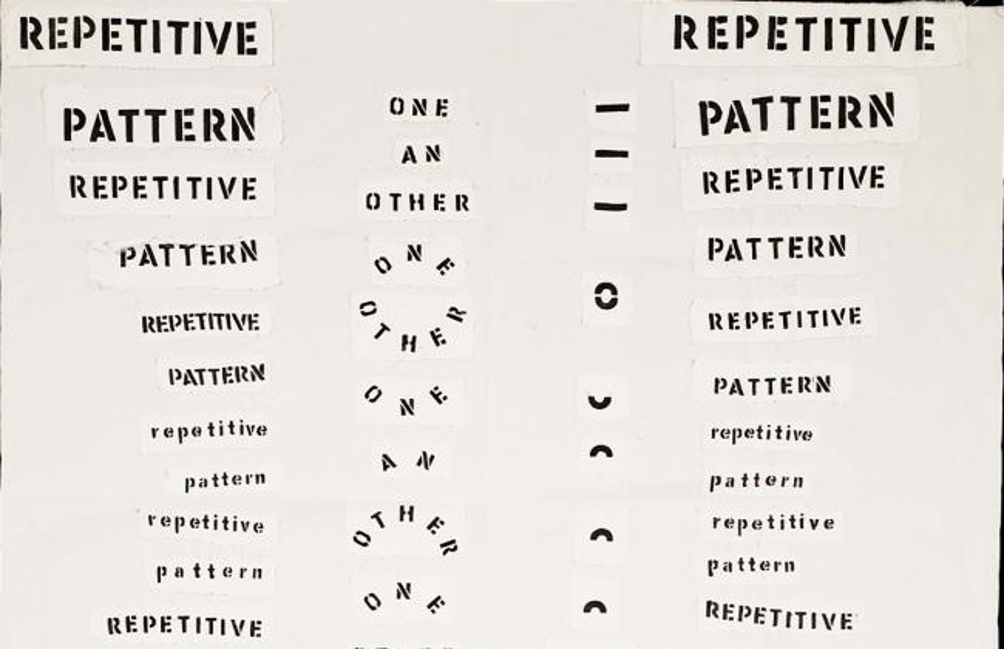
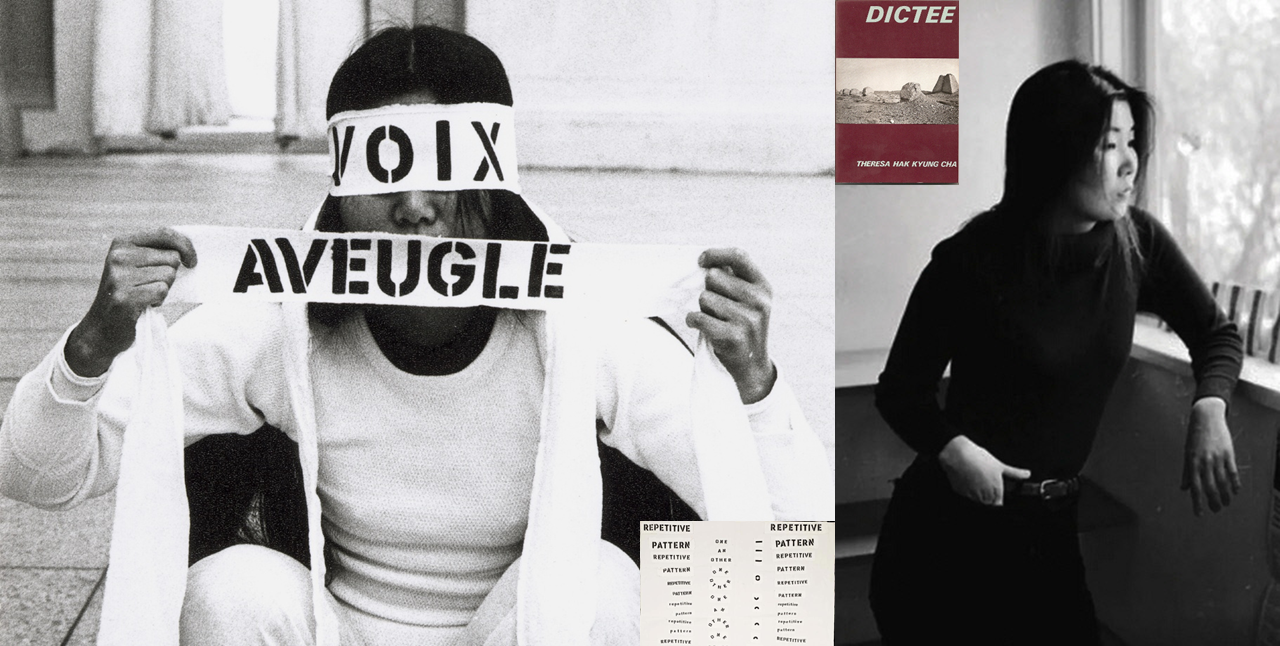
Theresa Hak Kyung Cha, Repetitive Pattern, 1975. / © BAMPFA
Nonlinear
Narratives and the Methodology of “Multiple Offerings”
Born in Korea and
later immigrating to the United States, Cha studied art, comparative
literature, and film at the University of California, Berkeley, developing a
practice that traversed visual art, language, and movement. Central to her work
was not the transmission of a fixed message, but the exposure of the
very conditions through which meaning is produced. Cha articulated
this approach through the concept she termed “Multiple Telling with Multiple
Offering.”
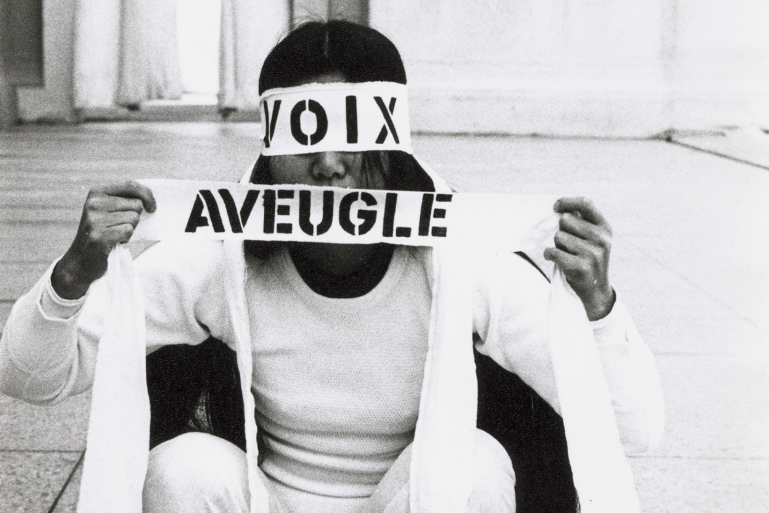
Theresa Hak Kyung Cha, Aveugle Voix, 1975.
Documentation of a performance rehearsal at the Greek Theatre, University of California, Berkeley.
In 1975, Cha presented the performance Aveugle Voix. Kim Kyung-nyeon, the Korean translator of 『Dictée』, notes that Cha described herself in her résumé as a “producer, director, performer, maker of video and film, installation artist, performance artist, and publishing artist.” Photo by Trip Callaghan / © BAMPFA
This
retrospective adopts Cha’s methodology as a guiding curatorial principle.
Rather than following a linear chronology, the exhibition is organized around
recurring thematic constellations—memory, exile and migration, the instability
of language, history and myth, and the female voice. Viewers are thus invited
to encounter Cha’s work through multiple points of entry, engaging with it
not as a singular narrative but as an open field of interpretive possibilities.
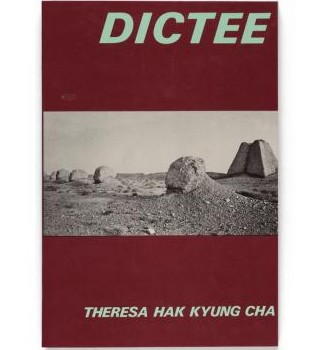
Dictée, published in 1982. Shortly after its publication, Theresa Hak Kyung Cha died tragically. Through Dictée, Cha came to be regarded as a “writer’s writer,” exerting a lasting influence on artists and scholars in the fields of visual art, literature, and film, as well as on Asian American communities. / © BAMPFA
Tensions
Between Language, Body, and History
Cha’s most widely
recognized work, Dictée (1982), occupies a central
position in the exhibition. Both a literary work and a visual-conceptual
project, Dictée appropriates the format of French
dictation exercises to interweave linguistic discipline, colonial history, and
female narratives. Since its publication, the book has been continuously
referenced across contemporary literature, art history, postcolonial studies,
and feminist theory, and is now widely regarded as a modern classic.
Alongside Dictée,
the exhibition presents a range of lesser-known works, including performance Aveugle
Voix, film- and text-based installations, and early works in fiber
and ceramics. Together, these materials underscore the fact that Cha’s practice
cannot be confined to a single genre or medium. Instead, they reveal a
sustained investigation into the tensions between language and the
body, documentation and enactment.
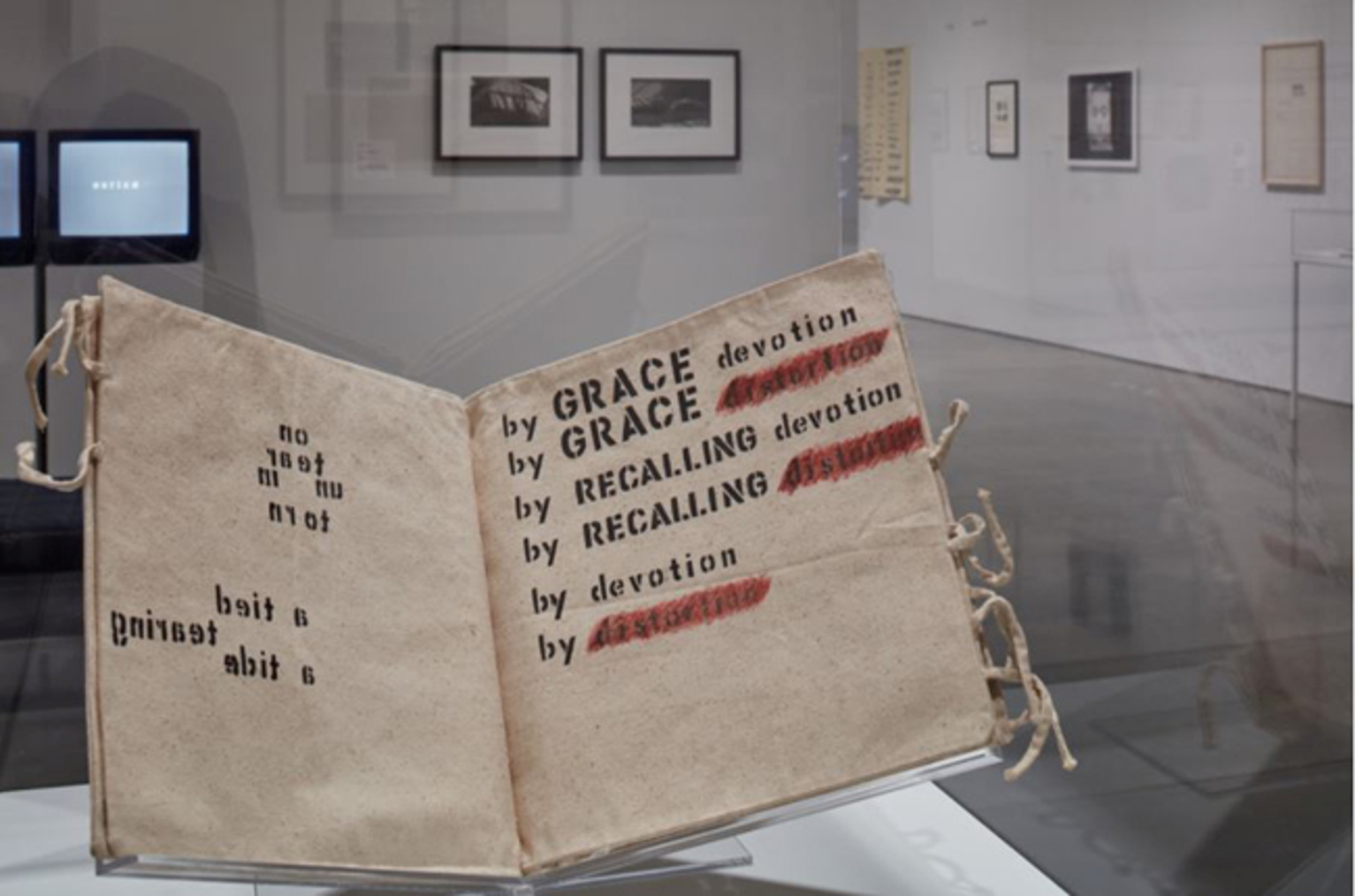
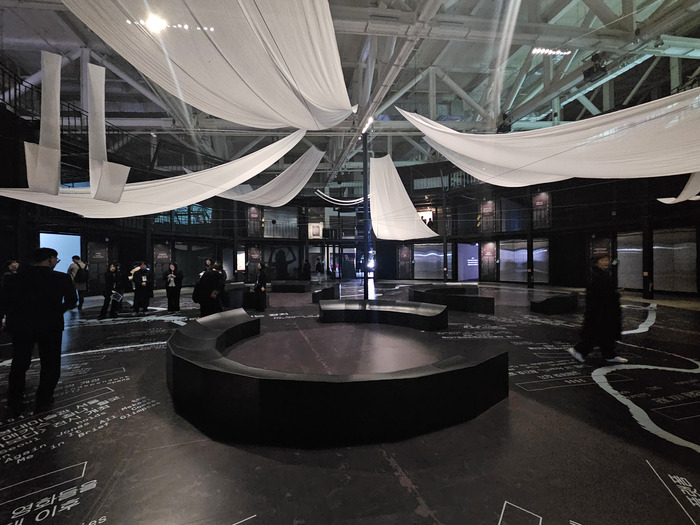
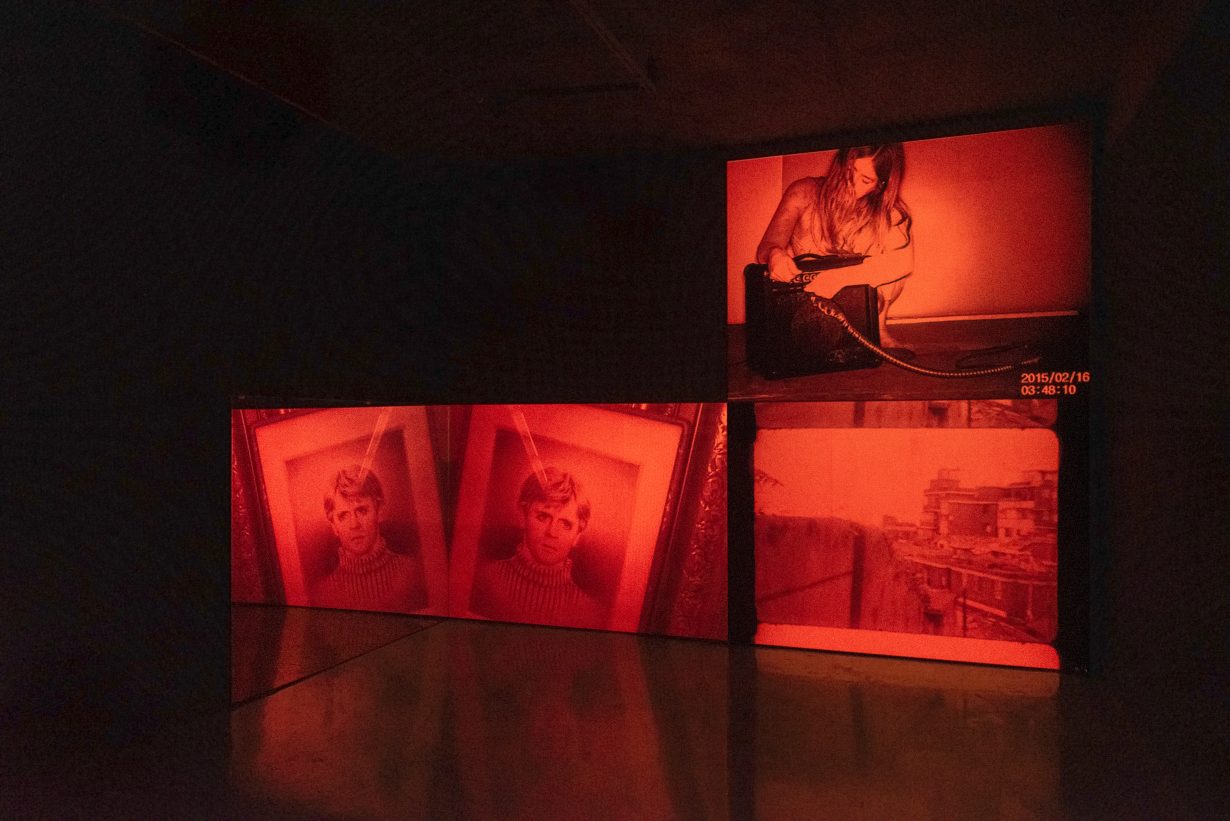
Theresa Hak Kyung Cha, Theresa Hak Kyung Cha, Avant Dictée, installation view, 2018, Berkeley Art Museum and Pacific Film Archive (BAMPFA). © BAMPFA
Theresa Hak
Kyung Cha in the History of American Experimental Art
Cha’s work is
closely connected to the developments of conceptual art, experimental film, and
performance art that unfolded in San Francisco and New York during the 1970s.
Yet rather than simply adopting the dominant languages of Western
conceptualism, Cha forged a distinct critical position by interweaving experiences
of migration and diaspora, multilingual environments, and memories of modern
Korean history.
The exhibition
situates Cha’s work within a broader network of contemporaries, presenting it
not as an isolated personal narrative but as part of an interconnected artistic
field. Works by artists who were active during the same period, as well as by
those influenced by Cha’s practice, are displayed alongside her own, making
visible the intellectual and artistic traces she left on subsequent
generations.
Although Cha did
not receive sustained institutional recognition during her lifetime, her work
has gradually gained significance across literature, visual art, and cultural
theory in the decades following her death. This retrospective seeks to position
Cha not as a marginal or tragic figure, but as a practitioner who
fundamentally reconfigured the forms and languages of contemporary art.
During the
exhibition period, a series of related programs—including public readings of Dictée,
academic symposia, and film screenings—will take place. In addition, the
exhibition will be accompanied by the publication of Cha’s first major museum
monograph in more than twenty years, providing a critical opportunity to
reassess her work within today’s contemporary art discourse.
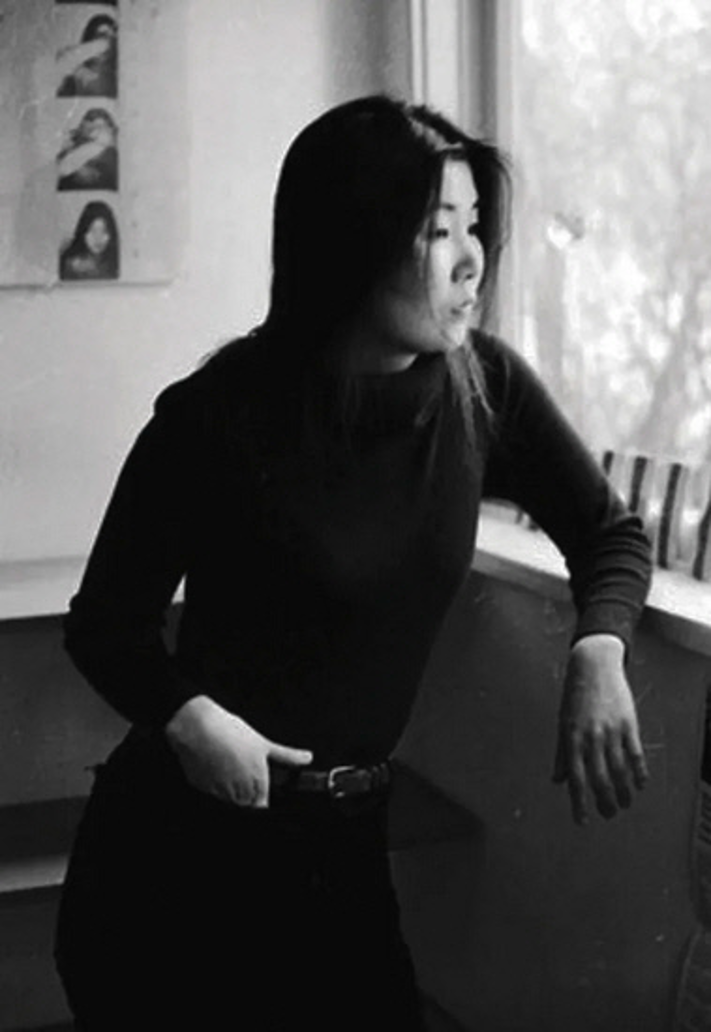
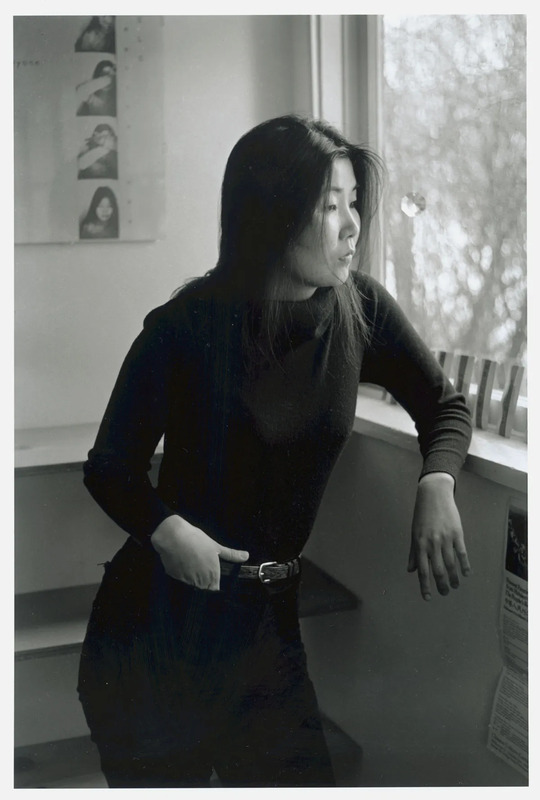
Portrait of Theresa Hak Kyung Cha (1951–1982). / © BAMPFA
Theresa Hak
Kyung Cha (1951–1982)
Theresa Hak Kyung
Cha (1951–1982) was a Korean American artist and writer born in Busan, Korea,
who worked primarily in the United States. She immigrated with her family to
Hawaii in 1961 and later moved to San Francisco and New York, growing up under
the conditions of diaspora. Her parents had themselves experienced displacement
and migration during the Japanese colonial period, a family history that deeply
informed Cha’s artistic practice.
Cha moved to the
United States at the age of eleven and studied art and comparative literature
at the University of California, Berkeley, later pursuing film theory studies
in France. Working across literature, experimental film, photography, and
performance, she explored questions of language, memory, history, and identity.
Her seminal work Dictée
interweaves figures such as Yu Gwan-sun and Joan of Arc with her own family
history, articulating colonial history and female subjectivity through an
avant-garde narrative structure. The book continues to be regarded as a
foundational theoretical and literary text.
In 1982, shortly
after the publication of Dictée, Cha died in New York
as a result of a violent incident. Concern that the brutality of the event
might eclipse her artistic achievements led to a prolonged reluctance to
publicly address the circumstances of her death, contributing to a delayed
critical recognition of her work.
Despite her short
life, Cha’s practice has been steadily reexamined and reassessed. Today, her
work is understood not as a reflection of personal tragedy but as a radical
artistic practice that critically engages with memory, migration, and the
instability of language, expanding the possibilities of narrative and form in
contemporary art.
Exhibition
Information
Exhibition
Title:《Theresa Hak Kyung Cha: Multiple
Offerings》
Artist: Theresa Hak Kyung Cha (1951–1982)
Exhibition
Dates: January 24 – April 19, 2026
Venue: Berkeley Art Museum and Pacific Film Archive (BAMPFA)
Exhibition
Type: Retrospective
Exhibition
Contents: Approximately 100 works and archival
materials, including text-based works, video, performance, installations, and
publications
Related
Programs: Public readings of Dictée,
academic symposia, and film screenings
Exhibition
Catalogue: The first museum monograph on the artist
to be published in more than twenty years
Organized by: Berkeley Art Museum and Pacific Film Archive
Supported by: Korea Foundation (KF)
Website: https://bampfa.org/program/theresa-hak-kyung-cha-multiple-offerings