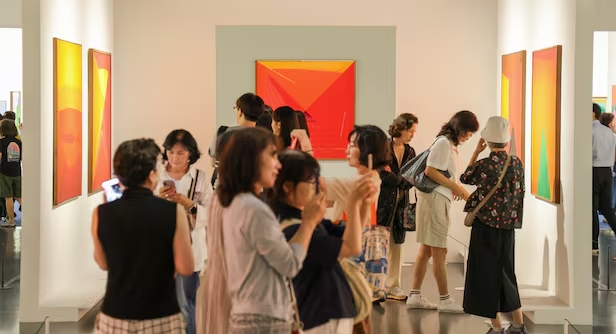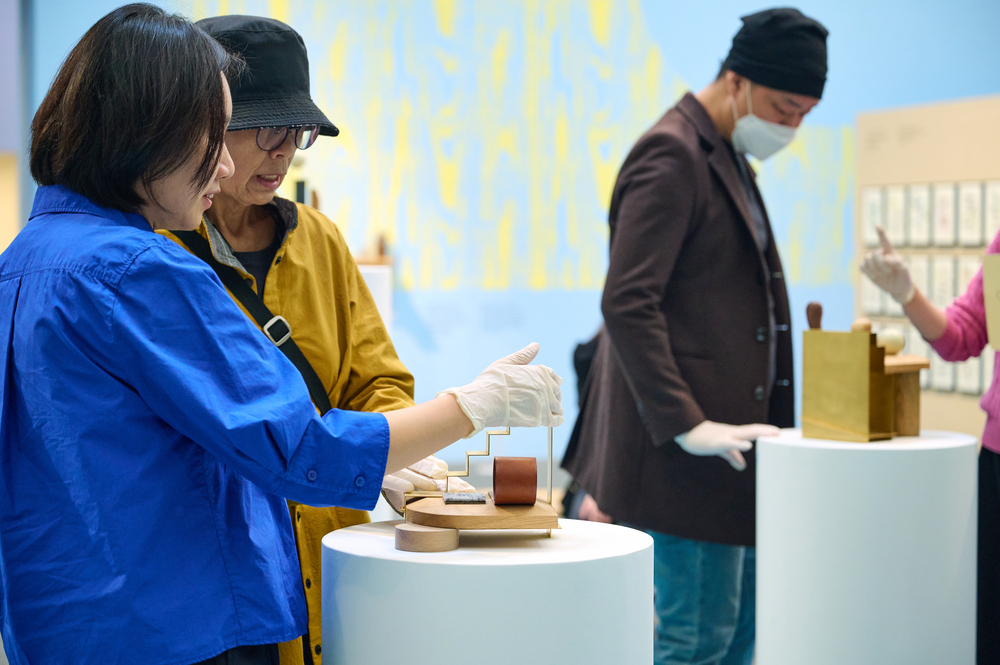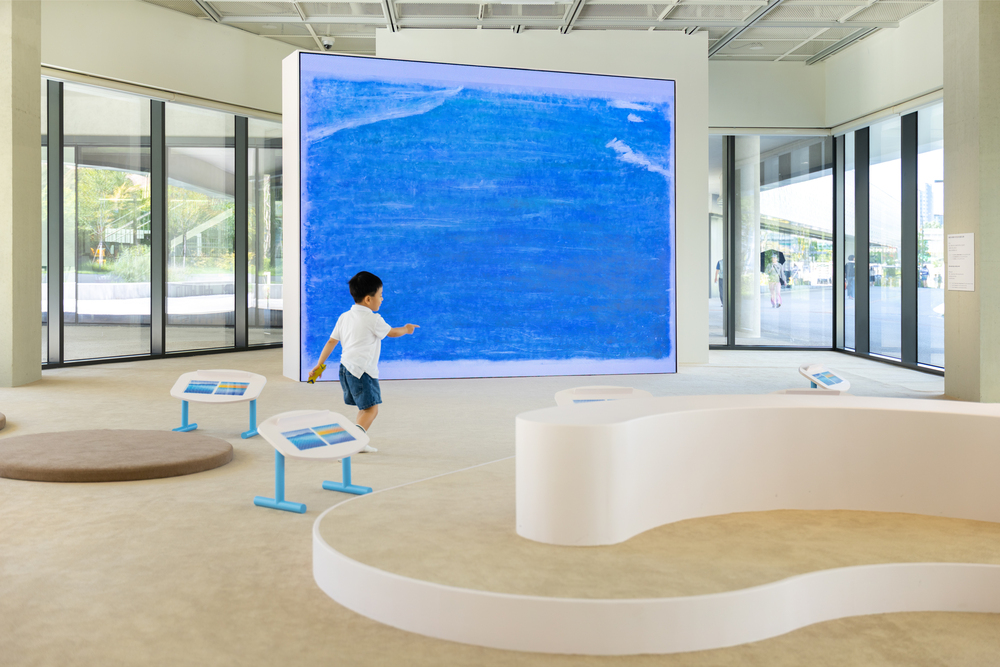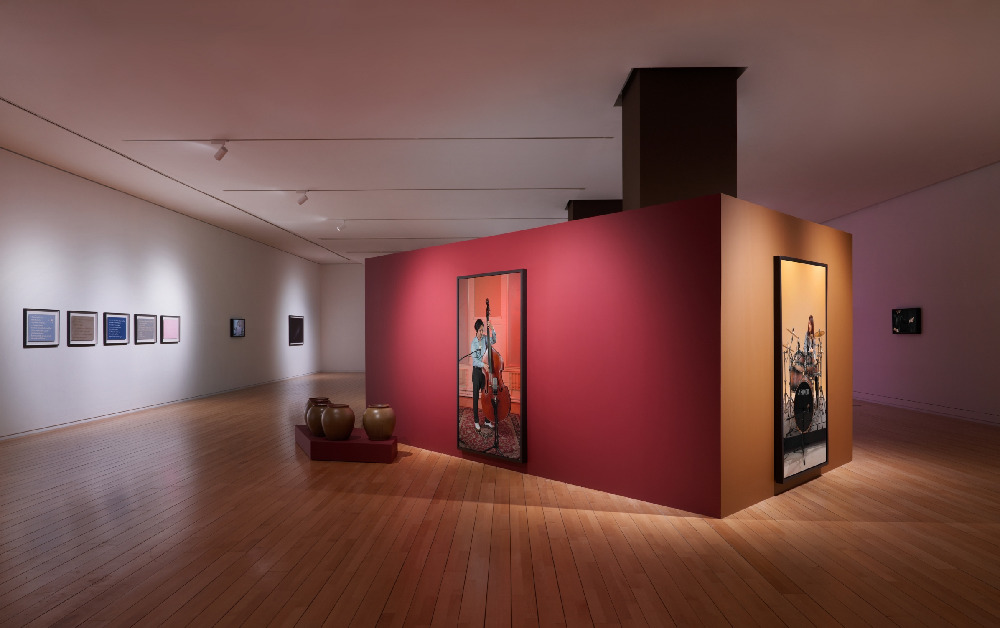

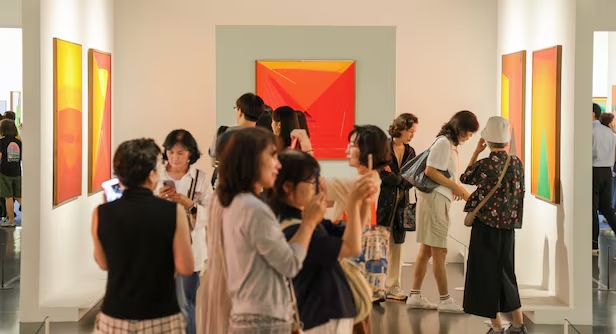
Visitor view of the exhibition 《Yoo Youngkuk: A Mountain Within Me》, a retrospective at the Seoul Museum of Art © Chosun Ilbo
A rare out-of-print book provided for
public reading at the Seoul Museum of Art’s retrospective exhibition 《Yoo Youngkuk: A Mountain Within Me》,
commemorating the 110th anniversary of the artist’s birth, has gone missing.
The missing publication is Yoo
Youngkuk: Life and the Horizon of Creation by art critic Oh Kwang-su.
According to the museum, the book was a non-reproducible archival resource
borrowed from an external institution. In addition to the loss of the book,
cases of damage to reading materials, including torn or folded pages, have also
increased during the exhibition period.
The incident became known after a notice
posted in the exhibition hall was shared online. In the notice, the museum
appealed, “If you have taken the book, please return it,” while a museum representative
stated, “Everyone is eagerly waiting for its return.”
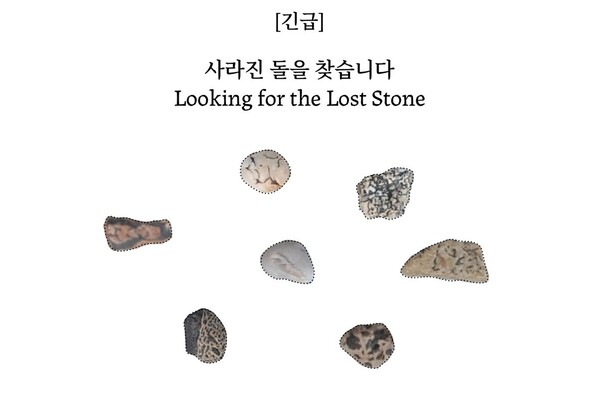
Notice posted on the National Museum of Modern and Contemporary Art, Korea’s social media © MMCA
Cases of exhibition materials or parts of
artworks going missing from national and public museums are not unprecedented.
In April, at the National Museum of Modern and Contemporary Art, Seoul’s
special exhibition 《Sak-da: The Poetics of
Decomposition》, a part of artist Gosari’s work A
Dredge Stone from the Earth, which was installed for visitors to
touch and interact with, disappeared during the exhibition period.
Such incidents reveal the challenges
involved in exhibition formats that encourage active audience participation.
While there are calls for a more mature culture of engagement to ensure both
future visitors’ experiences and the sustainability of exhibitions, the need
for more detailed operational systems has also been raised, including clearer
guidelines for on-site staff intervention and procedures for responding to
incidents.
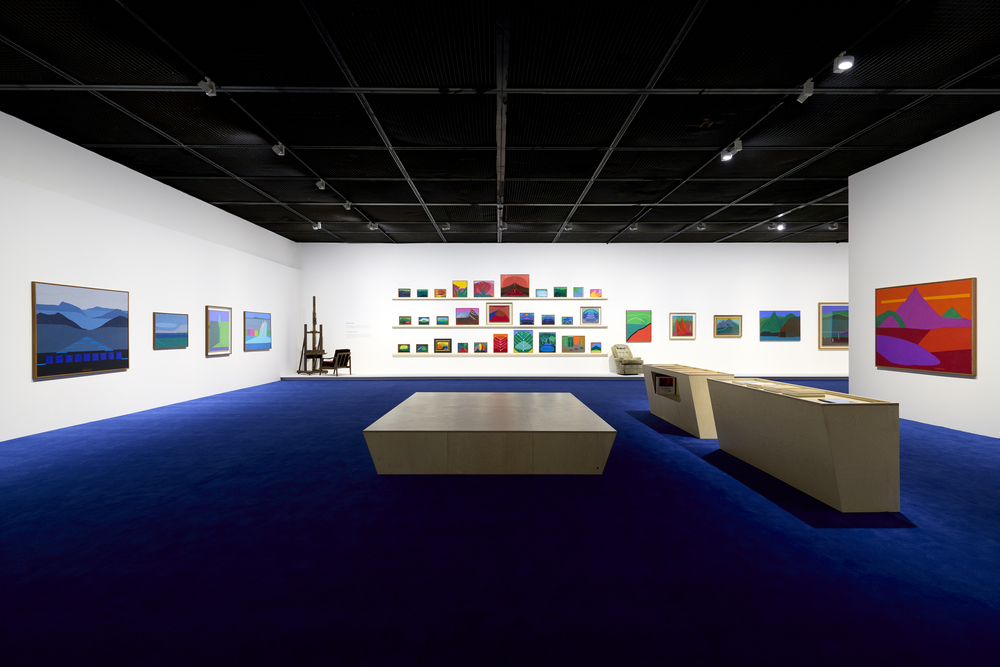
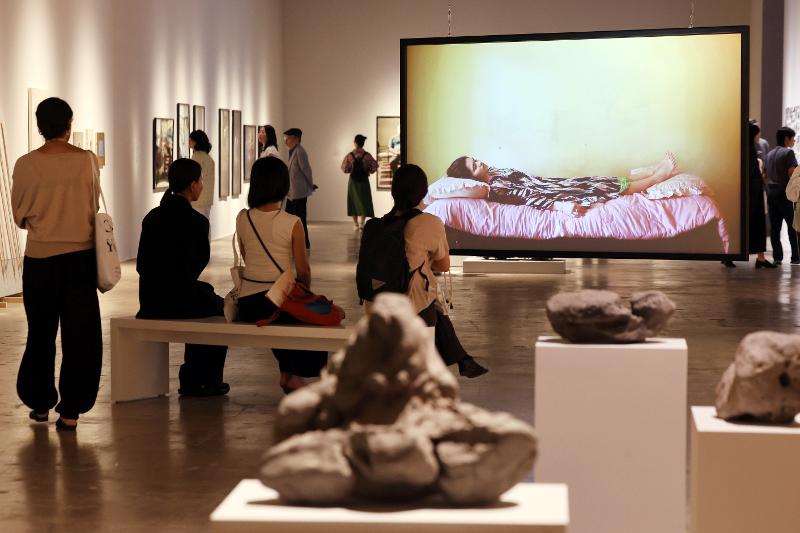
Installation view of the exhibition 《Yoo Youngkuk: A Mountain Within Me》, a retrospective at the Seoul Museum of Art. Photo: Sangtae Kim. ⓒ SeMA
Researcher Lee Hye-jin of Sungshin Women’s
University noted that while the nature of participatory exhibitions can
encourage active audience engagement, it may also create confusion over the
boundaries of acceptable behavior. She suggested that exhibition organizers
should establish management systems that provide clear and consistent
guidelines on methods of participation and visitor etiquette.
The Seoul Museum of Art also announced that
it has expanded safety management personnel in response to the growing number
of visitors and strengthened training on the management of freely accessible
books and exhibition materials. These measures aim to preserve the purpose of
participatory exhibitions while improving operational and management systems.
As exhibitions based on audience
participation continue to expand, museums are now required not only to broaden
accessibility but also to develop sustainable systems that can maintain and
manage such openness over the long term.