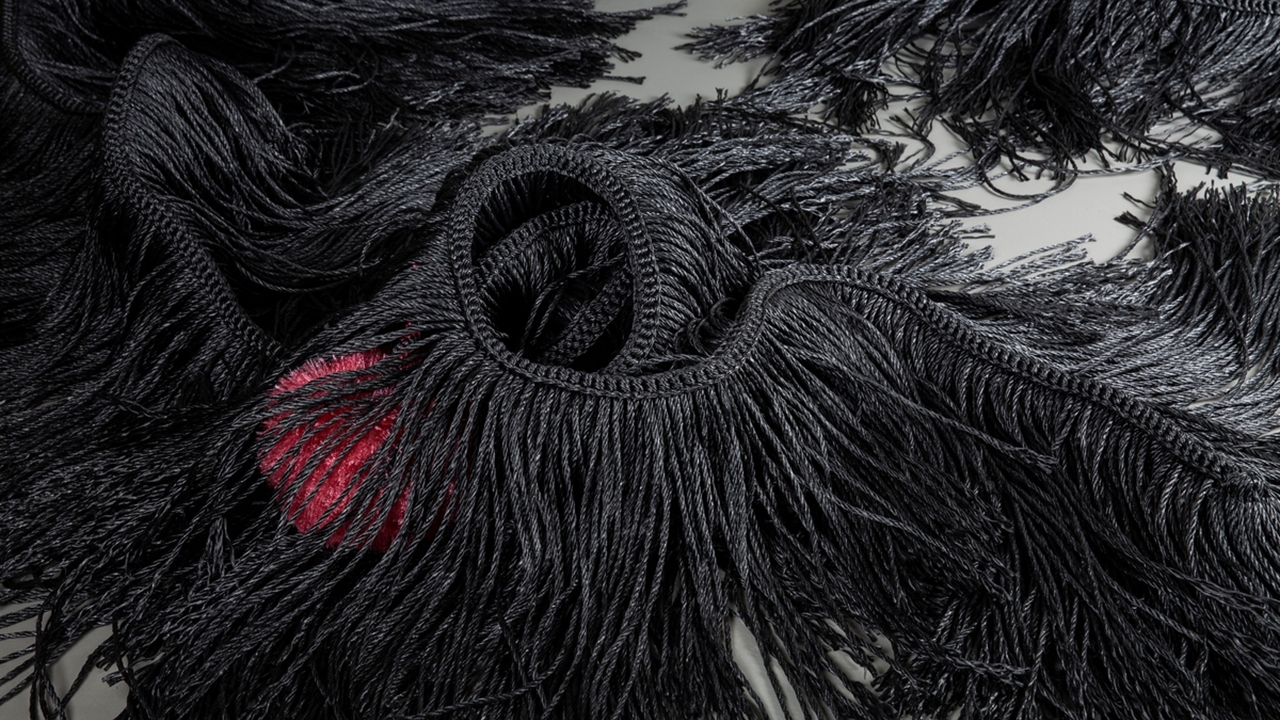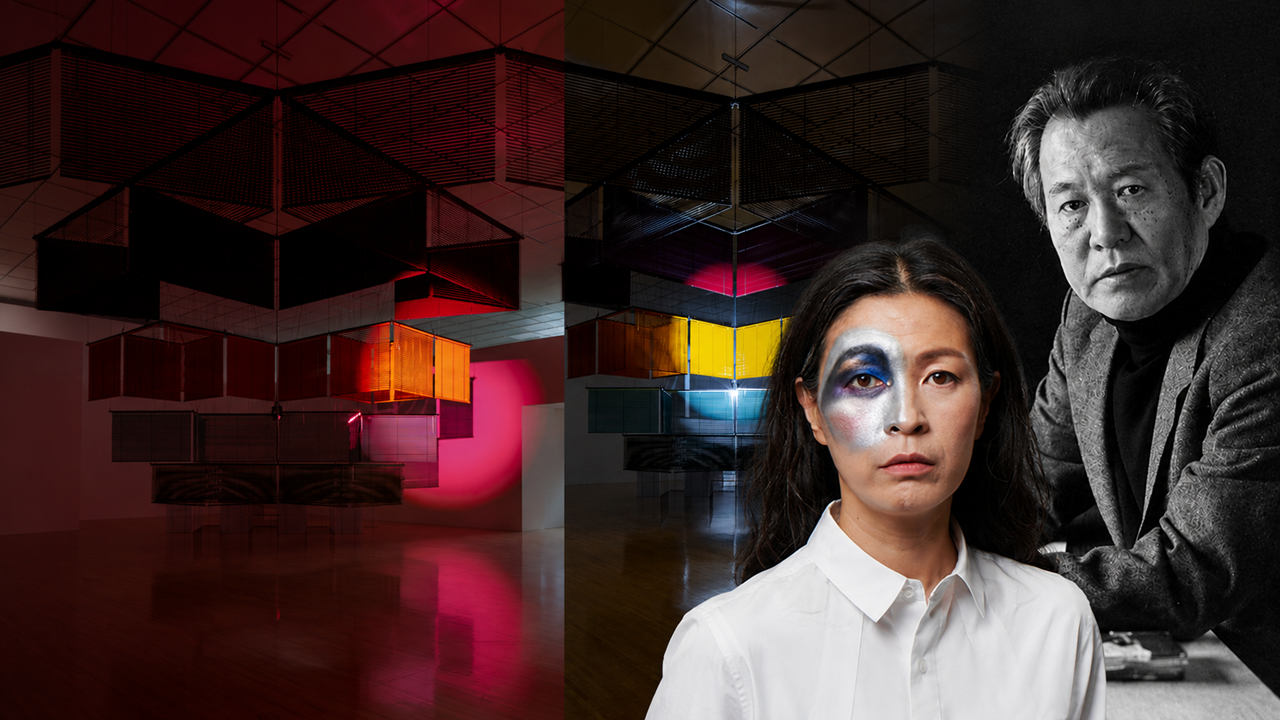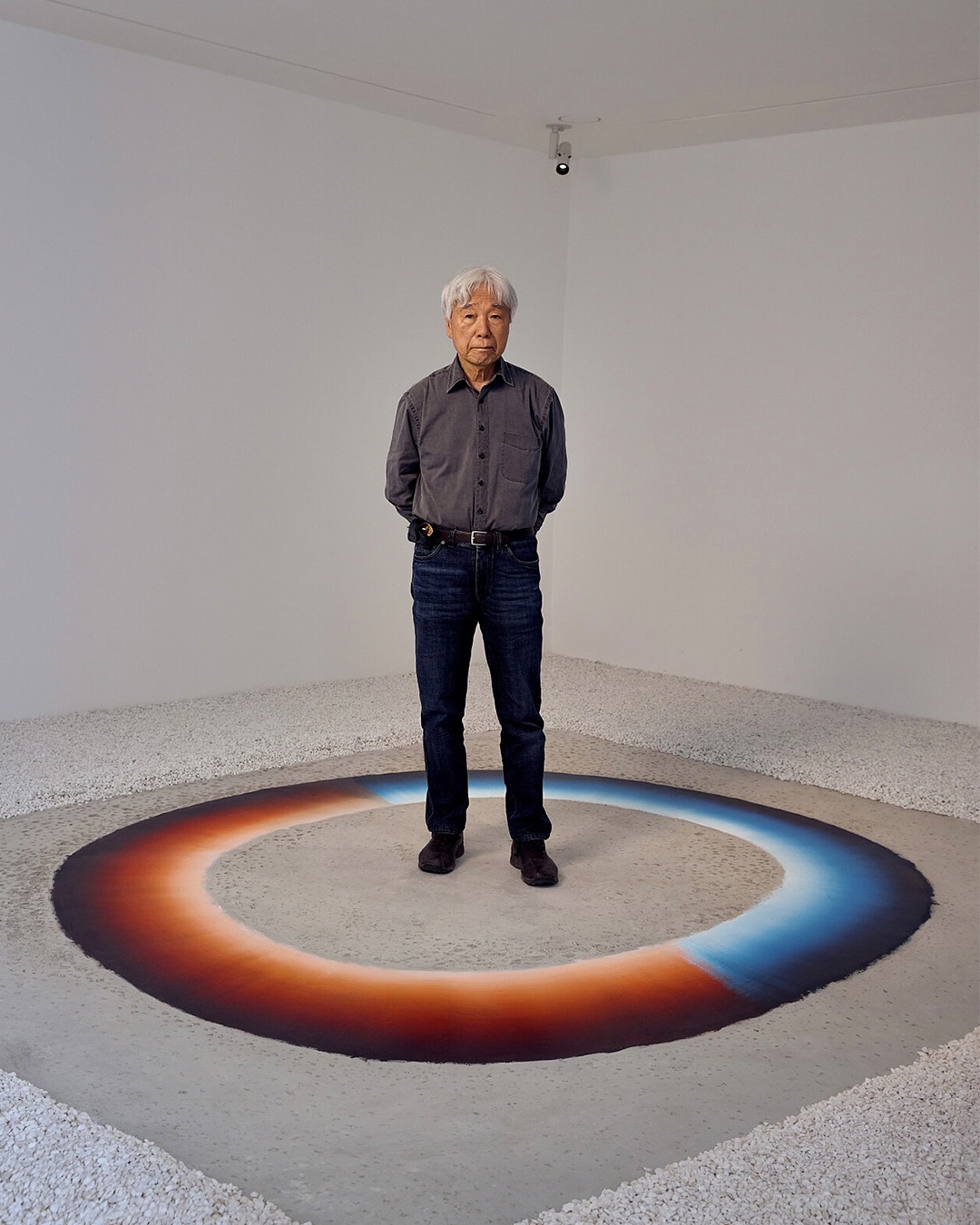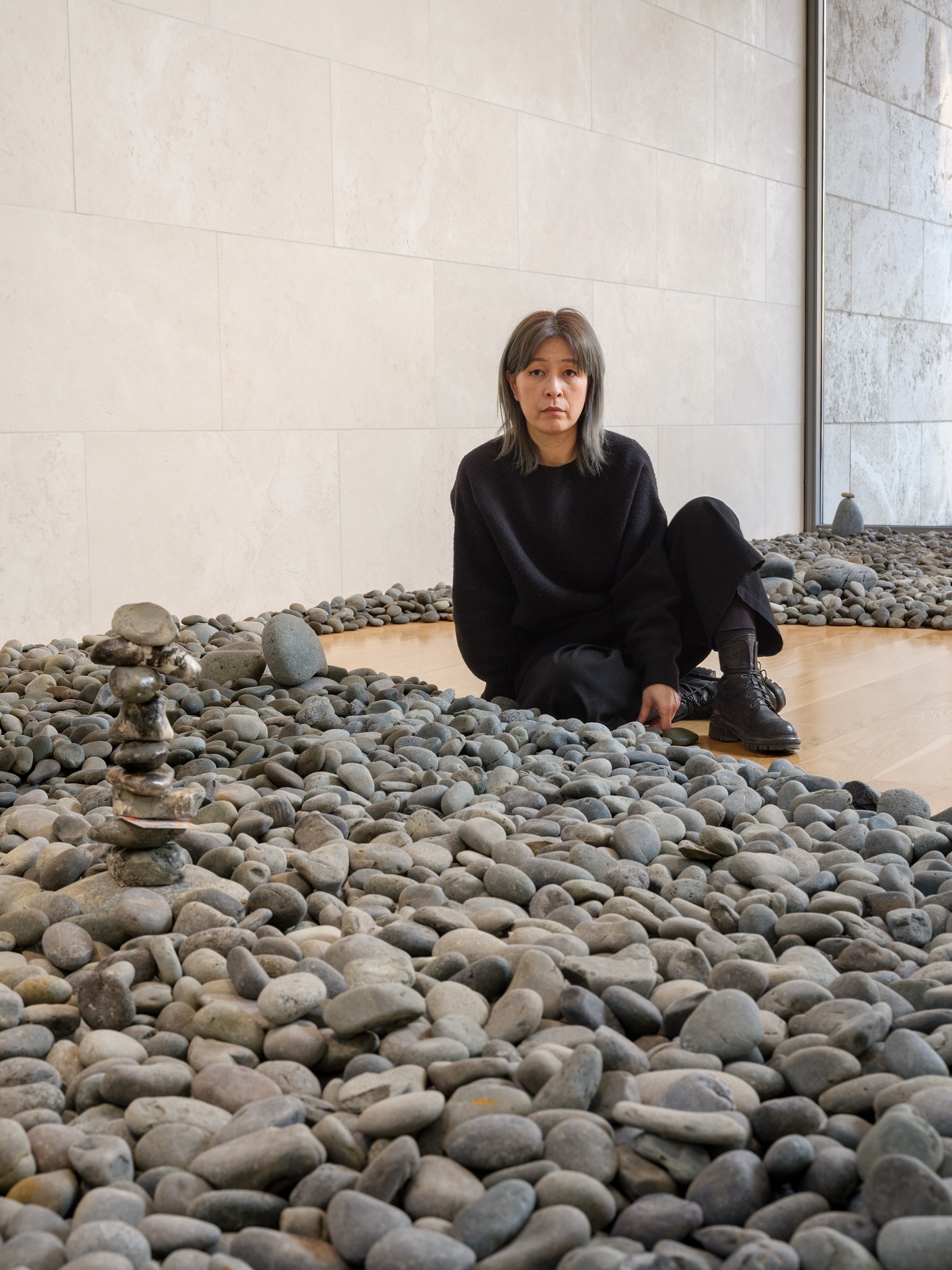

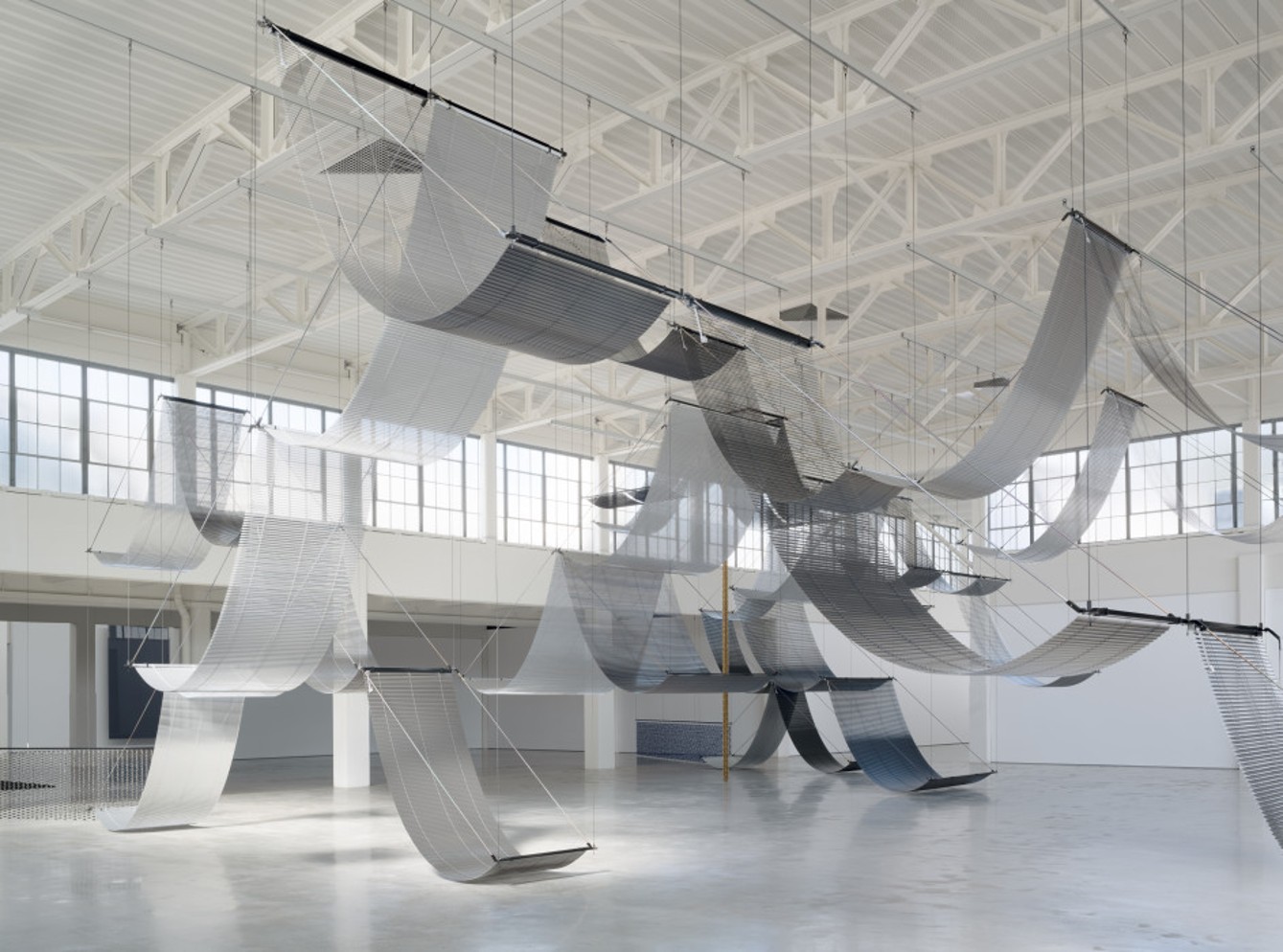
Haegue Yang, 〈Tidal Field (조석장潮汐場)〉, 2026. 《Haegue Yang: Through》, installation view, Dia Beacon, New York, 2026–28. © Haegue Yang. Photo: Bill Jacobson Studio, New York
A Major Commission Connecting
Dia Beacon’s Two Levels
《Haegue Yang: Through》 opened at Dia Beacon in New York State on October 10, 2026. On view
through June 12, 2028, the exhibition is Yang’s largest commission in the
United States. It also marks the first time an artist has conceived a new body
of work connecting multiple galleries across the museum’s ground and lower
levels. The exhibition is curated by Jordan Carter and Min Sun Jeon.
The exhibition takes its starting point
from the building’s contrasting spatial conditions. Natural and artificial
light, ground-floor and subterranean spaces, suspended structures and forms
resting on the floor are brought into relation. Yang connects these differences
through the cardinal directions and colors associated with East Asian Five
Phases theory and the music of Isang Yun, shaping an exhibition that unfolds
across both levels.
An Ongoing Engagement with
Isang Yun, from MOCA Los Angeles to Dia Beacon
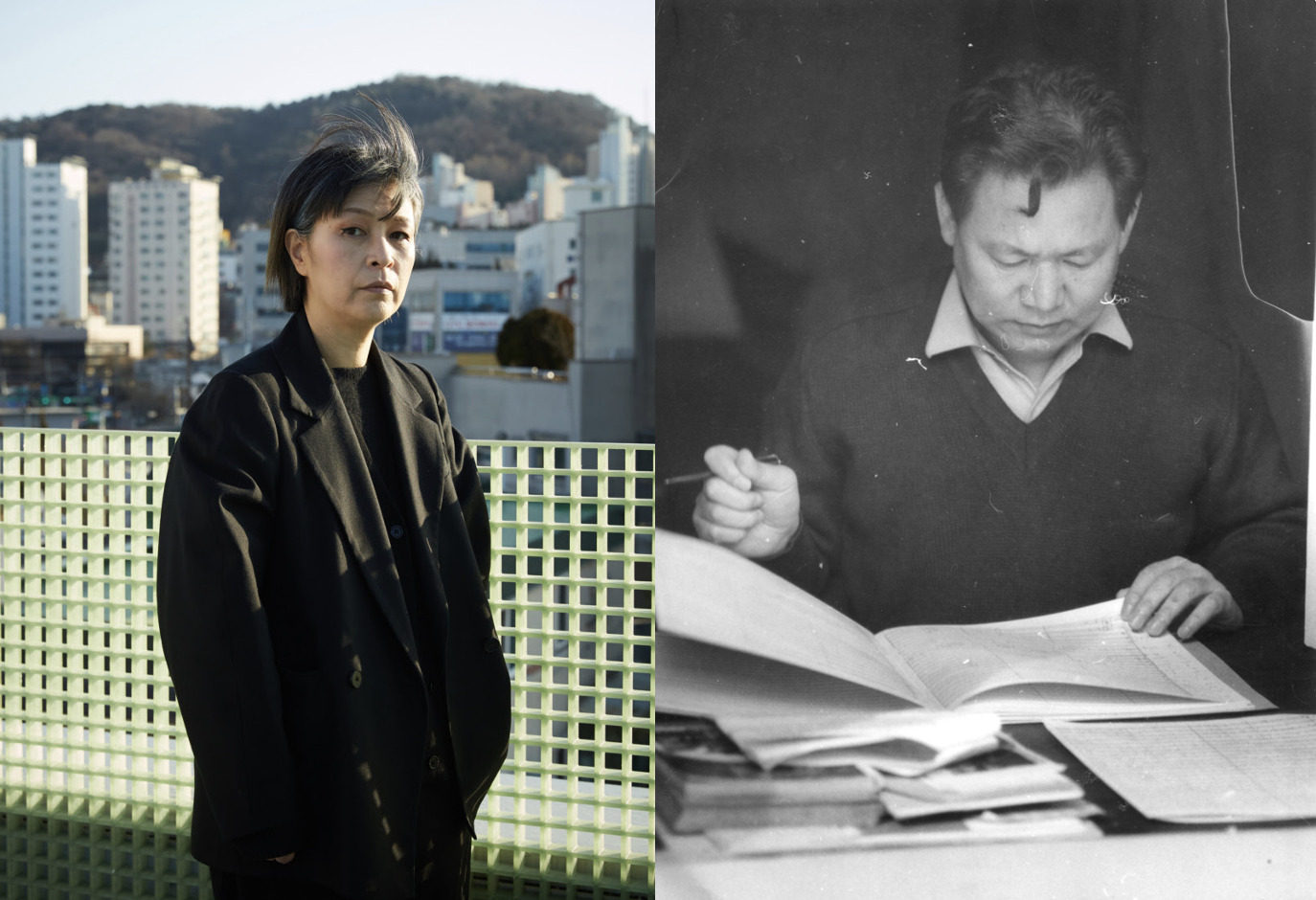
Central to the exhibition is Yang’s
sustained engagement with the life and music of composer Isang Yun. For more
than a decade, she has explored his legacy through archival research and
artistic inquiry. Born in Korea, Yun moved to Germany and experienced political
persecution and exile. His life, together with his synthesis of Eastern and
Western musical traditions, has become a point of reference for Yang’s
exploration of history and movement across cultures through abstraction.
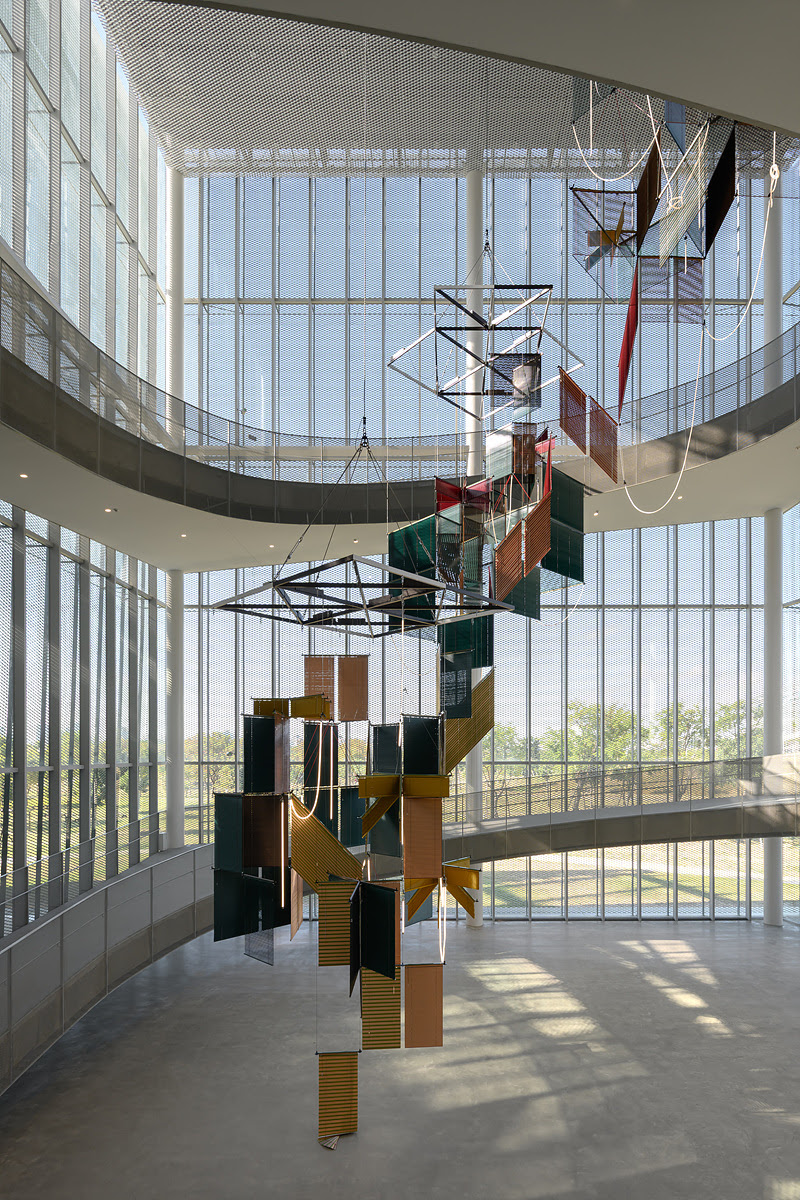
This engagement was also evident in 《Haegue Yang: Star-Crossed Rendezvous》,
presented at the Museum of Contemporary Art, Los Angeles (MOCA), from February
24 to August 2, 2026. The exhibition brought together a Venetian-blind
installation inspired by Sol LeWitt’s cube structures and Star-Crossed
Rendezvous after Yun (2024), a work dedicated to the composer. In
the latter, moving lights synchronized with Yun’s Double Concerto
for Oboe, Harp, and Small Orchestra (1977) illuminate an
arrangement of colored blinds. On March 10, a collaboration between MOCA and
the Los Angeles Philharmonic linked a viewing of the installation with a live
performance of the same composition.
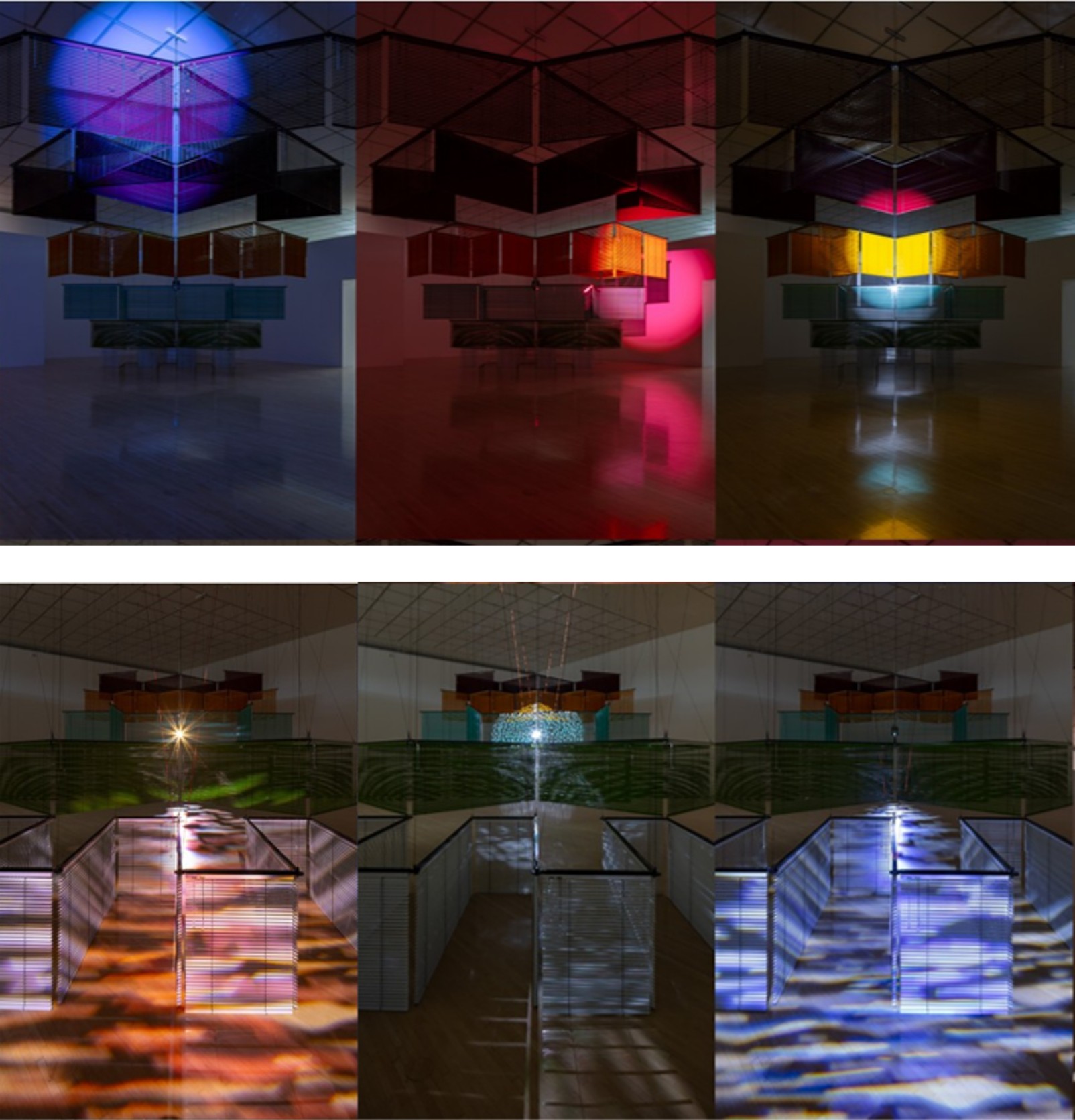
Installation view of 《Haegue Yang: Star-Crossed Rendezvous》, MOCA Grand Avenue. Courtesy of The Museum of Contemporary Art, Los Angeles (MOCA). Photo: Zak Kelley.
Images: The Four Guardian Deities and a System of Cardinal Directions
At Dia Beacon, 《Through》 develops this inquiry through a different composition and a new
spatial configuration. Its central musical reference is Yun’s quartet Images
(1968), composed during his imprisonment. Recasting the Four Guardian Deities
depicted in Goguryeo tomb murals in a contemporary musical language, the
composition connects ancient imagery and East Asian thought with the timbres of
Western instruments.
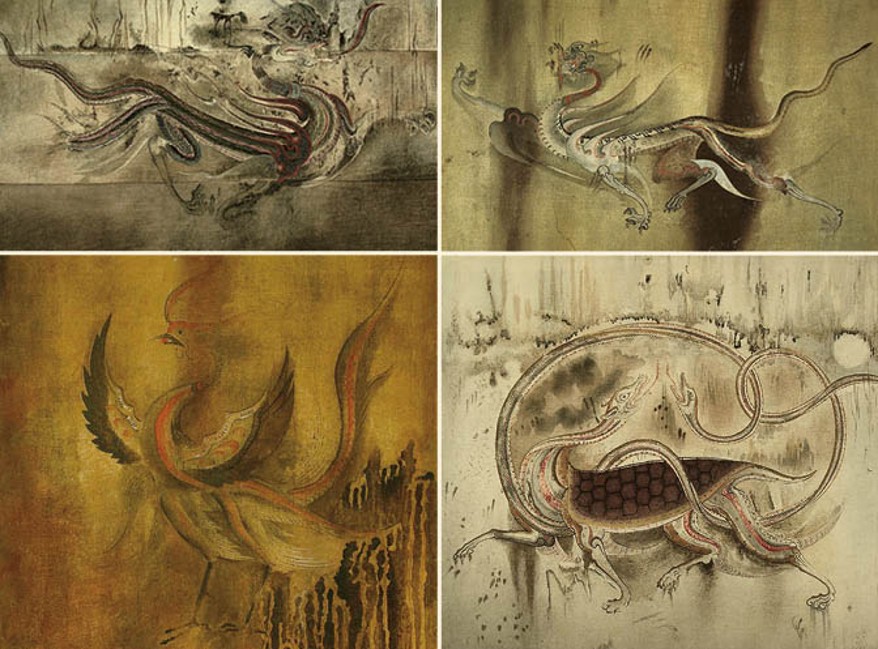
The Four Guardian Deities in murals from the Great Tomb of Gangseo. Upper row, from right: the Azure Dragon (east) and the White Tiger (west). Lower row, from right: the Vermilion Bird (south) and the Black Tortoise (north). Photo: National Museum of Korea.
In Images, the
Black Tortoise of the north corresponds to the flute, the Azure Dragon of the
east to the oboe, the Vermilion Bird of the south to the violin, and the White
Tiger of the west to the cello. The four instrumental voices retain their
distinct identities as they emerge, overlap, and recede. Yang reconfigures this
interplay through sculptural form, color, and movement. By aligning the
directional and chromatic associations of Five Phases theory with the building’s
orientation, she recasts the interplay among the instruments as a spatial
experience encountered through the viewer’s movement.
Rather than playing as a soundtrack, Images
informs the exhibition’s sculptural forms, colors, and choreography. Where Yun
translated ancient imagery into a modern musical language, Yang unfolds that
music through materials, light, and motion. His work thus becomes an organizing
principle for an exhibition that traverses periods, geographies, and media.
Light, Material, and Movement
across Four Works
The exhibition comprises four distinct yet
interconnected works. On the ground floor, Tidal Field
(2026) is an installation of dark Venetian blinds suspended in curving, draped
formations. An industrial product composed of repeated horizontal slats bends
and hangs to create a fluid configuration. Natural light passes through the
blinds’ surfaces, revealing and concealing the surrounding space while bringing
structural regularity into contact with the undulating forms.
The elongated forms of Fallen
Field (2026) evoke the imoogi, a
creature in Korean folklore poised between serpent and dragon. Spreading across
the floor and climbing partway up the columns, the forms suggest a movement
arrested between ascent and descent. This is Yang’s largest imoogi
installation to date.
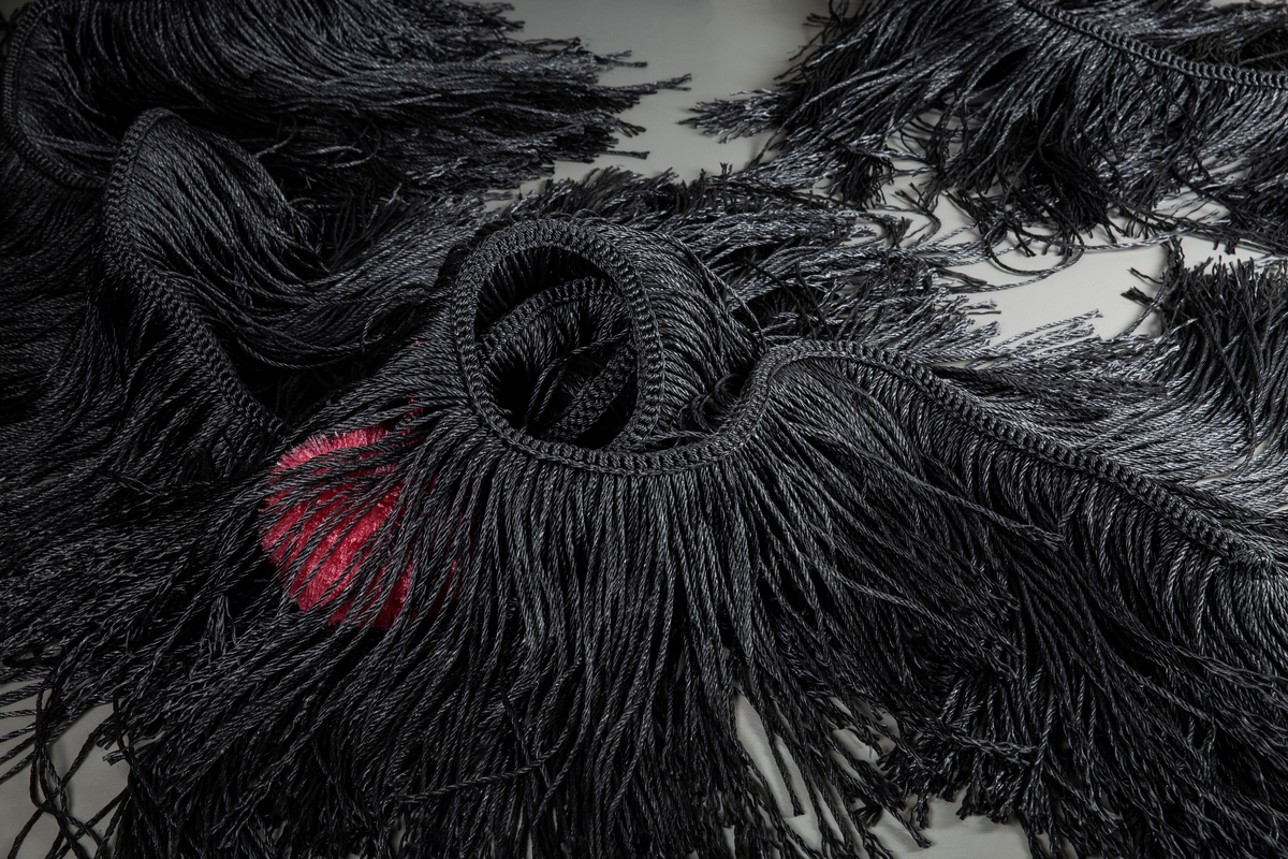
Haegue Yang, Fallen Field, 2026, installation view. Photo courtesy of Kukje Gallery.
Nearby, Sonic Field
(2026) consists of an expansive layer of bells placed over a string of light
bulbs. Light filters through the densely arranged material, revealing both its
mass and its interstices. The work brings the bells’ potential sound into
dialogue with the light beneath them, engaging the viewer’s awareness of both
sight and hearing.
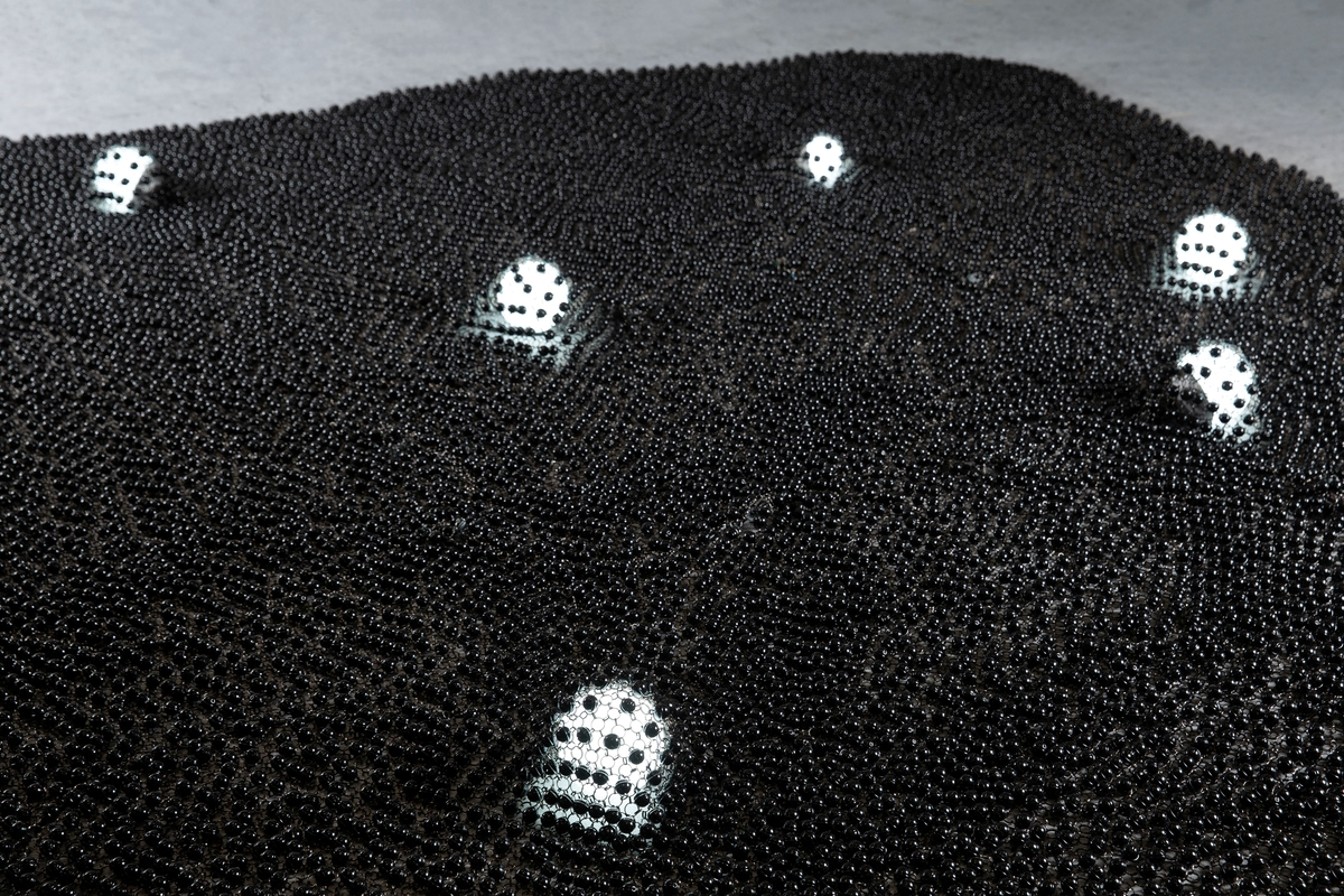
Haegue Yang, Sonic Field, 2026, installation view. Photo courtesy of Kukje Gallery.
On the lower level, Axial Flow
(2026) comprises vertical metal louvers and moving lights. Aligned with the
arrangement of the columns, the louvers rotate according to a programmed
sequence, opening and closing the space. Their approximately forty-minute
choreography is structured like a musical score: individual elements move at
different speeds and in different directions before converging into a shared
flow. The lights likewise draw on the directional colors of Five Phases theory
and interact with the louvers’ movements. The movement and transformation
suggested by the ground-floor works become actual motion on the lower level.
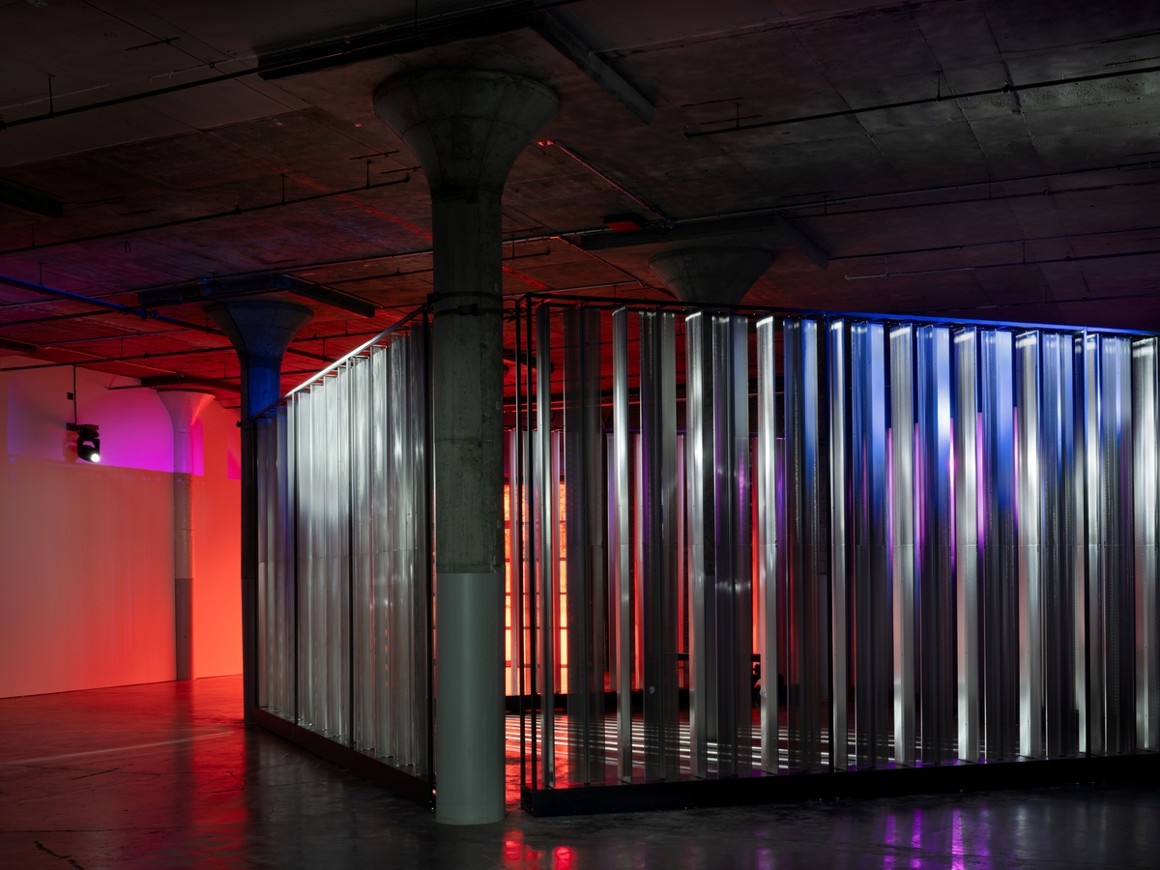
Haegue Yang, Axial Flow, 2026. Photo courtesy of Kukje Gallery.
An Opening Program Connecting
Installation and Live Music
To mark the opening, Dia organized a
program that brought Yun’s music into the exhibition space. The October 10
program included a performance of Images by
ensemble-in-residence Sejong Soloists in the lower-level gallery, preceded by a
contextual lecture by musicologist Mina Lee. The lecture was conceived to
examine the composition within the historical and biographical circumstances of
Yun’s life, while tracing connections between his practice and Yang’s.
Where the MOCA project connected an
installation viewing with a performance in a concert hall, the Dia Beacon
program brought the music underlying the works into the galleries themselves.
It offered audiences the opportunity to encounter the composition through live
instrumental sound alongside its sculptural reinterpretation.
Music and Cultural Memory
within a Minimalist Context
The exhibition brings music, mythology, and
cultural memory into dialogue with Minimalism’s repetition and modularity and
Postminimalism’s fluid forms. Where the MOCA exhibition placed Sol LeWitt’s
sculptural language alongside Yun’s music, at Dia Beacon these connections
extend into the organization of direction, light, and the viewer’s movement
across two levels. Abstraction becomes a language through which different
histories and experiences are connected.
With exhibitions of work by Roni Horn, Lee
Ufan, and Kishio Suga continuing in nearby galleries, Yang’s project links
multiple spaces across the ground and lower levels. This arrangement situates 《Through》 within the art-historical
context that Dia Beacon has cultivated.
In 《Through》, Yun’s music underpins the interplay of direction, color, material,
and movement. Viewers encounter these connections sequentially as they move
among the works and between the museum’s two levels. Yang’s ongoing inquiry,
which connected music, installation, and performance at MOCA Los Angeles,
continues at Dia Beacon, where musical relationships are reimagined through
space and movement.
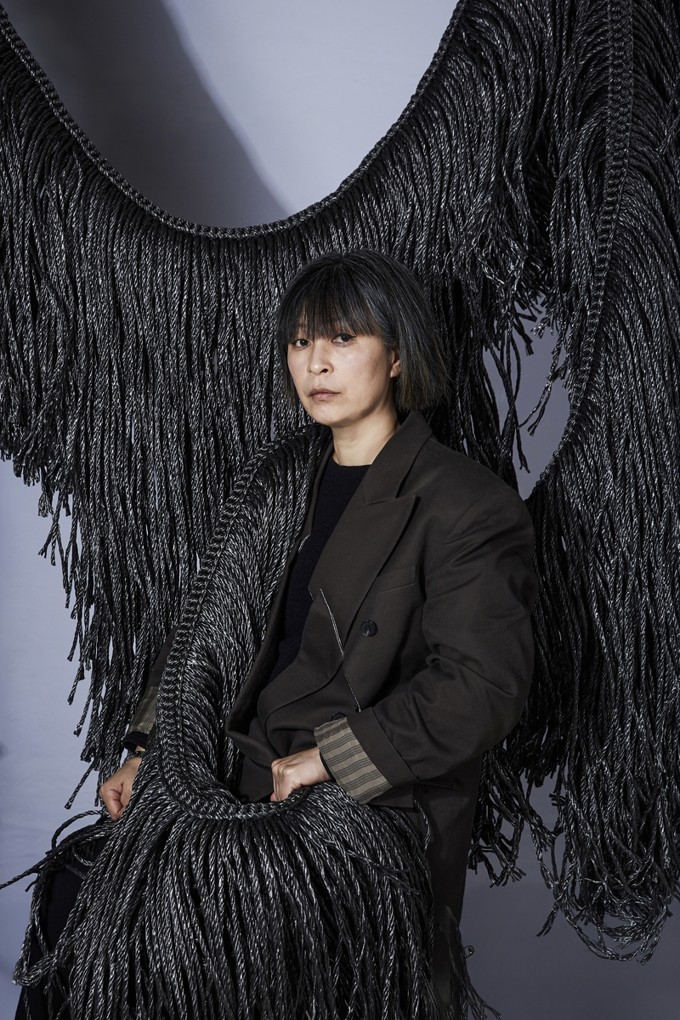
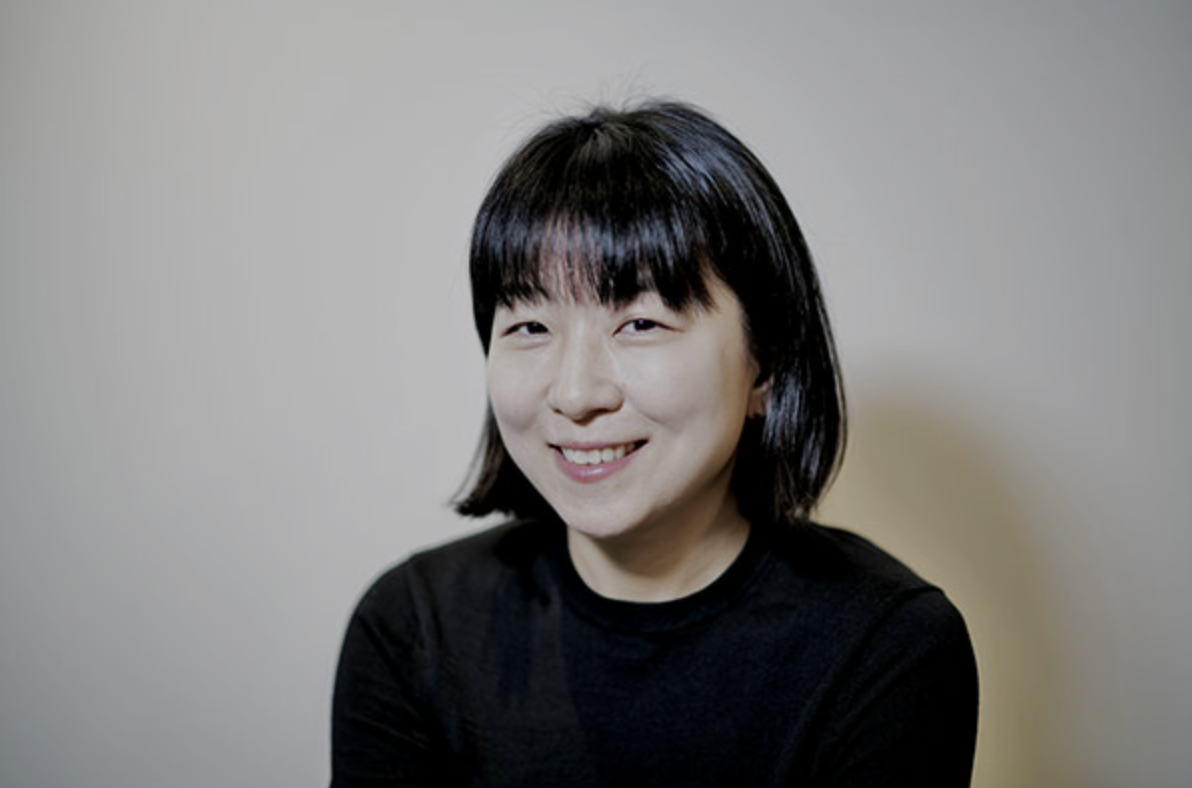
Haegue Yang. Photo courtesy of Kukje Gallery.
About Haegue Yang
Born in Seoul in 1971, Haegue Yang lives
and works in Seoul and Berlin. Working across installation, sculpture, collage,
and performance, she explores cultural, philosophical, and historical concerns.
She combines industrially manufactured objects, including Venetian blinds and
bells, with craft-based methods, using light, sound, and movement to expand the
sensory possibilities of materials.
Yang participated in the Venice Biennale in
2009 and Documenta in Kassel in 2012, and has held solo exhibitions at
institutions including the Hayward Gallery, London, and the Museum of
Contemporary Art, Los Angeles. She received the Wolfgang Hahn Prize from Museum
Ludwig, Cologne, in 2018 and the Benesse Prize at the Singapore Biennale in
2022. She is a professor at the Städelschule in Frankfurt am Main, Germany.
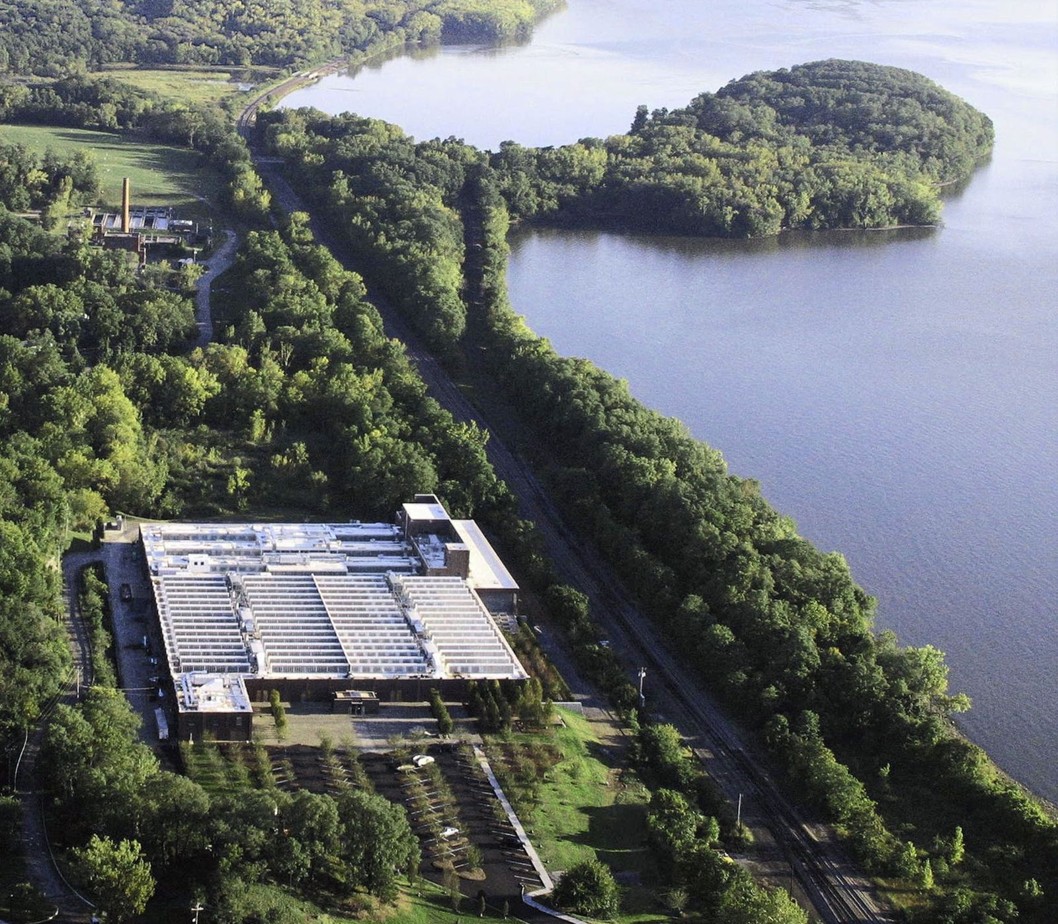
An aerial view of Dia Beacon and the Hudson River. Photo: Michael Govan.
About Dia Beacon
Dia Beacon is a contemporary art museum
operated by Dia Art Foundation near the Hudson River in Beacon, New York.
Opened in May 2003 in a converted Nabisco box-printing factory, it presents Dia’s
collection of art from the 1960s to the present, alongside special exhibitions
and new commissions.
The museum retains the industrial building’s
high ceilings, wide spans between columns, and abundant natural light,
providing an environment for sustained encounters with large-scale works.
Artist Robert Irwin and the architectural firm OpenOffice collaborated on the
building’s conversion. In keeping with Dia’s commitment to long-term, in-depth
presentations of individual artists’ work, the museum encourages an enduring
relationship among artworks, architecture, and the viewer’s experience.
Exhibition Information
Exhibition: 《Haegue Yang: Through》
Dates: October 10, 2026–June 12, 2028
Venue: Dia Beacon, Beacon, New York, USA
Address: 3 Beekman Street, Beacon, New York 12508
Curators: Jordan Carter and Min Sun Jeon
Website: diaart.org