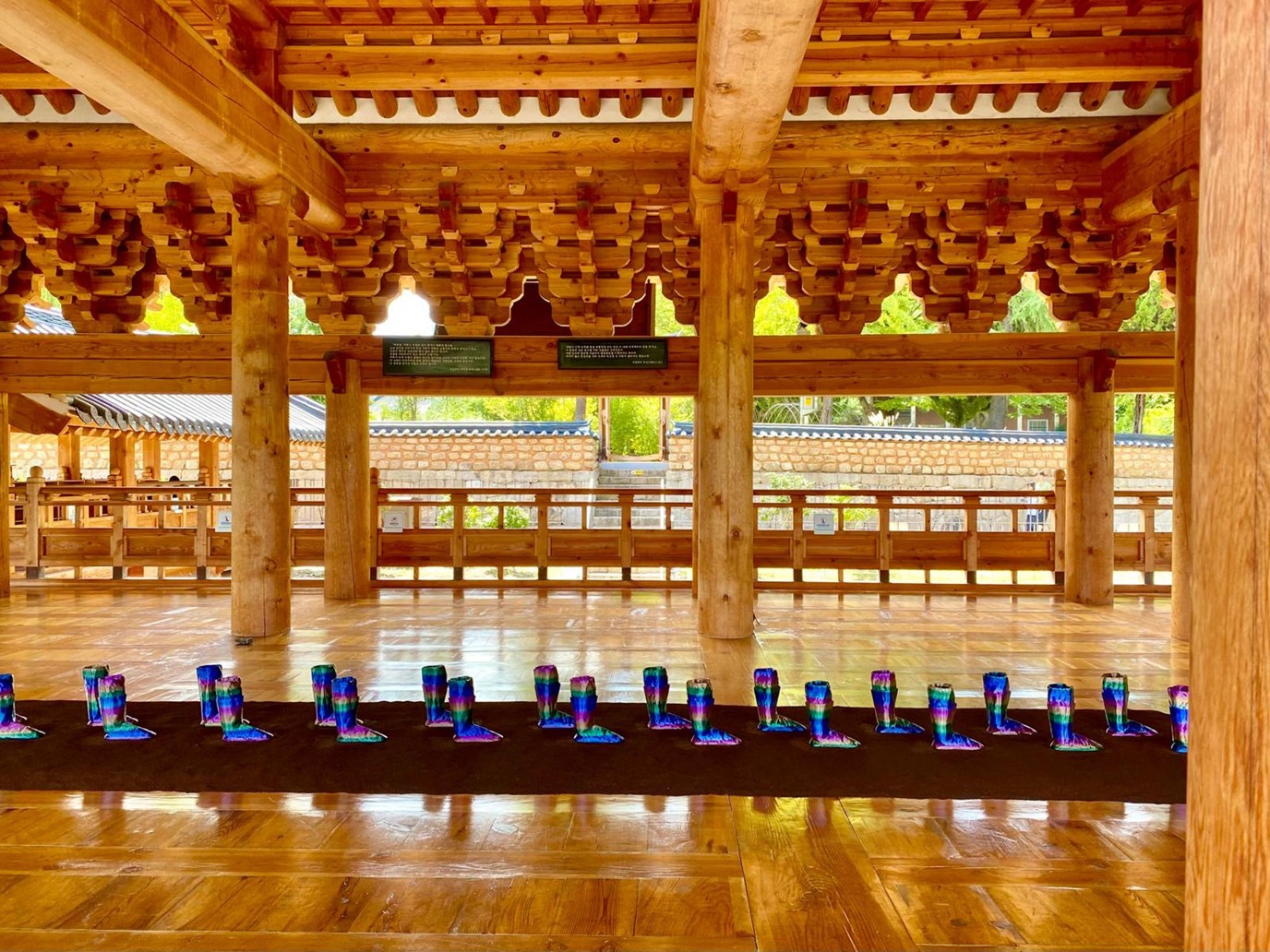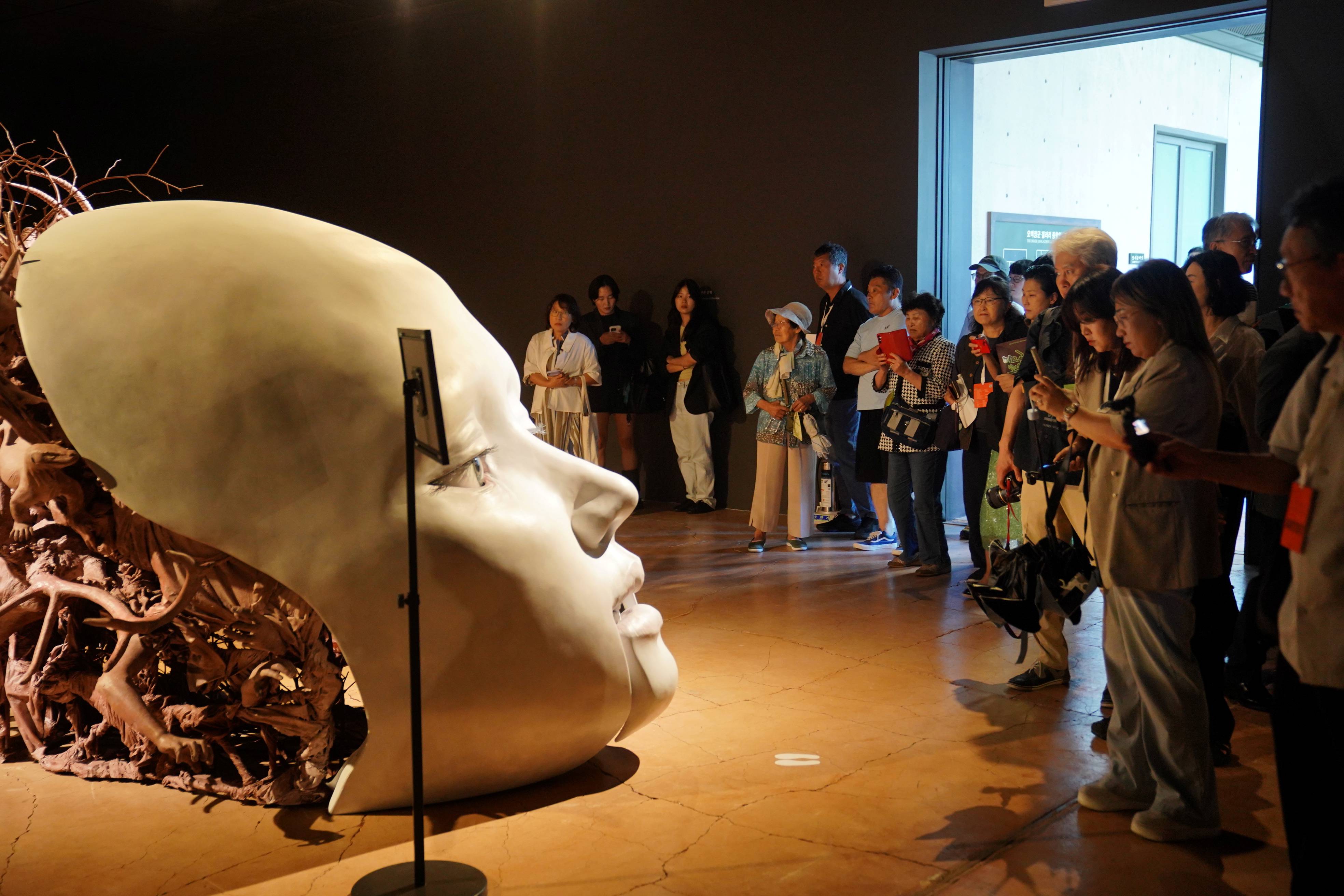

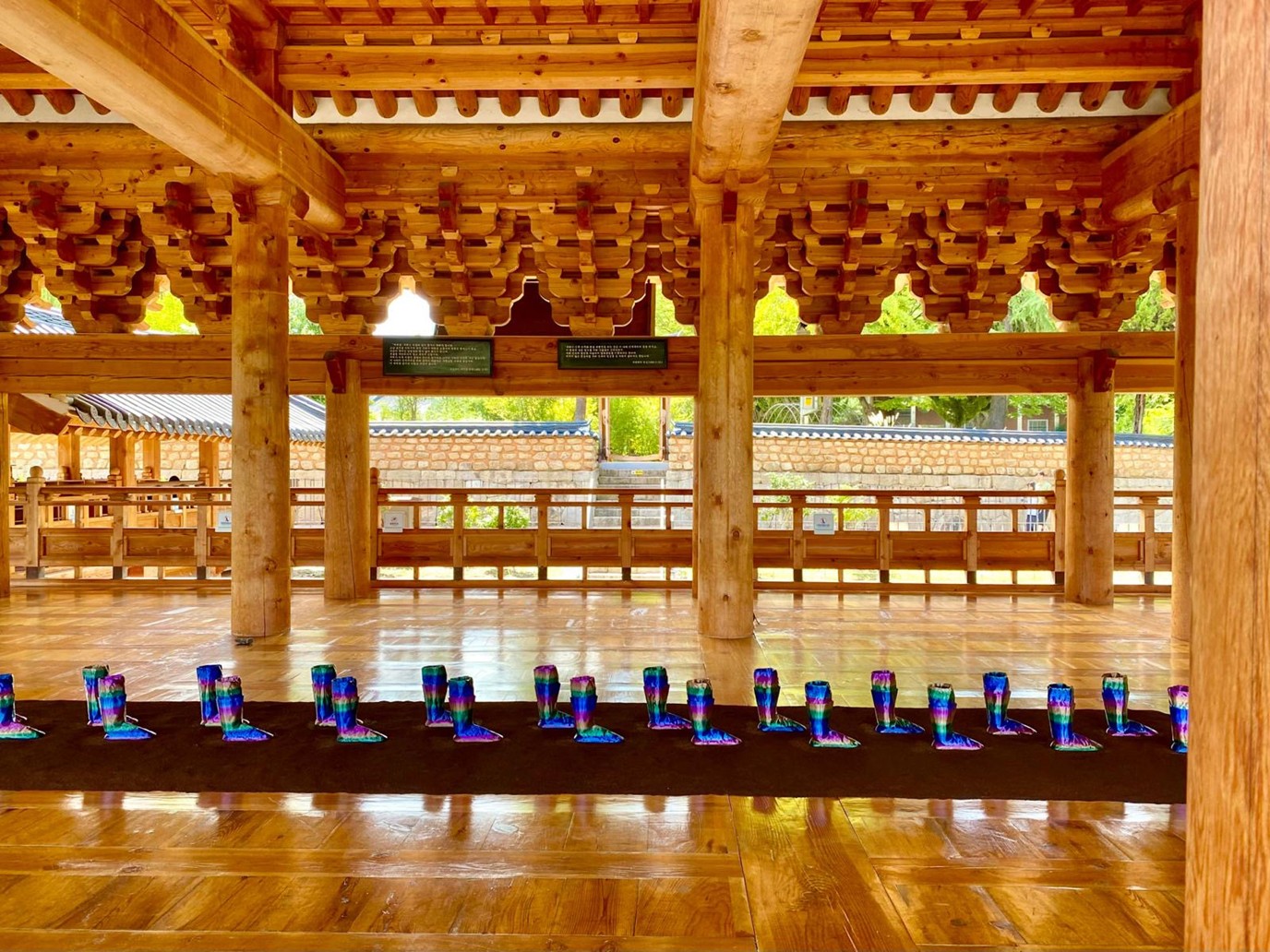
Jessie Kleemann, Kamiit Walking, 2026. Installation view, Kalaallit Illuutaat Pavilion at Heekyungru, 16th Gwangju Biennale. Courtesy of the artist and the Kalaallit Illuutaat Pavilion.
Boots Without a Body
At Huigyeongru in Gwangju, a path made of
coffee grounds has been laid out, and brightly colored boots are placed along
it. The wearer is nowhere to be seen, yet the arrangement evokes the sight of
someone walking down the path. This is 《Kamiit
Walking》, presented by Greenlandic artist Jessie
Kleemann at the Kalaallit Illuutaat Pavilion of the 16th Gwangju Biennale. The
exhibition runs through November 15, 2026.
Born in 1959 in Upernavik, in northwestern
Greenland, Kleemann works across performance, video, installation, and poetry.
Drawing on her experience of moving between Greenland and Denmark, she explores
how cultural identity, tradition, the body and the land, and language change.
In her work, the body is both a medium for expressing personal experience and a
site where a community's history and the effects of colonialism become visible.
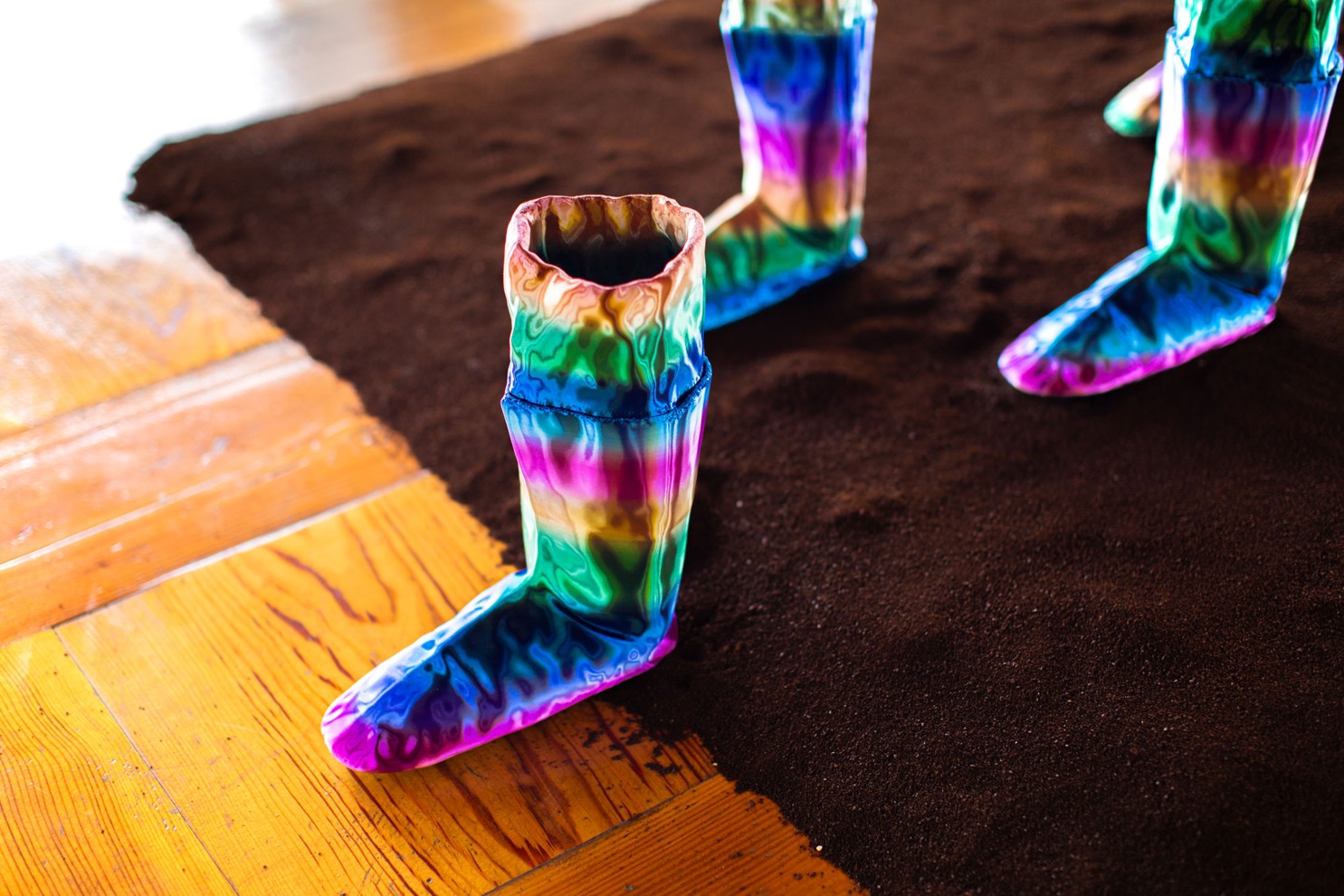
Jessie Kleemann, 《Kamiit Walking》, 2026. Installation view, Kalaallit Illuutaat Pavilion at Heekyungru, 16th Gwangju Biennale. Courtesy of the artist and the Kalaallit Illuutaat Pavilion. © Jaeseo Lee
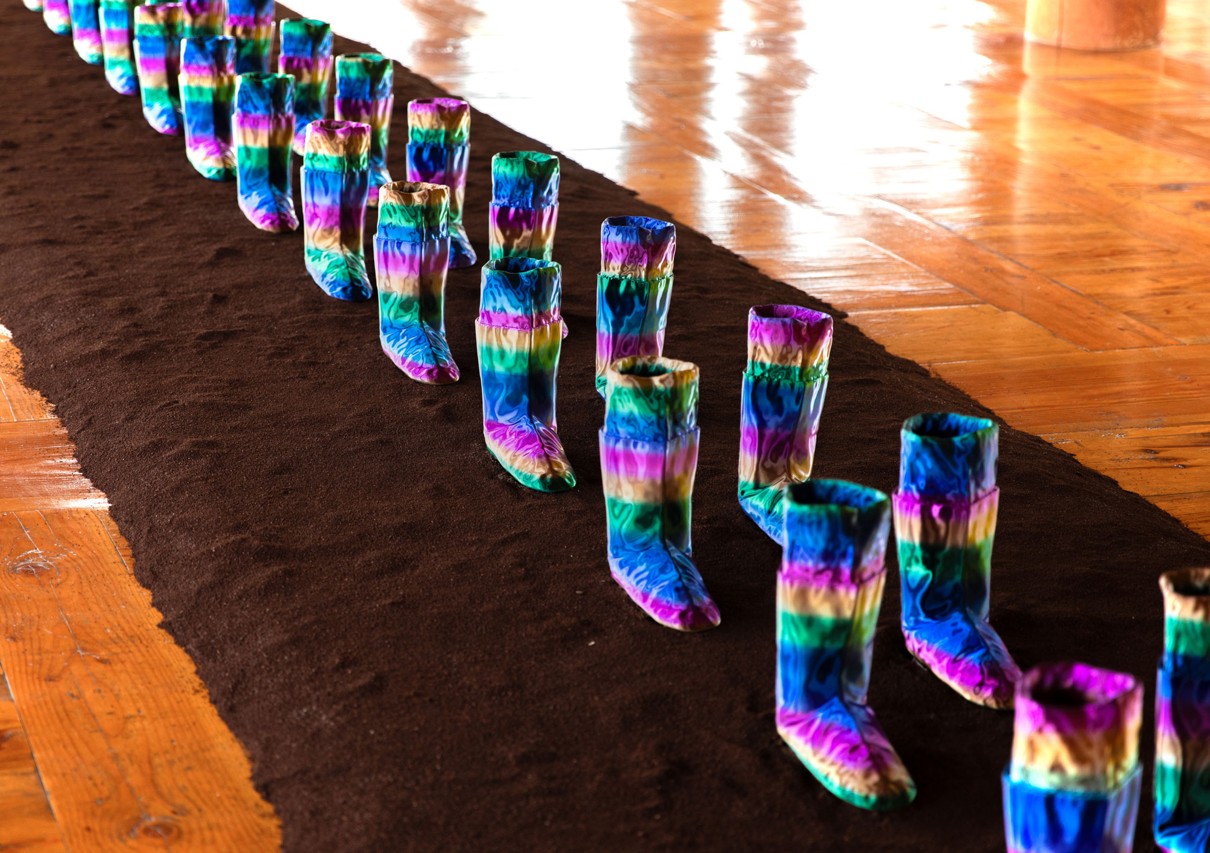
This work begins with the ‘kamiit’,
traditional Inuit boots that the artist inherited from her family. Made of
sealskin and worn over many years, the boots carry the life and movements of
the people who wore them. Kleemann 3D-scanned the boots and printed them,
turning them into new installation objects. According to a representative of 3D
Print & Scan, who took part in producing the Gwangju exhibition, the
details of the original boots were recorded digitally, and multiple replicas
were then made using color-changing filament. A shoe once used in daily life
reappears in new materials and colors.
This transformation raises the question of
how to remember and carry on what we inherit. The form of the boots remains,
but their material and purpose change. Shoes that once protected the body and
made movement possible now become sculptures that call to mind an absent body.
As the traces of everyday life on the original are carried through replication
and repetition, they can be read as evoking not one person's experience but the
lives and journeys of many.
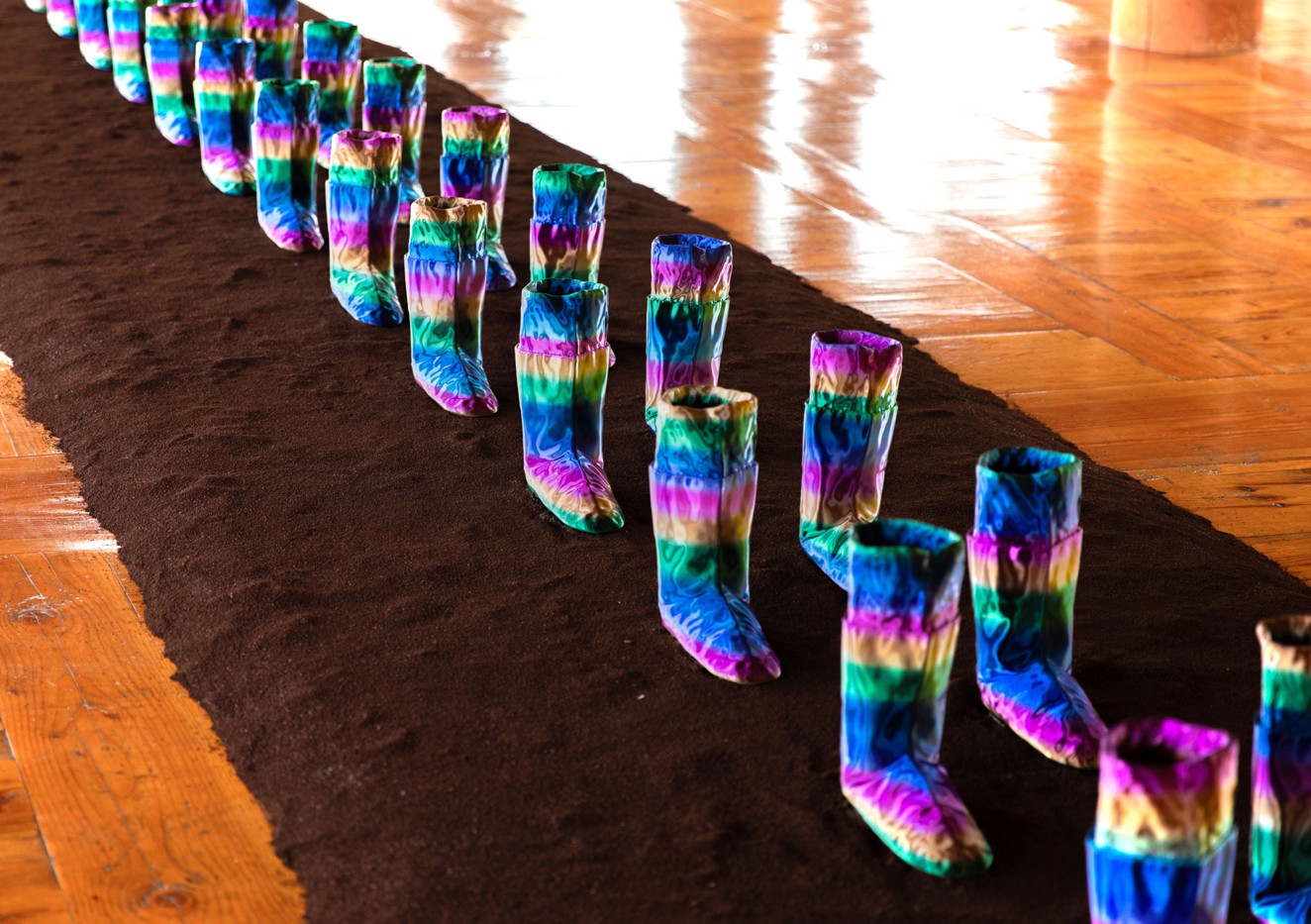
Jessie Kleemann, Kamiit Walking, 2026. Installation view, Kalaallit Illuutaat Pavilion at Heekyungru, 16th Gwangju Biennale. Courtesy of the artist and the Kalaallit Illuutaat Pavilion. © Jaeseo Lee
Inherited History, Unseen Work
In her written interview with K-ARTNOW, the
artist said that what we inherit is not only physical. A pair of ‘kamiit’,
for example, can carry more than meets the eye: we inherit history. Viewing the
work from an Inuit woman's perspective, she said, it invites us to look at the
unseen work of women. Just as their ancestral foremothers did, women today walk
the path and do the work, now in this world.
This account grounds the shoes in the
concrete realities of lived experience. The boots symbolize cultural identity,
but they are also objects tied to bodies that worked, moved, and kept daily
life going. The heritage passed down in this work therefore includes not only a
traditional form but also the acts and labor repeated to sustain life.
Reproduced in vivid colors, the shoes give this history a contemporary visual
form.
The method of production also reveals the
relationship between continuity and change. Kleemann records the form of a
traditional shoe with digital technology and realizes it anew in different
materials, interpreting cultural heritage through present-day technology and
sensibility. Through choices about what to keep and what to change, the work
asks what form an inherited culture can take in today's life.
Whose Heritage, Whose Voice
This question also connects to the right of
Inuit communities to interpret and express their own culture for themselves.
The pavilion's introduction likewise describes the work as a matter of Inuit
sovereignty and the changing Kalaallit identity. From the standpoint of
cultural self-determination, the reinterpretation of the ‘kamiit’ can be
understood as a practice in which members of the community express their
heritage in today's language and create new meaning from it.
The shoes set on the path at Huigyeongru
recall the past while also inviting us to imagine movement ahead. No body is
inside them, yet the presence of the people who made the shoes, wore them, and
lived their lives in them remains. Starting from a single pair of boots
inherited from family, 《Kamiit Walking》 asks how history and labor continue in the bodies and lives of
today. Along that path, viewers are invited to consider what they have
inherited and what they will carry forward.
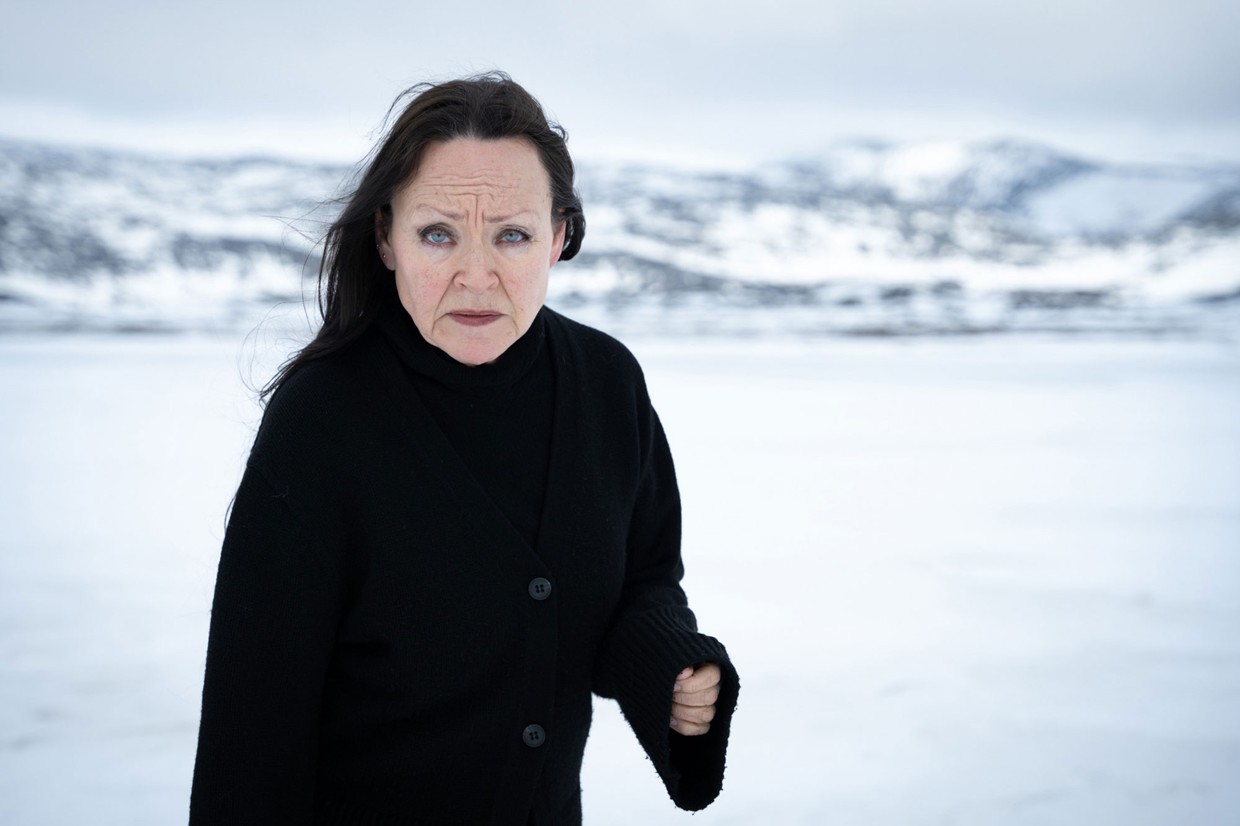
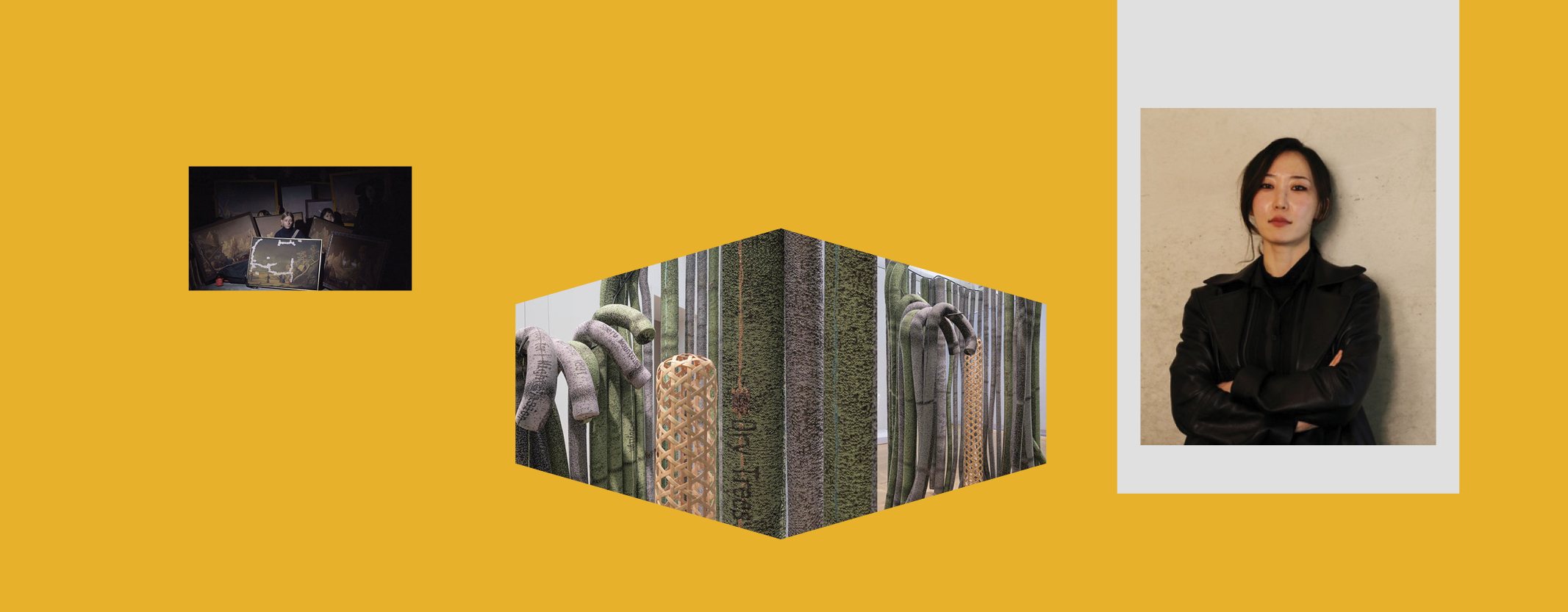
Jessie Kleemann, still from Running Time. Courtesy of the artist. © Christian Brems
About the Artist
Jessie Kleemann (b. 1959) is an artist and poet born in Upernavik, Greenland, who is now
based in Copenhagen, Denmark. Working across performance, video, installation,
and poetry, she has explored Inuit cultural heritage and identity, women's
experience, the body and nature, and the effects of colonialism. In 2023, she
held a solo exhibition at the National Gallery of Denmark (SMK), and in 2024,
she received the Eckersberg Medal from the Royal Danish Academy of Fine Arts.
Exhibition
Information
Gwangju
Biennale: 《You Must Change Your Life, the
16th Gwangju Biennale》
Biennale
Dates: September 5 – November 15, 2026
Pavilion: Kalaallit Illuutaat
Exhibition: Jessie Kleemann 《Kamiit Walking》
Exhibition
Dates: September 5 – November 15, 2026
Venue: Huigyeongru, Gu-dong, Nam-gu, Gwangju
Admission: Free
Website: www.gwangjubiennale.org