
In 2026, South
Korea occupies a different position in the global cultural landscape than it
did in the past. International interest in Korean culture has grown through
K-pop, film, television dramas, food, and fashion, while the number of
international visitors to the country has also increased. According to the
Ministry of Culture, Sports and Tourism, approximately 17.11 million
international visitors arrived in South Korea between January and September
2026, an increase of 21.5 percent compared with the same period the previous
year.
The art world is
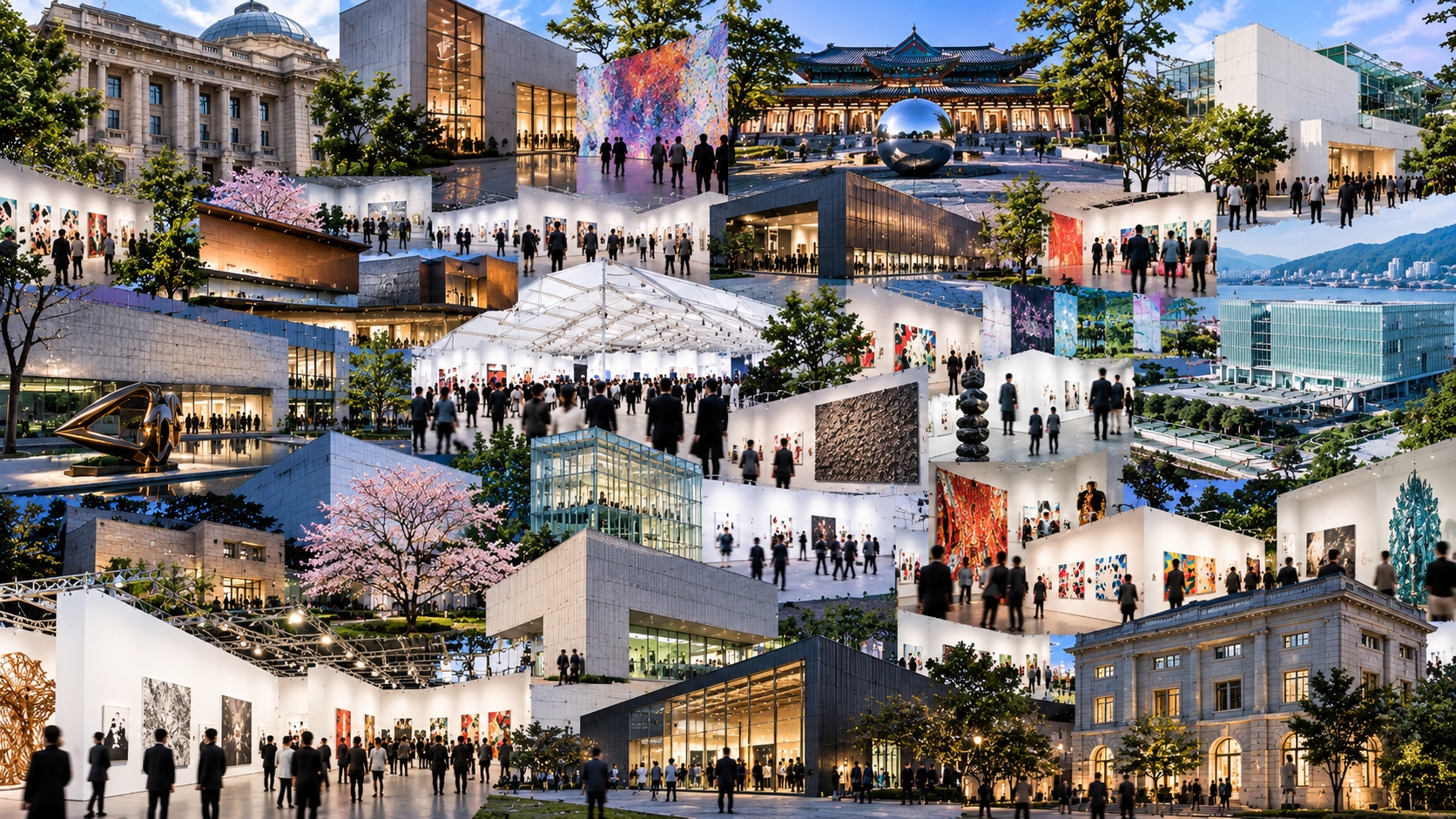
undergoing similar changes. Frieze Seoul 2026 attracted more than 70,000
visitors from 54 countries and territories, while representatives from 178
museums and related institutions across 25 countries and territories attended
the fair. The Korea Art Festival, held in September of the same year, brought
together four biennials—the Gwangju, Busan, and Jeju Biennales, and the
Gyeonggi Ceramics Biennale—alongside two art fairs and 96 museums nationwide.
South Korea has
become a major destination regularly visited by members of the international
art community. Yet growing international attention and an increasing number of
art events do not necessarily translate into substantive progress for Korean
contemporary art. Even as international art fairs expand and overseas galleries
increase their activities in Korea, the question of what new values Korean
artists and institutions produce—and whether they establish lasting
international influence—remains a separate matter.
Now
that the world is coming to Korea, is Korean contemporary art prepared to turn
this opportunity into its own long-term development?
Over the previous
twenty installments, 《The Conditions of the
Post-Contemporary and the Future of Korean Contemporary Art》 has examined the structural transformations of the global art world
and the conditions shaping Korean art, including Western-centered art history
and institutions, Asian art and Orientalism, capital and the art market, and
global standards.
Drawing these
discussions together, this concluding installment identifies three essential
conditions for the future of Korean contemporary art: globalization,
professionalization, and industrialization.
Globalization
concerns the roles and influence Korean art can establish within the
international art world. Professionalization concerns whether the individuals
and institutions responsible for artistic production, research, curatorial
practice, and administration possess the necessary expertise, institutional
capacity, and mechanisms of accountability. Industrialization concerns the
development of the economic foundations that allow these activities to continue
through a sustainable art production system and art ecosystem.
These are not
sequential stages of development but interdependent conditions that must
advance together if Korean contemporary art is to expand its global presence.
Globalization
— Participating on the International Stage Is Not the Same as Shaping Global
Art
Since the modern
era, the international order of the art world has largely been shaped by major
cities and institutions in Europe and the United States. Cities such as Paris
and New York developed beyond places where artworks were exhibited and traded,
becoming centers for the production and evaluation of new aesthetic ideas and
artistic discourses.
The international
influence of the Western art world emerged through an interconnected system of
museums, galleries, universities, research institutions, criticism, publishing,
collectors, and the art market. These institutions not only supported the production
and circulation of artworks but also researched, interpreted, and evaluated
their significance, helping to establish their positions within art history.
From the late
1980s onward, this Western-centered order began to change with the expansion of
international biennials and the growing visibility of artistic practices from
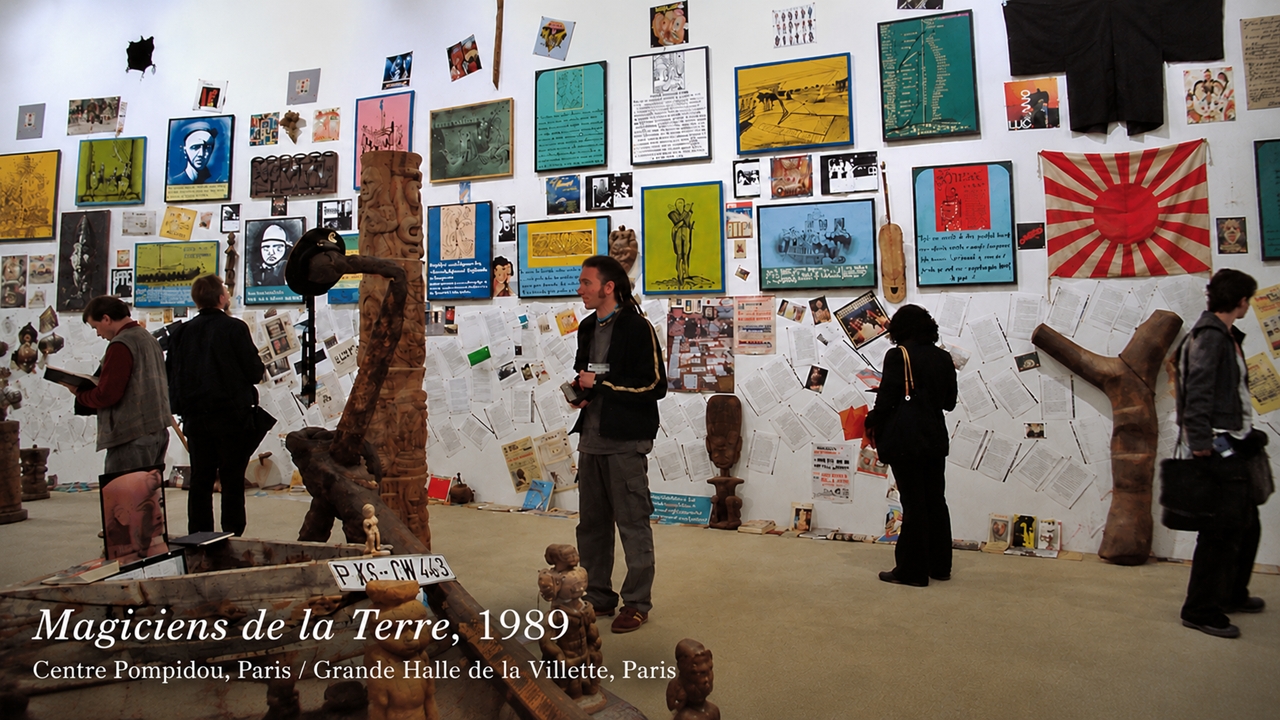
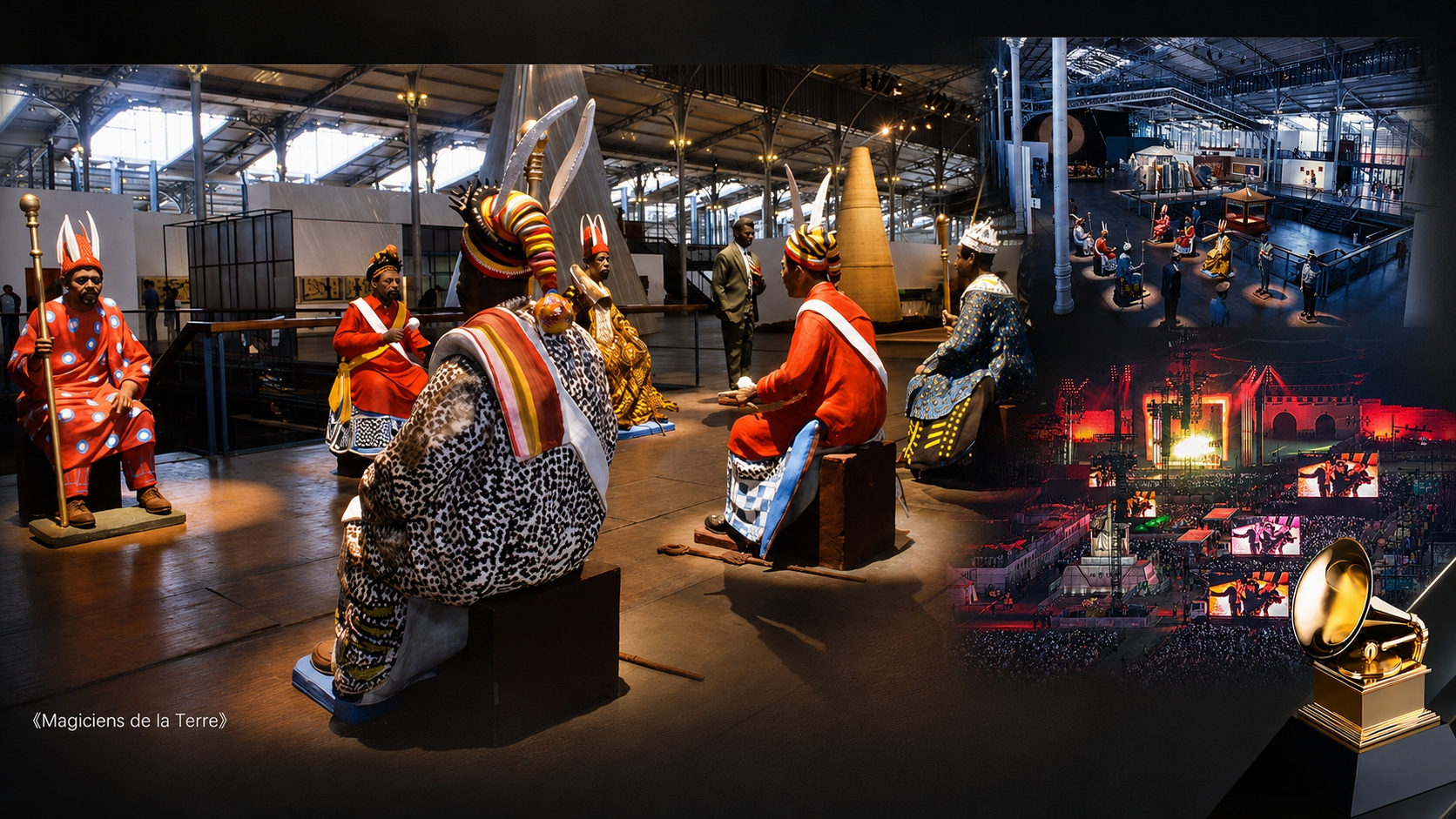
different regions. The Third Havana Biennial in 1989, 《Magiciens de la Terre》 in Paris that
same year, and documenta 11 in 2002 were significant moments in reconsidering
the geographical scope of global art and its established structures of
evaluation.
The international
art world subsequently developed into a broader network involving artists and
institutions from diverse regions. Nevertheless, the expansion of participation
did not necessarily bring about an equal distribution of evaluative authority and
influence.
Today,
globalization can no longer be understood simply as the spread of Western art
to other regions or the entry of non-Western artists into major Western
institutions. It must instead be understood as a set of relationships in which
artistic practices from different regions interact and contribute to the
production of new values and discourses.
From this
perspective, the Korean art world's frequent use of the term
"international expansion"—and its tendency to describe overseas
exhibitions as an artist having "broken into" a foreign art scene—deserves
reconsideration.
An invitation to
exhibit at an overseas museum or participate in an international biennial is an
important international activity. Yet a single exhibition does not necessarily
mean that an artist has established a sustainable professional presence in that
country's art world. Similarly, holding a solo exhibition at an overseas
gallery is different from securing ongoing representation and the sustained
circulation of works within the local market.
When assessing
international achievements, it is necessary to distinguish among participation,
the establishment of lasting relationships, and art-historical or cultural
influence. What research and criticism followed an overseas exhibition? Did the
exhibition lead to museum acquisitions or subsequent presentations? What new
interpretations or possibilities did the artist's work introduce into
international discourse?
These criteria
apply equally to museums and biennials. Inviting internationally recognized
artists and curators constitutes international exchange, but enabling research
and curatorial initiatives originating in Korea to develop into exhibitions and
publications at overseas institutions represents a different level of
achievement.
Korean museums
and biennials must therefore expand their roles from hosting international
exhibitions to producing research and curatorial projects of international
significance. This requires identifying sustained research agendas, undertaking
collaborative research with overseas institutions, and establishing long-term
partnerships through which the results can lead to further exhibitions and
publications.
Galleries and the
art market must likewise move beyond participation in international art fairs
and short-term sales toward establishing sustainable overseas opportunities for
the artists they represent. Joint exhibitions with international galleries, collaboration
with museums and nonprofit institutions, and ongoing research and publications
about artists' work should develop through long-term relationships.
Public policies
supporting internationalization also need differentiated evaluation criteria
according to the nature of each activity. Support for overseas exhibitions
should be assessed in terms of the content of exhibitions and their research
and exchange outcomes, while support for galleries' international operations
should consider the development of distribution networks and business
capabilities. Follow-up assessments one or two years after a project concludes,
along with multi-year support for partnerships that demonstrate substantive
continuity, would be worth considering.
The
globalization of Korean contemporary art is not a matter of increasing the
number of overseas activities. It is about building a structure through which
artworks, research, curatorial practices, and discourses produced in Korea can
make sustained contributions to the formation and transformation of global art.
Professionalization
— The Gap Between Expanding International Events and Actual Institutional
Capabilities
Globalization
requires the professional capabilities necessary to carry it out. Korea already
has numerous museums, biennials, art fairs, galleries, universities, and
research institutions. Yet the expansion of this institutional landscape does
not necessarily correspond to an equivalent development of professional
expertise.
One of the most
basic examples is the accessibility of international art events to audiences
and professionals from abroad.
Some biennials
and art fairs in Korea present themselves as international events and invite
overseas artists, yet provide insufficient information in English or lack
accessible exhibition documentation. In certain cases, relevant materials
become difficult to consult once the event has ended.
If international
curators and researchers cannot readily obtain information about an
exhibition's theme, participating artists, artworks, and related publications,
for whom is the event actually being conceived and organized?
The issue extends
beyond whether an English-language website exists. It concerns the availability
of reliable information systems, exhibition documentation and archival
management, professional communication, and the ability to sustain
international partnerships.
This is
fundamentally a question of institutional purpose and professionalism rather
than the scale of an event.
When an overseas
museum considers presenting a Korean artist, it should be able to access
artwork images, exhibition histories, major critical essays and research
materials, as well as information concerning image rights and artwork loans.
International biennials and museums should likewise provide reliable
documentation of their curatorial concepts, participating artists, and the
works presented, with continued access after exhibitions close.
When these
responsibilities depend entirely on temporary staff or external contractors
assembled for each event, however, the experience and knowledge generated
through the process are unlikely to accumulate as lasting institutional
resources.
Institutions
organizing international art events should therefore maintain clearly assigned,
ongoing responsibility for Korean- and English-language information,
documentation, international communication, and the management of artworks and
intellectual property rights. Maintaining archives that remain accessible after
exhibitions end is equally important.
Yet
professionalization extends beyond administrative efficiency. Museums and
biennials must be capable of independently determining their research and
curatorial directions and assuming professional responsibility for the
outcomes.
Museums should
develop long-term research functions alongside their exhibition programs,
including collection research, conservation, and publishing. Biennials should
move beyond implementing the visions of invited artistic directors and
establish institutional capabilities in research and international
collaboration that continue after each edition. Galleries should develop
expertise not only in sales but also in artwork management, research,
contracts, copyright, and international distribution to support artists'
long-term careers.
Criticism and
scholarship are equally important areas of professionalization. Expanding
international understanding of Korean artists and their work requires
sustained, independent interpretation and evaluation rather than promotional
coverage. The accumulation of such research and criticism provides a foundation
for connecting artists' practices to broader art-historical discourse.
The continued
development of professional expertise also depends on stable working conditions
for arts professionals. In an environment where personnel change and experience
becomes dispersed whenever a project ends, institutional capabilities are
difficult to retain. Appropriate compensation, opportunities for career
development, and continuity in research and operations are therefore essential.
Not every
institution, however, needs to maintain all specialized functions internally.
Smaller organizations can collaborate with external specialists in areas such
as conservation, exhibition production, translation, publishing, and digital
archiving.
Nevertheless,
outsourcing a task is not the same as outsourcing professional responsibility.
Institutions must be capable of defining their own research and operational
objectives, identifying the expertise they require, and overseeing the work
accordingly.
Professionalization
is not about increasing the number of experts or the size of institutions. It
is the process through which each area of the art world develops the capacity
for independent judgment and accountability while continuously accumulating knowledge
and experience.
Such
professionalization should strengthen the shared operational standards
necessary for international collaboration without compromising diversity in
artistic creation, curatorial practice, and criticism.
Industrialization
— From Art Market Growth to the Development of an Art Production System
The third
condition is industrialization. Before discussing industrialization in the
arts, however, its meaning must be clearly defined.
The art industry
is commonly associated with the trade in artworks through galleries, auction
houses, and art fairs. Yet growth in the art market is not equivalent to the
industrial development of the art ecosystem as a whole.
From the creation
of artworks to their exhibition, acquisition, research, and conservation, a
wide range of specialized functions and economic activities is required.
Art production
involves materials, technology, equipment, workspaces, and skilled fabricators.
Exhibitions require installation, transportation, lighting, audiovisual
technology, spatial design, and safety management. Collections and conservation
involve restoration, insurance, copyright, and documentation. Criticism,
publishing, translation, archiving, digital platforms, and education also
constitute important areas supporting the production and circulation of art.
The central
question of industrialization is how this art production system can develop
specialized capabilities and a sustainable economic structure.
Industrialization
in the arts can therefore be defined as the process through which the
specialized functions and services that constitute the art production system
develop sustainable economic foundations, while preserving the autonomy of
artistic creation and aesthetic value.
This definition
distinguishes the industrial development of art from its commodification.
Experimental
artistic practices, independent criticism, and research and conservation
undertaken by public museums play essential roles within the art ecosystem even
when they do not generate direct revenue. Such activities require support
through public funding, private philanthropy, and other nonprofit resources.
By contrast,
fields capable of sustaining professional economic activity—including
fabrication, installation, transportation, conservation, publishing, and
digital services—can develop industrial foundations through stable demand,
appropriate pricing, and viable business operations.
The presence of
skilled art conservators, for example, does not in itself mean that a
conservation industry has been established. Museums, galleries, and collectors
must generate sustained demand for conservation services. Professionals must
receive fair compensation and opportunities to accumulate technical knowledge
and experience, allowing specialized organizations to operate on a stable
basis.
The same
principle applies to artwork fabrication and installation, specialized
publishing and translation, archives, and digital platforms. An industrial
structure develops when demand for professional expertise is established,
appropriate compensation is provided, and revenues are reinvested in people,
technology, and service development.
Without such
infrastructure, museums, galleries, and artists must repeatedly assemble the
necessary personnel and services for each new project. The knowledge and
technical experience gained through these activities struggle to develop into
sustainable professional organizations, while employment and compensation
remain uncertain.
Conversely, the
development of specialized companies and services allows individual artists and
institutions to draw on reliable professional resources without performing
every function themselves. They can then concentrate more fully on artistic
creation, research, and curatorial practice.
Cultural policy
should consequently address not only support for artists and exhibitions but
also the sustainability of the broader art production system. An appropriate institutional
environment is needed to encourage demand for and provision of professional
services, fair contracts and compensation, and the development of skills and
expertise.
Public
institutions, in particular, should ensure fair payment for specialized
services and consider multi-year contracts and sustained collaboration where
appropriate to the nature of a project. The private sector should likewise move
beyond relying exclusively on one-off contracts and develop longer-term
relationships with specialized providers and businesses.
This does not
mean that all artistic activities should operate according to market logic.
Rather, it requires distinguishing areas that can develop through commercial
revenue from those that depend on public and nonprofit support, while
establishing sustainable economic foundations appropriate to each.
The achievements
of industrialization should therefore not be assessed solely through art market
turnover or the revenues of related businesses. They must also be considered in
terms of stable working conditions for arts professionals, the accumulation of
technical knowledge and expertise, the quality and accessibility of services,
and the capacity to support artistic creation and research.
Industrialization
in the arts should not subordinate art to industrial logic. Its purpose is to
develop the professional economic activities and industrial foundations that
allow artistic production to continue.
Beyond
the Conditions of the Post-Contemporary — The Future of Korean Contemporary Art
Over the past
several decades, Korean contemporary art has expanded its international
exchanges and developed a substantial institutional landscape encompassing
museums, biennials, galleries, and the art market.
Yet the
international environment Korea faces in 2026 demands a different set of
questions.
Korea has become
a destination for the global art market. But becoming an important center of
international art market activity is not the same as becoming a producer of new
artistic values and knowledge that shape the global art world.
Bridging this gap
requires the interconnected development of globalization, professionalization,
and industrialization.
Globalization
must enable Korean artists and institutions to establish independent roles and
influence beyond participation in international exchange. Professionalization
must strengthen the capabilities of the individuals and institutions
responsible for these activities, allowing the results of research, curatorial
practice, artistic creation, and institutional operations to accumulate over
time. Industrialization must develop the foundations of the art ecosystem so
that these professional activities can be sustained through stable production
and economic structures.
To achieve this,
the Korean art world must examine what its existing institutions and
organizations actually produce before continuing to expand facilities and
events. International achievements should be assessed not simply by the number
of exhibitions but by the durability of international relationships;
institutional strength not merely by size but by research and curatorial
capabilities; and the development of the art economy not only by market
turnover but also by the sustainability of specialized production and services.
Cultural policy
must also move beyond short-term project outcomes toward the long-term
accumulation of research, expertise, institutional capabilities, and industrial
capacity. Public institutions and private organizations should perform distinct
yet complementary roles, creating an interconnected structure linking artistic
production, research, professional services, and the market.
The questions
explored throughout this series—Western-centered art history and institutions,
capital and the structures of evaluative authority, and global standards—were
never intended merely as a critique of an external order. They formed part of a
broader examination of how Korean contemporary art should understand its
position and prepare for its future within a changing global art world.
Moving beyond the
conditions of the post-contemporary does not mean rejecting the existing
international order or seeking to establish Korea as a new center of global
art. It means creating the conditions under which Korean artists, institutions,
researchers, and professional organizations can develop independent capacities
for artistic creation, research, curatorial practice, and critical evaluation,
and participate actively in shaping the global art world.
The
future of Korean contemporary art therefore depends on how effectively
globalization, professionalization, and industrialization develop as
interconnected conditions. The ability to build relationships with the world,
the professional capacity to produce new artistic values, and the economic
foundations that sustain these activities must advance together.
In 2026, Korea
has an important opportunity to pursue such transformation. Yet international
attention and cultural prominence do not, in themselves, constitute
art-historical achievement.
The question
Korean contemporary art must now confront is not how much attention the world
pays to Korea, but what Korea can contribute to the global art
world—and what lasting value it can leave behind.
Jay Jongho Kim graduated from the Department of Art Theory at Hongik University and earned his master's degree in Art Planning from the same university. From 1996 to 2006, he worked as a curator at Gallery Seomi, planning director at CAIS Gallery, head of the curatorial research team at Art Center Nabi, director at Gallery Hyundai, and curator at Gana New York.
From 2008 to 2017, he served as the executive director of Doosan Gallery Seoul & New York and Doosan Residency New York, introducing Korean contemporary artists to the local scene in New York. After returning to Korea in 2017, he worked as an art consultant, conducting art education, collection consulting, and various art projects.
In 2021, he founded A Project Company and is currently running the platforms K-ARTNOW.COM and K-ARTIST.COM, which aim to promote Korean contemporary art on the global stage.