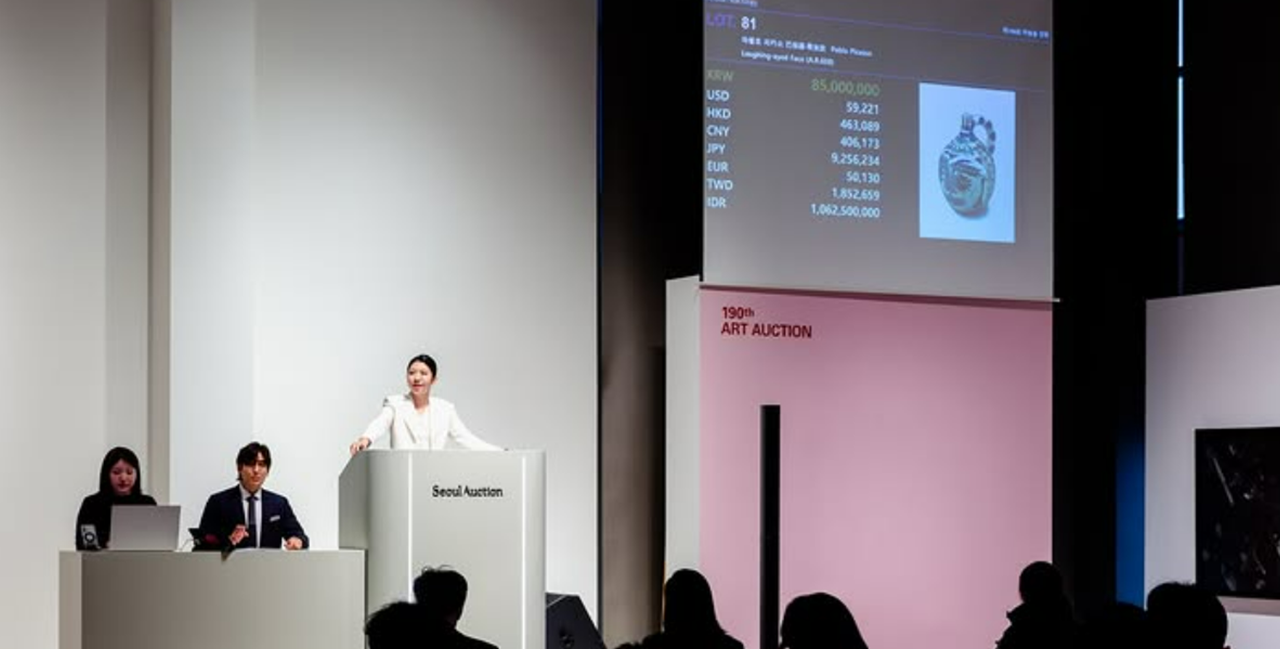

The results of
the major May auctions held by Seoul Auction and K Auction in the last week of
May 2026 show that the Korean art market is beginning to move again. However,
this movement should be understood not as a full-scale recovery, but rather as
a pattern of selective transactions that varies according to artwork category,
price range, artist recognition, and the character of the collector base.
K Auction
recorded total sales of approximately KRW 7.2321 billion (approx. USD 4.78
million) and a sell-through rate of 77.9% at its major auction held on May 27.
Of the 77 lots offered, 60 were sold. The top lot was Yayoi Kusama’s >Infinity
Nets (POWTY), which was offered with an estimate of KRW 2.1
billion–3.5 billion (approx. USD 1.39 million–2.31 million) and sold for KRW
2.1 billion (approx. USD 1.39 million).
Seoul Auction
recorded total sales of approximately KRW 5.66 billion (approx. USD 3.74
million) and a sell-through rate of 69.8% at its 192nd art auction held on May
28. At Seoul Auction, Lee Ufan’s Dialogue was offered
with an estimate of KRW 700 million–1.2 billion (approx. USD 463,000–794,000)
and sold for KRW 1.04 billion (approx. USD 688,000).

Lee Ufan, Dialogue, 2018, acrylic on canvas, 130.3 × 96.8 cm. / Photo: Seoul Auction
Taken together,
the results of the two auctions show that high-priced blue-chip works continue
to form a central axis of the market, but not every high-priced work is
automatically absorbed. At the same time, strong bidding emerged around
specific works by younger artists. This is the key point of the May auctions.
The market is moving, but that movement is not broad or uniform. Rather, it
appears selectively according to the character of each work and the conditions
of its price.
K
Auction: Blue-Chip Stability and Competition for Mid- to Lower-Priced
Contemporary Works
K Auction’s
results were generally stable. Its sell-through rate approached 80%, and total
sales exceeded KRW 7 billion (approx. USD 4.63 million), marking a relatively
strong performance within the recent auction market.
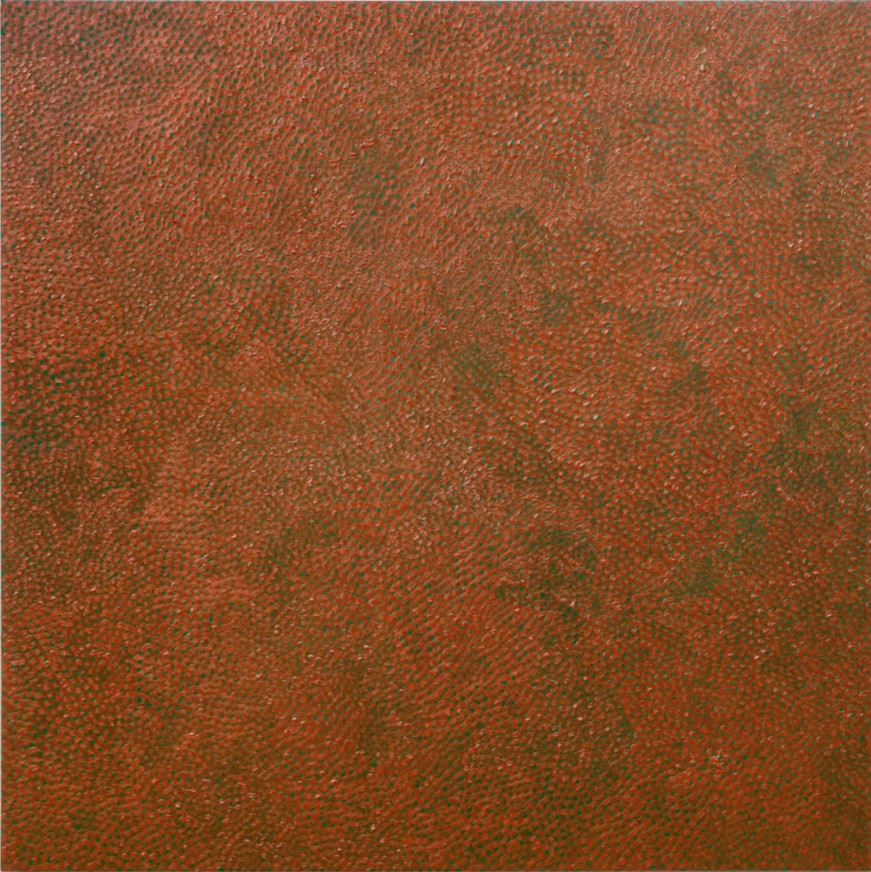
Yayoi Kusama, Infinity-Net (POWTY), 2014, acrylic on canvas, 145.5 × 145.5 cm.
/ Photo: Sotheby’s
Yayoi Kusama’s Infinity
Nets (POWTY), which achieved the highest price of the sale, was
offered with an estimate of KRW 2.1 billion–3.5 billion (approx. USD 1.39
million–2.31 million) and sold at the low estimate of KRW 2.1 billion (approx.
USD 1.39 million). The fact that the work sold at the low estimate suggests
that the current market is moving less through aggressive bidding above the
estimate and more through the acceptance of proven works at realistic price
levels.
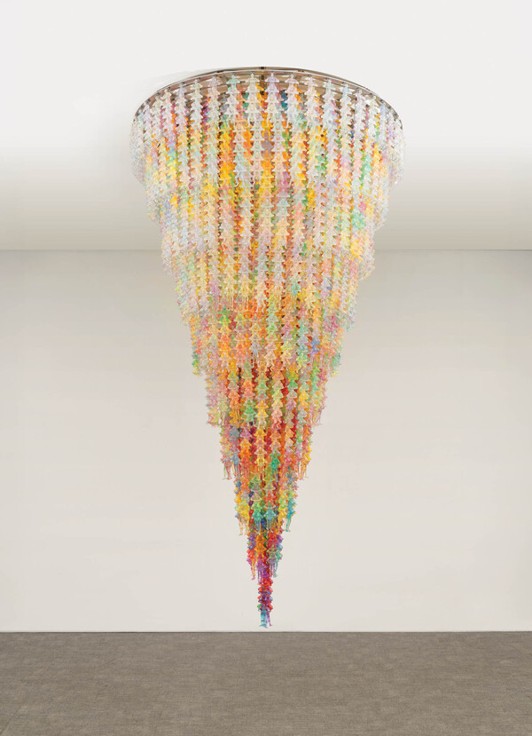
Do Ho Suh’s large-scale installation Cause & Effect. / Photo: K Auction
Do Ho Suh’s
large-scale installation Cause & Effect was
offered with an estimate of KRW 280 million–600 million (approx. USD 185,000–397,000)
and sold for KRW 360 million (approx. USD 238,000). Compared with paintings or
two-dimensional works, installation works involve more complex conditions
related to storage, installation, and resale. Therefore, the sale of this work
can be seen not simply as a transaction, but as a useful reference point for
considering how far the domestic auction market can expand its acceptance of
contemporary art.
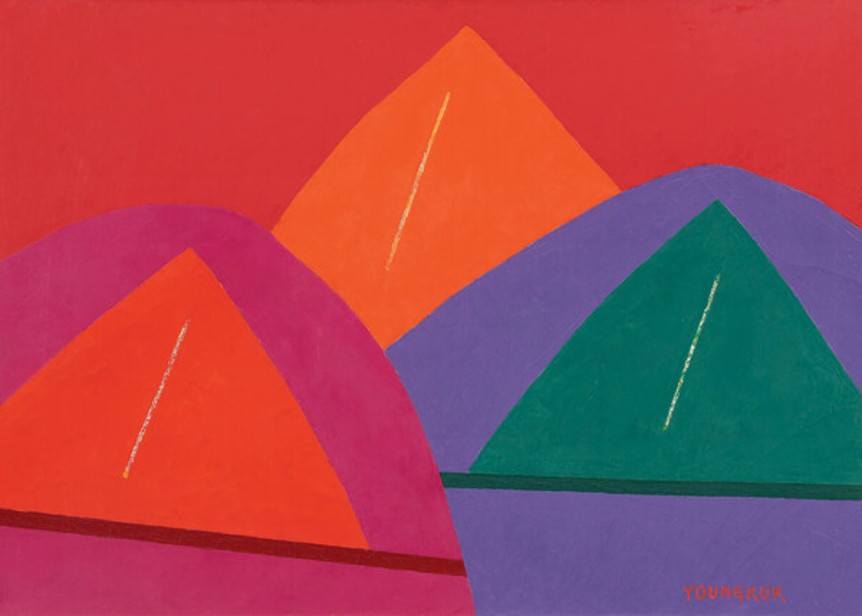
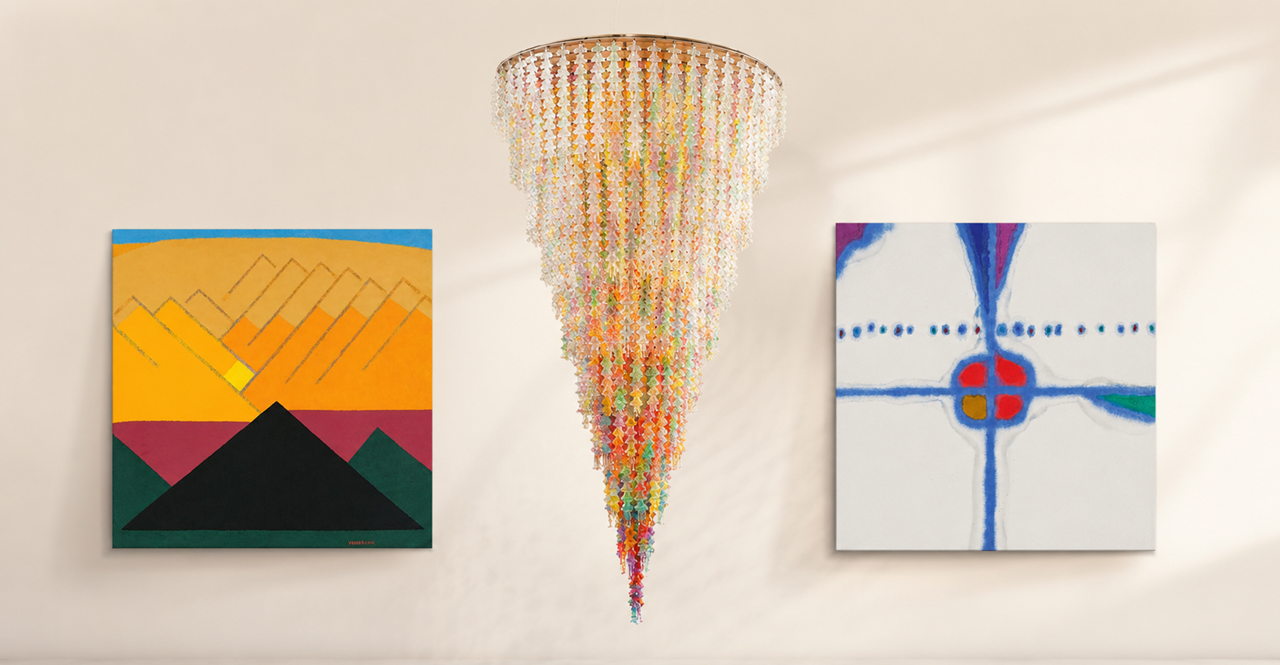
Yoo Youngkuk, Mountain, 1988, oil on canvas, 65.1 × 90.9 cm. / Photo: K Auction
Yoo Youngkuk’s
1988 work Mountain was offered with an estimate of
KRW 400 million–800 million (approx. USD 265,000–529,000) and sold for KRW 490
million (approx. USD 324,000). This result shows that basic demand for Korean
abstract art remains in place. However, rather than indicating an aggressive
price increase, it is closer to a case in which a work by a proven artist was
absorbed by the market within an appropriate price range. The current market is
not at a stage where it accepts high prices based on the artist’s name alone.
The date of production, size, series, and realism of the estimate all operate
together.

Moonassi, Awareness, ink and acrylic on hanji, 60.6 × 72.7 cm, 2022. / Photo: K Auction
An interesting
case at this K Auction sale was Moonassi’s Awareness.
The work started at KRW 8 million (approx. USD 5,300) and sold for KRW 26
million (approx. USD 17,200) after 42 bids. What matters in this case is not
the sale price itself, but the density of bidding.
Whether this
competition resulted from participation by a broad collector base or from
repeated bidding among a small number of bidders needs to be examined
separately. Competition at auction may reflect actual demand, but it can also
function as a mechanism that publicly exposes and establishes the price of a
specific work. Therefore, this result can be read both as a sign of market
activity and as a case that requires further verification of the price
formation process.
Seoul
Auction: Bidding Concentrated on Modern and Contemporary Blue Chips and Young
Artists
Seoul Auction’s
results were somewhat more limited compared with K Auction’s. Total sales
amounted to approximately KRW 5.66 billion (approx. USD 3.74 million), with a
sell-through rate of 69.8%. The colored manuscript version of Daedongyeojido,
which had been mentioned as a highly anticipated lot, was offered at a low
estimate of KRW 2 billion (approx. USD 1.32 million), but failed to sell.
The colored
manuscript version of Daedongyeojido is a special
item that differs from ordinary paintings or contemporary artworks. As a
historical document of cultural-property-level significance, it clearly
possesses scholarly value and rarity. However, the collector base capable of
purchasing such an item at auction is limited.
Several
conditions must align for a transaction to take place, including storage,
research purpose, collecting purpose, the possibility of institutional
acquisition, and price acceptability. Therefore, this failure to sell should be
understood not as a sign of weakness in the entire antique art market, but
rather as the result of a mismatch between the work’s price and buyer
conditions at this particular auction.
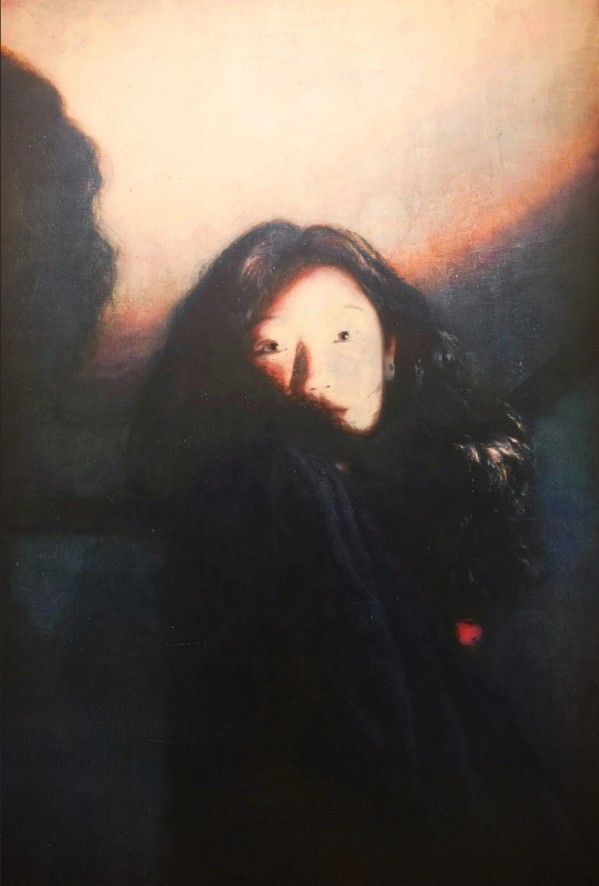
Lee Mokha’s Chroma Key Blue. / 사진: Seoul Auction
The more
noteworthy point in Seoul Auction’s results was the competition for a young
artist. Lee Mokha’s Chroma Key Blue was offered with
an estimate of KRW 100 million–150 million (approx. USD 66,000–99,000) and sold
for KRW 350 million (approx. USD 231,000). This was a case that showed a level
of price acceptance beyond simple interest. At the same time, it also shows the
need to examine what supports such a price when a young artist’s work enters a
high-price range within a short period of time.
Moonassi
and Lee Mokha: Similar Competition, Different Price Structures
The results for
Moonassi and Lee Mokha both show market interest in young artists. However, the
market significance of the two cases differs.
Moonassi’s Awareness
started at KRW 8 million (approx. USD 5,300) and sold for KRW 26 million
(approx. USD 17,200). This was a case in which multiple bidders were drawn to a
relatively accessible price range. In this case, the key point is not the
height of the sale price, but the breadth of bidding participation. If
competition emerges from a low starting price and the price rises through
repeated bidding, this may be seen as a case that demonstrates liquidity in the
mid- to lower-priced contemporary art market.
By contrast, Lee
Mokha’s Chroma Key Blue was offered with an estimate
of KRW 100 million–150 million (approx. USD 66,000–99,000) and sold for KRW 350
million (approx. USD 231,000). In this case, the key issue is not price
accessibility but the market’s willingness to accept a high price. For a work
by a young artist to trade at this level, simple preference for the image is
not enough as an explanation. It is likely that several factors operated
together: the artist’s recent market attention, the representative quality of
the work, exhibition history, gallery price management, expectations of future
price appreciation, and symbolic value within contemporary art.
However, this is
precisely where careful interpretation is required. The fact that a work by a
young artist greatly exceeds its estimate or attracts many bids does not
automatically prove that the market is healthy. Auction prices may reflect
actual demand, but at times they also function to publicly establish a price
and signal it to the market. Especially when auction prices rise before an
artist’s institutional validation or critical foundation has been sufficiently
formed, the price may reflect market expectations brought forward rather than
market trust.
Therefore, the
cases of Moonassi and Lee Mokha show vitality in the young artist market while
also requiring closer examination of the structure of price formation. What
matters is not the sale price itself, but the conditions under which that price
was created. The breadth of actual bidders, the relationship with primary
market prices, whether similar works are repeatedly offered, post-sale payment
and resale records, and the artist’s exhibition and critical foundation must
all be confirmed together.
Criteria
for Evaluating Auction Results for Young Artists
To properly
evaluate auction results for young artists, at least six criteria need to be
considered together.
First,
the gap between primary market prices and auction sale prices.
It is necessary
to examine the extent of the difference between the recent prices formed by
galleries and the prices achieved at auction. If the gap is large, there must
be grounds that can explain the increase, such as exhibitions, institutional
acquisitions, critical evaluation, overseas exposure, or expanded demand. If
auction prices move too far ahead of primary market prices, questions may arise
about the stability of price formation.
Second,
the frequency of consignments and repeated sales.
If works by a
young artist appear repeatedly at multiple auctions within a short period of
time, this should be watched carefully. In a healthy market, good works tend to
be absorbed by collectors and held for a certain period. By contrast, if
similar works are quickly and repeatedly consigned, this may indicate that
selling pressure is stronger than collecting demand, or that a tendency to
expose prices through auction is at work.
Third,
the quality of bidding.
A high number of
bids does not necessarily mean that the demand base is broad. What matters is
how many actual bidders participated, whether bidding was concentrated only at
lower price levels, and whether multiple competitors remained in the final
high-price range. Even in a case of more than 40 bids, it is possible that the
competition was created by a small number of bidders repeatedly bidding in
small increments. Therefore, the number of bids is only a reference indicator;
it does not in itself prove the health of the market.
Fourth,
actual payment after the sale and resale records.
The fact that a
work was sold at auction does not by itself confirm the price. It is necessary
to verify whether payment was actually completed, whether similar works later
trade again at a comparable price level, and whether the price is maintained in
subsequent auctions.
Fifth,
the breadth of actors supporting the price.
For the price of
a young artist’s work to be formed in a healthy way, it must not depend only on
a specific auction house or a specific collector group. Galleries, collectors,
institutions, criticism, and exhibition history must operate together. If the
price is formed only among a narrow group of market participants, the breadth
of demand may be limited. By contrast, if institutional exhibitions, major
collections, critical discussion, and international exposure provide support
together, the persuasiveness of the price increases.
Sixth,
the representative quality and artistic quality of the work.
Even in the case
of a young artist, a high-price transaction becomes more persuasive when the
work is representative, clearly shows the artist’s core language, belongs to an
important period, or has an exhibition history. By contrast, if a secondary
work or a work distant from the artist’s core language rises excessively, the
basis for the price becomes weak. In the young artist market, the
representative quality of the work itself is especially important, more than
the artist’s name alone.
Review
of the May Auction Results: Price Formation and Market Trust
The May major
auction results of Seoul Auction and K Auction confirmed stable demand in the
blue-chip market, selective competition in the young artist market, and limited
transaction conditions for special items.
In particular,
high-priced sales and multiple bids for young artists can be signs of market
vitality, but they do not by themselves prove price stability. For prices
formed at auction to become sustainable market prices, they must be supported
by the representative quality of the work, the artist’s exhibition history,
critical evaluation, primary market price management, and the breadth of the
actual collector base.
Ultimately, the
key point to be confirmed from the May auctions is not whether prices rose, but
whether those prices are persuasive. A good market is not one that produces
many high prices, but one that can explain why those prices are possible. For
the Korean art market to grow in a sustainable direction, auction results must
not be consumed merely as indicators of excitement. The process through which
prices are formed, and the structure that supports those prices, must be read
more rigorously.