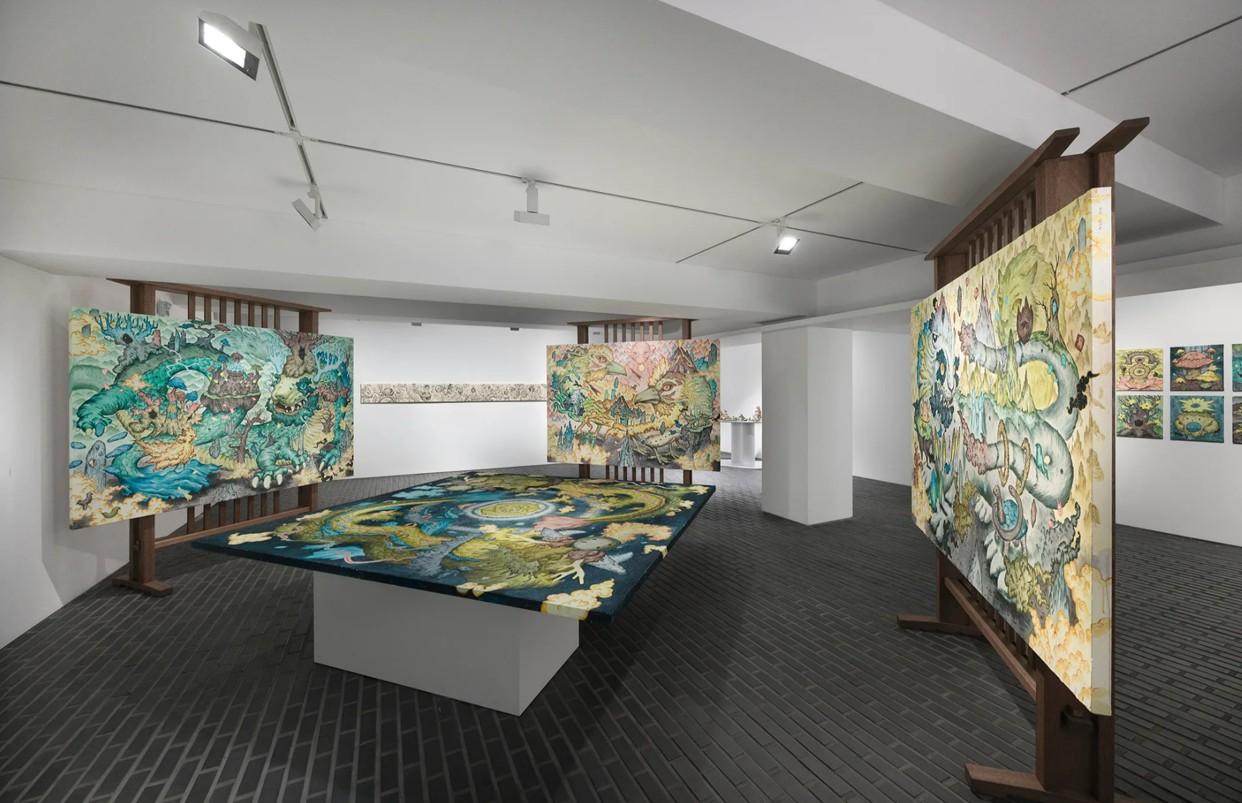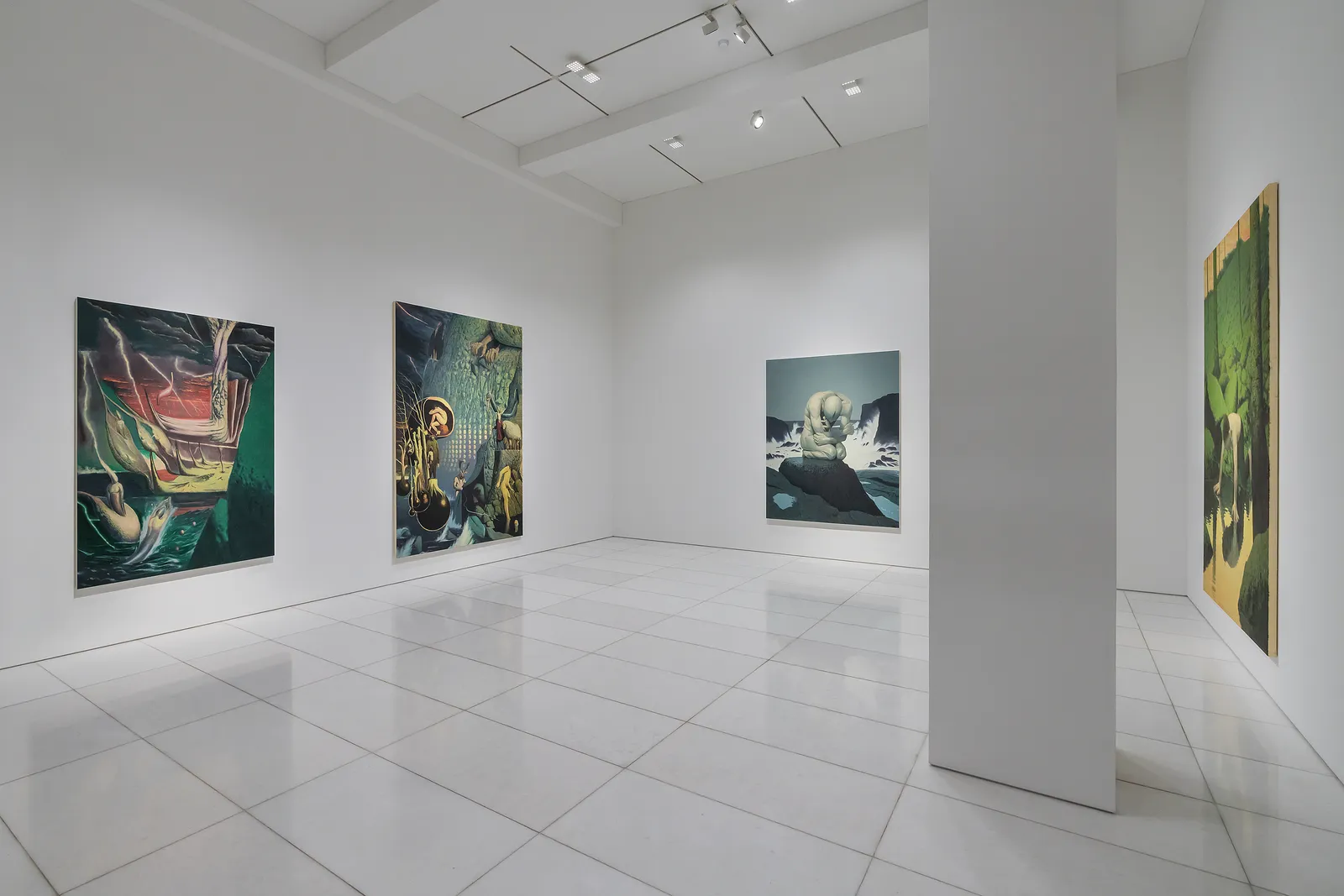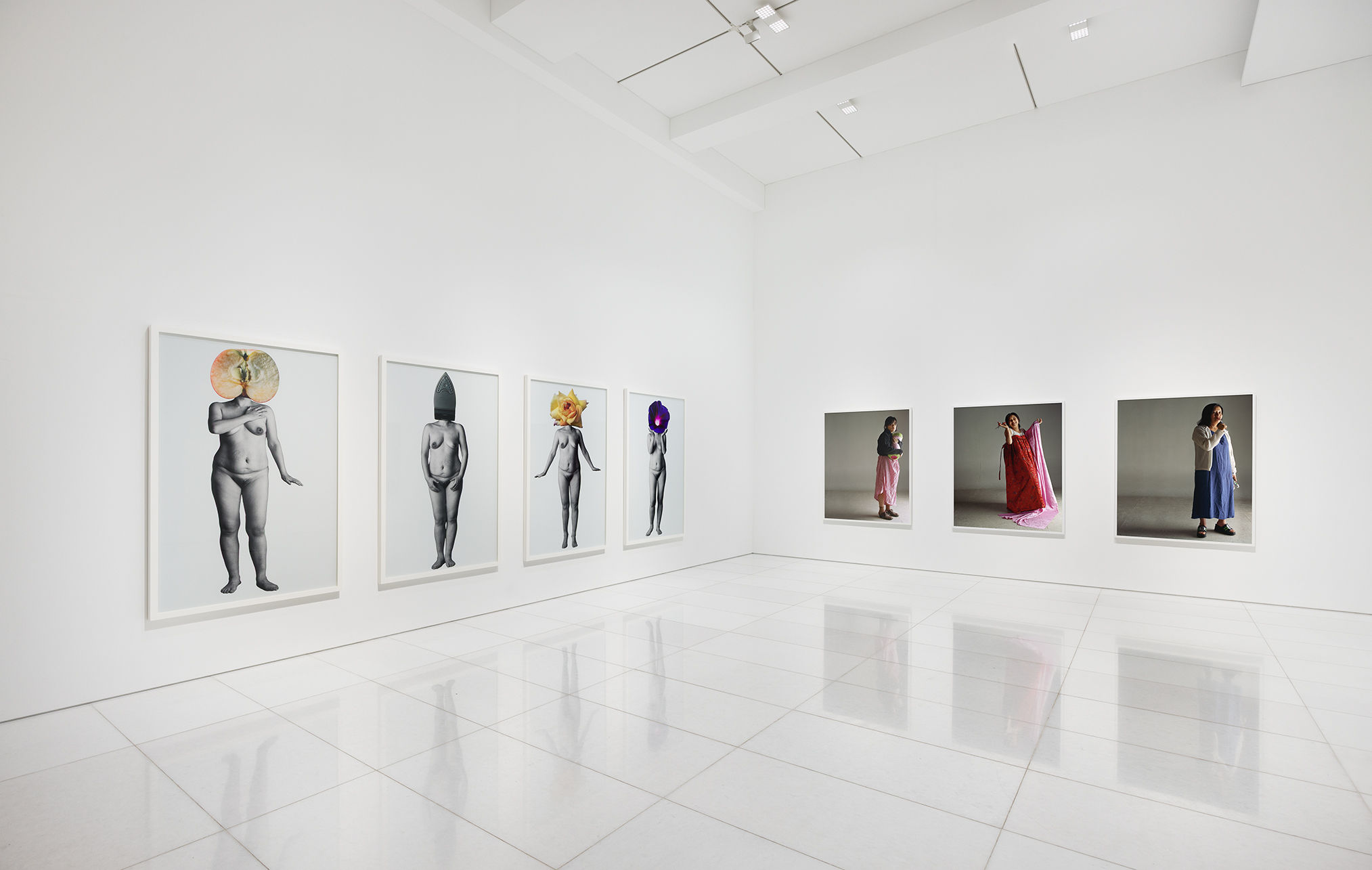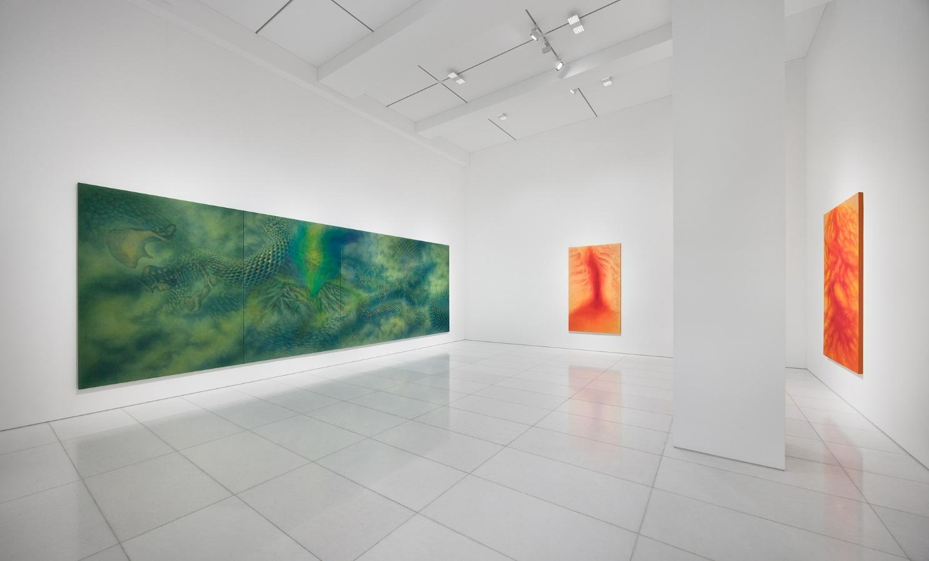

ARARIO GALLERY SEOUL presents LEE Jihyun’s
solo exhibition《Fantasma: Restless Silence》from July 1 to August 15, 2026.
Marking the artist’s first solo exhibition
in Korea in four years, the exhibition unfolds across the gallery’s first,
third, and fourth floors. Through the materiality of painting and the
architectural structure of the exhibition space, it brings together LEE’s
sustained exploration of memory, time, and the layered workings of
consciousness.
LEE reconstructs images drawn from
remembered places, everyday scenes, mythology, and history through the language
of painting. In her work, memory is not a resource for restoring the past as it
once existed. Rather, it is an active process through which reality and dream,
individual experience and collective narrative overlap, producing new scenes,
sensations, and temporal relationships. The artist understands this process as
both an inscription of memory and a painterly act of resistance against forgetting.
The exhibition title, “Fantasma,” evokes
an imaginary manuscript in which memory and imagination, belief and experience
are intertwined. The empty spaces within and around the paintings likewise
function not as simple blanks, but as “restless spaces”—sites in which emotions
and memories persist and new relationships emerge between images, as well as
between past and present.
Painting as an Architecture of
Memory
An important point of departure for the
exhibition is the『Spinola Book of Hours』, an illuminated manuscript produced in Flanders in the early
sixteenth century. Containing prayers, psalms, calendars, and miniature
paintings, the devotional manuscript is distinguished by its elaborate borders,
architectural frames, and multilayered pictorial spaces, each constructed
independently across its pages.
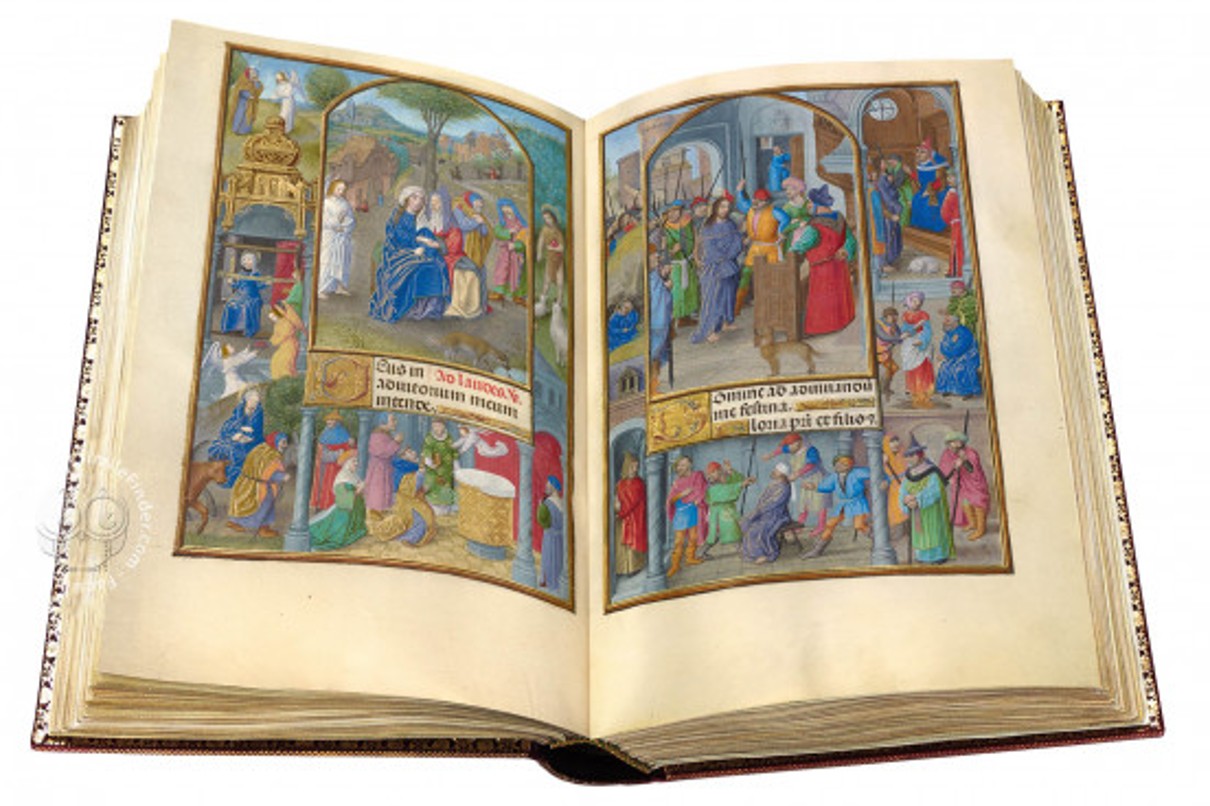
『The Spinola Hours』, ca. 1510–1520, illuminated manuscript. Original in the collection of the J. Paul Getty Museum. / Photo: Facsimile Finder
LEE has described experiencing an
inexplicable sense of intimacy with the manuscript, despite its origins in a
historical period and cultural context far removed from her own. It became a
means of connecting the anxiety and solitude she experienced while living in
the United States with broader human practices of faith, consolation, and
spiritual reflection.
The manuscript’s arched frames and page
structures—in which one spatial field appears to open into another—later
developed into the geometric frameworks and translucent, membrane-like forms
that recur throughout her paintings. Rather than directly reproducing the
imagery of the manuscript, LEE translates its underlying compositional
principle—the coexistence of multiple temporalities and spatial layers within a
single field—into her own painterly language.
A Structure of Consciousness
Unfolding Across Three Floors
The exhibition organizes the three floors
of ARARIO GALLERY SEOUL as though they were sections of an expansive book. Each
floor operates as an independent chapter, while the viewer’s movement through
the building gradually reveals distinct layers of the artist’s memory and
consciousness.
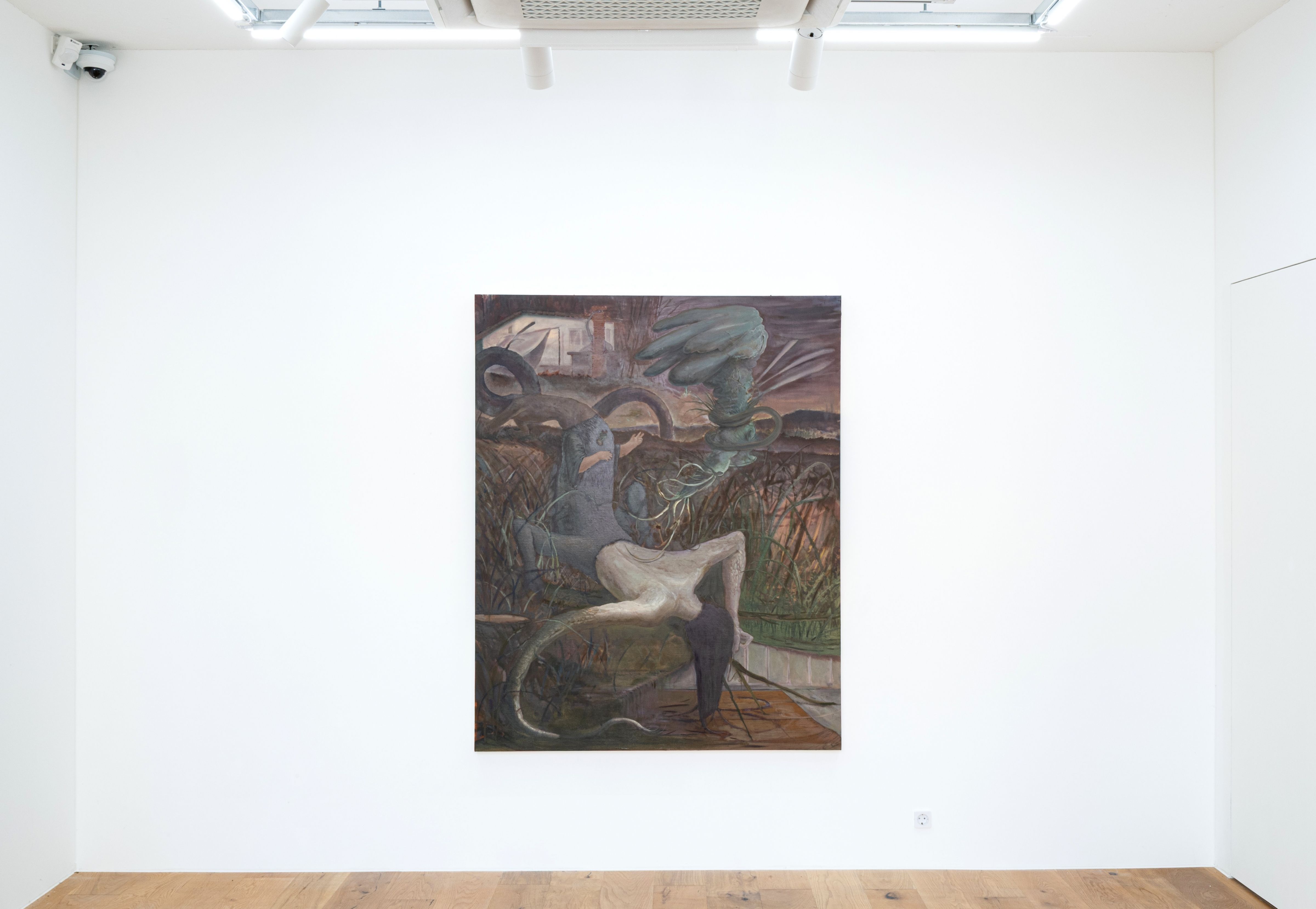
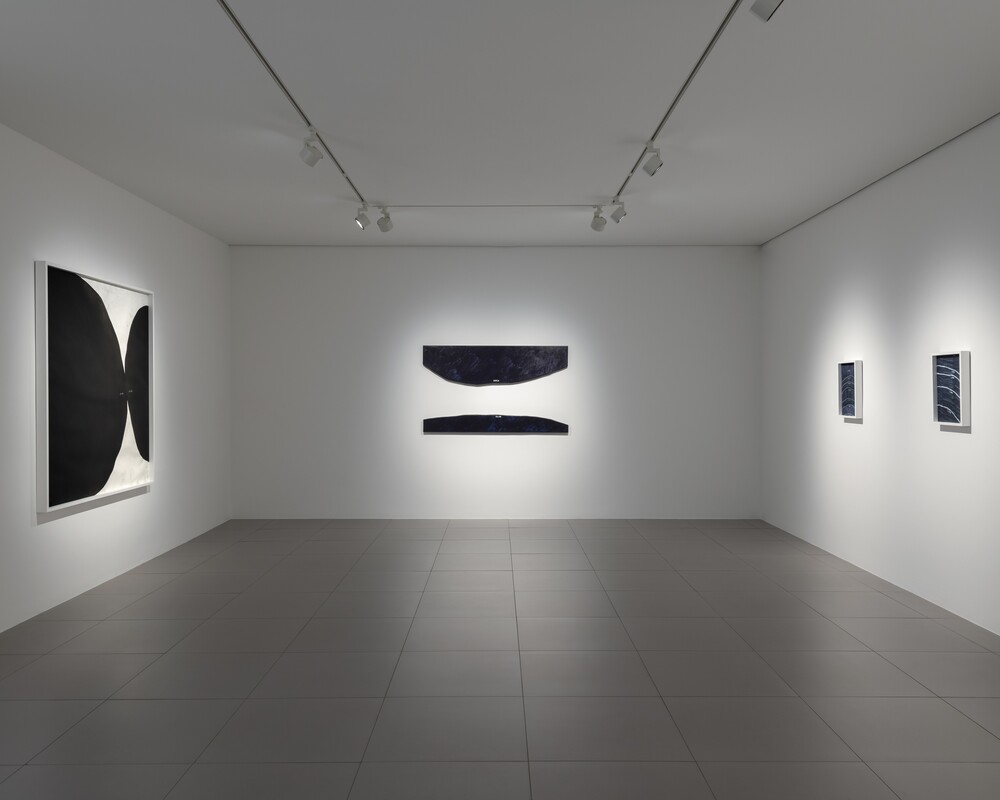
On the first floor, defined by its high
ceiling, LEE’s personal memories and experiences are superimposed upon the
broader temporal fields of mythology and history.
Works including the ‘Spinola Hours’
series begin with the medieval manuscript but extend beyond direct historical
reference. They construct painterly spaces in which individual experience and
historical time, past and present, coexist and intersect.
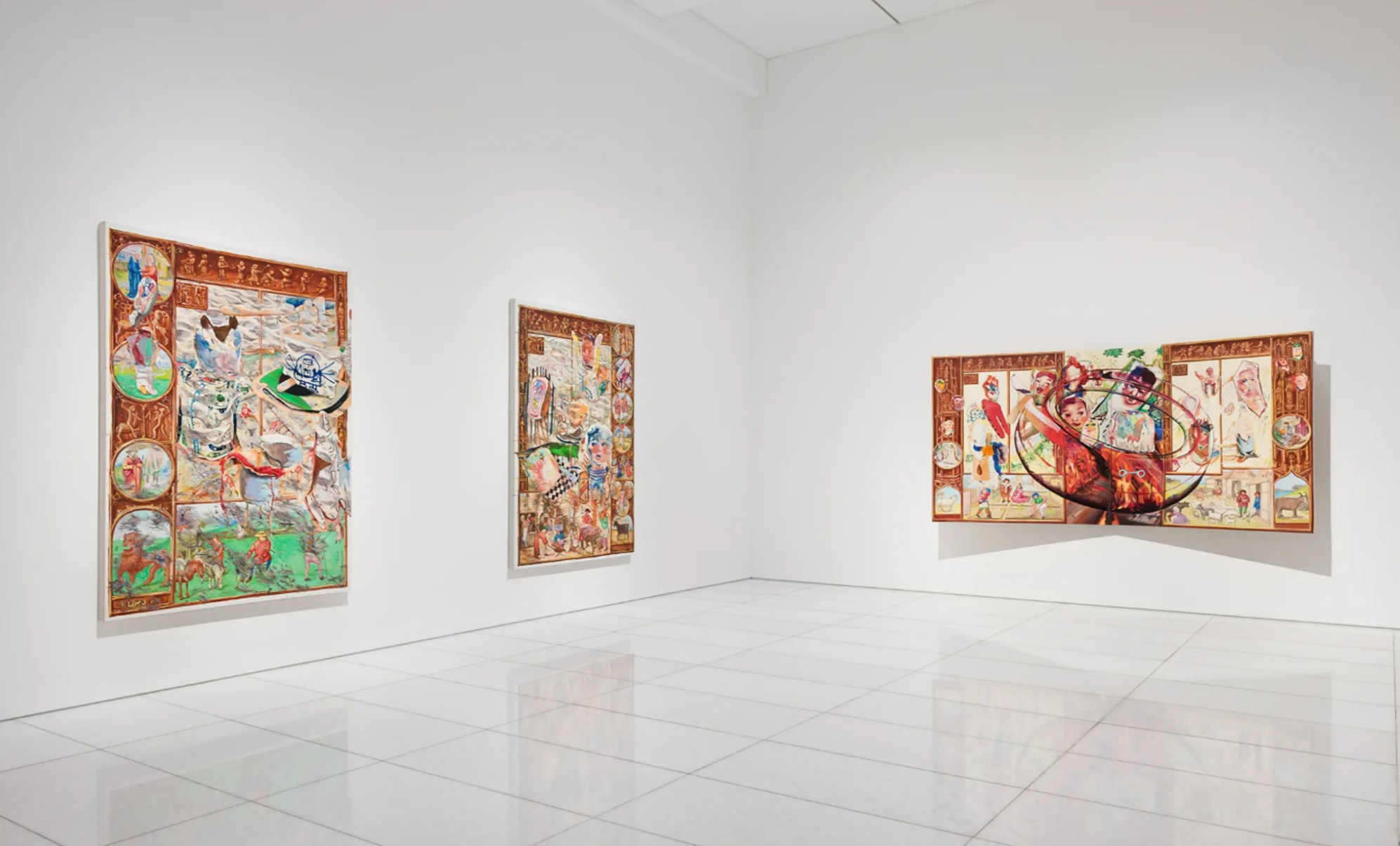
First-floor installation view / Photo: ARARIO GALLERY
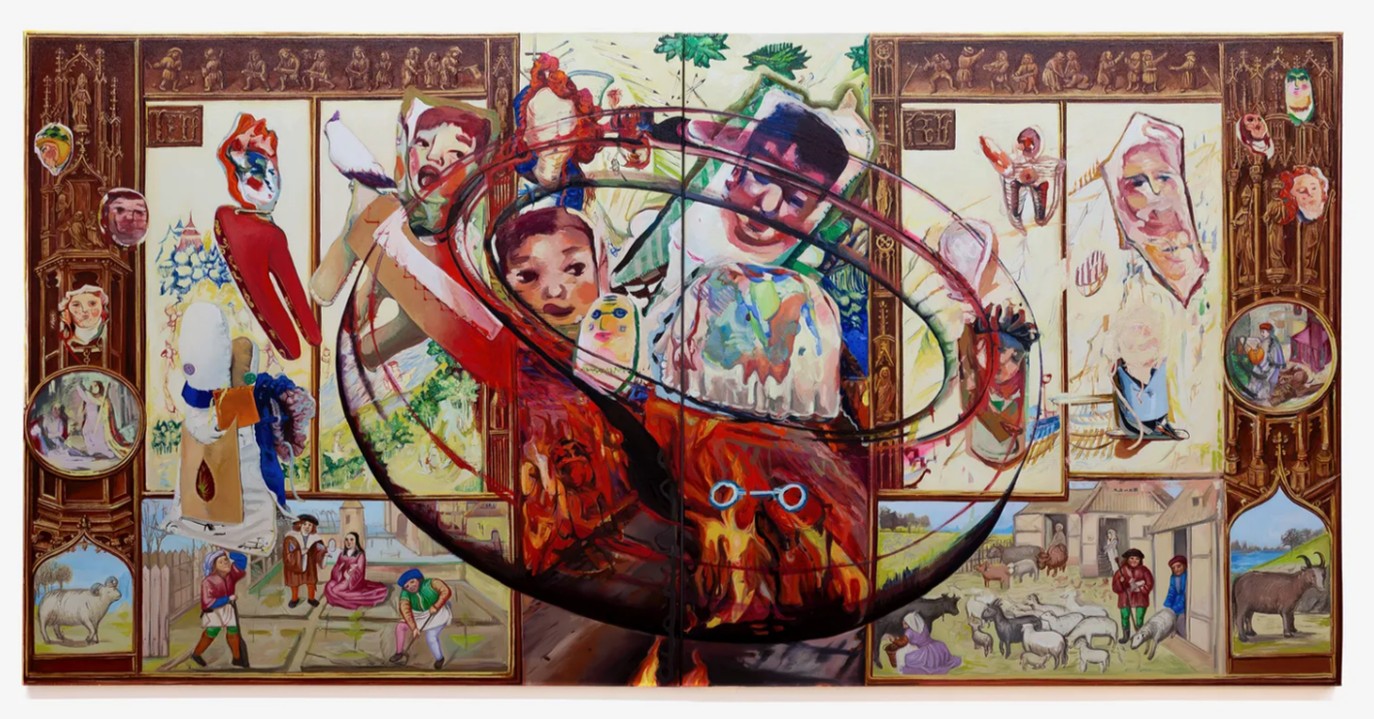
Spinola Hours_March: Aries, April: Taurus (Diptych), 2020–2022, oil on canvas, 152.5 × 305 cm / Photo: ARARIO GALLERY
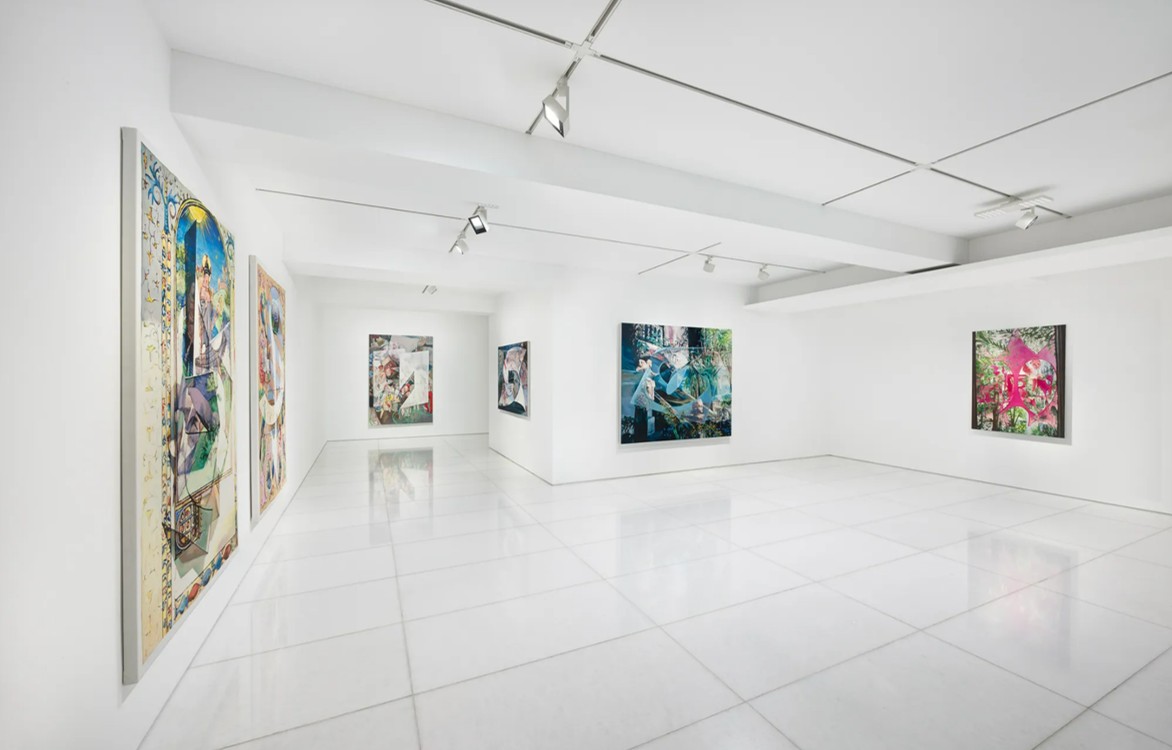
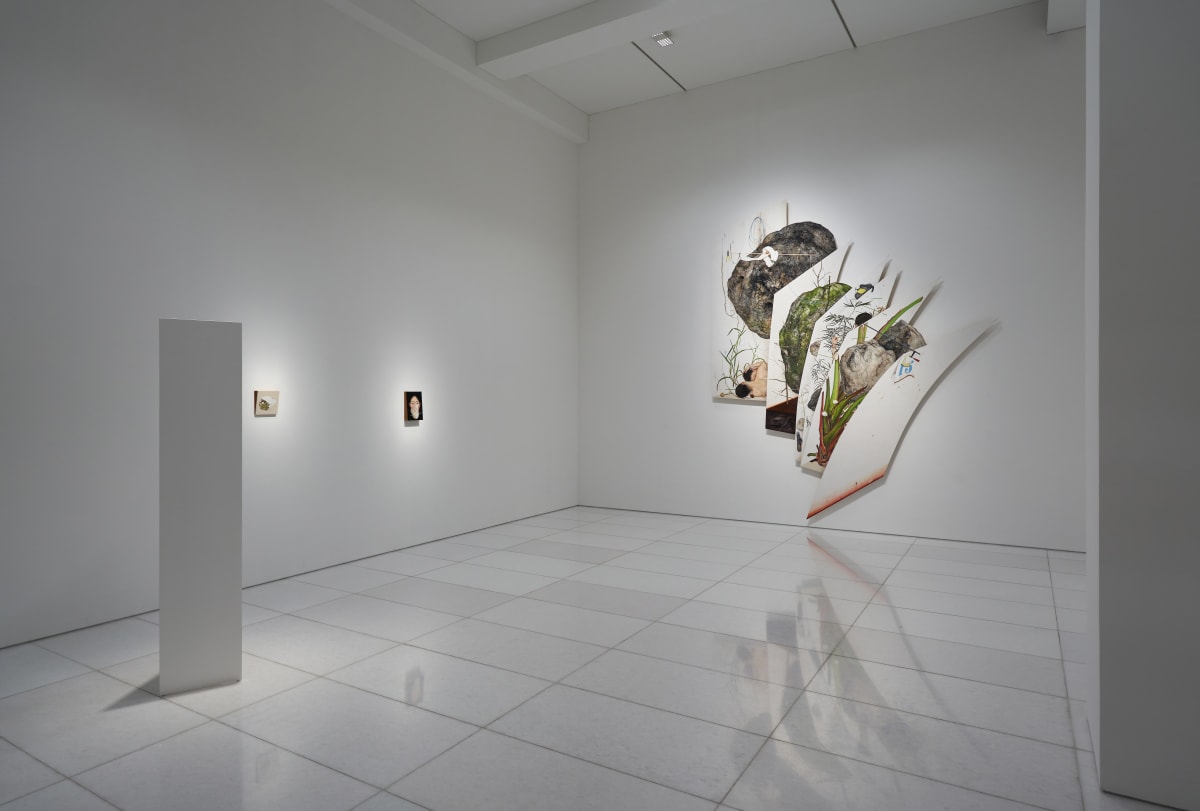
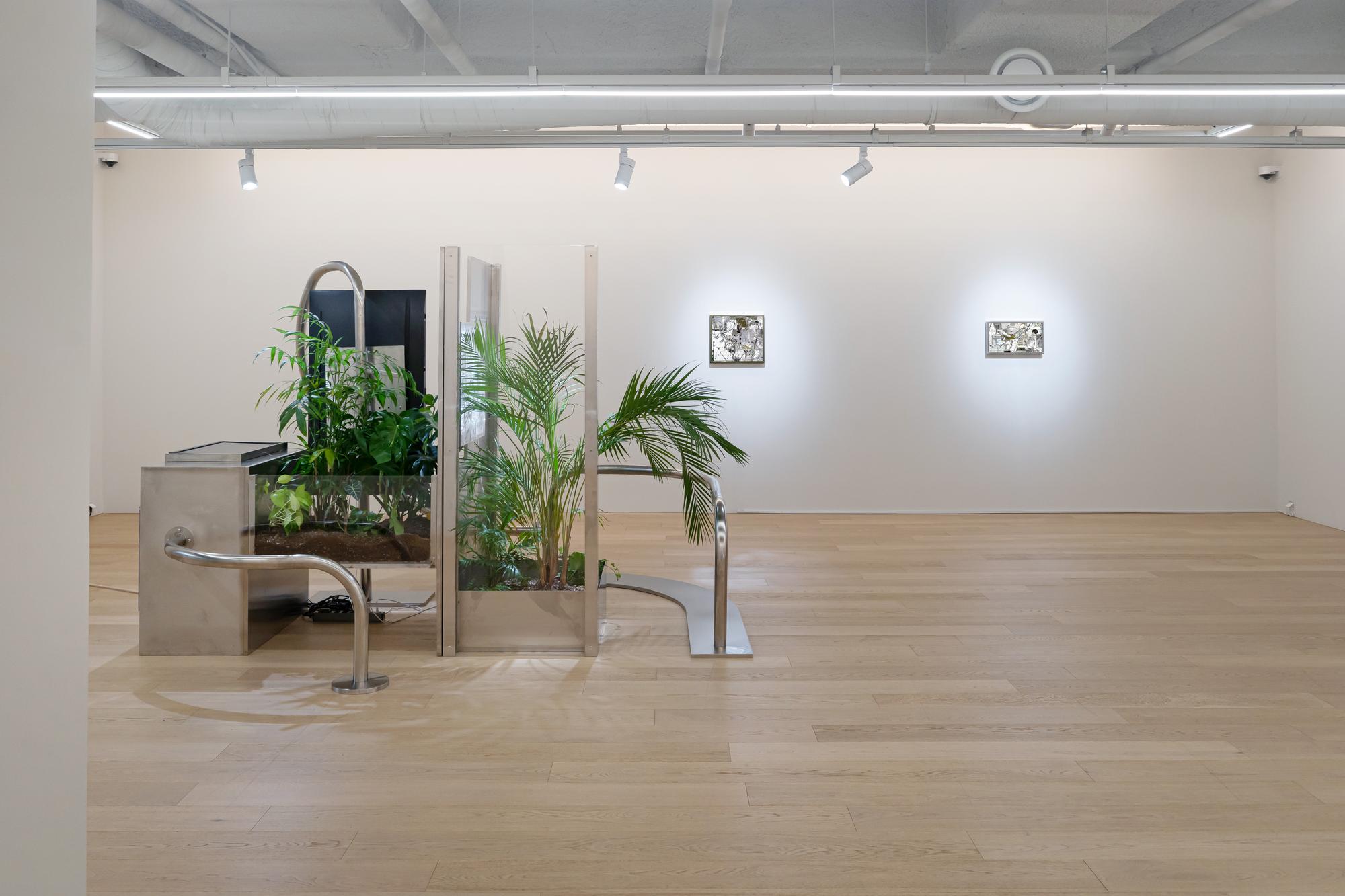
The third floor turns toward more private
memories and intimate scenes drawn from everyday life.
Geometric structures reminiscent of folded
pop-up books, ornamental borders, human figures, gardens, and indistinct
landscapes are densely interwoven. Rather than forming a complete or linear
narrative, these images collide, overlap, and pass through one another,
revealing the unstable process through which memory is reorganized within
consciousness.
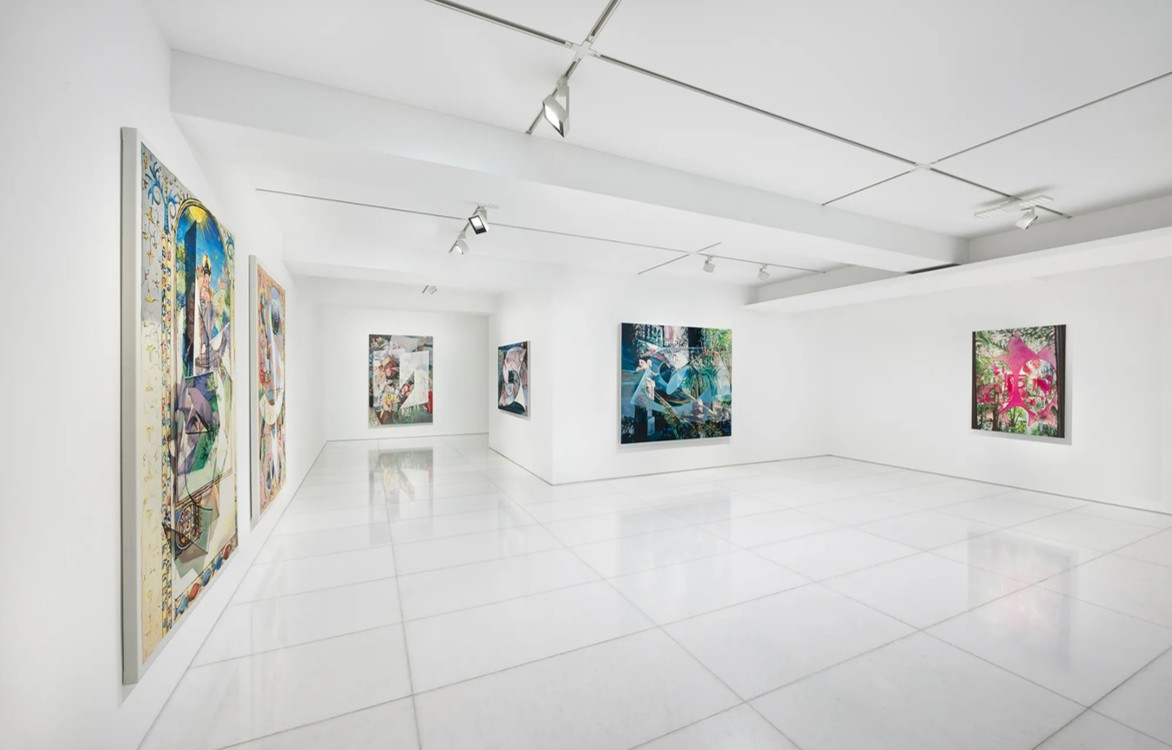
Third-floor installation view / Photo: ARARIO GALLERY
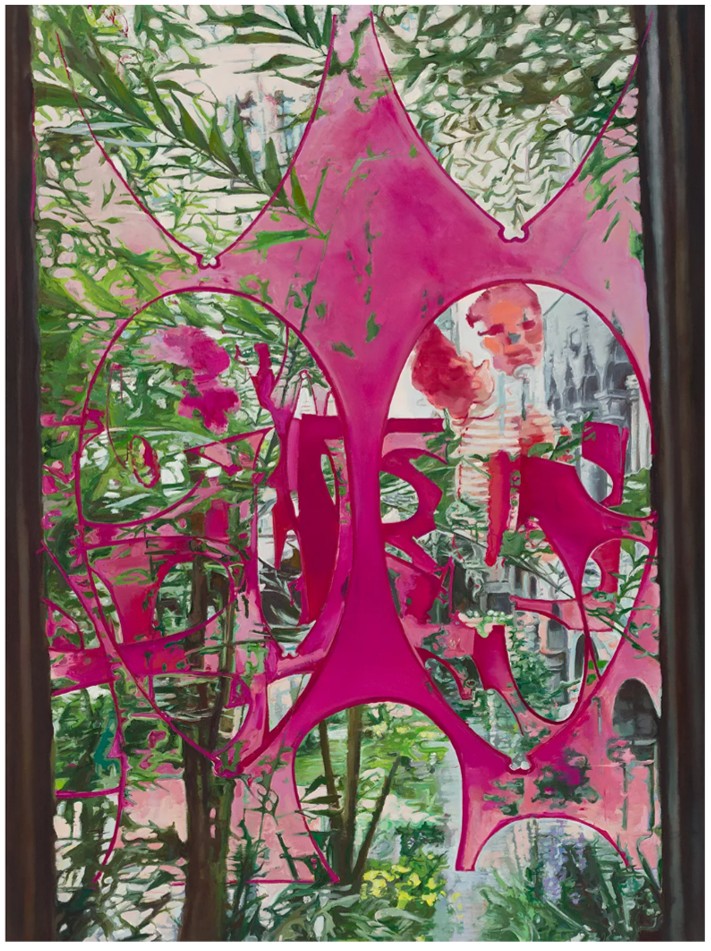
Sealed Garden, 2026, oil on canvas, 122 × 91.5 cm / Photo: ARARIO GALLERY
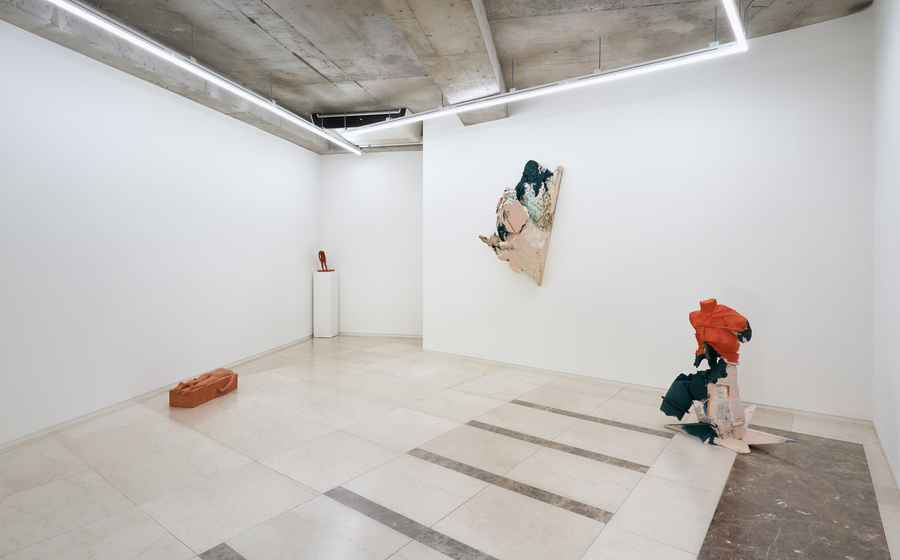
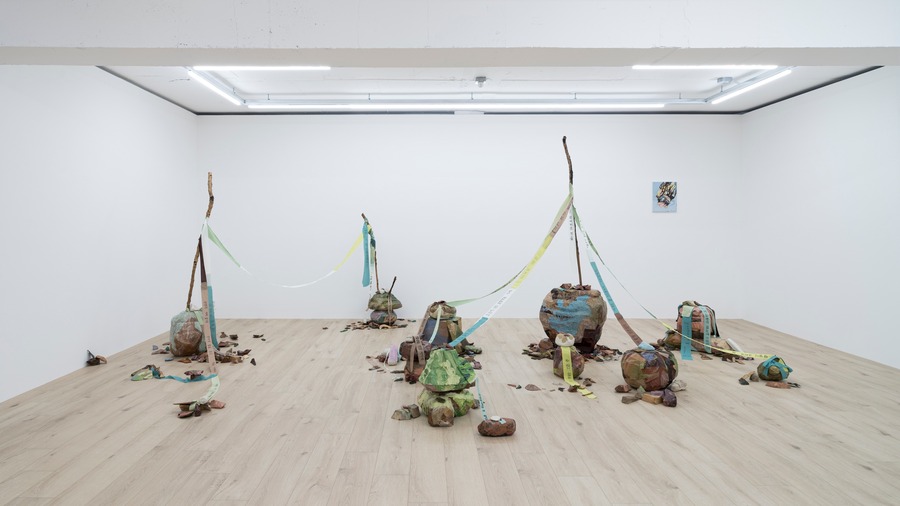
The fourth floor centers on works executed
in a drawing-like manner on unprimed canvas.
Pigment is absorbed directly into the
untreated surface, while lines, brushstrokes, and material traces remain
visible without being fully corrected or concealed. Here, painting presents not
so much a completed image as the artist’s bodily movement, the duration of the
working process, and the moment at which an image begins to emerge.
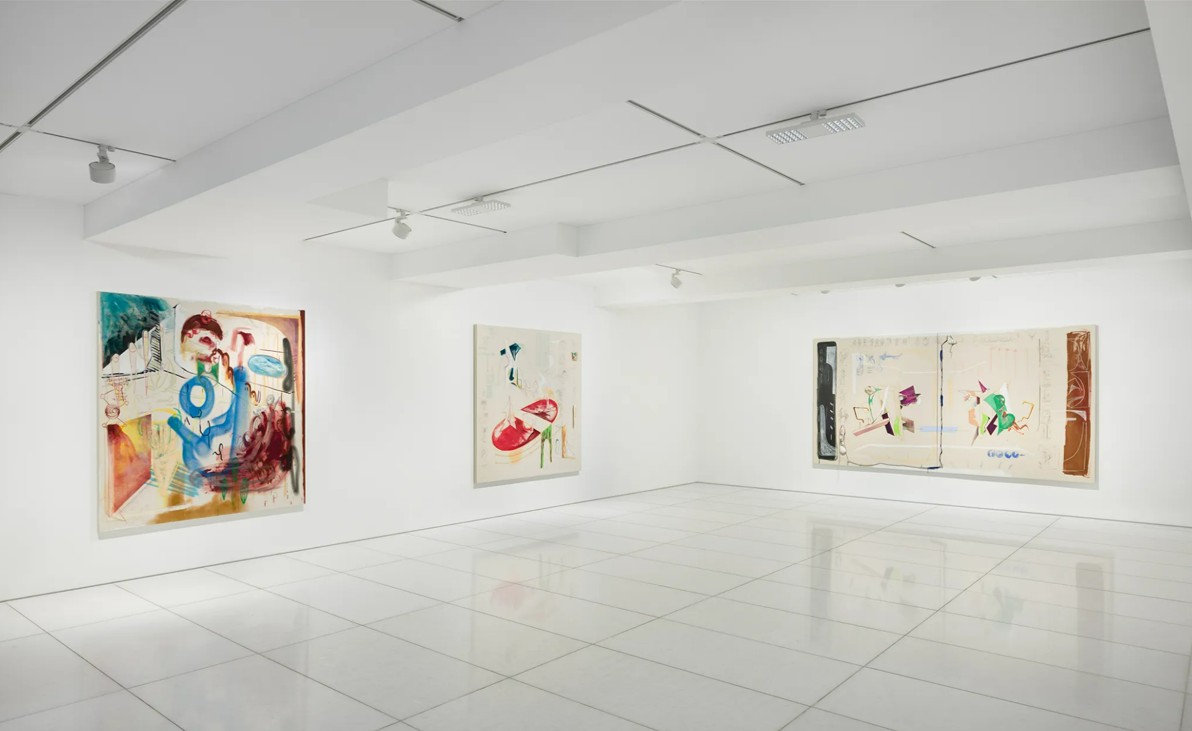
Fourth-floor installation view / Photo: ARARIO GALLERY
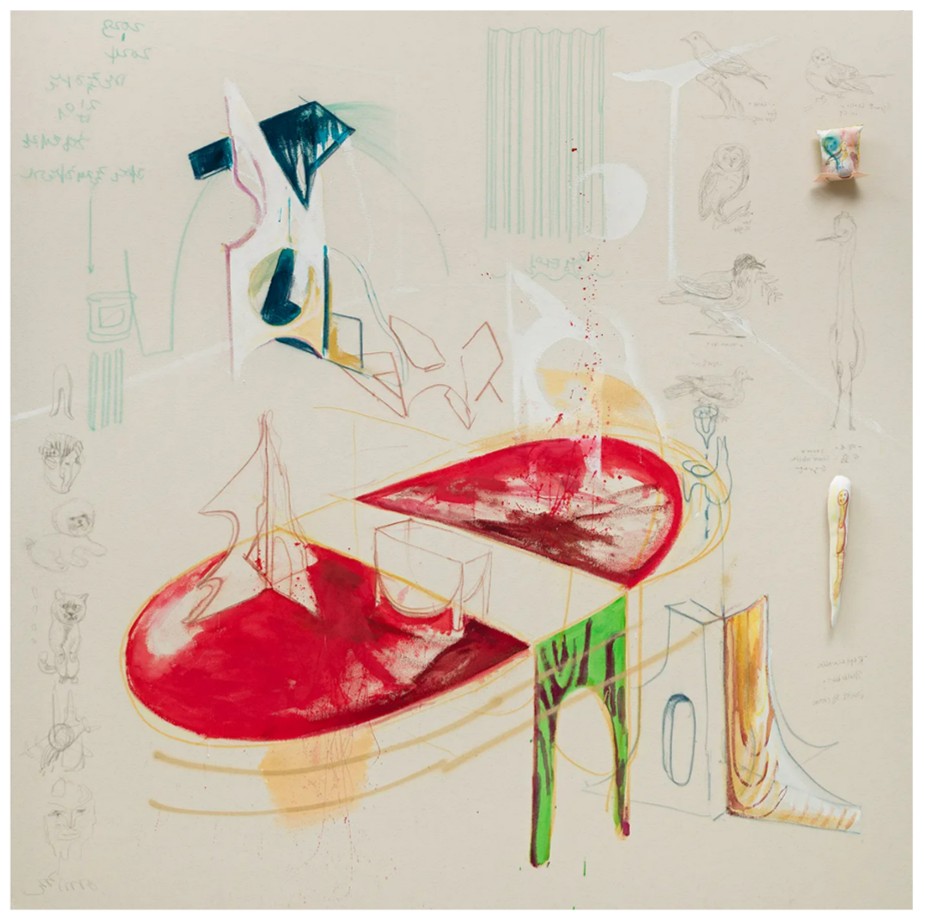
Creases of Contemplation, 2024, watercolor on muslin and felt, graphite, pastel, and acrylic on unprimed canvas, mounted on wooden panel, 162.5 × 162.5 cm / Photo: ARARIO GALLERY
The Spatiotemporality of Memory
Generated through Painting
For LEE, painting is not merely a flat
surface that contains images. It is a material and temporal field in which
bodily action and the duration of making accumulate. The thickness of pigment,
the movement of the brush, and traces that have been layered, obscured, or
erased allow experiences from different moments to coexist within a single
work. Through this process, scenes from the past are continuously reorganized
through present perception.
《Fantasma: Restless Silence》brings this approach into focus. Here, “silence” does not refer to
an empty, static, or inactive condition. It signifies a latent space inhabited
by what has disappeared, what remains unresolved, and what has yet to emerge.
Reality and dream, personal experience and collective narrative intersect without
stable boundaries, generating scenes that remain provisional, shifting, and
open to further transformation.
The exhibition therefore presents LEE’s
painting not as a means of reproducing the past, but as a medium through which
time, sensation, and memory are materially restructured. Her paintings do not
restore forgotten scenes in their original form. Instead, they reveal how
residual traces of the past encounter present perception to produce new
emotions, images, and spatiotemporal relationships. It is in this continuous
reconstruction of memory that the significance of the exhibition lies.
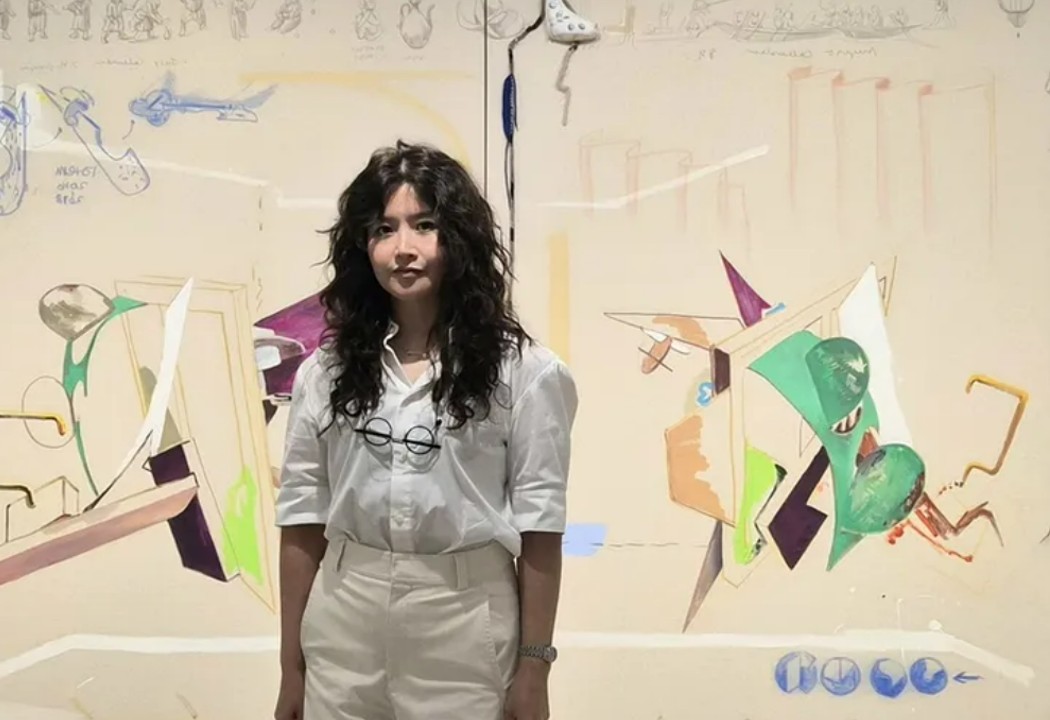
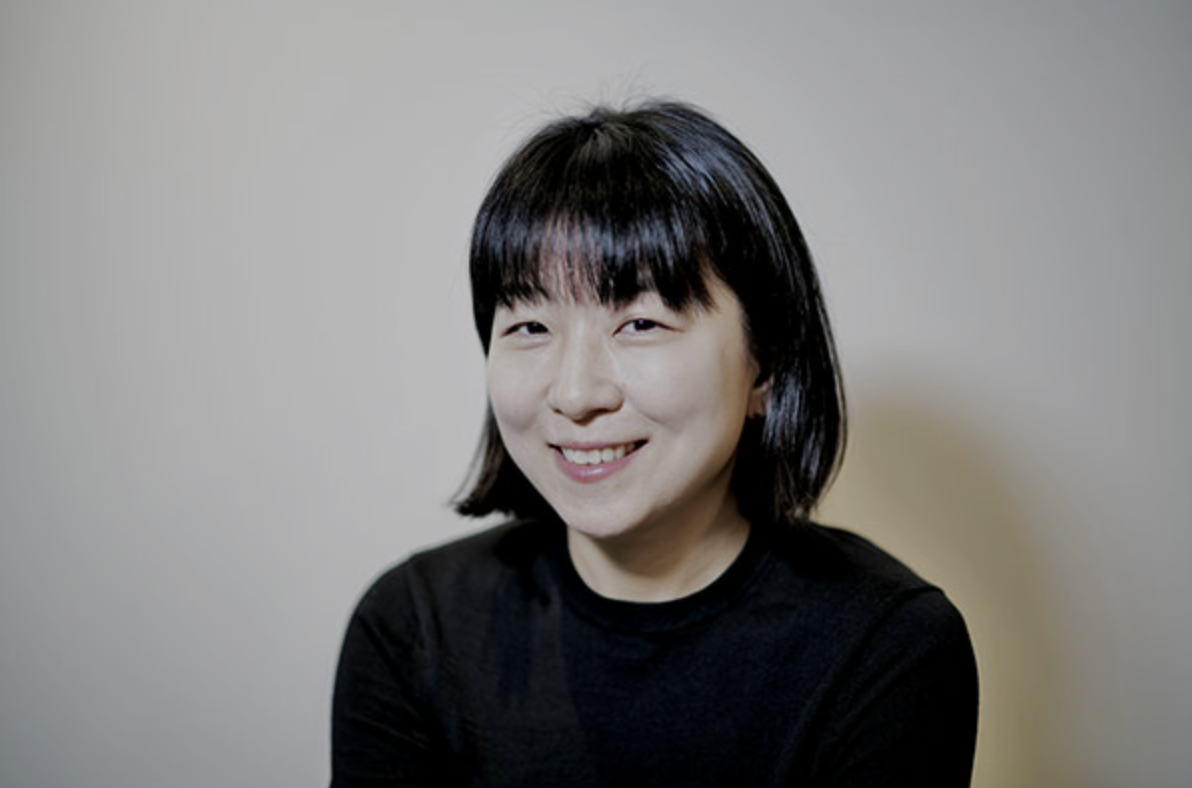
LEE Jihyun / Photo: ARARIO GALLERY
About the Artist
LEE Jihyun was born in Seoul in 1979. She
studied Western painting at Sungshin Women’s University and its graduate school
and received her MFA from the School of Visual Arts in New York.
She has held solo exhibitions at ARARIO
GALLERY SEOUL in 2008, 2022, and 2026, as well as at Illy Contemporary Art
Center, DOOSAN Gallery Seoul and New York, Gallery Sun Contemporary, and ARARIO
GALLERY Beijing. She has also participated in group exhibitions at institutions
and galleries including The Aldrich Contemporary Art Museum, NXTHVN, ARARIO
GALLERY Seoul and Cheonan, DOOSAN Gallery, and the Seoul Museum of Art.
Her works are held in collections including
the Government Art Bank and Art Bank of the National Museum of Modern and
Contemporary Art, Korea, and the ARARIO Collection. She currently lives and
works in New Haven, Connecticut.
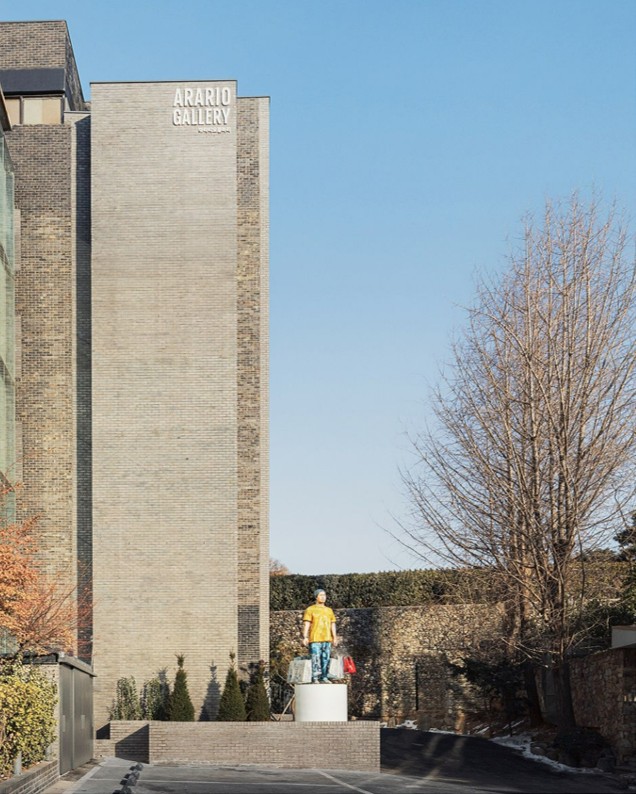
Exterior view of ARARIO GALLERY / Photo: ARARIO GALLERY
ARARIO GALLERY
ARARIO GALLERY is a contemporary art
gallery based in Korea and China that has introduced both Korean and
international artists. Its program encompasses artists from a broad range of
generations, from emerging practitioners to internationally active mid-career
and senior figures, and includes exhibitions across painting, sculpture,
installation, and moving image.
ARARIO GALLERY SEOUL actively utilizes
exhibition spaces with different ceiling heights and architectural
characteristics, presenting exhibitions in which artistic practice is closely
connected to the surrounding environment. For this exhibition, LEE organizes
the gallery’s three above-ground floors into a book-like spatial narrative,
unfolding different layers of memory and consciousness throughout the building.
Exhibition Information
Exhibition:
LEE Jihyun《Fantasma: Restless Silence》
Dates: July 1–August 15, 2026
Venue: ARARIO GALLERY SEOUL, 1st, 3rd, and 4th Floors