
In February 2026,
Korea’s two leading auction houses, Seoul Auction and K Auction, held their
respective major sales. Seoul Auction conducted its 190th Art Auction on
February 26, while K Auction held its 195th Major Auction on February 27. Both
sales were structured around established modern and contemporary masters,
offering a clear indication of the Korean art market’s position following a
period of correction and consolidation.
Seoul Auction:
Maintaining a 70% Success Rate, Recalibrating Price Expectations
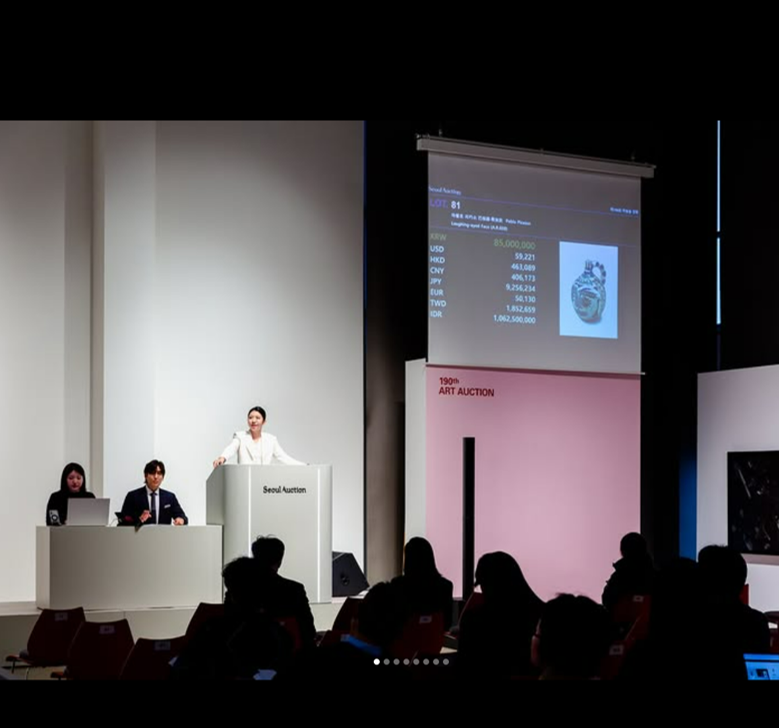
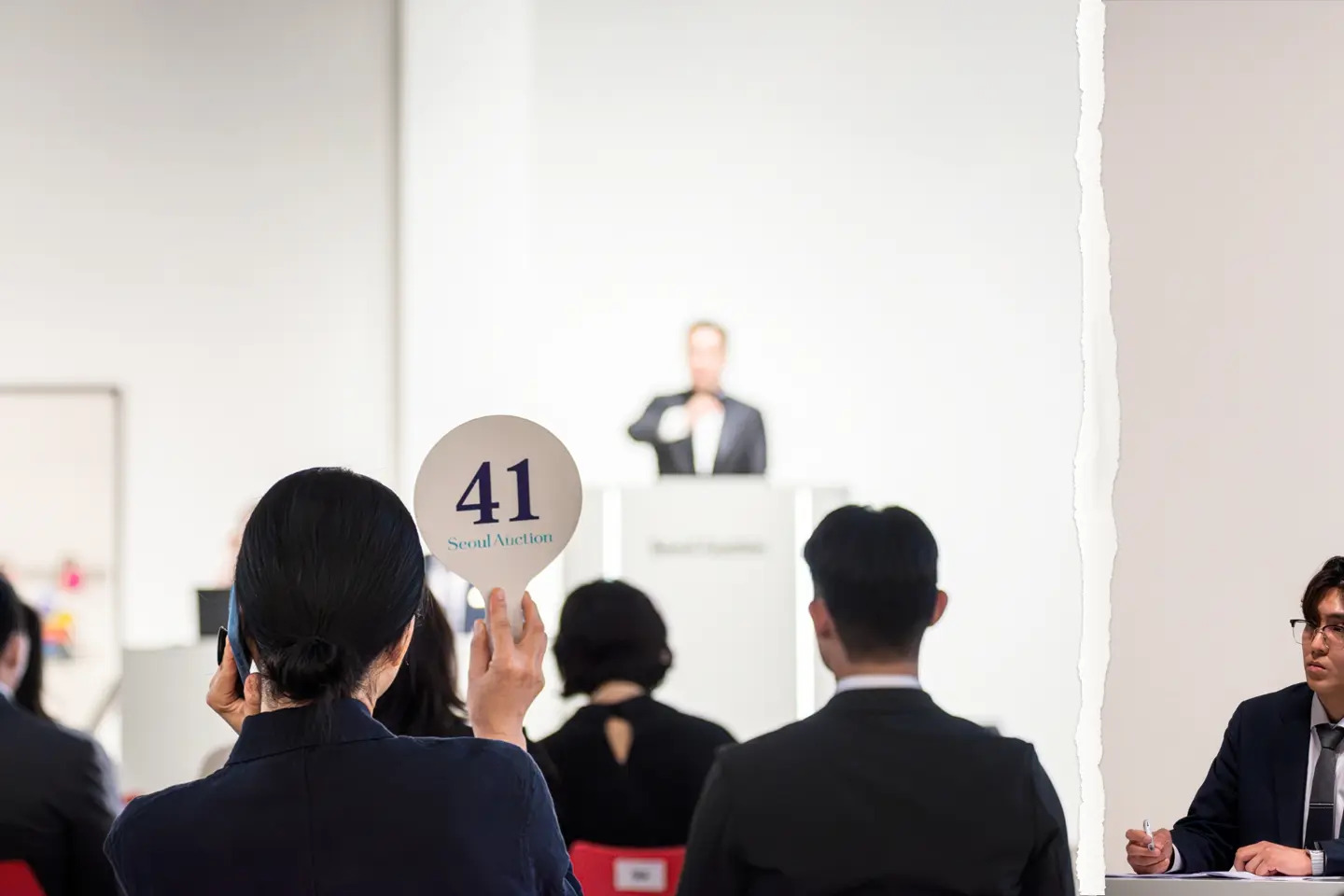
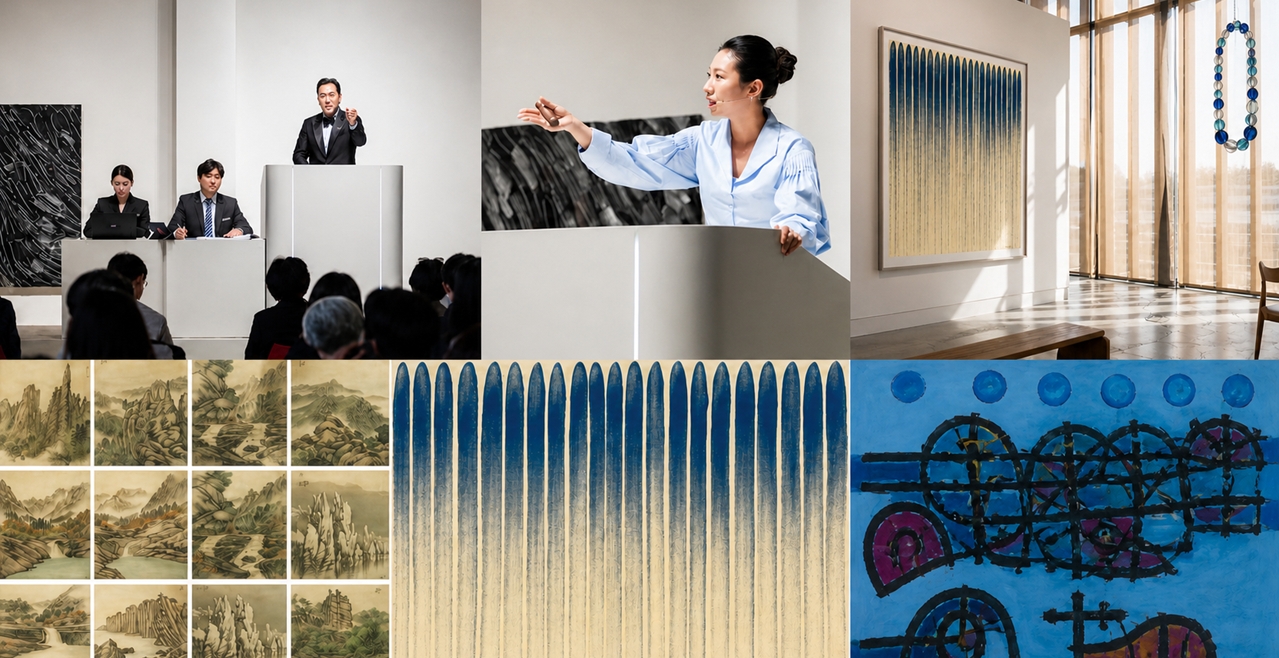
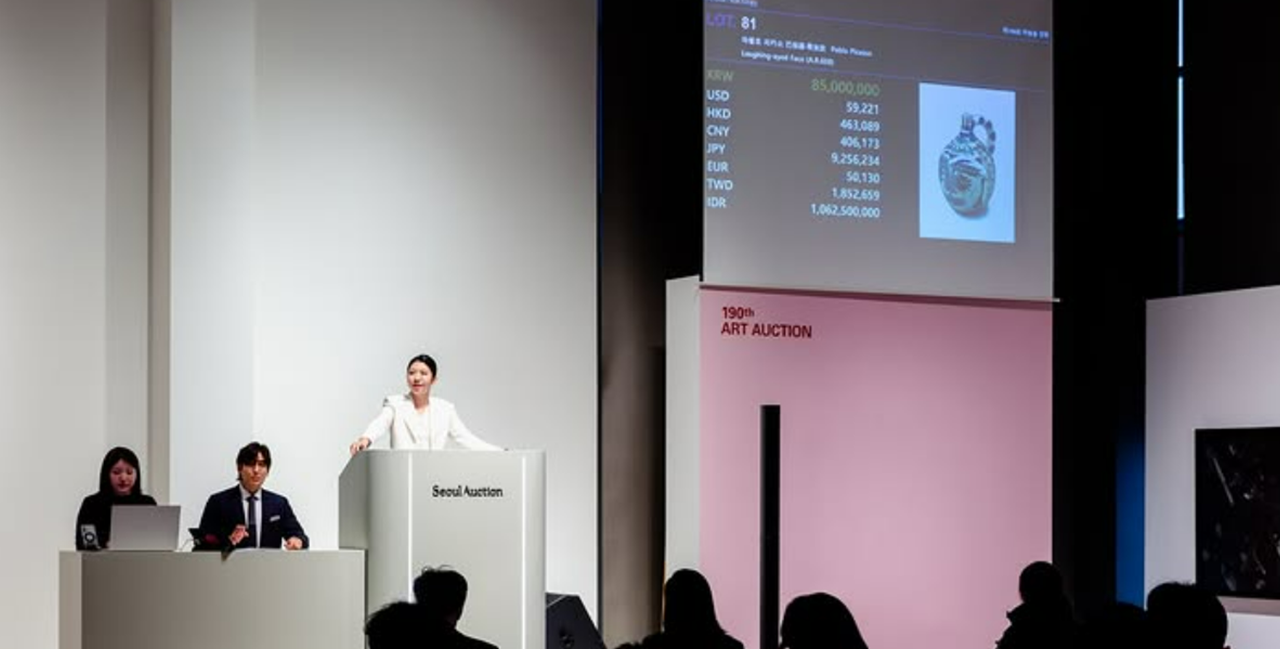
Seoul Auction 190th Sale Installation View / Photo: Seoul Auction Blue Instagram
Seoul Auction’s
190th sale presented 143 works, with a combined low estimate of approximately ₩8.4
billion (approx. $5.79 million, converted at ₩1,450 per USD). A total of 93
works were sold, resulting in a sell-through rate of 72.7%, and the total
hammer price reached approximately ₩4,478,900,000 (approx. $3.09 million).
While the
sell-through rate remained above 70%, the total realized amount appeared
conservative relative to the aggregate estimate. This outcome suggests not an
aggressive rebound but a recalibration phase in which price expectations and
actual demand are gradually aligning. Several works by leading Korean artists
were left unsold, reinforcing the cautious sentiment currently shaping buyer
behavior.
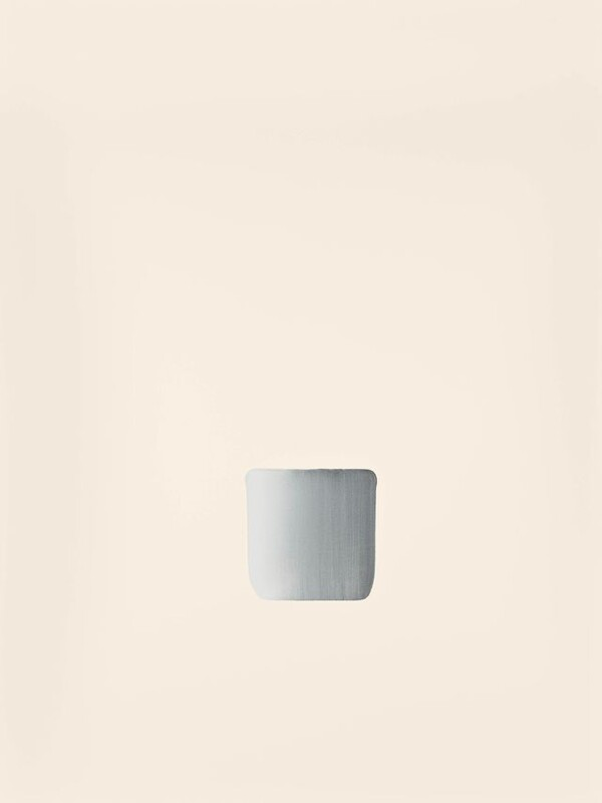
The highest price of the sale was achieved by Lee Ufan’s Dialogue (2008), oil and mineral pigment on canvas, 290.8×218.5cm(300), which sold for ₩950,000,000 (approx. $655,000). © Seoul Auction
The highest price
of the sale was achieved by Lee Ufan’s Dialogue
(2008), which sold for ₩950,000,000 (approx. $655,000). The work functioned as
a price anchor within the sale, confirming that large-scale blue-chip works
continue to serve as market benchmarks. However, beyond this anchor, bidding
intensity varied noticeably across categories.

Kim Tschang-Yeul’s early painting Sunflower (1955), oil on canvas, measuring 43.2 × 116.3 cm, carried an estimate of ₩250,000,000–₩500,000,000 (approx. $172,000–$345,000). The final result was not publicly disclosed at the time of reporting. © Seoul Auction
Additional works
by Kim Tschang-Yeul (‘Waterdrop’ series), Lee Bae (‘Brushstroke’
series), Jang Ukjin, Kim Chong-hak, and Lim Jik-soon were also included in the
sale. Demand within this group was selective rather than concentrated,
reflecting a shift from speculative competition toward discriminating
acquisition. Observational hesitation and cautious bidding patterns were
clearly evident.
Parallel to its
major auction, Seoul Auction conducted premium and themed online sales
throughout the month. If the offline major sale establishes symbolic pricing
and benchmark values, the online platforms function as liquidity channels
sustaining transactional frequency in the mid- and lower-price segments.
K Auction: Mixed
Portfolio Strategy and Defensive Market Positioning
K Auction’s 195th
Major Auction presented 83 works, maintaining a mixed portfolio strategy that
combined Korean modern masters with internationally established blue-chip
artists. This approach reflects defensive positioning in a moderated liquidity
environment, prioritizing artists whose market stability has already been
demonstrated.
Domestic artists
included Chun Kyungja, Do Sang-bong, Jang Ukjin, Kim Whanki, and Lee Jung-seob,
while international figures such as Yayoi Kusama, Bernard Buffet, Gerhard
Richter, and Yoshitomo Nara were also featured.
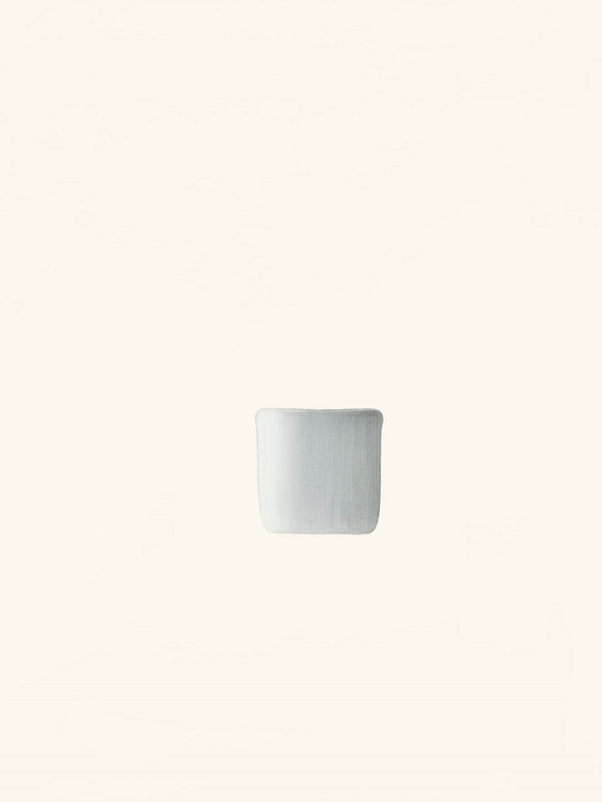
Lee Ufan’s ‘Dialogue’ series (2007, 300 size), estimated at ₩1,350,000,000–₩2,400,000,000 (approx. $931,000–$1.66 million), failed to sell. © K Auction
A large-scale
work from Lee Ufan’s ‘Dialogue’ series (2007, 300 size), estimated at ₩1,350,000,000–₩2,400,000,000
(approx. $931,000–$1.66 million), failed to sell. The unsold result underscores
the market’s increasing sensitivity to scale, pricing, and perceived quality
even within the blue-chip category.
Works by Yayoi
Kusama (Pumpkin) and Yoshitomo Nara (Untitled
drawing) were positioned as internationally recognized demand
indicators within the Korean market, signaling an effort to align domestic
collecting behavior with global pricing structures.
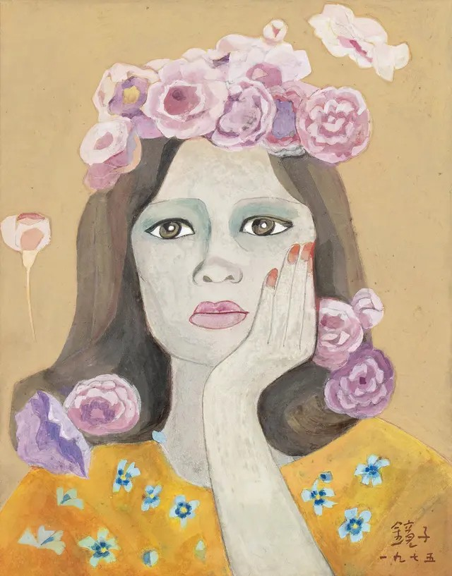
Chun Kyungja’s Woman (1975), color on paper, 32 × 25 cm, was estimated at ₩260,000,000–₩500,000,000 (approx. $179,000–$345,000) and sold at ₩260,000,000 (approx. $179,000), the low estimate. / © K Auction
K Auction
continues to operate premium and weekly online auctions alongside its major
sales. In this structure, the major auction establishes symbolic and reference
pricing, while online platforms maintain liquidity and transaction density in
the mid-range market.
Taken together,
the February 2026 major auctions indicate that the Korean art market is not
entering a rapid upward cycle but rather undergoing structural rebalancing
following a liquidity-driven expansion period.
Large-scale
blue-chip works continue to function as price anchors, yet their absorption
capacity has become increasingly selective. Museum-quality masterpieces have
appeared less prominently in recent cycles, particularly in the case of Lee
Ufan, where fully resolved, high-caliber large-scale works have not frequently
been presented.
The market now
reflects a transition from volume-driven expansion toward quality-driven
selectivity. Rather than signaling acceleration, the February results suggest
equilibrium formation. Future direction
will depend on the sustained absorption of large-scale blue-chip works and the
recovery of transaction density in the mid-price segment.
The capacity to
identify quality works early, and to closely observe emerging artists and
evolving demand patterns, will likely become increasingly decisive within this
rebalancing environment.
References
- - Seoul
Auction Results: https://www.seoulauction.com/auction-list/results
- K Auction Major Sale Results: https://www.k-auction.com/Auction/Major/Result