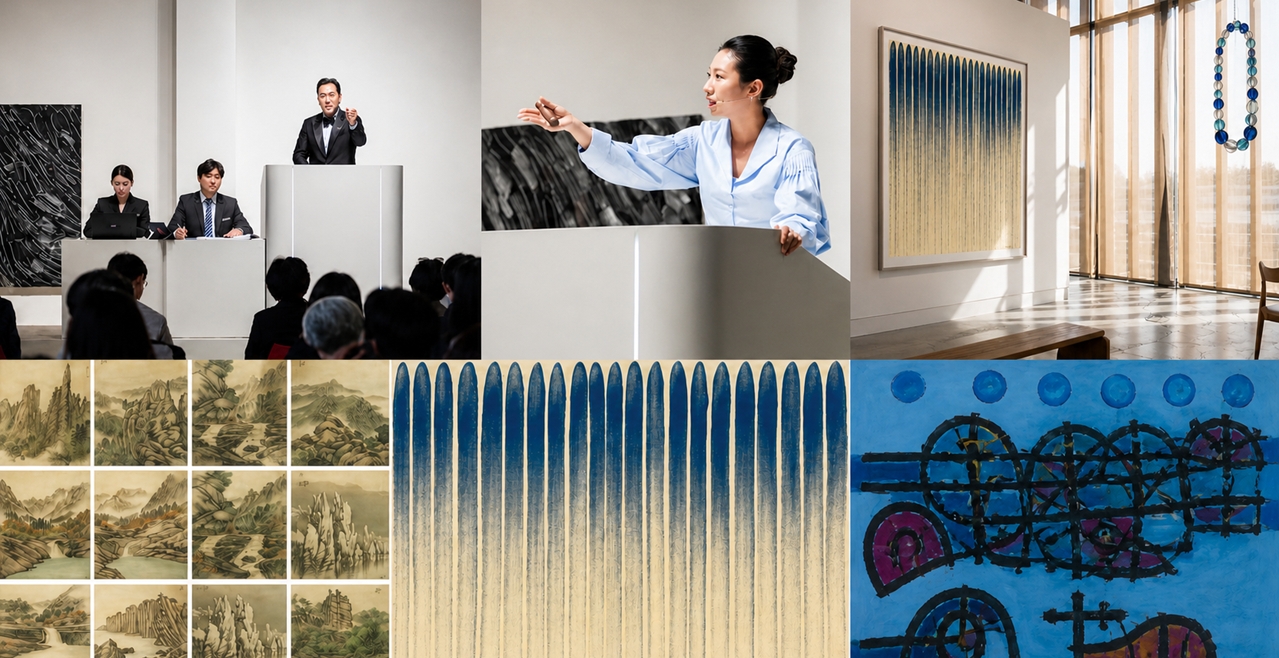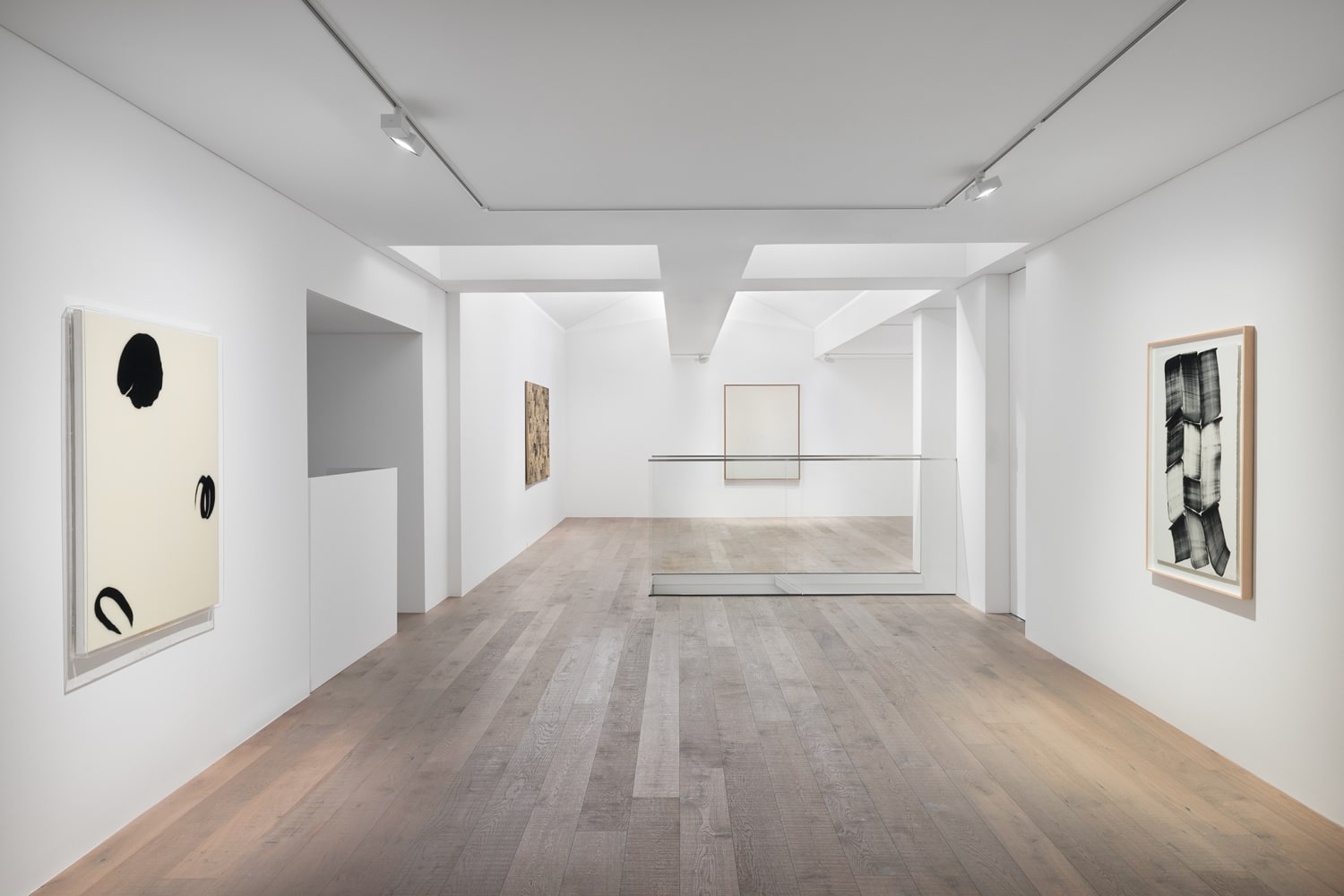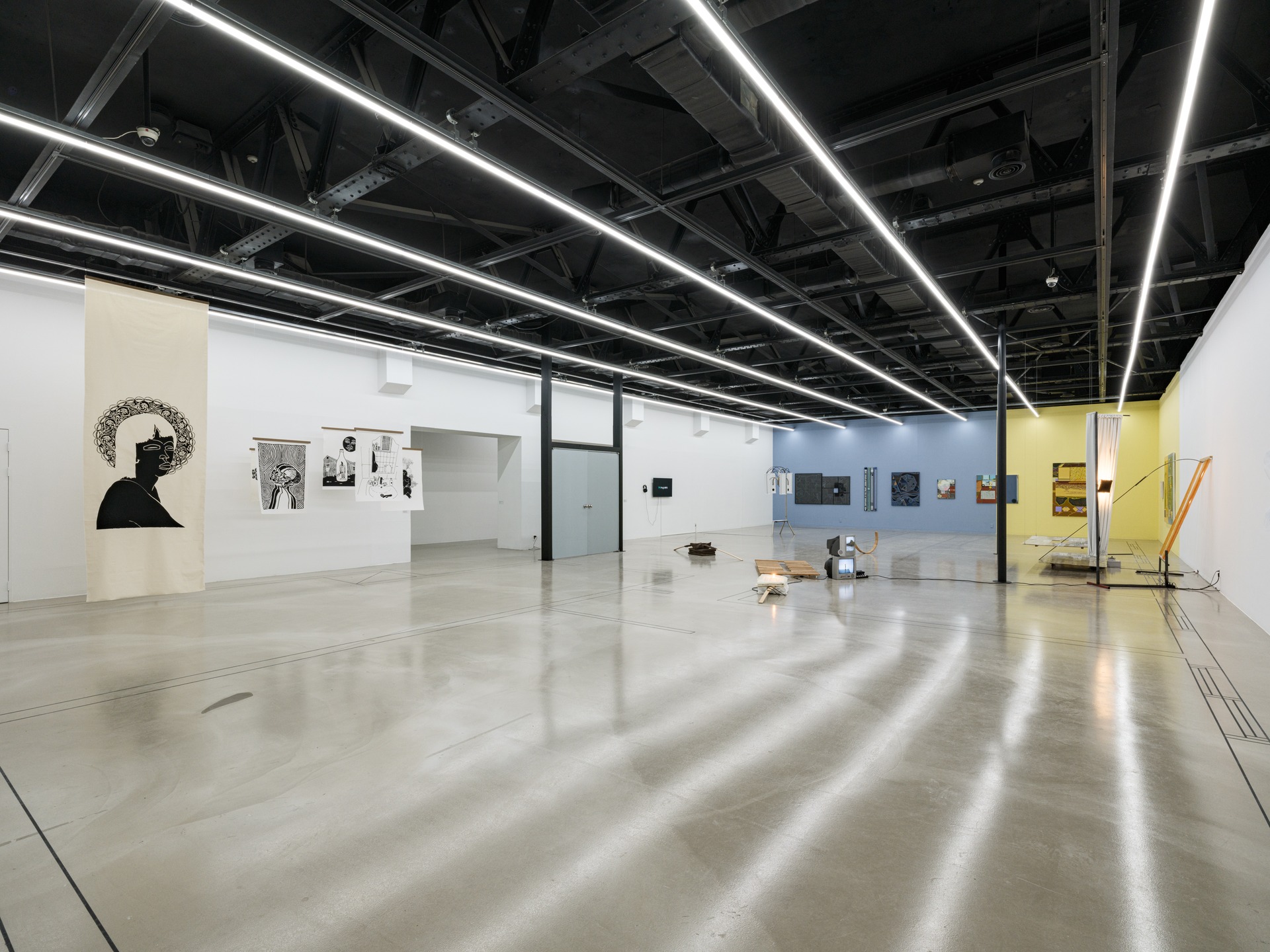

The ‘20th/21st Century’ sale to be held in Hong Kong
from March 27 to 28 carries significance beyond that of a seasonal auction, as
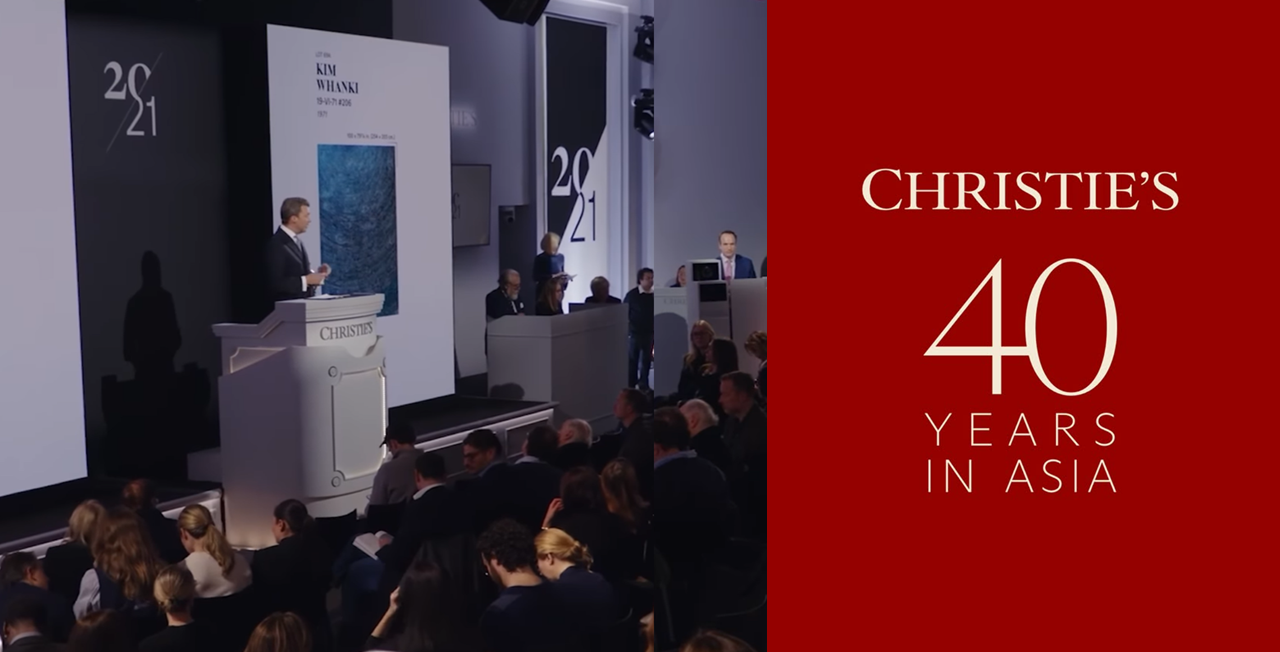
this year marks Christie’s “40 Years in Asia.” The sale will take place at The
Henderson, where Christie’s Asia Pacific headquarters is located.
One notable aspect of this season is the presence of
Korean artists. According to Christie’s, artists representing Korean modern and
contemporary art—including Kim Whanki, Rhee Seundja, Lee Ufan, Kim
Tschang-Yeul, Myonghi Kang, Chung Sang-Hwa, and Park Seo-Bo—are highlighted
within the broader context of the sale. This configuration demonstrates how
Korean art has come to occupy an important position in explaining both East
Asian modernism and the global market for abstract painting.
Jung Yunah, Senior Specialist of 20th and 21st Century
Art at Christie’s Asia, commented on the sale as follows:
“This spring at Christie’s Hong Kong, artists who
shaped the language of Korean abstraction and defined the intellectual and
material rigor of Korean modernism come together once again. From Lee Ufan’s
philosophy of encounter to Rhee Seundja’s lyrical cosmology, Kim Tschang-Yeul’s
meditative water-drop paintings, and Myonghi Kang’s poetic landscapes born from
deep observation of nature, these works speak not only of aesthetics but of
time, contemplation, and endurance.”
The Market Structure of Korean
Abstract Art
In the global auction market today, Korean art is
primarily traded through abstract painting and modernist artists, with
Dansaekhwa works forming a particularly stable market structure. Since the
mid-2010s, the expansion of international gallery exhibitions and museum
research has positioned Dansaekhwa artists as an important category in the
Asian auction market. Over the past decade, auction records for Korean abstract
art have steadily increased.
Kim Whanki’s dot paintings have established the
highest price benchmarks for Korean art, while Lee Ufan and other Dansaekhwa
artists have become stable blue-chip names among international collectors.
Kim Whanki — The Dot Paintings
that Established the Price Benchmark for Korean Abstract Painting
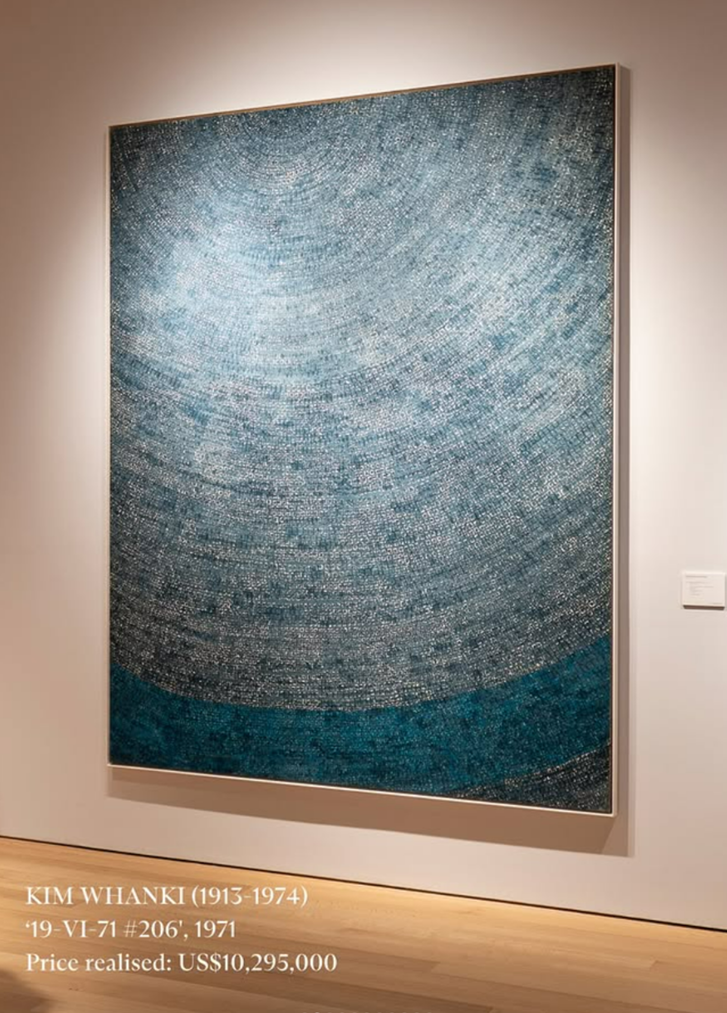
Kim Whanki Auction lot / Photo : Christie’s Asia Instagram
Kim Whanki (1913–1974) established a price benchmark
for Korean art in the international auction market through his New York-period
dot paintings.
After relocating his artistic base to New York in the
late 1960s, he developed a painting method based on the repetitive accumulation
of dots. His canvases filled with thousands of points constructed a unique
language of abstraction combining Korean sensibility with a sense of cosmic
space.
The 1971 painting 19-VI-71 #206 was
sold at Christie’s New York 20th Century Evening Sale for approximately
US$10,295,000, marking a landmark example of the global competitiveness of
Korean art. In this Hong Kong sale, Kim Whanki’s name once again appears as a
symbolic reference point for the price structure established by Korean abstract
painting in the international auction market.
Lee Ufan — Painting that
Connects Dansaekhwa and Mono-ha Philosophy
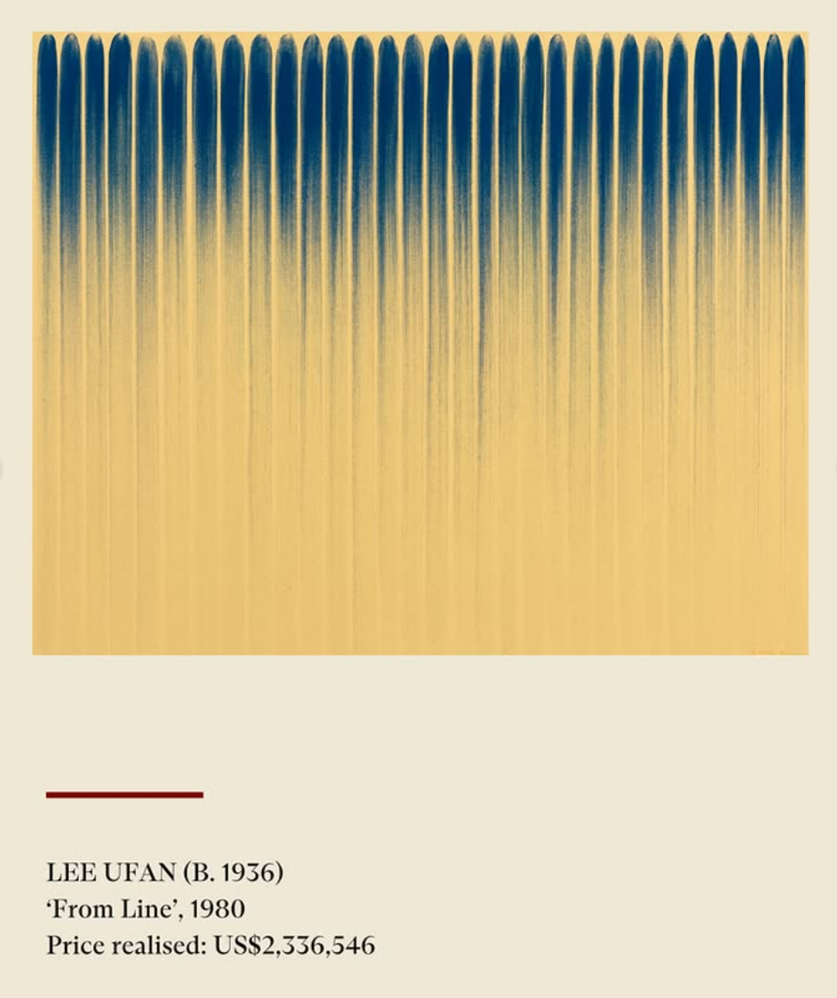
Lee Ufan Auction lot / Photo : Christie’s Asia Instagram
Lee Ufan (b.1936) is regarded as a key figure in
understanding East Asian modernism. His work is widely known for linking the
Japanese Mono-ha movement with the discourse of Korean Dansaekhwa.
His representative series From Line
reveals the accumulation of time and gesture through repeated brushstrokes
across the surface. Rather than functioning as purely formal abstraction, these
paintings are notable for embodying philosophical reflections on existence and
relationality.
A 1980 work from the From Line series
was previously sold for approximately US$2,336,546, demonstrating the stable
price structure that Dansaekhwa-related works have achieved in the
international auction market.
Kim Tschang-Yeul — Meditative
Abstraction Constructed through Water-Drop Painting
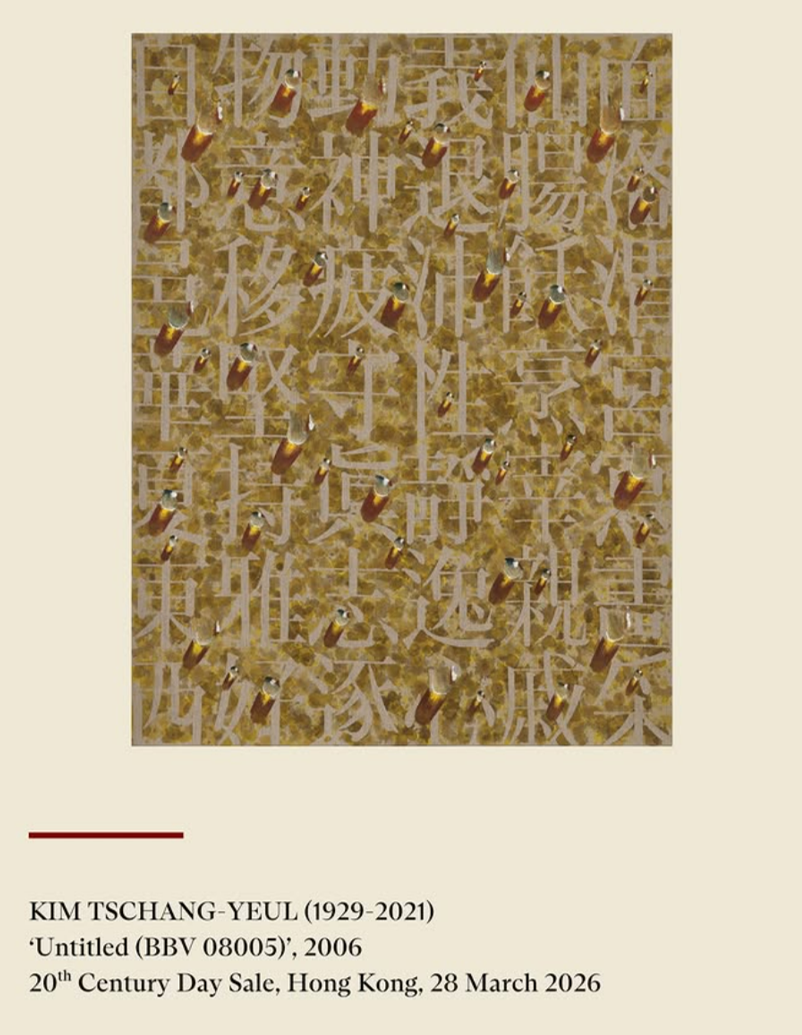
Kim Tschang-Yeul Auction lot / Photo : Christie’s Asia Instagram
Kim Tschang-Yeul (1929–2021) developed a distinctive
pictorial world through the motif of water drops.
The realistically rendered drops on canvas function
not simply as still-life imagery but as meditative devices that contemplate the
essence of existence and objects. His work has been interpreted as a synthesis
of Western abstract painting and Eastern philosophical thought.
The work Untitled (BBV 08005)
(2006), presented in this Hong Kong sale, exemplifies the characteristics of
his water-drop paintings. The transparent image of the drop and the flatness of
the picture plane create a subtle tension that produces a unique visual
experience.
Rhee Seundja — Another Lineage
of Korean Abstraction Formed in Paris
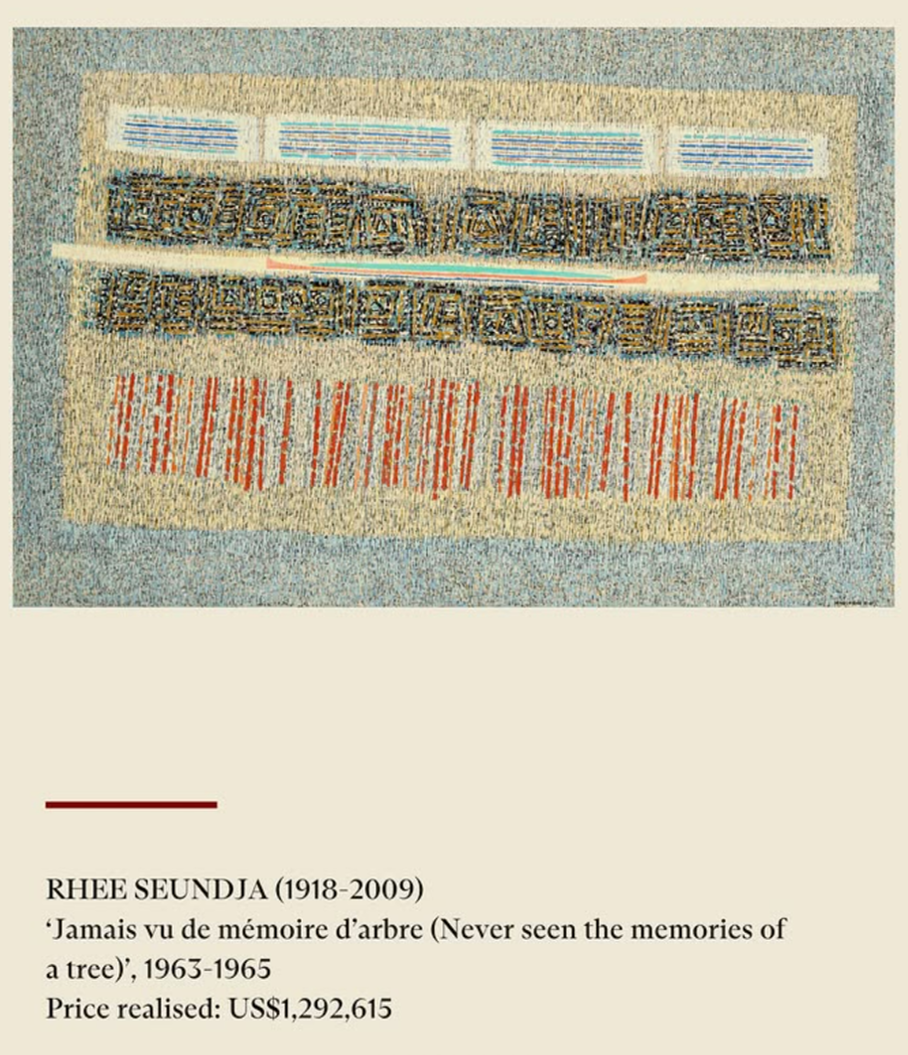
Rhee Seundja Auction lot / Photo : Christie’s Asia Instagram
Rhee Seundja (1918–2009) was one of the most
internationally active Korean women abstract painters. After relocating to France in the late 1950s, she
developed an independent abstract language combining cosmic imagination with
lyrical color.
Her work Jamais vu de mémoire d’arbre
(1963–1965), which merges memories of nature with a cosmic spatial sensibility,
previously sold for approximately US$1,292,615 at auction, marking a meaningful
record in the international market.
The work Mon auberge de mars No.3
(2002), presented in this sale, demonstrates how this cosmic imagination
continued to unfold in her later practice.
Ha Chong-Hyun — Dansaekhwa
Painting Built on Materiality and Repetitive Gesture
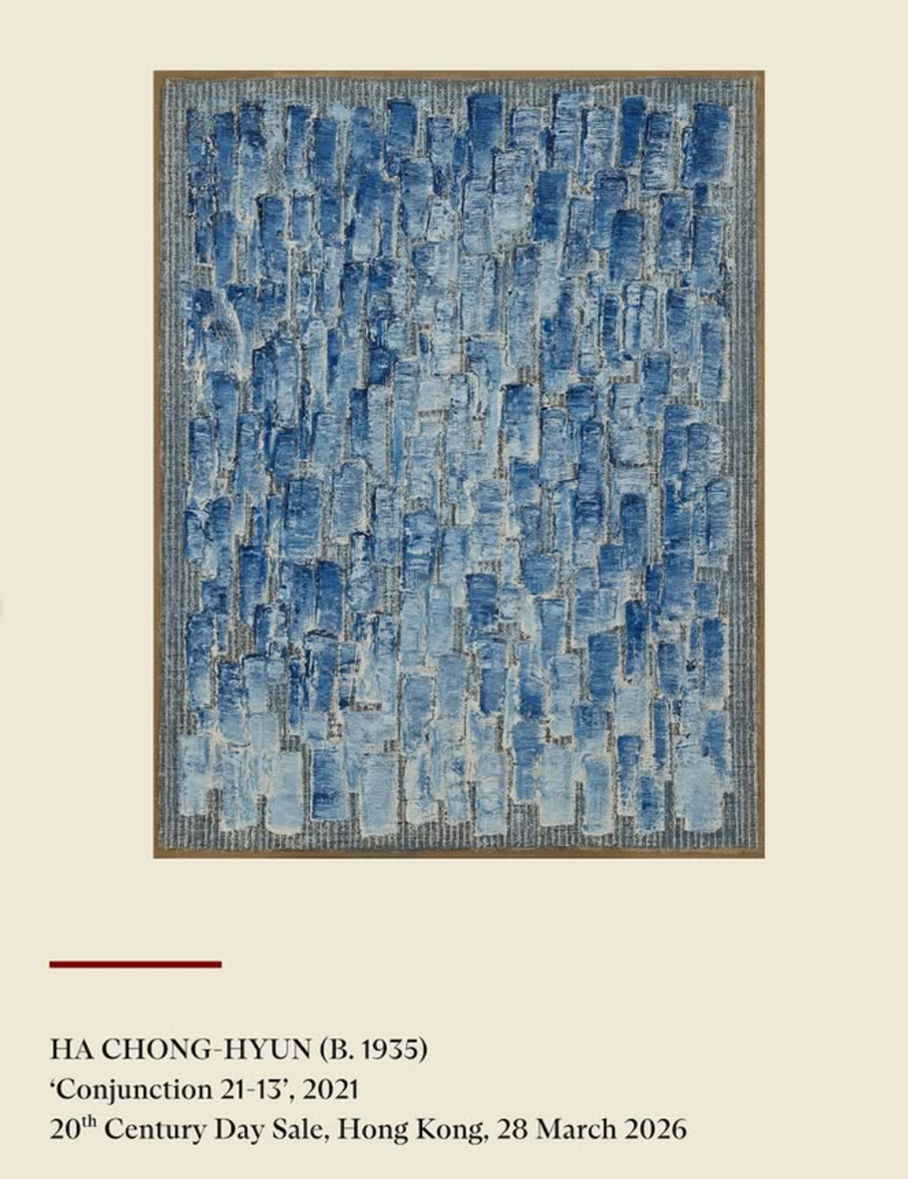
Ha Chong-Hyun Auction lot / Photo : Christie’s Asia Instagram
Ha Chong-Hyun (b.1935) is a leading figure of the
Korean Dansaekhwa movement.
His signature ‘Conjunction’ series is produced through
a distinctive method of pushing paint from the reverse side of the canvas. In
this process, the pigment passes through the woven structure of the canvas,
revealing both material presence and traces of physical action.
The work Conjunction 21-13 (2021),
included in this Hong Kong sale, demonstrates how this method continues to
define the artist’s practice today.
Myonghi Kang — Abstract
Landscapes Translating the Sensory Experience of Nature
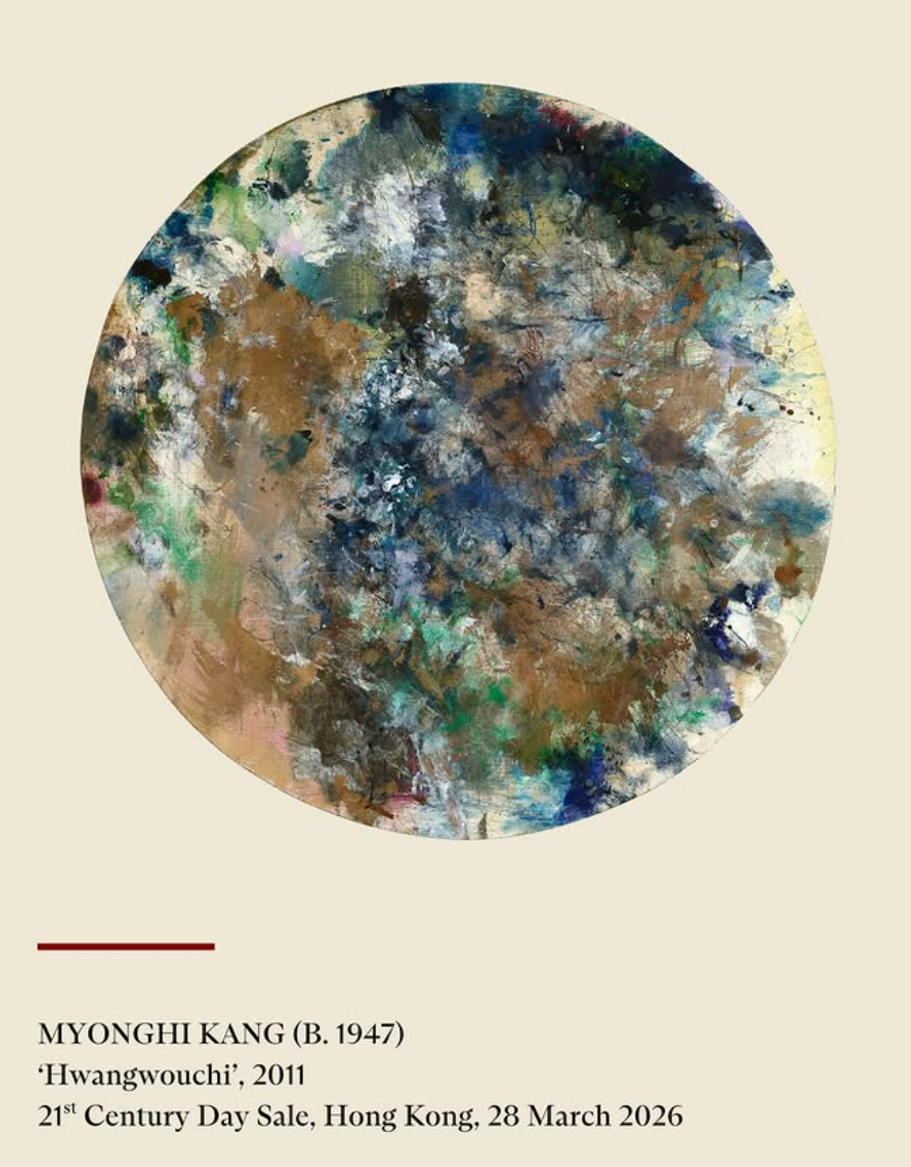
Myonghi Kang Auction lot / Photo : Christie’s Asia Instagram
Myonghi Kang
(b.1947) develops her paintings by translating the sensory experience and
memory of nature into fields of color and abstract structures rather than
directly depicting landscape. Her work can be
understood not as representation of nature but as a process of reconstructing
the sensations of time and space experienced within nature on the pictorial
surface.
The work Hwangwouchi
(2011), presented in the Christie’s Hong Kong sale, clearly demonstrates this
approach by transforming a natural landscape into an abstract configuration of
color and structure.
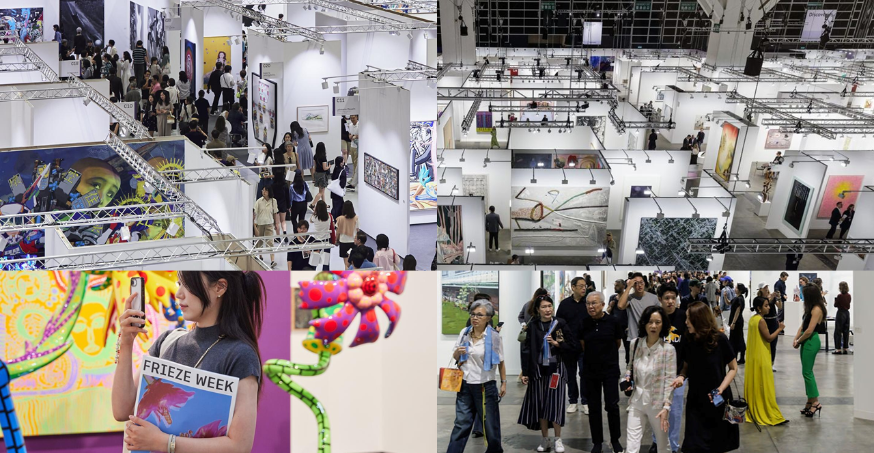
Hong Kong remains a
central stage for the Asian art market. While New York and London lead the
structure of the global art market, Hong Kong functions as one of the most
important crossroads for art transactions in East Asia.
The Christie’s Hong
Kong 40th Anniversary Sale therefore represents an important moment that
reveals which artists and works come to represent Korean art within the
international art market. At the same time, it demonstrates how Korean abstract
art continues to be read within the global language of modernist abstraction.
Auction Information
Christie’s Hong
Kong
20th / 21st Century Art Day Sale
27–28 March 2026
The Henderson, Hong Kong
Christie’s Asia Pacific Headquarters
Website: www.christies.com