To consider the future of Korean
contemporary art, we must first examine the structures and standards through
which the global art world operates today.
Over the past century, Korean modern and
contemporary art has developed by absorbing artistic forms, concepts, and
institutions that originated in the West and transforming them within Korea’s
own historical and social conditions. Today, however, the situation is
different.
Many of the forms and institutions of
modern and contemporary art that originated in the West have spread across the
world, while art from Korea and other parts of Asia, the Middle East, Latin
America, and Africa has become part of the international contemporary art
world.
The issue, therefore, can no longer be
understood through the old dichotomy of whether to embrace Western art or
pursue something distinctly Korean.
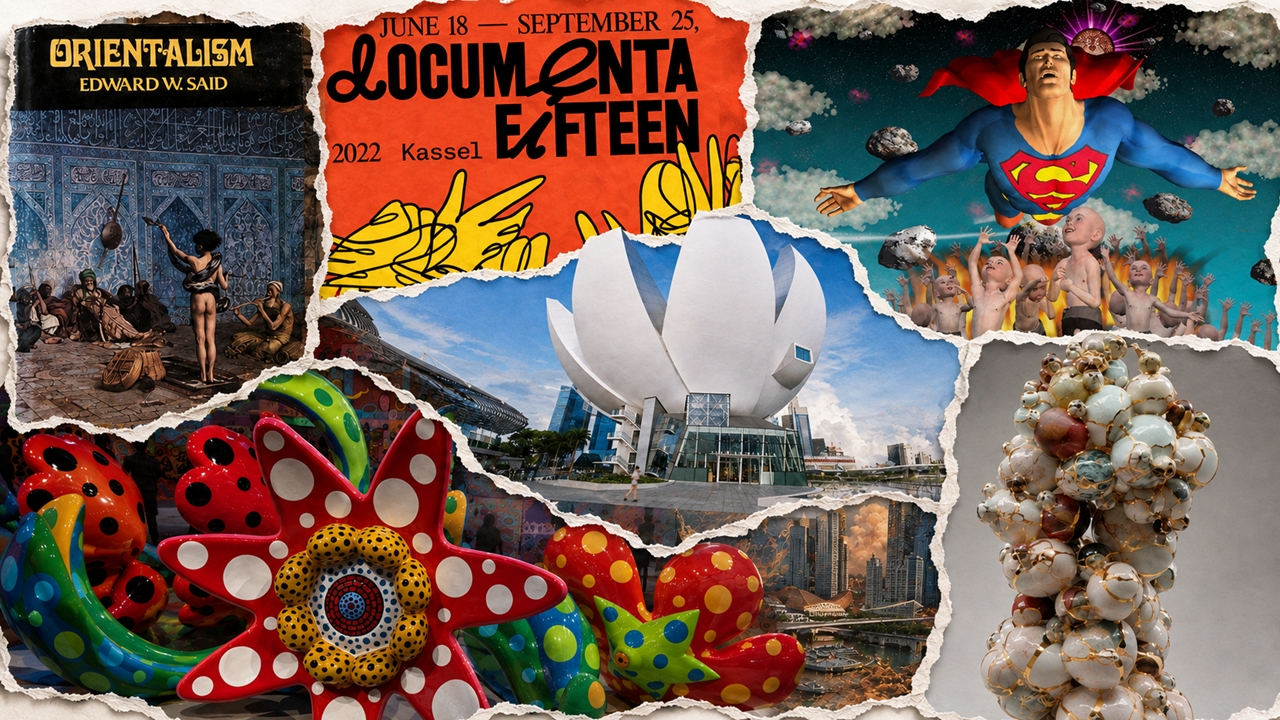
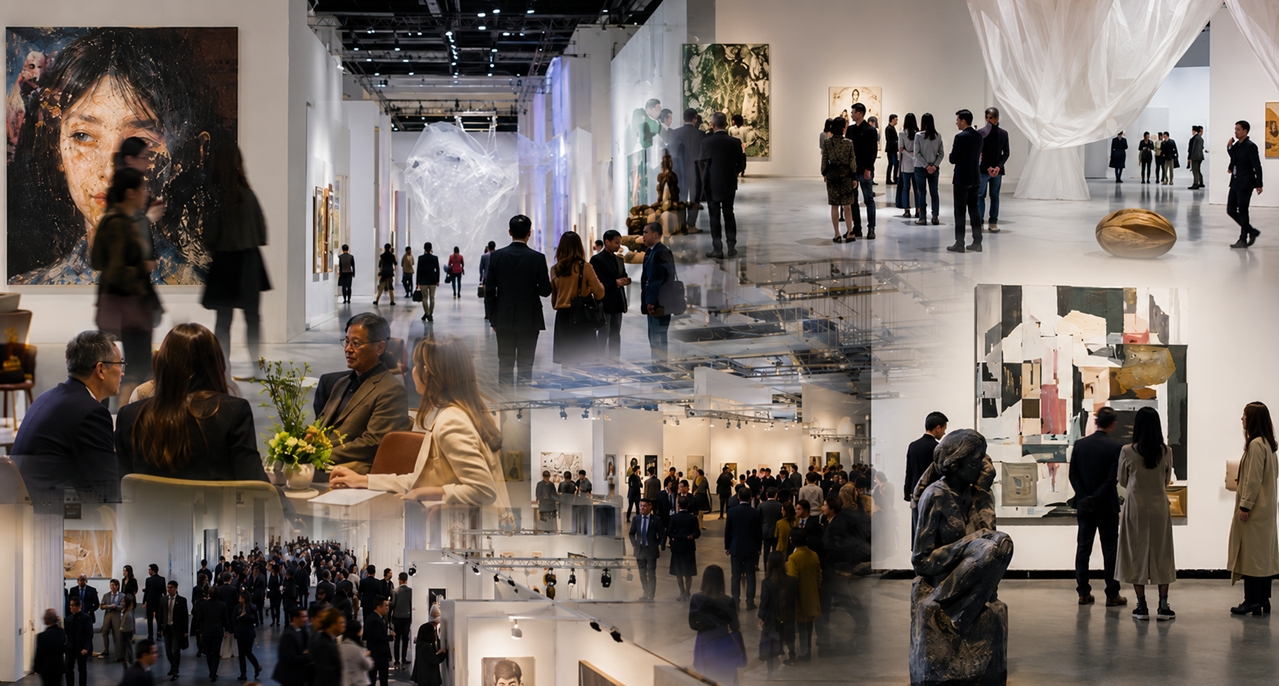
Artists in Seoul, London, New York, Berlin,
Beijing, Jakarta, and São Paulo work within different historical and cultural
contexts. Yet their works are produced, interpreted, exhibited, and circulated
through an international art system interconnected by biennials and museums,
art schools and residencies, galleries and art fairs, criticism and publishing,
media and archives.
Installation, video, performance, sound,
archival practice, and research-based art can no longer be identified with any
particular country or region. Concepts such as identity, memory, gender,
migration, borders, decolonization, ecology, and community are likewise shared
across contemporary art in different parts of the world.
A common set of forms, institutions,
discourses, and languages has emerged, enabling art from different parts of the
world to encounter one another within a shared international field.
This essay examines this common framework
through what we will call the “global standards” of contemporary
art.
The purpose of discussing global standards
is not to learn and conform once again to criteria already established by the
international art world. Nor is it to define those standards simply as Western
and reject them.
What matters is to determine where
Korean art stands within an already globalized structure of contemporary art,
and what it can produce anew within it.
The discussion of the post-contemporary
begins here as well. Before considering what might come next, we first need to
understand the conditions that made contemporary art as we know it possible.
What Are Global Standards?
The global standards discussed here do not
refer to a particular artistic style or a single aesthetic criterion. They do
not imply that every artist should make installations or adopt a particular
philosophy or theoretical framework.
Rather, they refer to a shared
structure and language through which art from different cultural contexts can
be produced, interpreted, exhibited, documented, and circulated within an
international contemporary art system.
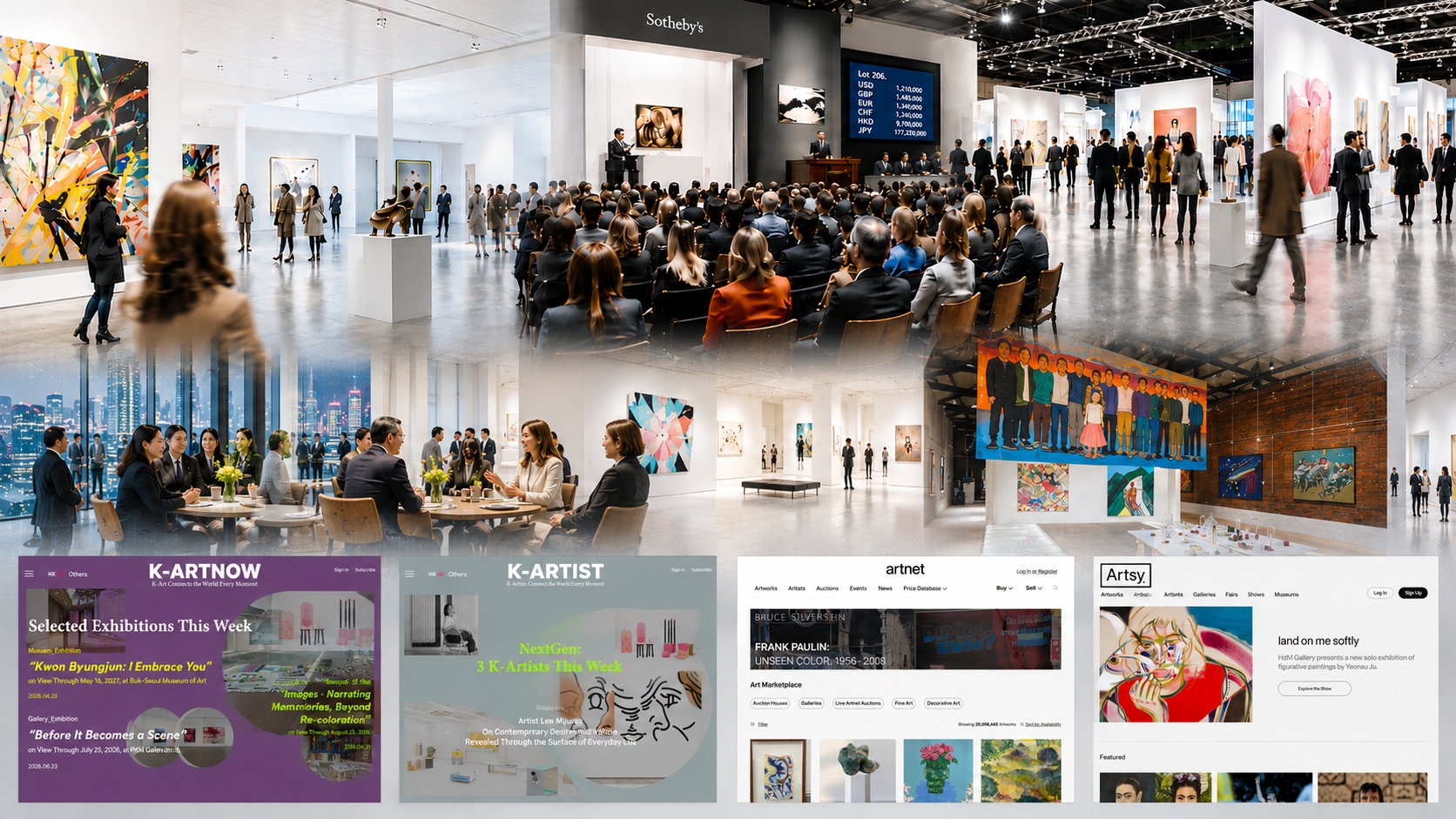
Artists produce works and conceptualize
their practices. Curators and critics provide contexts and interpretations.
Museums exhibit, collect, and preserve works, while archives accumulate records
of these processes. Galleries and art fairs connect artworks to markets, and
publishing and media transmit them across regions. Art schools and research
institutions study and teach the knowledge and methodologies that sustain this
system.
Together, these interconnected processes
constitute an international art ecosystem.
The globalization of contemporary art,
therefore, was not simply the globalization of artworks.
It was the globalization of the
entire system surrounding art.
The ZKM project “Global Art and the
Museum (GAM)”, launched in 2006, similarly examined how globalization was
transforming not only artistic production but also museums and biennial
networks, contributing to the formation of new “art worlds.”
In this sense, global standards are better
understood not as a fixed set of rules imposed by a single authority, but as a
common grammar that emerged through the operation of globalized contemporary
art itself.
From a Western Artistic
Language to a Global Common Language
Many of the principal forms and
institutional languages that we now associate with contemporary art were
developed within the history of twentieth-century Western modern art.
Following modernism, the emergence of
conceptual art, Minimalism, performance, video art, site-specific art, and
institutional critique rapidly expanded the field beyond the traditional media
of painting and sculpture. Later, postmodernism and postcolonialism, feminism
and gender, identity, relational and participatory practices, ecology, and
socially engaged art entered the central discourses of contemporary art.
These developments transformed not only the
forms of art but also the ways in which art was produced, exhibited, and
interpreted.
From the late twentieth century onward,
these forms and institutions increasingly spread beyond the West. Growing
international mobility, advances in information and communication technologies,
the proliferation of biennials and residency programs, and the expansion of new
museums and art markets reshaped the geography of the art world.
Paris, New York, London, and Berlin remain
powerful centers, but the global art world can no longer be explained through a
handful of Western cities alone. Seoul, Beijing, Shanghai, Hong Kong, Jakarta,
Sharjah, São Paulo, and numerous other cities have emerged as significant sites
for the production, exhibition, and circulation of contemporary art.
As artistic languages developed
in the West expanded globally, art from different regions of the world also
began to participate in the production of international contemporary art.
1989: A Changing Map of the Art
World
The year 1989 stands as one symbolic
turning point in this transformation.
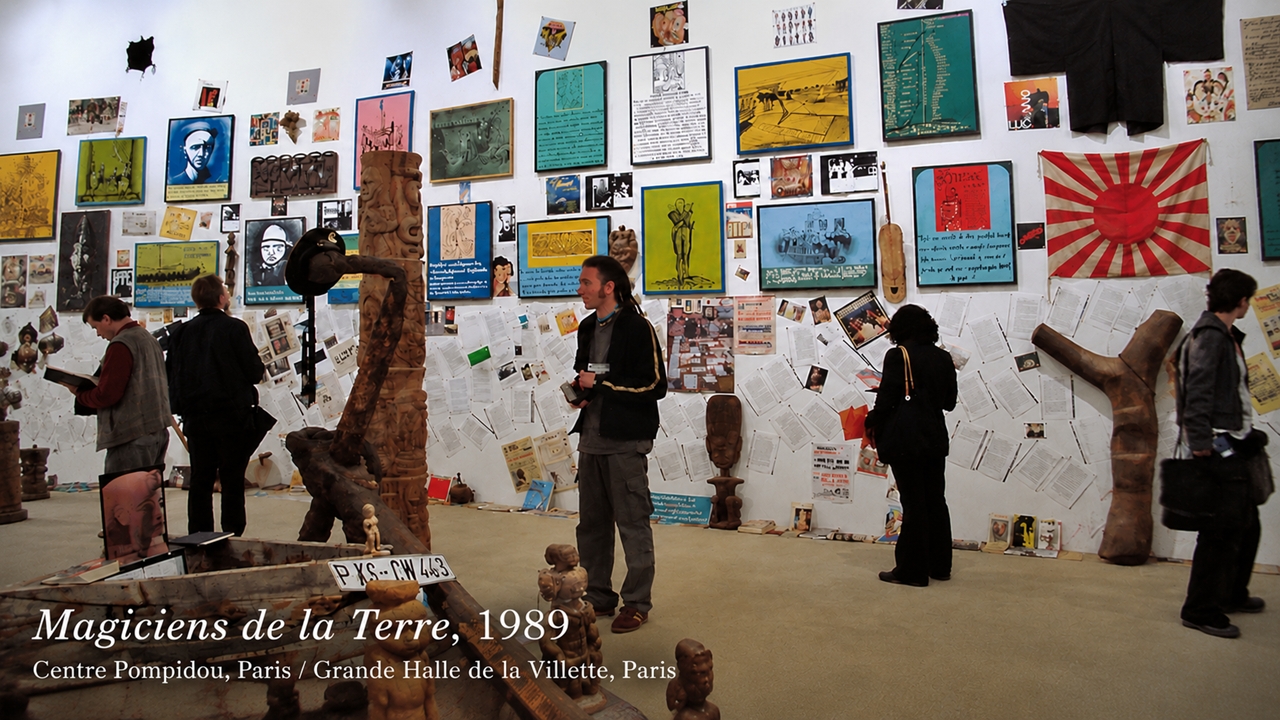
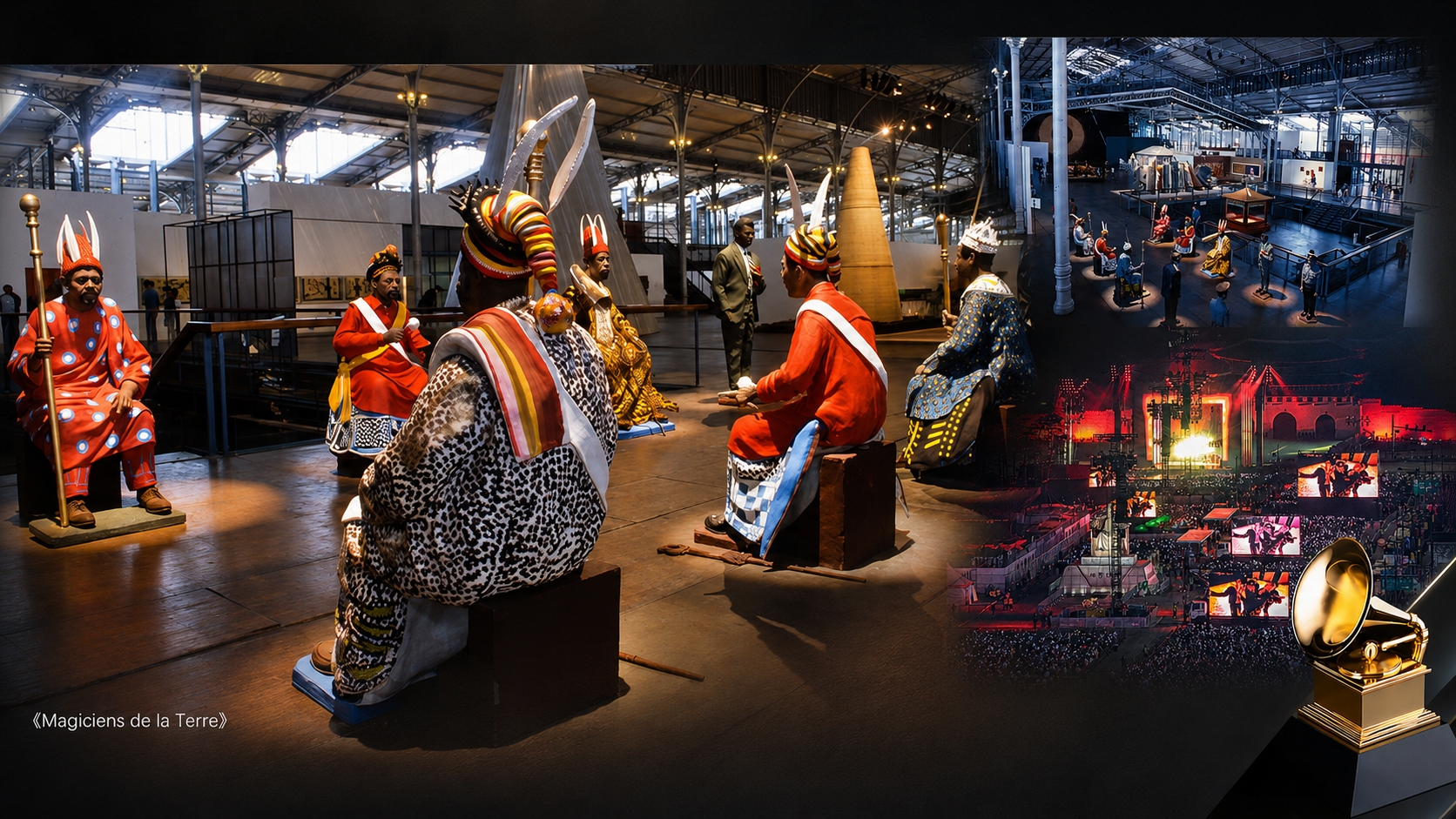
Held that year at the Centre Pompidou and
the Grande Halle de la Villette in Paris, 《Magiciens
de la Terre》 brought together 100 participants from
Western and non-Western contexts within a single international exhibition.
The exhibition subsequently generated
extensive debate over the criteria through which a Western curator selected and
represented non-Western art and culture. This was also one of the central
issues examined in the preceding series, “Asian Contemporary Art and
Orientalism.”
Beyond these controversies, however, the
geographical scope of the art world was rapidly expanding.
As biennials and international exhibitions
proliferated around the world, and artists from Asia, the Middle East, Latin
America, and Africa became increasingly visible in international museums,
galleries, and art markets, contemporary art expanded beyond its predominantly
Western institutional framework into what has come to be understood as the global
contemporary.
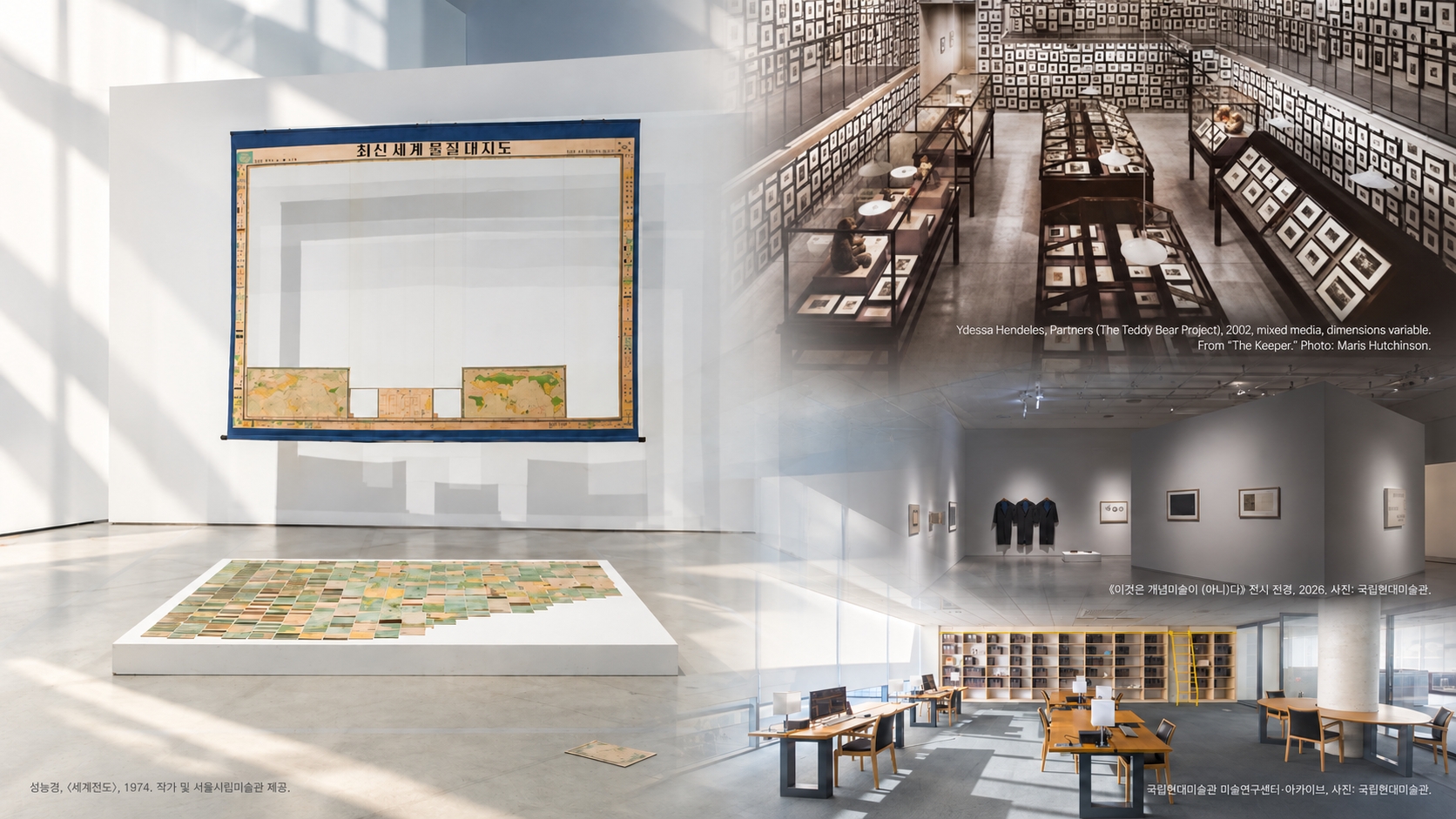
Major art institutions also responded to
this transformation. In 2009, the Museum of Modern Art (MoMA) in New York
launched C-MAP (Contemporary and Modern Art Perspectives), expanding long-term
research on modern and contemporary art beyond North America and Western Europe
and connecting that research to its collection, exhibitions, publications, and
educational programs.
The map of the art world was
changing.
The Globalization of Form and
the Localization of Content
The consequences of this transformation can
now be seen in exhibitions across the world.
Artists in Seoul and Berlin both work with
video. Artists in Indonesia employ archives, while artists in Brazil develop
research-based projects.
Installation, video, photography,
performance, sound, archival practice, research-based art, site-specific work,
and participatory projects no longer belong to any single nation or region.
As international mobility, overseas study,
and residency programs expanded, and as biennials, museums, art schools,
galleries, art fairs, and media became increasingly interconnected, artistic
forms and discourses also became internationalized.
Yet artists around the world do not all
tell the same stories.
On the contrary, the globalization of
contemporary art has made visible histories and experiences from different
regions that had previously received insufficient attention within a
predominantly Western-centric art-historical framework.
In Korea, colonial experience, war and
national division, compressed industrialization and urbanization,
democratization, and rapid social transformation provide important historical
contexts. In China, socialism, the Cultural Revolution, and the transformations
following Reform and Opening Up have shaped distinct experiences.
In Southeast Asia, histories of colonialism
and decolonization, religion and ethnicity, and processes of nation-building
intersect with artistic practice. In Latin America, the legacies of
colonialism, military dictatorships, political violence, and memory have
likewise informed contemporary art.
Globalization did not erase the local.
Instead, it brought local histories and memories, societies and individual
experiences into international contemporary art as significant forms of
content.
One of the defining characteristics of the
global contemporary thus becomes clear:
Forms have globalized, while
content has localized.
Artists in different parts of the world
increasingly work through internationally shared artistic languages while
bringing into them distinct histories, cultures, and social experiences.
Different worlds have begun to
speak through a shared artistic language.
Korean Contemporary Art within
Global Standards
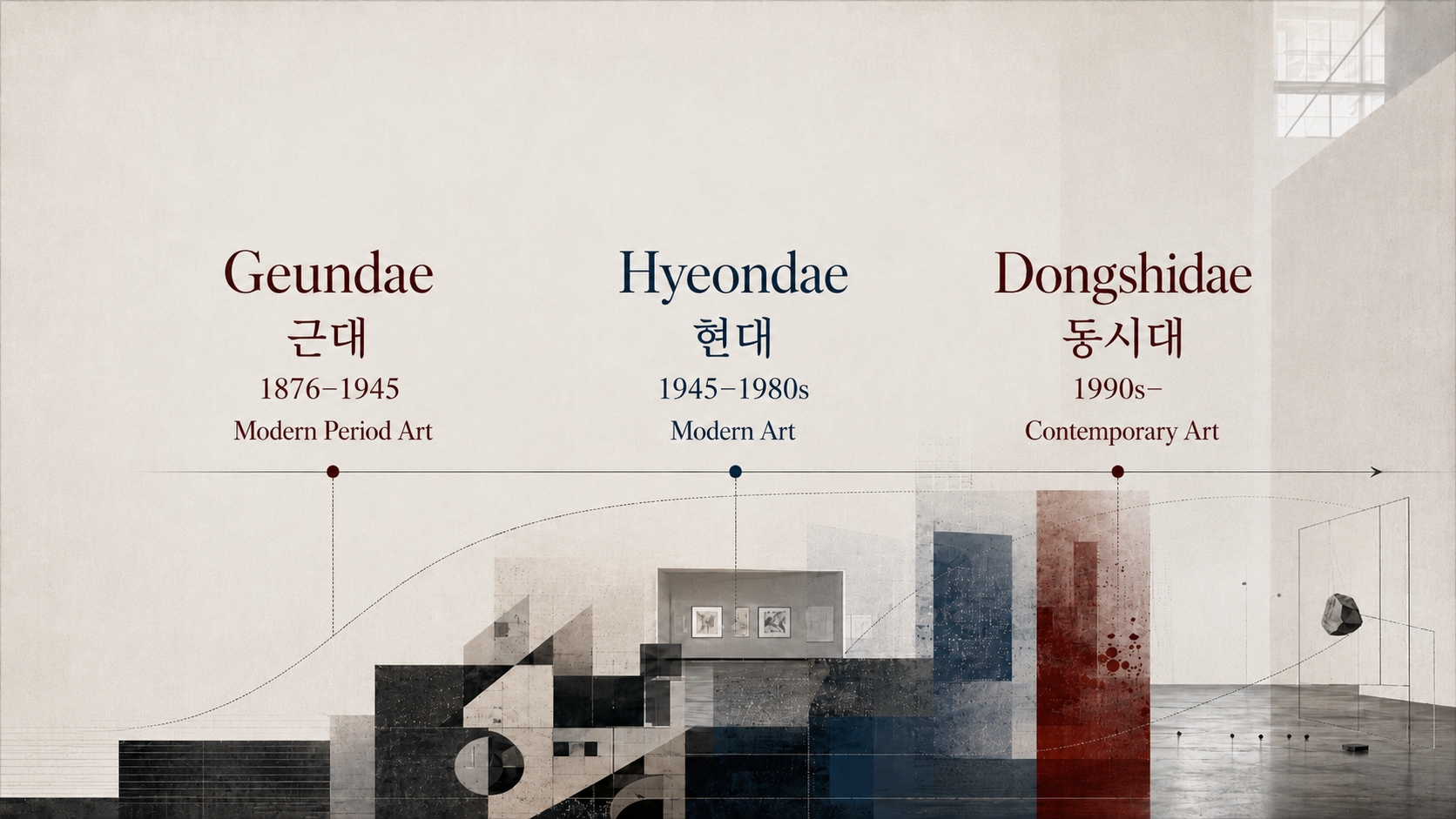
Korean modern and contemporary art has
developed within this process as well.
Since the modern period, Korea has absorbed
Western artistic institutions and languages. After liberation, international
currents including Informel, abstraction, experimental art, and conceptual
tendencies were received and transformed within Korea’s particular historical
and social conditions.
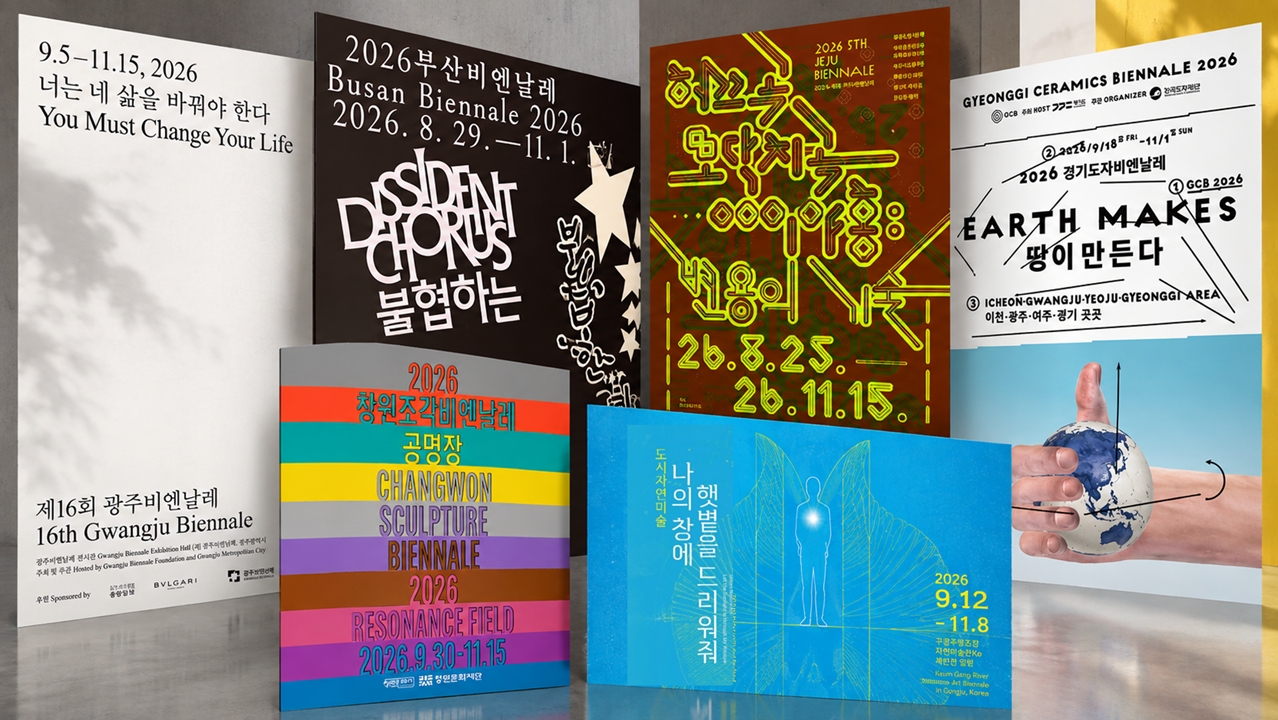
From the 1990s onward, the emergence of
international exhibitions such as the Gwangju Biennale, the expansion of
overseas study and residency programs, and the growing presence of Korean
artists in international biennials and museums brought Korean art into
increasingly direct contact with global contemporary art networks.
Today, the media and concepts employed by
Korean artists, as well as the ways in which their works are exhibited and
articulated, cannot be separated from the shared languages of international
contemporary art.
Korean contemporary art is
already operating within global standards.
The question, therefore, is no longer
whether Korea should embrace Western art or pursue something uniquely Korean.
Nor can Koreanness be located solely in
materials and images such as hanji, ink, ceramics, or traditional motifs.
Conversely, the use of video, installation, performance, or archival practice
does not automatically make a work Western.
What matters is not the nationality of a
material, but how the histories, experiences, sensibilities, and
modes of thought accumulated within Korean society are transformed into
aesthetic and formal languages.
The question of Koreanness must therefore
move beyond subject matter toward a more fundamental issue: what
kind of art is being produced?
From Reception to Production
Over the past several decades, global
standards have connected art from different cultural contexts within a shared
international field. The geographical scope of the art world has expanded, and
histories and experiences once relegated to its margins have become important
subjects of contemporary art.
Korea, too, has become part of this
international contemporary art world.
Yet operating within an
established global framework and helping to shape that framework are two
different things.
Expressing Korean history and experience
through an already established international contemporary art grammar is not
the same as producing new aesthetic and formal languages in Korea that open new
possibilities for art globally.
The next task for Korean contemporary art
is therefore clear:
to move from reception to
production.
This does not mean rejecting the West or
withdrawing from the shared languages of international contemporary art. It
means fully understanding those globalized languages without remaining confined
to their repetition, while developing the capacity to produce new works,
aesthetics, discourses, and values from Korea.
Such production cannot be the
responsibility of artists alone.
Artists must create new aesthetic
possibilities; criticism and scholarship must interpret them; curators and
museums must construct new contexts around them; archives must preserve their
histories; publishing and media must communicate them internationally; and
galleries and markets must provide structures for their sustained circulation.
For Korea to become a site of
production within the global art world is to build an ecosystem capable of
sustaining this entire process.
It is here that the question of the
post-contemporary re-emerges.
The post-contemporary does not mean
rejecting the contemporary or prematurely declaring the arrival of a new
artistic style. It begins by understanding the conditions that made
contemporary art possible and considering what might follow from both their achievements
and their limitations.
Global standards have been one of those
conditions.
Now that the art world has become
thoroughly globalized, however, the global standards themselves must also
become an object of inquiry.
Forms have globalized and
content has localized. But has art itself truly become more diverse, or have
different worlds simply begun to speak through a shared international grammar?
This question does not negate the
achievements of global standards. Rather, it asks where and how new
artistic possibilities might emerge from the conditions they have created.
The same question now confronts Korean
contemporary art.
The question is no longer how
successfully Korean contemporary art conforms to global standards, but what it
can newly produce and contribute to the global art world.
The conditions of the
post-contemporary—and the future of Korean contemporary art—begin with this
question.
Jay Jongho Kim graduated from the Department of Art Theory at Hongik University and earned his master's degree in Art Planning from the same university. From 1996 to 2006, he worked as a curator at Gallery Seomi, planning director at CAIS Gallery, head of the curatorial research team at Art Center Nabi, director at Gallery Hyundai, and curator at Gana New York.
From 2008 to 2017, he served as the executive director of Doosan Gallery Seoul & New York and Doosan Residency New York, introducing Korean contemporary artists to the local scene in New York. After returning to Korea in 2017, he worked as an art consultant, conducting art education, collection consulting, and various art projects.
In 2021, he founded A Project Company and is currently running the platforms K-ARTNOW.COM and K-ARTIST.COM, which aim to promote Korean contemporary art on the global stage.