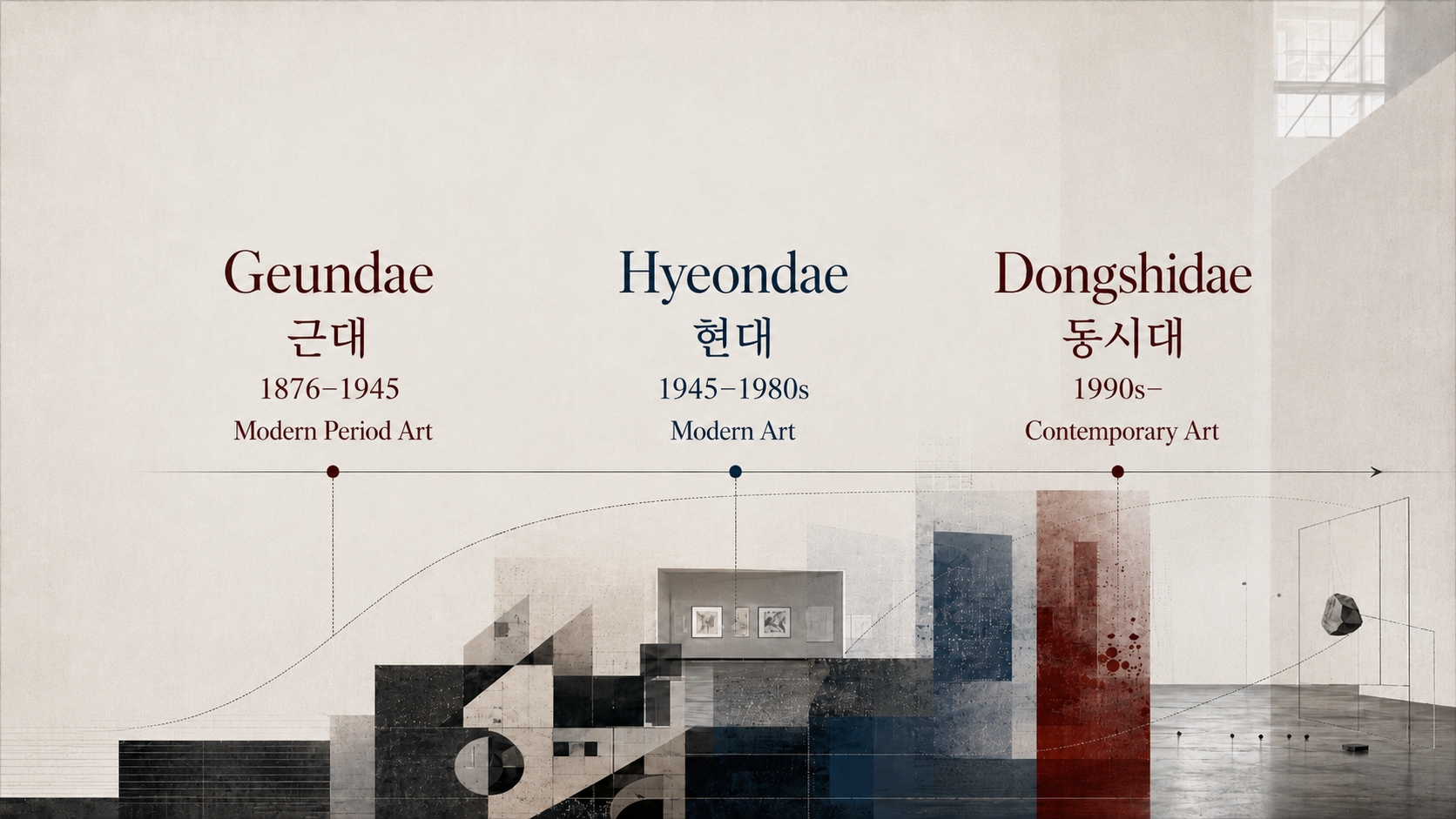
Moving beyond Orientalism entails more than
shifting the center from the West to Asia. It requires transforming the
structure through which particular actors have classified and evaluated the art
of other regions, while developing new values and criteria grounded in diverse
histories and experiences. What is needed is a new system of knowledge—one that
recognizes the achievements of Western art history as a shared global legacy
without treating them as the sole standard of judgment.
The future of Korean contemporary art
likewise extends beyond introducing more artists abroad. The Korean art world
must move beyond creating artworks and discovering and supporting artists to
build an ecosystem in which discourse, exhibitions, criticism,
archives, the market, and education operate organically together.
The Post-Contemporary as a New
Condition
The post-contemporary is an analytical
concept that describes the present condition in which the relationships between
center and periphery, West and non-West, and the universal and the regional are
being reconfigured. Rather than designating a particular style or art movement
that follows contemporary art, it provides a framework for understanding the
changing structures and power relations of the global art world.
Contemporary art has broadened its scope by
embracing diverse regions, cultures, and identities. Yet the authority to
interpret artworks and assign them art-historical value remains concentrated in
a limited number of Western museums, biennial organizations, galleries, art
schools, publishing institutions, and art media.
For Asia to move beyond a position in which
it is selected and interpreted within established discourses, it must
participate in shaping the concepts and directions of global contemporary art.
The core of the post-contemporary lies not simply in expanding diversity, but
in reconfiguring the authority to produce meaning and establish
standards.
From “International Expansion”
to “A Site of Production”
For decades, the Korean art world has
regarded overseas exhibitions, participation in international art fairs and
biennials, and representation by foreign galleries as major indicators of
internationalization. These activities have played an important role in
expanding Korea’s connections with the international art world and increasing
the visibility of Korean art.
What now matters is not only the number and
scale of overseas exhibitions, but also the records, research, and critical
outcomes they leave behind. Exhibition materials, critical texts, and
information about artworks must be systematically preserved if these
achievements are to lead to further research and future exhibitions.
The globalization of Korean contemporary
art requires an environment in which new agendas and knowledge are developed in
Korea and subsequently cited and used throughout the global art world. The
Korean art world must not only introduce its artists internationally but also
become a producer, publisher, connector, and standard-setter
within the global art world.
A Critical Language for Korean
Contemporary Art
To establish a lasting presence in the
global art world, Korean contemporary art needs a critical language that
emerges from Korea’s historical and social experiences and expands into
contemporary concerns shared across the world.
Korea’s experiences of modernization and
industrialization, national division and the Cold War, democratization,
compressed economic growth, urbanization, and digital transformation are
historically specific, yet they also intersect with changes experienced across
many other regions. Repeatedly interpreting Korean art through limited
categories such as Dansaekhwa, tradition, meditative practice, or Eastern
spirituality can obscure the complexity and contemporary relevance of the works
themselves.
Expanding Korea’s historical and social
experiences into concepts and agendas that can be discussed internationally
requires the sustained participation of scholars, critics, curators,
translators, editors, and publishers. Critical studies of artists, exhibition
criticism, and art-historical research must be made available as accurate,
high-quality English-language resources that can be accessed, searched, and
cited internationally.
Building Records and Archives
The art-historical positions of artists and
artworks are established through interconnected records of exhibitions,
criticism, research, transactions, ownership, and conservation.
Materials on Korean artists are currently
dispersed among artists, galleries, museums, media outlets, and numerous online
platforms. Standards for recording titles, dates, media, dimensions, exhibition
histories, and collections also vary widely. Even for many established artists,
reliable resources covering their artistic practices and careers—particularly
in English—remain insufficient.
Artists’ archives extend beyond the
preservation of the past. They provide the foundation for future research,
exhibitions, publications, artwork authentication, and confidence in the art
market. The standardization of artwork information, digitization of exhibition
records, management of image rights, and accumulation of critical writing and
critical studies of artists must proceed together. International
visibility creates opportunities for discovery, while international
accessibility and citability sustain art-historical continuity.
The Roles of Art Institutions
and the Market
Public museums, universities, and nonprofit
institutions must function not only as exhibition venues but also as producers
and repositories of knowledge. When international exhibitions and overseas
invitations lead to research, publications, translations, and archives,
individual events can become part of the long-term foundation of Korean
contemporary art.
Public museums should systematically
develop research materials on major artists and artworks and make them
accessible both domestically and internationally. Universities and research
institutions should undertake long-term studies connecting Korean contemporary
art with international discourse, while nonprofit organizations and private
platforms can identify artists and materials that have yet to receive
sufficient institutional attention.
Confidence in the art market is likewise
built on accurate documentation and evaluation. Galleries must systematically
manage artists’ career and artwork records, while auction houses and other
market participants should establish standards for verifying authenticity,
provenance, and transaction histories. The long-term value of artworks can be
sustained when art-historical assessments developed by museums and research
institutions are supported by transparent market information.
A National-Level Public
Platform
Korea needs a public platform that
systematically connects information and research on Korean art and makes these
resources accessible both domestically and internationally.
Such a platform must extend beyond
exhibition listings and news. It should organize information on artists,
artworks, exhibitions, criticism, publications, collection histories, and
artistic activities according to international standards. Korean- and English-language
records, consistent data standards, regular updates, verification procedures,
and copyright management should form its foundation.
An open and interoperable structure based
on shared public standards would allow data held by museums, universities,
galleries, and private platforms to be connected. Each institution could retain
the autonomy and specialist character of its own records while contributing to
a broader system of knowledge. International art professionals would then be
able to follow developments in Korean contemporary art and directly access the
artists and materials relevant to their work.
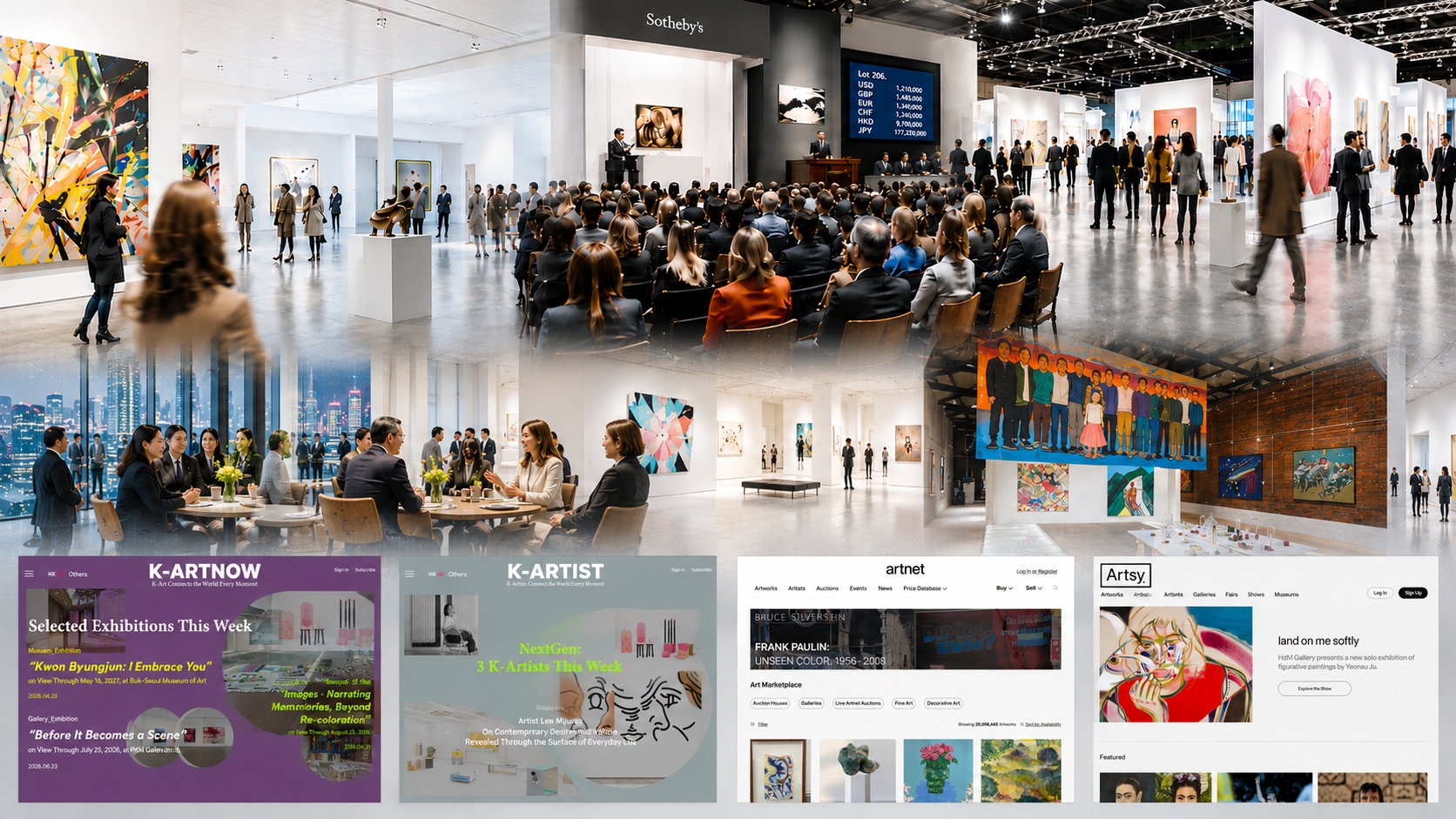
Korea’s emerging media, archival, and
artist-networking platforms already reflect this need. Their individual efforts
should now develop into a nationally coordinated framework involving public
institutions, universities, museums, galleries, private platforms, and artists.
Who Shapes the Future of Global
Art?
The discourse surrounding Orientalism is
ultimately connected to the operation of power: who looks, who interprets, and
who confers value. The future of Korean contemporary art does not lie in
replacing the West on the throne. It lies in creating an order in which
different histories and experiences participate equally in shaping the
standards and directions of global art.
For Korean contemporary art to
become a major site of production in the global art world, it must move beyond
the international promotion of Korean art. Korea must become a place where
major artists and agendas in global contemporary art are researched, where new
discourses and exhibitions are developed, and where the resulting knowledge is
cited and used internationally. This is the post-contemporary condition that
Korean contemporary art must shape as it moves beyond Orientalism.
Jay Jongho Kim graduated from the Department of Art Theory at Hongik University and earned his master's degree in Art Planning from the same university. From 1996 to 2006, he worked as a curator at Gallery Seomi, planning director at CAIS Gallery, head of the curatorial research team at Art Center Nabi, director at Gallery Hyundai, and curator at Gana New York.
From 2008 to 2017, he served as the executive director of Doosan Gallery Seoul & New York and Doosan Residency New York, introducing Korean contemporary artists to the local scene in New York. After returning to Korea in 2017, he worked as an art consultant, conducting art education, collection consulting, and various art projects.
In 2021, he founded A Project Company and is currently running the platforms K-ARTNOW.COM and K-ARTIST.COM, which aim to promote Korean contemporary art on the global stage.