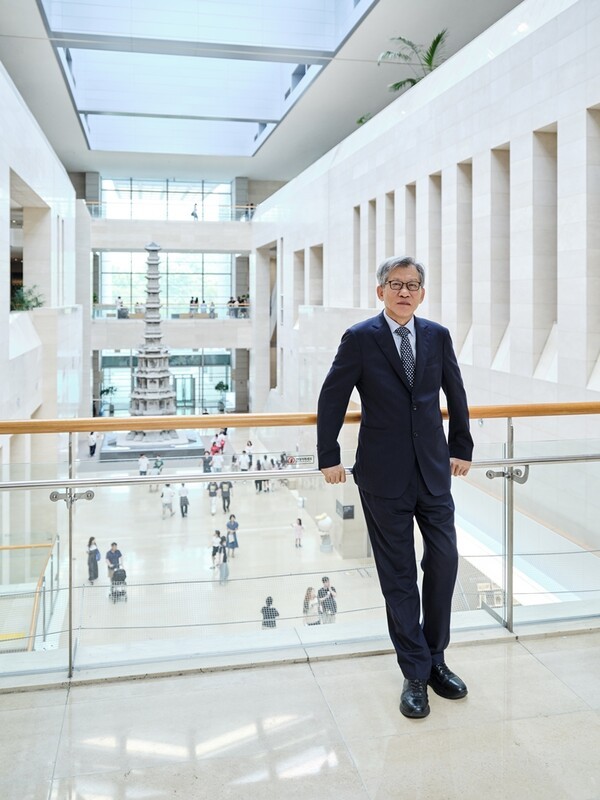

On November 13, 2026, the Ministry of Culture, Sports and Tourism appointed
Ki Hye-kyung as the new director of the National Museum of Modern and
Contemporary Art, Korea (MMCA). This appointment should prompt a discussion of
how Korea’s leading national art institution should position Korean
contemporary art within a changing international art world. We must ask how
thoroughly it understands artists working in Korea, on what grounds it assesses
their achievements, and how prepared it is to develop that knowledge into
international research and exhibitions. [1]
Across the contemporary art world, the concepts and narratives of art are
being reconsidered through the histories and experiences of different regions.
The 2026 Venice Biennale, 《In Minor Keys》, foregrounded artistic practices rooted in local contexts yet
connected across national borders, along with the sharing of knowledge.
Through
its Contemporary and Modern Art Perspectives (C-MAP) program, the Museum of
Modern Art in New York (MoMA) conducts multiyear research into the art
histories of Africa, Southeast and East Asia, and other regions, incorporating
its findings into collections, exhibitions, and publications. As the
geographical scope of the art being presented expands, the capacity to determine
what to research and how to interpret relationships among works and practices
is becoming increasingly important. [2, 3]
Korean contemporary art must participate actively in these developments and
take the initiative in proposing new questions and curatorial projects. In an
era that requires us to consider not only multipolarity but also the
possibility of nonpolarity, waiting for the next set of criteria to be
established and then adding Korean artists to it offers little prospect of
taking the lead. We must first investigate and interpret the work developed in
Korea, then present it as a subject for international inquiry and debate.
Genuine
globalization means that Korea becomes a center for producing the art and ideas
that shape international discourse and the art market. Works and interpretations developed in Korea should inform research,
curatorial projects, acquisitions, and transactions elsewhere. International
attention should turn toward Korea in search of artists and practices yet to be
discovered. This requires a system that identifies and selects artists working
in Korea, researches their practices, supports their development and
exhibitions at home, and connects those outcomes to international activity.
This process cannot be left to individual artists’ abilities and chance
opportunities abroad. National and local public art museums must undertake it
as a shared task, with MMCA taking the lead. Three priorities provide a
starting point.
First, establish an archive of Korean contemporary artists that
the international art world can freely search and use
A national museum’s expertise is not demonstrated by its knowledge of, or
exhibitions devoted to, a handful of famous artists. It must understand in
concrete terms which artists are developing which bodies of work in Korea
today, and whose works merit attention and why. It must make that knowledge
available in a form that researchers and curators outside the institution can
use.
The first task is a broad survey of Korean contemporary artists and their
activities from 2000 to the present. This must extend beyond major museums and
galleries to regional and nonprofit spaces and artist-organized initiatives. A
detailed list of artists whose practices demonstrate sustained development and
achievement must be compiled, with key works, exhibitions, and relevant
research and criticism documented and verified. Selecting familiar artists
first and then gathering material about them cannot adequately map the field of
Korean art.
The standard for a functioning archive is clear. A curator abroad with no personal contacts
in Korea must be able to discover an artist, examine the work, and propose
research or an exhibition. Users should be able to search not
only artists’ names in Korean and English but also works, themes, media, and
periods of activity. Individual artist and artwork records must also be
discoverable through search engines used internationally. A website with Korean
and English menus alone does not meet this standard.
For each artist, the archive should connect the evolution of the practice
with accurate information and images of major works, exhibition histories, the
artist’s writings and interviews, and aesthetic and art-historical research and
criticism. Installation, video, and performance works also require
documentation necessary for presentation and reinstallation. Sources, image-use
permissions, and contacts for additional materials and loan inquiries must be
provided. A search result should become a genuine starting point for research
and curatorial work.
If this cannot be accomplished within existing operations, a dedicated task force must be established
so that the work can begin. Responsibilities for surveying,
research, archiving, translation, and editing must be assigned, with regional
institutions and independent researchers involved. Existing public and private
archives should be connected, and information verified through artists’ review
and corrections.[4] The scope of the survey and a schedule for
making the materials publicly available must be announced, with staff and
funding secured to keep the material up to date after the initial archive is
built.
An archive’s strength is not determined simply by the number of artists
listed. What matters is whether its materials enable users to discover
previously unfamiliar artists, understand differences between works, and begin
new research. Making a
country’s artists and their work accessible to substantive international
research is a concrete source of competitiveness in a multipolar world.
Second, hold at least five research-based exhibitions of Korean
contemporary artists each year
Building an archive must be connected to assessing the significance of
works. Artists and practices identified through research should be examined
through actual exhibitions. MMCA should institutionalize at least five such research-based exhibitions annually
within a medium- to long-term exhibition plan that includes preliminary
research and production support.
In particular, it should expand in-depth solo exhibitions and a range of
thematic exhibitions involving artists in their forties and fifties who are
shaping the present and will help lead the future of Korean contemporary art.
Artists need opportunities for research and support as their practices develop,
well beyond the point at which their early promise is first recognized. The 《Korea Artist Prize》 supports the
production of new work, exhibitions, and international projects.[5]
Yet this and similar existing programs alone cannot sustain research across a
broad range of artists or generate enough curatorial work to address the
questions of a rapidly changing era. Alongside opportunities for selection and recognition, an exhibition
framework is needed that supports the development of artistic practice over
time.
An exhibition should begin with an investigation of what the artist has
produced and what can now be developed further. Key works should be examined,
studios visited, and the artist’s account considered alongside existing
criticism. This research should inform decisions about whether to reconfigure
earlier work or support new production and experimentation. Research funding,
new-work production costs, technical collaboration, and space must be included
in exhibition budgets.
The grounds for artist selection and curatorial decisions must also be
specific. Curators must explain which works mark formal or conceptual shifts
and how the artist’s concerns take shape through methods of production and
artistic form. Comparisons with contemporaneous practices in other regions
should clarify which aspects can be explained through existing concepts in art
and which require fresh interpretation. An increase in the number of
exhibitions must be accompanied by this depth of research.
Extensive
aesthetic and art-historical research on Korean contemporary art must take
place now, alongside the work artists are making. Retrospective reassessment alone cannot engage with present artistic
production and curatorial practice. Researchers must be able to trace changes
in an artist’s work, while artists should be able to encounter interpretations
and criticism of their practice as they develop their next projects. Creating
conditions in which artmaking and research can inform one another is a
responsibility of public art museums.
If there are not enough specialists to undertake this research, a training
system must be established. Emerging researchers and curators should
participate in actual artist and artwork research, critical writing, and
exhibition development, with their work reviewed by lead researchers and peers
in Korea and abroad. Research time, writing fees, and translation and editing
costs must be funded, and the outcomes used in exhibitions and publications.
Documentation and criticism produced through exhibitions should return to the
archive as a foundation for further research and curatorial projects.
Third, bring the artistic and curatorial expertise developed in
Korea to international exhibitions
Communicating the results of research and exhibitions in Korea to the
international art world cannot be relegated to publicity after an exhibition
closes. From the earliest research stages, museums must identify institutions
and researchers abroad whose interests intersect with the works and questions
under consideration. They should examine potential partners’ research
priorities, collections, and exhibition plans, share materials, and identify
opportunities for joint projects.
By the
time an exhibition opens in Korea, a proposal package must also be ready for
review by institutions abroad. In Korean and English, it should set out the rationale for selecting the
artists and works, relevant research and criticism, a work list, the
exhibition’s structure, installation and conservation requirements, loan
availability, and an implementation budget. The aim is to develop a concrete
exhibition model that allows an international partner to assess both the
significance of the work and the feasibility of presenting it.
The model may be a solo exhibition or a thematic group exhibition. An
exhibition developed in Korea might tour in its existing form, or it might
evolve into a joint project incorporating artists and works from other regions.
We must begin discussions by presenting the artists, research, works, and
curatorial projects we are prepared to propose.
Visits by international curators should be integrated into this process.
Artist information and research materials should be shared in advance, with
studio visits and discussions leading to further investigation and project
development. Responsibility, schedules, materials, and budgets for follow-up
must be specified. Substantive discussions of particular works and projects
matter more than the signing of interinstitutional agreements.
In international co-curated projects, curators based in Korea must
participate as responsible partners in setting the agenda, selecting works,
developing interpretations, and shaping publications. Expertise in negotiating
shipping, insurance, copyright, production costs, installation, and artist fees
is also essential. Where these
capacities are insufficient, training and professional development programs
must be established immediately to build the practical and curatorial skills
needed for international work.
Training cannot stop at foreign-language proficiency or visits to overseas
institutions. It must involve preparing proposals for actual international
partners, developing coproduction budgets, negotiating contracts and loan
conditions, and managing international publications and communications, with
professional review throughout. Its outcomes must be viable joint projects and
a stronger pool of specialists. Once a gap in capacity has been identified, a
plan and investment to address it must follow.
After an exhibition, museums should pursue opportunities for further
publications, presentations in other regions, potential acquisitions, and
additional research. Proposals that do not proceed should also be documented,
including why they stalled and what needs improvement. The knowledge and
experience gained must be available for subsequent artists and projects rather
than remaining with individual staff members. Published research and records
can also be taken up by galleries, publishers, universities, and critical art
media in their own activities.
Conclusion: Understand a changing world and build the capacity to
respond
Directors and curators of national and local public art museums must be
able to understand the changes of a multipolar twenty-first-century world and
determine the role Korean contemporary art can play within them. Familiarity
with international art trends is not enough. They must identify artists and works capable of engaging with those
developments, develop research and exhibition projects around them, and have
the strategies and practical means to carry those projects through
internationally. This is the level of expertise now required of
public art museums.
If those capacities are not yet sufficient, institutions must learn,
provide education, and train people. They must identify weaknesses in research
and curating, translation and publishing, and international collaboration, then
create structures through which those capabilities can grow through actual
projects. Recognizing a lack of
capacity must be the starting point for deciding what to learn and build,
rather than a reason to defer action. An institution’s
capabilities will not develop on their own while it waits for someone elsewhere
to supply the necessary expertise.
How long will institutions continue to postpone decisions on the grounds of
insufficient preparation and recognize the value of Korean artists only after
they have been selected abroad? Public art museums must make their own
judgments and accept responsibility for them. MMCA should lead by presenting an
implementation plan connecting artist research, exhibitions, and international
collaboration, and securing the staff and budgets to carry it out. Other public
museums should connect the artists and research emerging from their own local
contexts to this effort.
This work is urgent because neither artists’ practices nor changes in the
world will wait for institutions to be ready. As artists in Korea make work today, the research and curatorial work
needed to interpret, assess, and present that art internationally must develop
alongside it. Materials can be organized and artists reassessed
later. But the chance to participate from the outset in shaping the questions
and criteria of a new era cannot be recovered.
Acting with initiative and becoming professionals equipped to fulfill that
role is not optional self-improvement. It is a responsibility that comes with
using public resources to assess Korean art in the present and allocate
opportunities for its future. Korean
contemporary art must move beyond waiting for recognition from abroad and
consistently produce works that the world will research, exhibit, and collect,
together with discourse that advances international debate. Building those
conditions now is the responsibility that a multipolar twenty-first-century
world places on national and local public art museums.
References
[1] Ministry of Culture, Sports and Tourism, “Appointment of Ki Hye-kyung
as Director of MMCA,” November 13, 2026. (View
source)
[2] La Biennale di Venezia, “Biennale Arte 2026: In Minor Keys,” June 15, 2026.
(View
source)
[3] The Museum of Modern Art, “Global Research: C-MAP,” undated. (View
source)
[4] National Museum of Modern and Contemporary Art, Korea (MMCA), “MMCA
Exhibition Plans and Major Initiatives for 2026,” January 5, 2026. (View
source)
[5] National Museum of Modern and Contemporary Art, Korea (MMCA), “MMCA and SBS
Foundation Select Four Artists for Korea Artist Prize 2026,” January 16, 2026. (View
source)
Jay Jongho Kim graduated from the Department of Art Theory at Hongik University and earned his master's degree in Art Planning from the same university. From 1996 to 2006, he worked as a curator at Gallery Seomi, planning director at CAIS Gallery, head of the curatorial research team at Art Center Nabi, director at Gallery Hyundai, and curator at Gana New York.
From 2008 to 2017, he served as the executive director of Doosan Gallery Seoul & New York and Doosan Residency New York, introducing Korean contemporary artists to the local scene in New York. After returning to Korea in 2017, he worked as an art consultant, conducting art education, collection consulting, and various art projects.
In 2021, he founded A Project Company and is currently running the platforms K-ARTNOW.COM and K-ARTIST.COM, which aim to promote Korean contemporary art on the global stage.