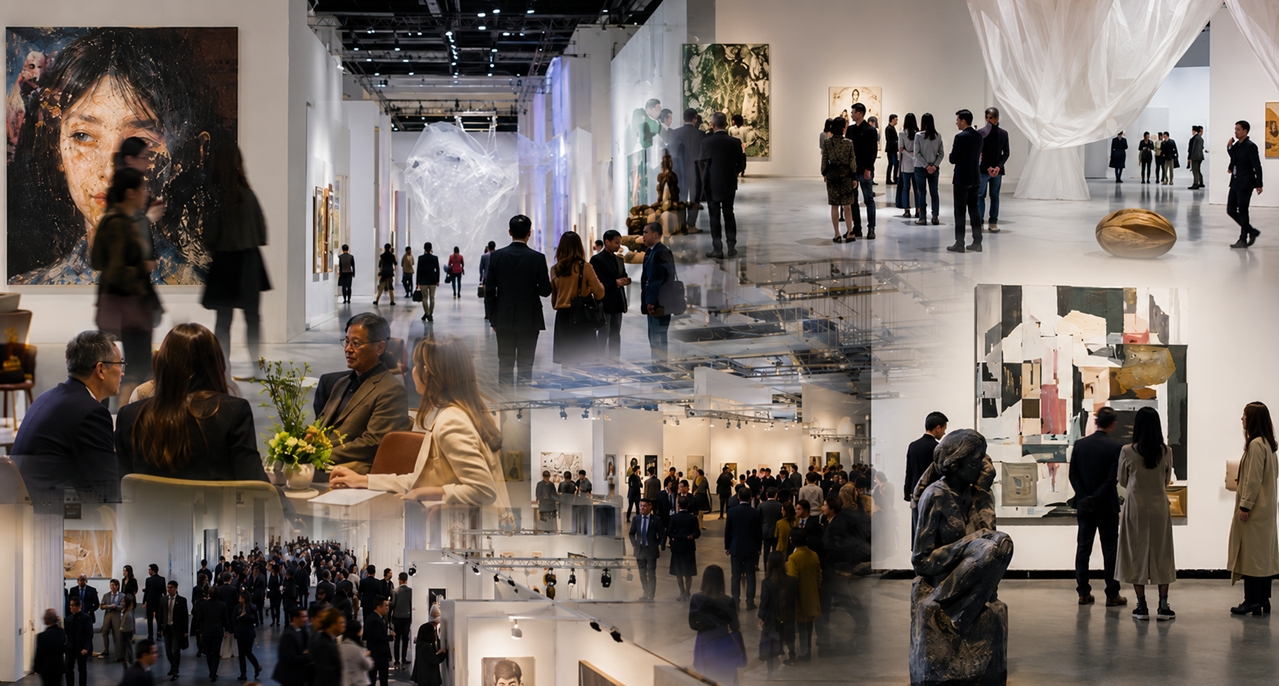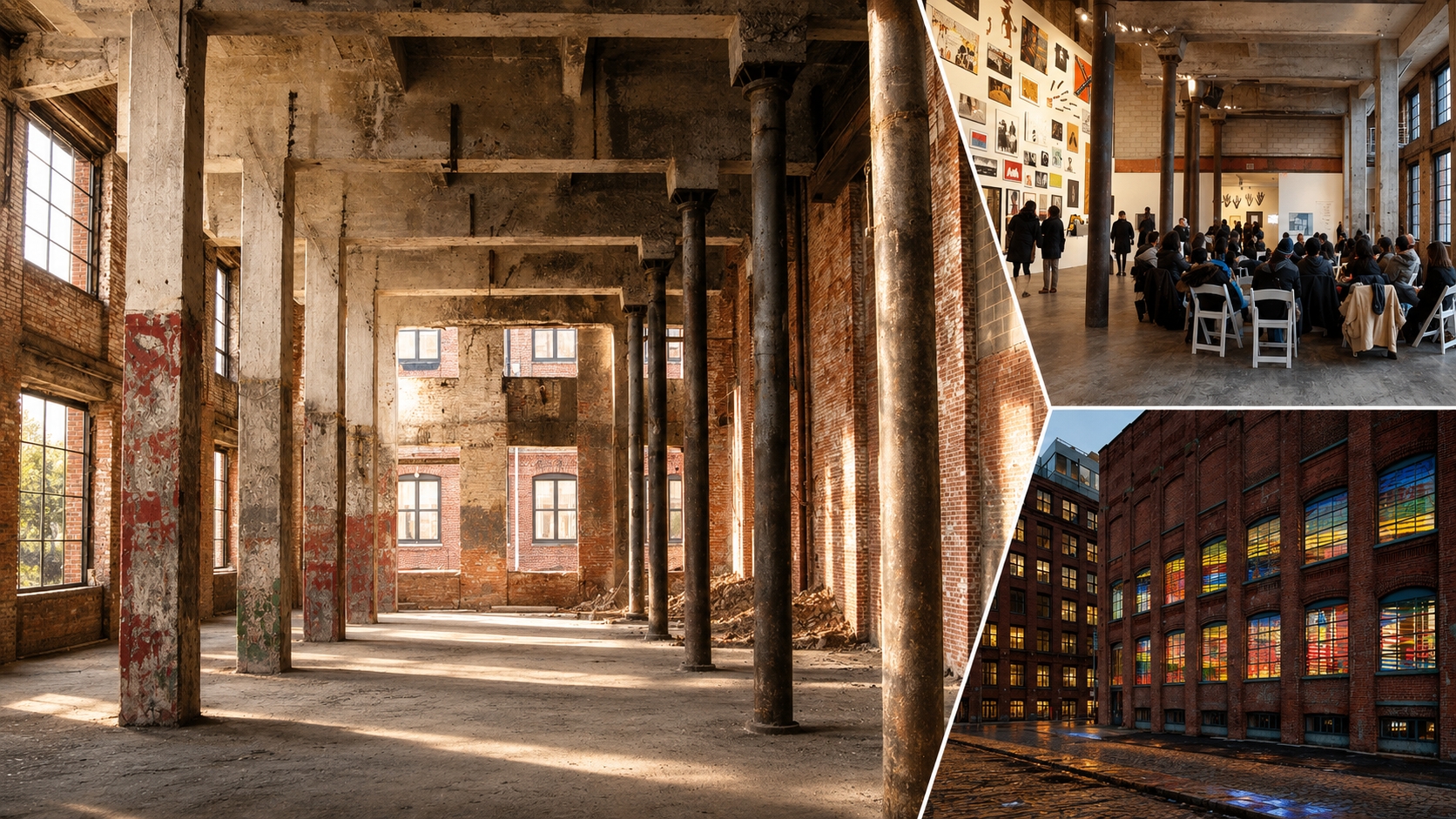

Why Talk About Asian
Contemporary Art Now?
“Asian contemporary art” does not refer to
a single shared style or aesthetic. Korea, China, Japan, and the countries of
Southeast Asia each have distinct histories, political and social conditions,
art institutions, and markets.
In this essay, Asian contemporary art
refers to a field of contemporary art produced across
these different regions and interconnected through museums, biennials, markets,
discourses, institutions, and international networks.
The purpose of discussing Asian art,
therefore, is not to group different countries and cultures under a single
notion of “Asian identity.” Rather, it is to look at Korean contemporary art
not only from within the category of “Korean art,” but within the changing
coordinates of Asian and global art, in order to understand its current
position and future possibilities.
One important narrative through which
modern and contemporary art in Asia has long been explained concerns how
different regions received and transformed Western modernism and contemporary
art.
Today, however, the direction of the
question needs to change.
The question is no longer what
Asia received, but what it has produced—and what it is producing now.
This provides a new starting point for
understanding Asian contemporary art today.
Orientalism and Three Questions
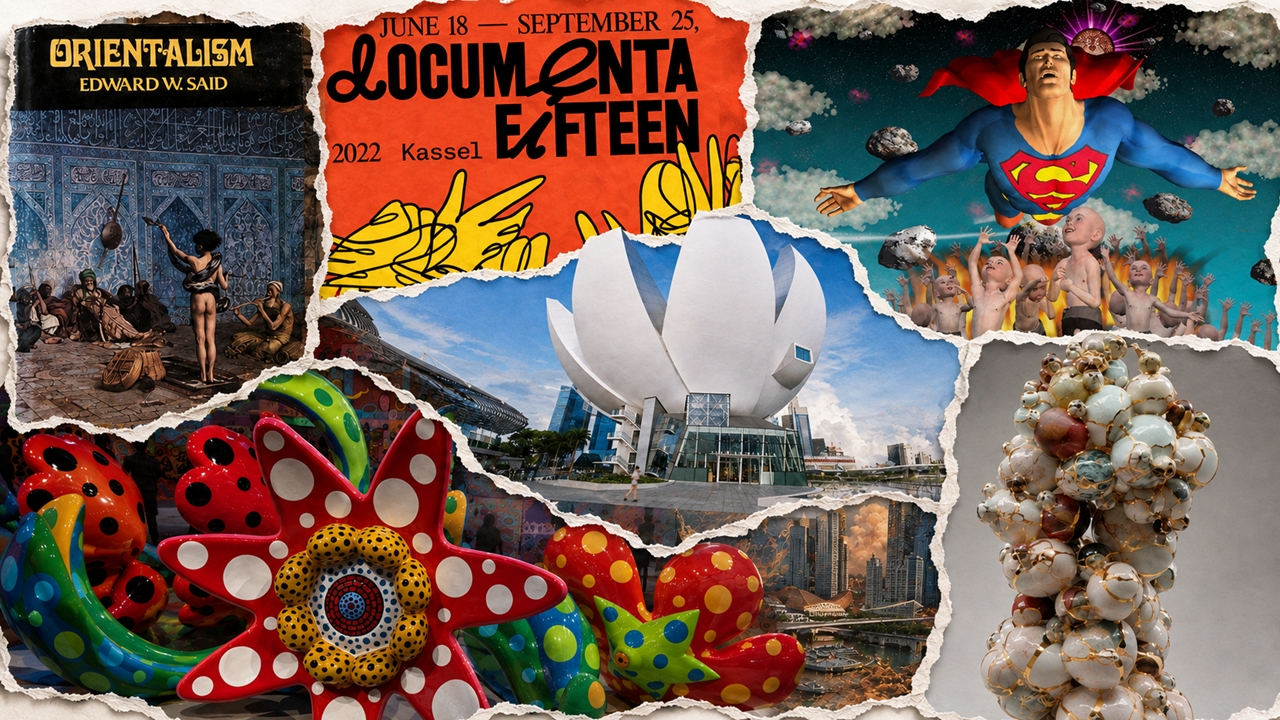
In 1978, Edward W. Said published 《Orientalism》, examining how the West had
historically viewed, represented, described, and constructed the “Orient” as an
object of knowledge.
Said’s concern was not simply cultural
prejudice or a fascination with the exotic.
Who is looking at whom? Who has
the authority to name and classify? And how do such classifications determine
the way their subjects are understood?
For Said, Orientalism concerned the
structures of knowledge and power formed through the Western representation and
interpretation of the Orient.
His theory was subsequently criticized for
reducing complex relationships to an overly simple binary between “West” and “East,”
and for not sufficiently accounting for the differences among diverse regions
and societies or their active roles in cultural production.
Yet the fundamental questions remain
important: Who explains? Who classifies? And through what
frameworks is the world understood?
Nearly half a century after the publication
of Said’s book, the actual geography of the art world has changed dramatically.
Asian artists can no longer be adequately described as peripheral producers who
simply absorb Western contemporary art. Contemporary art is being produced in
Seoul, Tokyo, Beijing, Shanghai, Hong Kong, Singapore, Jakarta, and many other
cities, while artists from across Asia are active in museums, biennials,
galleries, and markets around the world.
This raises another question.
Has the way the world views and
classifies art changed as much as the reality of art itself?
Terms such as “Asian Art,” “Chinese Art,” “Japanese
Art,” and “Korean Art” remain widely used. These categories are not inherently
Orientalist. Historical, social, and regional contexts remain important
conditions for understanding art.
The problem begins when regional
identity ceases to be one interpretive condition among many and instead becomes
the primary and fixed framework through which a work is understood.
This three-part series examines the issue
in three stages.
Part I looks at the actual geography of
Asian art today. Part II examines the frameworks and systems of classification
through which the international art world views this changed reality, as well
as the possibility that Asian art worlds themselves reproduce particular forms
of “Asianness.” Part III considers what Korean contemporary art needs to
produce, how it should document and interpret that production, and how it can
connect it to the wider world.
The first step, then, is to look at the
reality on the ground.
From One Center to Multiple
Centers
Until the late twentieth century, Japan
occupied a relatively advanced position in the development of modern and
contemporary art in Asia. In addition to its accumulation of postwar artistic
practices, Japan established museums, collections, research, publishing, and
other institutional foundations earlier than many other Asian countries.
From the 2000s onward, China’s rapid
economic growth and the expansion of its art market significantly altered the
geography of Asian art. Hong Kong also developed into a major hub connecting
Asian and global art markets as international auction houses, global galleries,
and art fairs became concentrated in the city.
The situation today, however, is changing
again.
Markets and capital, artists and
exhibitions, museums and biennials, research and discourse, international
circulation and networks are no longer concentrated in a single country or
city.
One center is not simply being
replaced by another. Multiple centers with different functions are operating
simultaneously.
The purpose of comparing China, Hong Kong,
Japan, Singapore and Southeast Asia, and Korea is therefore not to determine
which region is ahead of the others.
What matters is to understand what
each region produces and what role it plays within the current structure of
Asian contemporary art.
China: Scale and the Base of
Artistic Production
China’s greatest strength lies in the scale
of its market and capital, together with its vast base for artistic production.
Centered on Beijing and Shanghai, China has
developed extensive networks of galleries, museums, auction houses, and
collectors. Since the 1990s, Chinese contemporary art has established a
powerful international presence through Political Pop, Cynical Realism, and a
wide range of experimental practices.
In 2025, China accounted for 14 percent of
global art-market sales, remaining the world’s third-largest art market after
the United States and the United Kingdom. It continues to be one of the major
forces in the global art market.
Market size, however, does not
automatically translate into cultural influence in contemporary art. Changes in
the economic environment, political regulation, and conditions of artistic
expression also affect the domestic and international activities of the Chinese
art world.
Even so, scale, capital, and a
vast base for artistic production remain the clearest sources of
China’s strength today.
Hong Kong: International
Circulation and Cultural Connectivity
Hong Kong has long functioned as a gateway
connecting Asian and global art markets.
Its concentration of international auction
houses, global galleries, and Art Basel Hong Kong has established the city as a
key hub for the circulation of art in Asia.
More recently, its cultural infrastructure
has also been strengthened.
M+ positions itself as an institution that
collects and researches twentieth- and twenty-first-century visual culture from
a perspective rooted in Asia yet global in scope. This reflects Hong Kong’s
active use of its geographical and cultural position connecting mainland China,
Asia, and the wider world.
Hong Kong’s importance today therefore
extends beyond the buying and selling of art.
It functions as an
international platform connecting markets and institutions, Asia and the world.
This remains one of the city’s most
important roles.
Japan: History and Accumulation
Japan’s greatest asset is the long
accumulation of modern and contemporary art history and the institutional
foundations that support it.
Gutai and Mono-ha, as well as Neo-Pop and
Superflat, have become established parts of global modern and contemporary art
history, while artists including Yayoi Kusama, Yoshitomo Nara, Takashi
Murakami, and Hiroshi Sugimoto have secured lasting international positions.
Japan’s strength, however, does not lie
solely in the success of individual artists.
Museum collections, exhibition records,
research, publishing, conservation, and archives have been built up over
decades. This provides a foundation through which individual artists and
artistic movements can be continually researched, reassessed, and situated
within art history.
It would be difficult today to describe
Japan as the single center of Asian art.
Nevertheless, its accumulated
capacity to document, research, and historicize art remains one
of the most important strengths of the Japanese art world.
Singapore and Southeast Asia:
Connectivity and New Modes of Practice
Singapore has developed into an important
art hub by combining cultural policy, finance, English-language international
networks, and its geographical position within Southeast Asia.
Museums, biennials, international art
fairs, and cultural policies have created the foundations for Singapore to
function as a platform connecting Southeast Asia with the international art
world.
At the same time, diverse forms of
contemporary art have developed across Indonesia, Thailand, the Philippines,
Vietnam, and other parts of Southeast Asia, each shaped by distinct historical
and social conditions.
Some artists and collectives in the region
have connected artistic practice with issues such as colonialism, dictatorship,
democratization, migration, ecology, and local communities, while experimenting
with modes of artistic production different from established market- and
institution-centered systems.
A prominent example is the concept of lumbung
introduced by the Indonesian collective ruangrupa at documenta fifteen in 2022.
Derived from the Indonesian communal rice barn in which harvests are
collectively stored and shared, lumbung extended ideas of collaboration,
sharing, and the collective management of resources into the very structure of
the exhibition.
The diverse art practices of Southeast Asia
cannot, of course, be reduced to a single tendency.
What matters instead is that different
social conditions across the region have generated experiments in the ways art
is produced, relationships are formed, and cultural practices are organized.
Korea: A Complex Art Ecosystem
Korea has developed the foundations of its
contemporary art through a different configuration from China, Japan, Hong
Kong, or Singapore.
It does not possess a market on the scale
of China, nor can it yet claim the same depth of accumulated research and
archival infrastructure as Japan. Nor are international finance and circulation
the central foundations of its art ecosystem in the way they are in Hong Kong
or Singapore.
Instead, Korea has developed a relatively
dense and interconnected ecosystem in which artists, museums, biennials,
galleries, nonprofit and independent spaces, public funding, the market, and
international networks have grown alongside one another.
Since the launch of the Gwangju Biennale in
1995, institutions and events including the Busan Biennale, Seoul Mediacity
Biennale, the National Museum of Modern and Contemporary Art, Korea, public and
private museums, commercial galleries, and alternative spaces have expanded the
foundations for the production of Korean contemporary art at different levels.
The launch of Frieze Seoul in 2022 should
also be understood in relation to this pre-existing ecosystem. When announcing
its entry into Seoul, Frieze itself pointed to the city’s thriving creative
community and art ecosystem as important factors.
Rather than suggesting that Frieze Seoul
created the internationalization of Korean art, it is more accurate to say that
the accumulated foundations of artistic production, institutions,
the market, and international networks in Korea were among the conditions that
made Frieze Seoul possible in the first place.
Korea’s strength does not lie in the
overwhelming dominance of any single sector.
Its strength lies in the fact
that artistic production, institutions, the market, independent practices, and
international networks operate together within a relatively dense and
interconnected ecosystem.
This complexity represents an important
strength of Korean contemporary art.
Yet the density of an art ecosystem does
not automatically translate into the capacity to produce and circulate
discourse internationally. Compared with the pace of exhibitions and market
activity, long-term research on artists and artworks, criticism, documentation
and archives, as well as translation and international circulation, remain
areas that need to be strengthened.
The next stage for Korean contemporary art
is closely tied to this challenge.
Where Does Asian Art Stand
Today?
Asian art today can no longer be adequately
explained through a single center or a single ranking.
China has scale and a vast production base;
Japan has the accumulation of history and research; Hong Kong has strength in
international circulation and connectivity; and Singapore combines policy and
networks. Across Southeast Asia, alternative modes of production and social
relations continue to be explored, while Korea has developed a complex
ecosystem in which artistic production, institutions, markets, and
international networks operate together.
Asian contemporary art is no
longer moving toward a single center. It is becoming a multipolar structure in
which different centers perform different functions simultaneously.
Korea’s task, therefore, is not to declare
itself the new center of Asia.
What matters is what we
produce, how we document and interpret it, and how we connect it to the world.
And this is where the next question begins.
The reality of Asian art has
changed dramatically. But have the global frameworks through which it is viewed
and classified changed to the same extent?
If the geography of art has changed, the
frameworks through which it is understood must also be reconsidered.
Is Asian contemporary art truly
free from Orientalism?
References
Edward W. Said, 《Orientalism》, Pantheon Books, 1978.
John Clark, 《Modern Asian Art》, Craftsman House /
University of Hawai‘i Press, 1998.
John Clark, 《Asian Modernities: Chinese and Thai Art Compared, 1980 to 1999》, Power Publications, 2010.
John Clark, Contemporary
Asian Art at Biennales and Triennales: The 2005 Venice Biennale and Fukuoka
Asian Triennale, the Sigg Collection, and the Yokohama and Guangzhou Triennales,
caa.reviews, 2006.
Michelle
Antoinette and Caroline Turner, eds., 《Contemporary
Asian Art and Exhibitions: Connectivities and World-Making》, ANU Press, 2014.
Reiko Tomii, 《Radicalism in the Wilderness: International Contemporaneity and
1960s Art in Japan》, MIT Press, 2016.
Asia Art
Archive, >The And: An Expanded Questionnaire on the Contemporary,
Field Notes 01, 2012.
M+, About
the Collection; M+ Collection.
ruangrupa
/ documenta fifteen, lumbung, 2022.
Frieze, Frieze
Will Launch a New Fair in Seoul, 2021; Introducing Frieze Seoul 2022,
2022.
Art Basel &
UBS, The Art Basel and UBS Global Art Market Report 2026,
Arts Economics, 2026.
Jay Jongho Kim graduated from the Department of Art Theory at Hongik University and earned his master's degree in Art Planning from the same university. From 1996 to 2006, he worked as a curator at Gallery Seomi, planning director at CAIS Gallery, head of the curatorial research team at Art Center Nabi, director at Gallery Hyundai, and curator at Gana New York.
From 2008 to 2017, he served as the executive director of Doosan Gallery Seoul & New York and Doosan Residency New York, introducing Korean contemporary artists to the local scene in New York. After returning to Korea in 2017, he worked as an art consultant, conducting art education, collection consulting, and various art projects.
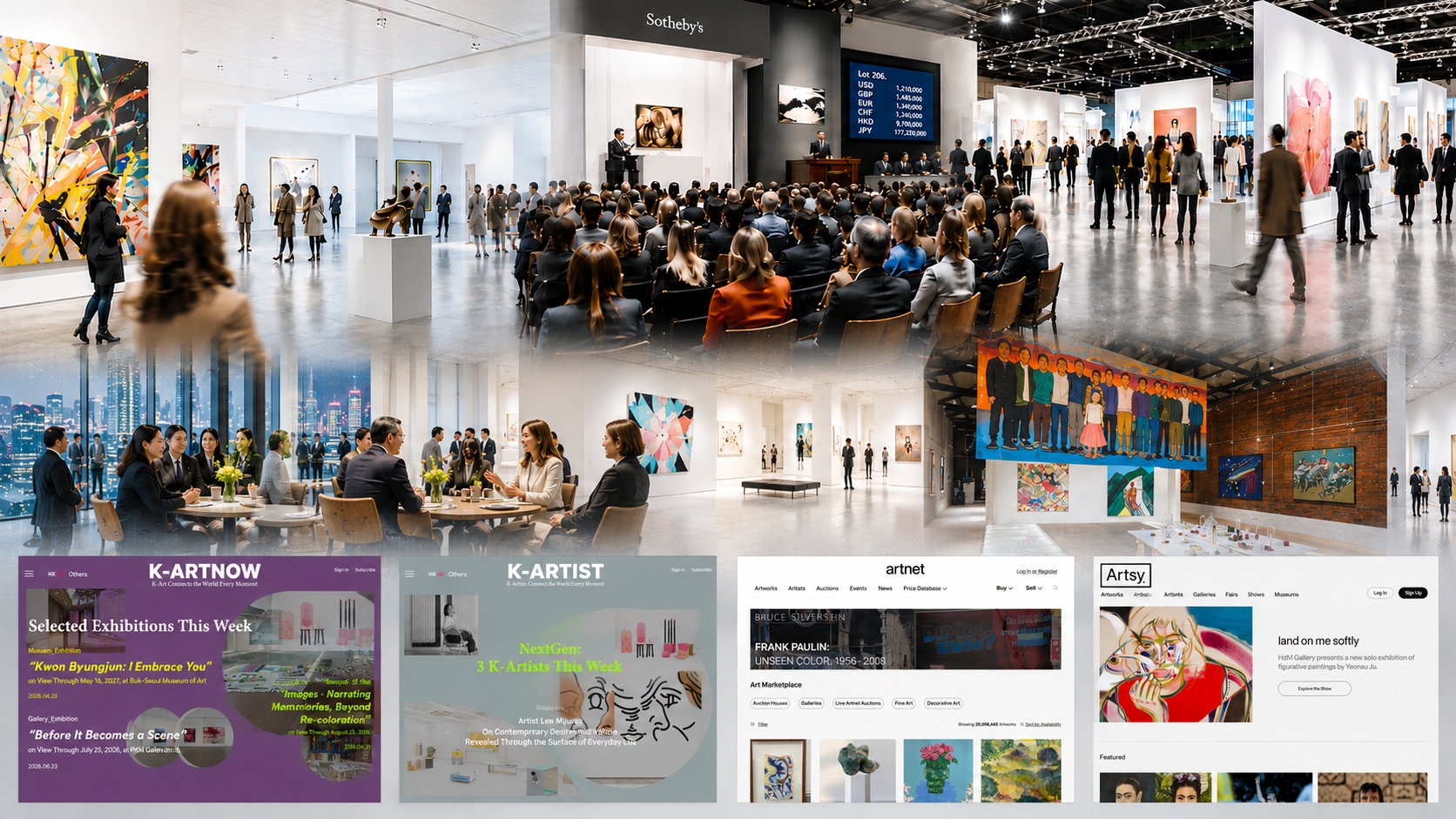
In 2021, he founded A Project Company and is currently running the platforms K-ARTNOW.COM and K-ARTIST.COM, which aim to promote Korean contemporary art on the global stage.