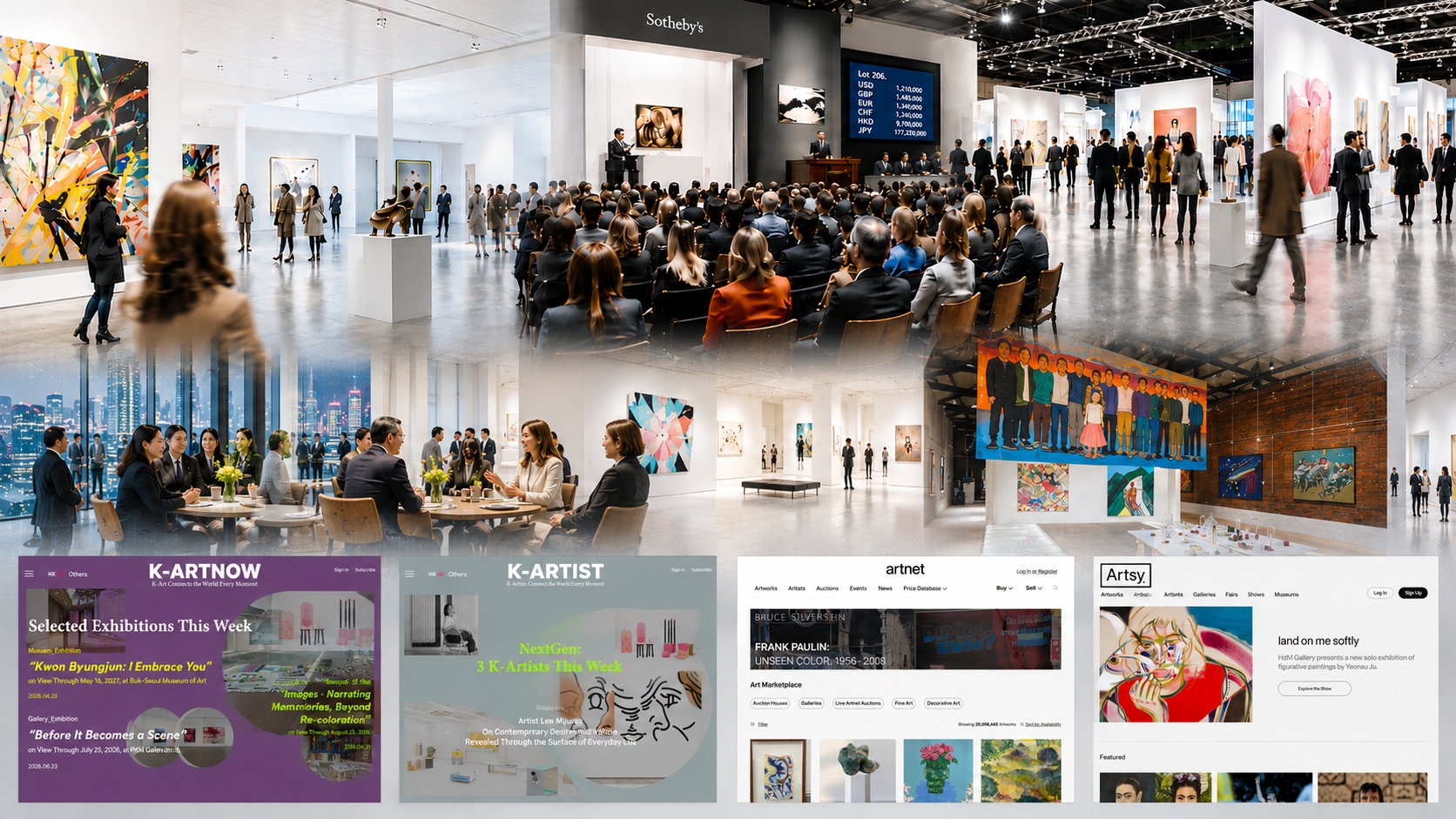

Contemporary art today encompasses a wide
range of cultures, histories, and social experiences. Artists from Asia, the
Middle East, Latin America, and Africa are active in international biennials,
museums, galleries, and art markets. Histories and cultures that received
insufficient attention within Western-centered accounts of art history have
also become important subjects of contemporary art.
Yet whether these changes necessarily lead
to greater diversity in art requires further consideration. Increasing the
diversity of participating regions and artists is a different matter from
diversifying artistic forms, languages, and criteria of evaluation.
The preceding installment, “Global
Standards (I),” examined how shared forms, institutions, discourses, and
systems of circulation have developed within global contemporary art. It
identified the “globalization of form and localization of content” as a central
feature of this process.
Here, global standards refer to conventions
of exhibition, interpretation, and evaluation repeatedly shared across major
institutions and networks in the international art world, rather than a single,
formally codified set of rules. These conventions provide a basis for
connecting art from different regions, while also influencing which works and
discourses gain international visibility and legitimacy.
The increased visibility of different
cultures and histories within the international art world is a significant
achievement. Geographical diversity, however, does not necessarily guarantee
aesthetic diversity. Even when art from different regions addresses distinct
histories and experiences, the ways in which it is expressed, interpreted, and
exhibited may follow common frameworks.
What requires our attention,
then, is the possibility that diversity and standardization are advancing
simultaneously. As the subjects addressed
by art and the regions participating in its production expand, might
internationally recognized forms and languages be converging in particular
directions? This question offers a starting point for examining both the
possibilities opened by global standards and their limitations.
How Did Diversity Become a
Global Standard?
Since the second half of the twentieth
century, diversity has become an important value in international contemporary
art. Regions and cultures, along with questions of race, gender, class, and
identity, that had been excluded or marginalized by Western-centered art
histories became subjects of art historical research and exhibitions.
Postcolonialism, feminism, and
multiculturalism influenced not only how art was understood, but also the
direction of museum collecting and exhibitions, criticism, and education. Art
historical narratives organized around Western modernism expanded to consider
the different histories of modern and contemporary art across multiple regions.
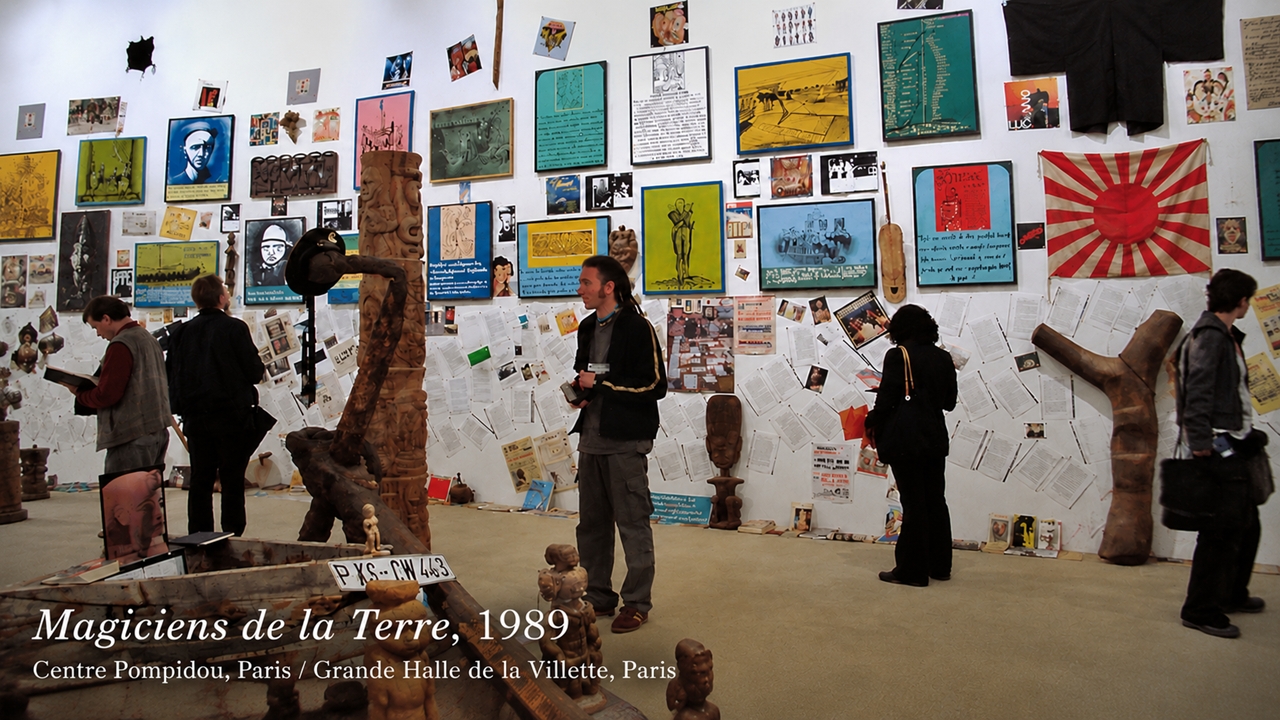
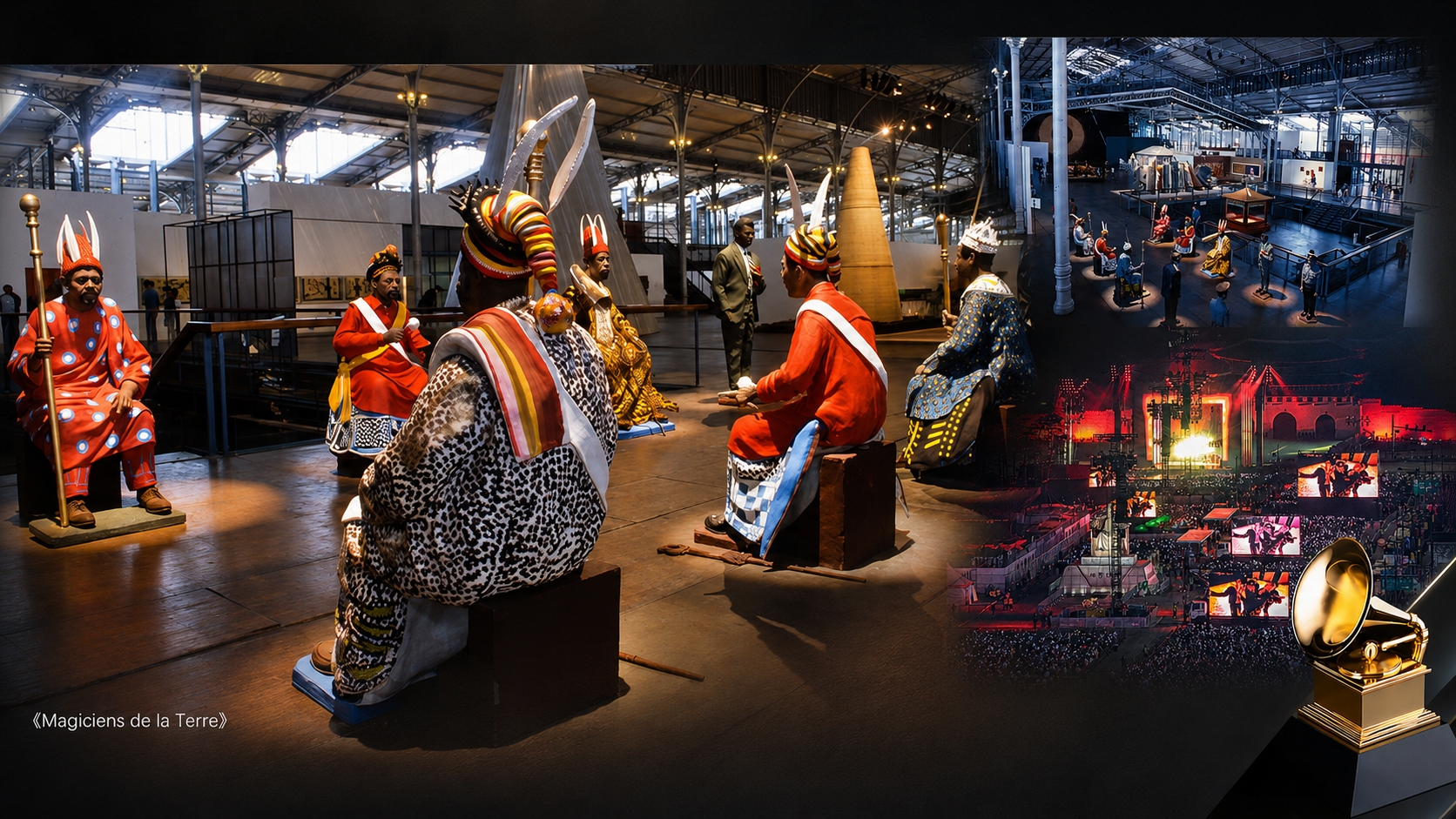
Held at the Centre Pompidou and La Villette
in Paris in 1989, 《Magiciens de la Terre》 brought Western and non-Western artists together in a single
exhibition, making the contemporary presence of non-Western art visible within
the international art world. Its attempt to apply common selection criteria to
works from different regions also connects with the central question of this
essay: is exhibiting art from different contexts together the same as
diversifying the criteria by which it is judged?
The proliferation of international
biennials from the 1990s onward likewise provided important avenues through
which artists from different regions could participate in the international art
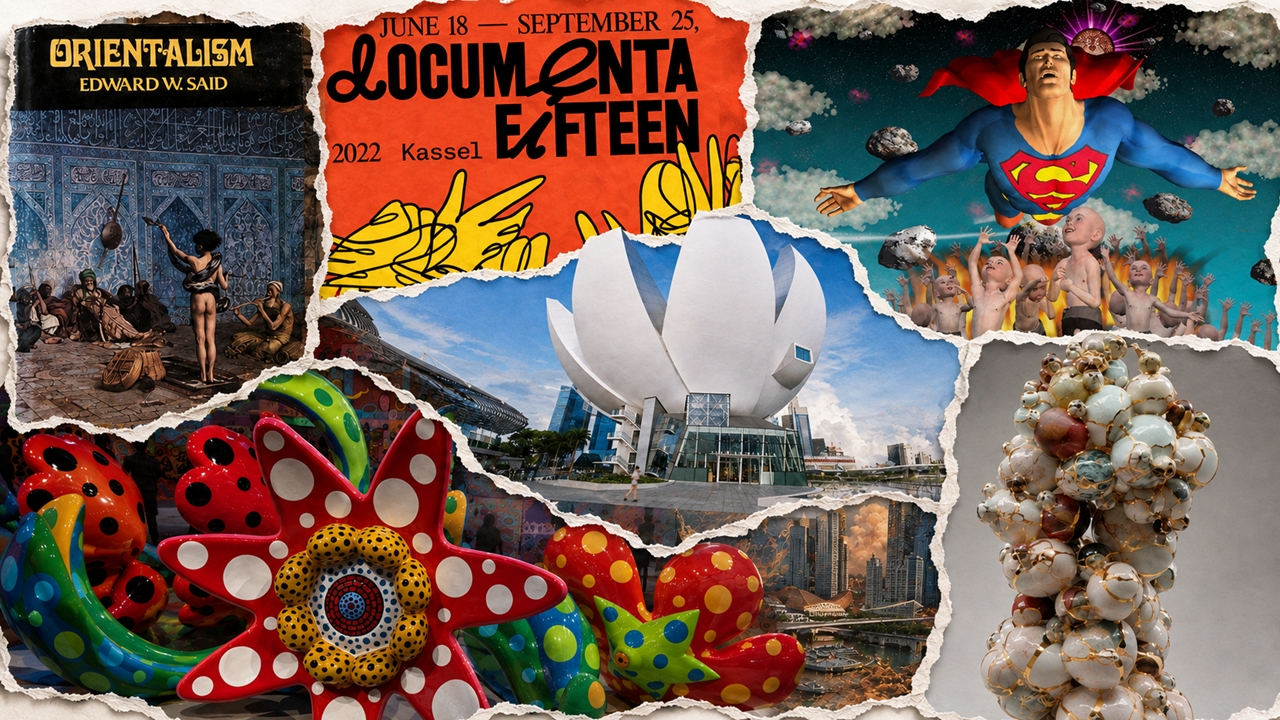
world. Documenta 11, directed by Okwui Enwezor in 2002, is a major example of
an international exhibition that expanded its geographical and discursive scope
through a postcolonial perspective. Discussions of democracy, truth and
reconciliation, creolization, and African cities took place across several
continents and were connected to the exhibition. The exhibition in Kassel
constituted the fifth and final platform.
The significance of these developments
extends beyond the increased diversity of participating artists’ nationalities.
They prompted a reconsideration of what should be understood as contemporary
art, how its histories should be written, and what roles museums and curators
should assume.
As diversity became a central value in the
international art world, however, the ways in which it was recognized and
accommodated also became established conventions of exhibition and evaluation.
This calls for a closer examination of the tension between the expansion of
diversity and its institutionalization.
The Institutionalization of
Diversity and New Forms of Authority
Identity, migration, decolonial
perspectives, ecology, community, and social practice are now familiar concerns
in international biennials and museums. These concerns address important
problems facing the world and have expanded the ways in which contemporary art
engages with society.
Yet when particular concerns are repeatedly
selected and become principal grounds for explaining a work’s significance, the
discourses surrounding them can acquire new forms of institutional authority.
What matters in this process is not only the legitimacy of these concerns, but
also how different experiences are understood and evaluated.
Within international exhibitions and
criticism, artists explain the histories and cultures of their own regions in
language accessible to audiences and professionals elsewhere. Local experiences
are translated into international discourses, and the meanings of works are
interpreted in relation to those discourses.
Such translation is an important part of
exchange. A shared language connects different experiences and opens up
possibilities for understanding art that has previously received insufficient
attention. The participation of artists from additional regions can also
transform existing languages and interpretive frameworks.
The issue changes, however, when a shared
language becomes more than a means of understanding a work and begins to
determine what qualifies as diversity. Experiences that are readily explained
through established discourses may receive attention, while sensibilities,
modes of thought, and formal experiments that do not fit those frameworks may
remain insufficiently understood.
The institutionalization of diversity must
therefore be assessed both in terms of how many differences it accommodates and
whether those differences can transform existing criteria of interpretation and
evaluation. The institutions that accommodate diversity must
themselves remain open to revision through new experiences and forms of
expression.
Shared Forms and the
Possibility of Aesthetic Homogenization
Another issue raised by global standards
concerns artistic form and modes of expression. Biennials and international
exhibitions across different regions feature installation, video, sound,
performance, archive-based and research-driven work, and socially engaged
projects.
These forms have expanded the scope of art
once understood primarily through painting and sculpture, opening up new
expressive possibilities. The growth of international art education,
exhibitions, residencies, and curatorial networks has provided an important
basis for exchanging working methods and knowledge.
At the same time, these connections may
reinforce the repetition of particular working methods and exhibition
languages. Different historical experiences can be presented through documents
and records, video and text, installations and participatory projects, and
explained through shared theories and social discourses.
The use of similar media and themes,
however, does not in itself establish aesthetic homogenization. Just as
different aesthetic approaches can emerge within painting, installation, video,
and archive-based work can generate distinct sensibilities, temporalities, and
spatial experiences. Shared forms can also provide a basis for producing new
differences.
In this essay, form therefore encompasses
more than the type of medium used. It includes how materials are selected and
arranged, how relationships between works and audiences are established, and
how experience is organized through concepts and artistic form. The question of
standardization concerns whether these modes of construction and criteria of
interpretation become dependent on particular conventions in ways that narrow
other possibilities.
When internationally shared modes of
expression are transformed through encounters with new experiences, the
globalization of form can expand aesthetic diversity. Conversely, when artists
increasingly repeat established ways of constructing and explaining their work,
distinct forms of content may be presented within similar frameworks.
This is the paradox of the
globalization of form., A common language
that has expanded expressive possibilities can also constrain them if it
becomes a convention through which only particular approaches are recognized as
internationally intelligible art.
Global Standards and the Power
Structures of Art
These possibilities cannot be explained
solely through the choices of individual artists. International contemporary
art operates within a complex system in which biennials and museums,
universities and research institutions, galleries and art fairs, publishing and
media influence one another.
Participation in international exhibitions,
museum acquisitions, criticism and research, gallery exhibitions, and market
circulation all contribute to the formation of a work’s value. Cultural and
symbolic value, alongside economic value, emerge through interactions among
these institutions and markets. They sometimes reinforce one another and
sometimes come into conflict.
When particular works and discourses are
repeatedly selected and studied, the criteria used to understand and evaluate
them accumulate through education, publishing, exhibitions, and circulation.
These established criteria can, in turn, influence subsequent selections and
judgments of value.
These fields do not all operate according
to the same criteria. Biennial programming, museum collecting, academic
research, and market demand have different purposes and conditions, while
competing perspectives exist within each field. Global standards develop and
change through these differences and conflicts.
Nevertheless, the distribution of
international visibility, resources, and the authority to interpret and
evaluate remains an important issue. The participation of institutions and
professionals from multiple regions does not, in itself, establish that such
authority has been sufficiently dispersed.
The diversification of art’s geographical
centers must be considered separately from the emergence of new criteria of
evaluation. What matters is whether newly participating regions can move beyond
entering existing systems to influence how those systems’ criteria are formed
and revised.
What Should Korean Contemporary
Art Be Alert To?
Korean contemporary art also operates
within these international structures. Overseas exhibitions and international
exchanges involving Korean artists, together with the activities of
international galleries and art fairs in Korea, have broadened the channels
connecting Korean art to the global art world.
These connections are important because
they expand opportunities for artistic creation and circulation, research and
criticism. Yet participation in international exhibitions and success in the
market alone are insufficient grounds for determining whether Korean art has
become an active producer of new aesthetic approaches and artistic value.
If Korean history and social experience are
presented only as examples that support existing international discourses,
Korean art may remain confined to reproducing established frameworks and
criteria. Even when Korean materials or traditional imagery are used, it is
necessary to examine how they transform the thinking and construction of the
work.
The central question is less whether an
international artistic language is used than what is newly created through it.
Korean history, culture, and social realities should be able to move beyond
serving as content placed within predetermined forms and become catalysts for
changing form and the criteria of interpretation themselves.
Korean contemporary art has accumulated
experience in adopting and transforming international forms and discourses.
Building on this experience, it is now necessary to examine concretely how
different creative and research practices generate new possibilities for
expression and thought.
This requires the development of criticism
and research that interpret and evaluate works; curating and museums that
identify emerging artistic value; and archives and publishing that document and
preserve these achievements, alongside artists’ creative practices.
International recognition is an important
dimension of evaluation. It needs to be accompanied by the capacity to
discover, discuss, and build a sustained understanding of artistic value within
Korean art itself. Such capacity enables Korean art to move beyond responding
to external selection and to participate actively in the formation of value
internationally.
Beyond Diversity: Toward New
Artistic Production
Global standards have broadened the
geographical scope of contemporary art and created a basis for different
cultures to communicate within an international arena. Building on this
achievement requires attention not only to expanded participation, but also to
how diversity develops in artistic thought and expression, interpretation and
evaluation.
The participation of art from different
regions in an international arena is not the same as the production of diverse
aesthetic approaches and values. The task ahead is to use shared languages and
institutions while creating conditions in which new experiences and forms of
expression can transform existing artistic forms and criteria of judgment.
It is here that the question of the
post-contemporary reemerges. In this series, the post-contemporary is used as a
perspective for reconsidering the structures and criteria that have made
contemporary art possible, and for exploring the conditions under which their
limitations might be overcome.
From this perspective, the crucial
questions concern who judges artistic value, which experiences and forms of
expression receive adequate interpretation, and where new artistic languages
and criteria emerge. The future of Korean contemporary art is connected to
these questions.
For Korean art, becoming an active
contributor to shaping global art means moving beyond creating and circulating
works internationally to participating in the formation of new aesthetic
approaches, formal languages, discourses, and criteria of evaluation. When
the capacity to create new artistic value develops alongside the capacity to
interpret, evaluate, and build on it, Korean art can meaningfully expand the
diversity of global art.
The next installment, “Global Standards
(III)—Beyond Global Standards: What Will Korea Produce?”, will examine the
conditions and possibilities through which Korean contemporary art can become
an active producer of new aesthetic approaches and artistic value.
Jay Jongho Kim graduated from the Department of Art Theory at Hongik University and earned his master's degree in Art Planning from the same university. From 1996 to 2006, he worked as a curator at Gallery Seomi, planning director at CAIS Gallery, head of the curatorial research team at Art Center Nabi, director at Gallery Hyundai, and curator at Gana New York.
From 2008 to 2017, he served as the executive director of Doosan Gallery Seoul & New York and Doosan Residency New York, introducing Korean contemporary artists to the local scene in New York. After returning to Korea in 2017, he worked as an art consultant, conducting art education, collection consulting, and various art projects.
In 2021, he founded A Project Company and is currently running the platforms K-ARTNOW.COM and K-ARTIST.COM, which aim to promote Korean contemporary art on the global stage.