
In “Global Standards (I),” we examined the
forms, institutions, discourses, and systems of circulation shared across
global contemporary art through the framework of the “globalization of form and
localization of content.” “Global Standards (II)” explored how the expansion of
international participation can also lead to the standardization of artistic
expression and the criteria by which art is evaluated.
This final installment brings these
questions into the context of Korean contemporary art.
Korean artists have gained greater
international visibility, international galleries and art fairs have
established a presence in Seoul, and overseas museums and research institutions
have shown growing interest in Korean art. Yet whether this internationalization
has contributed to the development of distinctive aesthetic concepts, critical
discourses, and independent capacities for research and evaluation in Korea
remains a separate question.
The Emergence of a Multipolar
Art World and Korea’s Position
Global contemporary art can no longer be
understood solely through major Western cities such as New York, London, and
Paris. Asian art cities, including Hong Kong, Seoul, and Singapore, have
emerged as important hubs of the international art market, while new museums
and cultural institutions in the Middle East have expanded the region’s
cultural influence.
Yet the geographical expansion of the art
market does not necessarily signify a redistribution of power within the art
world. Major museums, biennials, mega-galleries, art schools, and networks of
criticism and publishing continue to exert considerable influence over the
formation of artistic value and discourse.
Major Asian art centers have developed
under different historical and institutional conditions. Hong Kong has become a
hub of international art trading; Japan has built upon its long-established
museum and gallery infrastructure; and Singapore has expanded its role in
connecting Southeast Asia with the international art world. Korea, meanwhile,
has strengthened its international engagement through its artists, museums,
biennials, and galleries.
Discourses surrounding identity politics,
decolonialism, ecology, migration, and diaspora have helped bring the histories
and experiences of non-Western regions into greater visibility. However, as
these themes have become recurring curatorial criteria in international
exhibitions, distinct artistic practices from different regions have sometimes
been interpreted through similar subjects and formal conventions.
Korean art must therefore move beyond
adopting internationally established discourses and develop artistic practices
capable of expanding existing modes of interpretation and expression.
From Producing Artworks to
Generating New Aesthetic Ideas and Discourses
The international reassessment of
Dansaekhwa and Korean experimental art, together with Korean artists’
participation in international biennials and exhibitions at major museums, has
contributed to the growing international recognition of Korean art.
Yet working within subjects and forms
already recognized by the international art world is not the same as generating
new aesthetic concepts.
Korea’s experiences of colonialism, war,
division, democratization, rapid industrialization and urbanization, and
technological transformation can provide important points of departure for
artistic practice. What matters, however, is not simply representing these
experiences as subject matter, but how they transform artistic form itself—including
materials, composition, time, space, and the relationship with the viewer.
New aesthetic possibilities emerge through
the independent practices of individual artists and may develop into new
concepts and critical discourses through criticism and research.
This is where the role of art criticism in
Korea becomes particularly important.
Although texts introducing artists and
exhibitions are regularly produced in Korea, exhibition statements and articles
based on press releases must be distinguished from independent art criticism.
Communicating an artist’s intentions and critically examining the aesthetic
achievements and limitations of the resulting work require different forms of
expertise.
Korean criticism and scholarship must
engage actively with international art theory while also developing
interpretations grounded in specific artworks and artistic practices,
reconsidering established concepts rather than merely applying them.
Korea’s capacity for
independent critical judgment depends not on reaffirming established
reputations, but on identifying and critically examining artistic achievements
that have yet to receive sufficient recognition.
What Do Museums and Biennials
Produce?
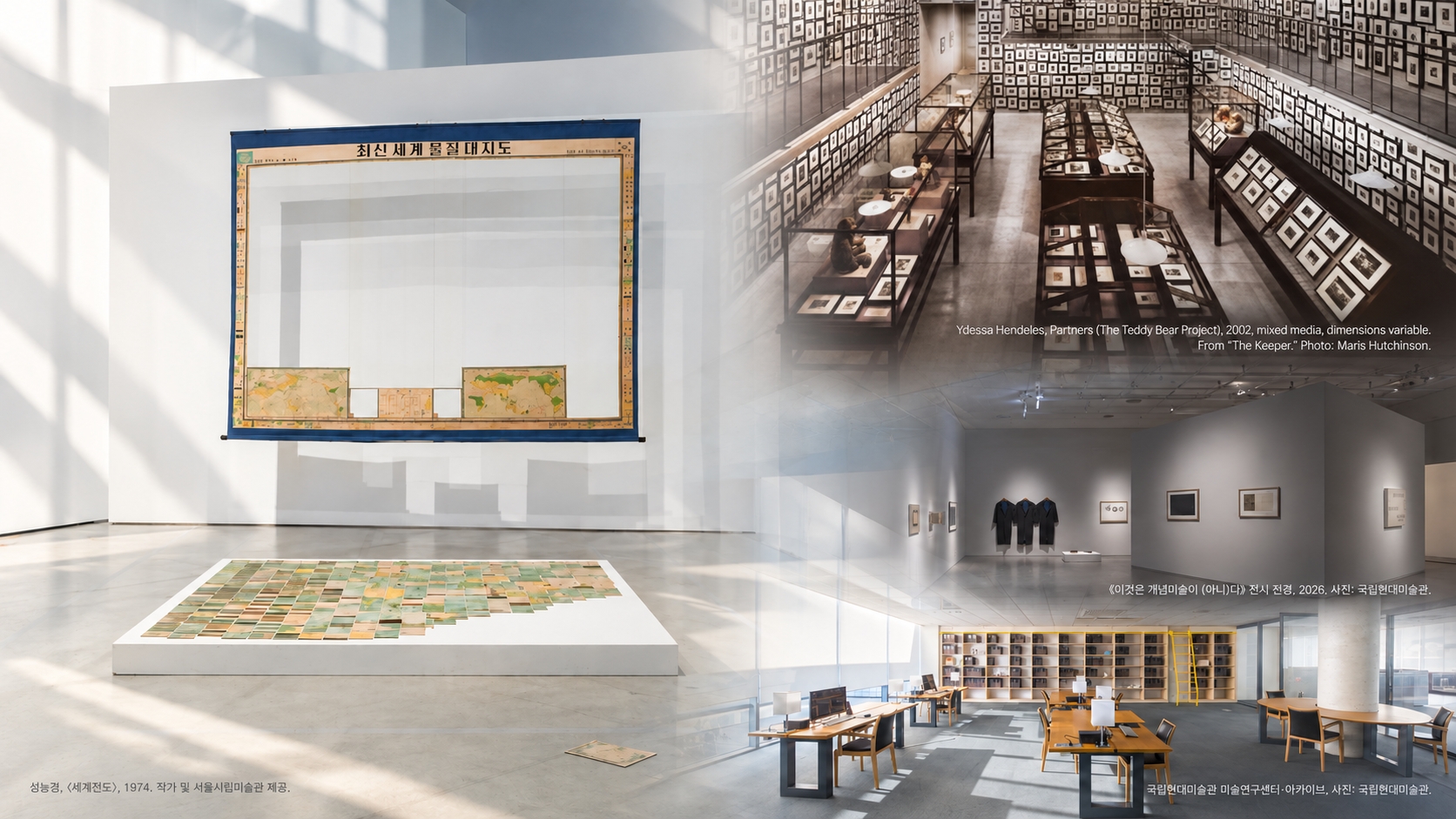
Korea has numerous public and private
museums, including the National Museum of Modern and Contemporary Art, Korea
(MMCA), as well as major international exhibitions such as the Gwangju Biennale
and Busan Biennale.
A museum is not merely a venue for
exhibitions. It is also an institution responsible for collecting and
conserving artworks and conducting art-historical research. Its achievements
should therefore be assessed not only through visitor numbers and exhibition
scale, but also through collection research, scholarly publications, artist
studies, and new interpretations of art history.
Biennials, likewise, must do more than
introduce new themes with each edition. The questions raised by an exhibition
should generate further research and criticism and contribute to artistic
practices beyond the exhibition itself. This requires sustained documentation
and critical evaluation.
Korean museums and biennials
must strengthen their capacity not only to present developments in global art,
but also to generate new aesthetic questions and art-historical
interpretations.
The Art Market, Archives, and
the Formation of Artistic Value
The Korean art market has evolved through
the arrival of international galleries and art fairs, the overseas expansion of
domestic galleries, and the growth of its collector base. Frieze Seoul, in
particular, has helped establish Korea as a significant hub of exchange within
the international art market.
Yet the arrival of foreign galleries and
the sale of high-priced artworks do not, in themselves, demonstrate the
maturity of the domestic art ecosystem.
Major international galleries are involved
not only in selling artworks but also in supporting artists’ long-term careers,
research and publishing, museum exhibitions and acquisitions, and the
development of international networks. Korean galleries likewise need to
strengthen their roles beyond sales and art fair participation.
In this process, documentation and archives
become increasingly important. Records relating to Korean artists and artworks
are often dispersed among museums, galleries, artists, estates, and research
institutions. Without systematic documentation of production dates, materials,
exhibition histories, and critical writings, sustained scholarship and
art-historical evaluation remain difficult.
Digital archives also require systems for
verifying and continuously updating information and for connecting accumulated
records with criticism and research.
The long-term development of
Korean art requires a professional infrastructure capable not only of
circulating and selling artworks, but also of researching, documenting, and
sustaining their artistic value over time.
Does Cultural Policy Build
Facilities or the Capacity for Artistic Production?
Korea’s cultural policies have expanded
cultural infrastructure through the construction of museums and cultural
facilities, the organization of international biennials and art fairs, and
partnerships with overseas cultural institutions.
Yet whether new facilities and large-scale
international events always represent the most effective strategy for the
long-term development of Korean art deserves closer examination.
The cancellation of the planned Centre
Pompidou branch in Busan in 2026 raised questions about how importing the brand
of a renowned foreign museum could contribute to local cultural development.
The issue is not the adoption of foreign
cultural institutions or successful international models in itself. Rather, it
lies in treating models developed under different historical conditions as
strategies for the future without sufficiently examining Korea’s present
cultural and institutional circumstances.
Having already established substantial
cultural infrastructure, Korea must place greater emphasis on strengthening the
expertise and continuity of existing institutions.
Curatorial and research personnel,
independent criticism and publishing, artist research and archives,
professional conservation and documentation, and international collaborative
research may not produce immediate, visible results, but they are essential to
the long-term accumulation of artistic and intellectual value.
In the twenty-first century, a
nation’s cultural development should be measured not by the number of
world-class cultural facilities it possesses, but by its capacity to
continuously generate distinctive cultural values and share them
internationally.
Beyond Global Standards: What
Will Korea Produce?
Over the past several decades, Korean
contemporary art has expanded its international engagement and developed
institutions and professional capacities that operate within global frameworks.
These achievements provide an important foundation for Korea to become a site
of production in global contemporary art.
The question now is no longer simply how
effectively Korea has adopted international standards, but how it can
contribute to shaping and transforming them.
This requires stronger connections among
independent artistic practice, criticism and scholarship, museum and biennial
research, galleries’ long-term support for artists, archives and publishing,
and the professional capacities of cultural policy and education.
The objective is not for Korea to become
another center of the global art world. Establishing a new center while
criticizing the Western-centered history of art would risk reproducing the very
hierarchies under examination. Instead, aesthetic practices and knowledge
produced in different regions should interact and contribute to transforming
the standards through which art is understood and evaluated.
The term post-contemporary,
as used throughout this series, does not designate a new artistic movement or
style that definitively succeeds contemporary art. It is a critical framework
for examining the values, power structures, institutions, and discourses of
contemporary art, and for exploring the conditions under which new artistic
practices and values may emerge in a changing world.
If the central task of Korean
art over the past several decades was to enter the international art world and
secure global recognition, the task ahead is to build upon those accumulated
experiences and capacities to produce new aesthetic concepts, critical
discourses, artistic values, and criteria of evaluation.
The future of Korean
contemporary art lies not in becoming another center of the art world, but in
becoming an active participant in the production of the new values and
standards through which art is understood worldwide.
Jay Jongho Kim graduated from the Department of Art Theory at Hongik University and earned his master's degree in Art Planning from the same university. From 1996 to 2006, he worked as a curator at Gallery Seomi, planning director at CAIS Gallery, head of the curatorial research team at Art Center Nabi, director at Gallery Hyundai, and curator at Gana New York.
From 2008 to 2017, he served as the executive director of Doosan Gallery Seoul & New York and Doosan Residency New York, introducing Korean contemporary artists to the local scene in New York. After returning to Korea in 2017, he worked as an art consultant, conducting art education, collection consulting, and various art projects.
In 2021, he founded A Project Company and is currently running the platforms K-ARTNOW.COM and K-ARTIST.COM, which aim to promote Korean contemporary art on the global stage.