
In March 2026,
the concurrent openings of Tino Sehgal and Damien Hirst in Seoul are widely
regarded as the most significant art events in Korea this year, both in scale
and in discursive weight.
These exhibitions
are not merely major presentations of internationally renowned artists. Rather,
they offer a rare and dramatic opportunity to compare—at opposite ends of the
spectrum—how contemporary art has generated value over the past three decades.
Tino Sehgal:
Immaterial Sculpture and the Reconfiguration of the Institution
Sehgal does not
produce artworks—at least not in the conventional sense. He creates no objects
and prohibits photographic and video documentation. His works exist solely as “constructed
situations.” Within structures precisely choreographed by the artist,
performers speak to visitors, move, sing, or pose questions. The relational
event that unfolds in that moment constitutes the work itself.
His background in
dance and political economy is central to understanding his practice. Sehgal
connects art to questions of labor, exchange, institutional frameworks, and the
production of value. Although his works are sold, transactions occur without written
contracts, relying instead on oral agreements. This deliberate inversion of
legal and material conventions destabilizes the foundations of the art
institution and reactivates the question of what an artwork is from within the
system itself. The work exists only in its enactment and disappears once the
enactment concludes.
Signature works
such as This Progress and These Associations
incorporate the visitor directly into the structure of the piece. One does not
simply “view” the work but undergoes it. The experience cannot be repeated or
replicated. Sehgal transforms the museum from a site of object preservation
into a space where relationships are produced.
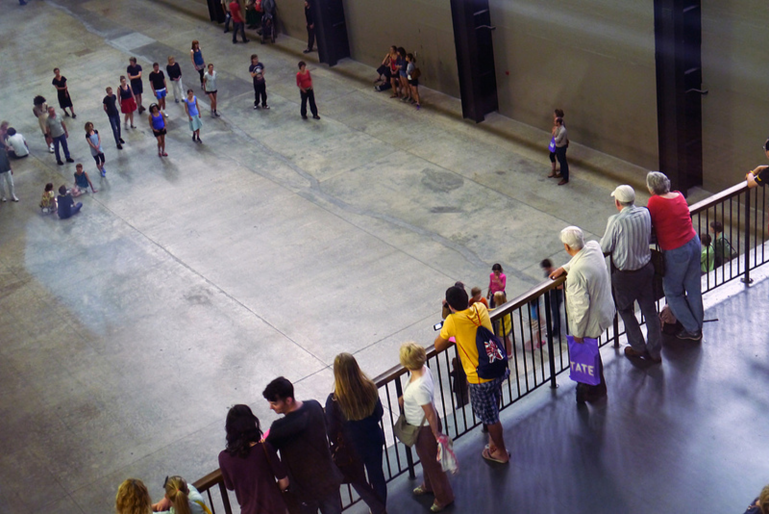
Tino Sehgal, These Associations, Tate Modern, Unilever Series Commission, 2012 / Photo credit : Jo Higgins
His solo
exhibitions at institutions including the Solomon R. Guggenheim Museum, Tate
Modern, and Centre Pompidou, along with the Golden Lion awarded at the 2013
Venice Biennale, marked the moment when immaterial practice moved decisively
into the center of the international institutional sphere. Sehgal is widely
regarded as an artist who reconfigured post-relational aesthetics at the level
of institutional structure.
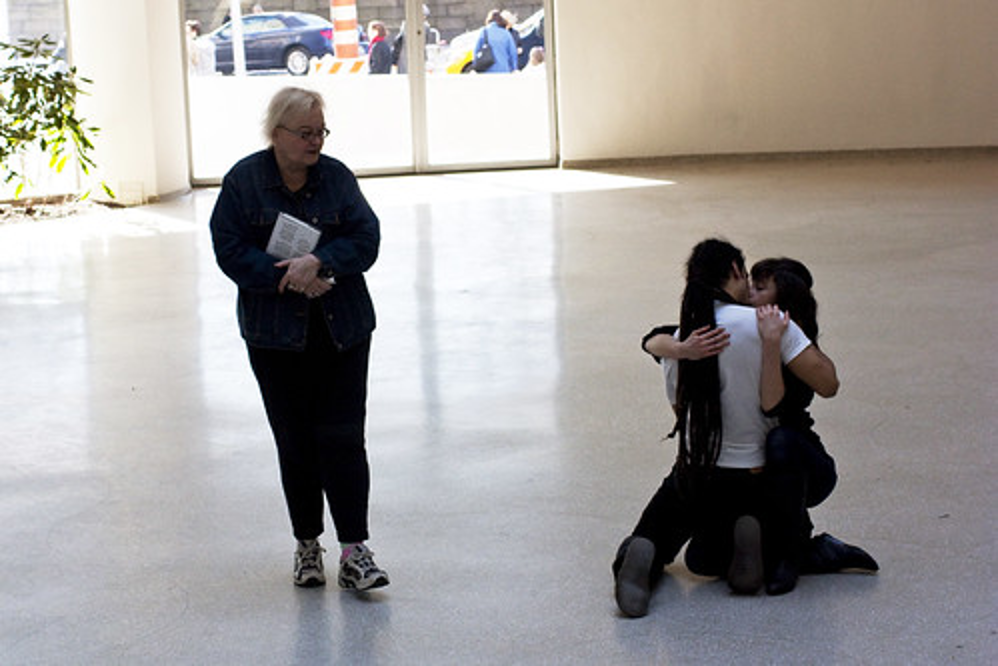
Tino Sehgal’s Kiss (2004) at the Solomon R. Guggenheim Museum / Photo Credit : Too Much Art
Korean
institutions have long operated within object-centered and archive-based
exhibition systems. Sehgal’s exhibition simultaneously reconsiders archival
logic, acquisition models, conservation strategies, and the role of the viewer.
The exhibition functions less as a display of works than as a structural
experiment testing the museum apparatus in real time. Immateriality here is not
absence, but a method for exposing the premises of the institution.
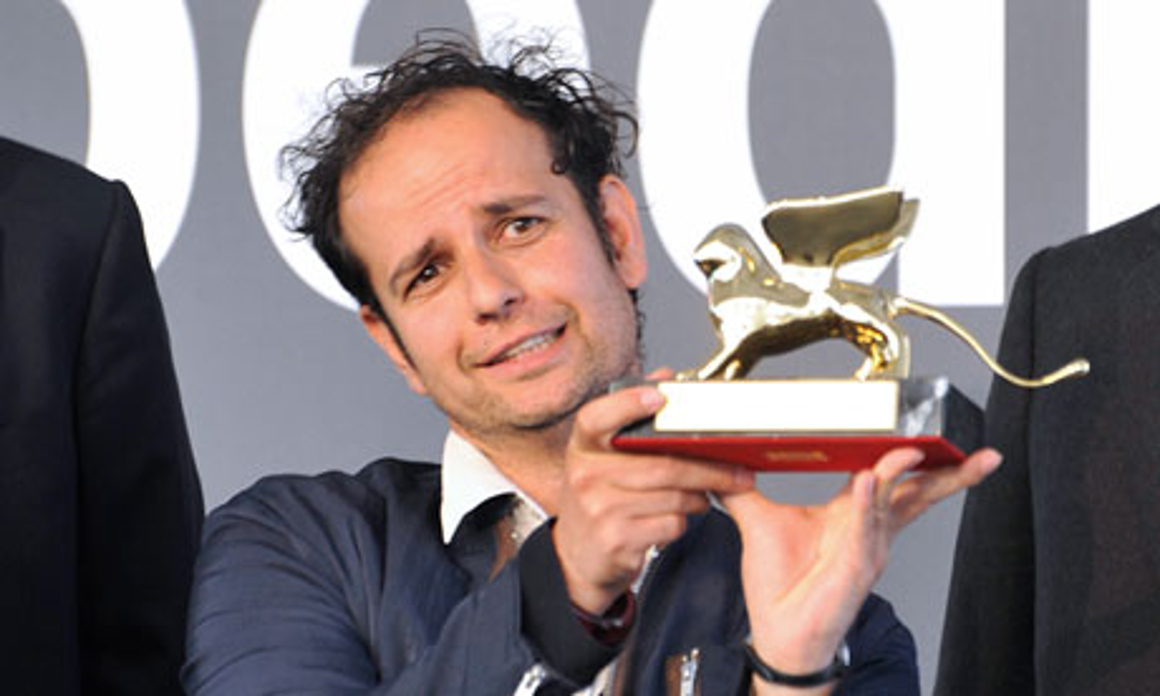
Tino Sehgal displays his Golden Lion award for best artist at the 2013 Venice Biennale. / Photograph: The Guardian
From this
perspective, Sehgal’s exhibition exceeds the category of spectacle. It proposes
a reconsideration of the operational structure of the contemporary Korean
museum itself.
Damien Hirst
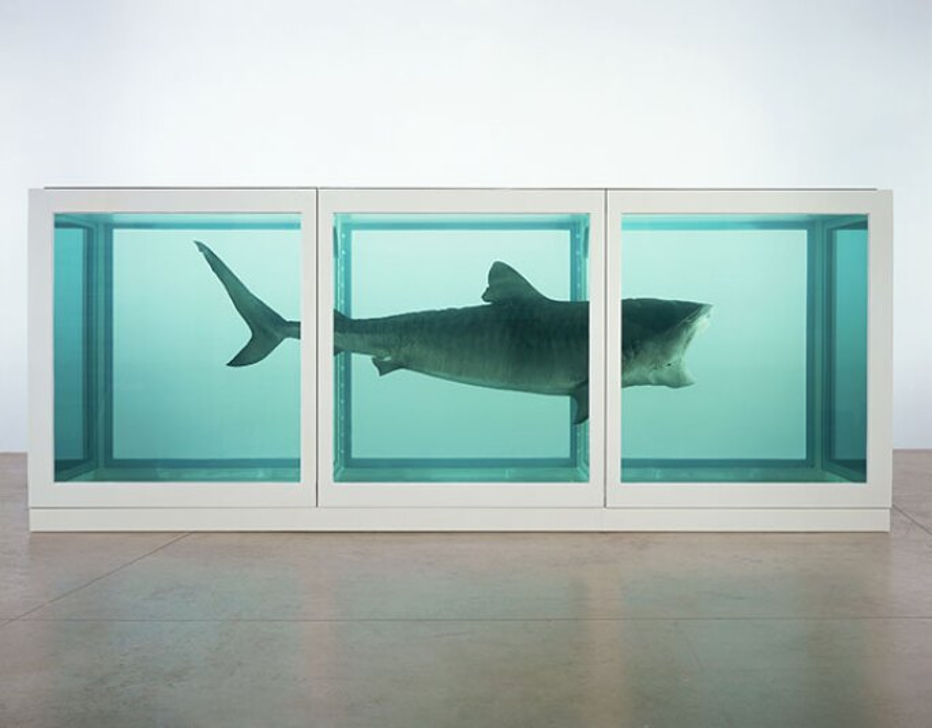
Damien Hirst, The Physical Impossibility of Death in the Mind of Someone Living, 1991. © Damien Hirst and Science Ltd. All rights reserved. DACS/Artimage 2018. Photo: Prudence Cuming Associates Ltd.
Image, Death,
and the Construction of Modern Myth
Hirst emerged in
the 1990s as a leading figure of the Young British Artists (YBA), becoming one
of the most emblematic artists to reveal the entanglement between contemporary
art and the global art market. Works such as the formaldehyde-preserved shark (The
Physical Impossibility of Death in the Mind of Someone Living,
1991), the Spot Paintings, Butterfly paintings, and Medicine cabinet
installations combine symbolic systems of life and death, faith and science,
and consumption culture.
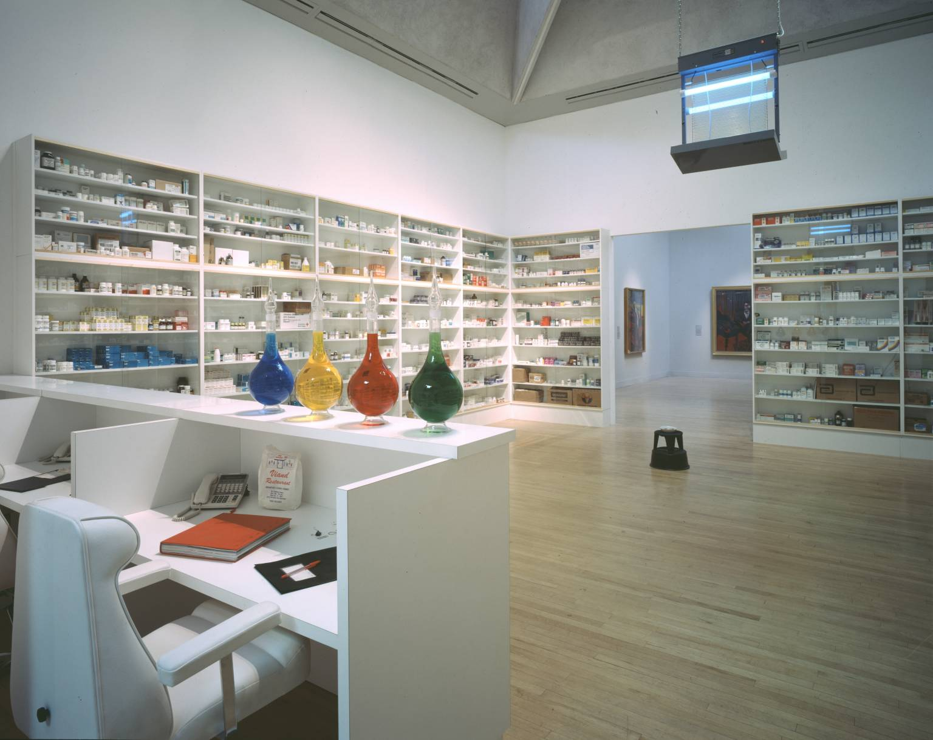
Damien Hirst, Pharmacy, 1992. Glass, paint, steel, wood, aluminum, plastic, and mixed media installation. Room-sized installation incorporating medicine bottles, cabinets, pharmaceutical packaging, and lighting./ © Damien Hirst and Science Ltd. All rights reserved.
First presented at Cohen Gallery, New York, 1992.
Hirst’s practice
does not separate aesthetic concerns from market structures. In 2008, he
bypassed the traditional gallery system by selling works directly at auction,
strategically engaging the mechanisms of the art market. This act exposed the
relationship between art and capital while igniting debate around branding,
industrialization, and artistic authorship.
Critically, his
work juxtaposes death and the sublime, ornamentation and repetition, industrial
production and spectacle. The studio system dismantles the traditional notion
of the artist’s handcrafted authorship, foregrounding instead conceptual design
and delegated fabrication. It symbolizes how contemporary art operates less as
an individual artifact and more as a structural system.
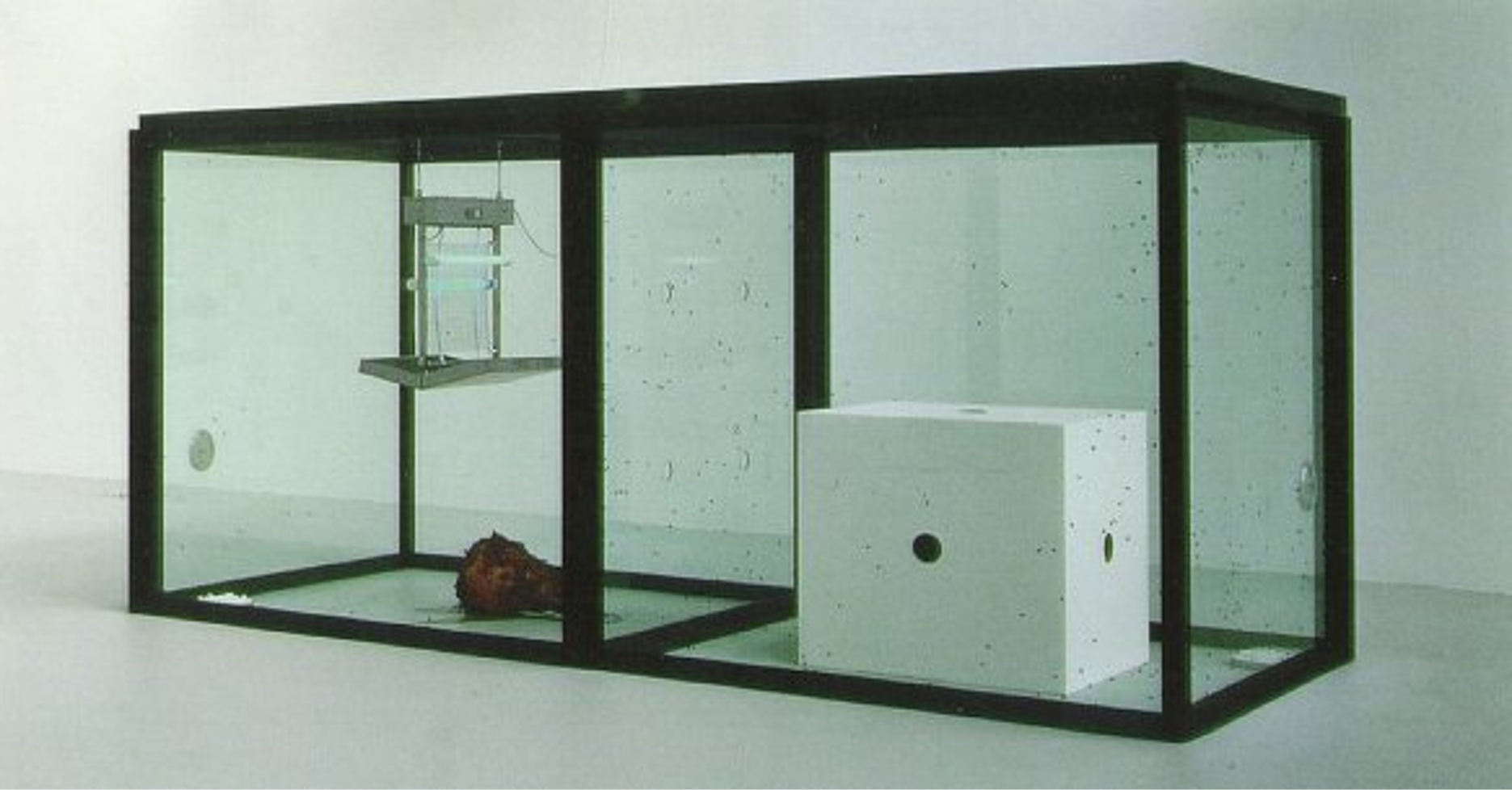
Damien Hirst, A Thousand Years, 1990, Glass, steel, MDF, flies, maggots, cow’s head, sugar, water, Insect-O-Cutor, Installation. © Damien Hirst and Science Ltd. All rights reserved.
If Sehgal’s
exhibitions are remembered as experiences without residue, Hirst’s exhibitions
are remembered through the accumulation of images. Yet both artists treat art
not merely as an aesthetic object but as a structure through which
value is produced. One empties the structure; the other amplifies it.
As Korea has
rapidly emerged as a major hub within the global art market, these exhibitions
resonate beyond celebrity appeal. They render visible the tensions between art
and capital, institution and brand, popular spectacle and critical value.
If Sehgal
unsettles the institution through ‘immateriality’, Hirst makes its mechanisms
visible through ‘material excess’. One approaches the question of art through
radical subtraction; the other through maximal exposure. In March 2026, Seoul
finds itself in the unusual position of witnessing these two strategies unfold
simultaneously.
Exhibition
Information
Tino Sehgal
Exhibition Title:《Tino Sehgal》
Venue: Leeum
Museum of Art
Dates: March 3 –
June 28, 2026
Address: 60-16
Itaewon-ro 55-gil, Yongsan-gu, Seoul, Korea
Website: https://www.leeum.org
Damien Hirst
Exhibition Title:〈There Is No Truth, Yet Everything Is Possible》
Venue: National
Museum of Modern and Contemporary Art, Korea (Seoul)
Dates: March 20 –
June 28, 2026
Address: 30
Samcheong-ro, Jongno-gu, Seoul, Korea
Website: https://www.mmca.go.kr