
In Korean society, internationalization and
globalization emerged as major national agendas between the late 1980s and the
mid-1990s. The 1988 Seoul Olympics was a symbolic event through which Korea
began to present itself to the international community in a more visible and
active way. In the 1990s, Korea rapidly entered the global order through
democratization, market liberalization, cultural exchange, and participation in
international organizations.
In particular, the “globalization” policy
promoted under the Kim Young-sam administration, Korea’s entry into the WTO
system in 1995, and its accession to the OECD in 1996 all indicate that Korean
society had begun to operate within international standards and institutional
frameworks.
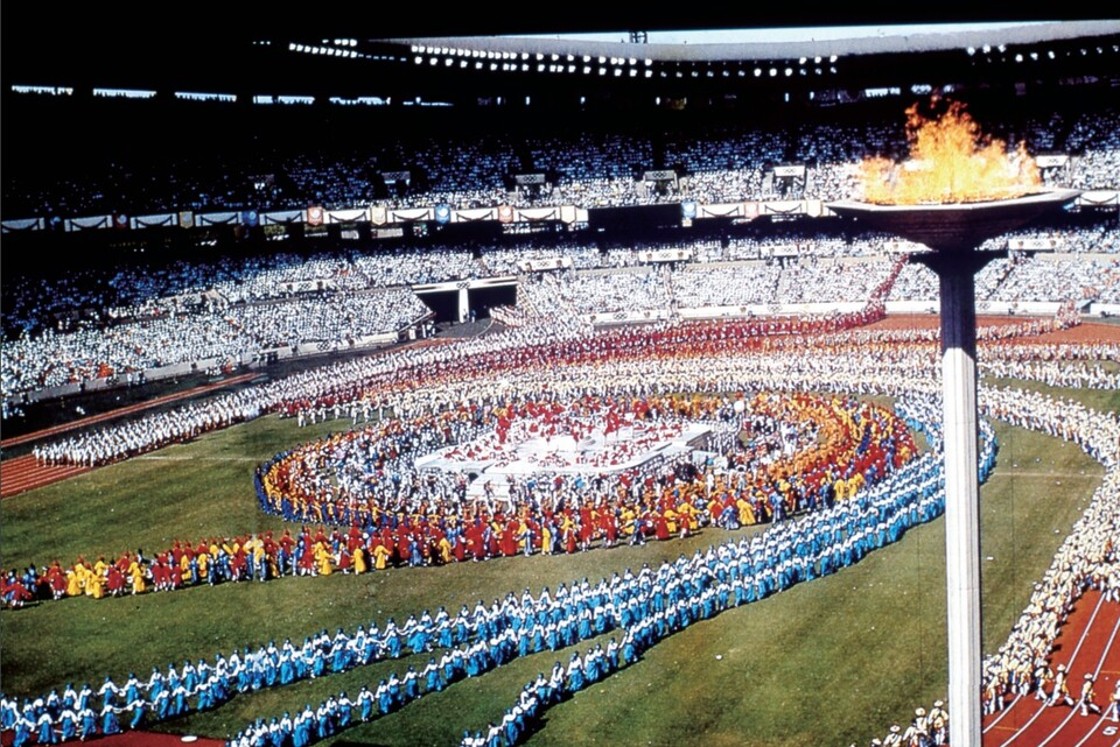
Opening ceremony of the 24th Seoul Olympic Games, held at Jamsil Olympic Stadium on September 17, 1988. / Photo: Korea Sports Promotion Foundation
The internationalization of Korean
contemporary art developed alongside these broader social changes. Around the
time of the Seoul Olympics in the late 1980s, international exchange
exhibitions expanded, and《Whitney Biennial Seoul》, held at the National Museum of Modern and Contemporary Art, Korea
in 1993, became a significant moment in which the Korean art world directly
encountered the issues and currents of global contemporary art.
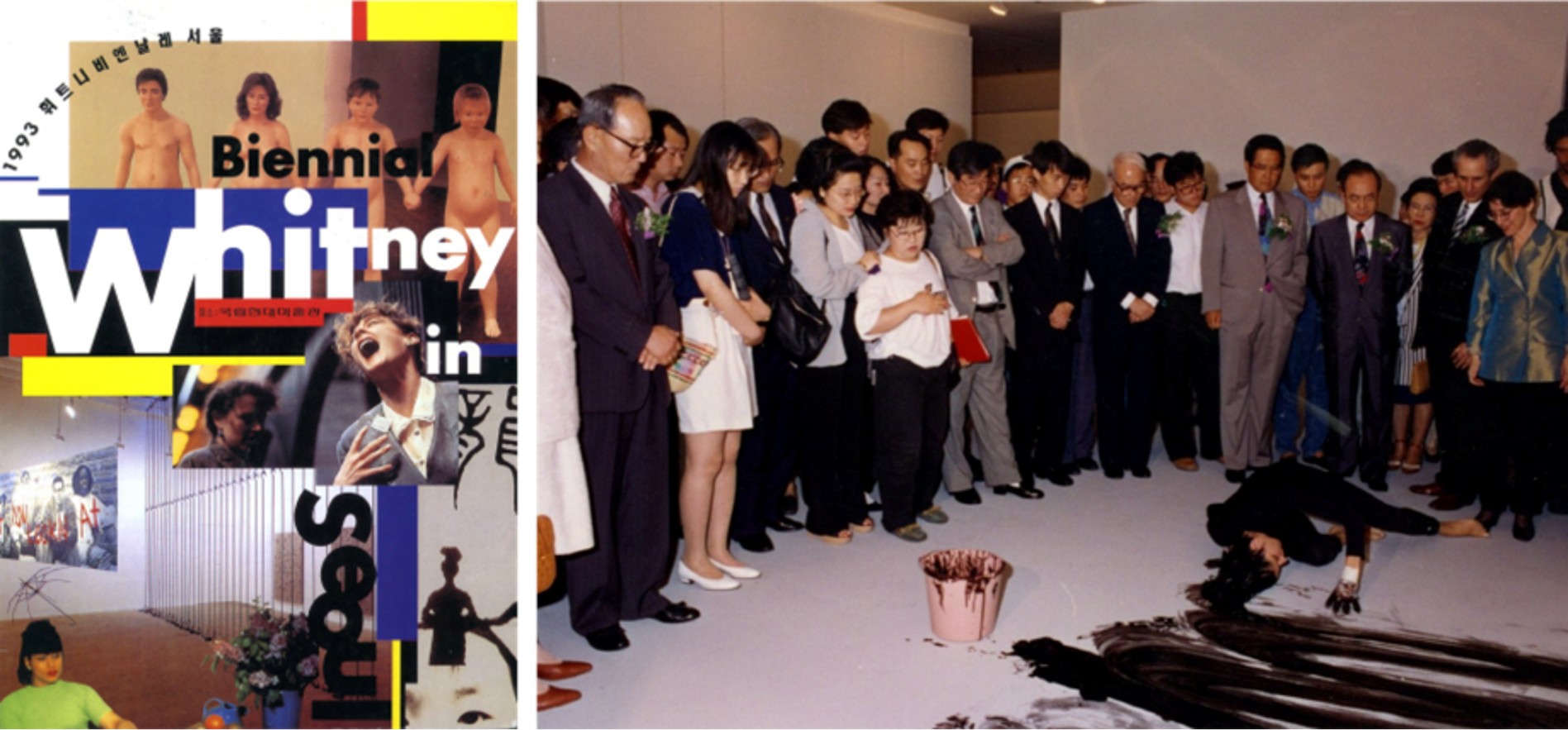
(Left) Poster for the《Whitney Biennial Seoul》, held at the National Museum of Modern and Contemporary Art in Gwacheon, Gyeonggi Province, in 1993. / Photo : courtesy of the National Museum of Modern and Contemporary Art, (Right) Performance Loving Care by American artist Janine Antoni at the opening of the 1993《Whitney Biennial Seoul》/ Photo: MMCA Research Center
In 1995, the founding of the Gwangju
Biennale and the opening of the Korean Pavilion at the Venice Biennale marked
Korea’s full entry into the international exhibition system. The launch of Kiaf
Seoul in 2002 and the arrival of Frieze Seoul in 2022 further demonstrated the
growth of the Korean art market within the structure of international art
fairs.
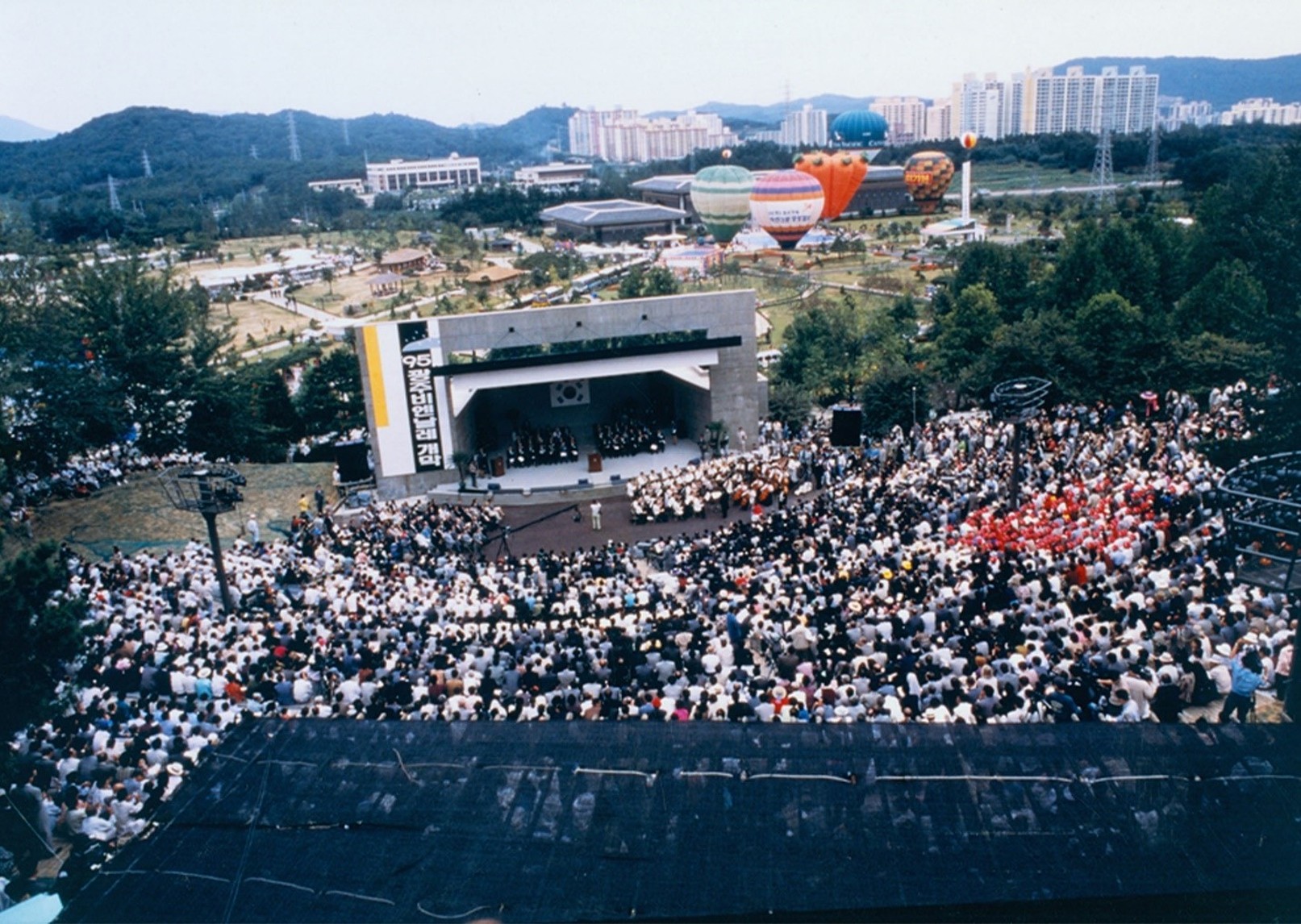
The opening ceremony of the 1st《Gwangju Biennale》held in 1995. The exhibition, curated by 17 curators, featured 660 participating artists presenting a total of 1,228 works. Over the course of two months, the exhibition attracted 1.64 million visitors, more than the population of Gwangju at the time. © Gwangju City Audiovisual Archives.
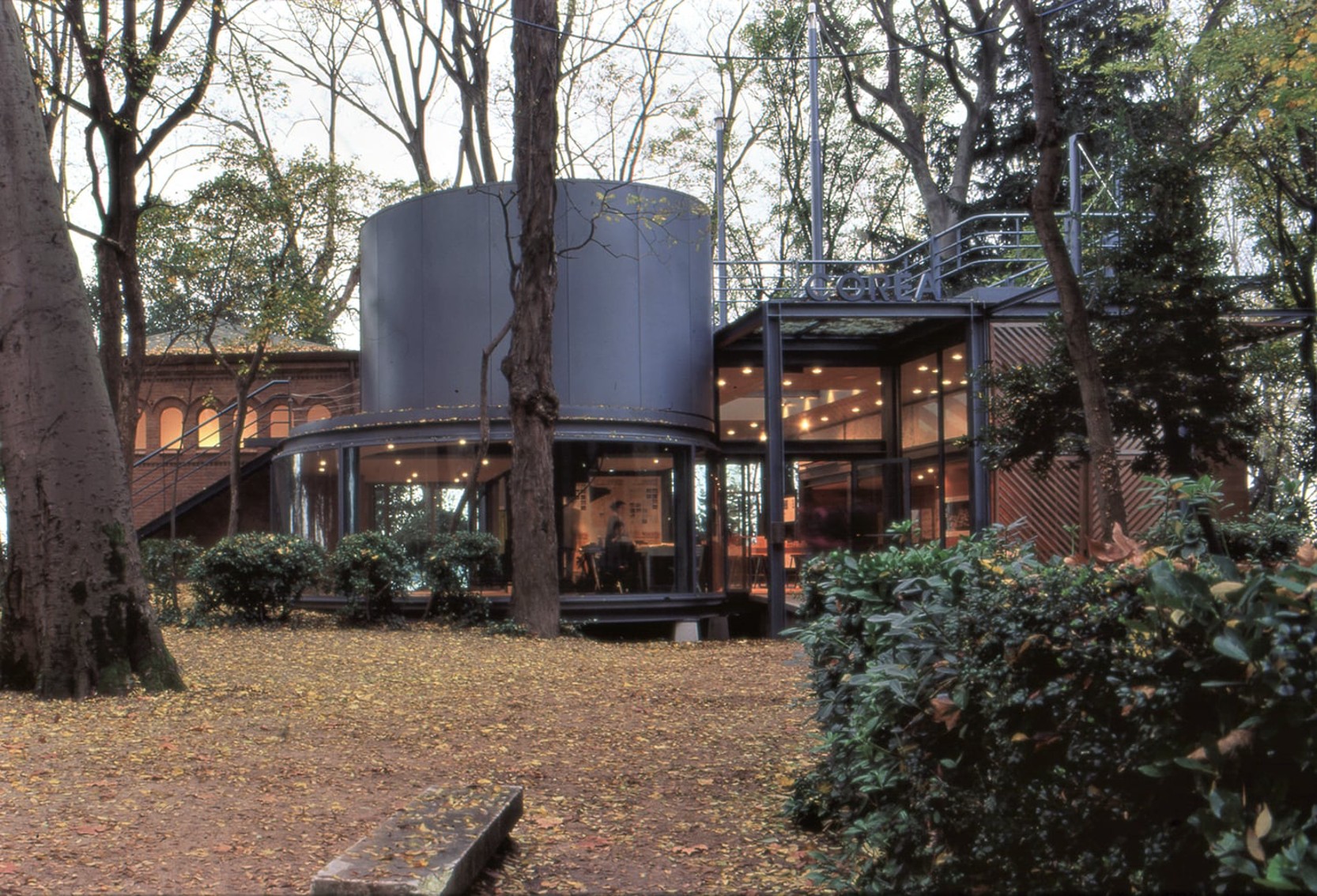
The Korean Pavilion at the《Venice Biennale》at the time of its completion in 1995. Co-designed by Kim Seok-chul and Franco Mancuso. / Photo: The Chosun Ilbo
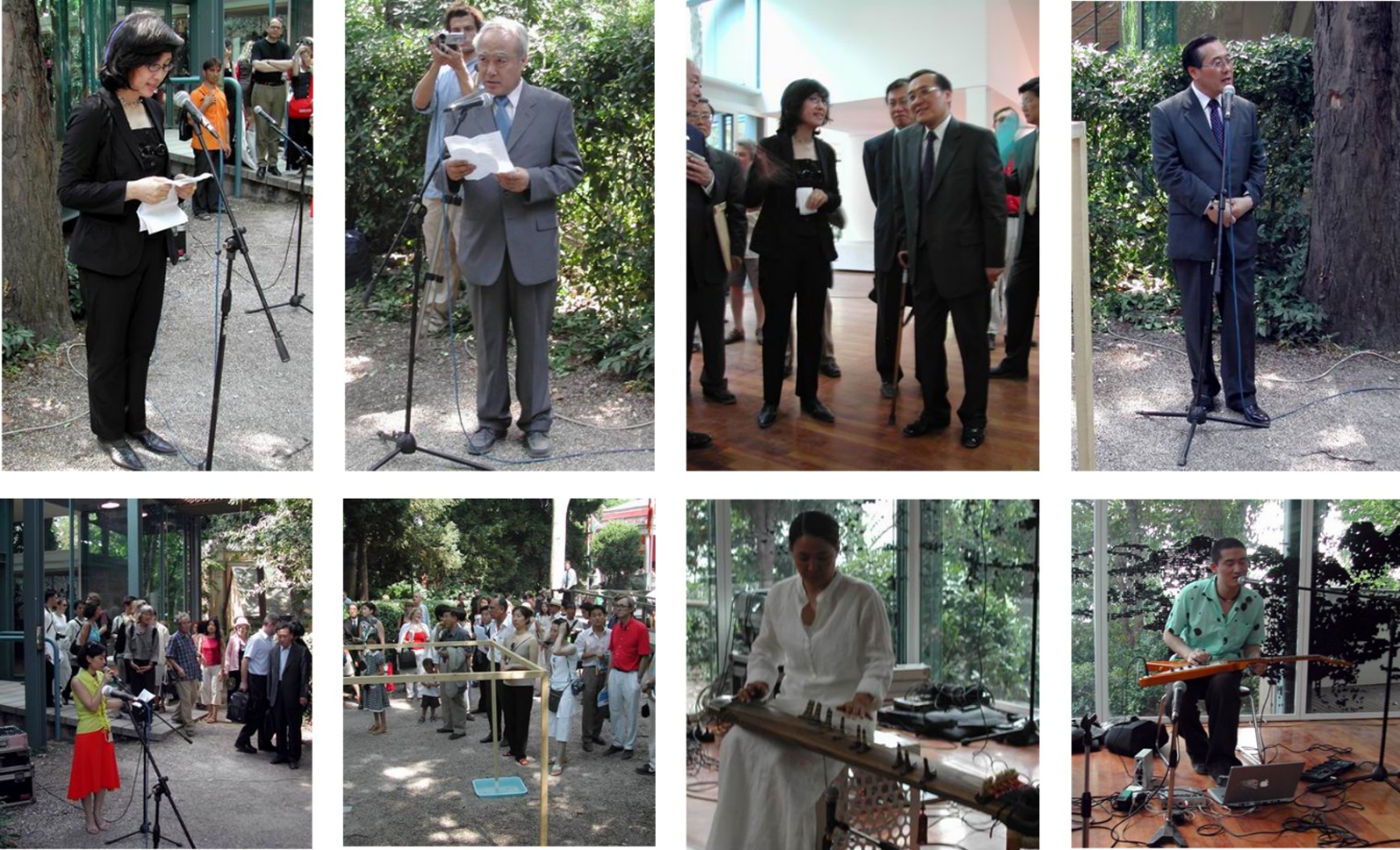
Opening ceremony of the Korean Pavilion at the《Venice Biennale》in 1995.
However, participation in overseas
exhibitions, the hosting of international art fairs, and transactions with
foreign collectors do not, in themselves, mean that global standards have been
achieved. What matters is whether Korean contemporary art has established the
institutional criteria, market transparency, critical language, records of
artists and artworks, data systems, and archives necessary to connect with the
world.
The question Korean art must now ask is not
simply “how far has it gone abroad?” but rather “has it built a structure
through which the world can read, compare, verify, and trust Korean art?”
The Meaning of Global Standards
Global standards do not mean
Westernization, nor do they mean following the trends of the international art
world. Rather, they refer to the shared languages, procedures, records, and
verification systems that allow art from different regions to be compared,
interpreted, and trusted within the international field. No matter how
outstanding an artwork may be, international trust is difficult to establish if
the structure for explaining, preserving, circulating, evaluating, and trading
that work is weak.
Therefore, global standards are not only a
matter of going outward. They are also a matter of reorganizing internal
criteria. For Korean art to engage with the world on equal terms, its
institutions, market, criticism, and archival systems must be legible and
verifiable internationally.
Global Standards for Artist
Archives
For Korean contemporary art to connect with
the world, the systematic construction of professional digital artist archives
is essential. An artist archive is not simply an artist profile or a collection
of artwork images. It is a knowledge structure that organizes an artist’s
practice, exhibition history, artwork list, criticism, collection records,
interviews, artist statements, and bibliographic materials.
In the international art world, artists are
not evaluated through individual works alone. What is examined is how an artist’s
practice has developed over time, what questions have shaped that practice, and
through which exhibitions, institutions, and critical contexts the artist has
been presented. In this sense, the artist archive is the most basic
infrastructure for explaining and verifying an artist’s career.
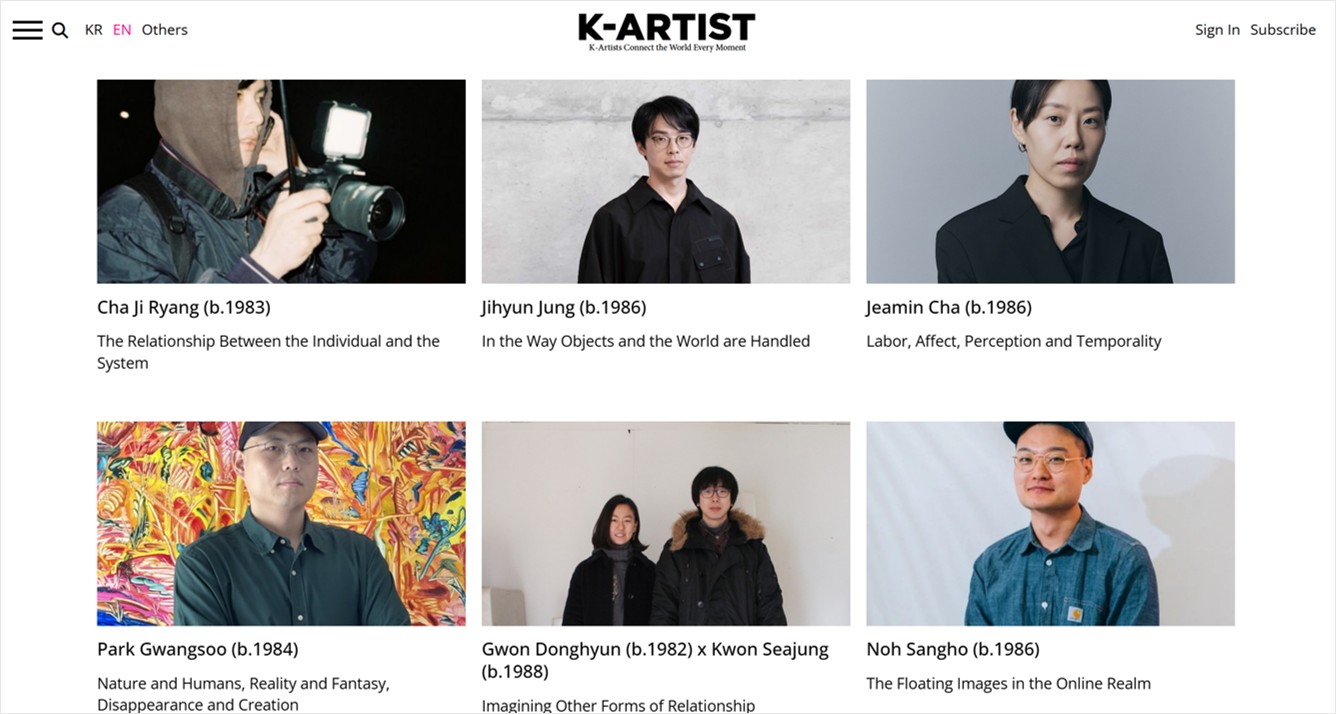
K-ARTIST.COM is an archive platform that selects and introduces Korean contemporary artists to the international stage. © Aproject Company
However, digital archives for Korean
contemporary artists remain highly insufficient. Many artists have significant
bodies of work and important exhibition histories, yet their English-language
biographies, artwork images, descriptions of major works, exhibition records,
critical texts, interviews, and bibliographies are often not systematically
organized for international use.
This is one of the most urgent and
important tasks for the internationalization of Korean contemporary art. Public
support should therefore move beyond one-time exhibitions or catalogue
production and expand toward supporting the creation of artist-specific digital
archives. If necessary, national-level support programs should be established
to organize Korean artists’ materials according to international standards and
systematically build English-language content, artwork data, images, and
critical resources.
Global Standards for Museums
The global standard of a museum is not
determined by the size of its building or the number of visitors it attracts.
What matters is whether research, collection, conservation, exhibition,
education, publication, and archiving function together as a public system. An
international museum is not merely a venue for exhibitions. It is an
institution that produces and verifies art historical meaning.
Korea’s museum system has expanded
significantly in quantitative terms. Yet many exhibitions still tend to focus
on short-term visibility, topicality, or visitor numbers. Systems that conduct
long-term research on Korean contemporary art, continuously collect major
artists and works, and accumulate those results through publications and
archives have not yet been sufficiently strengthened.
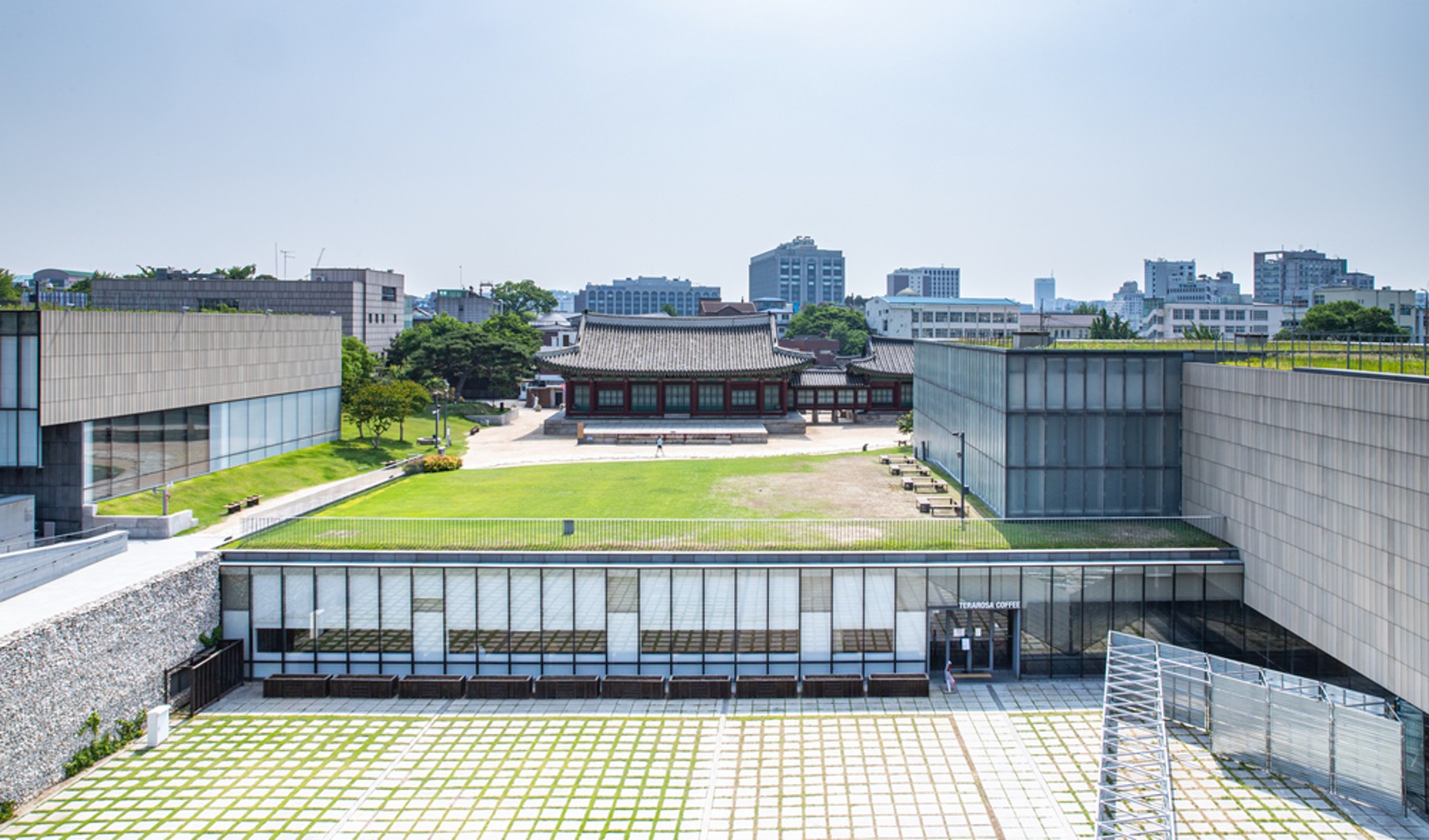
The National Museum of Modern and Contemporary Art, Korea (MMCA) © Park Jung Hoon
Korean museums, in particular, need
strategies to discover promising Korean artists and position their work within
the broader context of global art, rather than limiting it to domestic
exhibition circuits.
This should not be limited to sending
artists to overseas exhibitions. Through artist research, acquisitions,
English-language catalogues, international symposiums, and co-organized
projects with overseas institutions, museums must build institutional pathways
through which Korean artists can be read within global art history.
For Korean museums to approach global
standards, they must move beyond blockbuster-centered operations and establish
long-term systems for researching, recording, and presenting Korean
contemporary art on the world stage. Museums should function not merely as
spaces that gather audiences, but as public institutions that produce the art
historical value of Korean artists and verify it internationally.
Global Standards for Galleries
The global standard of a gallery is not
determined simply by its sales capacity. What matters is how it discovers
artists, manages them over the long term, and systematizes pricing, exhibition
histories, critical materials, collection records, and contract structures. An
international gallery is not merely a seller. It is a professional institution
that shapes an artist’s career.
Major Korean galleries have grown rapidly
through participation in international art fairs and the development of
overseas networks. Yet within the broader ecosystem, galleries that
systematically maintain artist archives, English-language materials, pricing
policies, transparent contracts, and long-term career strategies remain
limited.
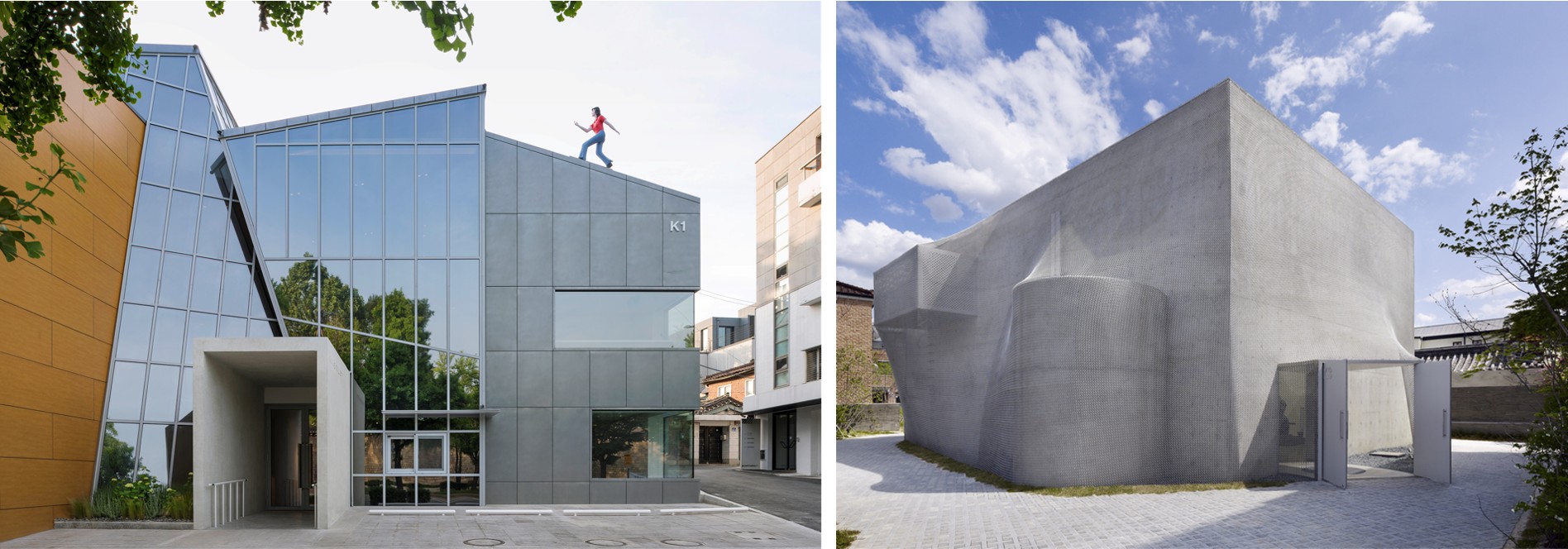
Exterior view of Kukje Gallery. / Photo: Kukje Gallery website
For galleries to place artists’ works
convincingly in the market, images and prices alone are not enough. They must
be able to professionally present who the artist is, what kind of practice they
have built, why a given work matters now, and within which exhibition,
critical, and collection contexts it should be understood.
In particular, when dealing with overseas
collectors and institutions, artist introductions, artwork descriptions, major
career records, critical materials, exhibition images, and artwork data must be
prepared in an international language and format.
One recurring problem in the Korean art
market is its short-term sales-oriented structure. Even when a particular
artist or tendency receives temporary attention, sustainable value formation is
difficult if that attention does not lead to exhibitions, criticism,
institutional collections, international networks, and the secondary market.
Galleries must move beyond simply selling artists and artworks in the market.
They must strengthen their role in designing long-term value and international
context.
Global Standards for Art Fairs
The level of an art fair is not determined
solely by the number of participating galleries or visitors. The key factors
are the quality of gallery selection, the standards of the selection process,
VIP collector networks, international media exposure, professional programs,
transaction reliability, and connectivity with the host city.
Kiaf Seoul and Frieze Seoul have increased
the international visibility of the Korean art market and positioned Seoul as a
major city in the Asian art market. Yet the success of an art fair cannot be
evaluated only by temporary visitor numbers or sales volume. What matters is
how convincingly it presents the actual level and diversity of Korean
contemporary art.
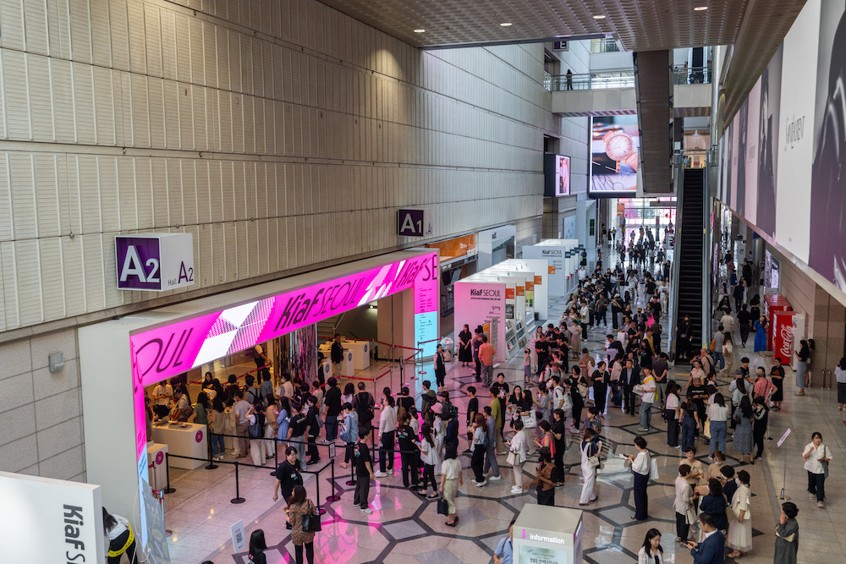
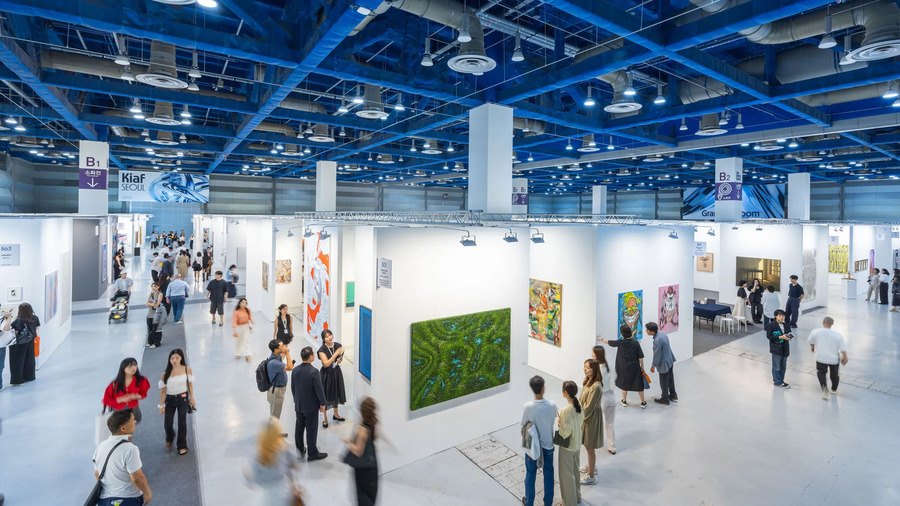
Scene from Kiaf Seoul 2023. / Photo: Kiaf
Domestic art fairs face clear limitations
if they remain confined to events held only within Korea. For Korean artists
and galleries to connect more directly with the global market, art fairs must
look beyond domestic hosting and develop strategies to connect with overseas
art scenes and markets. Programs linked with major overseas cities, exchanges
with international galleries, special exhibitions of Korean artists, previews
and networking events for overseas collectors and institutions, and collaborations
with global media are all necessary.
For Seoul to grow as an international art
fair city, it is important not only to attract overseas galleries but also to
strengthen the quality of Korean artists and Korean galleries, discover
emerging and mid-career artists, expand professional collector networks, and
connect art fairs with museums, galleries, biennales, tourism infrastructure,
and the broader urban culture. Art fairs must function not merely as commercial
events, but as cultural platforms that connect Korean art with the global
market.
Global Standards for Auctions
The global standard of an auction house is
not created by high-price records. It lies in the reliability of authenticity,
provenance, ownership history, appraisal, condition reports, price estimates,
and transparent sales results. Auctions are important institutions that
generate price signals in the art market, but they do not exist independently.
The level of an auction market is ultimately connected to galleries, museums,
criticism, collectors, and the accumulated careers of artists.
In a healthy market, auctions are not a
substitute for the primary market. They are the secondary market that verifies
the value of artists and artworks formed in the primary market. A necessary
structure is one in which works by artists discovered and exhibited by strong
galleries are collected by collectors and institutions, and later return to the
market after a certain period of time, at which point their history and value
can be confirmed.
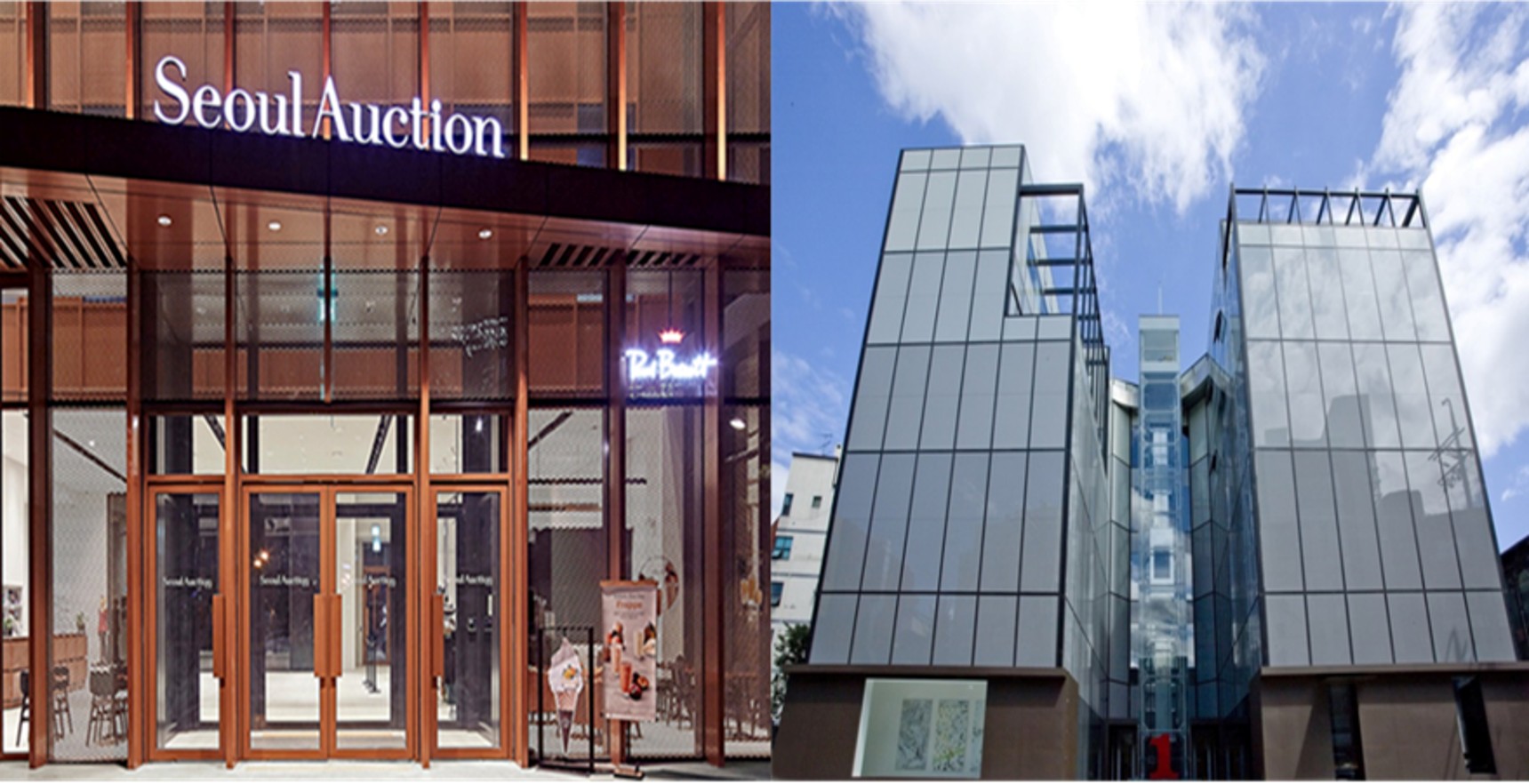
Left: Seoul Auction building. Right: K Auction building. © Seoul Auction & K Auction
A key challenge for the Korean auction
market is how to overcome the reality that the sales market and the structure
of artistic production often operate separately. If the gap widens between the
works traded in the auction market and the works being produced and evaluated
in the actual field of contemporary art, the market becomes driven by prices,
while the real achievements of contemporary art are not sufficiently reflected.
Auction houses should contribute to
building a structure in which strong artists recognized in the field can grow
through the primary market, and their works can then move naturally into the
secondary market.
To achieve this, galleries, museums,
critics, collectors, and auction houses must not operate as disconnected
sectors. Galleries discover artists and manage them within exhibitions and the
market. Museums and critics interpret the meaning and art historical value of
their work. Collectors should collect based on long-term value rather than
short-term profit. Auction houses, when works return to the market, must
transparently provide artwork information, provenance, and transaction records.
Therefore, the global standard of the
auction market does not depend on raising hammer prices. It depends on the
accuracy of artwork information, transparency of transaction records,
professionalism of appraisal systems, documentation that international buyers
can trust, and a healthy circulation structure between the primary and
secondary markets.
Global Standards for Criticism
and Media
For Korean contemporary art to connect with
the world, exhibitions and transactions are not enough. Criticism and media
that interpret, contextualize, and record artworks are essential. In the global
art world, an artist does not exist through artworks alone. Artists are read
internationally through texts, images, exhibition histories, interviews,
reviews, criticism, institutional collections, market records, and scholarly
interpretation.
In the Korean art world, exhibition
introductions and news content are produced continuously. Yet many texts remain
at the level of promotional introductions or short-term issue reporting. There
is still not enough criticism that follows an artist’s practice over the long
term or analyzes the currents of Korean contemporary art in relation to global
art history. In particular, high-quality English-language criticism and
materials accessible to overseas readers remain insufficient.
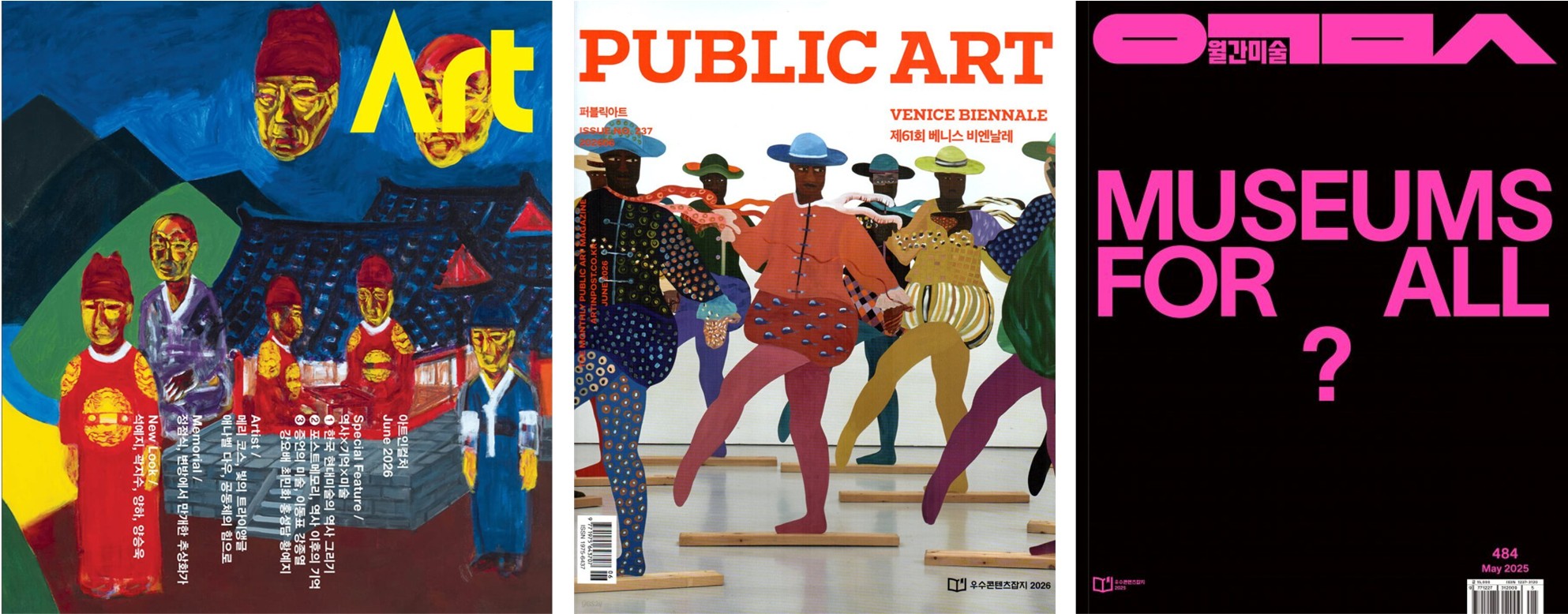
Representative Korean art magazines. / Photo: Each Art Magazine Website
Korean criticism and media should no longer
remain limited to importing or following theories and discourses that are
fashionable elsewhere in the world. What is needed is an independent Korean
model of criticism and discourse production that can address the actual
conditions under which Korean contemporary art is produced, as well as the
artist groups, institutions, markets, and historical experiences through which
it has been formed. This does not mean isolating Korean specificity. Rather, it
means connecting the concrete realities of Korean art with the universal
language of global art.
For this, intentional effort by media
platforms is essential. They must move beyond simply introducing Korean artists
and exhibitions. They must analyze the production structure and aesthetic
issues of Korean art, translate them into English, and continuously deliver
them to overseas readers, institutions, critics, and curators. Criticism and
media should not be tools of promotion. They should become knowledge platforms
that produce the meaning of Korean contemporary art and connect it with the
world.
Global Standards for Archives
and Data
One of the most important standards for
Korean contemporary art going forward is archives and data. Global standards
are also a matter of searchability, verifiability, and comparability. If an
artist’s exhibition history, artwork images, production year, materials,
dimensions, collection information, literature, criticism, and transaction
history are not systematically organized, it is difficult for the international
art world to research or trust that artist in depth.
One of the major challenges facing Korean
contemporary art is that information remains scattered. If information held by
museums, galleries, artists, critics, media, art fairs, and auction houses is
not connected, Korean art cannot build a sustainable knowledge structure
internationally.
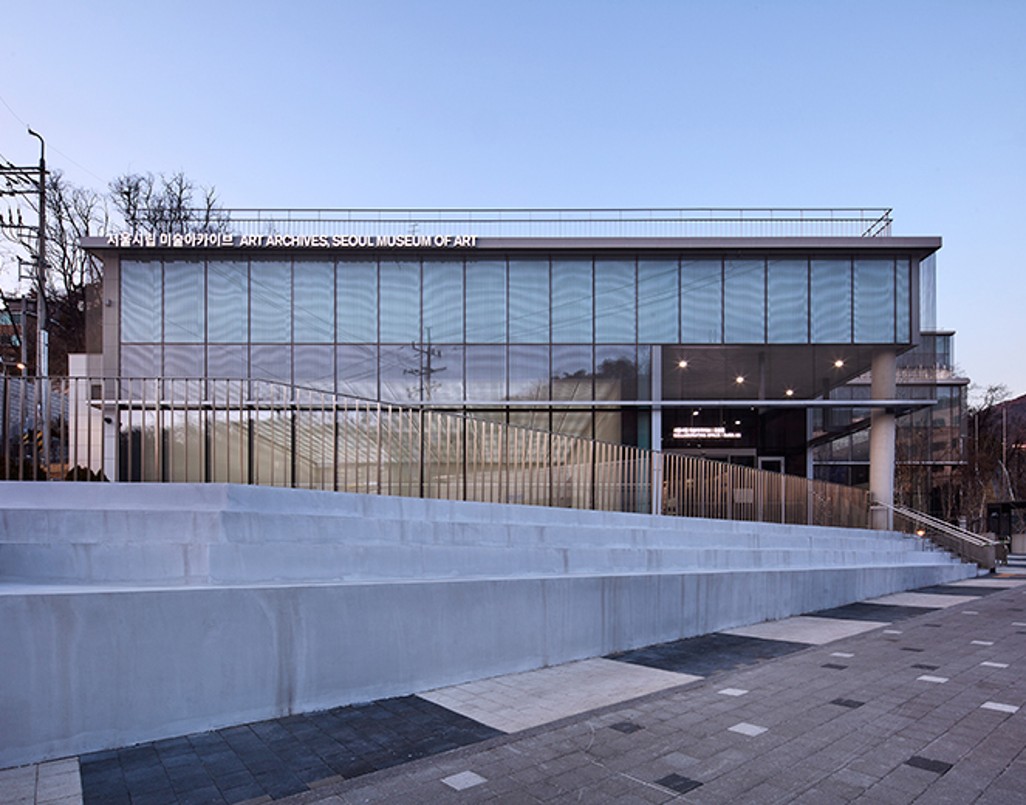
Art Archives, Seoul Museum of Art. / Photo: Seoul Museum of Art
A digital archive is not simply a
repository of materials. It is a knowledge infrastructure that enables the
world to search, compare, research, and interpret artists and artworks. The
international expansion of Korean art will likely depend not only on the
achievements of individual artists, but also on the data structures that record
and connect those achievements.
Global Standards for Support
Systems and Public Policy
The global standard of Korean contemporary
art cannot be achieved through the efforts of individual institutions alone.
For museums, galleries, art fairs, auctions, criticism, and archives to operate
sustainably over the long term, public policy and private-sector capacity must
work together.
Korea’s cultural and artistic support
systems have supported creation, exhibitions, overseas expansion, residencies,
and international exchange. However, many forms of support remain centered on
short-term projects. Structural initiatives such as long-term archive building,
the production of international criticism, artist research, sustained
management of overseas networks, and art market data systems need to be
strengthened further.
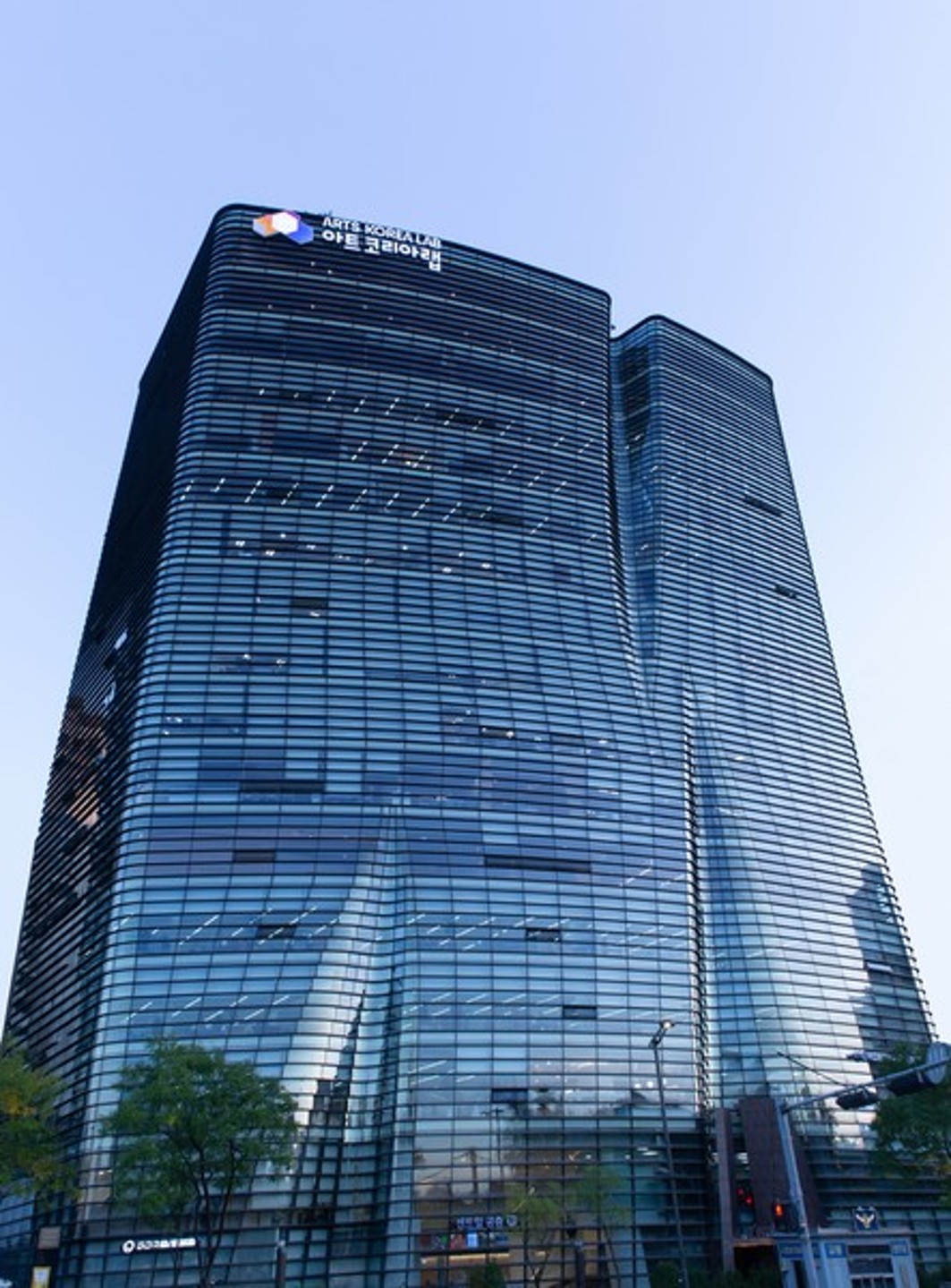
Art Korea Lab, operated by the Korea Arts Management Service. / Photo: Korea Arts Management Service
In particular, art support systems should
devote more effort to building the basic infrastructure necessary to properly
introduce Korean artists overseas. Support for individual exhibitions or
one-time participation in overseas events is necessary, but what is more
important is the organization of artist materials, production of
English-language content, standardization of artwork images and data,
development of networks with overseas institutions, and continuous production
of international criticism and research.
From the perspective of global standards,
what matters is not immediate results but sustainability. More important than a
single overseas exhibition is how the artist’s materials are accumulated
afterward, which institutions they become connected with, and within what
critical and market structures they continue to be read. Public policy should
be designed not around short-term outcomes, but around building the international
foundation of Korean art.
The Future of Korean
Contemporary Art
Korean contemporary art already has
outstanding artists and artworks. The problem is not the absence of strong
works, but the lack of structures that allow the world to read and trust them.
Global standards are not external criteria for gaining recognition from
outside. They are internal criteria through which Korean art can develop into a
more accurate, transparent, and sustainable ecosystem.
What is needed going forward is not merely
the individual growth of each sector, but a virtuous cycle among them. Artists
create strong works. Galleries select and manage them within exhibitions and
the market. Museums research and collect significant achievements. Criticism
and media interpret and record their meaning. Collectors collect with a
long-term perspective. Later, some works return to the market through auctions.
Archives and data connect all these processes into an internationally
searchable and trustworthy structure.
When this cycle begins to function, Korean
contemporary art can move beyond the stage of simply being introduced abroad
and become continuously compared and interpreted within the contemporary field
of global art. Global standards are not criteria for following the world. They
are the structural conditions Korean contemporary art must establish to speak
with the world on equal terms.
Jay Jongho Kim graduated from the Department of Art Theory at Hongik University and earned his master's degree in Art Planning from the same university. From 1996 to 2006, he worked as a curator at Gallery Seomi, planning director at CAIS Gallery, head of the curatorial research team at Art Center Nabi, director at Gallery Hyundai, and curator at Gana New York.
From 2008 to 2017, he served as the executive director of Doosan Gallery Seoul & New York and Doosan Residency New York, introducing Korean contemporary artists to the local scene in New York. After returning to Korea in 2017, he worked as an art consultant, conducting art education, collection consulting, and various art projects.
In 2021, he founded A Project Company and is currently running the platforms K-ARTNOW.COM and K-ARTIST.COM, which aim to promote Korean contemporary art on the global stage.