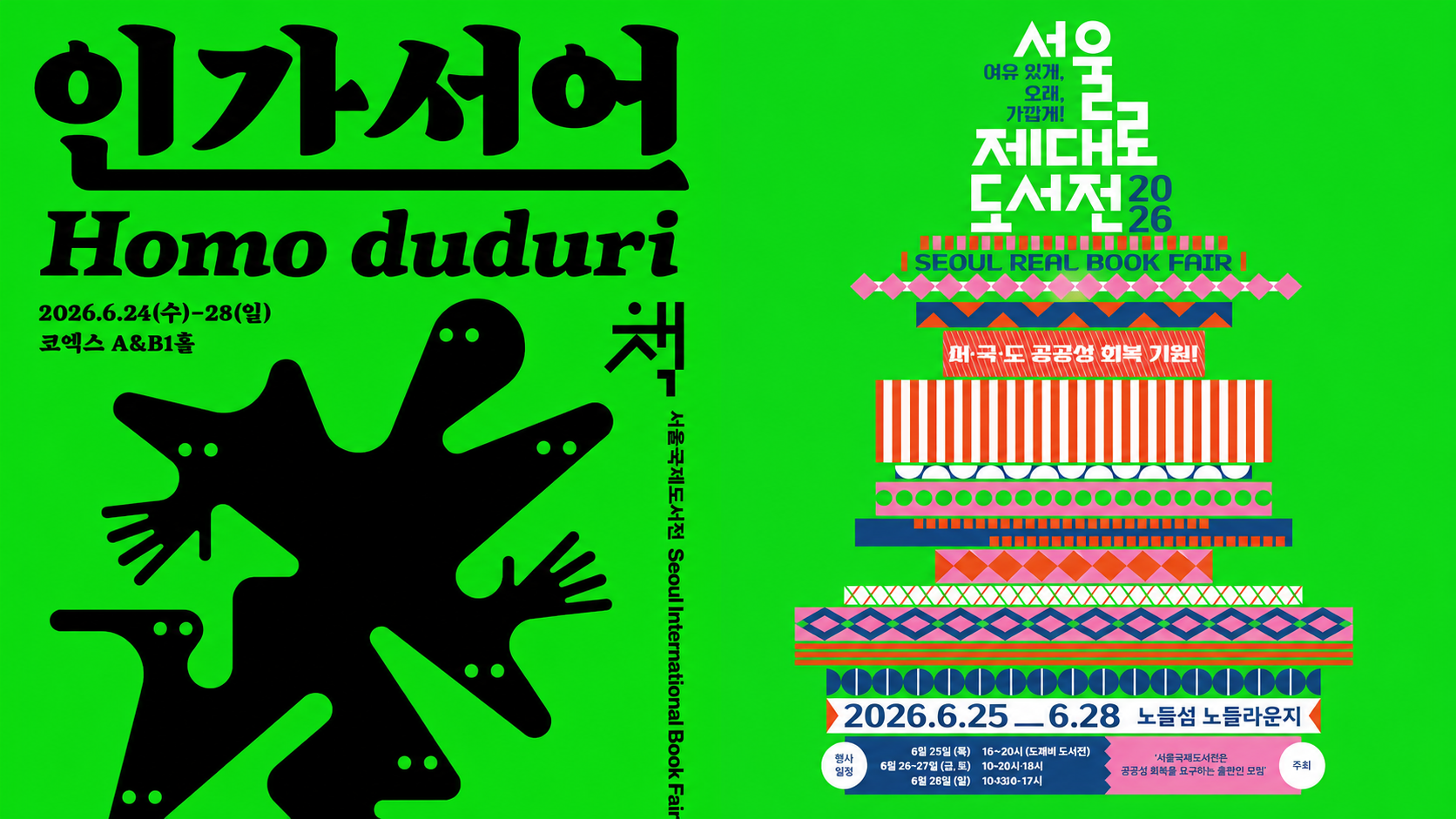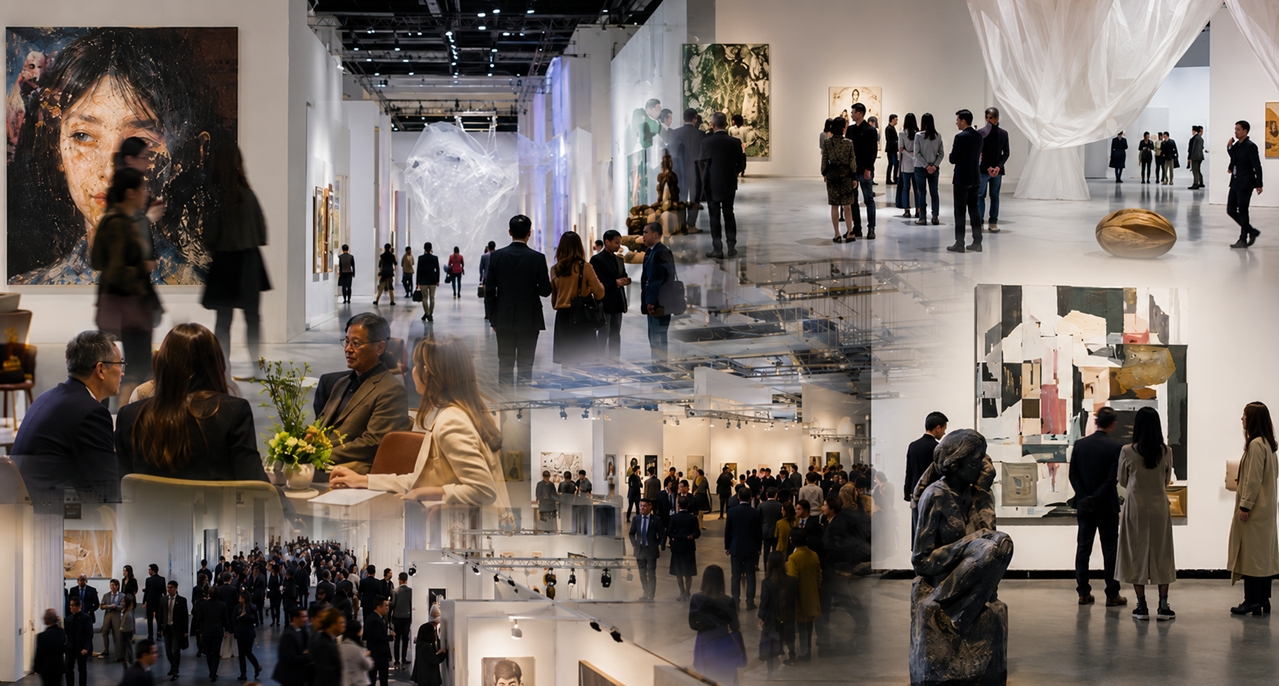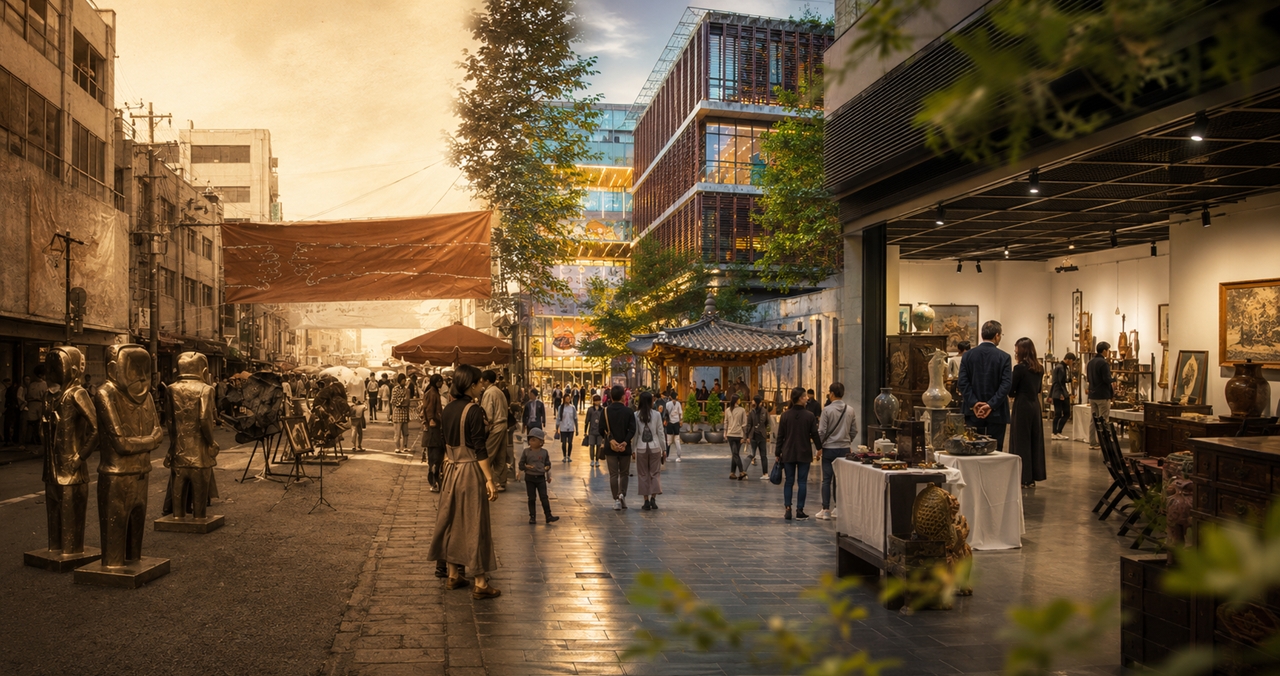

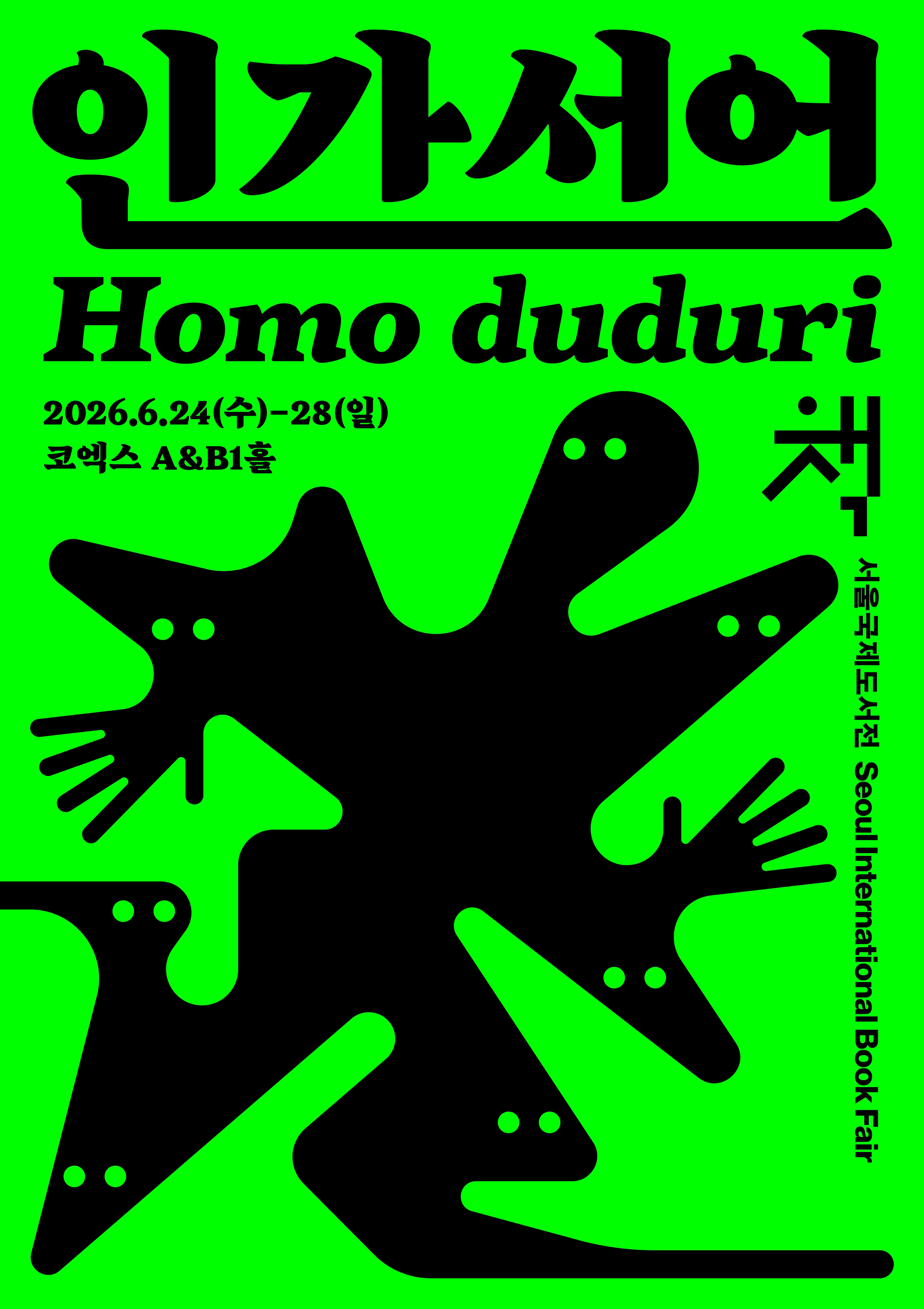
The theme of the 2026 Seoul International Book Fair, "Homo Duduri," explores the coexistence of humans and artificial intelligence. / Source: Seoul International Book Fair Instagram (@sibf_official)
The 2026 Seoul International Book Fair was
held from June 24 to 28 at Halls A and B1 of COEX in Seoul. During the same
period, the Seoul Proper Book Fair took place on Nodeulseom Island from June 25
to 28. Although both events centered on books, they differed significantly in
both scale and purpose. One presented itself as Korea's largest international
book fair, demonstrating the expanding cultural reach of books, while the other
emerged as a small-scale alternative fair that sought to reconsider the public
value and diversity of contemporary publishing.
Seoul International Book Fair:
Expanding Books into a Cultural Platform
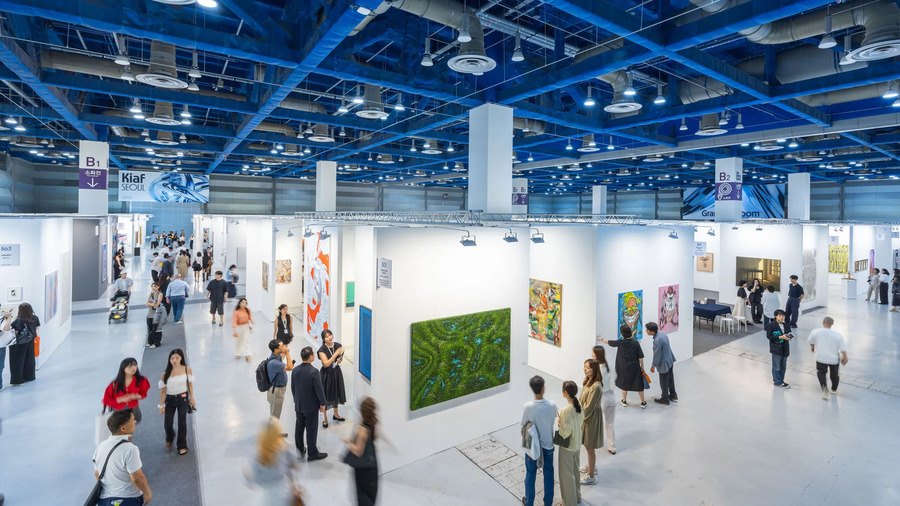
The Seoul International Book Fair is
Korea's largest publishing event, bringing together more than 530 domestic and
international publishers. This year's edition attracted exceptional public
interest, with approximately 150,000 visitors expected over the five-day event.
Notably, attendance among people in their twenties was particularly strong.
Visitors filled publisher booths throughout the venue, browsing a wide range of
books while discovering both established and emerging publishing houses.
Another major attraction was the fair's
extensive program of book talks. Lectures and conversations featuring writers,
cultural figures, and international guests drew long waiting lines, with many
attendees choosing to stand rather than miss the opportunity to participate.
These scenes illustrated how books have evolved beyond quiet reading into
shared cultural experiences that encourage discussion, exchange, and community.
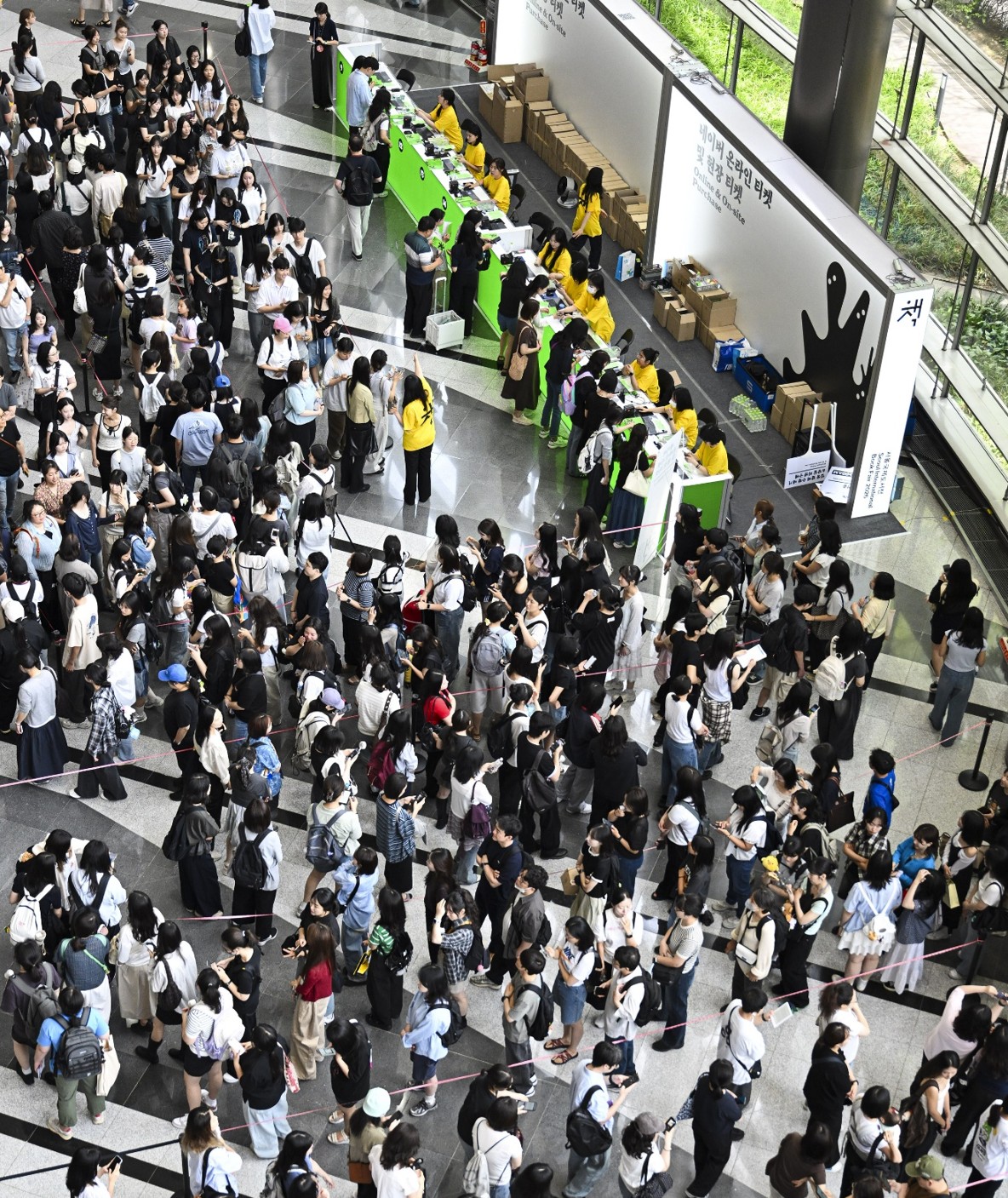
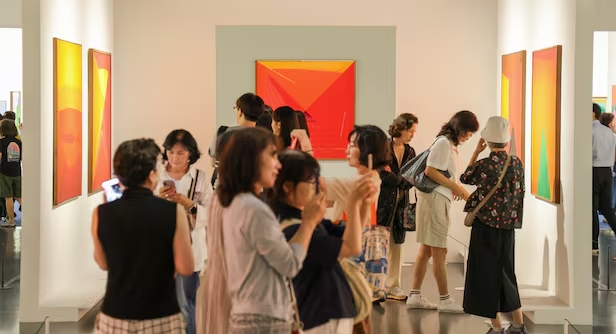
Visitors at the “2026 Seoul International Book Fair”. / Photo: Seoul Shinmun
In this respect, the Seoul International
Book Fair continues to evolve into a cultural platform that connects books with
an increasingly broad audience. Its large-scale exhibition, diverse
programming, and enthusiastic public participation demonstrate that publishing
still possesses the power to cultivate new generations of readers. The strong
presence of younger audiences suggests that books are increasingly being embraced
not only as objects of reading but also as meaningful cultural experiences.
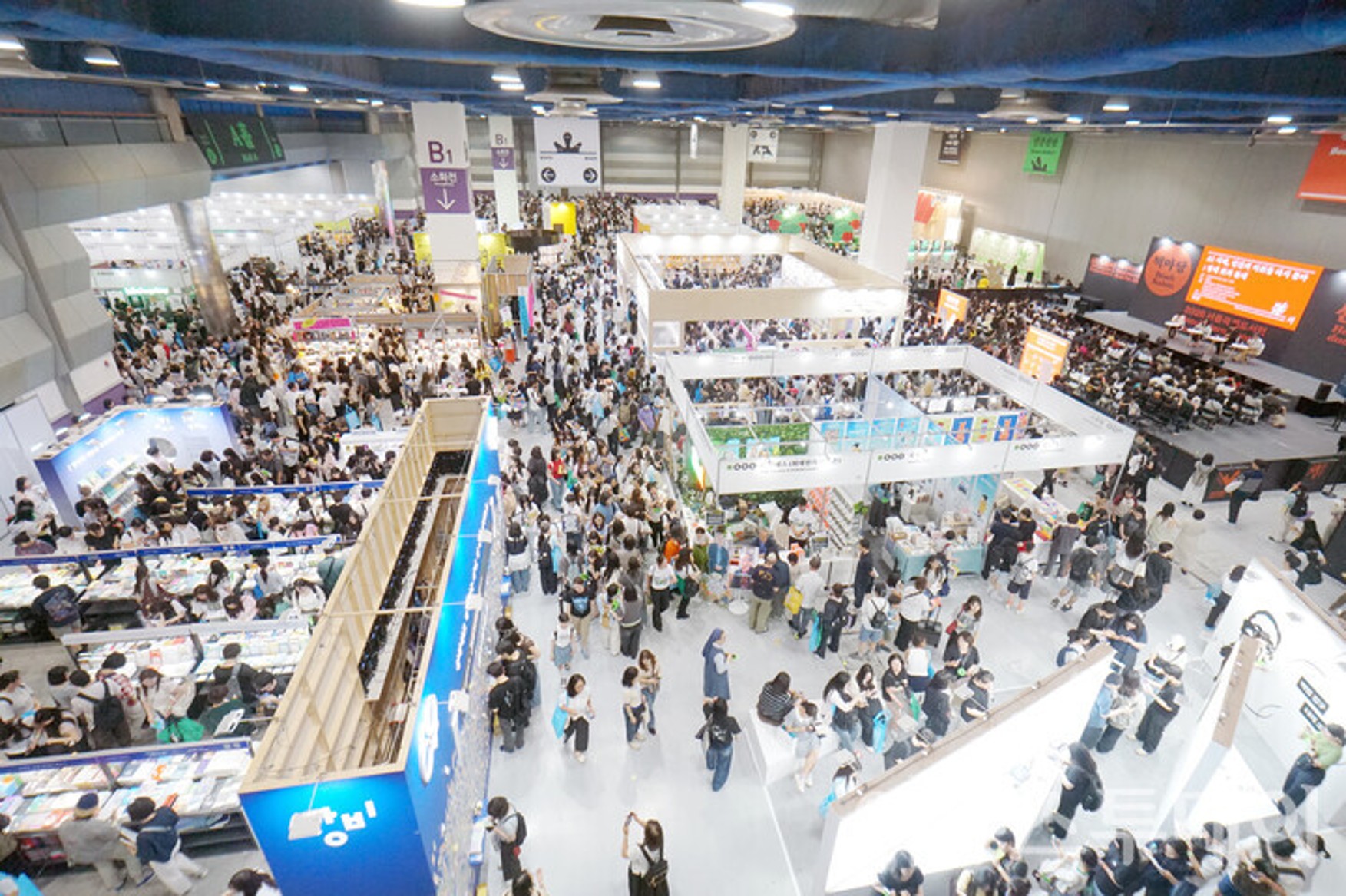
General view of the “2026 Seoul International Book Fair”, held at COEX in Gangnam-gu, Seoul, on June 26, 2026. / Photo: Enews Today
Seoul Real Book Fair:
Reconsidering Public Value and Diversity
By contrast, the Seoul Real Book Fair, held
on Nodeulseom Island, presented a different vision of what a book fair could
be. Organized by approximately fifty publishers concerned about the growing
commercialization and large-scale nature of book fairs, the event provided
equally sized booths for every participating publisher, creating a more level
environment for engagement with readers.
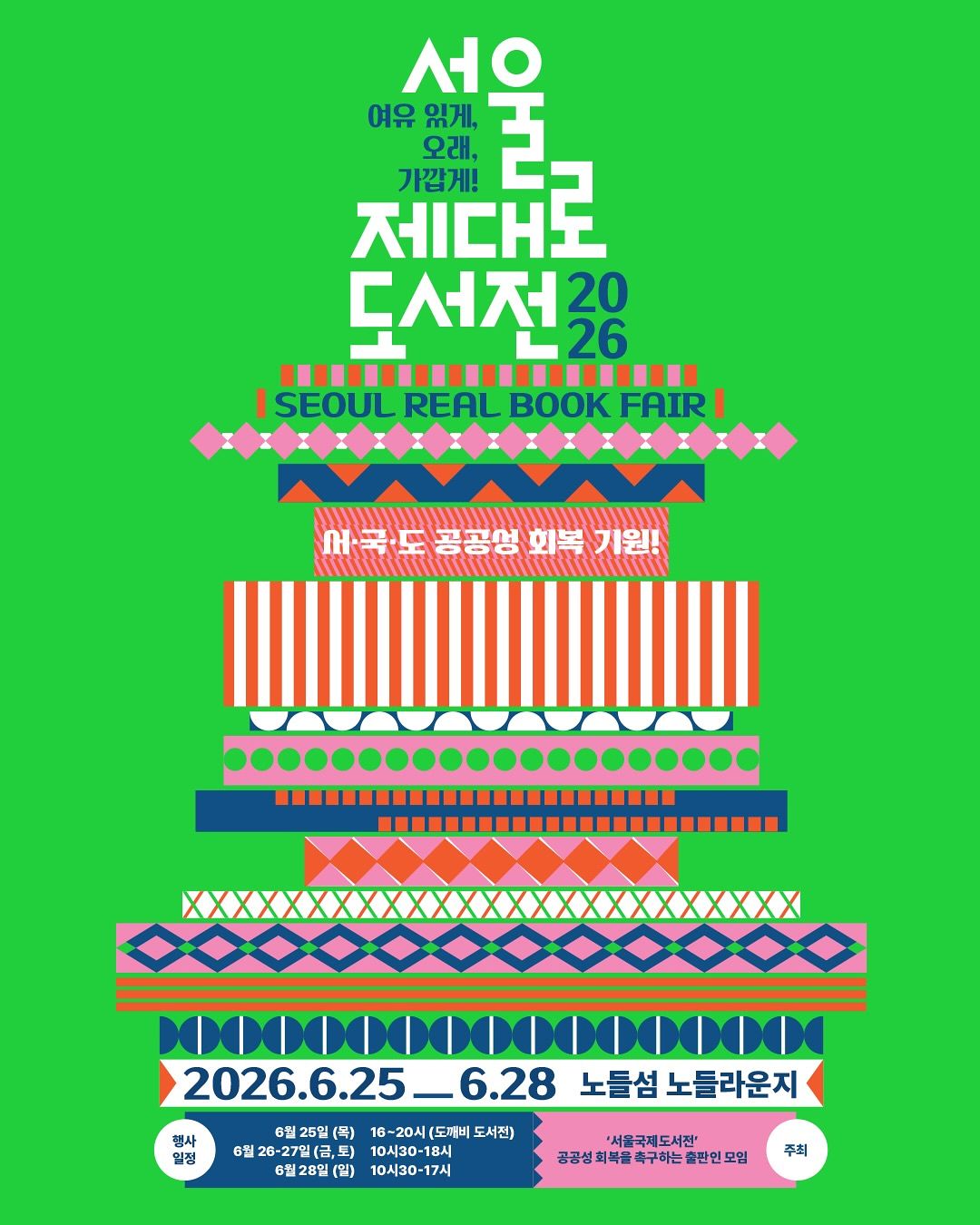
서울 제대로 도서전 포스터 ©서울 제대로 도서전
Rather than emphasizing scale, the Seoul Real
Book Fair emphasized relationships. It sought to create opportunities for
direct dialogue between publishers and readers, allowing conversations about
how books are made, why publishing matters, and how independent publishers
contribute to a diverse literary landscape. Participating publishers argued
that, as large book fairs continue to expand, they have become less effective
at accommodating a broad range of publishers and readers, raising concerns that
the public character and diversity of publishing culture could gradually be
diminished.
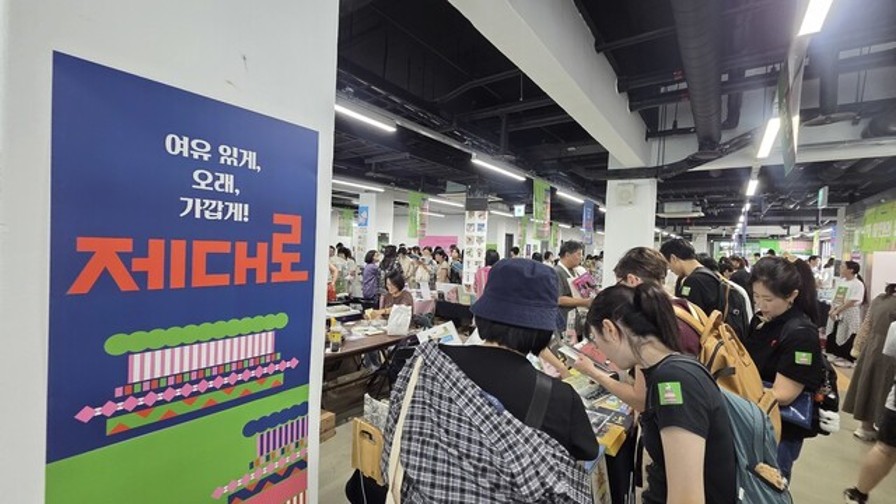
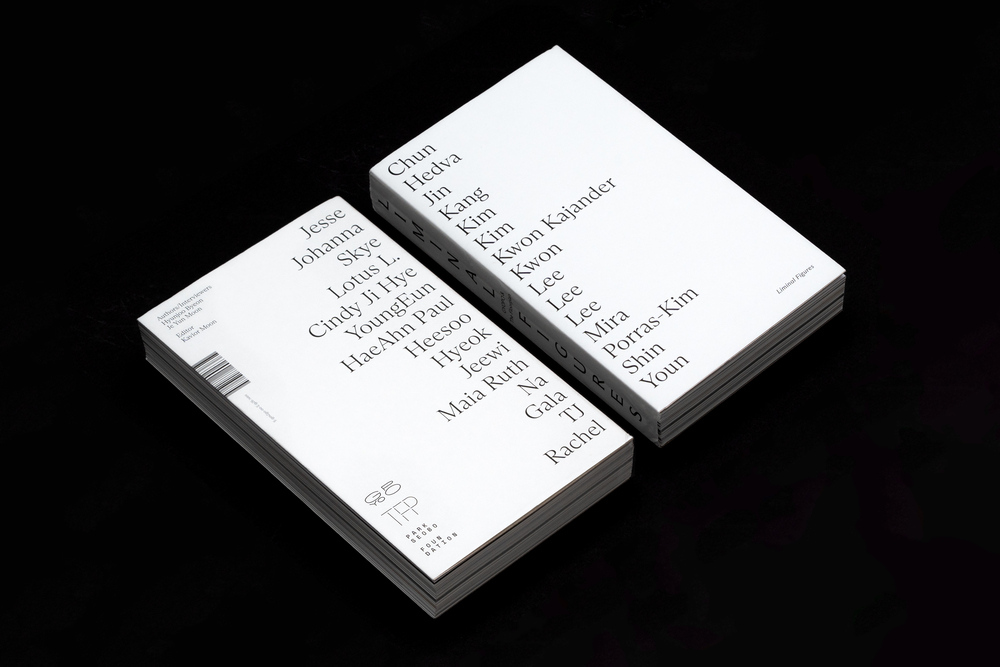
Scenes from the Seoul Real Book Fair. / Photo: The Hankyoreh
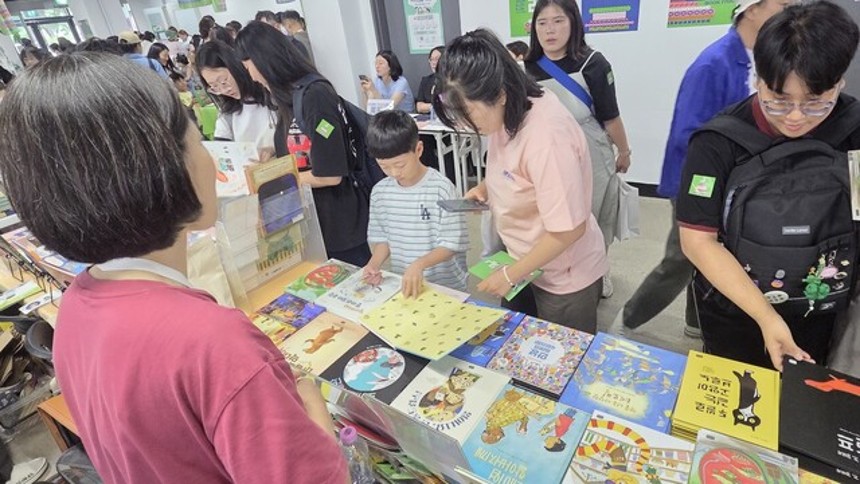
Scenes from the Seoul Real Book Fair. / Photo: The Hankyoreh
These concerns should not simply be
interpreted as criticism of the Seoul International Book Fair. Rather, they
represent a broader proposal to reconsider which values should be preserved in
order to maintain a healthy publishing ecosystem. Sustainable growth in
publishing depends not only on expanding the market but also on ensuring that
publishers of different sizes and perspectives continue to coexist.
The Questions Left Behind by
Two Book Fairs
In response to these discussions, the
organizers of the Seoul International Book Fair announced plans to expand the
exhibition space by approximately 30 percent beginning next year, enabling all
publishers wishing to participate to be accommodated. The announcement suggests
that the current debate may lead not merely to disagreement but to meaningful
institutional improvements.
Seen from this perspective, the two book
fairs are better understood not as competitors but as complementary cultural
platforms serving different purposes. While the Seoul International Book Fair
expands the reach of publishing and introduces books to broader audiences, the
Seoul Proper Book Fair reminds us of the fundamental values of diversity,
accessibility, and public engagement within publishing.
A similar dynamic can be found throughout
the contemporary art world. Large-scale art fairs play a vital role in
expanding markets and attracting new audiences, while nonprofit art spaces and
independent initiatives preserve experimentation, critical discourse, and
public value. A healthy cultural ecosystem depends on both. Market growth and
public responsibility, popularity and diversity, should not be viewed as
opposing forces but as complementary elements that sustain one another.
The Seoul International Book Fair and the
Seoul Real Book Fair ultimately asked the same question from different
perspectives. One explored how books can reach more people, while the other
considered how publishing can continue to embrace a wider diversity of voices.
Ultimately, this year's two book fairs in
Seoul did not demonstrate that one approach was right and the other wrong.
Instead, together they illustrated that the future of publishing depends not
only on continued growth but also on preserving diversity and strengthening its
public mission.
Books should reach more readers. At the
same time, they must continue to carry a greater diversity of voices. In
different ways, both the Seoul International Book Fair and the Seoul Real Book
Fair pointed toward that shared possibility. If each continues to fulfill its
respective role, Korea's publishing culture will have the opportunity to
develop into a richer, more balanced, and more sustainable cultural ecosystem.