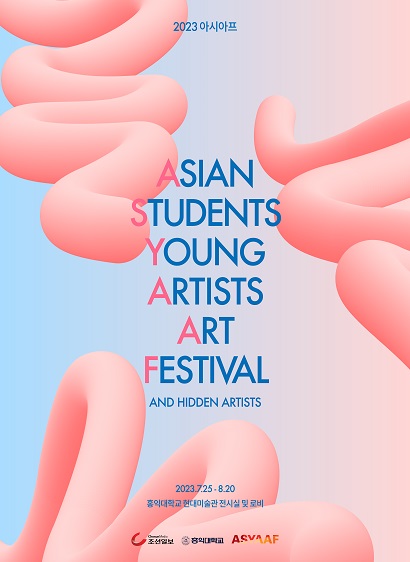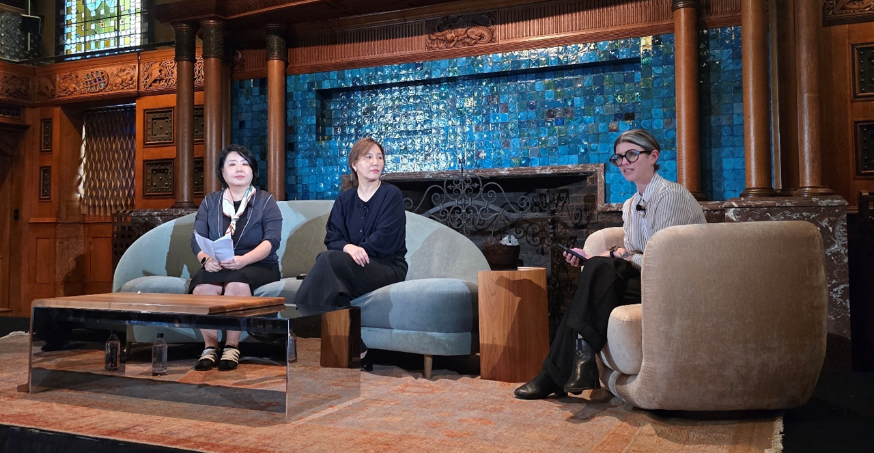

ASYAAF stands for the Asian Students and
Young Artists Art Festival. It is officially introduced as “Asia’s largest art
fair for young artists,” while also retaining the character of a youth art
festival.
In 2026, the event is being held under the
title《ASYAAF 100》from July 1 to
August 5 at Art Chosun Space (ACS) in Gwanghwamun, Seoul. The exhibition is
divided into two parts: Part 1 runs from July 1 to July 16, and Part 2 from
July 21 to August 5.
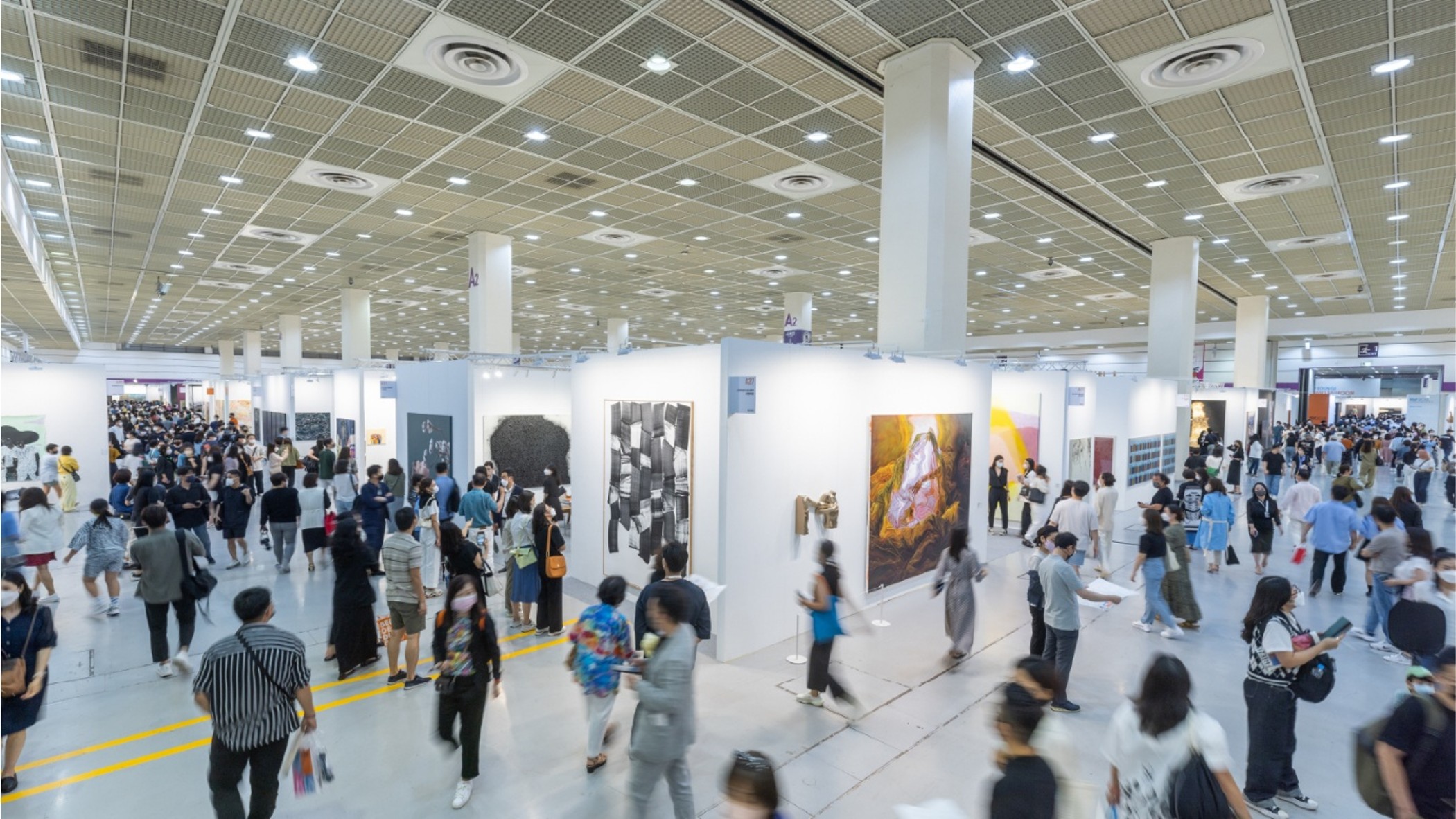
ASYAAF differs from major art fairs that
center on galleries and artists already validated by the market. This event
focuses on young artists who have not yet fully entered the established
structures of the art market. In this sense, the significance of ASYAAF lies
less in presenting a fully formed art market than in creating an early point of
contact where emerging artists can first encounter viewers and collectors.
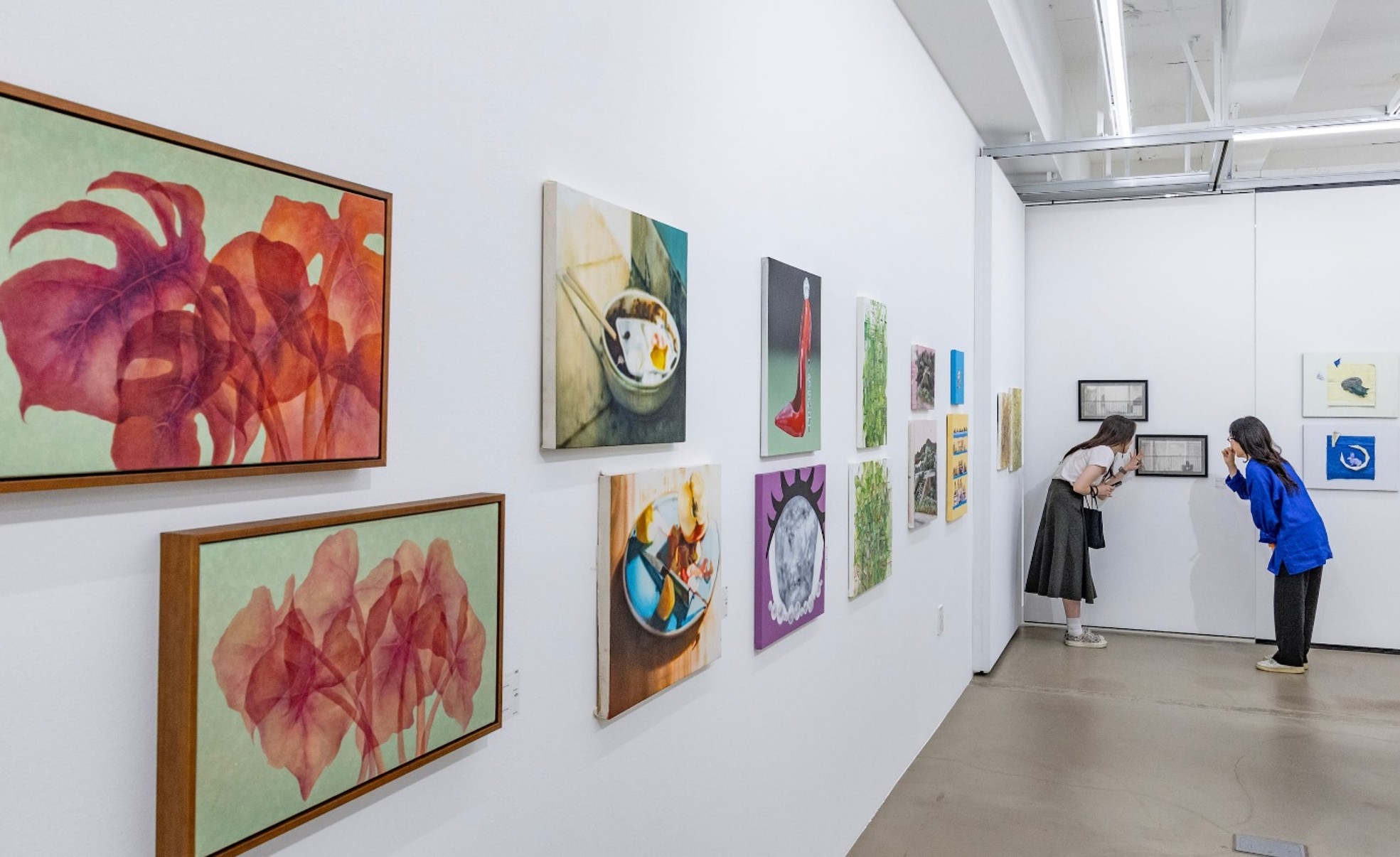
Officials look around the exhibition space on June 30, one day before the opening of 《2026 ASYAAF 100》, at Art Chosun Space in Jung-gu, Seoul. / Photo: Lee Tae-kyung, The Chosun Ilbo
However, this point of contact cannot be
understood simply as an exhibition or support program. ASYAAF foregrounds the
format of an art fair, and the sale of artworks is a central part of its
structure. It is meaningful in that it provides young artists with
opportunities to exhibit and sell their work. At the same time, it is also
necessary to consider that artists whose practices are still in the process of
formation are exposed at an early stage to sales potential, public response,
and ranking-based evaluation.
For this reason, ASYAAF is closer to a
sales-oriented platform that reveals the early distribution structure of the
young artist market than to a festival solely for young artists.
The Accumulation Since 2008 and
the Criteria for Evaluation
ASYAAF began in 2008 as part of the “A Home
with Art” campaign, launched to commemorate the 88th anniversary of The Chosun
Ilbo. The event was initiated with the idea of encouraging households to hang
artworks in their homes. Since then, it has provided young artists with
opportunities to exhibit and sell their work, while giving viewers access to
artworks at relatively approachable price points.
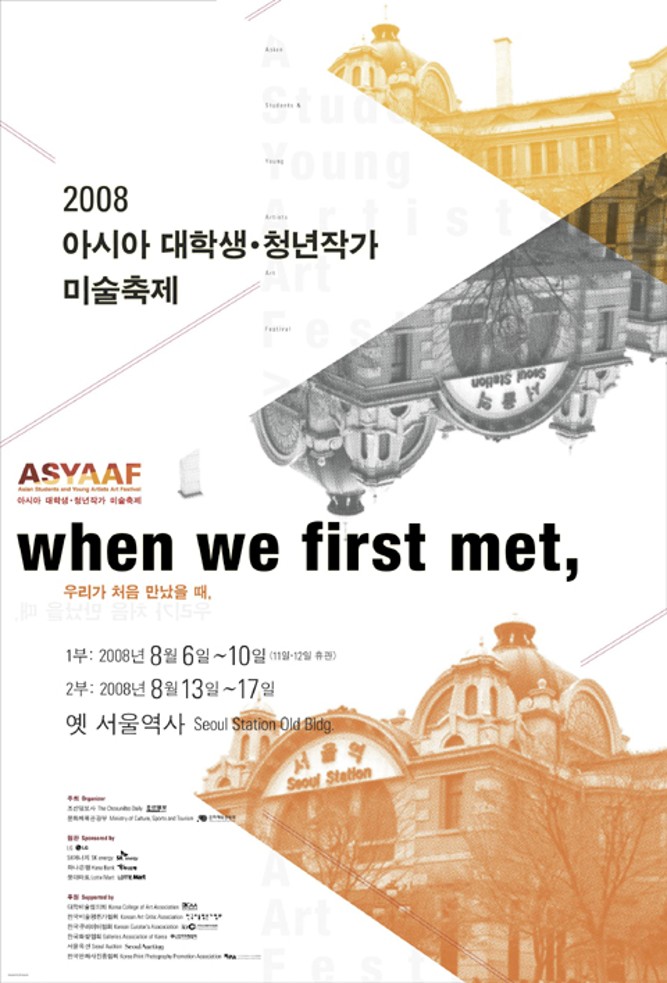
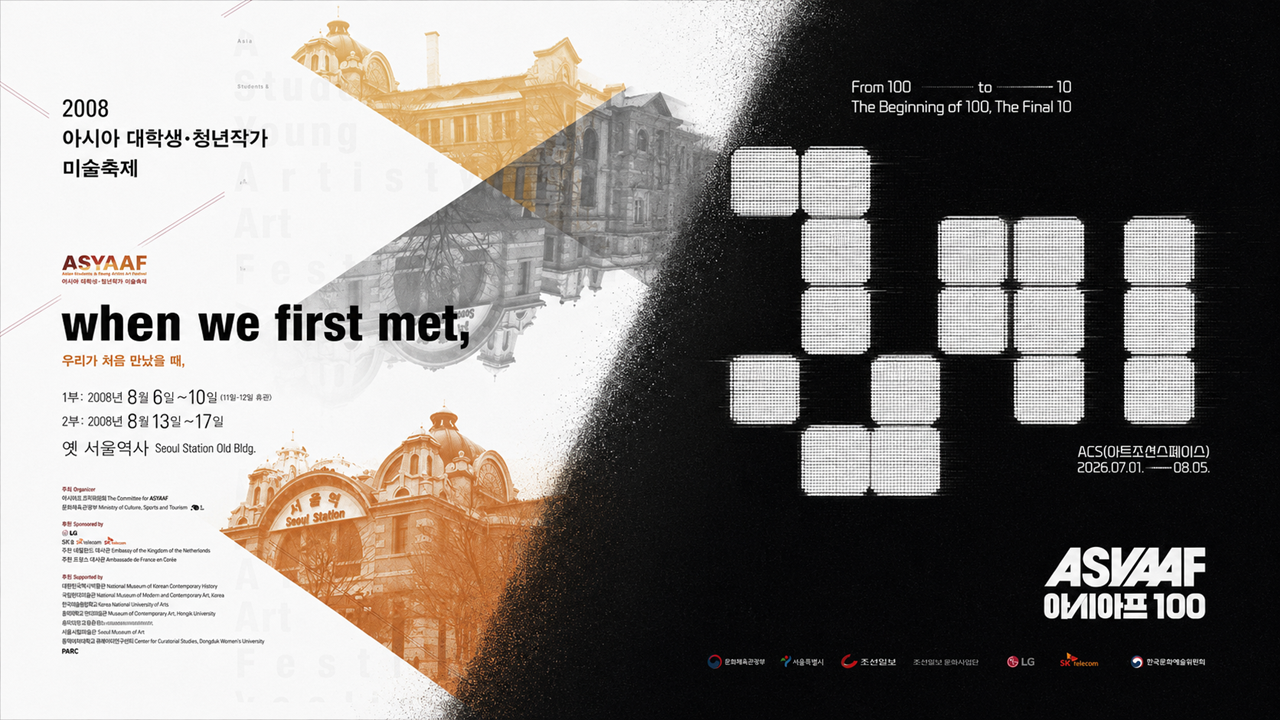
《2008 ASYAAF》official poster / © The Chosun Ilbo & Chosun.com
Over the years, ASYAAF has introduced many
young artists and has functioned as a gateway into the early collecting market.
For viewers with limited experience in purchasing art, it has offered a chance
to see and buy works by emerging artists directly. For artists, it has provided
an opportunity to observe how their work is received in an actual market
setting.
However, the achievements of a platform for
young artists cannot be evaluated solely by the cumulative number of
participating artists or sold works. What matters is what paths the artists
follow after participation: whether they move on to gallery representation, curated
exhibitions, museum shows, international exhibitions, or sustainable sales
structures.
What the young artist market needs is not
only one-time exposure, but also continuity in career development and market
entry. In this respect, ASYAAF’s achievements should be assessed less by
short-term sales performance than by the effectiveness of its follow-up
structure.
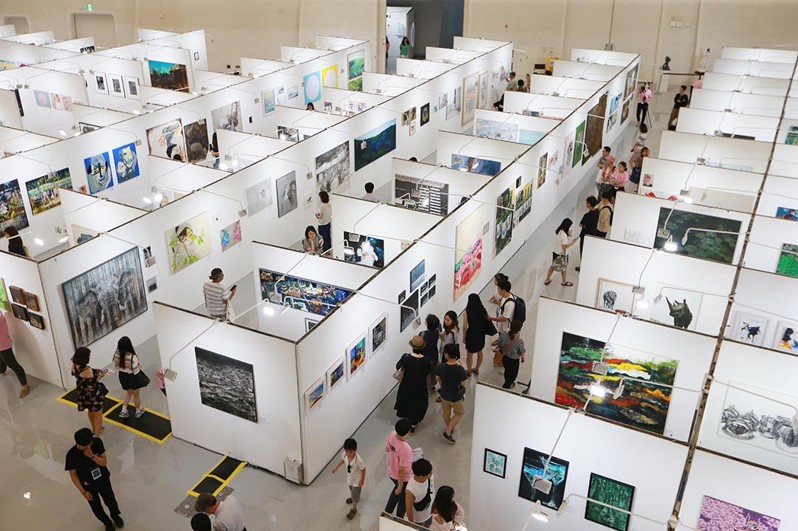
Installation view of《2018 ASYAAF》/ Photo: The Chosun Ilbo
The Reorganization into ASYAAF
100
The most significant change this year is
that the event has been renamed《ASYAAF 100》, with the number of participating artists reduced to 100. Departing
from the previous large-scale festival format for young artists, the event has
shifted toward a structure that presents a smaller, more selective group of
artists. This year’s exhibition features approximately 300 works by 100 young
artists from Asian countries, aged between 19 and 39.
This reorganization can be understood as a
move from “scale” to “density.” Bringing together a large number of artists is
effective in showing the breadth of the young artist market, but it can also
make it difficult for each artist’s work to receive sufficient attention. By
contrast, a 100-artist structure may increase the degree of focus on each
artist, but it also narrows the scope of participation.
ASYAAF 100 therefore needs to be evaluated
from two perspectives. On the one hand, it is a change intended to raise the
quality of the exhibition and increase the density of artist selection. On the
other, it partially reduces the broad participatory nature that ASYAAF has
previously maintained. Since the number of artists has been reduced, the
clarity of selection criteria, the quality of exhibition organization, the
introduction of participating artists, and the specificity of follow-up support
have become even more important.
In particular, if the event has been
compressed to 100 artists, it should not stop at simply exhibiting and selling
artworks. It also needs mechanisms that adequately introduce each artist’s
practice. Basic archival information—such as artwork images, artist statements,
key biographical details, artistic direction, price information, and materials
that can connect to future activity—should be provided together. For the
structure of “100 selected artists” to be persuasive, viewers and collectors
need to understand why these artists were selected and what artistic potential
their work holds.
The Meaning of Age-Based
Division
ASYAAF 100 is divided into two parts
according to age group. Part 1 is for artists aged 19 to 29, while Part 2 is
for artists aged 30 to 39. This division has a certain significance in that it
allows viewers to compare different stages of development within the broader
category of young artists. Artists in their twenties are often in the process
of forming their artistic language, while artists in their thirties are often
at a stage where they are establishing a clearer direction and seeking more
active exhibition opportunities and market entry.
However, age alone is not a sufficient
criterion for defining an artist’s stage of development. An artist’s career can
vary greatly depending on education, field of study, working environment,
exhibition experience, economic conditions, and regional base. Not all artists
in their twenties are at an early stage, and not all artists in their thirties
are at the point of entering the market. Therefore, while age-based division
may offer convenience for viewing, it does not adequately explain the actual
level of an artist’s work or career stage.
The Blind Exhibition Format
Another notable feature of this year’s
exhibition is the blind exhibition format. A blind exhibition presents works
without foregrounding the artist’s name or background information, encouraging
viewers to look at the work first. This can be seen as an attempt to reduce the
influence of factors that often shape the evaluation of emerging artists, such
as academic background, institutional affiliation, awards, school networks, and
existing art-world connections.
However, the blind exhibition format does
not in itself guarantee fair evaluation. Participating artists are selected in
advance through a jury process. The blind format therefore reduces bias at the
final viewing stage, but it does not eliminate the possibility of bias in the
overall selection structure.
Moreover, if the blind format encourages
viewers to focus on the work itself, the exhibition should also provide
sufficient information about each artist’s practice and background after the
viewing stage. Anonymity may be meaningful during the initial encounter with
the work, but reliable information about the artist becomes necessary at the
stages of market entry and collecting.
On-Site Audience Voting
ASYAAF 100 selects the Top 5 artists in
each part through on-site audience voting. This combines a jury-based selection
process with audience choice. In the conventional art market, the possibility
of an artist’s market entry is often determined by professional actors such as
galleries, curators, critics, and collectors. ASYAAF 100, by contrast,
incorporates audience response into its institutional structure.
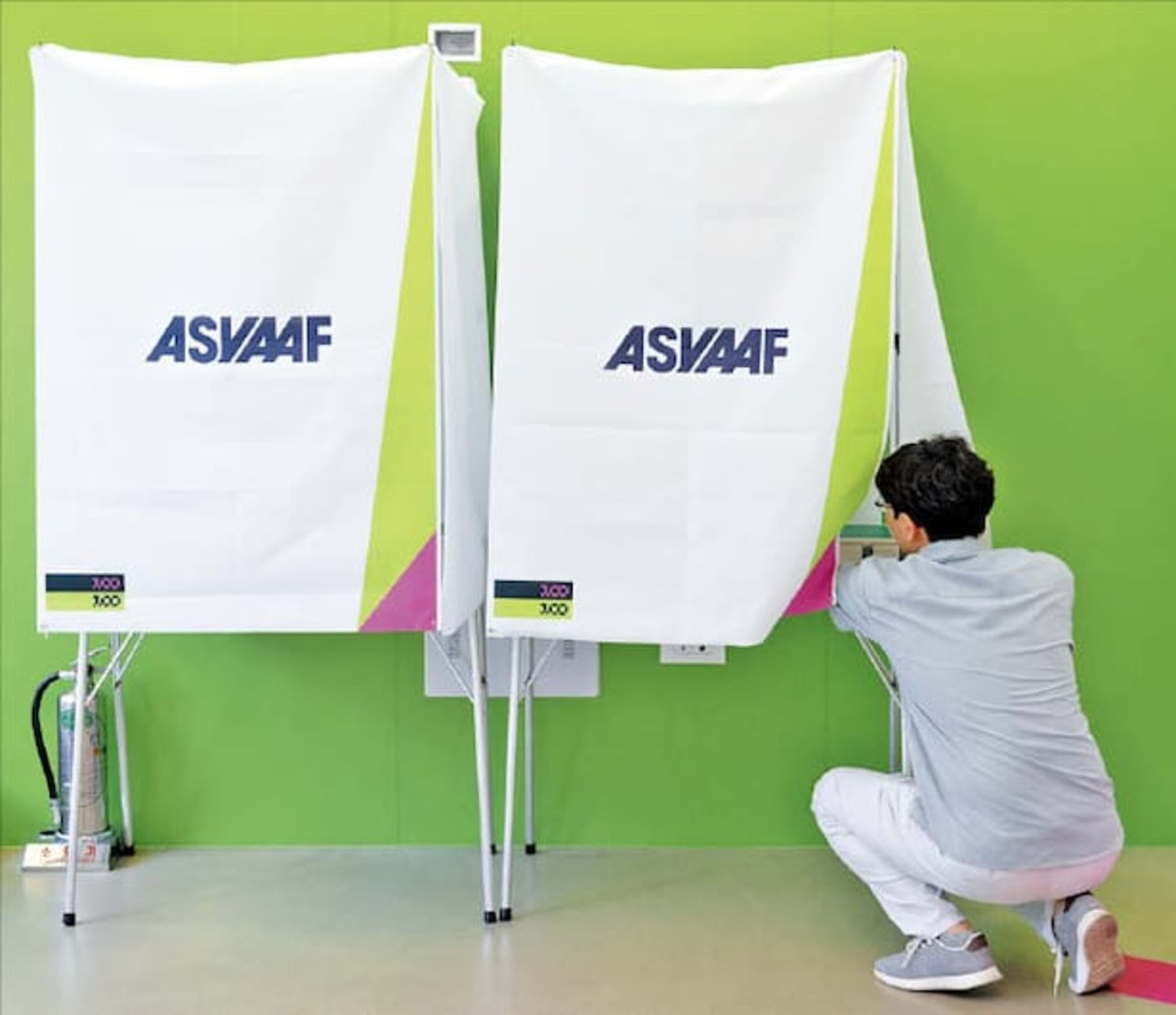
Voting booth installed in a corner of the《2026 ASYAAF 100》exhibition space. / Photo: Lee Tae-kyung, The Chosun Ilbo
However, audience voting cannot serve as a
sufficient criterion for judging the artistic value of a work or the long-term
potential of an artist. Public voting can be influenced by immediacy, visual
accessibility, the position of the work within the exhibition space, size,
color, and the familiarity of the subject matter. Audience voting may therefore
function as one reference point in evaluating artists, but it is difficult to
expand it into an objective measure of artistic quality.
Artist Award Program
ASYAAF 100 awards prize money to the Top 5
artists in each of the two parts. In each section, first prize receives 5
million KRW, second prize 3 million KRW, third prize 2 million KRW, and fourth
and fifth prize 1 million KRW each. Artists ranked first through third are also
given the opportunity to participate in ACF, Art Chosun Focus, in the second
half of the year. Prize money and follow-up exhibition opportunities can
provide a certain degree of practical support for young artists.
However, this follow-up support is limited
in scope. Of the 100 participating artists, only five from each section, or ten
in total, are selected for the Top 5, and the opportunity to participate in ACF
is limited to those ranked first through third. For the platform to strengthen
its continuity as a platform for emerging artists, it needs a broader support
structure that extends beyond prize winners. This could include archives,
critical writing, collector matching, and follow-up sales data management for all
participating artists. A healthy circulation structure for the young artist
market cannot be built through follow-up opportunities for only a small number
of winners.
Early Collecting and the
Investment Perspective
From the collector’s perspective, ASYAAF is
a market for encountering artists at a much earlier stage than those already
validated by museums, galleries, and the auction market. This means both a
lower barrier to entry and a higher degree of uncertainty. Prices may be relatively
accessible, but it is difficult to predict how an artist will develop or
whether their market will remain sustainable.
Collecting at ASYAAF should therefore not
be understood simply as an investment activity. It is closer to participating
early in the development of an artist whose practice is still being formed. In
this respect, ASYAAF offers a different kind of collecting experience from
upper-level markets that trade in blue-chip artists.
Collectors, however, also need to exercise
caution. When purchasing works by young artists, one must consider not only the
artist’s background but also the quality of the work itself, the continuity of
the practice, the potential direction of future development, and the
appropriateness of the price. ASYAAF certainly lowers the threshold for
collecting, but a lower threshold does not mean lower risk.
The Structure of a
Sales-Oriented Platform
At this point, the structure of the ASYAAF
website becomes an important object of analysis. The current website is
organized primarily around artwork search and purchase accessibility. The
ability to search by work type, theme, mood, price, and color is convenient for
collectors and buyers. However, for the platform to have long-term significance
as a platform for young artists, sales functions alone are not enough.
If the website does not provide a public
archive where past participating artists and exhibition records can be
systematically accessed, ASYAAF’s accumulated history risks being reduced to
separate annual events and sales results. The core function of a platform for
emerging artists is not simply to sell works in a given year. What matters is
to track and record what exhibitions the participating artists went on to hold,
how they developed, and how they moved within the market and institutional art
world.
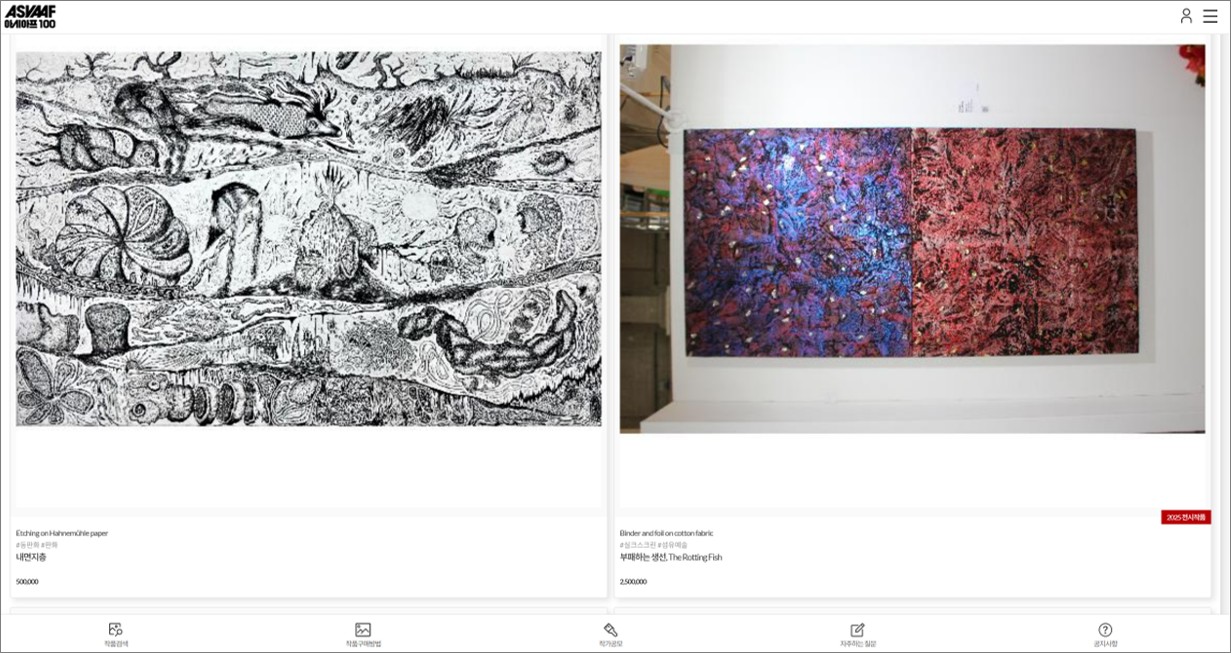
Screenshot of the ASYAAF website / Source: https://asyaaf.chosun.com
For ASYAAF to carry greater structural
significance in the young artist market, its website needs to strengthen its
archival function beyond its market function. Rather than operating only as an
artwork sales page, it should accumulate information on participating artists’
biographies, practices, past participation records, post-award activities,
career changes after sales, and critical introductions. This is especially
important in a year such as ASYAAF 100, when the number of artists has been
compressed to 100. The introduction and documentation of these 100 artists
become all the more significant.
Conclusion: From a Sales Market
to a Sustainable Archival Structure
ASYAAF is an art fair. It is therefore
natural that it emphasizes artwork sales and access to collecting. However, if
it is an art fair for young artists, market function alone is not sufficient.
What young artists need is not only a one-time sales opportunity, but also
career development, documentation of their artistic practice, sustained
connections with collectors, critical introduction, and structures that can
help them move into the established art-market system.
In this respect, the task facing ASYAAF 100
is clear. It should maintain its accessibility as a sales-oriented platform for
young artists while supplementing it with artist archives and follow-up
documentation systems. It needs to accumulate materials on artists from
previous editions, provide sufficient introductions to the 100 artists selected
this year, and track the subsequent paths not only of prize winners but of all
participating artists.
ASYAAF 100 therefore cannot be summarized
simply as an art fair for young artists. It is a sales-oriented platform where
emerging artists and collectors meet at the earliest stage of the Korean art
market. Its future evaluation will depend on whether the platform can move
beyond one-time exhibition and sales, and whether it can meaningfully
contribute to the long-term growth of young artists and the healthy circulation
of the Korean art market.
Exhibition Information
Title:《2026 ASYAAF 100》
Dates: July 1–August 5, 2026
Part 1: July 1–July 16, 2026
Artists: Asian artists aged 19–29
Part 2: July 21–August 5, 2026
Artists: Asian artists aged 30–39
Organizer: The Chosun Ilbo
Venue: Art Chosun Space (ACS)
Address: 30 Sejong-daero 21-gil, Jung-gu, Seoul
Inquiries: +82-2-724-6361
Participating artists: 100 young artists from Asian countries
Works on view: Approximately 300 works