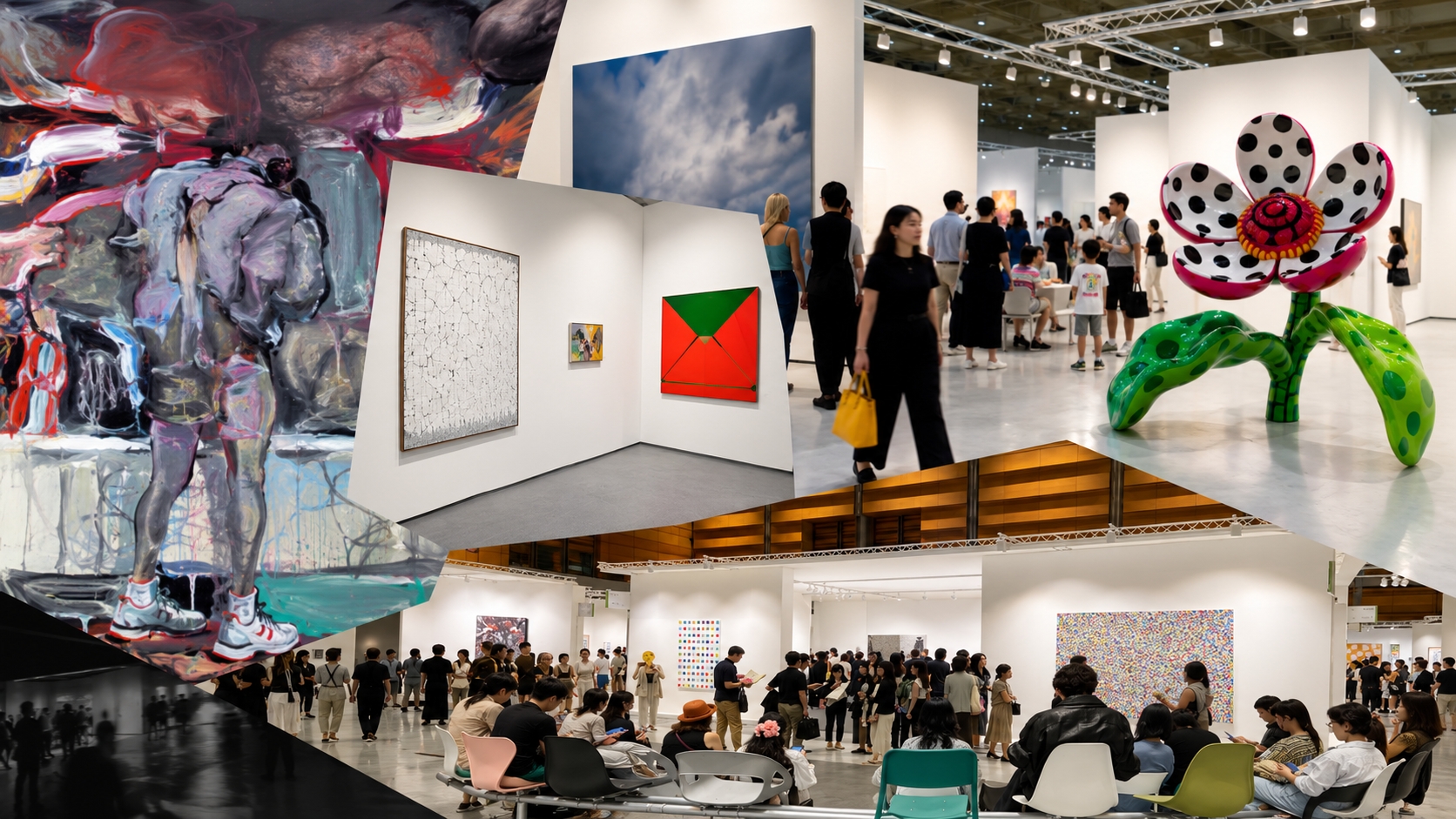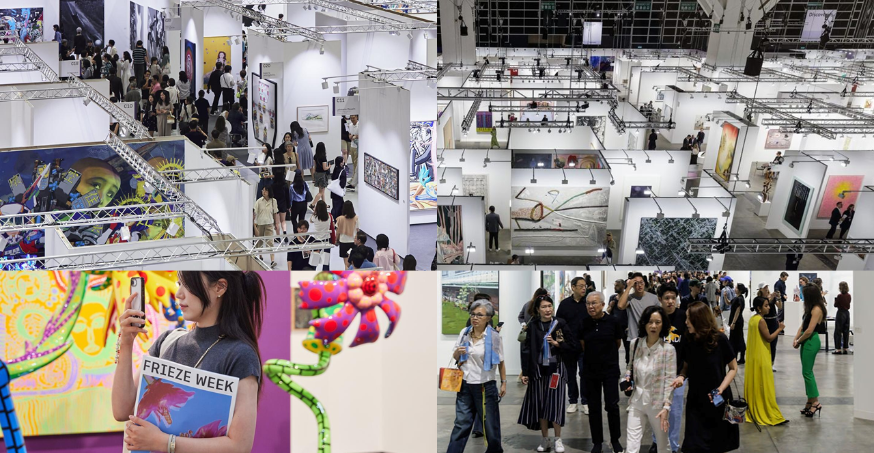

Frieze Los Angeles will be held from February 26 to
March 1, 2026, at Santa Monica Airport in Los Angeles, California.
Now in its seventh edition since its launch in 2019,
the fair has established itself as the largest contemporary art platform on the
U.S. West Coast, with more than 95 international galleries participating. The
schedule, centered on a VIP preview, reflects the structure of the global art
market, where early contact with collectors and institutional representatives
plays a significant role in market formation.
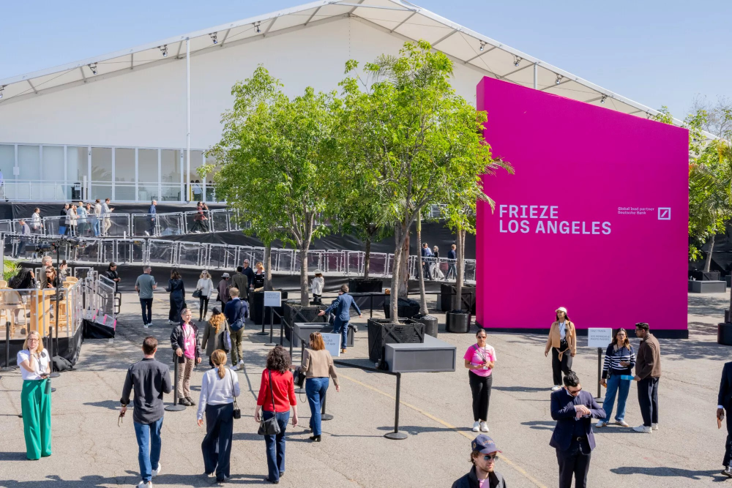
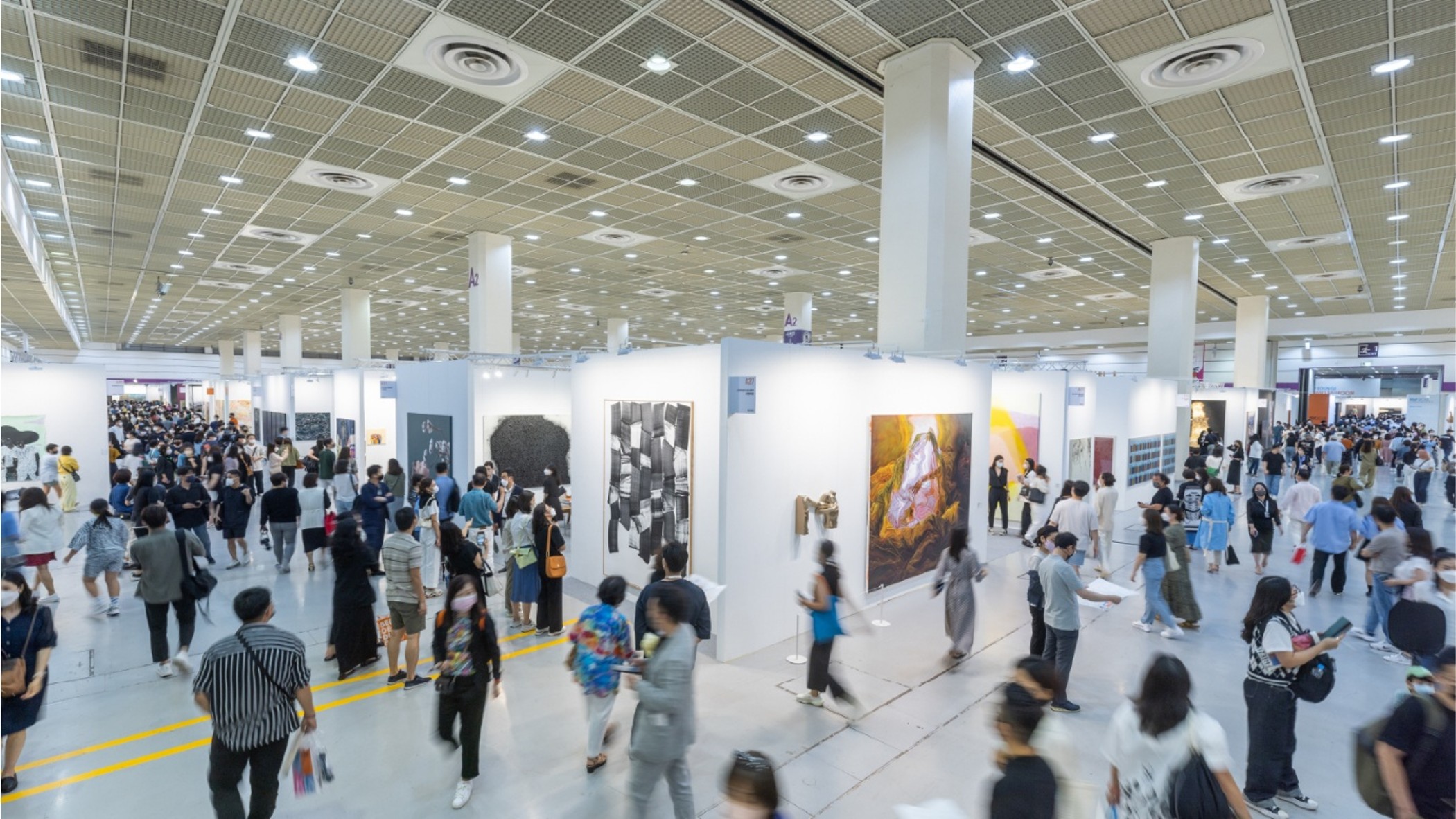
Frieze LA view / Photo: Frieze website
Los Angeles differs in character from the New
York-centered East Coast market. The city brings together collectors connected
to the entertainment industry, networks of private foundations and museums, and
a culture receptive to experimentation.
Frieze Week programs linked with major institutions
such as Getty, Hammer Museum, MOCA, and The Broad demonstrate that the event
operates not merely as a site of transactions but as a city-wide cultural
network. In this context, the participation of major Korean galleries carries
meaning beyond short-term sales, suggesting sustained positioning within the
West Coast market.
Kukje Gallery: A Generational Lineup Including Kim Yun
Shin, Kim Yong-Ik, and Haegue Yang
Kukje Gallery presents a booth structured around a
generational spectrum. In sculpture, works by Kim Yun Shin take center stage.
Since the 1970s, Kim has explored the structure of “union” and “division”
through wood and stone, combining materiality and formal tension in a sustained
ontological inquiry. Her recent exhibitions in Latin America and Europe have
contributed to renewed international attention.
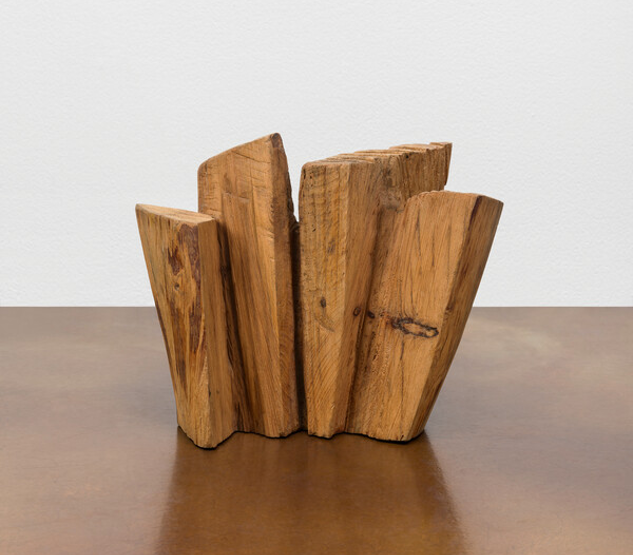
Kim Yun Shin, Add Two Add One, Divide Two Divide One (合二合一 分二分一, Habi Habil Il Buni Bunil) 1992-11, 1992. / Photo: Ahn Cheon-Ho, Image courtesy of Kukje Gallery
In painting, works by Kim Yong-Ik are prominently
featured. Belonging to the post-Dansaekhwa generation, Kim has inscribed
performativity and temporality onto the surface through repetitive actions and
the accumulation of thin layers of pigment. The restrained surface can be read
as a continued questioning of the conditions of painting itself.
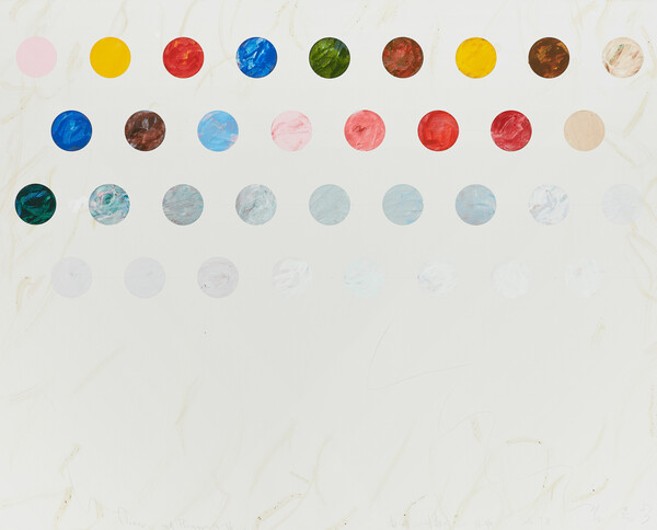
Kim Yong-Ik, Thinner… and Thinner… #16-36, 2016. / Photo: Ahn Cheon-Ho, Image courtesy of Kukje Gallery
Contemporary artists including Haegue Yang, Lee
Ki-Bong, Kim Hong-Seok, and Lee Kwang-Ho are also presented.
Haegue Yang has established a strong international
presence through installations using blinds and industrial materials, with
participation in major biennials and museum exhibitions. Lee Ki-Bong creates
sensorial environments mediated by fog and light. Kim Hong-Seok critically
engages institutional structures through the combination of language and
objects, while Lee Kwang-Ho reinterprets figures and botanical imagery through
hyperrealistic painting.
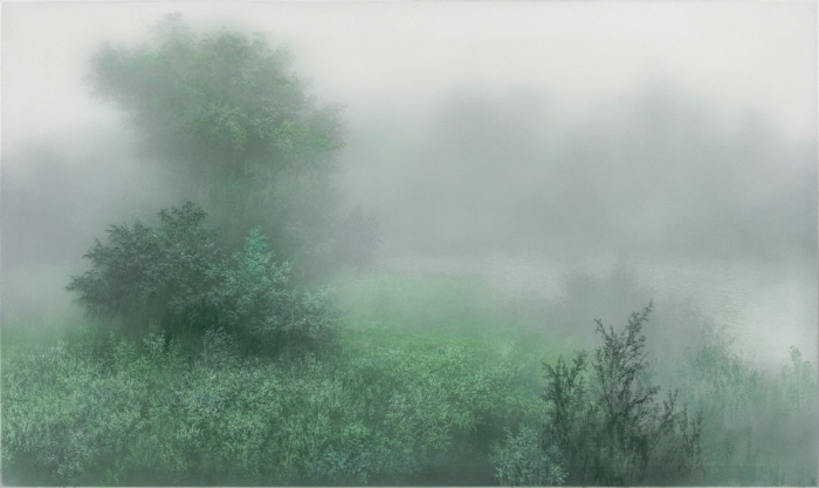
Lee Ki-Bong, Extra - ordinary - late – summer, 2026, Acrylic and polyester fiber on canvas, 120 × 201 cm / Photo: Ahn Cheon-Ho, Image courtesy of Kukje Gallery
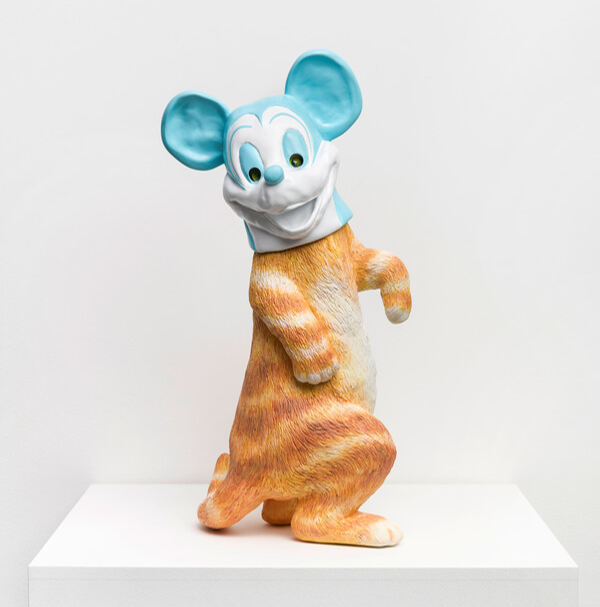
Kim Hong-Seok, new work A Villain Oliver, 2026 / Photo: Kukje Gallery
Gallery Hyundai: A Focused Solo Presentation of Yoo
Geun-Taek
Gallery Hyundai presents a solo booth dedicated to Yoo
Geun-Taek, concentrating on the artist’s painterly world. Yoo has long
transformed everyday scenes into psychological spaces using ink, gouache, and
tempera on hanji.
The ‘Fountain’ and ‘Swimming Pool’ series explore
layers of memory and the unconscious through the motif of water. The use of
bleeding and layering preserves the material qualities of traditional ink
painting while establishing a contemporary spatial composition.
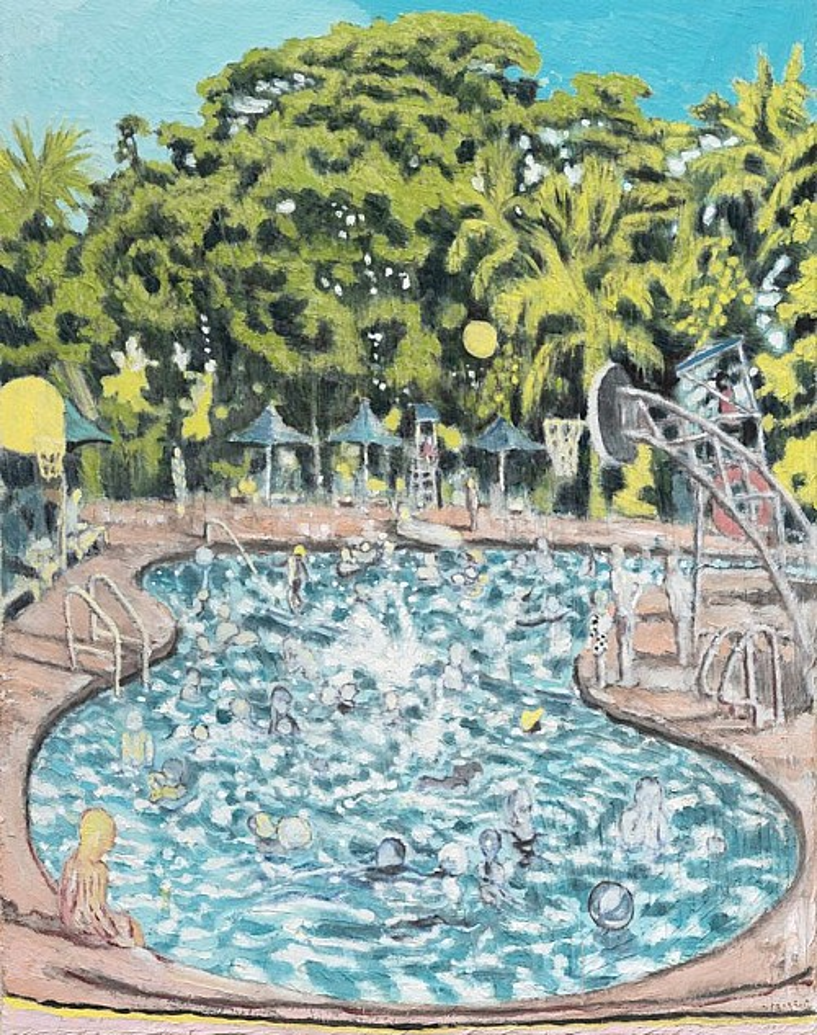
Yoo Geun-Taek Swimming Pool, 2025 Black ink, shell white, tempera and gouache on Korean paper mounted on canvas, 141.5 × 101.5 × 3 cm / Courtesy of the artist and Gallery Hyundai
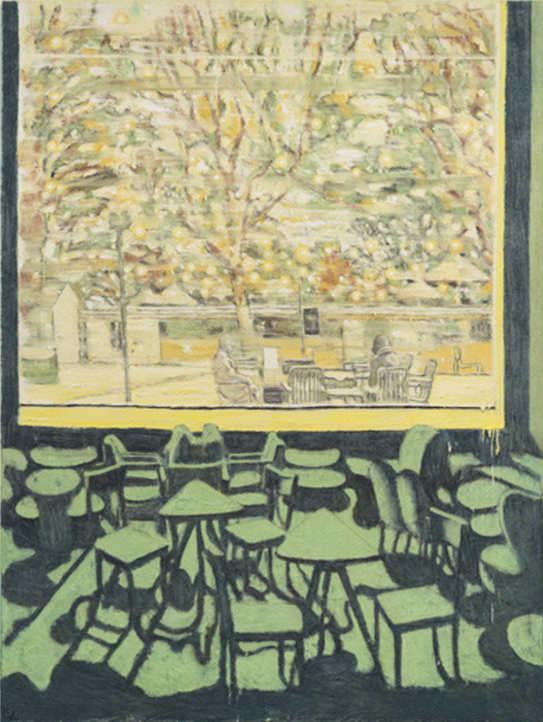
Yoo Geun-Taek, Two Dialogues, 2025. Ink and color on Korean paper (hanji), 187.5 × 141 × 3 cm / Photo: Gallery Hyundai
Johyun Gallery: Material-Centered Practice Focused on
Lee Bae
Based in Busan, Johyun Gallery centers its
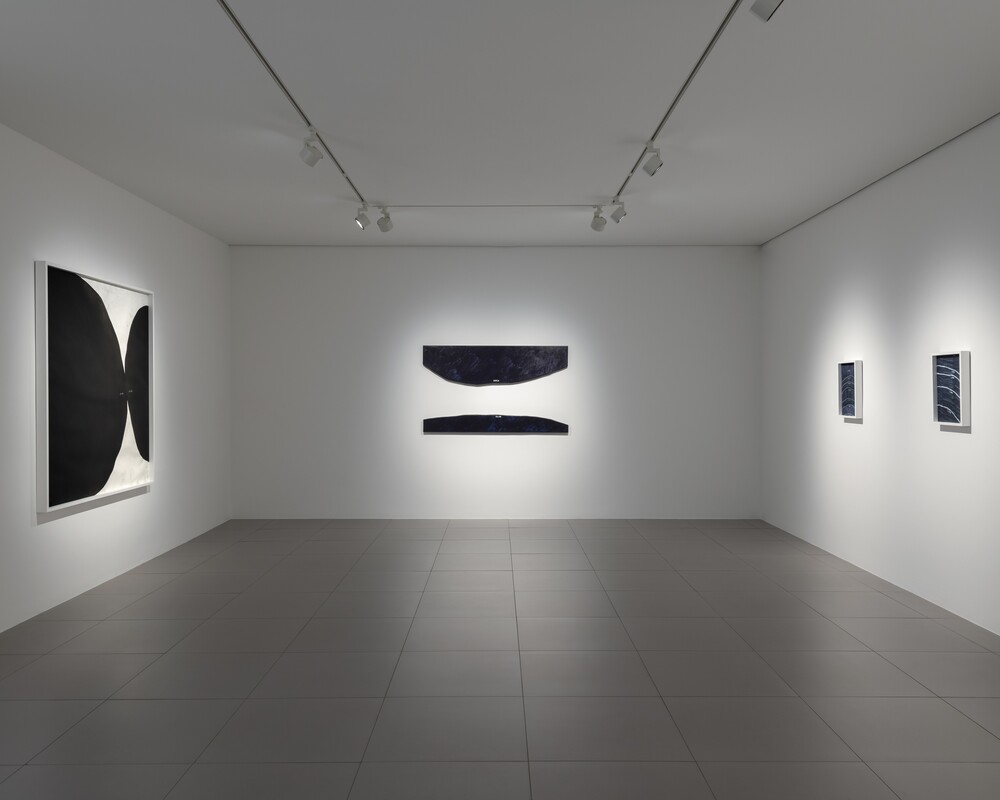
presentation on materiality and contemplative form. Notably, works by Lee Bae
featuring charcoal are included. Through the material of charcoal, Lee
visualizes the tension between emptiness and substance, extending the
aesthetics that follow from Dansaekhwa through repetitive arrangement and the
depth of black surfaces. His recent exhibitions in Paris and New York indicate
how his practice is being reconsidered within the international contemporary
context.
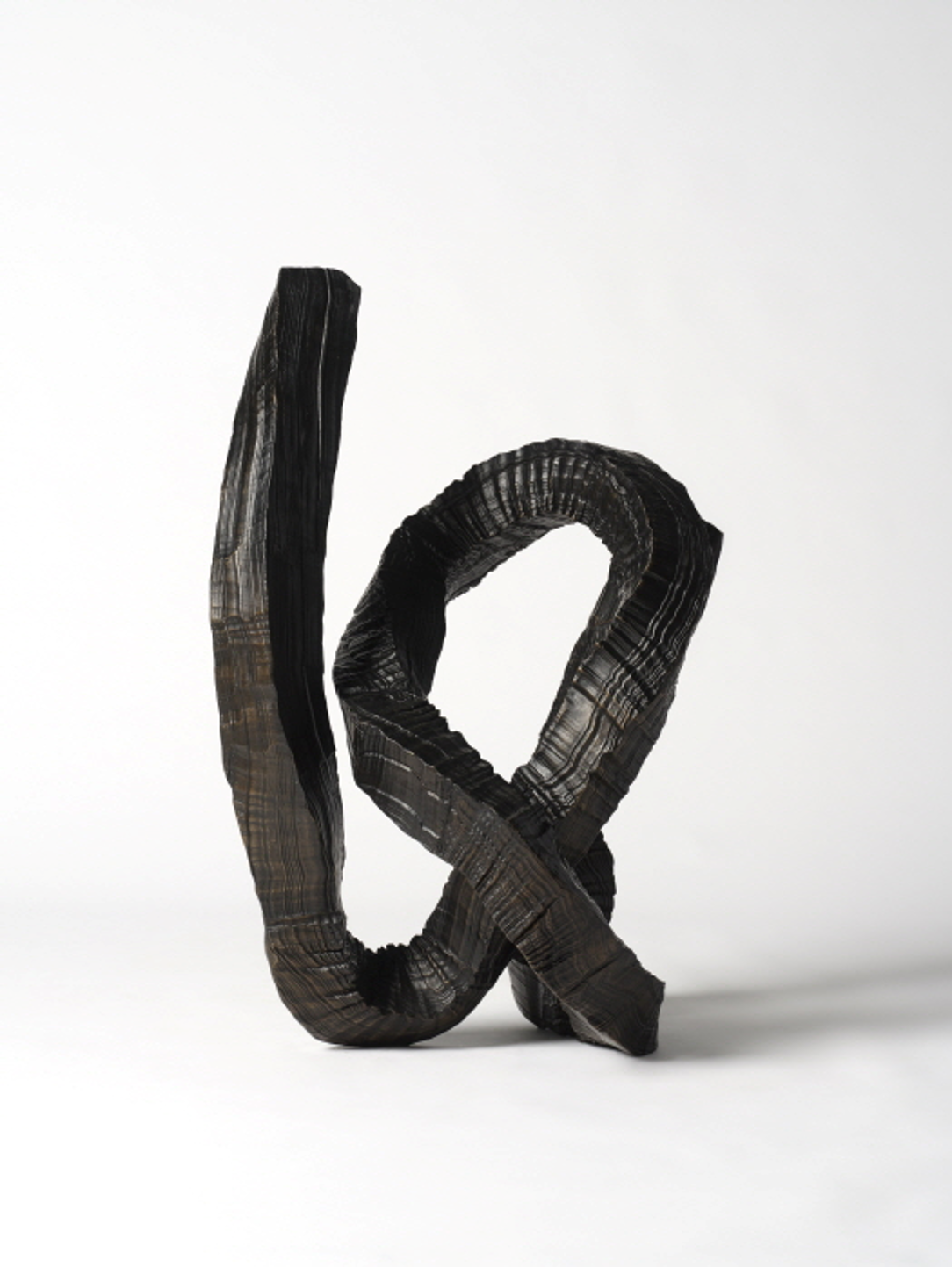
Lee Bae, Brushstroke S6, 2025, Bronze, 62 x 56 x 106(h) cm / Photo : Johyun Gallery
At this year’s Frieze Los Angeles, Korean galleries
engaged the international market directly through their respective programs and
artists rather than relying on a national image. Kukje Gallery’s generational
structure, Gallery Hyundai’s concentrated focus on painting, and Johyun
Gallery’s emphasis on materiality reveal distinct approaches while collectively
outlining the complex terrain of contemporary Korean art.