
On July 26, 2026, the Art Services Business
Registration System came into effect under the Art Promotion Act. Businesses
operating in six categories—galleries, art auctions, art advisory services, art
rental and sales, art appraisal, and art exhibitions—are now required to
register with the relevant local authority.
To minimize confusion arising from the
introduction of the new system, the government will provide a one-year grace
period through July 25, 2027. During this period, businesses will be informed
of registration procedures and sector-specific obligations, and administrative
penalties will not be imposed. Once the grace period ends, however,
unregistered business operations or violations of statutory obligations may be
subject to sanctions, including the suspension of business activities. The
system is intended to provide a clearer understanding of the art services
sector, strengthen transaction standards and consumer protection, and use the
resulting information as a basis for future policies and support programs.
The inclusion of art service businesses—many
of which had previously operated outside a formal, sector-specific registration
framework—within an institutional system is significant. Yet it remains unclear
whether the new system will provide a foundation for the growth of the Korean
art market or function instead as another administrative regulation and barrier
to market entry.
Registering businesses will not
automatically make art transactions transparent. Nor will stronger
administrative oversight generate market confidence on its own. Even when the
stated purpose of a policy is reasonable, the field may experience it primarily
as control and restriction rather than activation if it fails to reflect the
actual operating structure of the art ecosystem.
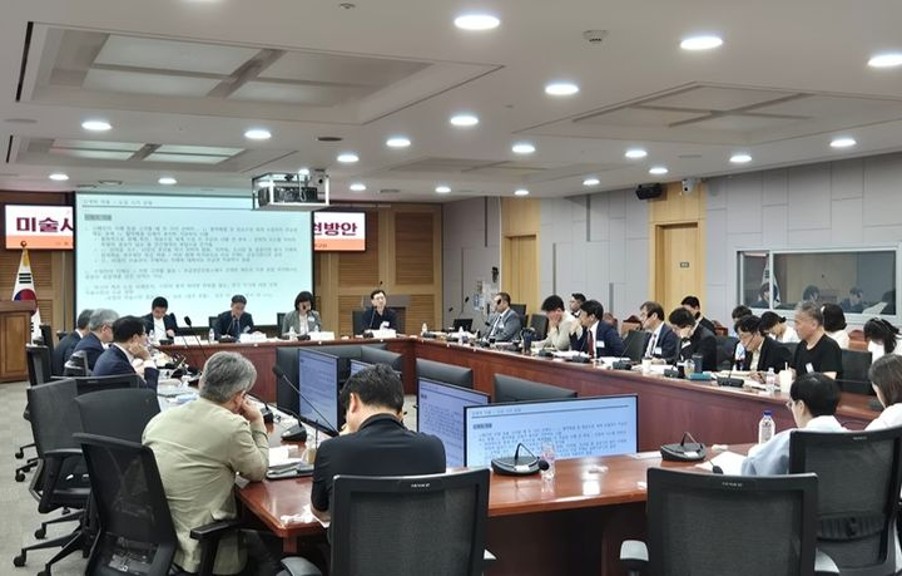
Before implementing the registration
system, the Ministry of Culture, Sports and Tourism held regional briefing
sessions. However, the fact that briefings and consultations took place does
not necessarily mean that the diverse realities of the art field were fully
reflected in the policy. Galleries, auction houses, artists, independent
curators, small exhibition spaces, appraisal professionals, and collectors all
operate under different conditions. Whether the system adequately addresses
those conditions must be assessed by examining how carefully the government
identifies and corrects administrative burdens, sector-specific blind spots,
and conflicts with existing policies during the grace period.
The one-year grace period should therefore
be more than a temporary suspension of penalties. It should serve as a
substantive period of review in which problems encountered in the field are
investigated, the effectiveness of the system is reassessed, and the necessary
complementary policies are developed.
A Single Policy Cannot
Transform the Market
The art market is not simply a place where
works are bought and sold. It is a complex ecosystem in which artistic
production and exhibitions, contracts and settlements, appraisal and
authentication, taxation and accounting, artwork records and provenance, public
museum acquisitions, support programs, overseas promotion, criticism, and
archives are closely interconnected.
If business registration is strengthened in
isolation while standard contracts, payment settlements, the accountability of
appraisal institutions, tax standards, artwork records, transaction
information, and public museum acquisition procedures remain unchanged, the
market’s fundamental problems will persist. The result may simply be the
addition of another administrative procedure.
The problem with Korean art policy is not a
lack of institutions or support programs. Public organizations such as the Arts
Council Korea and the Korea Arts Management Service have played important roles
in supporting artistic production, international exchange, overseas promotion,
market development, and professional training.
However, support programs, the market, and
museums have often operated separately from one another. It is frequently
unclear how works produced through public support are documented and circulated
after an exhibition, how overseas exhibitions lead to criticism, research,
acquisitions, and long-term international networks, or how accumulated
information is used in subsequent policies and market analysis.
When new obligations are introduced without
fundamental structural reform or coordination with related policies, they are
likely to be experienced in the field as control and burden rather than
support. A single policy cannot transform the entire market. Registration,
contracts, taxation, settlement, appraisal, authentication, public collecting,
and transaction-information policies must move together.
The Art Promotion Act already provides a
legal basis for standard contracts, consumer protection, certificates of
authenticity, market surveys, and an integrated art information system. The
important task is not to implement each provision separately, but to ensure
that they function together as a coherent structure within the actual art
ecosystem.
A Market Without Transparent
Prices Cannot Be Analyzed
One of the most significant structural
limitations of the Korean art market is the difficulty of determining how much
artworks have actually sold for.
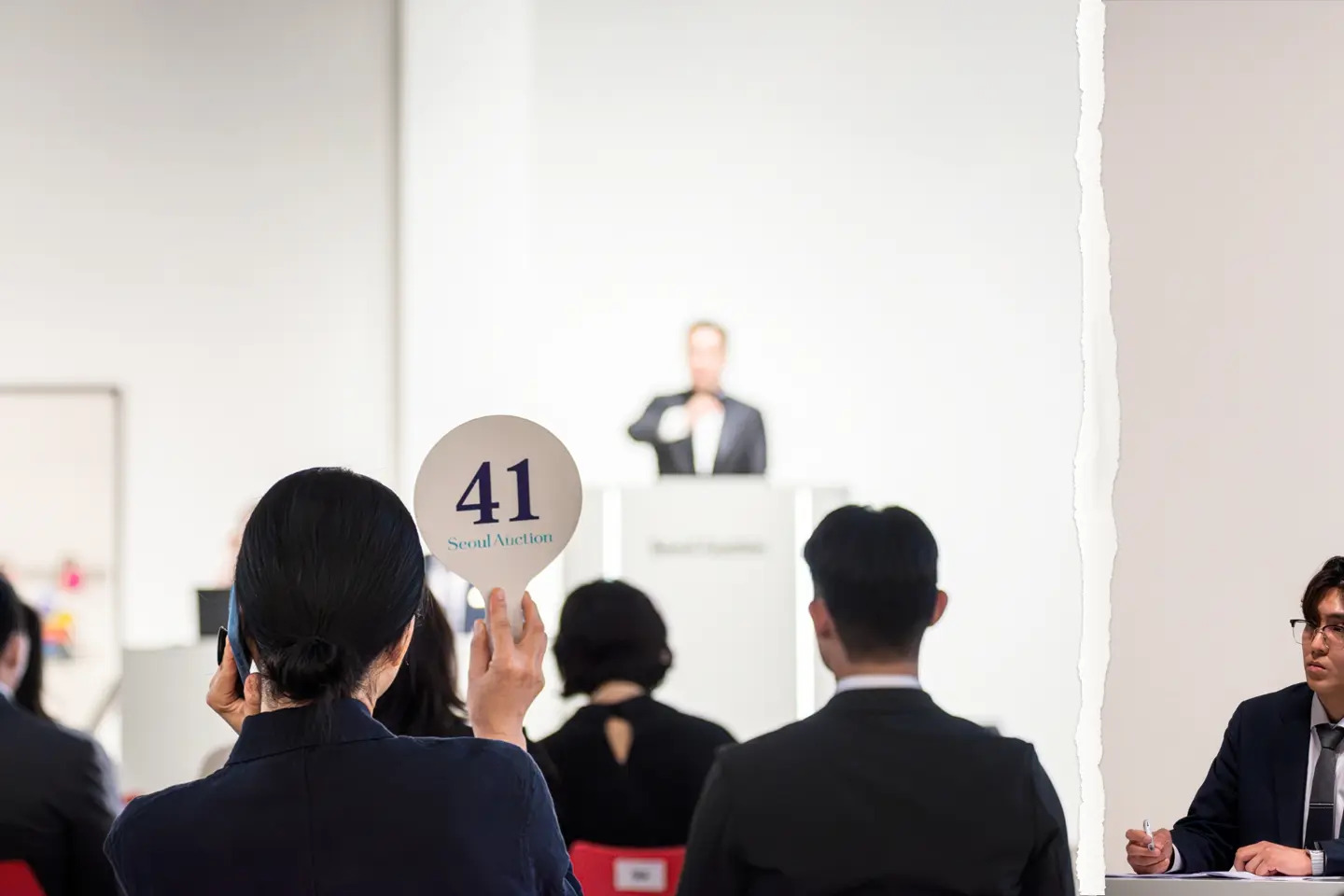
In the auction market, auction listings and
winning bid prices are publicly available. In the primary market, however—particularly
in galleries and art fairs—information on whether a work has been sold and at
what final price generally remains known only to the parties involved.
Transactions conducted directly by artists, through art advisers, or between
corporations and private individuals are also difficult for outsiders to
identify.
The listed price of a work may differ from
the final contract price, while discounts, installment payments, exchanges, and
other transaction conditions are rarely disclosed. There is also a lack of
systematic information that would allow collectors or researchers to determine
when comparable works by the same artist were sold and at what prices.
The Korea Arts Management Service operates
K-ARTMARKET, the Korean Art Market Information System, which provides market
analysis, reports, statistics, and auction results. Users can access
information on recently auctioned works from major Korean auction houses,
including artists’ names, titles, and winning bid prices, while the annual art
market survey provides time-series data on the overall scale of the market.
These initiatives have made an important contribution to building an
information base for the Korean art market.
Yet the publicly accessible data remain
largely concentrated on auction results. Transactions by galleries and art
fairs may be reflected in aggregate statistics such as total sales and the
number of works sold, but users cannot access individual transaction records
showing which work by which artist was sold, when the sale took place, and at
what price.
This is not solely a limitation of
K-ARTMARKET. It reflects a structural problem in the Korean art market, where
actual transaction data from galleries, art fairs, and direct artist sales are
not consistently collected, verified, and accumulated according to common
standards.
Without reliable sales-price data, it is
difficult to analyze changes in prices and transaction volumes across artists,
generations, and artistic genres. It is equally difficult to evaluate the
difference between primary-market and auction-market prices, the actual
expansion or contraction of the market, or the genuine level of demand for a
particular artist.
Collectors lack sufficient information to
assess whether a price is reasonable. Artists may also be unable to determine
at what prices and under what conditions their works are circulating.
Policymakers, meanwhile, are forced to estimate the size of the market on the
basis of incomplete samples and voluntary survey responses.
Statistics, analysis, and forecasting must
all begin with reliable primary data. A market in which actual sales prices
cannot be verified cannot be accurately analyzed, and a market that cannot be
analyzed cannot be reasonably forecast.
Public Art Museums Must Also
Explain How Prices Are Determined
Transparency is not a principle that
applies only to the private art market. Public art museums that acquire works
with public funds also have a responsibility to explain, in a reasonable
manner, how works are selected and acquisition prices are determined.
In a recent civil petition submitted
through Korea’s national e-People petition system, an artist stated that a
public art museum had twice proposed an acquisition price more than 65 percent
below the artist’s initial proposed price, without providing a sufficient
explanation of the valuation criteria or the reasons for the adjustment.
The artist was not simply asking the museum
to pay a higher price. The request was for standard guidelines governing public
museum acquisitions, explanations of the criteria and reasons applied when
prices are adjusted, and written notification following the review process
stating the reasons for selection or non-selection and the basis for any price
adjustment.
According to the Ministry of Culture,
Sports and Tourism, the National Museum of Modern and Contemporary Art, Korea
conducts acquisitions through a three-stage process involving a value
assessment committee, a price advisory committee, and an artwork acquisition
review committee. The ministry stated, however, that the development of
standard guidelines for all public art museums, as well as the disclosure of
committee members and individual assessment details, should be approached
cautiously in consideration of the independence of deliberation, privacy
protection, and potential effects on the art market. It also explained that
actual transaction prices and recent sales records would be reviewed, and that
opinions from art historians and specialists in relevant fields would be sought
when an artist had only a limited market history.
This case alone is not sufficient to
conclude that the museum’s valuation was improper. Public museums operate
within budgetary constraints, and an artist’s proposed price may legitimately
differ from an institution’s assessed value.
However, the existence of a review
procedure does not necessarily mean that those affected by it can understand or
trust how it works. When a price is substantially adjusted, the institution
should be able to explain, within reasonable limits, what data and valuation
principles were applied and through what process the final decision was
reached.
Fairness is not achieved merely by
establishing a procedure. Public confidence emerges only when fairness is
accompanied by accountability.
The acquisition of works by public art
museums is not simply a purchasing transaction. It is an act of selecting the
cultural heritage of a particular period and preserving it within the public
record. It may also have a long-term effect on an artist’s career,
art-historical evaluation, and market pricing. The processes of selection,
valuation, and documentation must therefore maintain a careful balance among
professional expertise, institutional independence, and transparency.
For the System to Become a
Foundation for the Art Industry, Not Another Regulatory Burden
For the Art Services Business Registration
System to contribute to the development of the art industry, it must go beyond
registration and enforcement. The system should not merely count the number of
businesses. It should also enable the accumulation of actual transaction data
and artwork records, which can then be used for market analysis and policy
development.
At the same time, immediately disclosing
every private transaction price and the identity of every buyer would not be
realistic. A graduated information system is required—one that protects
personal information, commercial confidentiality, and the autonomy of price
negotiations while still generating sufficient data to analyze the market as a
whole.
One possible approach would be to require
businesses to report basic artwork information and actual transaction prices
confidentially to the relevant authority. Publicly accessible data could then
provide anonymized statistics such as price ranges, median prices, transaction
volumes, and rates of price change, while excluding information that could
identify buyers. Art fairs, overseas promotion programs, and public museum acquisitions
funded by public money should be subject to more detailed disclosure of sales
results and valuation criteria.
K-ARTMARKET should also move beyond its
present role of providing auction results and market-survey statistics. It
should develop into a national art-market data infrastructure that connects
transaction information from galleries, art fairs, public art museums, and
publicly funded projects.
A standardized identification system for
individual works is also necessary so that basic artwork information,
certificates of authenticity, exhibition histories, transaction records, and
changes in ownership can be connected. Procedures for verifying omissions and
false reporting will be required, but new administrative costs must not simply
be transferred to small galleries and individual artists.
If registration duties are imposed, the
government should also provide standard contracts, accounting and tax guidance,
accessible digital reporting tools, and systems for managing artwork records.
Rather than merely adding regulation, it must build the administrative and
technological infrastructure that allows market participants to comply with and
benefit from the system.
Above all, an ongoing consultation
mechanism should be established during the one-year grace period, involving not
only major galleries and auction houses but also small and mid-sized galleries,
independent spaces, regional exhibition businesses, artists, and curators.
Problems arising during implementation should be investigated, and
administrative guidelines and related policies should remain open to revision.
The effectiveness of the policy should not
be assessed by the number of registered businesses or the volume of penalties
imposed. It should be measured by whether transactions and settlements have
become more transparent, whether reliable price information has been
accumulated, whether the burden on small operators has been reduced, and
whether previously fragmented public support and market systems have begun to
connect.
There Can Be No
Internationalization Without Industrialization
A market is a space in which artworks are
exchanged, but an industry is a system in which creation and distribution,
contracts and settlements, appraisal and authentication, collecting and
documentation, policy and capital circulate continuously within an
interconnected structure.
For Korean art to evolve from a market into
an industry, systemization, rationalization, and capitalization must operate
together on the basis of reliable information and data.
Systemization means managing artworks,
transactions, institutions, and businesses according to consistent standards.
Rationalization means making the grounds for pricing, deliberation, appraisal,
and settlement objectively explainable. Capitalization—understood here as the
accumulation and reinvestment of resources—does not simply mean raising the
prices of artworks or transforming art into a financial product. It means
ensuring that the capital and achievements invested in artistic production,
research, professional personnel, archives, exhibitions, and distribution are
reinvested in and accumulated within the broader ecosystem.
The Art Services Business Registration
System may become a starting point for this process of industrialization. Yet
without transparent transaction information, accountable public museum
acquisition procedures, standard contracts and settlement practices, artwork
record management, and stronger connections between public support and the
market, it may ultimately be experienced as little more than another layer of
regulation.
Korean art already possesses accomplished
artists, museums, galleries, and support systems. What is lacking is not the
individual components themselves, but a transparent and rational system capable
of connecting them.
A market in which actual sales prices
cannot be verified cannot be properly analyzed. A market that cannot be
analyzed cannot be forecast, and a market that cannot be forecast will struggle
to attract long-term capital or build international confidence.
The task facing the Korean art world is
therefore not simply to expand the size of the market. It is to determine how
market transactions and achievements can be recorded, disclosed, and
transformed into sustainable industrial assets—assets that allow creation and
distribution, public collecting and research, public support and international
exchange to circulate within a continuing structure.
Internationalization, in the end, is not a
final stage pursued separately from industrialization. It is the result of a
transparent and rational industrial system extending outward and connecting
with the wider world. For Korean art to establish itself as an important center
of artistic production and a sustainable cultural industry, it must first build
an internal structure that participants both at home and abroad can trust.
In that sense, the direction Korean art
must take is clear: there can be no internationalization without
industrialization.
References
- Ministry of Culture, Sports and Tourism, “Art
Services Business Registration System to Take Effect on July 26,” press
release.
- Ministry of Culture, Sports and Tourism, “Regional
Briefing Sessions on the Art Services Business Registration System,” press
release.
- National Law Information Center, Art
Promotion Act.
- National Law Information Center, Enforcement
Decree of the Art Promotion Act.
- Korea Arts Management Service, Art
Market Survey.
- Korea Arts Management Service, K-ARTMARKET:
Korean Art Market Information System.
Jay Jongho Kim graduated from the Department of Art Theory at Hongik University and earned his master's degree in Art Planning from the same university. From 1996 to 2006, he worked as a curator at Gallery Seomi, planning director at CAIS Gallery, head of the curatorial research team at Art Center Nabi, director at Gallery Hyundai, and curator at Gana New York.
From 2008 to 2017, he served as the executive director of Doosan Gallery Seoul & New York and Doosan Residency New York, introducing Korean contemporary artists to the local scene in New York. After returning to Korea in 2017, he worked as an art consultant, conducting art education, collection consulting, and various art projects.
In 2021, he founded A Project Company and is currently running the platforms K-ARTNOW.COM and K-ARTIST.COM, which aim to promote Korean contemporary art on the global stage.