
“The winter sea the eyes have seen is wider than
itself.”—Kang Seok Ho,「Seeing」, 2017
Tina Kim Gallery is presenting《Kang Seok Ho: Hold Still》, the gallery’s
second solo exhibition of the late Korean artist, currently on view from
November 20, 2025 through January 24, 2026.
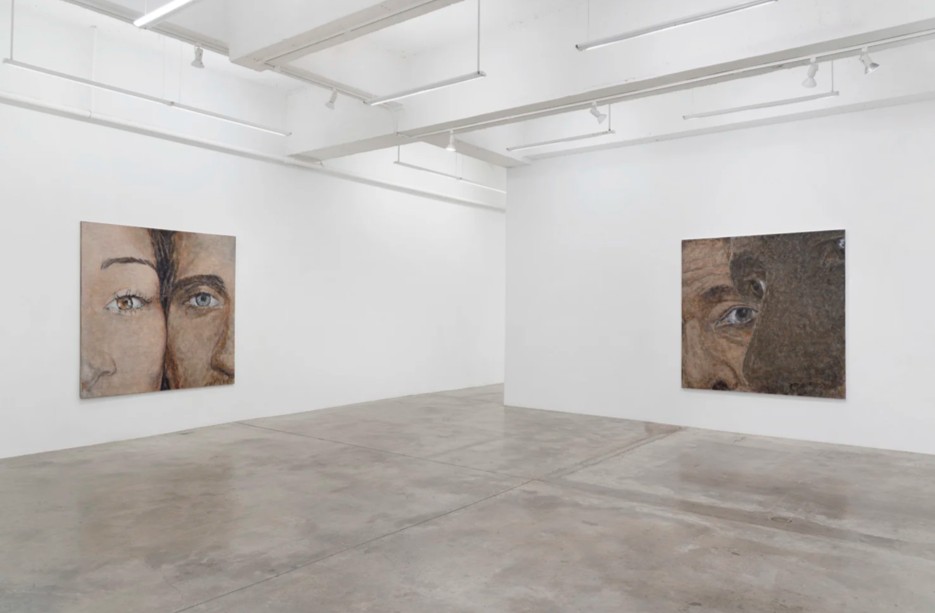
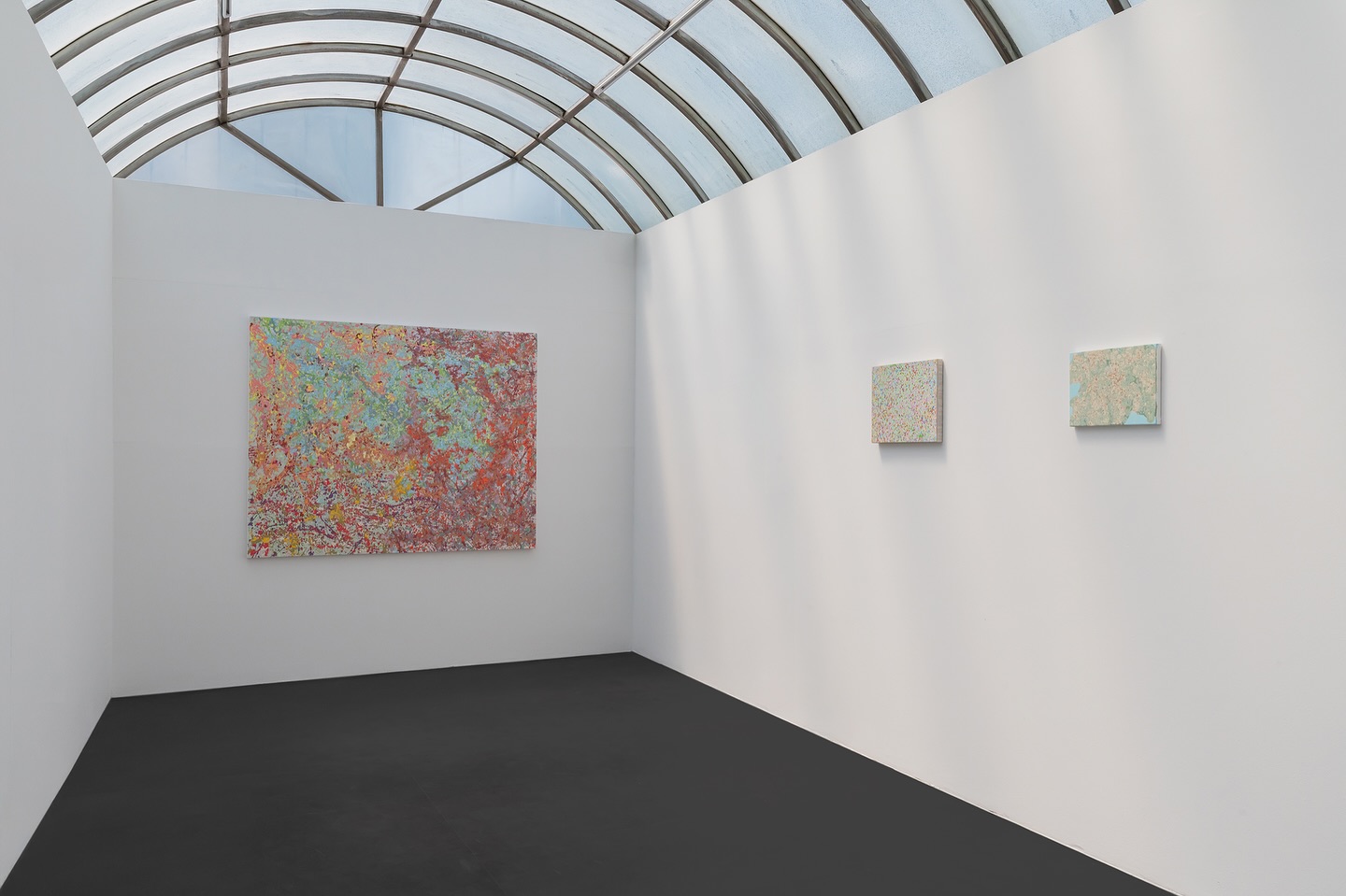
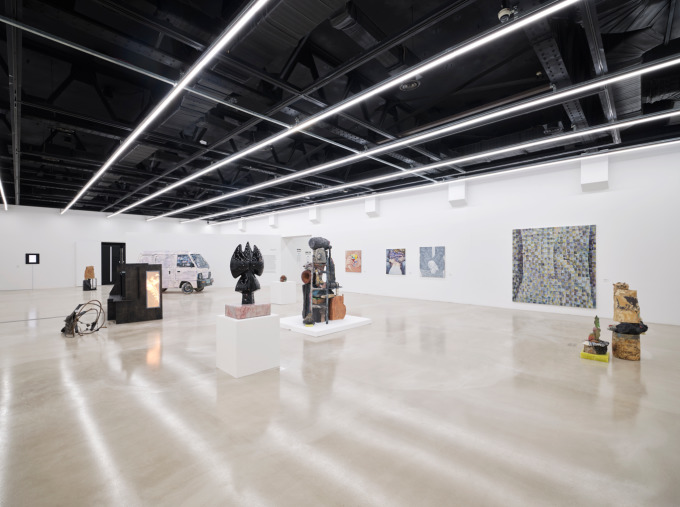
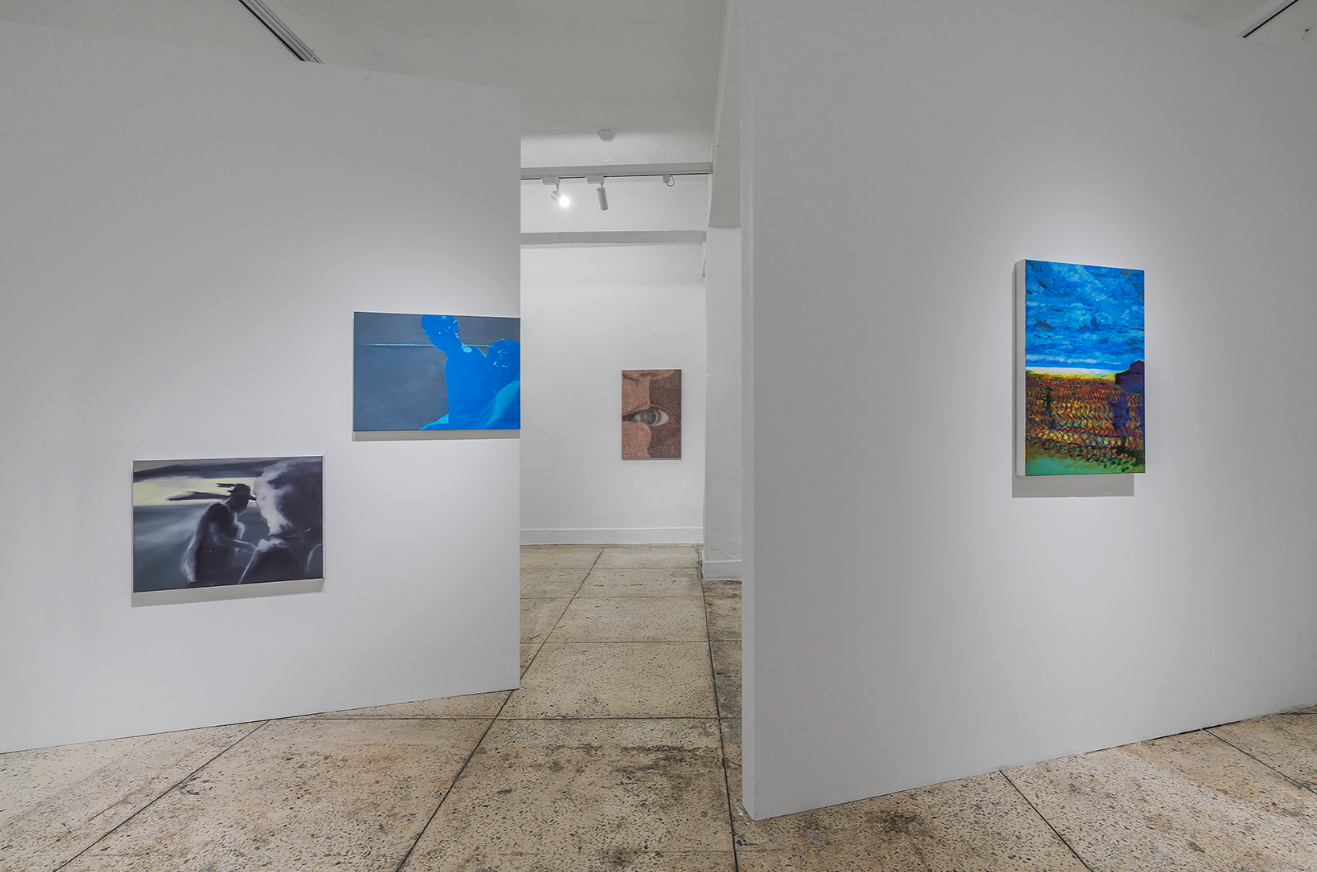
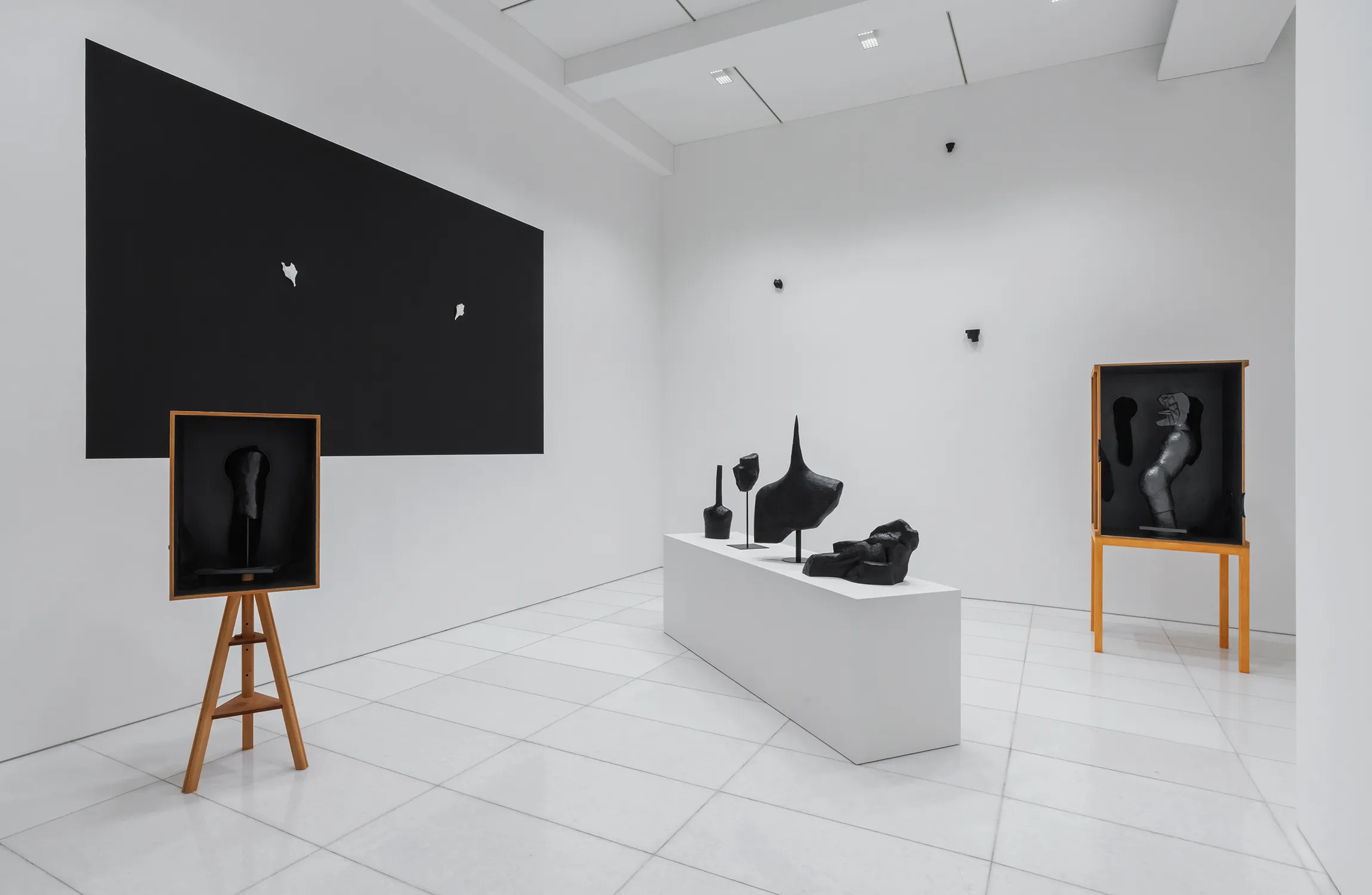
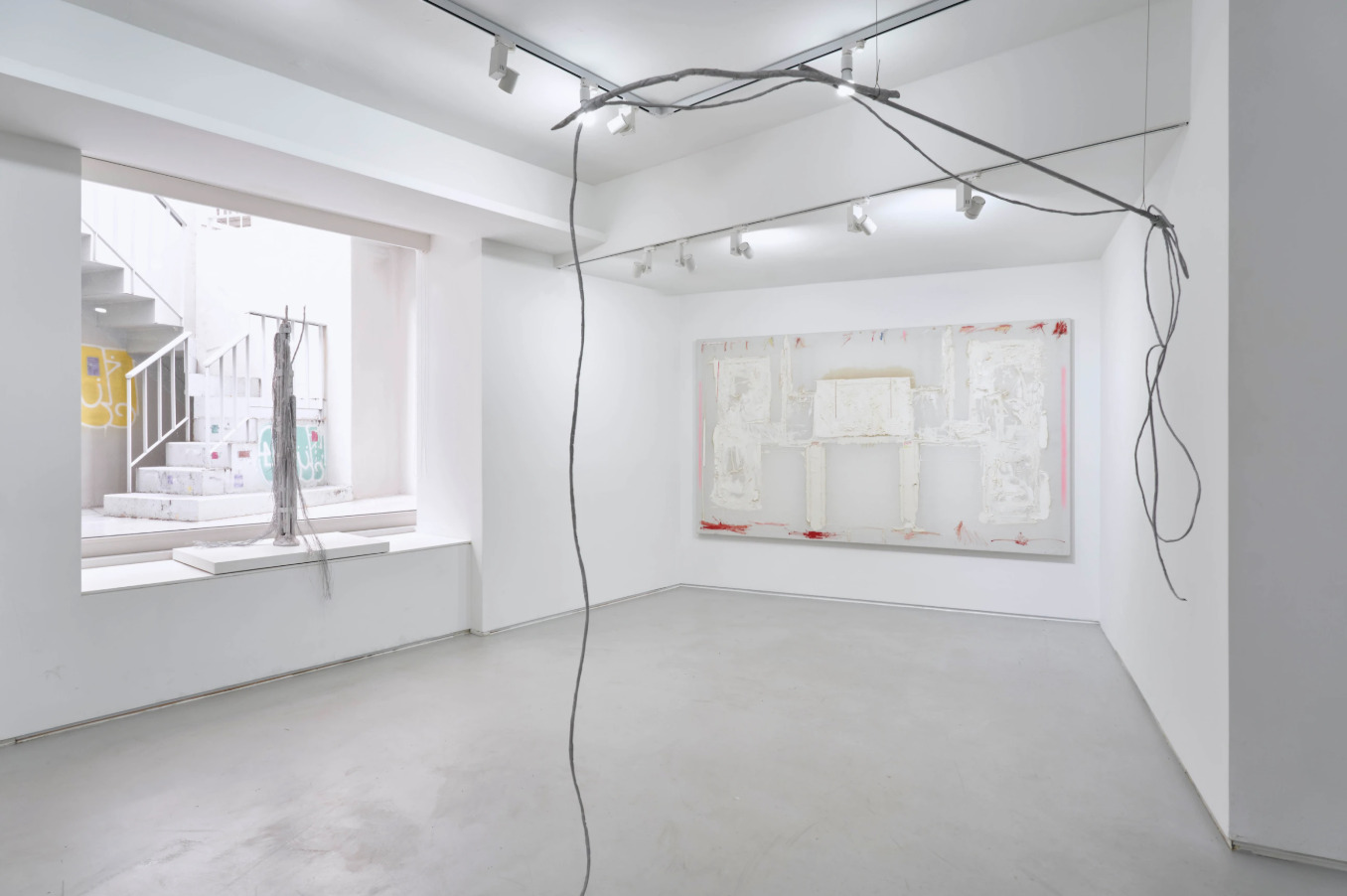
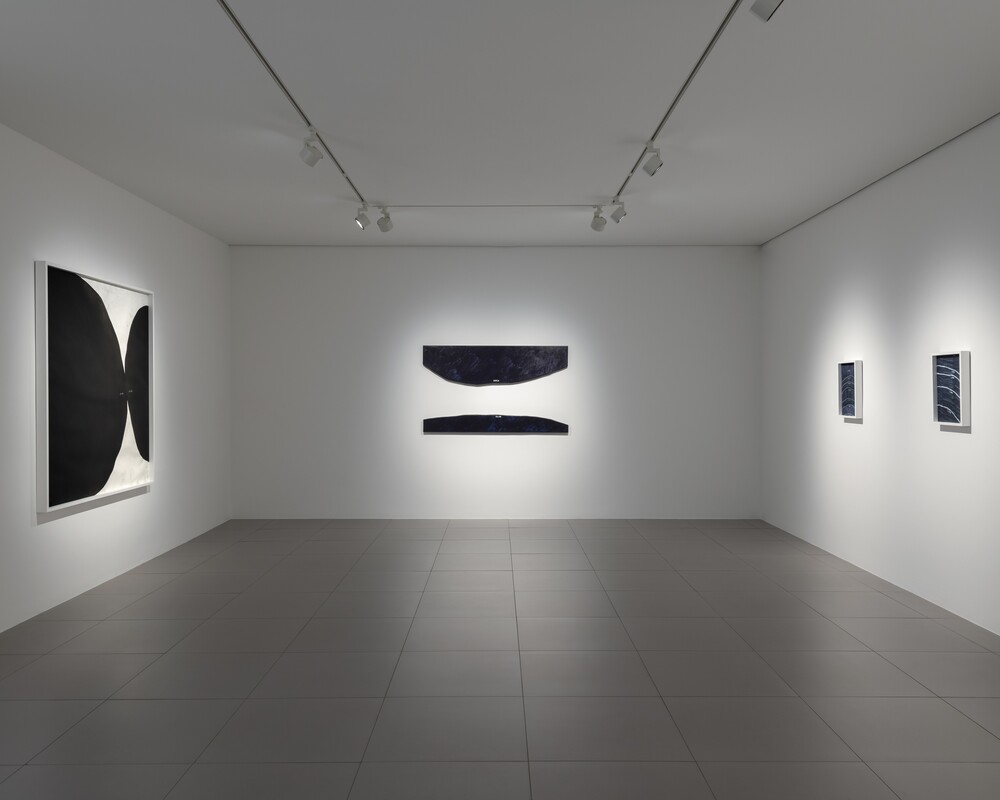
Installation view of《Kang Seok Ho: Hold Still》at Tina Kim Gallery, New York (November 20, 2025–January 24, 2026). / Photo by Hyunjung Rhee. Courtesy of Kang Seok Ho Estate and Tina Kim Gallery.
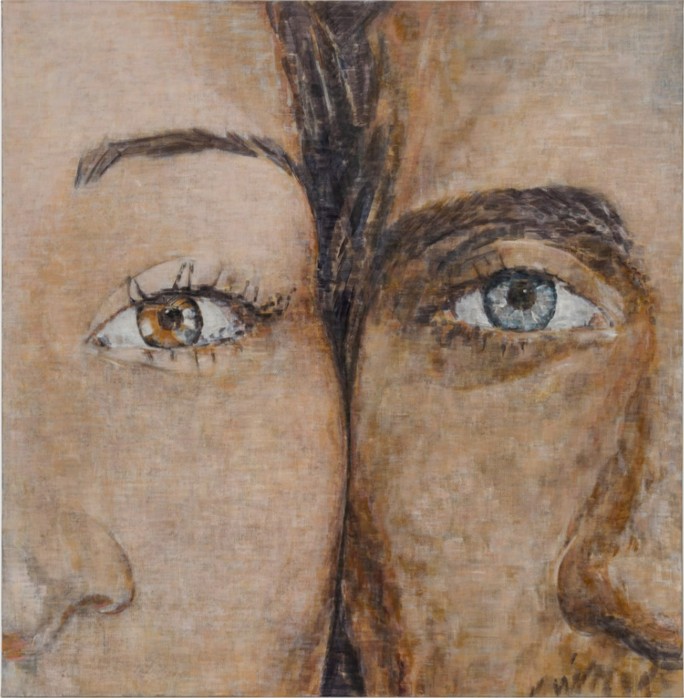
Untitled, 2017, Oil on canvas, 195 × 190 cm / Photo: Tina Kim Gallery website
Bringing together
Kang’s ‘Couple’ and ‘Nude’ paintings—created
between the mid-2010s and 2021—the exhibition traces the artist’s sustained
engagement with the human figure as a site for exploring painterly surface,
materiality, and form.
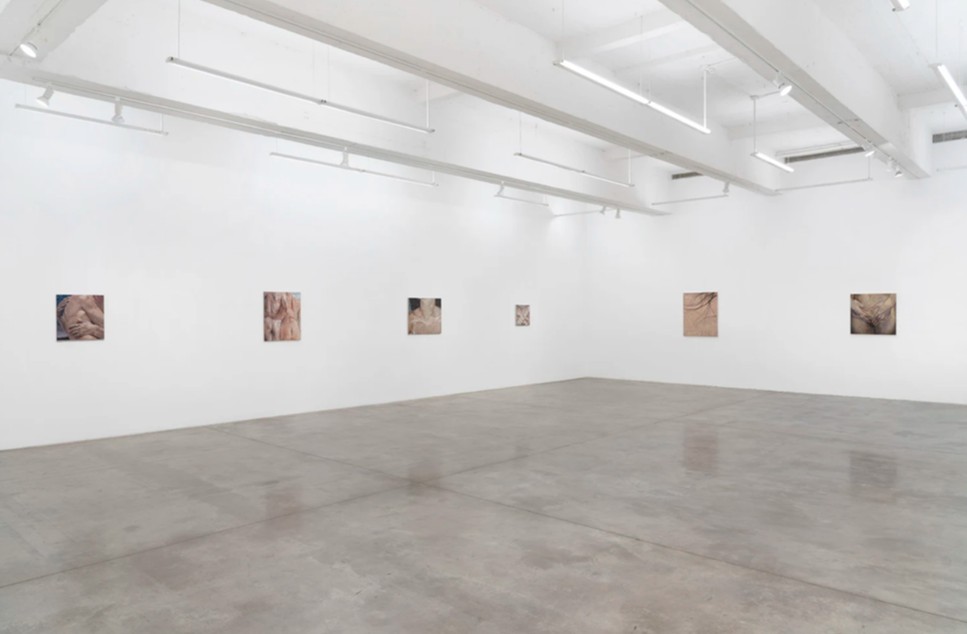
Installation view of《Kang Seok Ho: Hold Still》at Tina Kim Gallery, New York (November 20, 2025–January 24, 2026). / Photo by Hyunjung Rhee. Courtesy of Kang Seok Ho Estate and Tina Kim Gallery.
Depicting bodies and intertwined faces yet
stripped of narrative and erotic intent, these works reflect Kang’s deep
fixation on painting itself—and his fascination with how the effort to see and
depict another contains the paradox of closeness and distance
inherent in human relationships.
Kang Seok Ho (1971–2021) studied sculpture at
Seoul National University and trained under Jan Dibbets at the Kunstakademie Düsseldorf,
receiving his MFA in 2001 before returning to Seoul. His contemporaries
included Park Chan-kyong, Haegue Yang, Chung Seoyeong, and Kim Beom, among
others. At a time when the critical discourse in Korea revolved around
multimedia and conceptual practices, Kang turned instead to the language of
painting itself.

Installation view of《Seok Ho Kang: Three Minute Delight》at the Seoul Museum of Art, 15 December 2022 – 23 March 2023.
He studied the Old Masters—both Western and
Eastern—and was particularly drawn to the techniques of Piero della Francesca,
Giorgione, and Tintoretto, whose treatment of color and light he admired in
their depictions of skin. Yet Kang deliberately resisted virtuosity, developing
a distinctive method of tapping a brush dipped in thinned paint to build up
delicate, uniform layers, creating textured surfaces where pigment both reveals
and mimics the weave of the linen beneath.
Informed by the philosophy of East Asian
landscape painting—which privileges the subjective interpretation of nature
over direct representation—Kang approached every subject, including the human
figure, as a kind of landscape: a terrain for exploring gesture, surface, and
dimensionality in paint.
Kang’s methods, however, were distinctly
contemporary, exemplified by his use of photographic sources—first explored in
his ‘Get Up’ series, which zoomed in on clothed
torsos and buttocks, omitting faces and other identifiers. Working from
photographs—some his own, others drawn from media—he isolated and enlarged
fragments of images, taping off sections to re-angle and translate them onto
canvas.
Focusing on details such as the wrinkles in
denim where thighs meet or the beads of a necklace resting against a
collarbone, the ‘Get Up’ paintings became Kang’s
first anonymous portraits, turning the body into a rhythm of folds, seams, and
reflections: quiet abstractions that reveal his fascination with the everyday
as a site of intimacy.
This process of cropping and re-framing became
central to his later ‘Couple’ and ‘Nude’
series. For the ‘Couple’ paintings, begun after 2016, Kang
focused on compositions of two figures sharing a single frame, zooming into
moments of touch and proximity in photographs drawn from social media or film
stills. What might appear to mark a turn toward narrative was, for him, a
continuation of his formal and material concerns—now directed toward the
tension and harmony between forms sharing a pictorial surface: clasped hands,
entwined arms, and faces pressed together.
His interest lay not in depicting two
individuals, but in capturing the fleeting moments of convergence or intimacy
between them.
These investigations of the body as
landscape evolved into the ‘Nude’ series, where the artist
magnified his gaze still further, turning his attention to the texture,
creases, and folds of skin. Cropped tightly on the décolletage, navel, or
buttocks, these paintings subvert the conventions of the nude, lingering
between disclosure and restraint. In one painting, a few strands of ebony hair
splay across a softly dappled expanse of skin; in others, peaches and grapes—perhaps
a nod to nudes in Western art— partially obscure the body, leaving the viewer
uncertain of what is being revealed or withheld. Viewers often interpreted
these works as erotic, a reading Kang resisted.
In the late 2010s, Kang pushed the
compositions of the ‘Couple’ paintings further
inward, enlarging his canvases to focus on the eyes of two individuals. In
some, two faces adjoin edge to edge, their shared boundary forming a seam; in
others, one face passes another, half-visible, half-withheld. Eventually, the
faces nearly overlap, merging into a single eye-like form—a meeting point of
color and light akin to a solar eclipse.
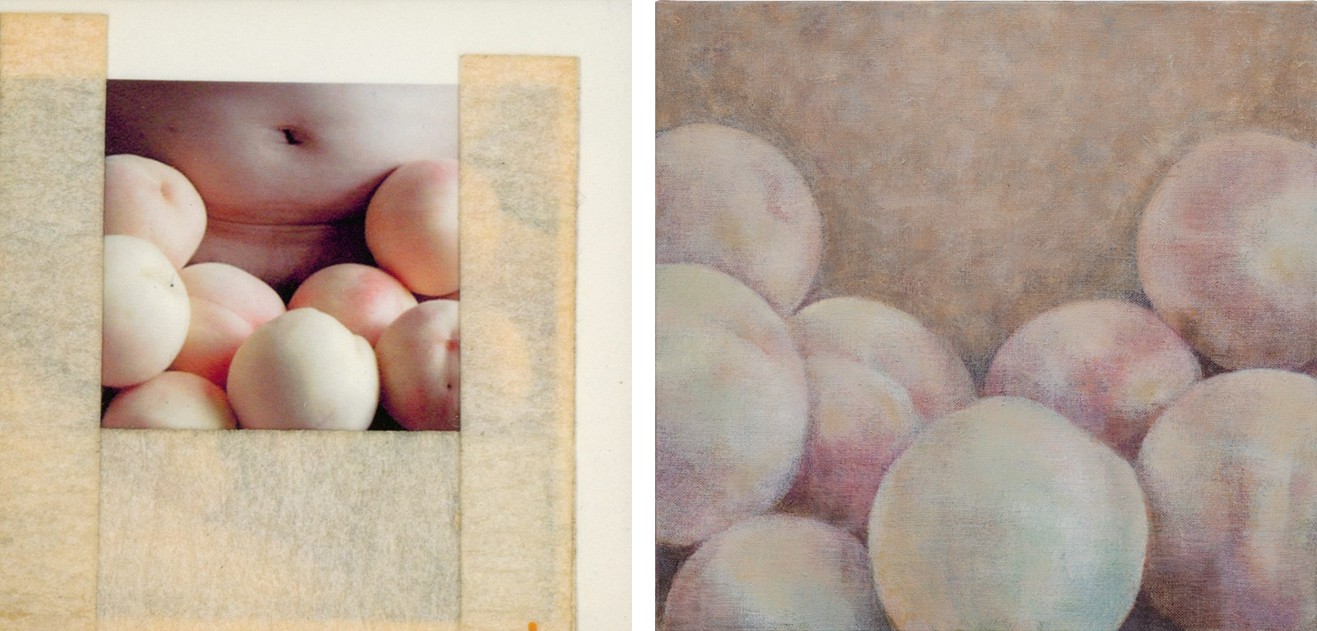
(Left) Original reference image used by the artist. Courtesy of Kang Seok Ho Estate.
(Right) Kang Seok Ho, Untitled, 2015, Oil on canvas, 43 × 43 cm / Photo: Tina Kim Gallery website
In his final group of ‘Nude’
paintings, created for a 2021 exhibition shortly before his death, Kang
concentrated his gaze on the belly button—the body’s physical and metaphorical
center. Perhaps his most intimate works, these paintings anchor folds and
crevices of skin within expanses of color that verge on abstraction.
The exhibition’s title,《Hold Still》, refers to Kang’s working process of selecting an image and
re-framing it to fit the proportions of his canvas. This became a way of
reconstructing chance, visually compelling moments encountered amid the sensory
excess of contemporary life and translating these images from the immediacy of
photography to the slower temporality of paint. The images, held still by the
artist’s intention, become his paintings—and in turn, invite viewers to look
with the same attentiveness.

Exhibited Artwork / Photo: Tina Kim Gallery website
Although Kang’s work has only recently begun to
receive wider international recognition, his influence within Korea’s painting
community was deeply felt during his lifetime. As an artist, curator, and
writer, he helped shape the discourse on contemporary art, organizing group
exhibitions such as《Good Form》(Insa Art Space, 2005) ,《Manner in Korean Paintings》(Hite Collection,
2012), and《When Words
Fail》(Hite Collection, 2016). His
writings on everyday experiences—plainspoken yet lyrical— echoed the tone of
his paintings, reflecting an ongoing search for clarity that always left space
for uncertainty. Kang’s passing in 2021 left his inquiries open-ended.
Yet in his ‘Couple’ and ‘Nude’
paintings—where forms meet, merge, or drift apart—he captured something of the
fragility of connection itself. His paintings do not seek to resolve the
tension between self and other, painter and viewer, figure and ground; rather,
they hold that tension quietly, discovering comfort in the unsettled.

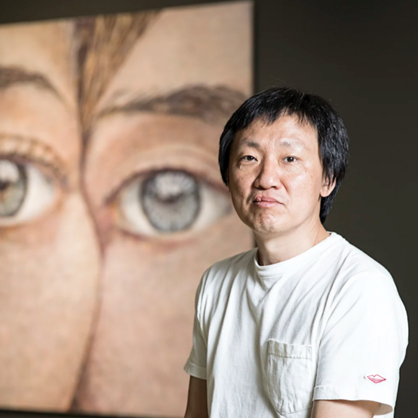
Artist Kang Seok Ho / © Kang Seok Ho Estate
ABOUT THE ARTIST
Kang Seok Ho received his Bachelor of Fine Art
in sculpture at Seoul National University, then left for Germany to study with
Jan Dibbets (b. 1941) at the Kunstakademie Düsseldorf, where he received his
Masters of Fine Art in painting. After winning the UBS Art Award in Basel,
Switzerland in 2000, he returned to Korea and won the Seoknam Art Prize (Seoul,
Korea) in 2004, and he was the selected artist for Young Korean Artists 2008: I
AM AN ARTIST by the National Museum of Modern and Contemporary Art.
From 2003 to 2020, he held 16 solo exhibitions
at Insa Art Space, Kumho Museum of Art, and Mimesis Art Museum. Beyond his
artistic practice, Kang was also active as a curator, organizing group
exhibitions featuring his peers and younger artists, as well as design shows
inspired by his personal passion for modern European and American design.
Exhibitions curated by Kang include《Good Form》(Insa Art Space, 2005),《Manner in Korean
Paintings》(Hite Collection, 2012),《When Words Fail》(Hite Collection, 2016), and《Bauhaus and Modern Life》(Kumho Museum of
Art, 2019).
Not separating his daily life and art, he led
meetings to interact with fellow artists on the subjects of painting, books,
music, hiking, and fishing. He taught as a professor at Seoul National
University of Science and Technology from 2018 to 2021, and his first
retrospective,《Seok Ho Kang: Three Minute Delight》(2022-2023) was held at the Seoul Museum of Art in the first year
after his untimely death in 2021. His debut solo exhibition with Tina Kim
Gallery was held in 2023.
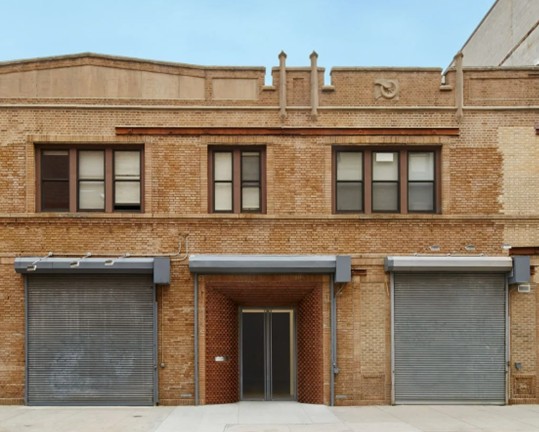
Tina Kim Gallery / Photo: Tina Kim Gallery Website
ABOUT THE GALLERY
Tina Kim Gallery is widely recognized for its
unique programming that emphasizes international contemporary artists,
historical overviews, and independent curatorial projects. The gallery has
built a platform for emerging and established artists by working closely with
over twenty artists and estates, including Pacita Abad, Ghada Amer, Tania Pérez
Córdova, and Mire Lee, amongst others.
Our expanding program of Asian-American and
Asian diasporic artists, including Maia Ruth Lee, Minoru Niizuma, and
Wook-Kyung Choi, evince the gallery’s commitment to pushing the conversation
beyond national frameworks. Founded in 2001, the gallery opened the doors to
its ground-floor Chelsea exhibition space in 2014.
The gallery was instrumental in introducing
Korean Dansaekhwa artists such as Park SeoBo, Ha Chong-Hyun, and Kim
Tschang-Yeul to an international audience, establishing public and
institutional awareness of this critically influential group of Asian Post-War
artists. The gallery partners regularly with prominent curators, scholars, and
writers to produce exhibitions and publications of rigor and critical
resonance.