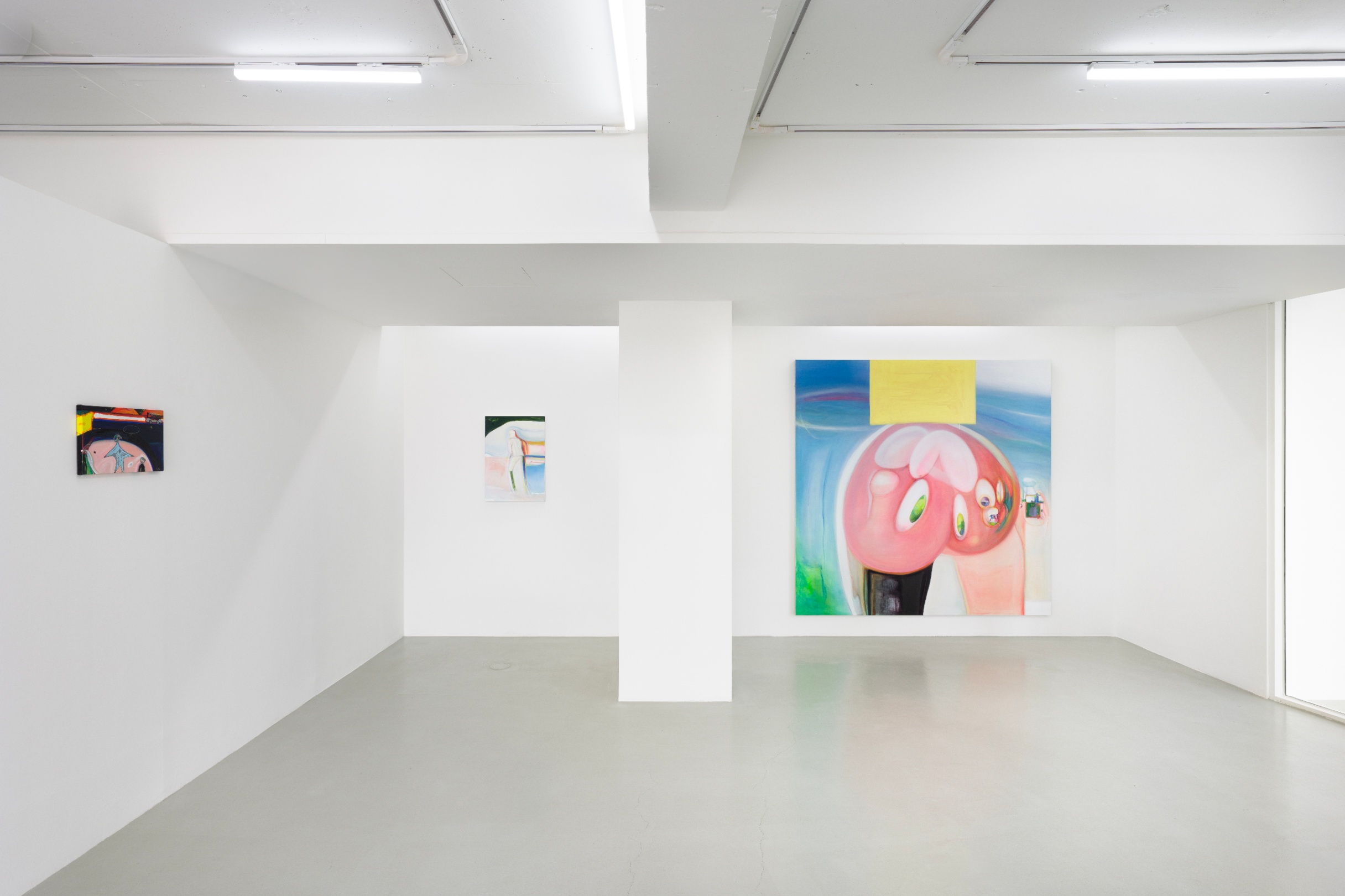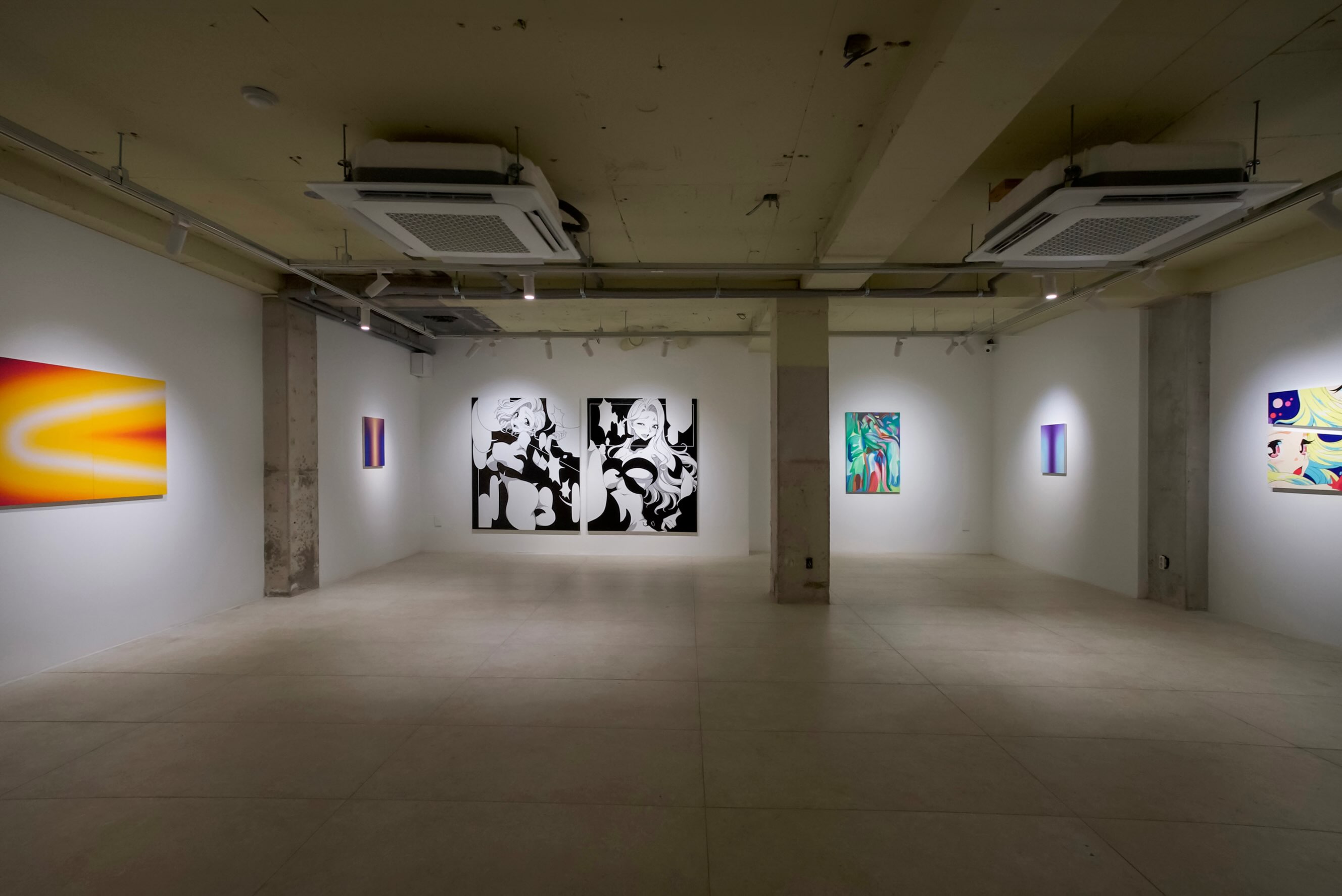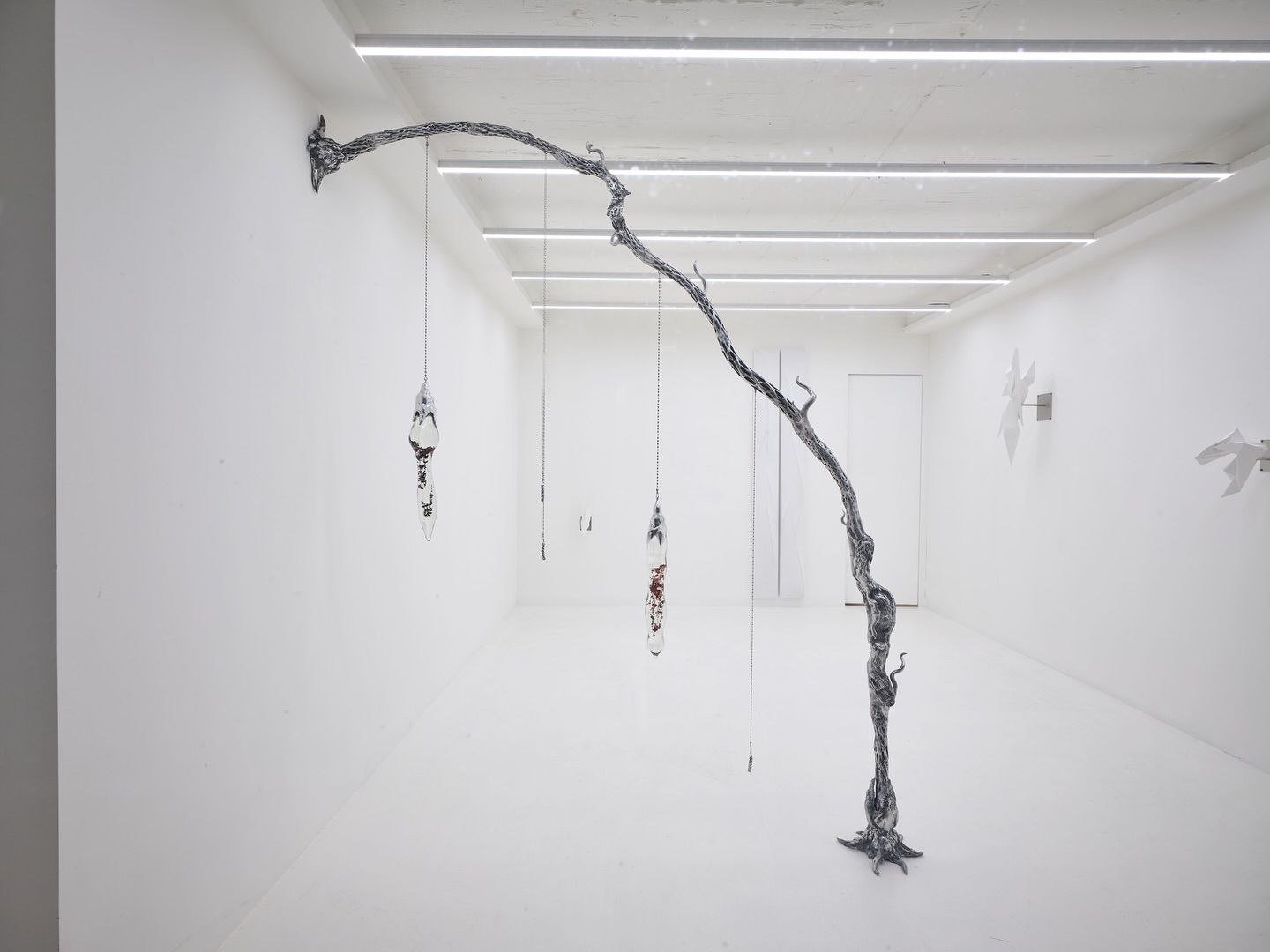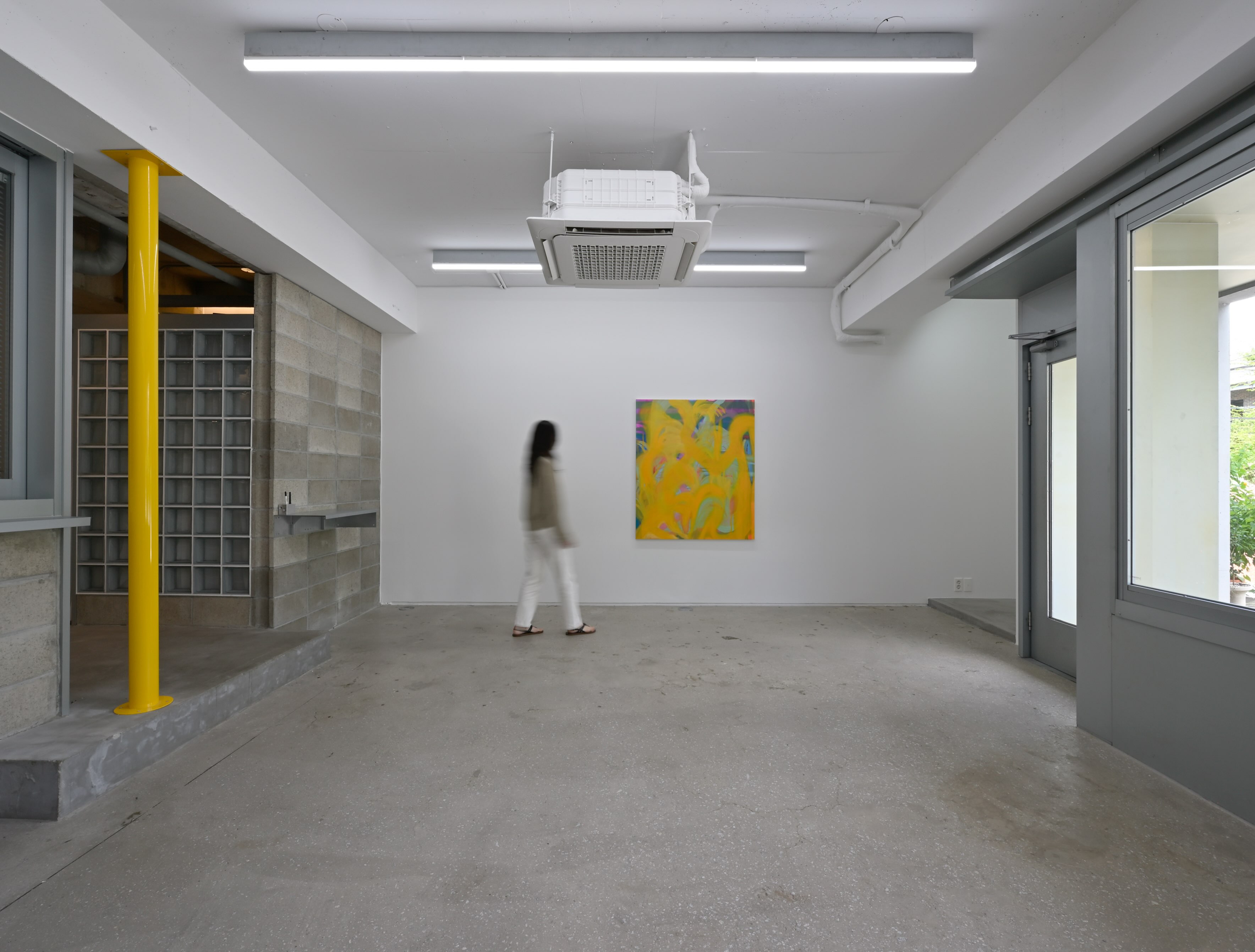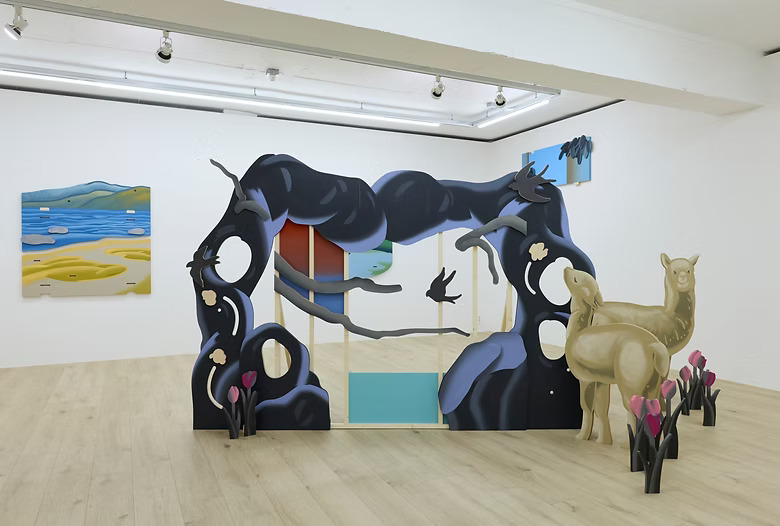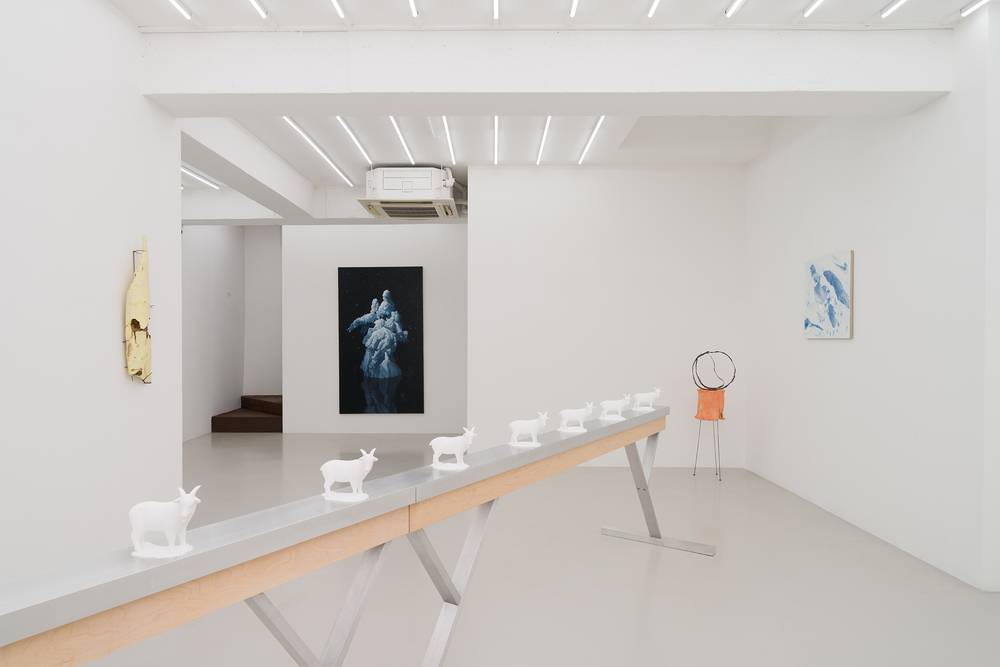

Johyun Gallery presents Kim Taek Sang’s
solo exhibition 《As It Is》 from August 26 to November 8,
2026. Spanning the gallery’s three spaces in Dalmaji and Haeundae in Busan and
in Seoul, the exhibition brings together recent works, including the new Ice
Blossom series, large-scale paintings, and video works.
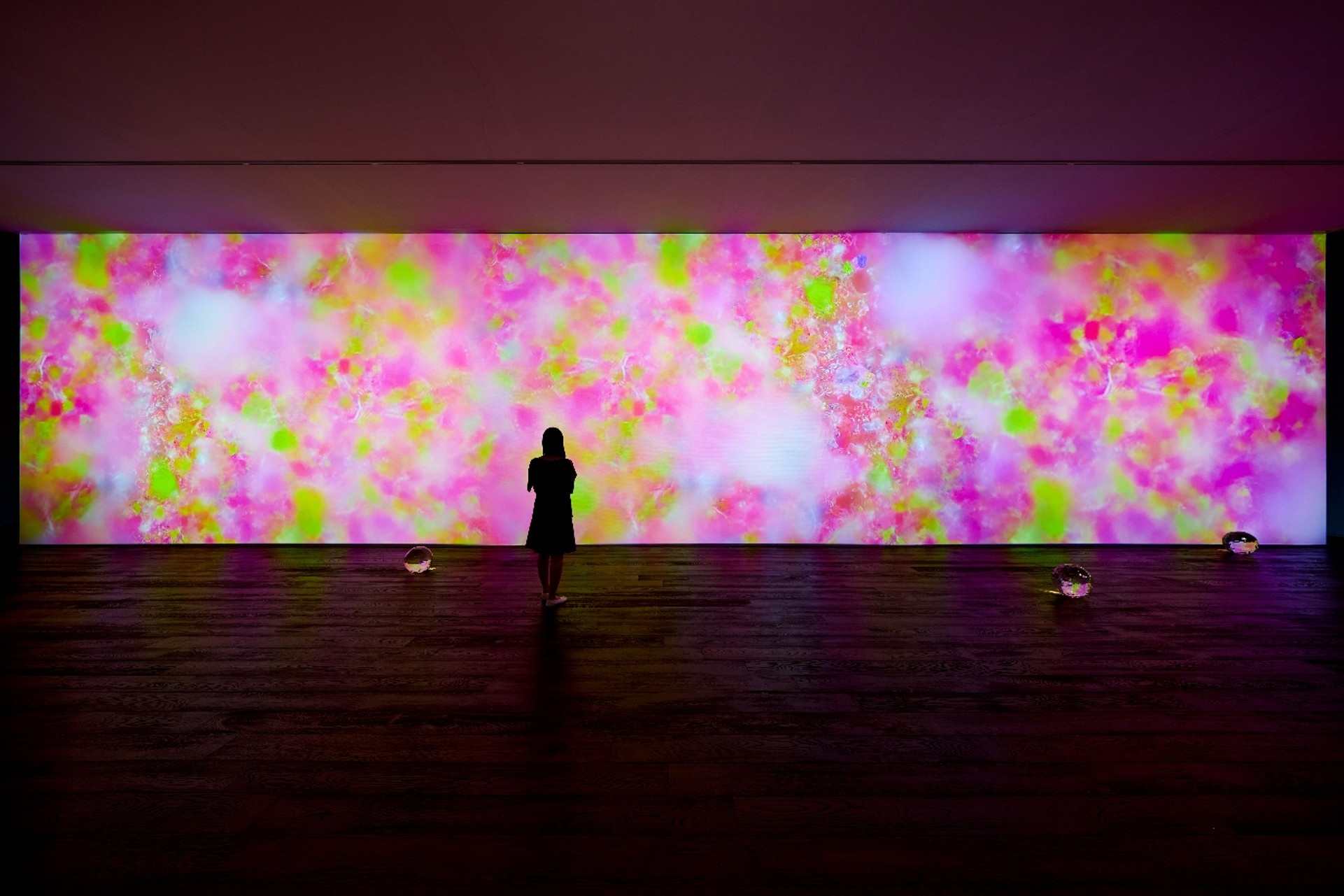
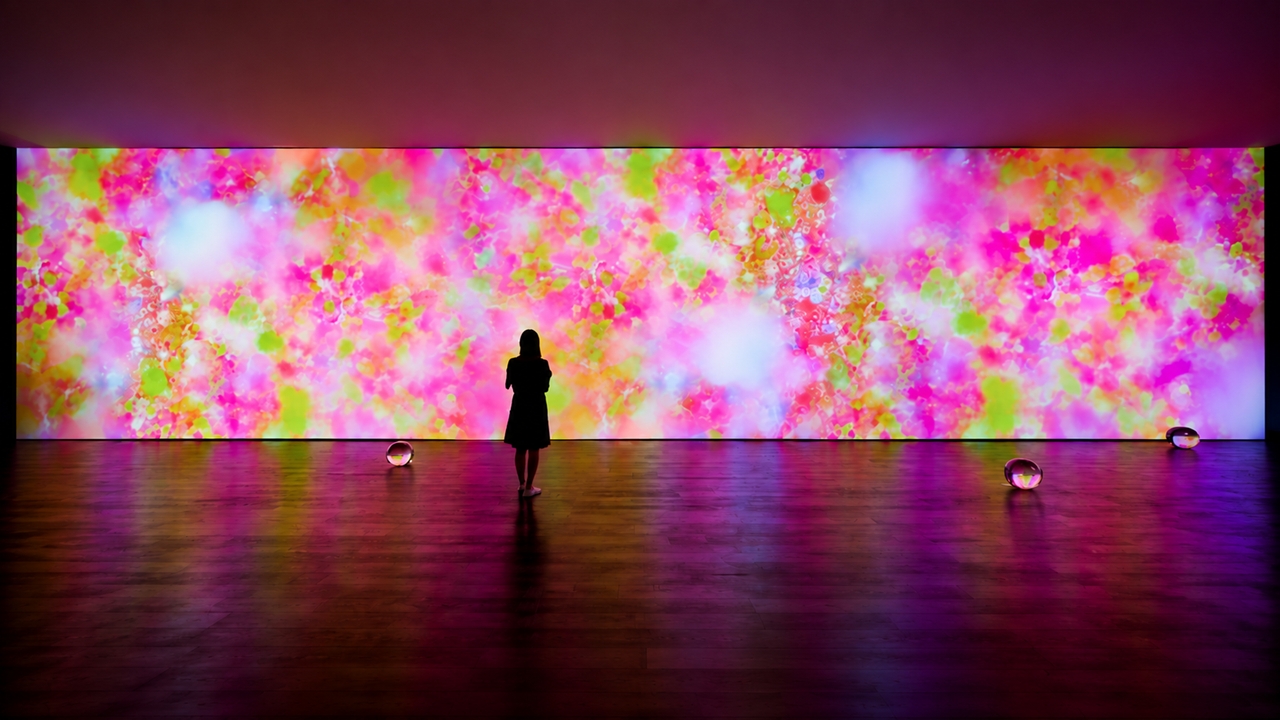
Video work in 《As It Is》 / Photo: Johyun Gallery
As It Is
The exhibition title 《As It Is》 encapsulates a central idea that runs through Kim Taek Sang’s
working process and artistic practice. Here, “as it is” refers to an approach
in which the artist acts without determining every outcome through his own
intention, allowing water and pigment to behave according to their inherent
properties.
Water and pigment produce different states
and traces in response to gravity and time, light and temperature, humidity and
seasonal change. The artist selects the materials and determines when a work
begins, when a process is repeated, and when it ends, while the material
transformations that occur during that process vary according to natural
conditions.
Human action and the inherent processes of
the natural world thus come together in the formation of a single painting.
This is the meaning of “as it is” that emerges from Kim’s work.
“As it is,” therefore, refers less to a
fixed state than to a process in which things change and develop according to
their inherent properties. This perspective connects the flow, sedimentation,
and evaporation of water in Kim’s earlier practice with the freezing and
thawing that appear in the new Ice Blossom
series, bringing his long-running painterly investigation into a continuous
trajectory.
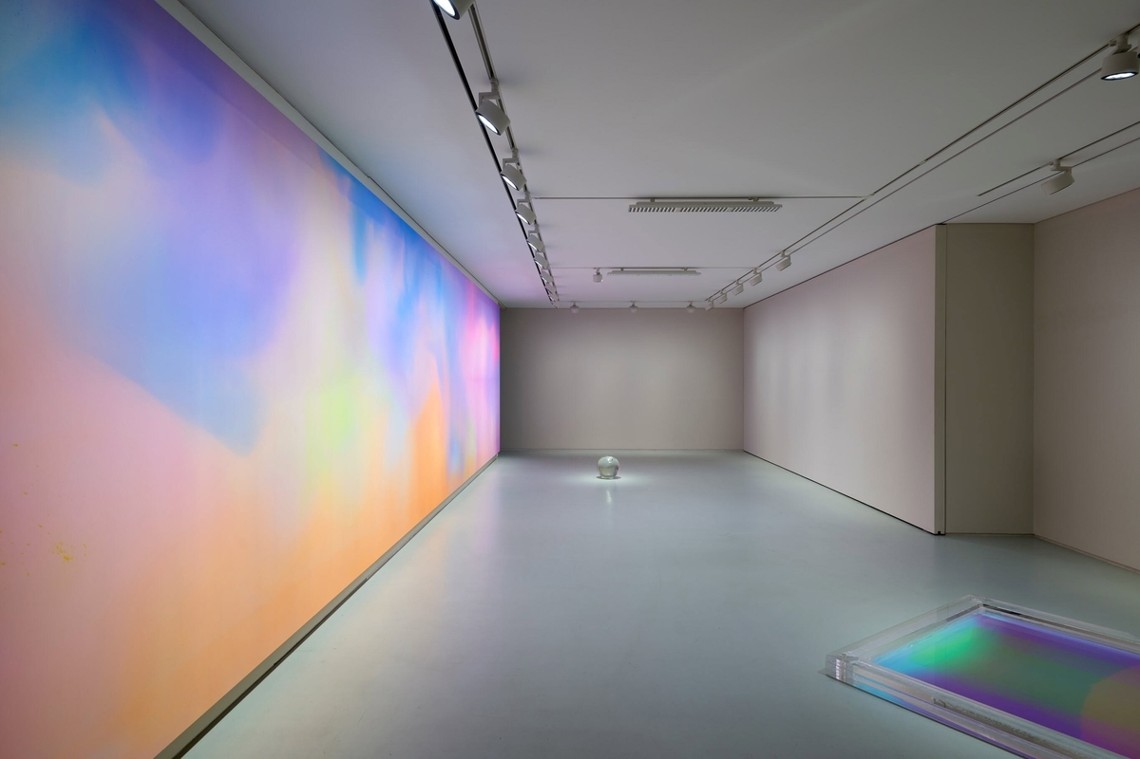
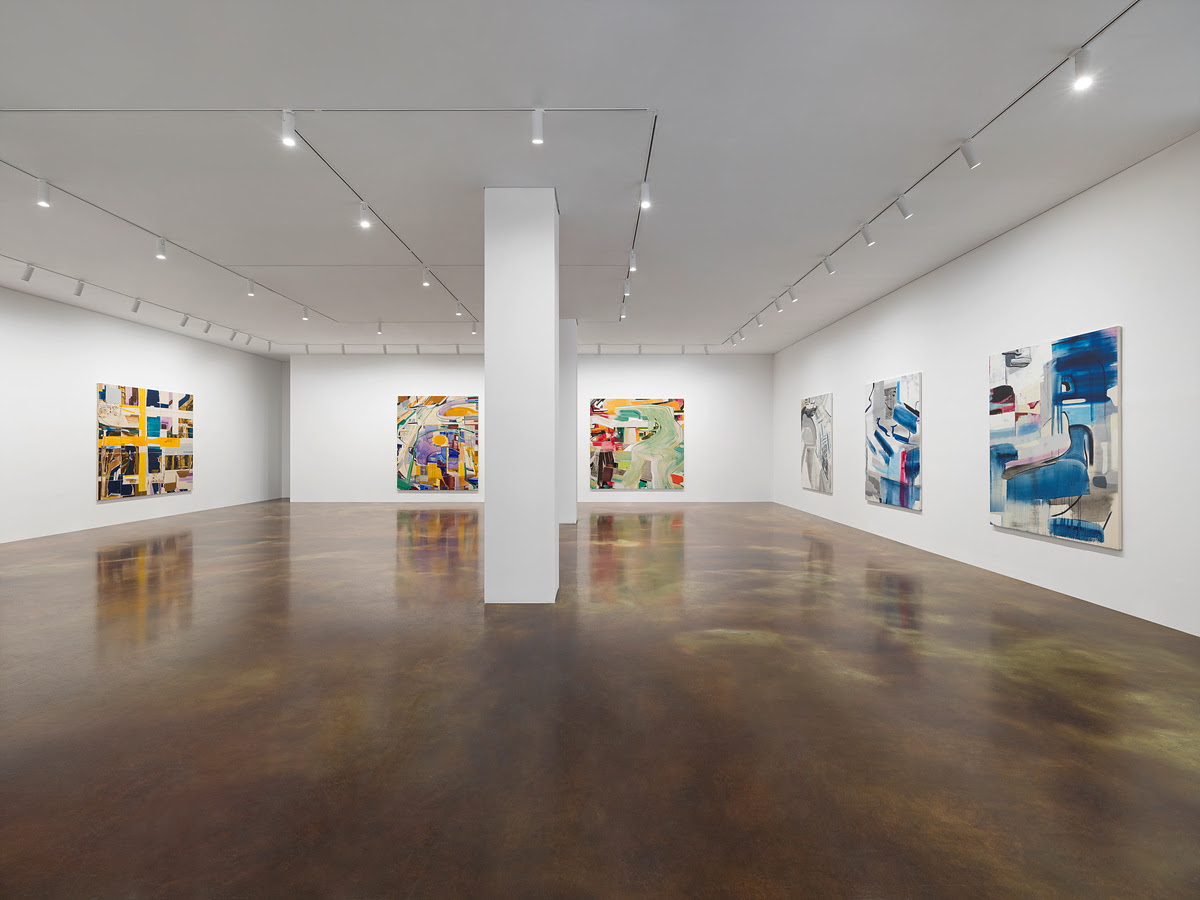
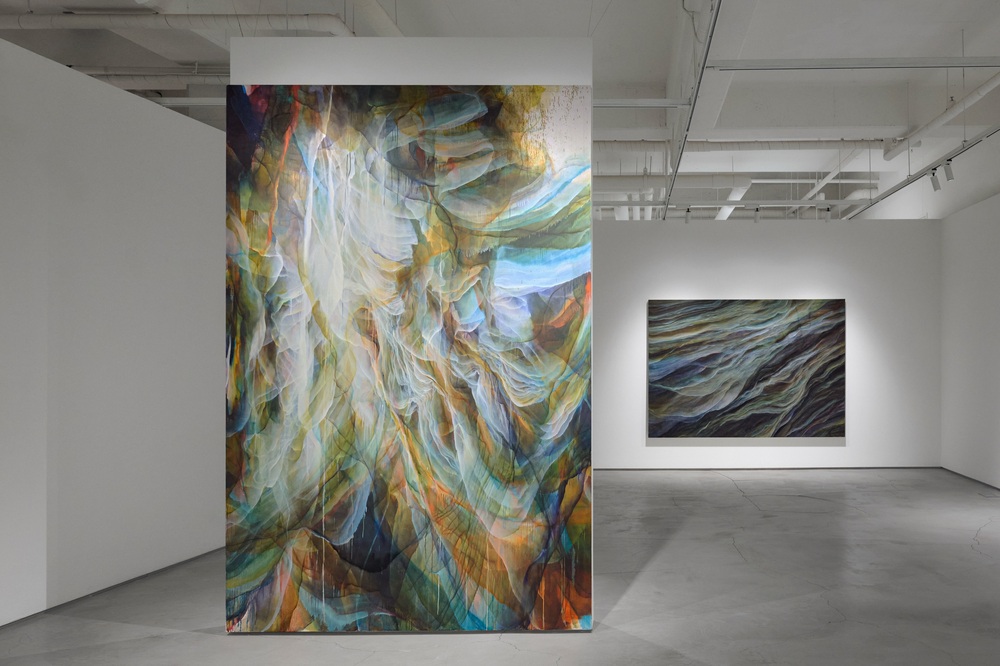
Flows As It Is 26-2, 2026, Water acrylic on canvas, 240 × 1100 cm. Installation view / Photo: Johyun Gallery
Ice Blossom
The new Ice Blossom
series begins with the transformation of water—the primary medium of Kim Taek
Sang’s practice for more than three decades—in the low temperatures of winter.
While Breathing, Flows,
and Resonance have been associated
respectively with the temporalities of spring, summer, and autumn, Ice
Blossom, unveiled for the first time in this
exhibition, introduces the conditions of winter into his practice.
Ice Blossom
extends Kim’s earlier exploration of flow and evaporation to another physical
transformation of water: freezing and thawing. As water and pigment freeze at
low temperatures and subsequently melt, crystalline traces and new surfaces
form across the canvas. Even with the same basic materials, changes in
temperature and season generate different painterly results.
This transformation is closely connected to
the meaning of 《As It Is》 Here, “as it is” encompasses
the way materials change according to their own properties under given
conditions. In Kim’s paintings, seasonal shifts alter light, temperature, and
humidity, directly affecting the flow and evaporation of water, the
sedimentation and drying of pigment, and the processes of freezing and thawing.
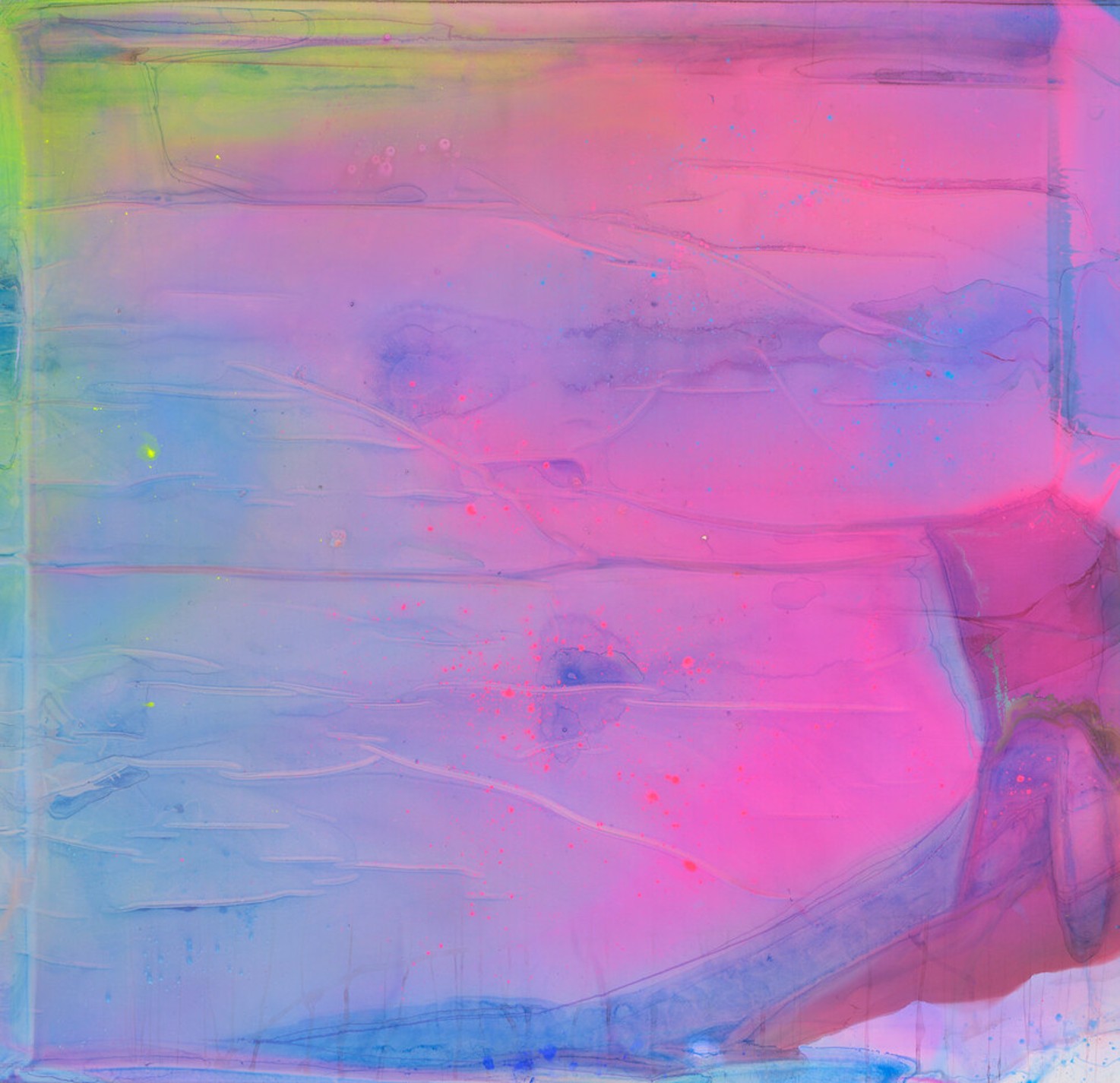
Ice blossom 26-53, 2026, Water acrylic on canvas, 223 x 214.5 cm. / Photo: Johyun Gallery
More Than Three Decades of
Painterly Investigation
For more than three decades, Kim Taek Sang
has developed a distinctive painting methodology by pouring heavily diluted
pigment onto canvas and repeatedly allowing it to settle and dry. Through this
process, changes in light and color, gravity and time, and seasonal conditions
accumulate on the surface. His sustained investigation has developed through
series such as Breathing, Flows,
and Resonance, in which the
properties of materials and changing natural conditions generate different
colors and surfaces.
In 《As
It Is》, this
long-term investigation is extended through the new Ice
Blossom series, the video work There,
and large-scale paintings. There
reveals the microscopic particles and layers of pigment that constitute the
painted surface, while the large-scale works expand the accumulated
transformations of material and color across a broader pictorial field.
《As It
Is》 brings
together the painterly methodology Kim has developed over more than thirty
years while showing how his sustained investigation of water and pigment
continues to open new possibilities through changing seasonal and environmental
conditions.
Beauty — Alumdaum
The Korean adjective areumdapda (아름답다), meaning “beautiful,” generally refers to something that is
pleasing, satisfying, or emotionally affecting to perceive. The precise
etymology of areum remains uncertain, though it is sometimes interpreted today
as suggesting “being true to oneself”—existing in accordance with one’s
inherent nature.
Kim reinterprets the idea of beauty through
his own term, “Alumdaum” (알움다움). In Kim’s usage, “alum” (알움) refers to a seed. Just as a
seed sprouts and grows according to the qualities contained within it, the term
describes a state in which each being unfolds its inherent potential in its own
way.
This idea of Alumdaum
resonates with Kim’s understanding of “as it is”: water and pigment flow and
settle according to their respective properties, while light, temperature,
humidity, and seasonal conditions continually shape their formation and
transformation within the painting.
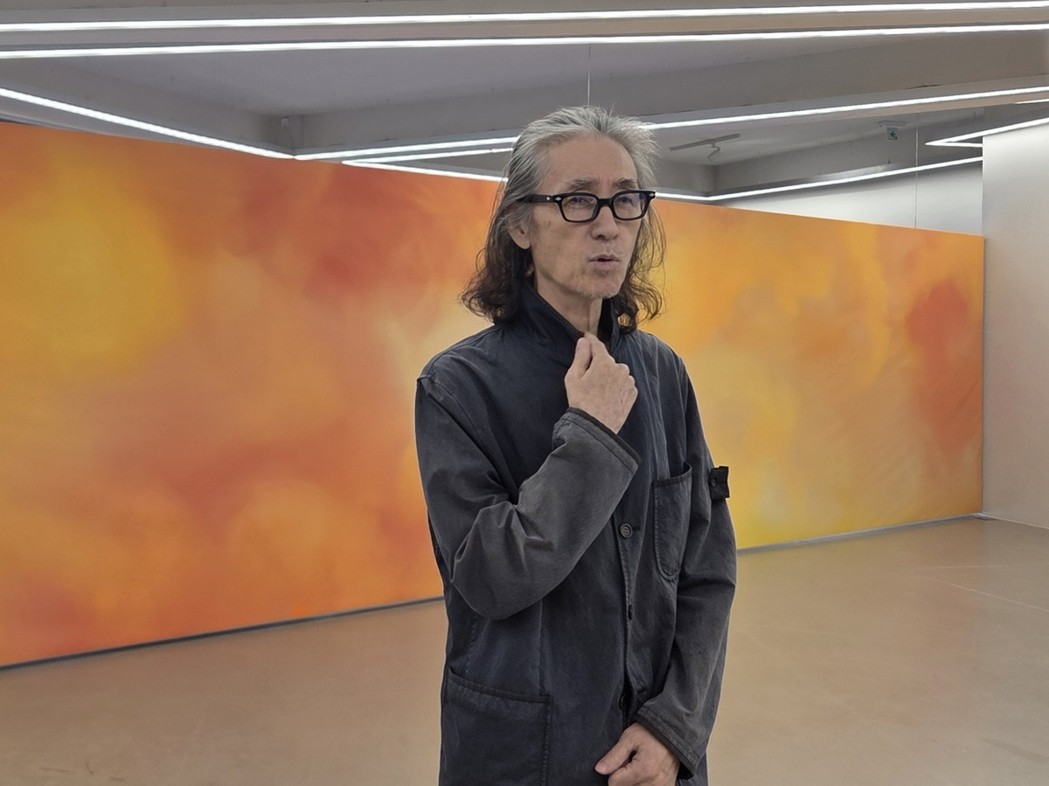
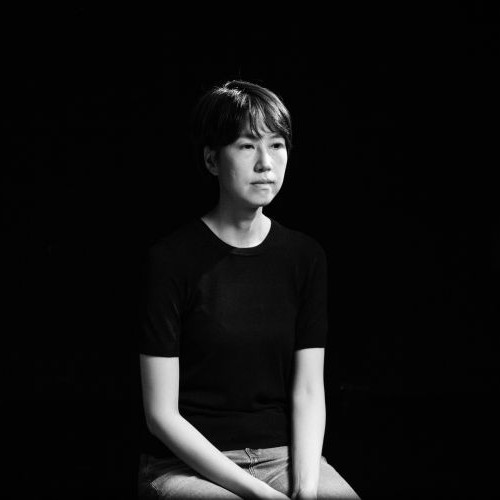
Kim Taek Sang / Photo: Yonhap News Agency
Aesthetic and Art-Historical
Position within Korean Abstract Painting
The aesthetic core of Kim Taek Sang’s
painting lies in bringing human artistic action and the workings of the world
into a single painterly process of formation. The artist’s choices and
judgments remain clearly present, while water and pigment change according to
their material properties and the natural conditions surrounding them.
This methodology extends Dansaekhwa’s
emphasis on materiality and process by exploring how human action and natural
processes can together generate pictorial form.
If 1970s Dansaekhwa established new forms
of painting through repetitive bodily action and an intensified engagement with
materiality, Kim allows gravity, sedimentation, evaporation, light,
temperature, and seasonal change to act directly upon the formation of the
painting through the medium of water and pigment. In doing so, he extends the
temporality of nature and the transformation of matter into the pictorial field
itself.
The labels “second-generation Dansaekhwa”
and “post-Dansaekhwa” provide one point of departure for locating Kim within
art history. His practice can more specifically be understood as a sustained
development of the relationships among human action, material, nature, and time
within Korean abstract painting after Dansaekhwa.
《As It Is》 brings more than three decades of this investigation into
the present, showing how Kim has developed questions of material, nature, and
time into a distinctive painterly methodology within Korean abstraction after
Dansaekhwa.
Exhibition Information
Exhibition: 《Kim
Taek Sang: As It Is》
Dates: August 26 – November 8, 2026
Venues: Johyun Gallery Dalmaji · Haeundae ·
Seoul
Featured works: New Ice
Blossom series, large-scale paintings, and video works
Organized by: Johyun Gallery
Website: Johyun Gallery