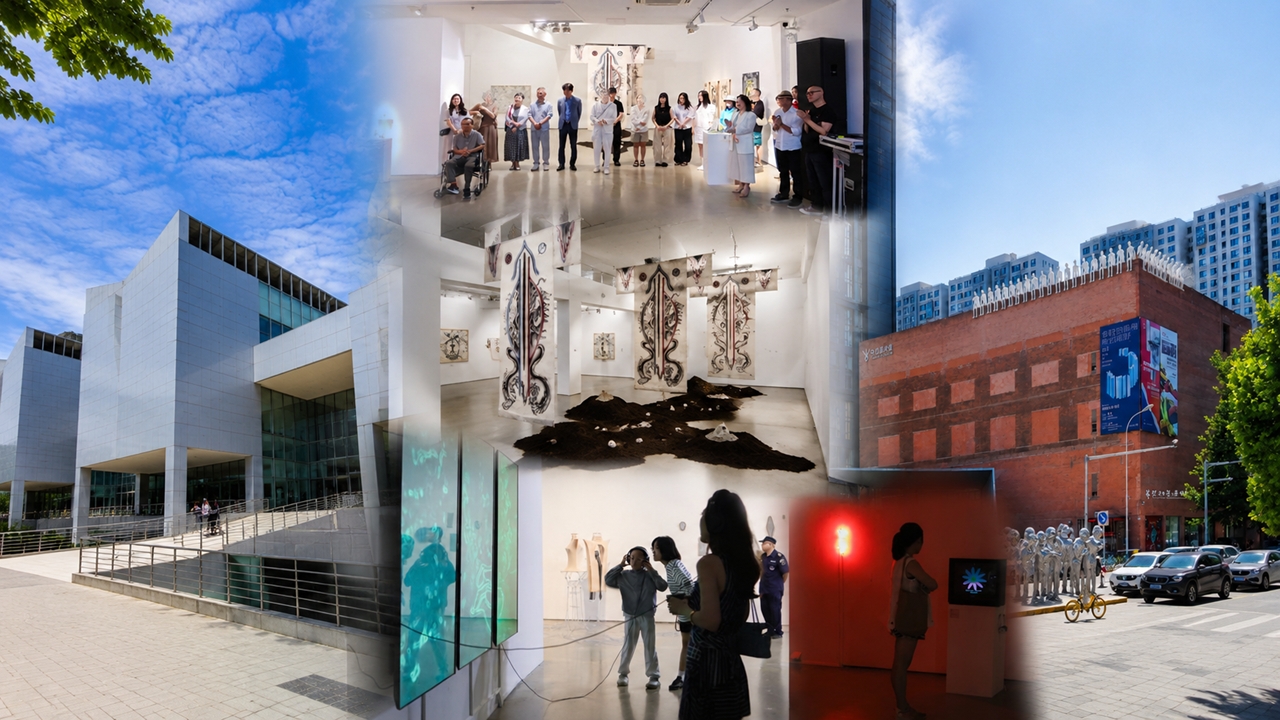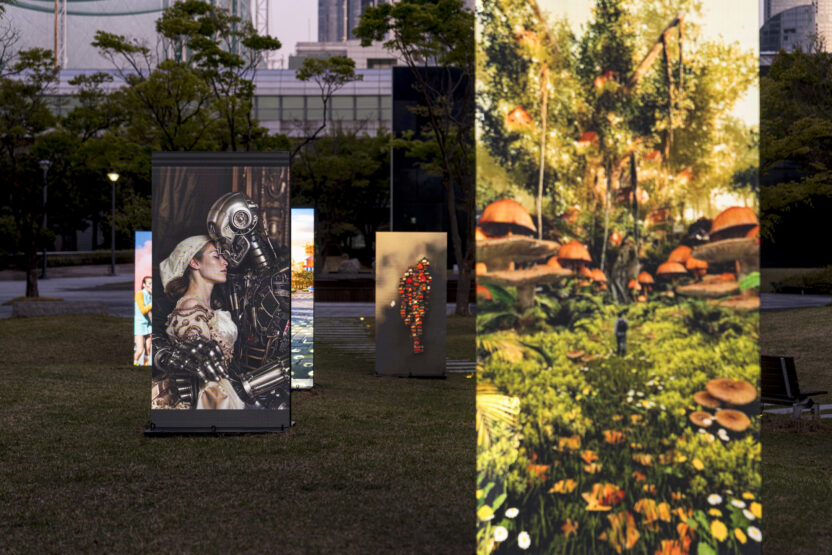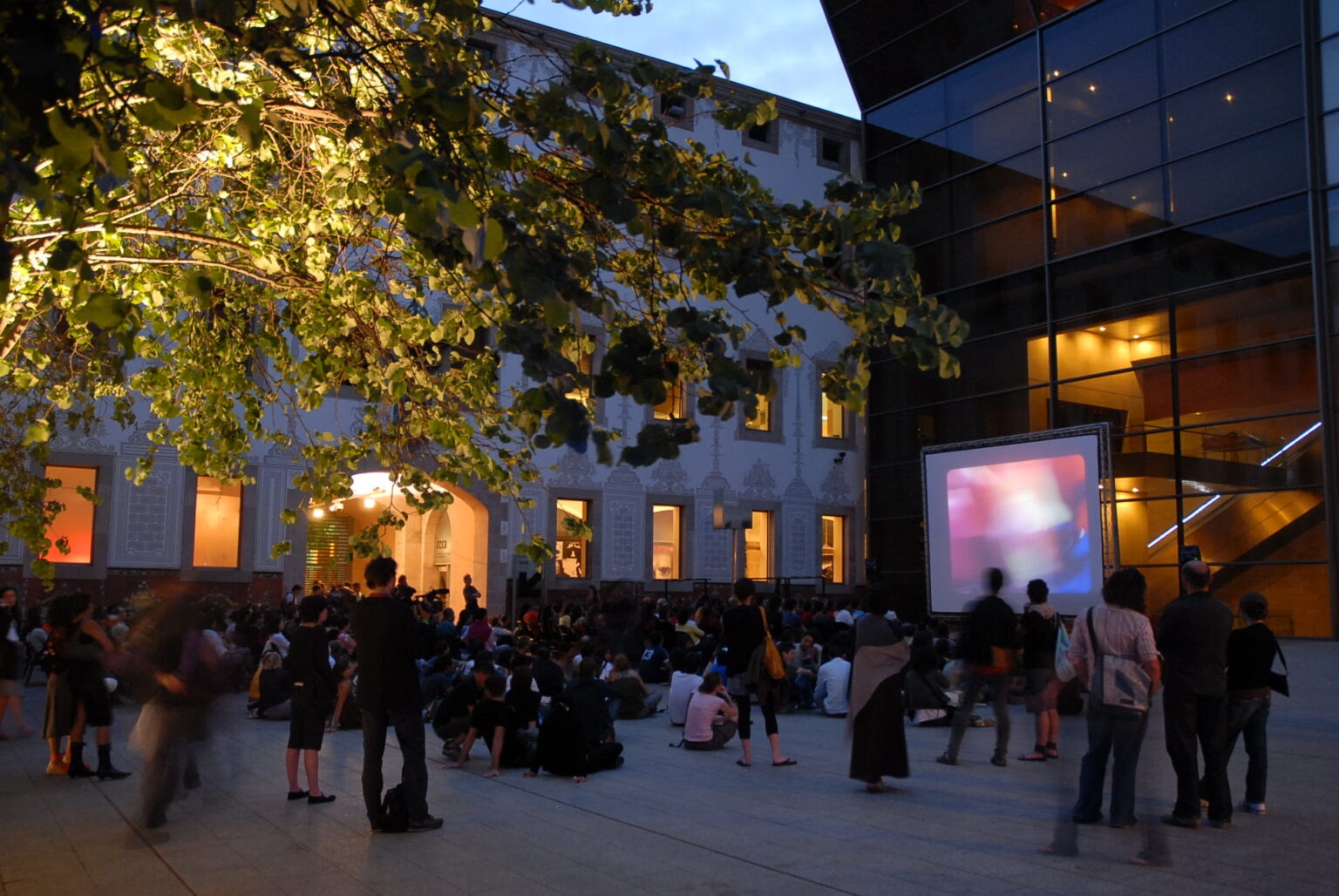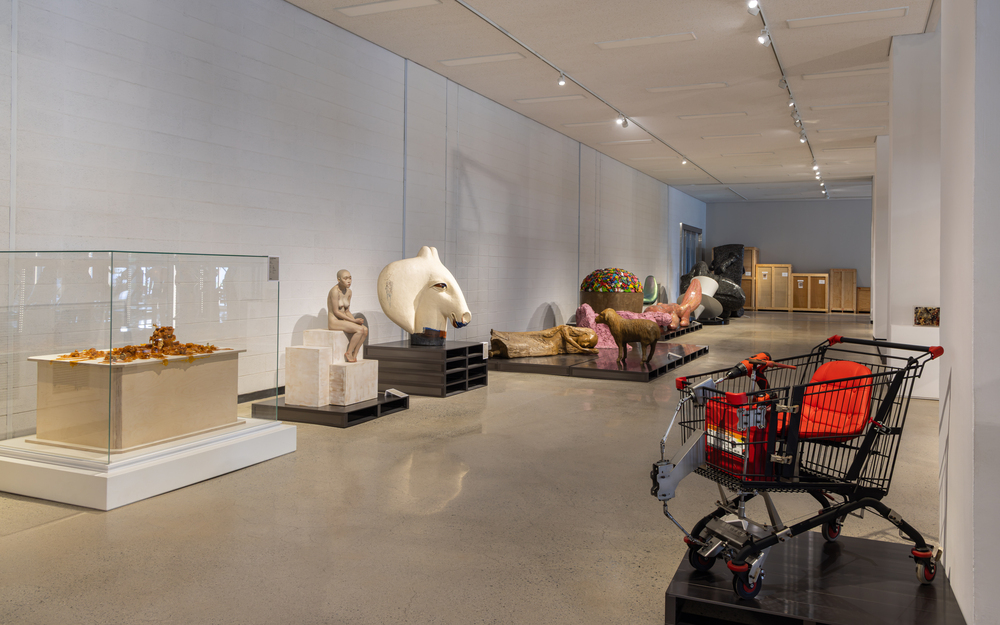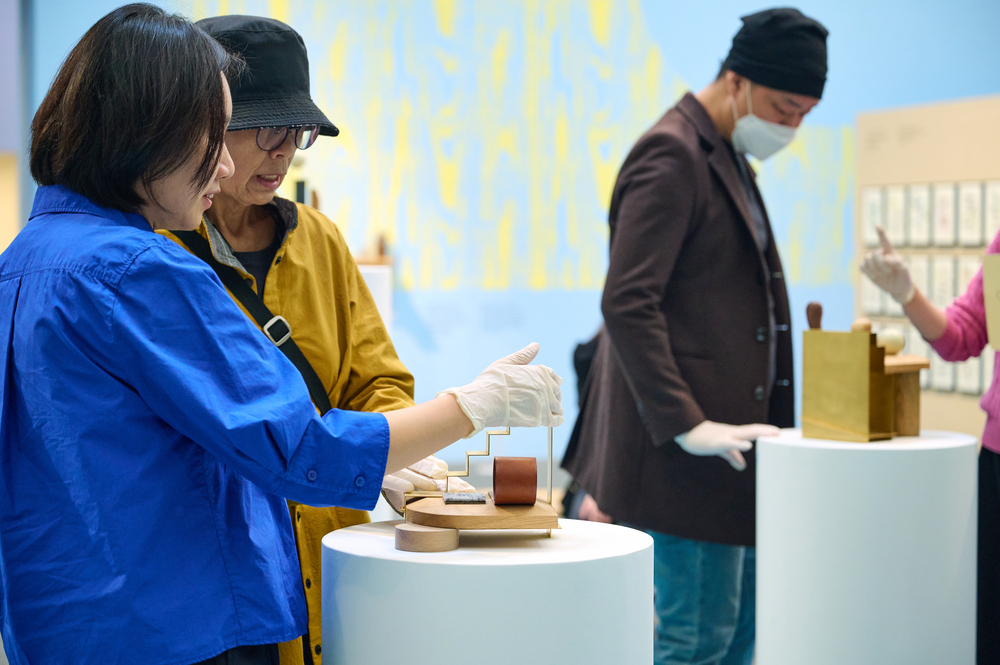
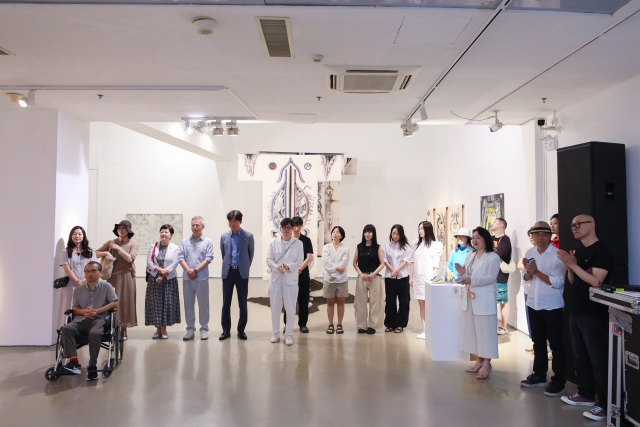
Opening of 《Vision and Perspective》 at Today Art Museum, Beijing, August 23, 2026. Participating artists and representatives from the two institutions. / Photo: Courtesy of Busan Museum of Art
Busan Museum of Art’s 《Vision and Perspective》 is on view at
Today Art Museum in Beijing, China, from August 23 through October 7, 2026.
The exhibition marks the first overseas
museum presentation of 《Vision and Perspective》, Busan Museum of Art’s long-running program for discovering and
supporting artists based in the region, established in 1999. The program has
now expanded beyond domestic exhibitions to include international
exhibition-making and institutional exchange.
The exhibition brings together eight
artists who were born in Busan or are currently based in the city: Lee Kyung
Kang, Mirae Kim, Jaewon Kim, Taesung Kim, Jihye Park, Hyunsung Park, Jangwoo
Yoo, and Hana Yoo. Working across painting, installation, and video, they
explore contemporary relationships between image and material, body and
environment.
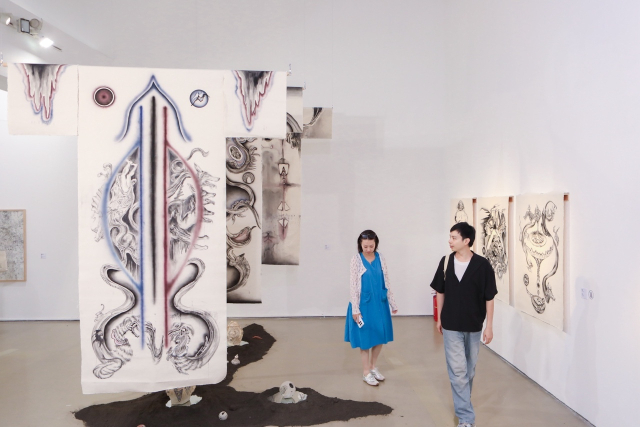
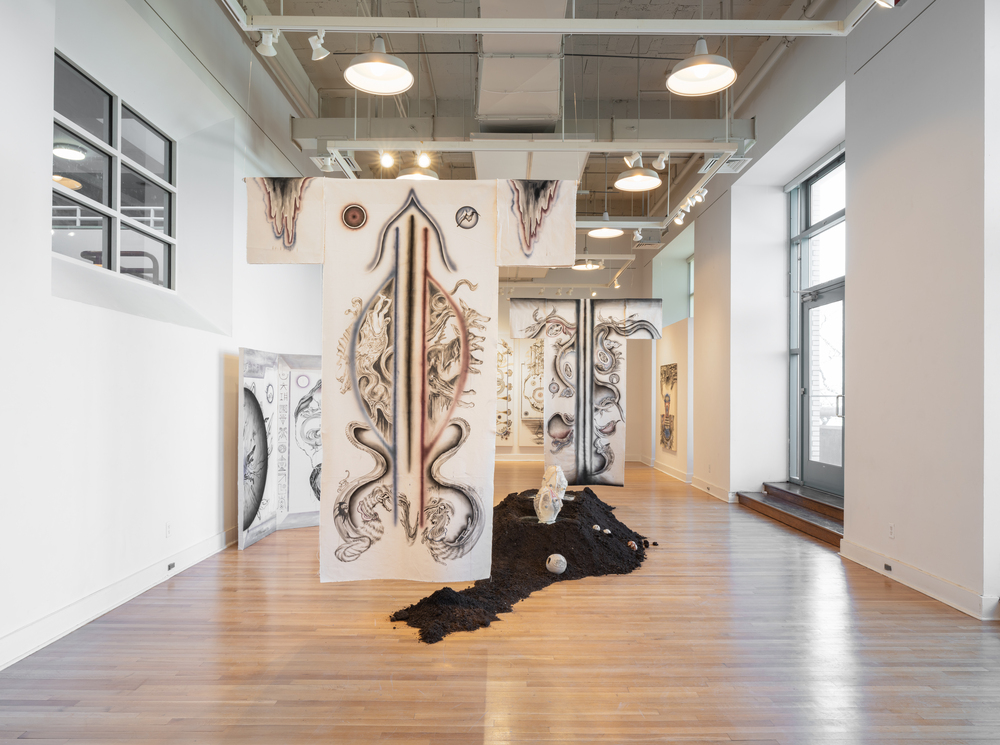
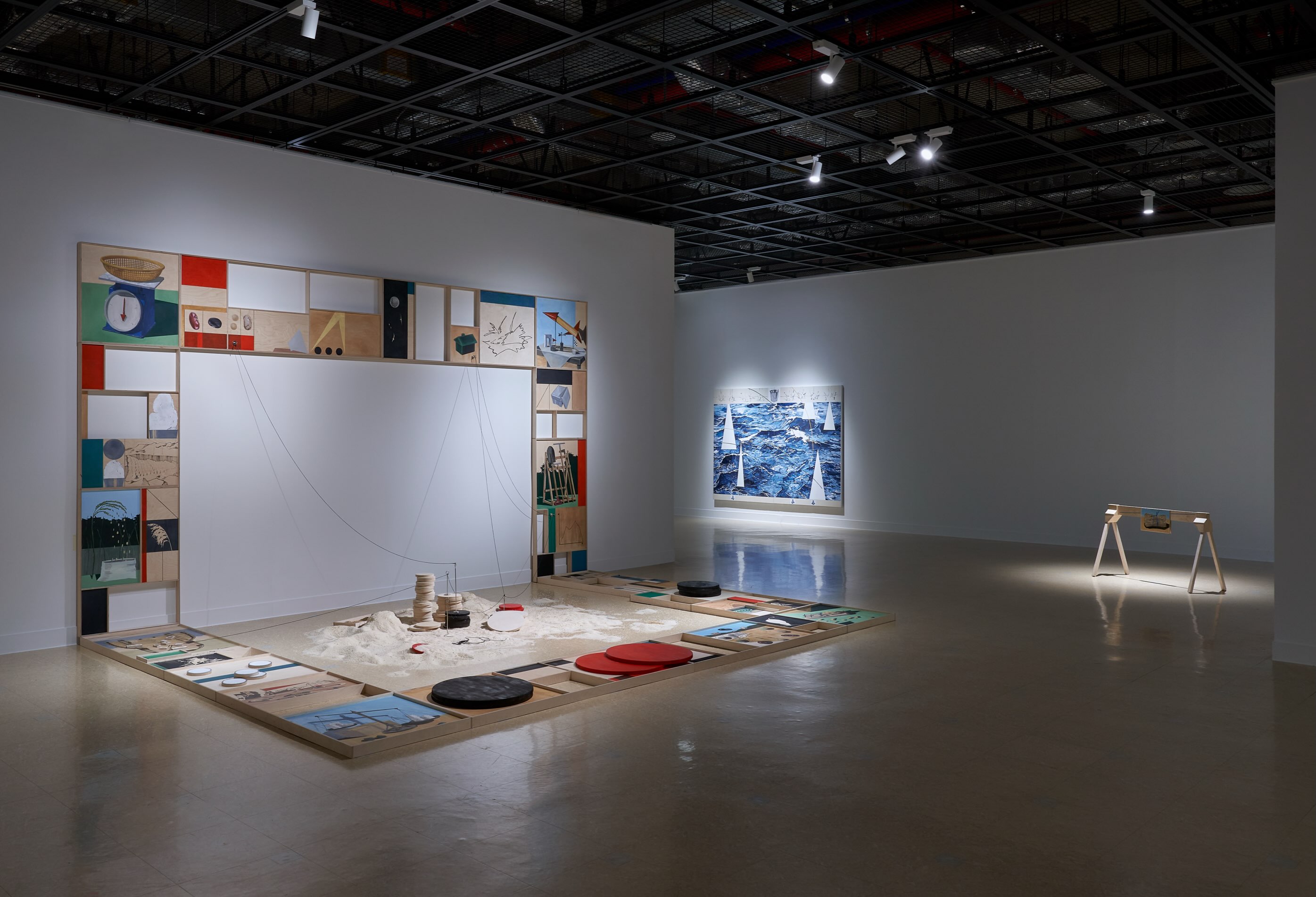
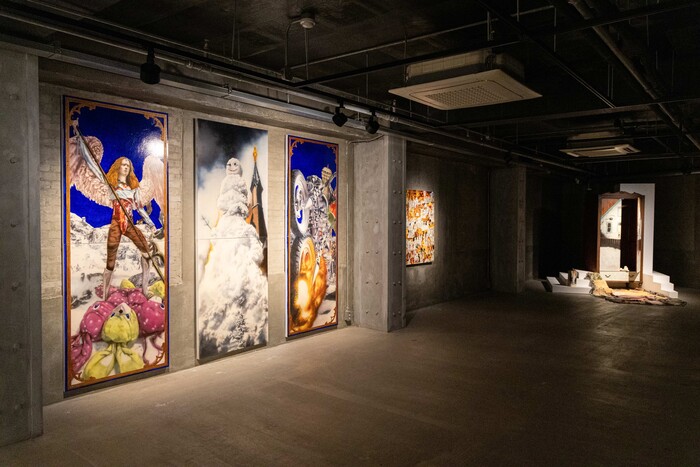
Installation view of works by Lee Kyung Kang in 《Vision and Perspective》, Today Art Museum, Beijing, 2026. / Photo: Courtesy of Busan Museum of Art
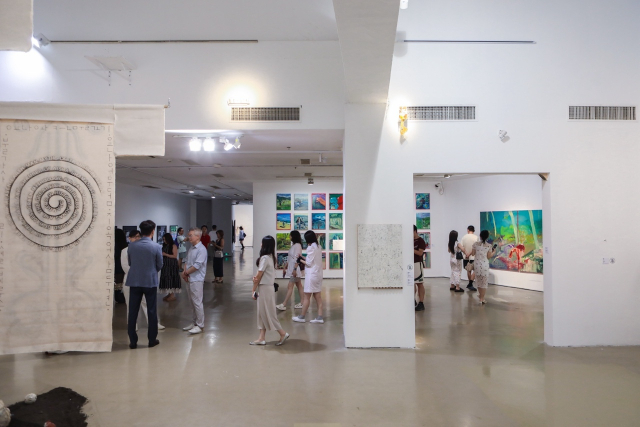
Installation view of 《Vision and Perspective》 at Today Art Museum, Beijing, 2026. / Photo: Courtesy of Busan Museum of Art
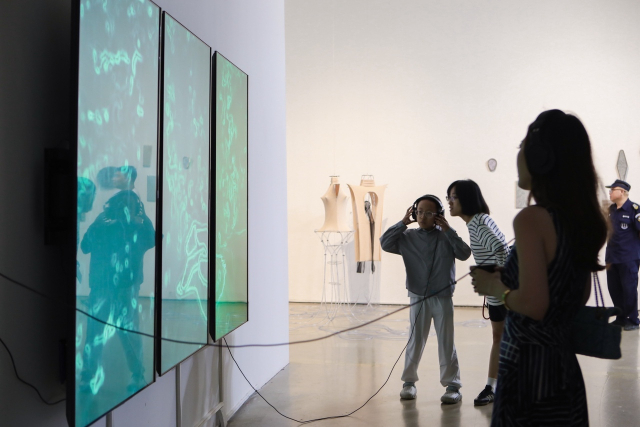
Installation view of 《Vision and Perspective》 at Today Art Museum, Beijing, 2026. / Photo: Courtesy of Busan Museum of Art
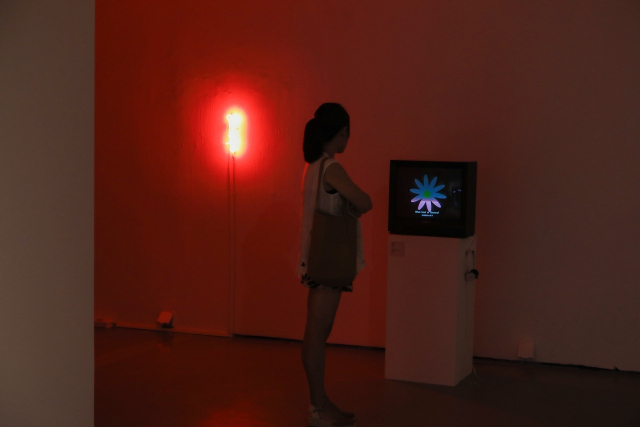
Installation view of 《Vision and Perspective》 at Today Art Museum, Beijing, 2026. / Photo: Courtesy of Busan Museum of Art
The International Expansion of
a Long-Running Artist Development Program
Launched in 1999, one year after Busan
Museum of Art opened, 《Vision and Perspective》 was established to discover emerging artists working in the region
and support their artistic development. By 2025, the program had presented 76
artists across 17 exhibitions, becoming one of the museum’s longest-running
artist-support initiatives.
Programs and open calls for emerging
artists are operated by many institutions, but the sustained commitment of a
regional public museum to identifying and supporting successive generations of
artists for more than two decades carries particular significance within Korea’s
art ecosystem, where major institutions, galleries, critical discourse, and the
market remain heavily concentrated in the Seoul metropolitan area.
What the program has accumulated over this
period extends beyond a record of exhibitions and participating artists. By
identifying new practices at different moments and bringing them into the
public sphere through museum exhibitions and documentation, 《Vision and Perspective》 has come to
function as an institutional archive tracing the changing landscape
of contemporary art in Busan and the emergence of new generations of artists.
In 2024, the program introduced changes to
both its selection process and support structure. The museum replaced its
previous internal recommendation system with an open call, selecting eight
artists from 158 applicants. Support was also expanded beyond a single
exhibition into a longer-term framework encompassing exhibitions in Korea and
abroad, critical engagement, and international networking.
The eight selected artists presented an
exhibition at Sungkok Art Museum in Seoul in 2025, followed by the current
exhibition at Today Art Museum in Beijing. In this way, the program has
expanded beyond the initial discovery and presentation of artists to connect
their subsequent practices with broader art scenes in Korea and
internationally.
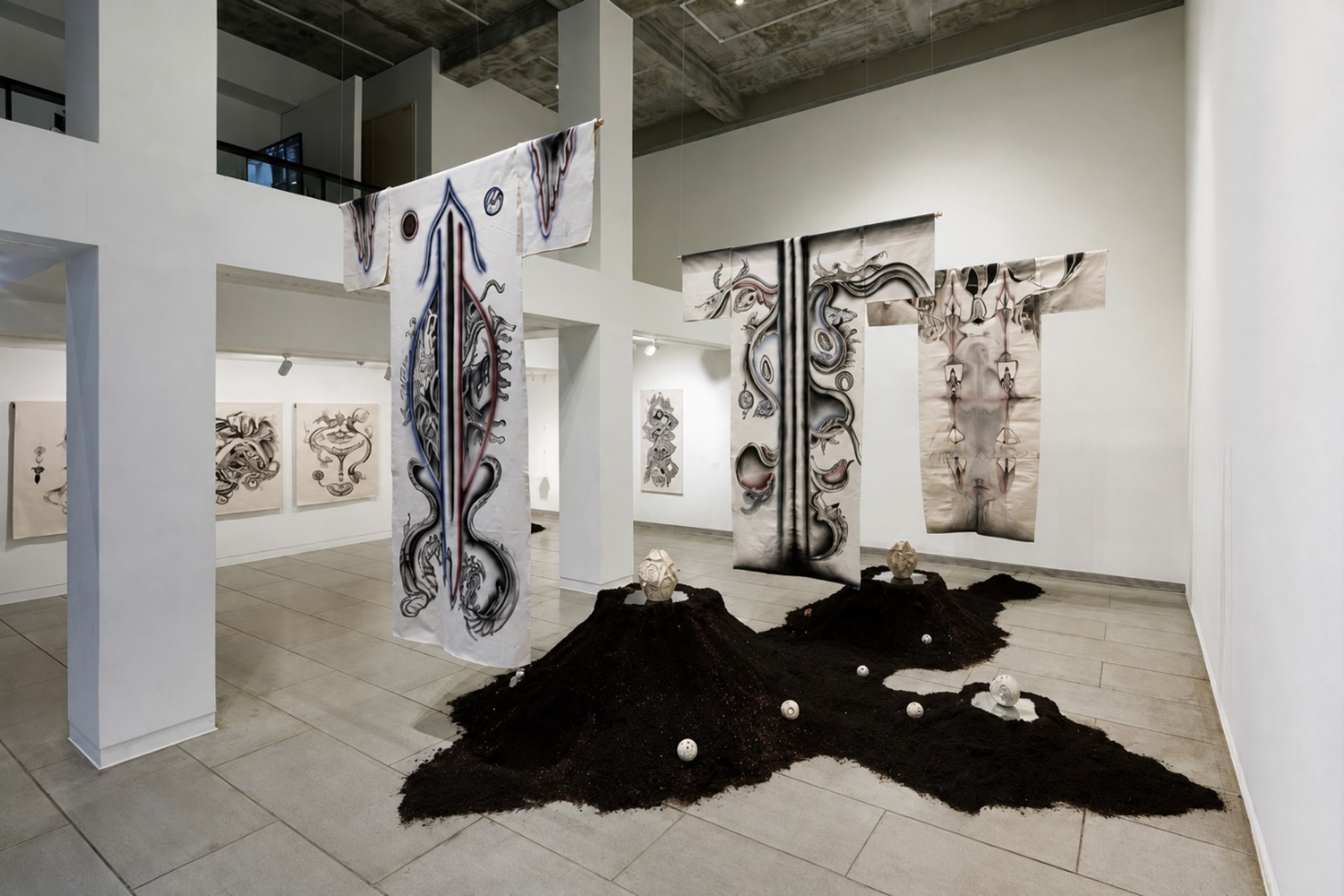
Installation view of works by Lee Kyung Kang at Sungkok Art Museum, Seoul, 2025. / Photo: Courtesy of Busan Museum of Art
Busan and Beijing: Different
Experiences of “Compressed Modernity”
Busan and Beijing share certain historical
conditions, having undergone rapid industrialization, urbanization,
technological development, and social transformation since the latter half of
the twentieth century.
At the same time, the two cities have
distinct historical experiences and political and social structures. Similar
technologies or cultural phenomena have acquired different meanings and
generated different memories within each city. The exhibition takes these
parallels and differences as a point of departure, considering how artistic
practices formed in Busan might be read differently when situated in Beijing,
another major East Asian city.
Today Art Museum has also emphasized this
temporal distinction in its framing of the exhibition: a technology may arrive
in two cities at roughly the same time yet occupy entirely different historical
moments. An artwork can cross a national border within hours, while the social
and historical contexts through which it is interpreted cannot move at the same
speed. What appears to be a shared present can therefore contain
distinctly different temporalities.
These ideas become more tangible through
the practices of the participating artists.
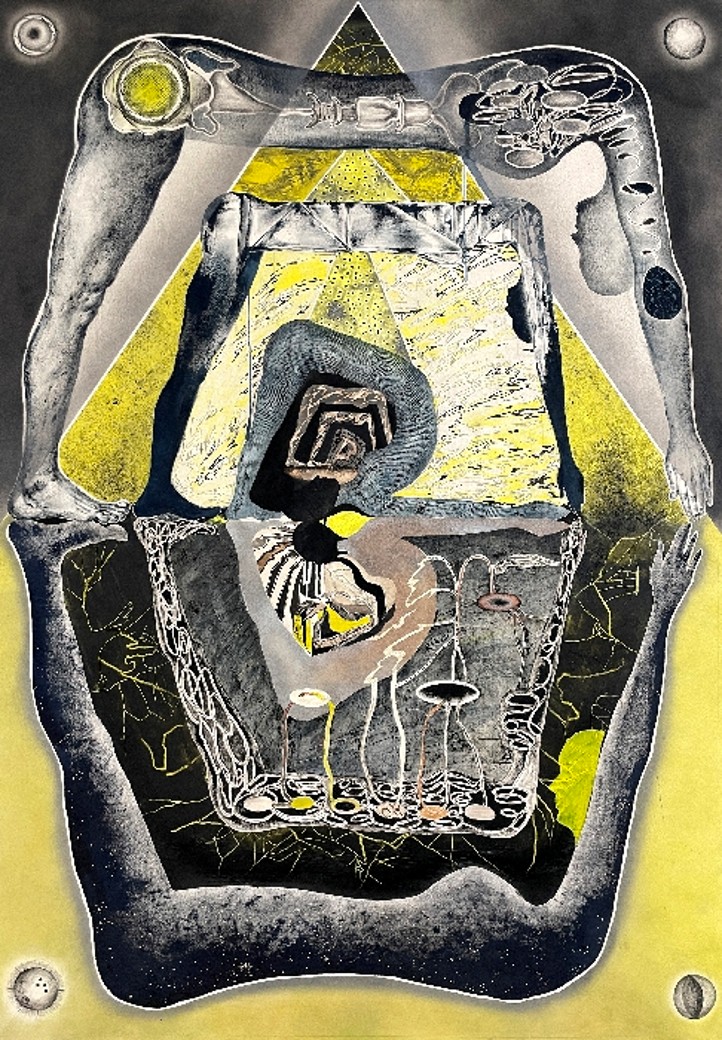
Lee Kyung Kang, Somewhere, There Is a House Inside Me That I Have Never Entered, 2026. / Image: Courtesy of the artist and Busan Museum of Art
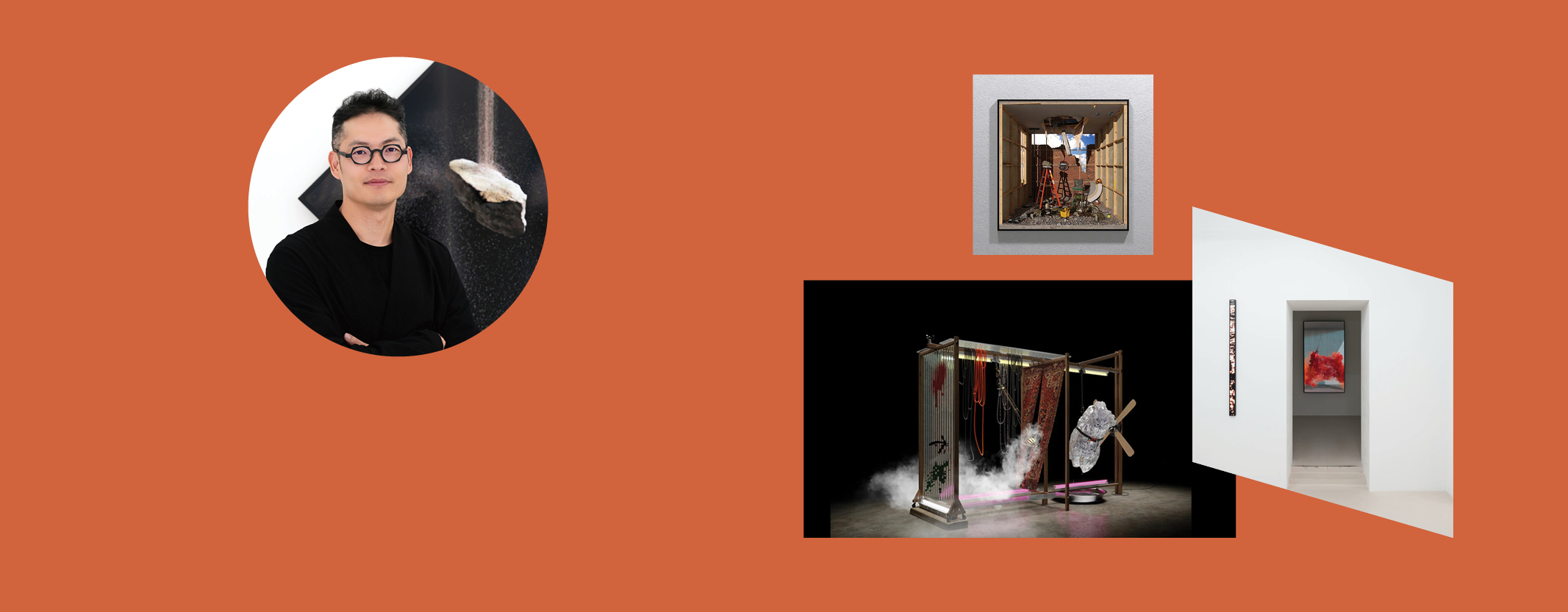
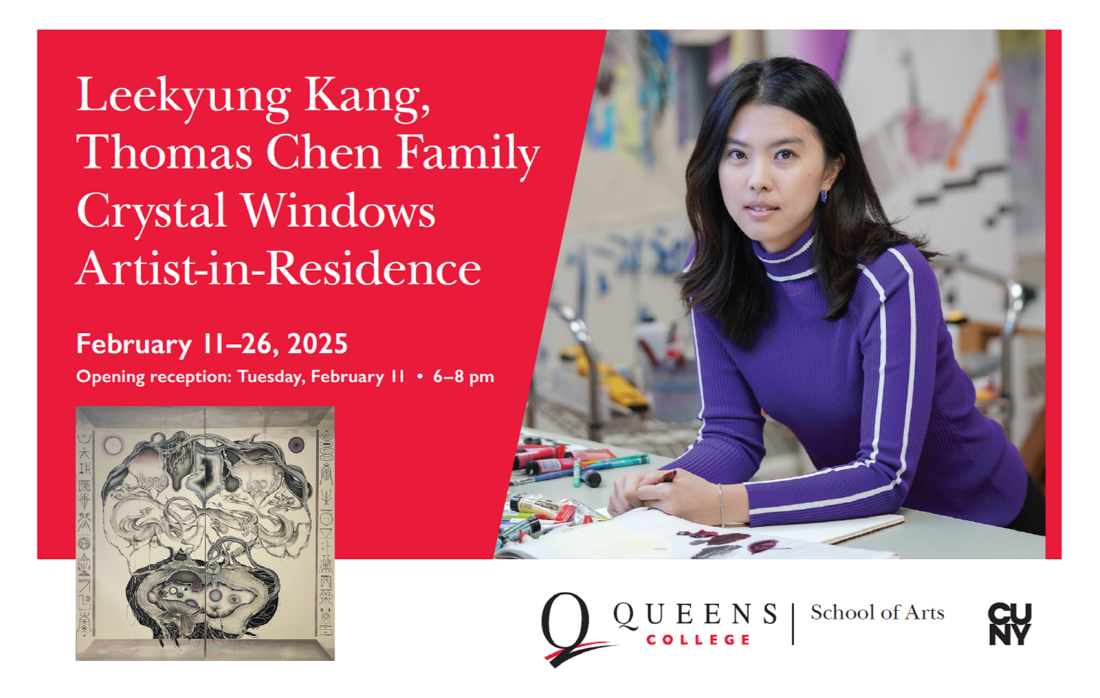
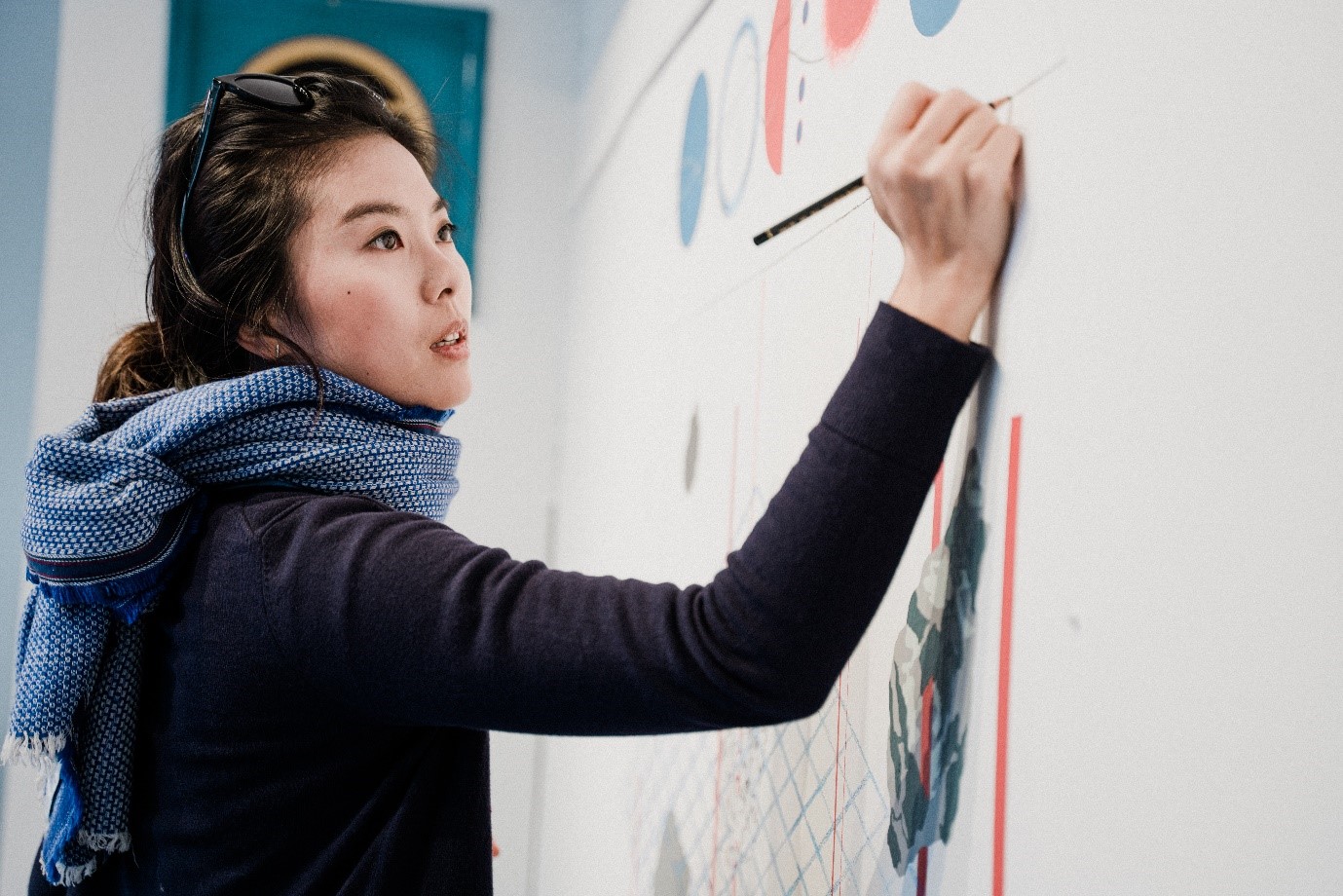
Lee Kyung Kang’s Guardian Deity of the Underground (2025)
is among the largest works presented in the Beijing exhibition. Working across
painting, print-based experimentation, and installation, Kang explores spatial
structures that remain hidden or are not immediately visible. Guardian
Deity of the Underground incorporates the surrounding space into
the work, encouraging viewers to reconsider the architecture and spatial
conditions of the exhibition itself.
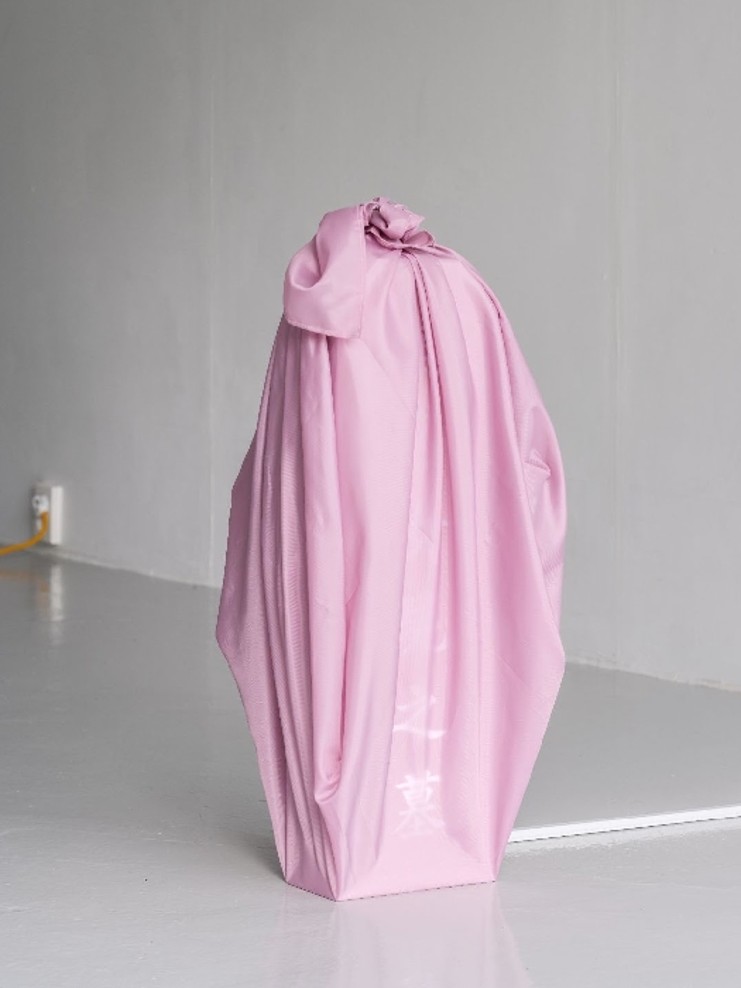
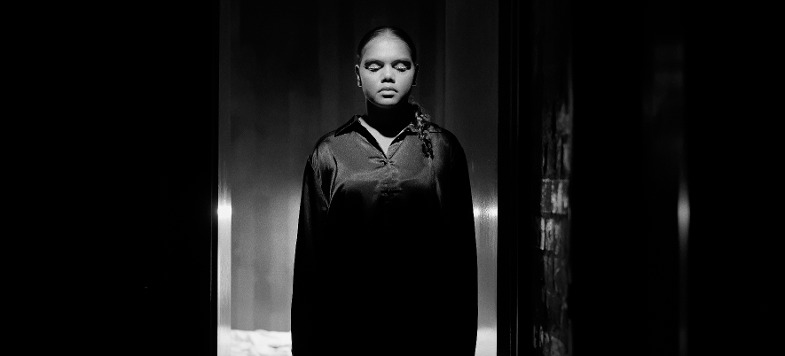
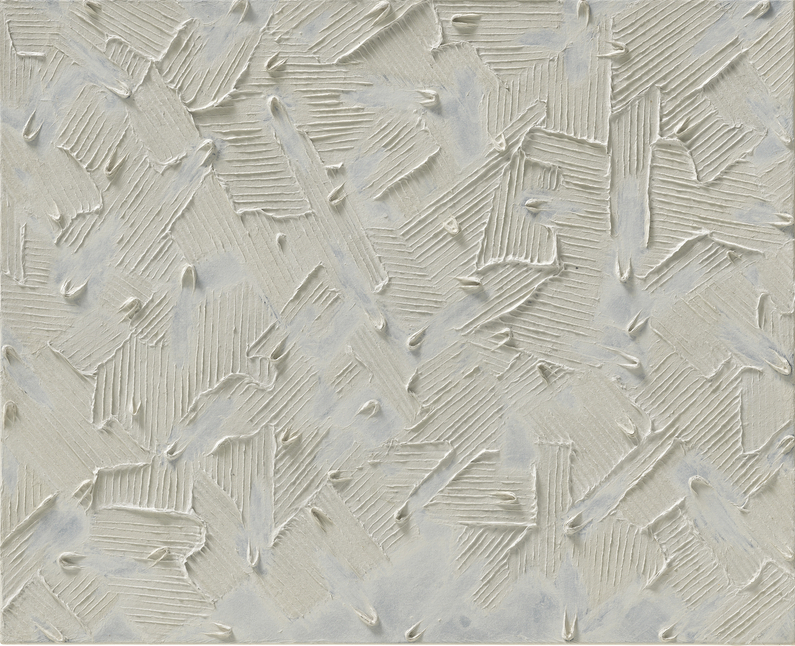
Jihye Park, Old Friend, 2024. / Image: Courtesy of the artist and Busan Museum of Art
Jihye Park explores relationships among language, signs, emotion, and memory.
The Beijing exhibition includes a work evocative of writing with water on
stone. As the water evaporates, the writing disappears, while the experience
and memory of the act remain in another form. Through linguistic traces that
appear and vanish, Park examines how cultural signs shape individual perception
and memory.
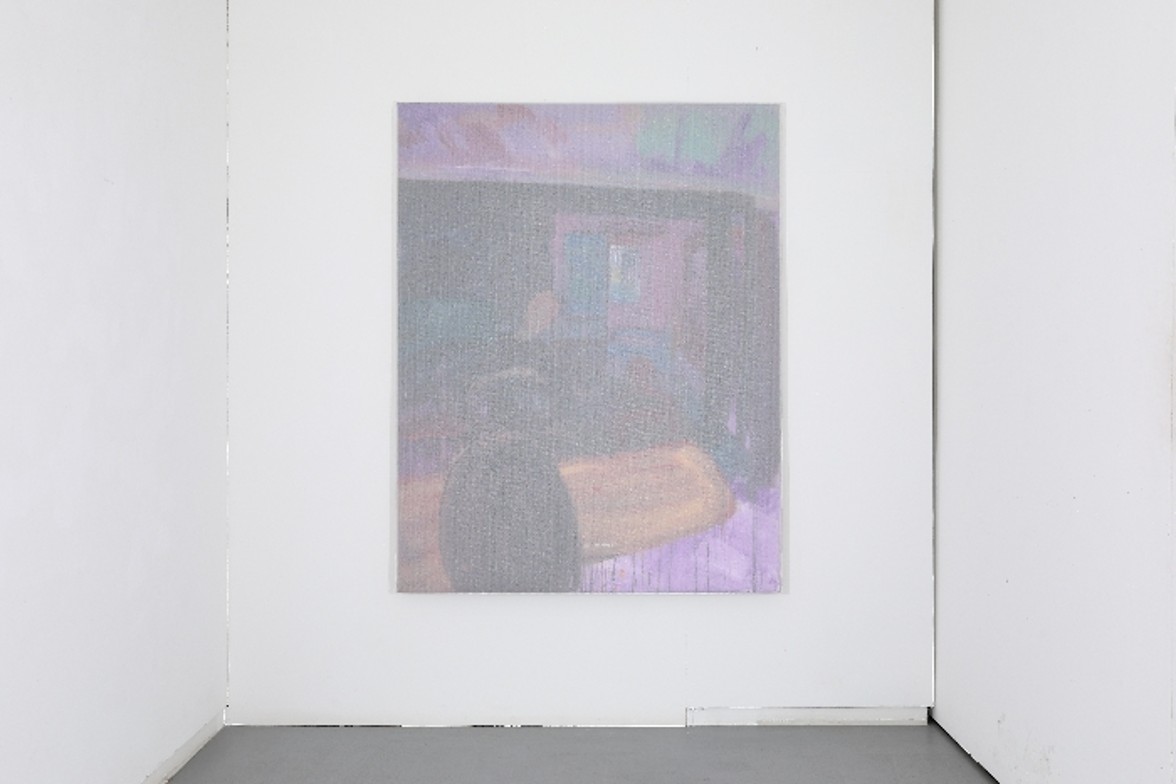
Taesung Kim, Facing Contemporary Images, 2023. / Image: Courtesy of the artist and Busan Museum of Art
Taesung Kim extends painting beyond the image on a flat surface to address the
material conditions through which a painting is produced, transported, and
displayed. In Beijing, multiple paintings are stacked together, while their
frames are accentuated with vivid colors, directing attention away from the
painted surface toward the physical structure surrounding it. His work draws
attention to the frames, packaging, production, and transportation that
condition how paintings exist and circulate.
Although the eight artists employ different
subjects and formal strategies, their practices intersect through an engagement
with image and material, space and body, memory and environment as conditions
of rapidly changing contemporary life. Repeated moving images, installations
that engage architectural structures and ruptures, and experiments that
reconsider the materiality of painting evoke, in different ways, the traces of
the “compressed modernity” experienced by both Busan and Beijing through rapid
industrialization and urbanization.
The physical movement of artworks creates
new conditions for interpretation. Works produced and previously understood in
Busan encounter different audiences and historical and cultural contexts in
Beijing, allowing new relationships and meanings to emerge.
In this sense, the exhibition provides an
opportunity to reconsider practices formed in Busan through another East Asian
city’s distinct temporality and perspective.
The Internationalization of a
Regional Museum
Busan Museum of Art intends to develop the
Beijing exhibition beyond a one-off overseas presentation and toward sustained
international collaboration.
This direction reflects the recent
restructuring of 《Vision and Perspective》. Rather than selecting artists for a single exhibition, the program
seeks to create opportunities for them to engage with museums, curators,
critics, and other art professionals in Korea and abroad, extending
institutional support beyond their initial selection.
The Beijing exhibition represents the first
international extension of nearly 27 years of accumulated experience in
discovering, presenting, and documenting artists from the region.
This approach is particularly relevant
within an art ecosystem in which major institutions, galleries, and
international networks remain concentrated in Seoul. By connecting artistic
practices developed in Busan directly with institutions and audiences in other
cities, a regional museum can extend its role from discovering and presenting
artists to creating the conditions for their longer-term development and
international exchange.
If these connections continue to generate
new critical evaluations, institutional relationships, and opportunities for
participating artists, 《Vision and Perspective》 could develop into a long-term model through which a
regional museum connects artist discovery and development with sustained
international exchange.
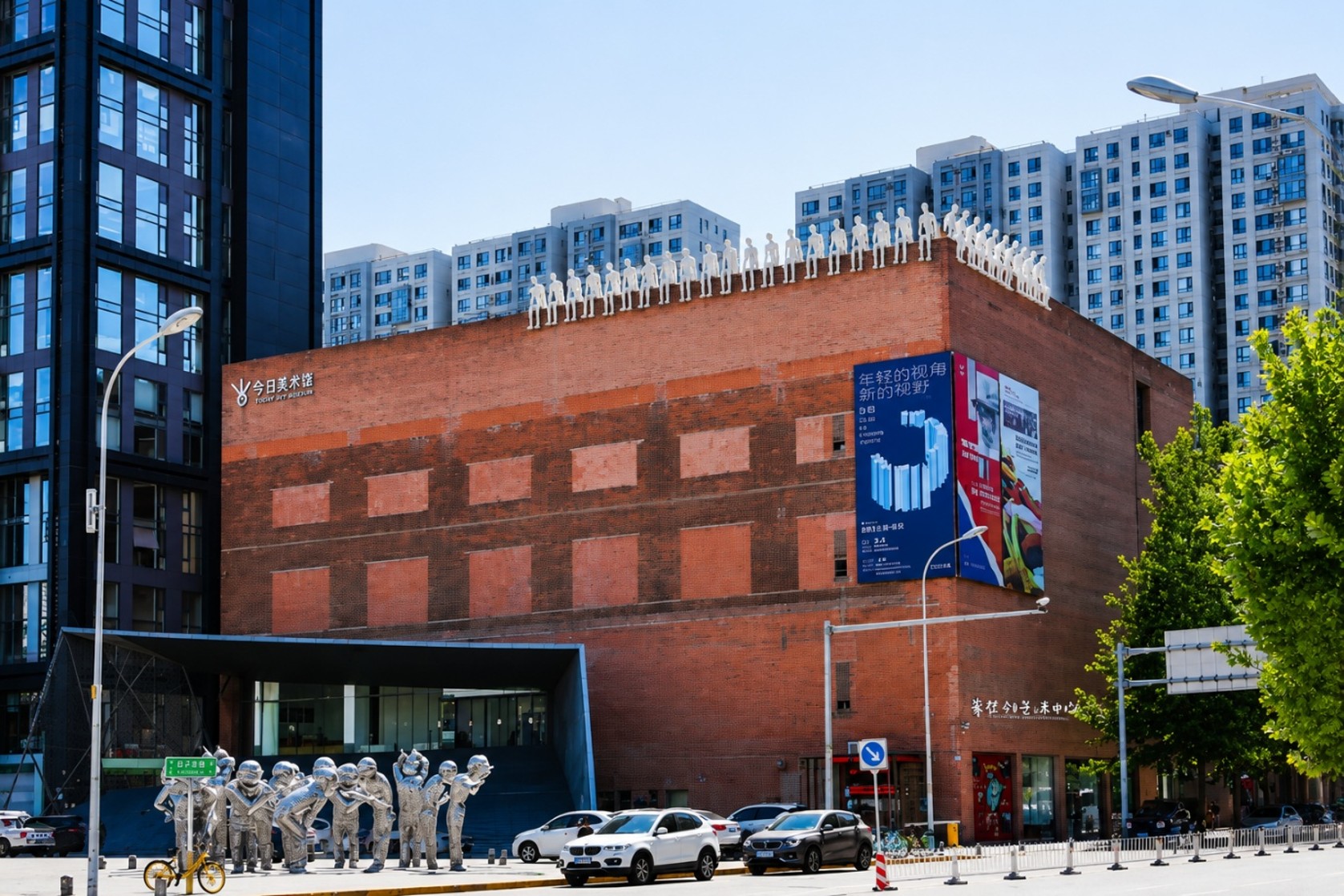
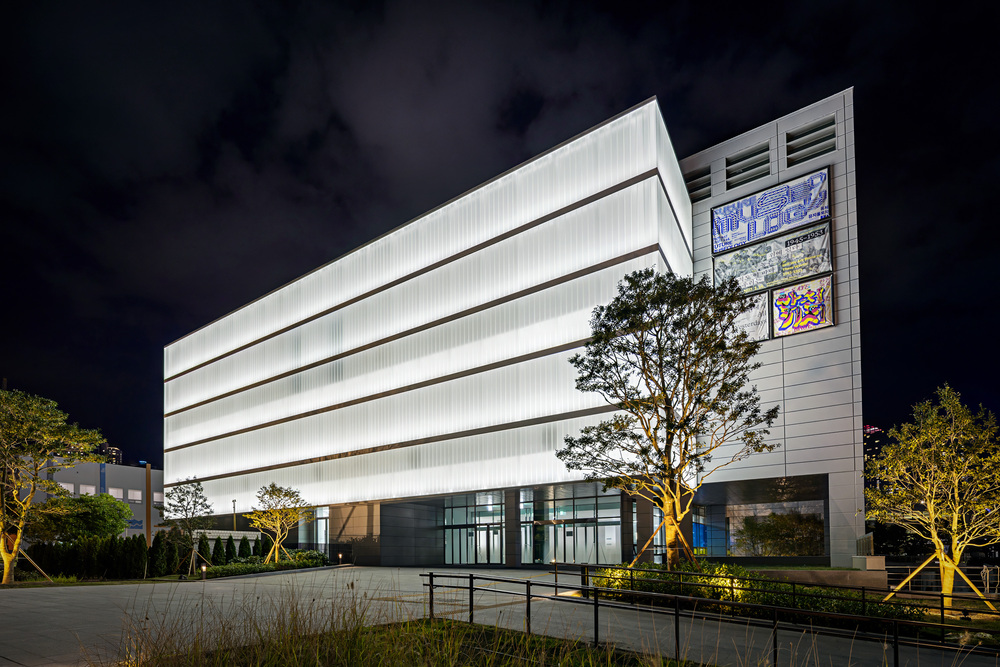
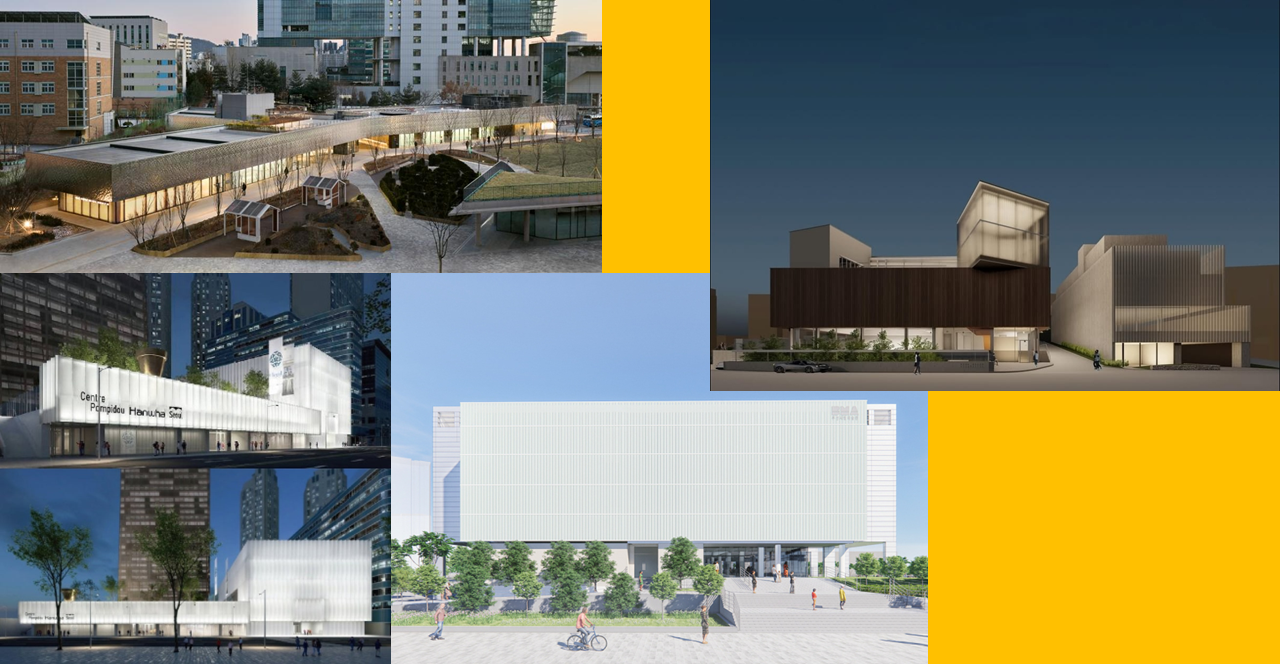
Exterior view of Today Art Museum, Beijing. / Photo: Courtesy of Busan Museum of Art
Today Art Museum
Today Art Museum is a nonprofit private
museum located in Beijing, China, with a program focused on contemporary art
exhibitions and international cultural exchange. 《Vision
and Perspective》 is the first exhibition jointly
organized by Today Art Museum and Busan Museum of Art.
The two institutions plan to build on the
project through collaborative research, academic exchange, and future
co-curated exhibitions, establishing a longer-term framework for institutional
collaboration.
Exhibition Information
Exhibition: 《Vision
and Perspective》
Dates: August 23–October 7, 2026
Venue: Today Art Museum, Beijing, China
Participating Artists: Lee Kyung Kang, Mirae Kim, Jaewon Kim, Taesung Kim,
Jihye Park, Hyunsung Park, Jangwoo Yoo, Hana Yoo
Co-organized by: Busan Museum of Art and Today Art Museum
Websites: Busan Museum of Art · Today
Art Museum