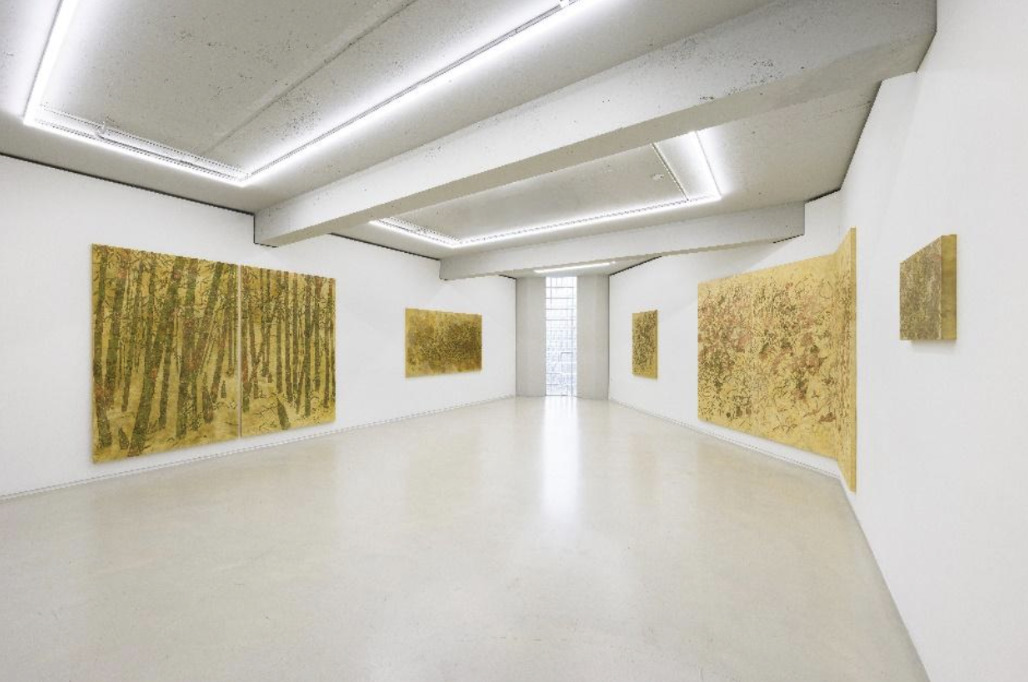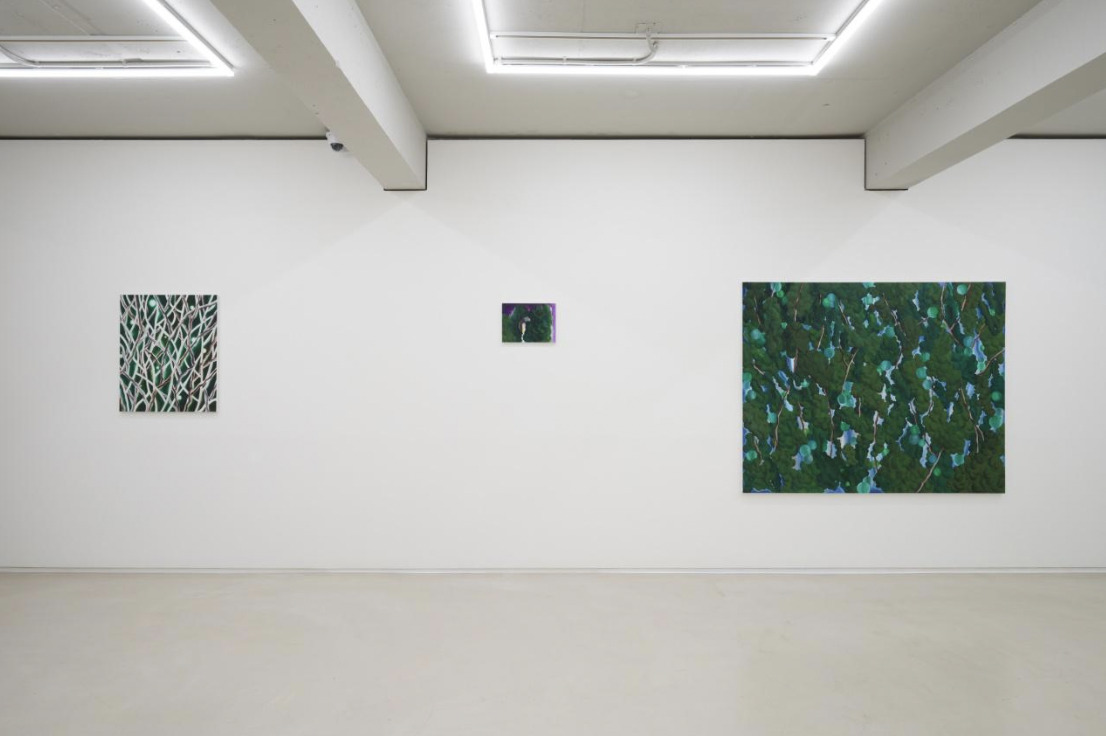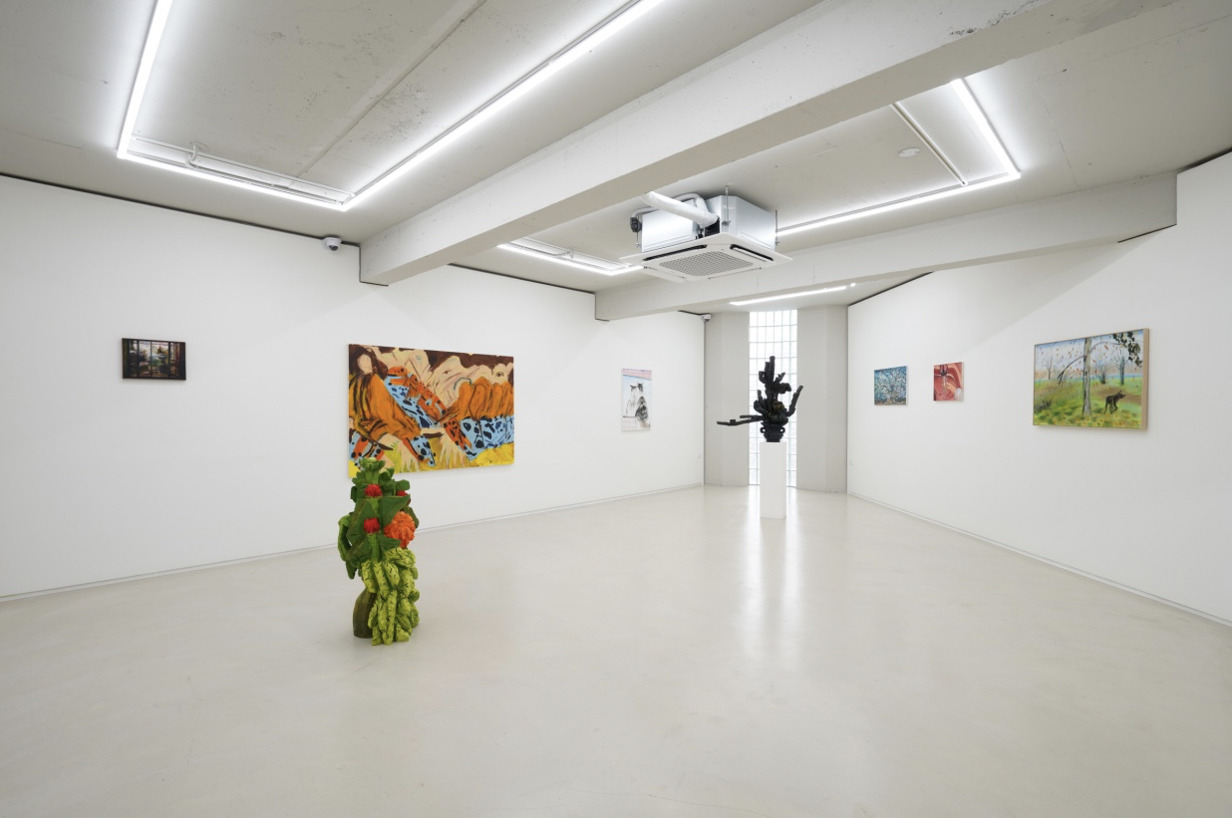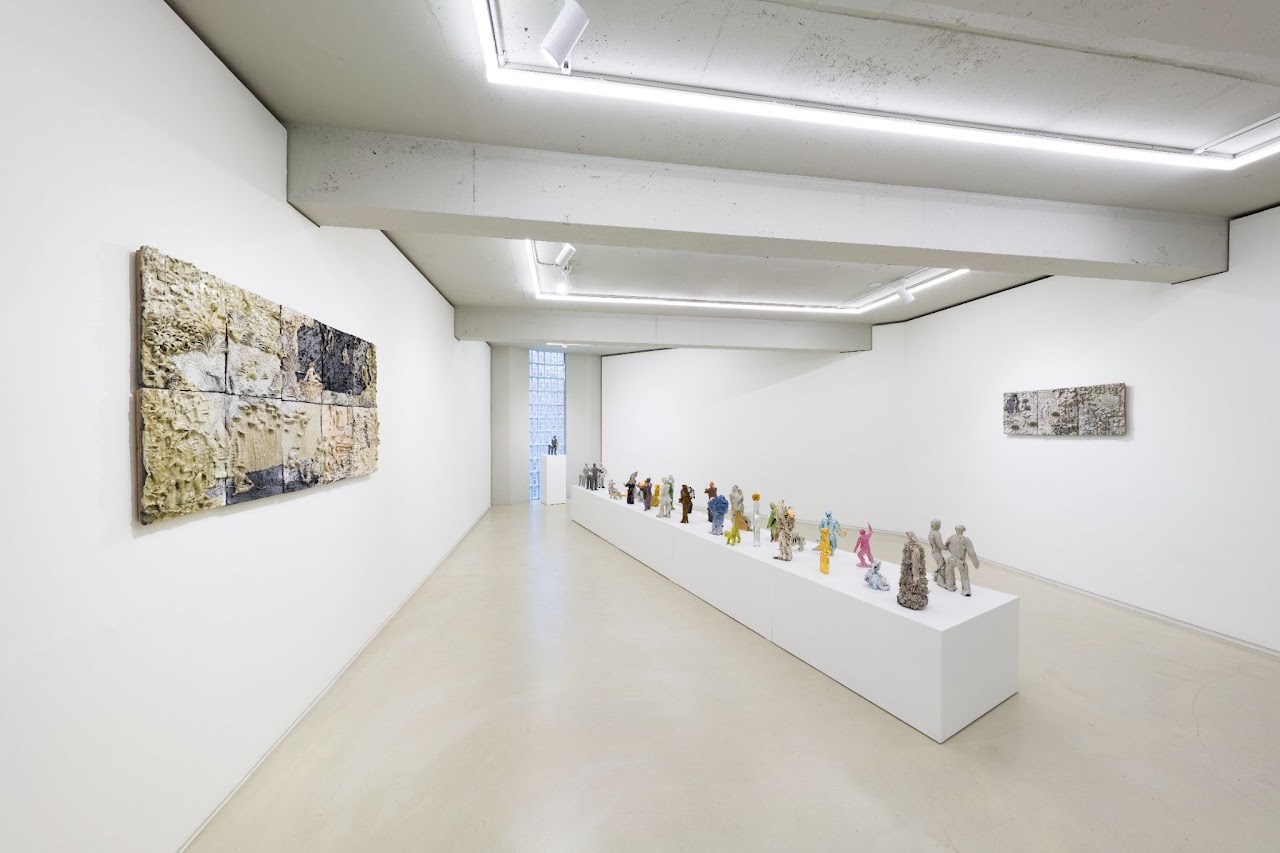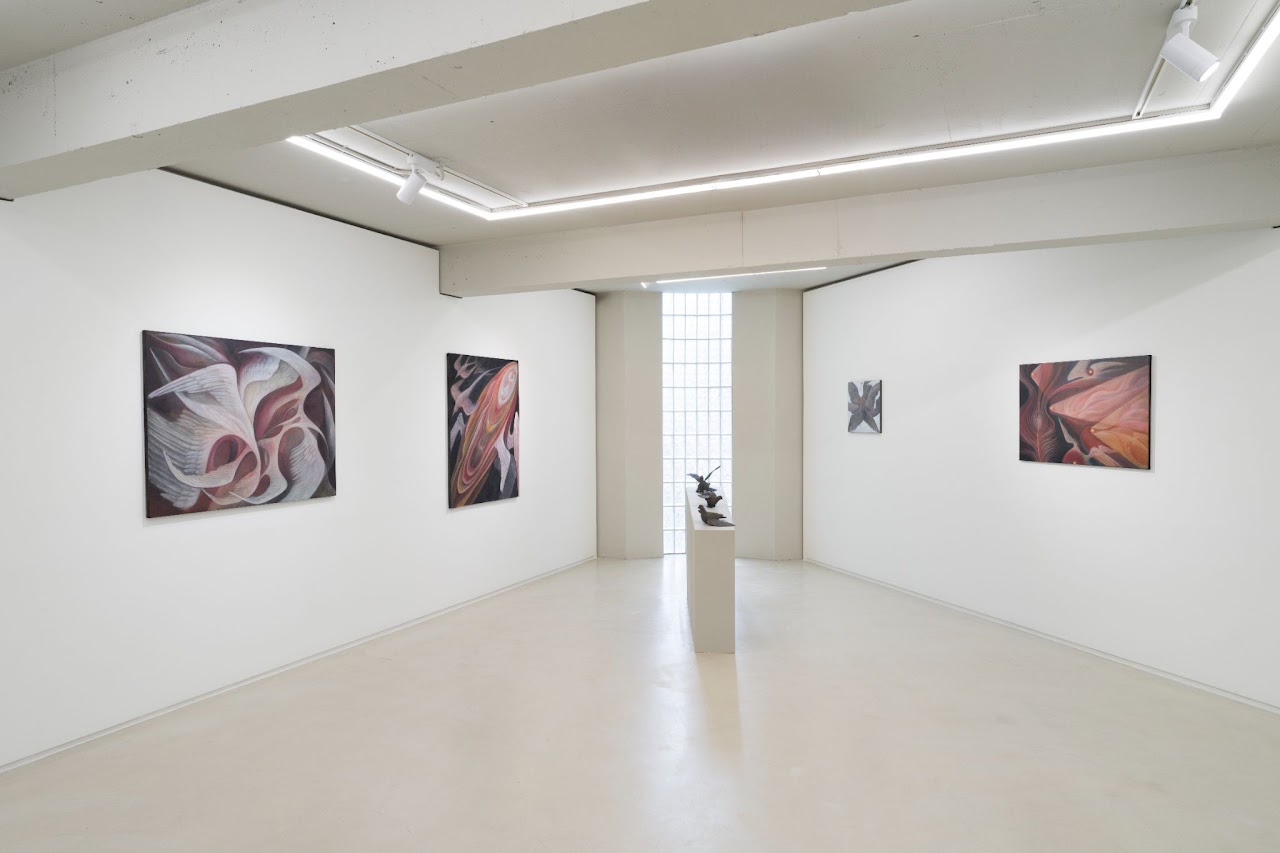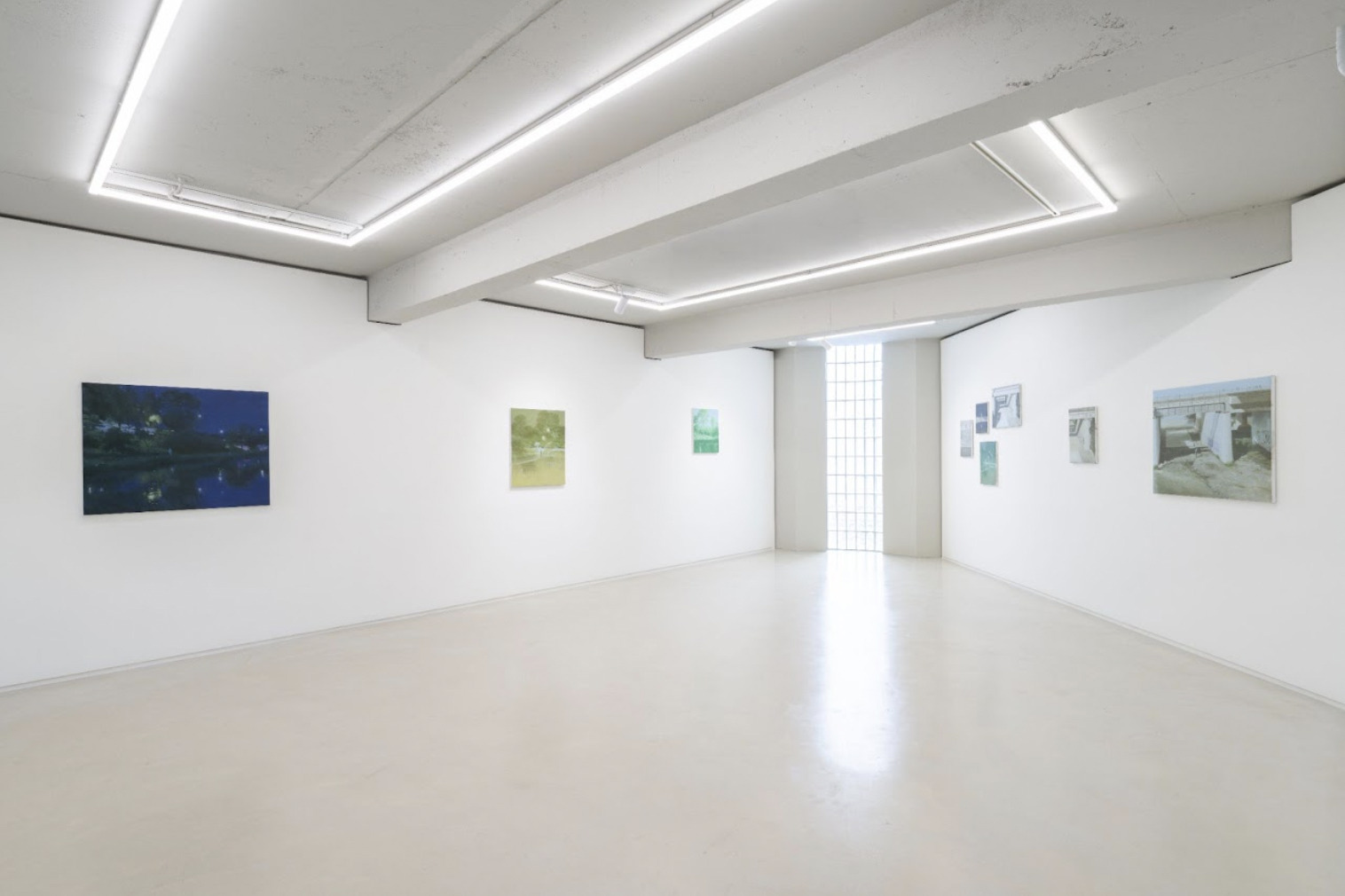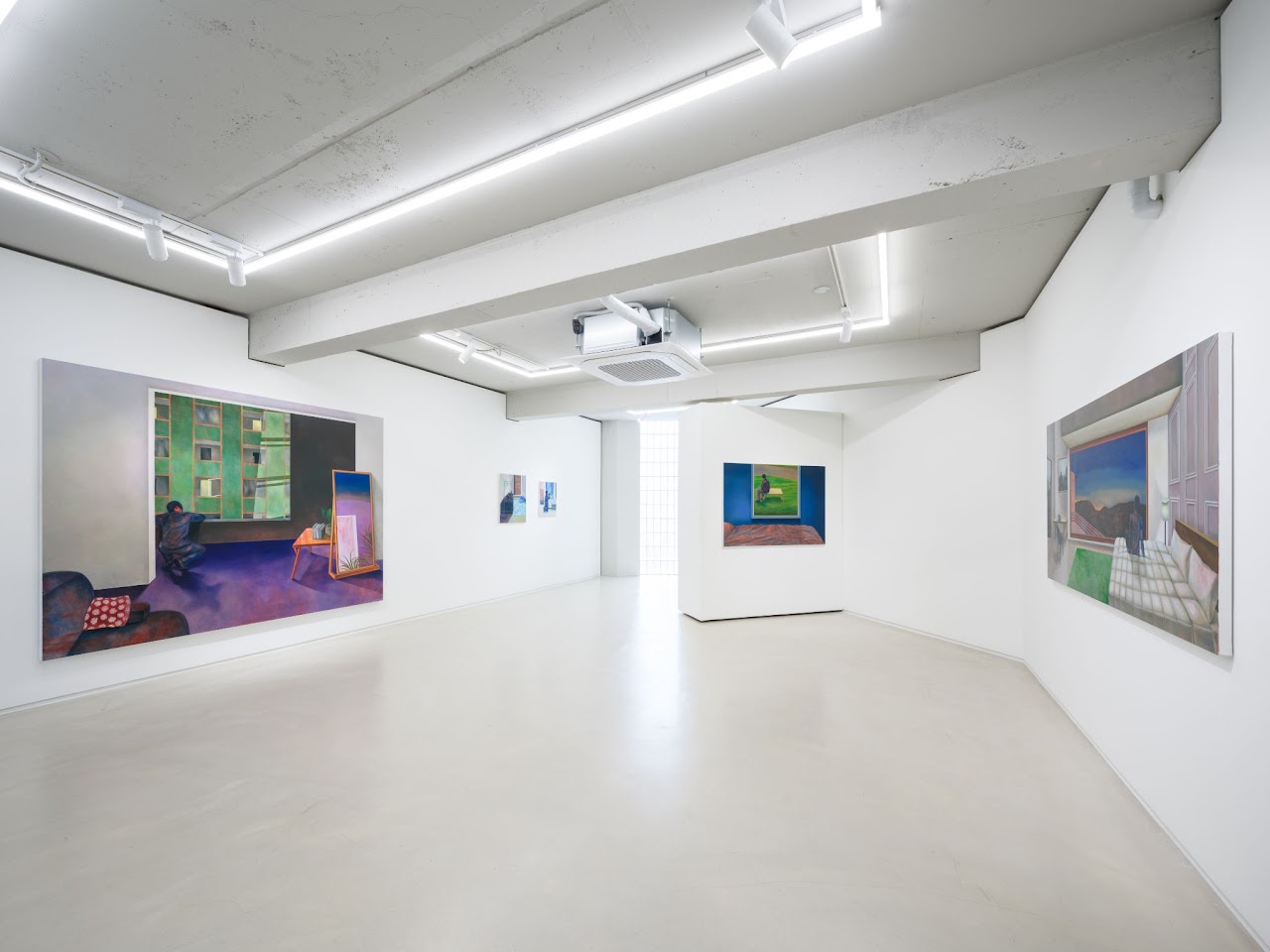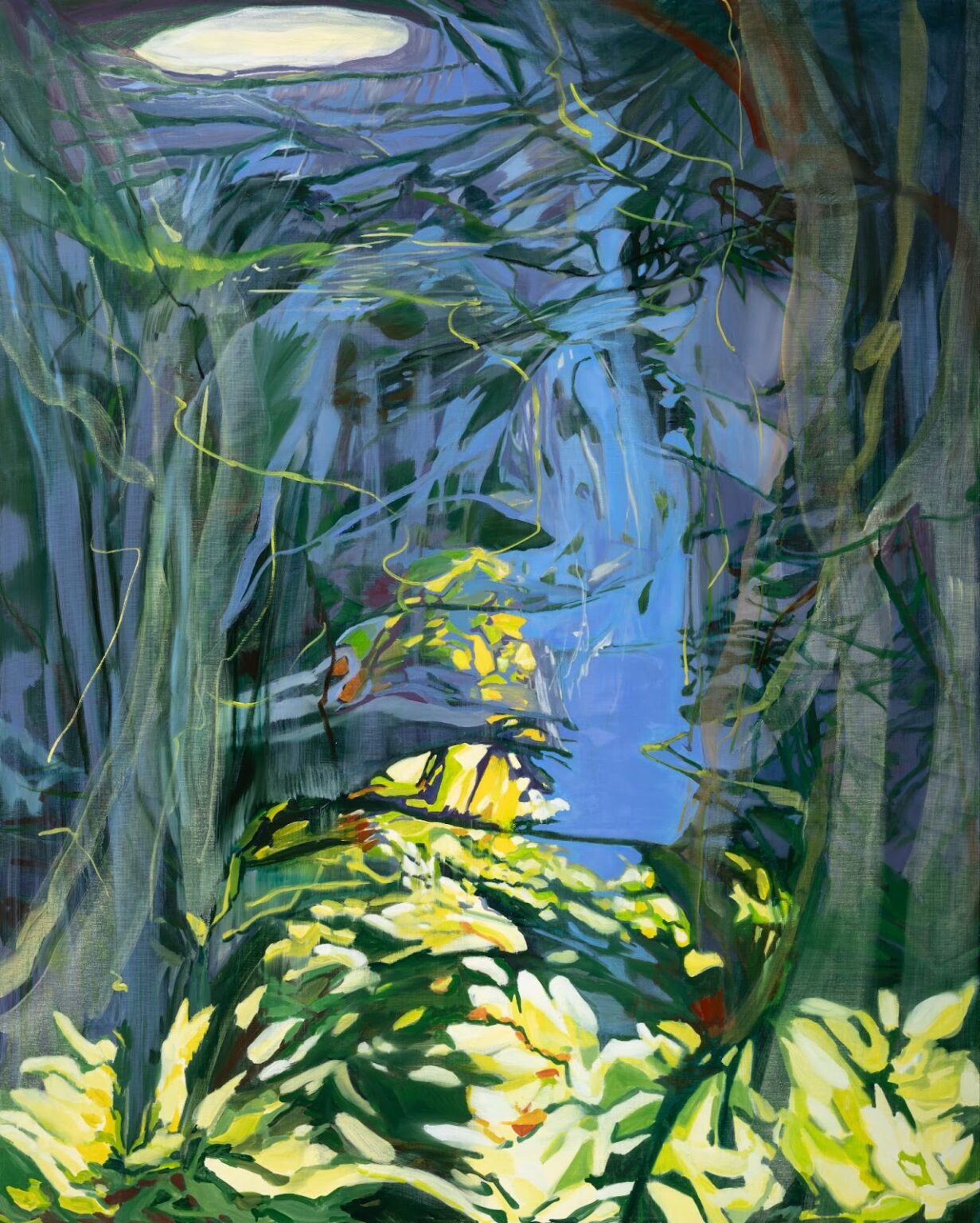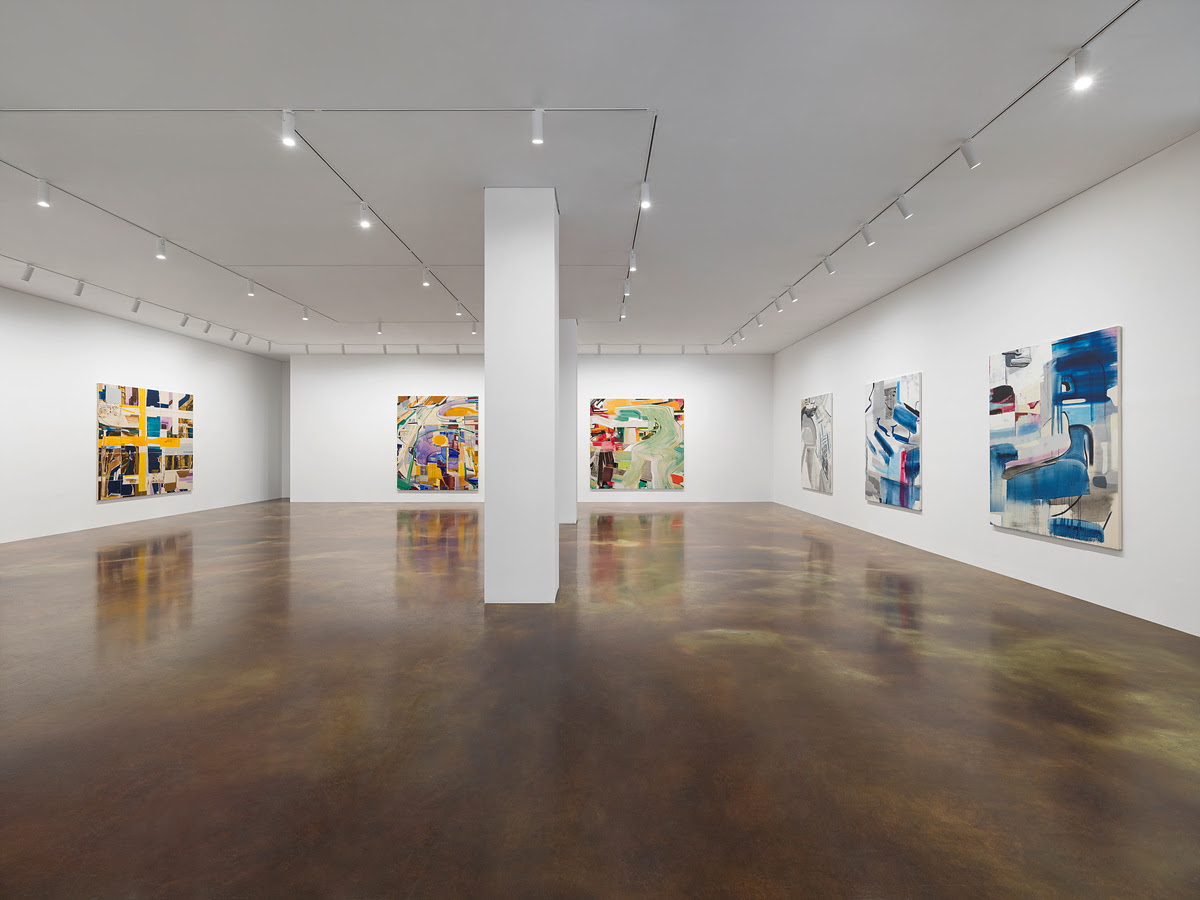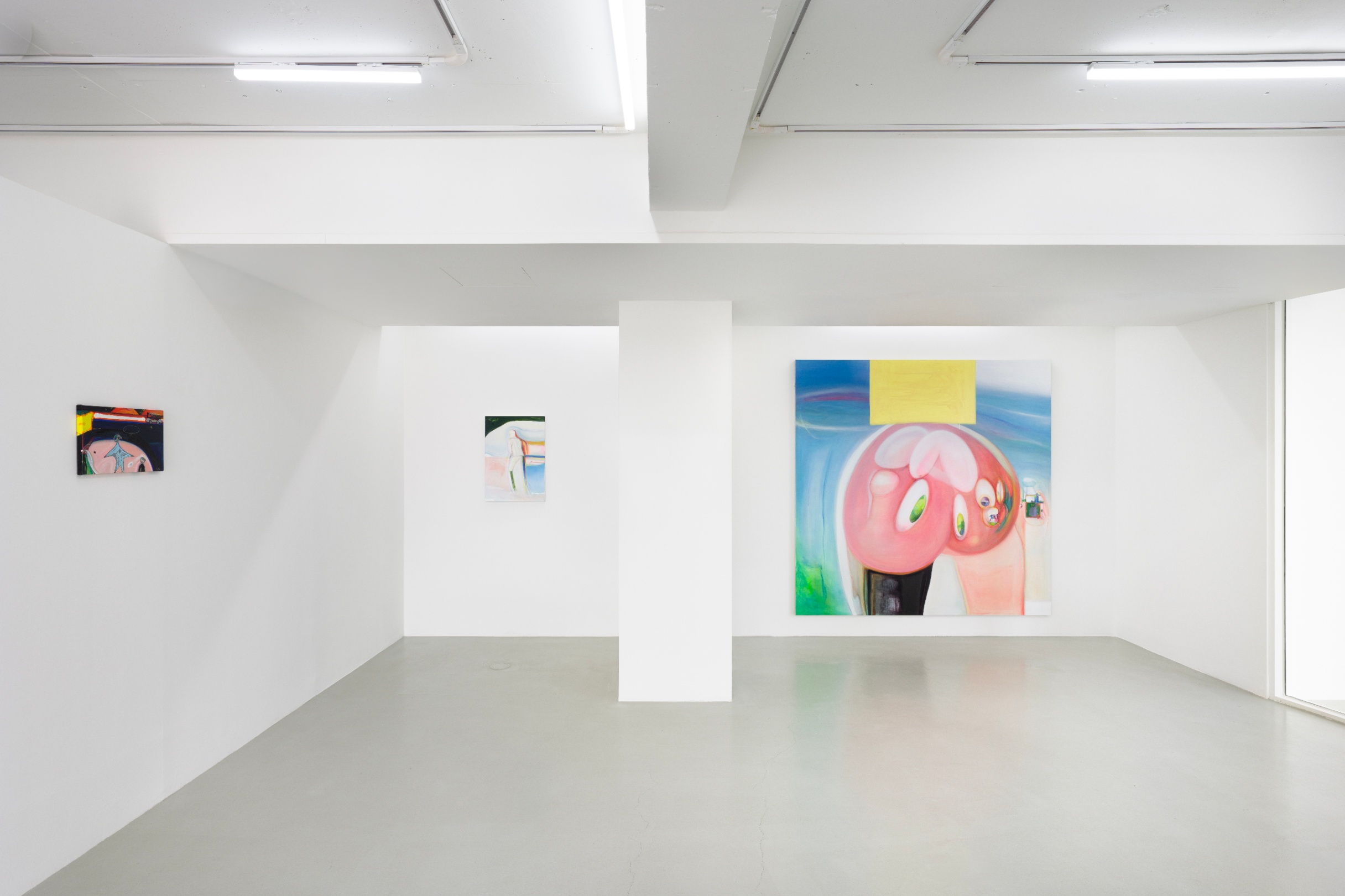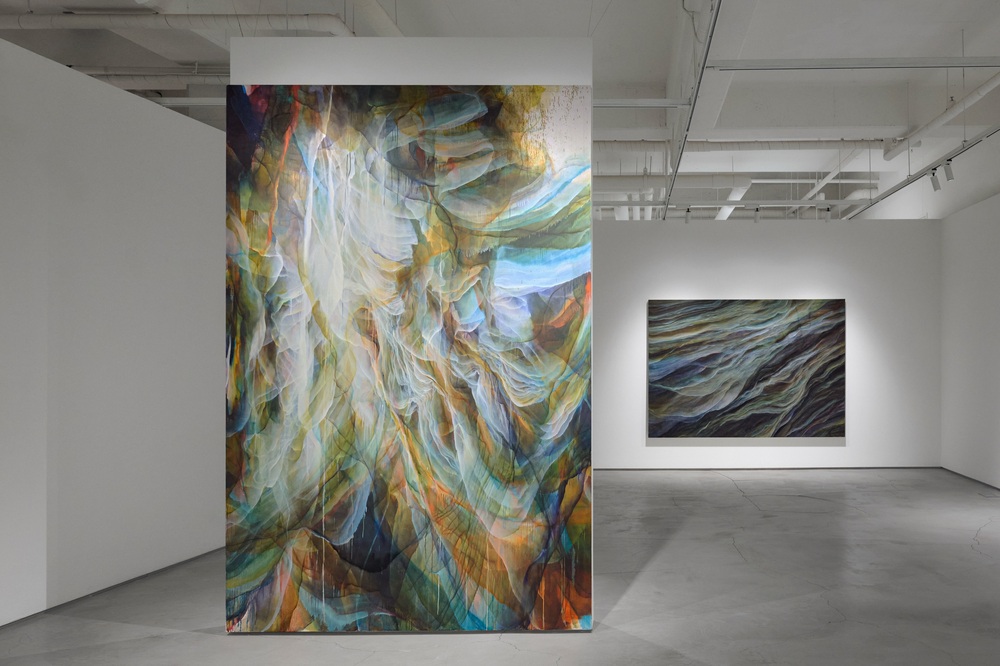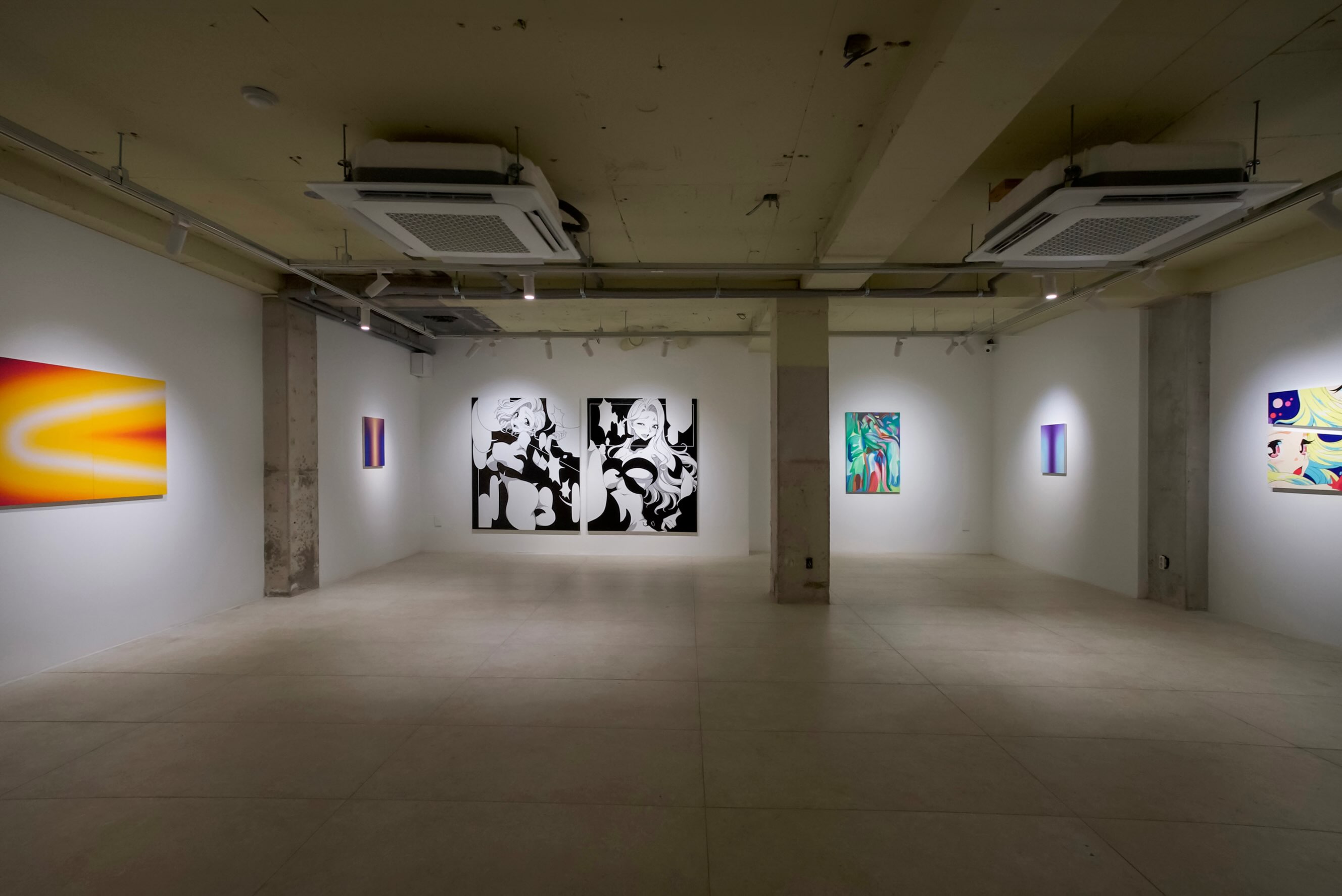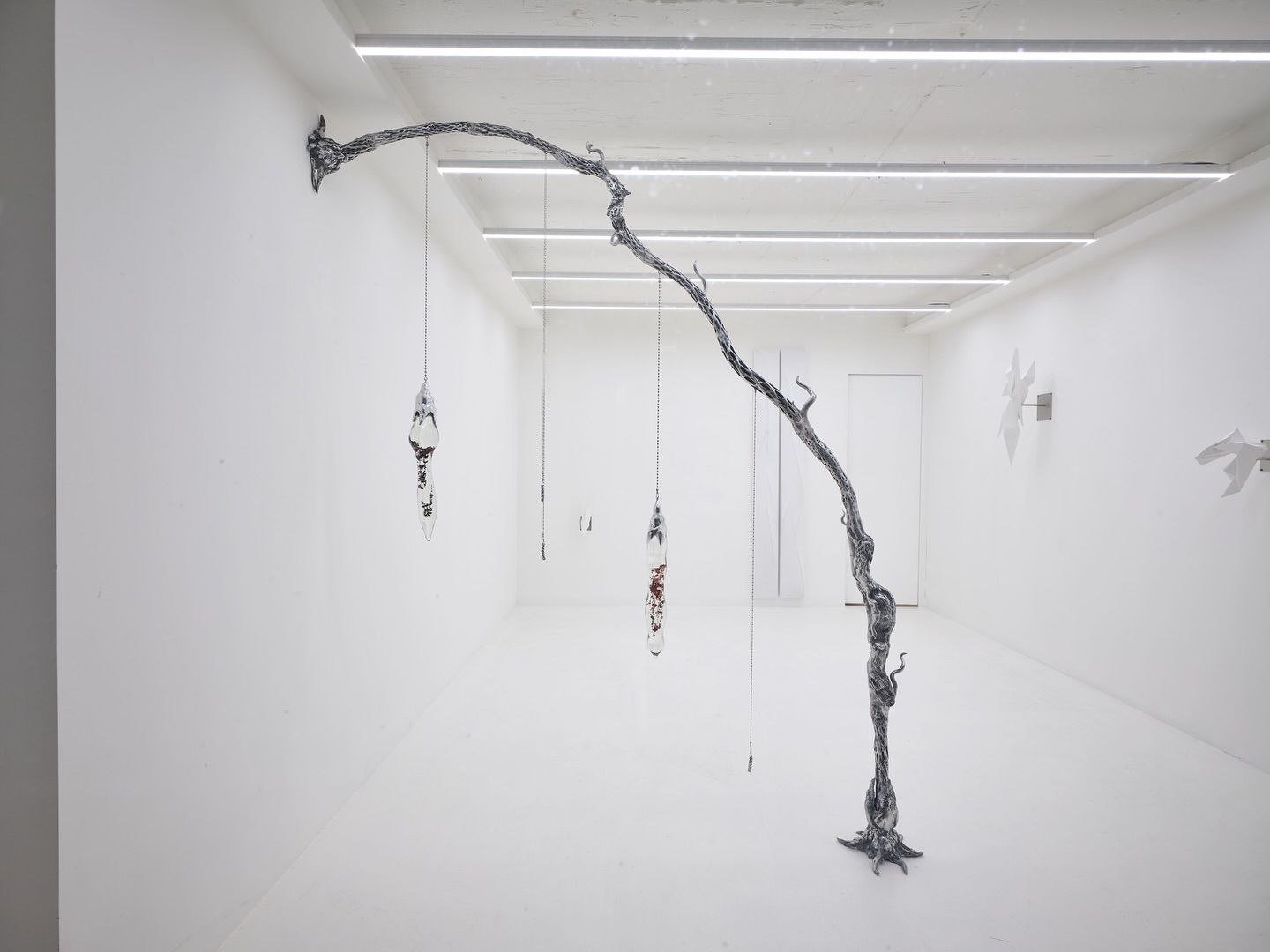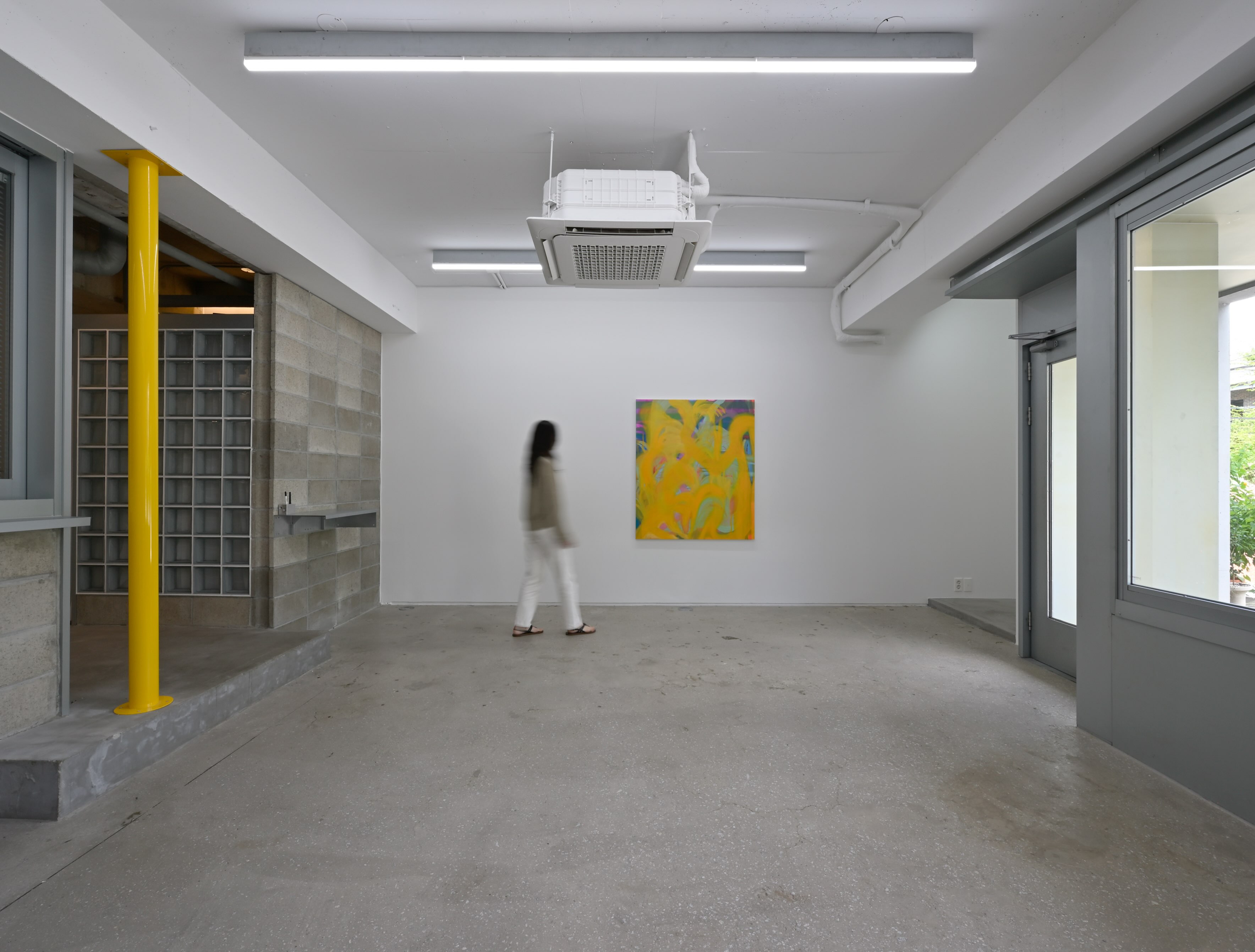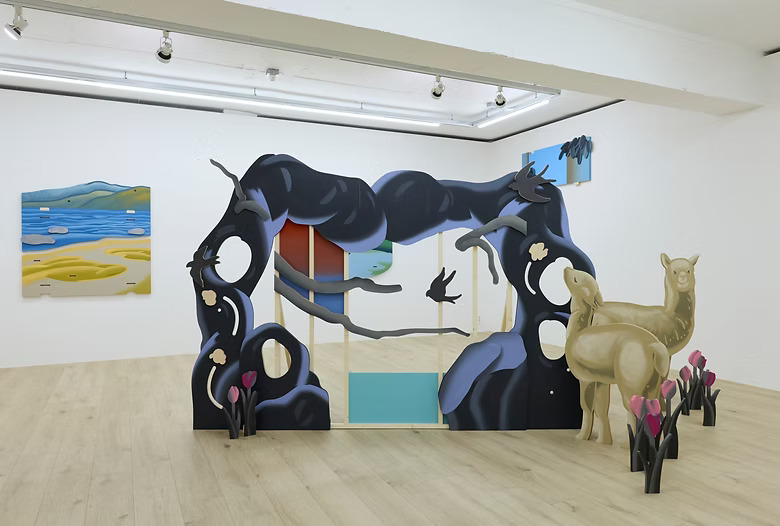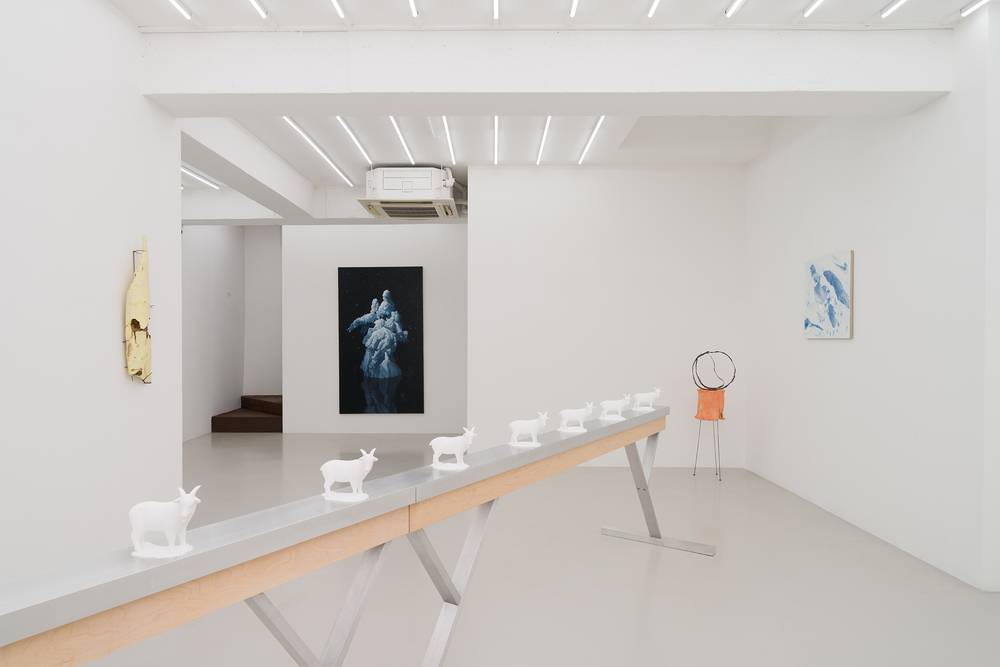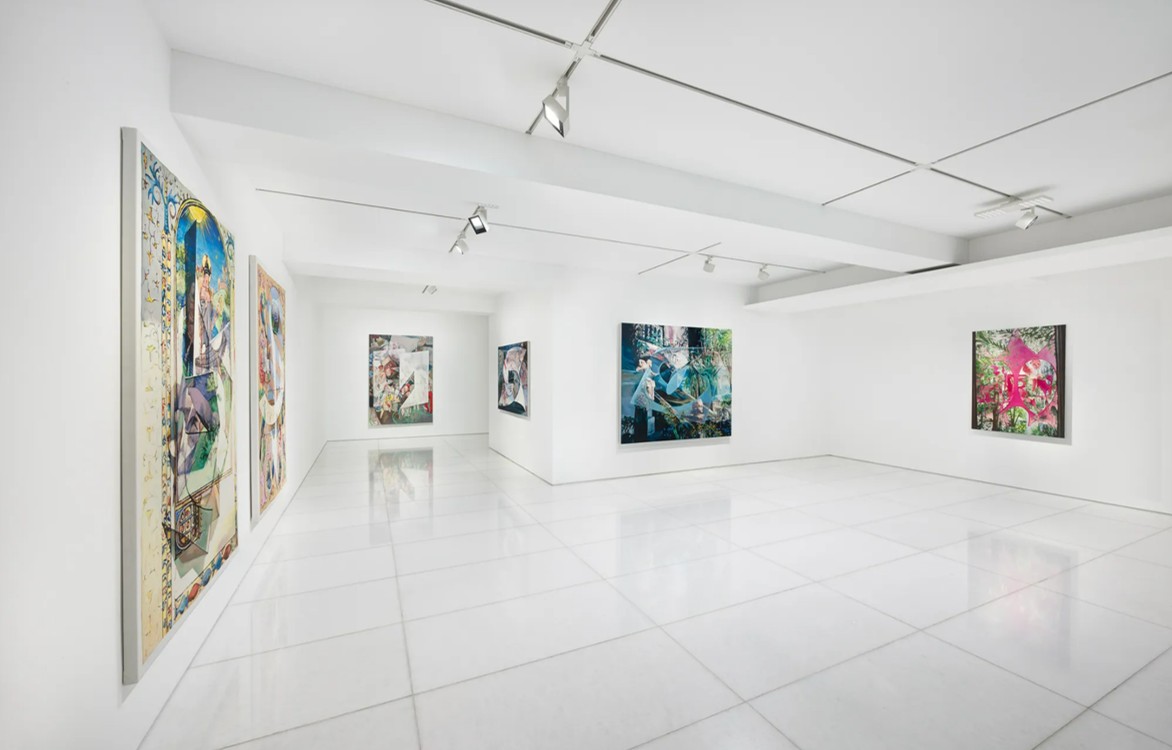

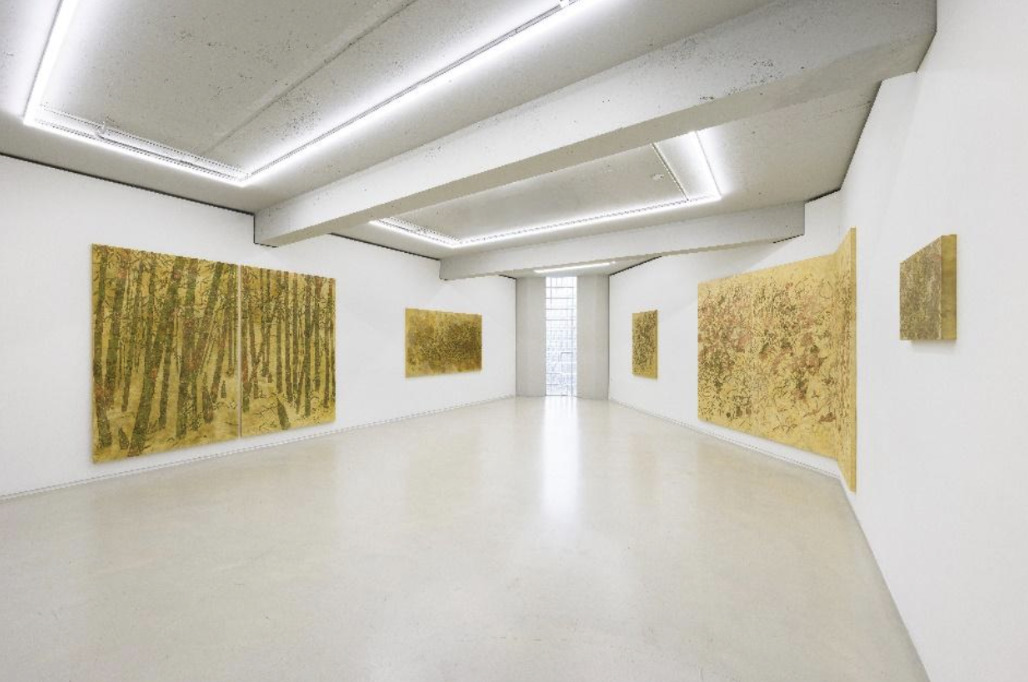
Installation view of 《Leaves of Stone》 © DrawingRoom
DrawingRoom is presenting 《Leaves of Stone》, a solo exhibition by
Hyeonsu Jo, on view through July 31.
A practitioner of Korean painting, Jo
employs the chemical corrosion of copper foil to capture nature's continual
transformation and vital rhythms. Her works embrace material processes that
allow organic change to emerge on the pictorial surface.
In this exhibition, forms of bamboo groves,
dense vegetation, and mountain ranges—realized through the interaction between
hanji (traditional Korean mulberry paper) and copper foil—refuse to function as
static visual illusions. For Jo, painting is not a finished image but a living
field in which material and time remain in constant flux.
Rather than serving as a passive medium
that merely realizes the artist's intentions, the copper foil in Jo's practice
acts as an active nonhuman agent. Possessing its own intrinsic energy, it
participates in the work by continually transforming space and time through its
chemical reactions.
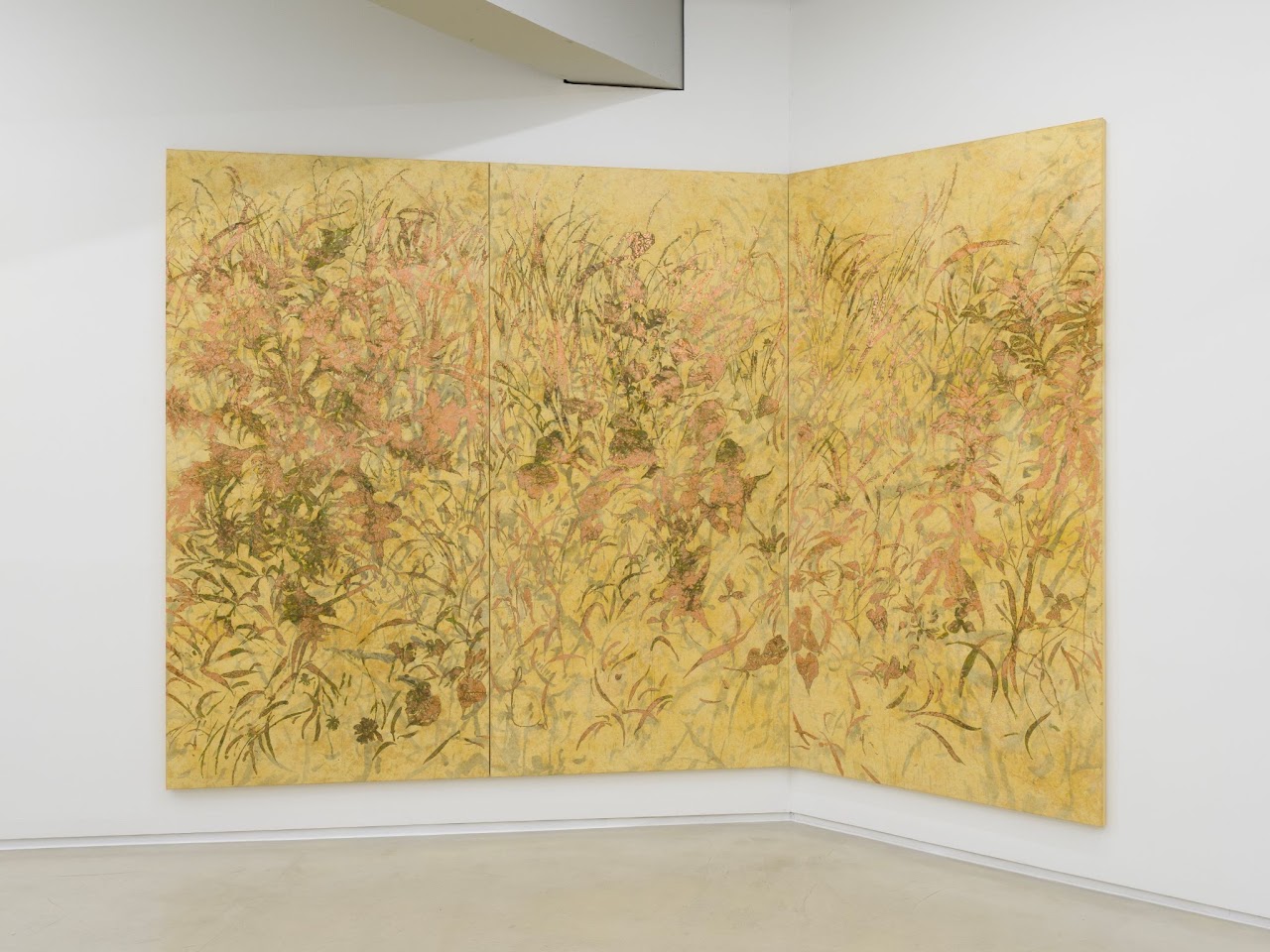
Hyeonsu Jo, Thicket 14, 2026, Copper leaf on Korean paper, 193.9 x 291cm © Hyeonsu Jo
Applying chemicals to copper foil adhered
to hanji is not an act of imposing human control over matter, but one of
creating the conditions for a nonhuman material to transform and behave
according to its own agency.
In this sense, the work embodies an organic
collaboration between the human and the nonhuman. Once installed, the paintings
continue to react to the oxygen and humidity of the exhibition space,
undergoing unpredictable shifts in color—from dark brown and ash gray to brown
and green—as an ongoing, active material process.
The formal distinctiveness of Jo's practice
lies in its fusion of the traditional language of Korean painting with the
unconventional process of copper corrosion. This encounter suspends the notion
of a singular, artist-determined completion, instead foregrounding the
reciprocal interactions between the human (the artist) and the nonhuman (the
copper foil).
The works thus unfold as dynamic systems of
continual transformation, in which meaning emerges through an ongoing dialectic
of process, material, and change.