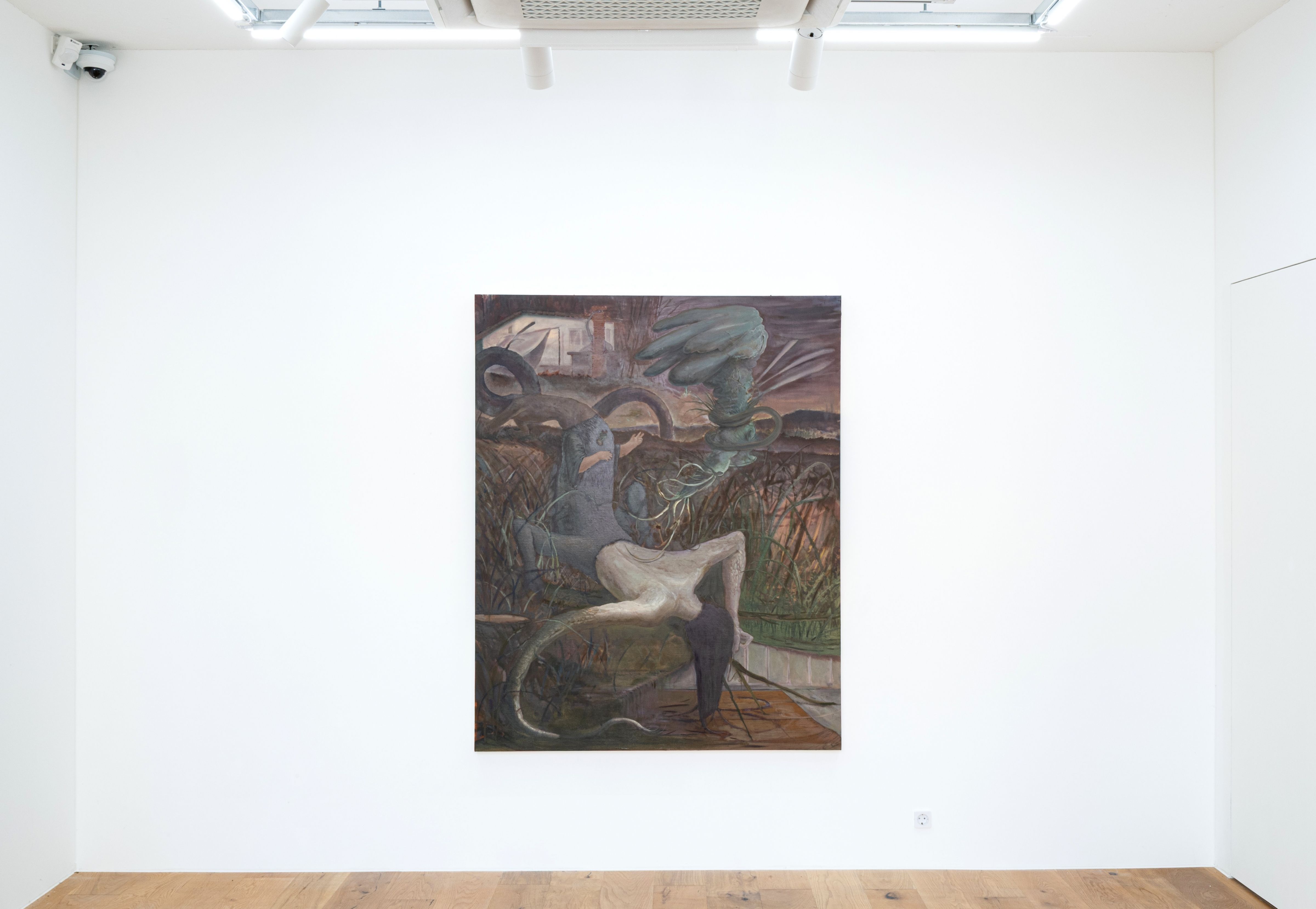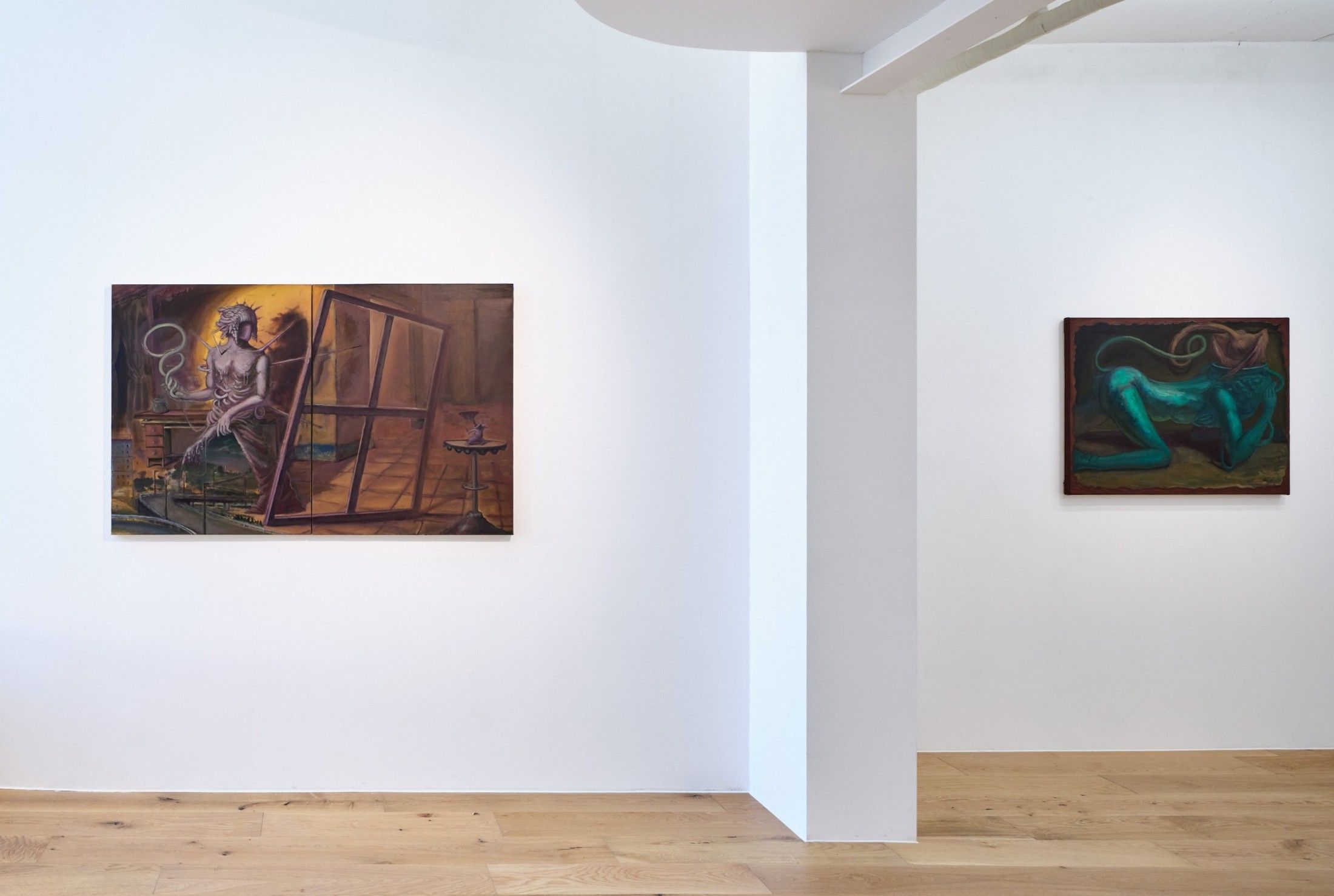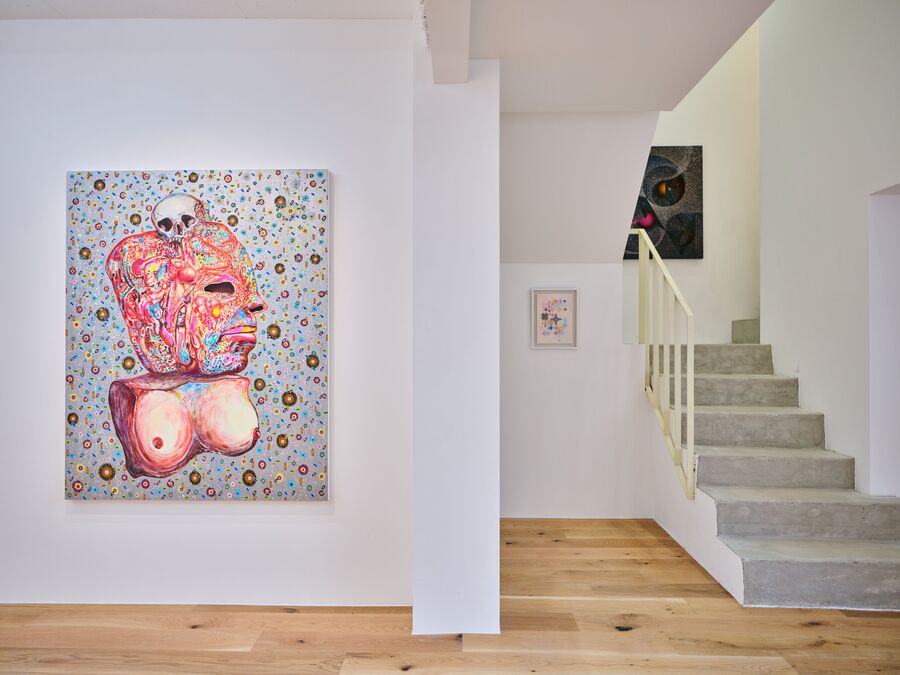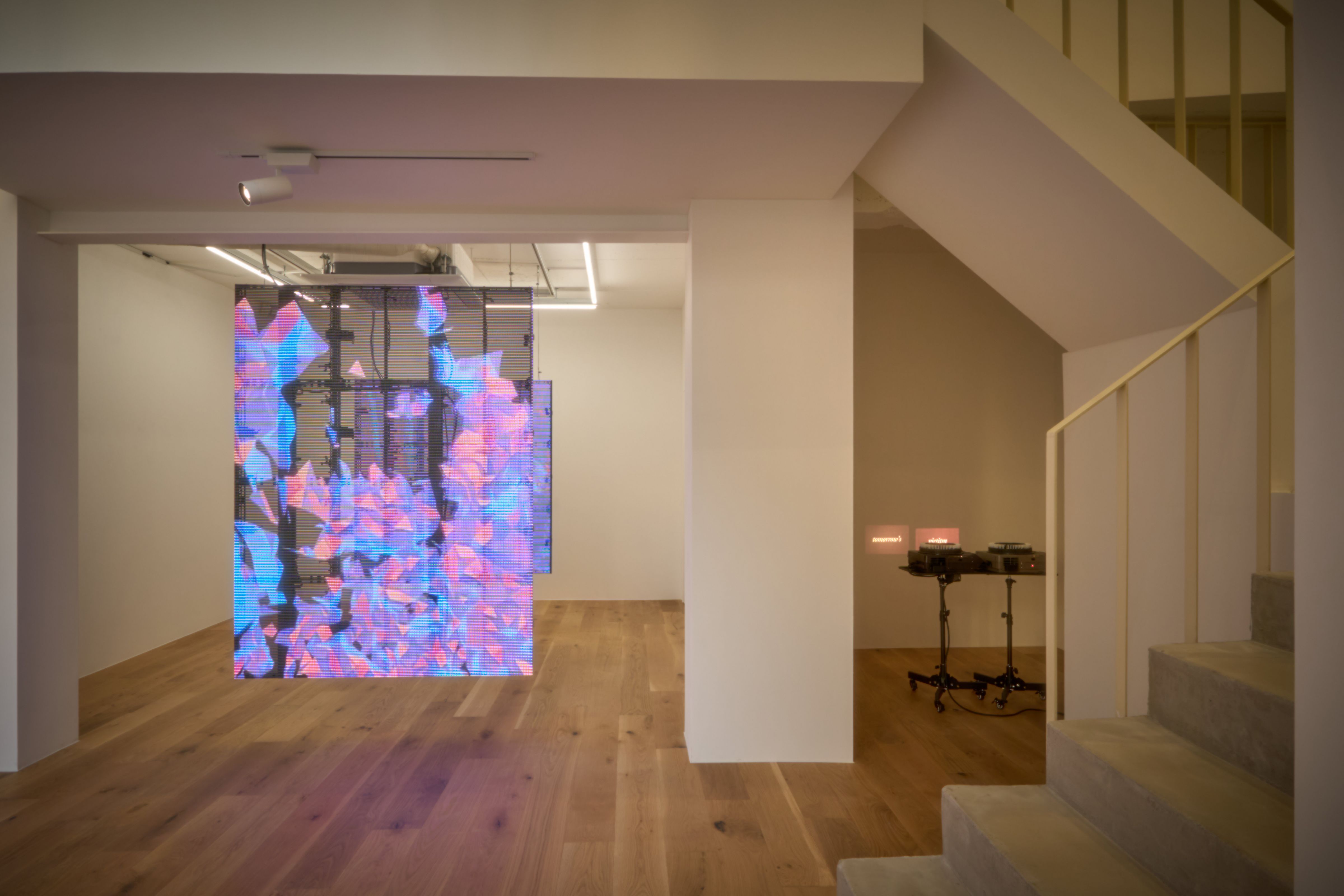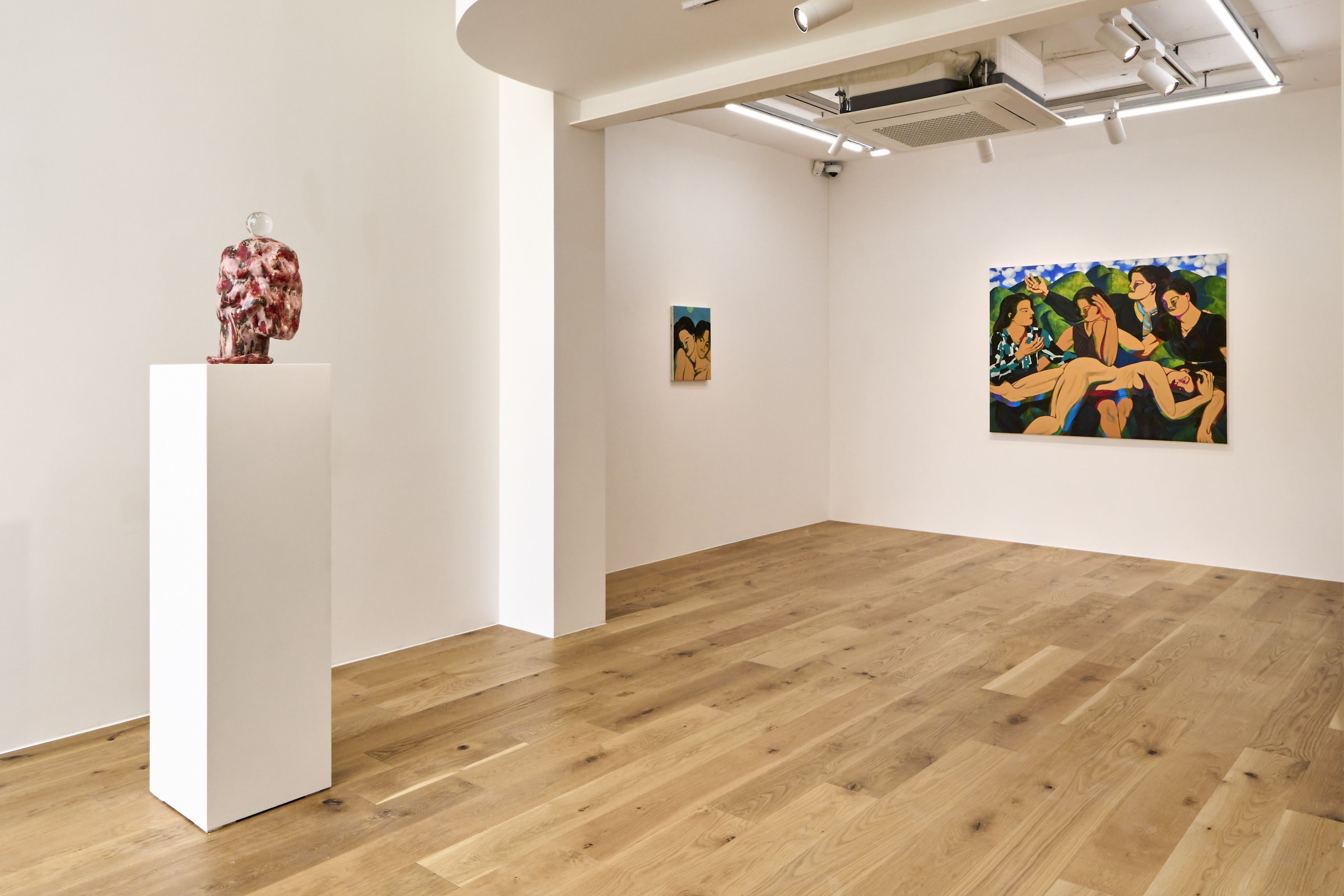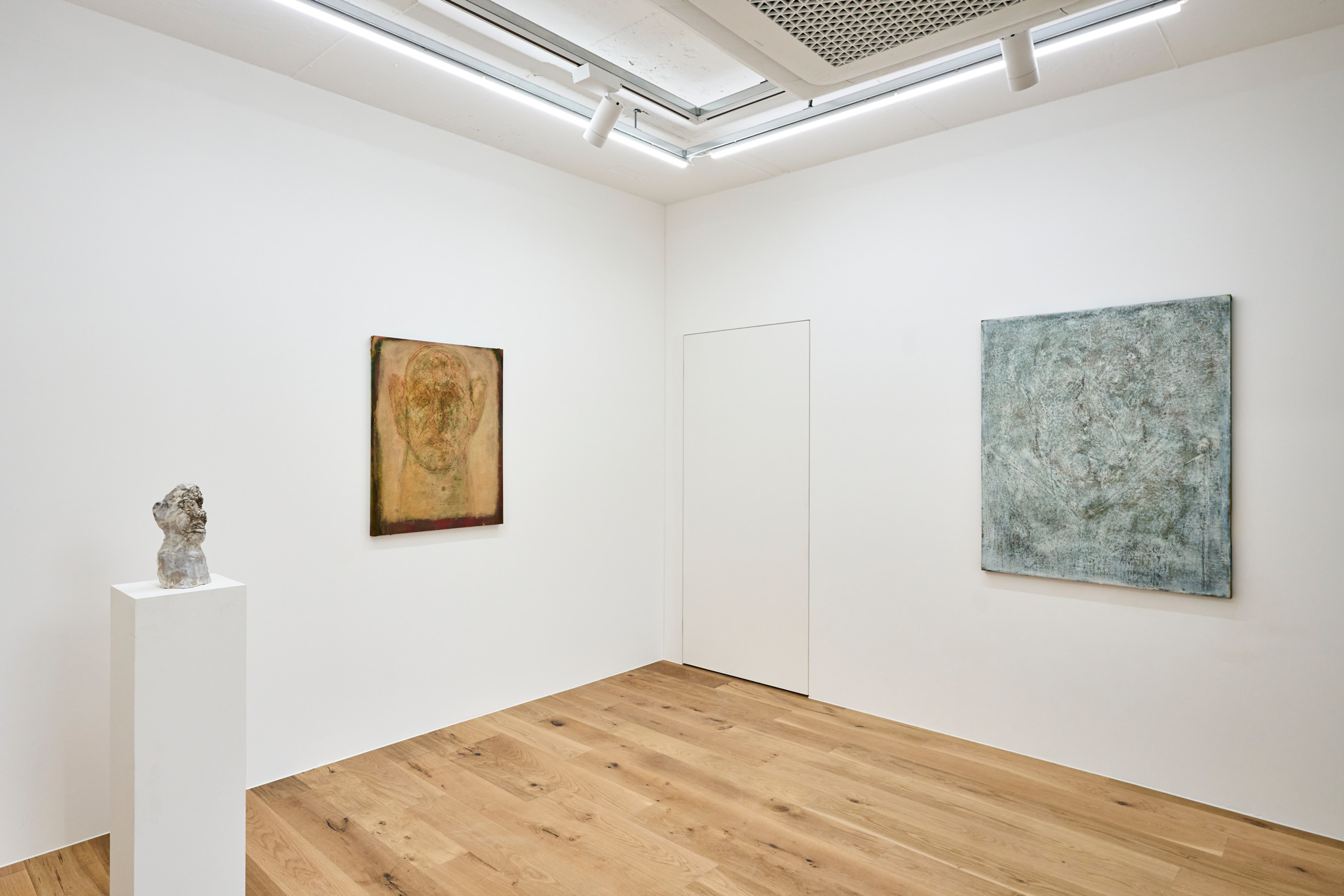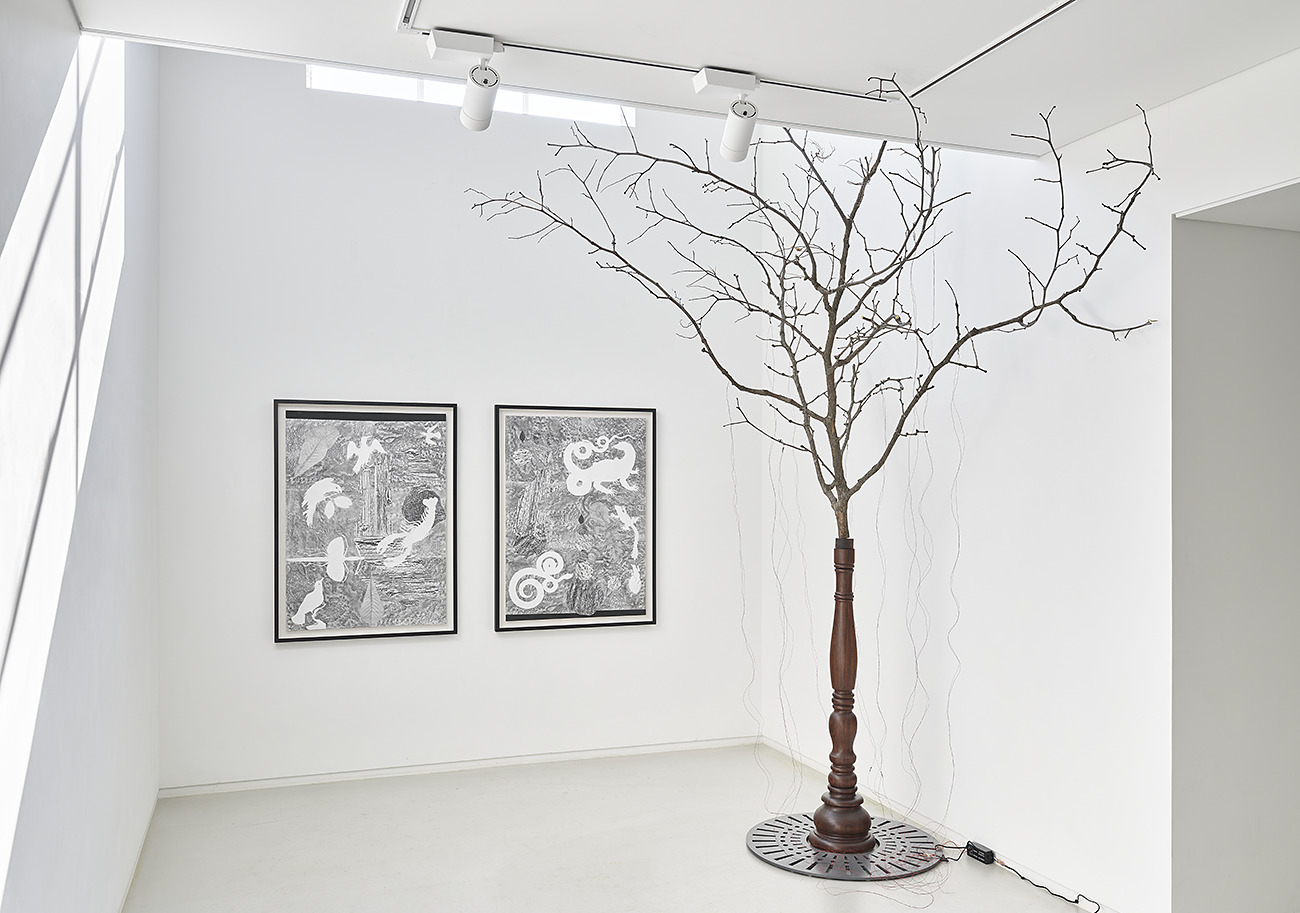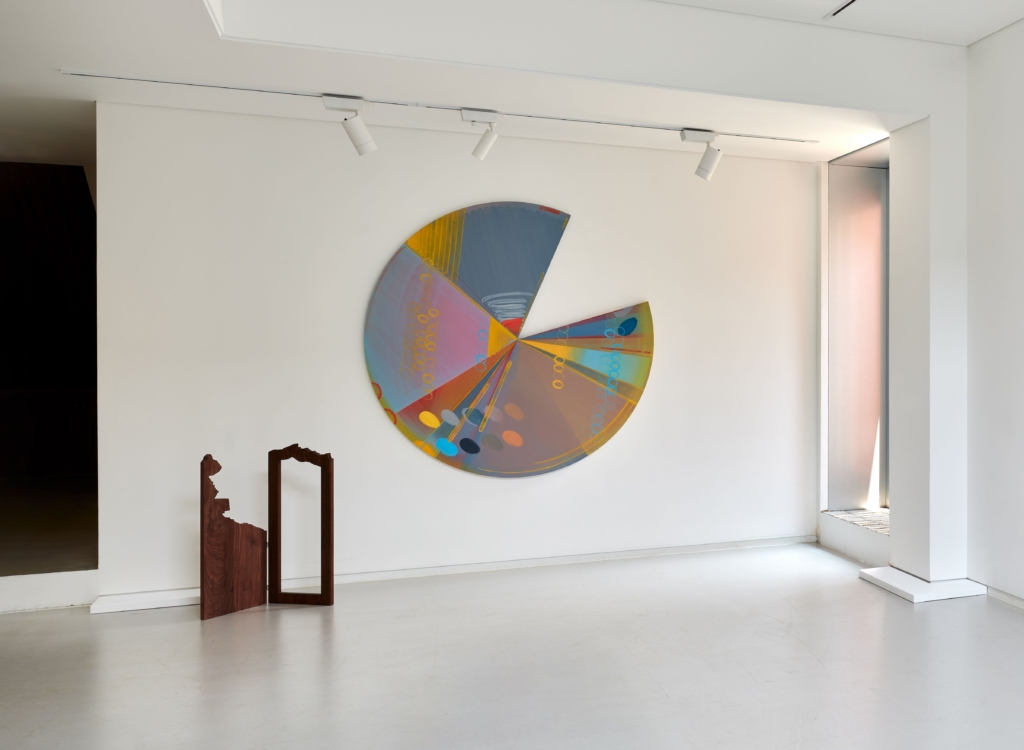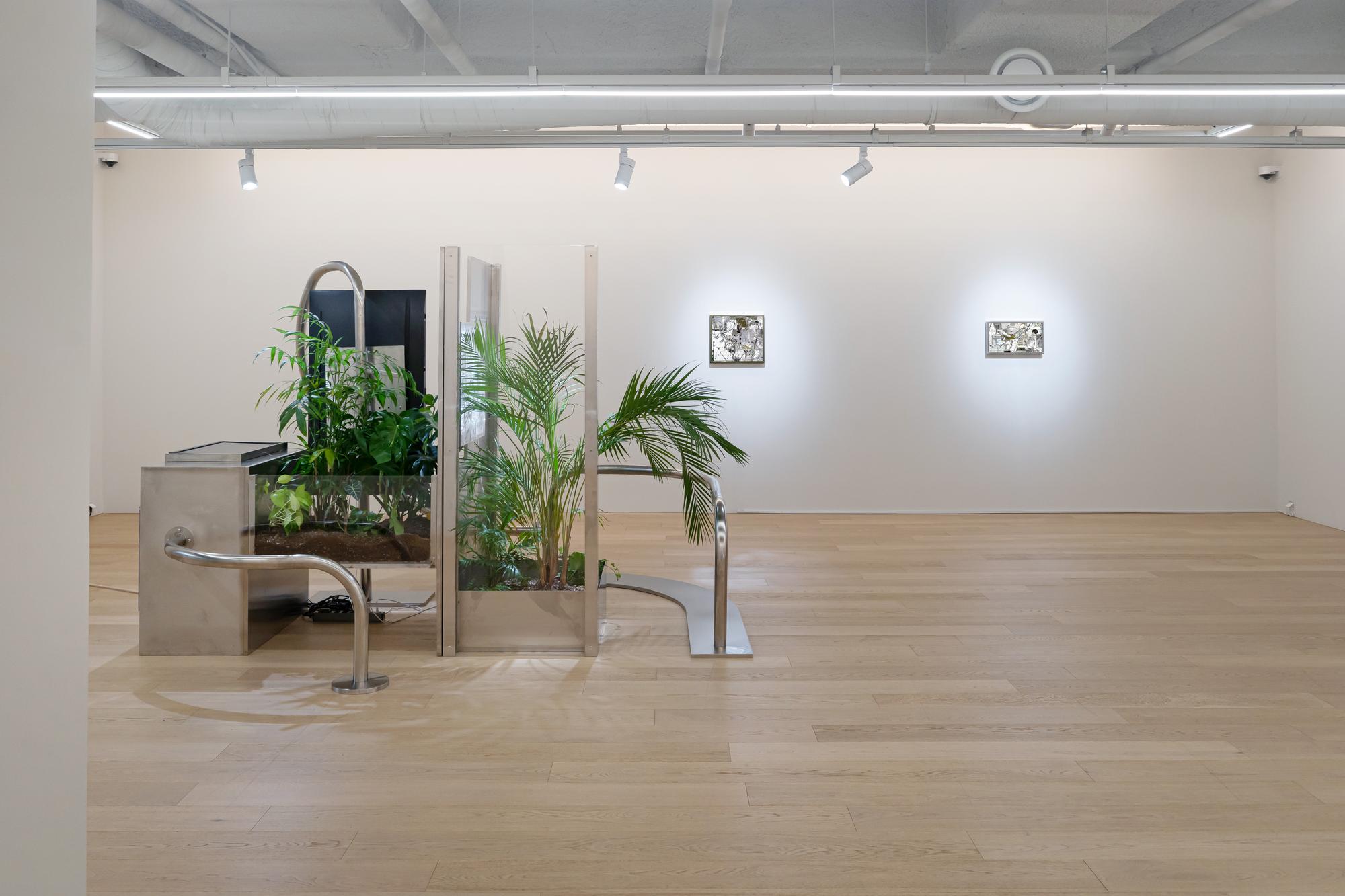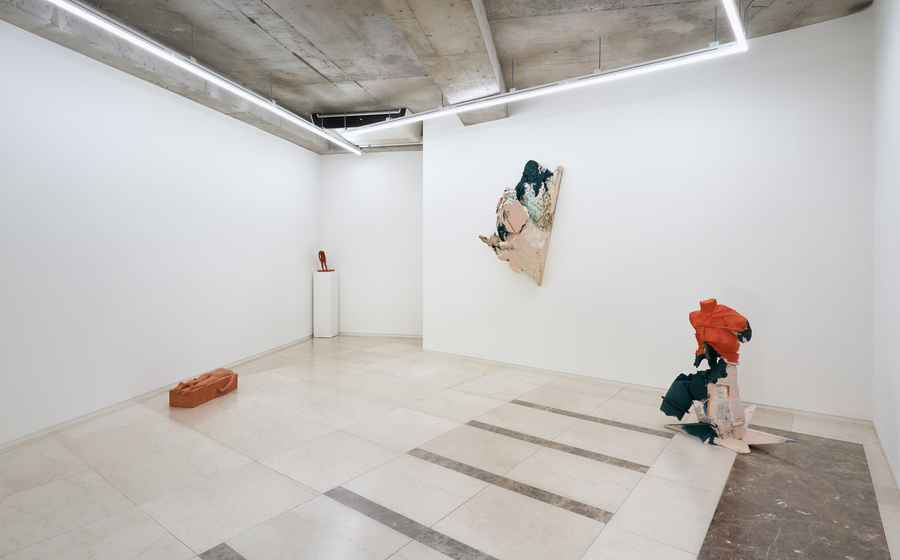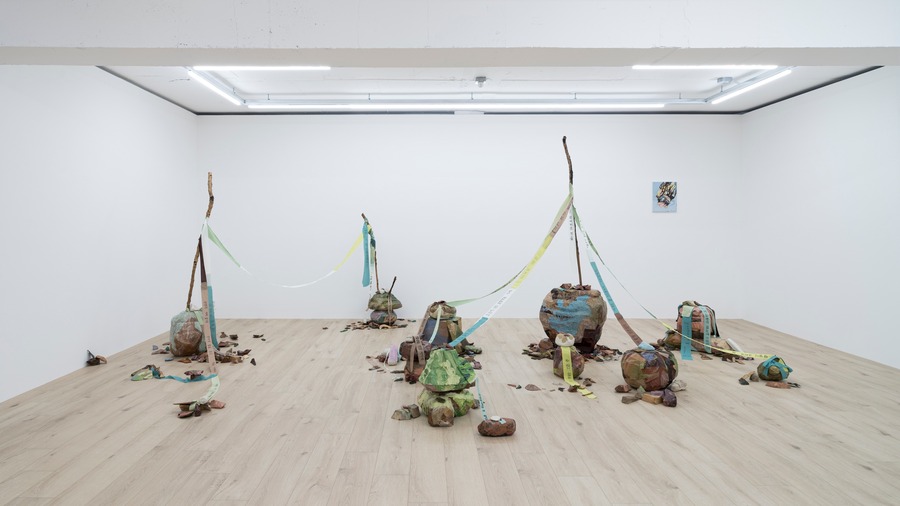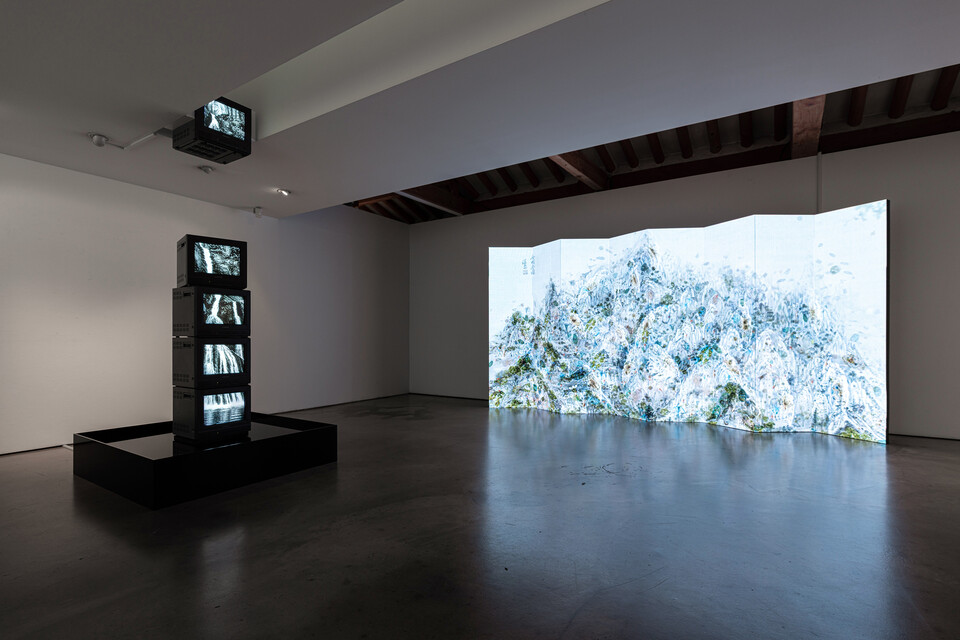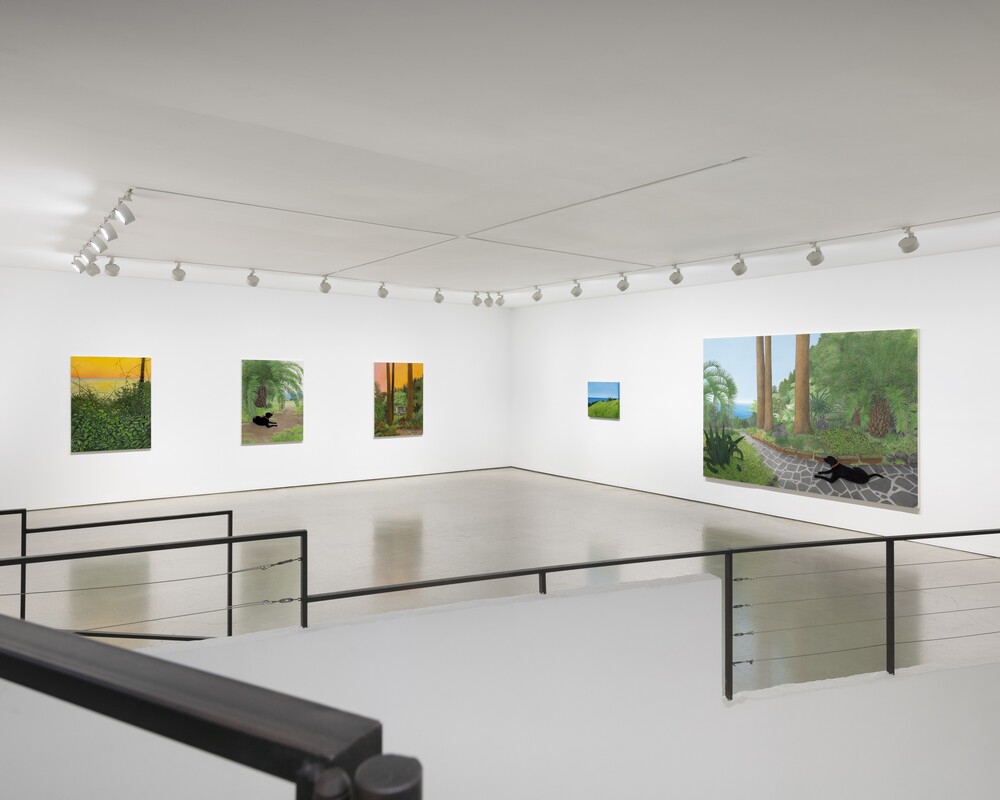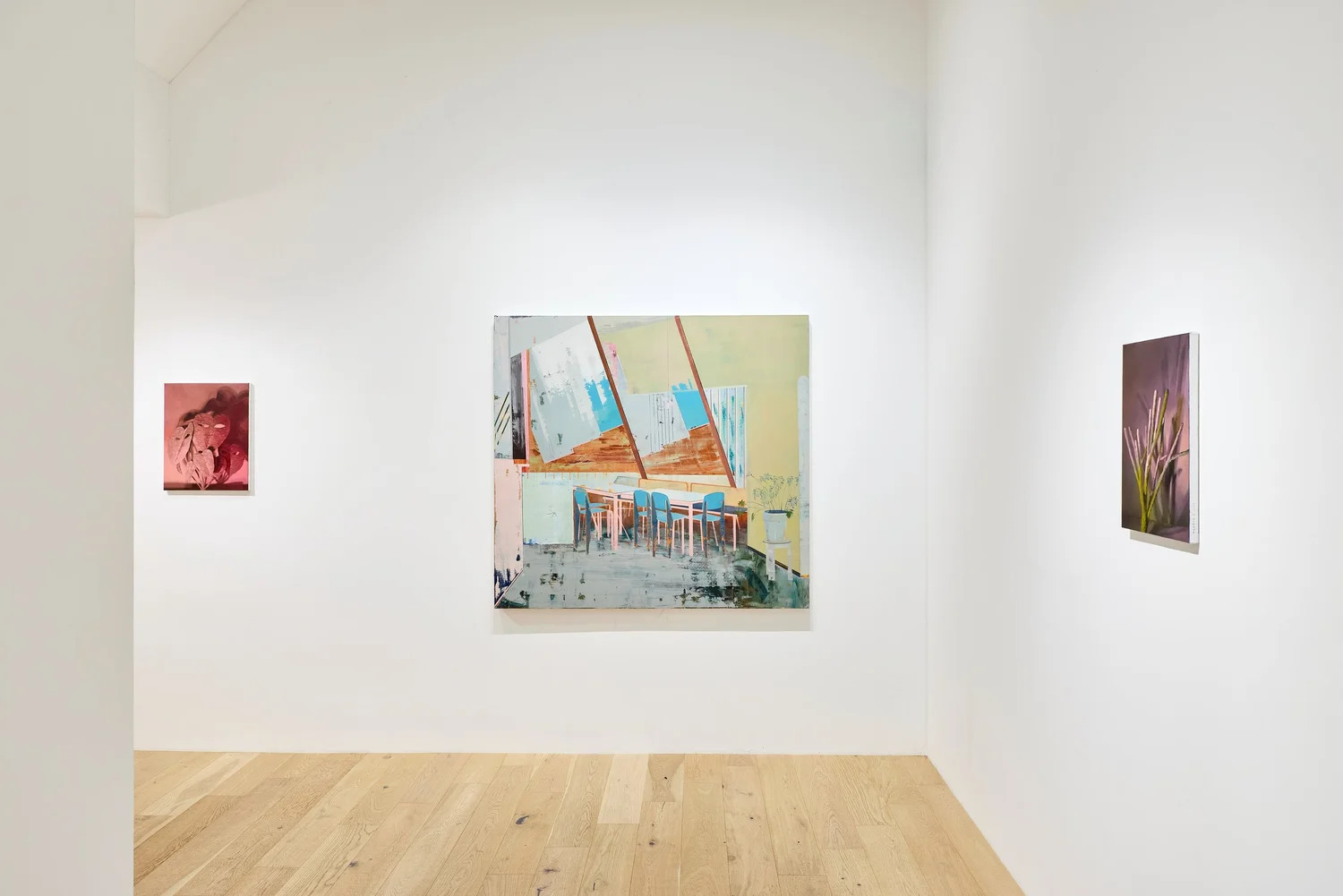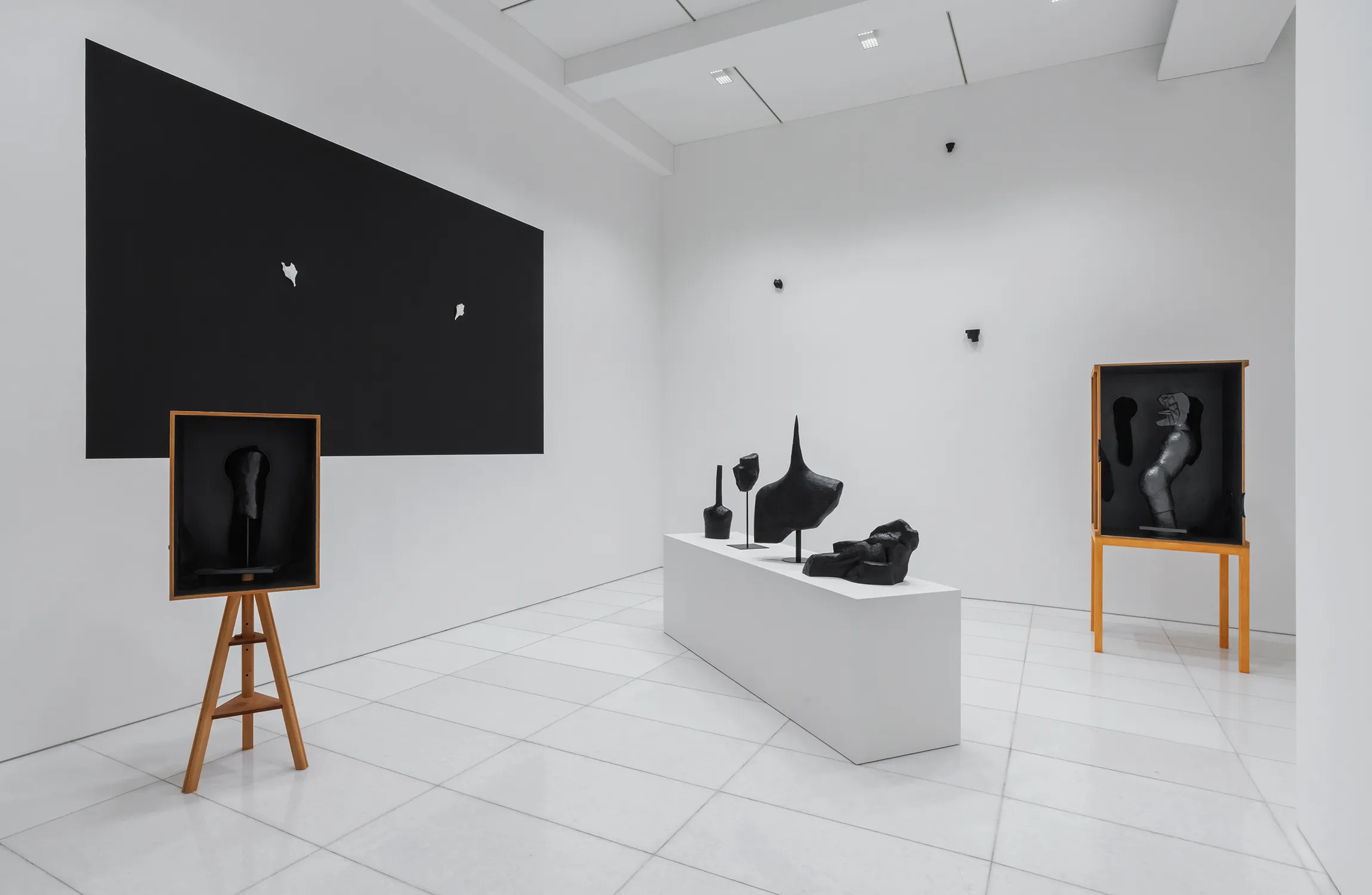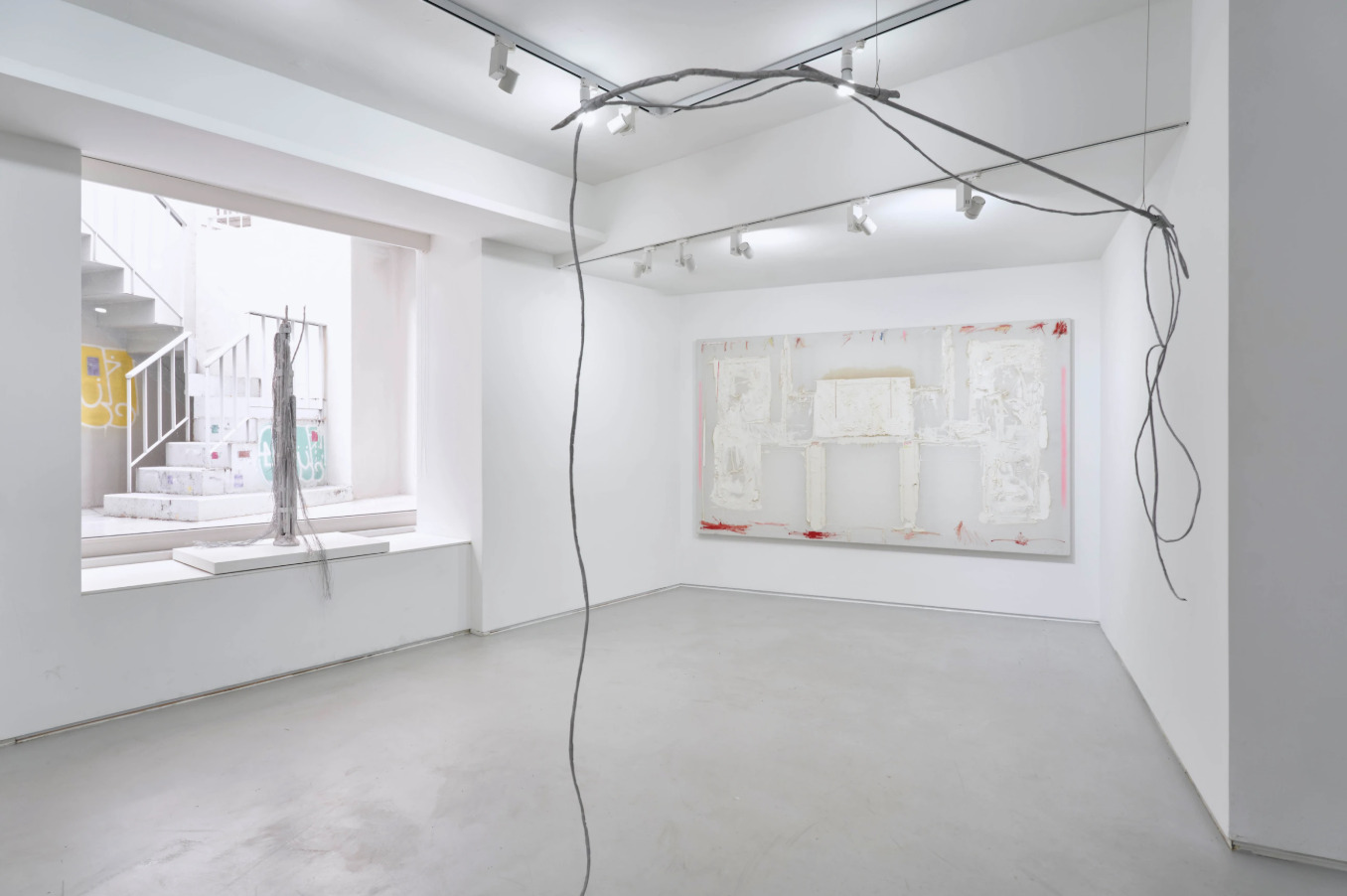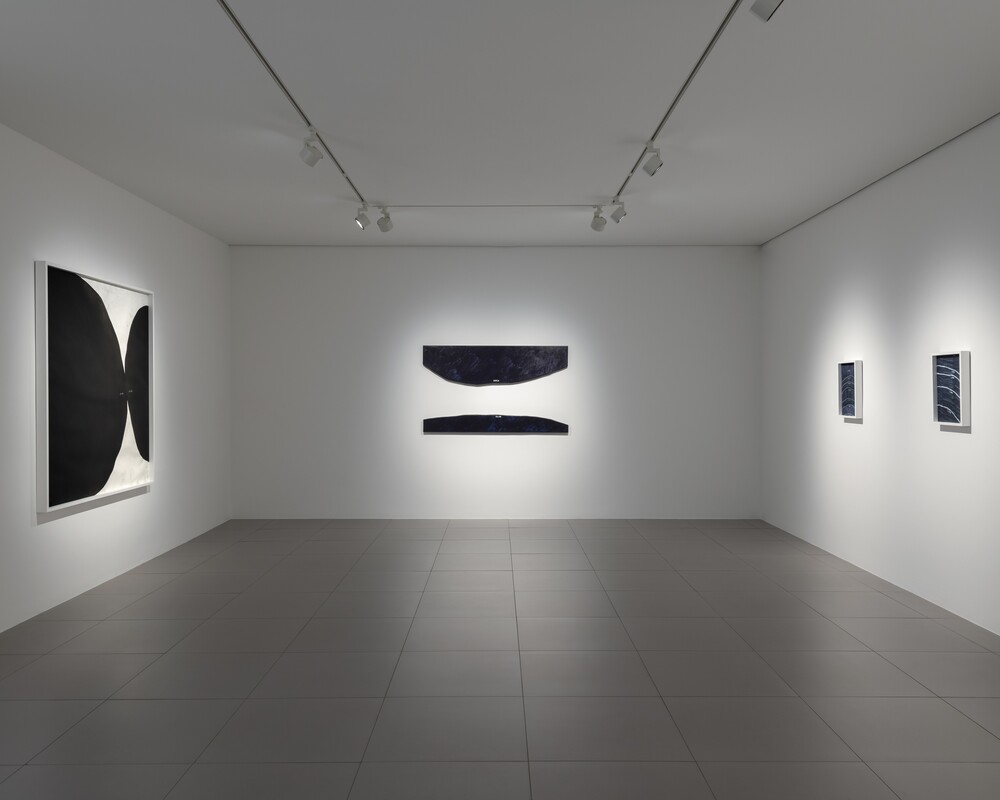

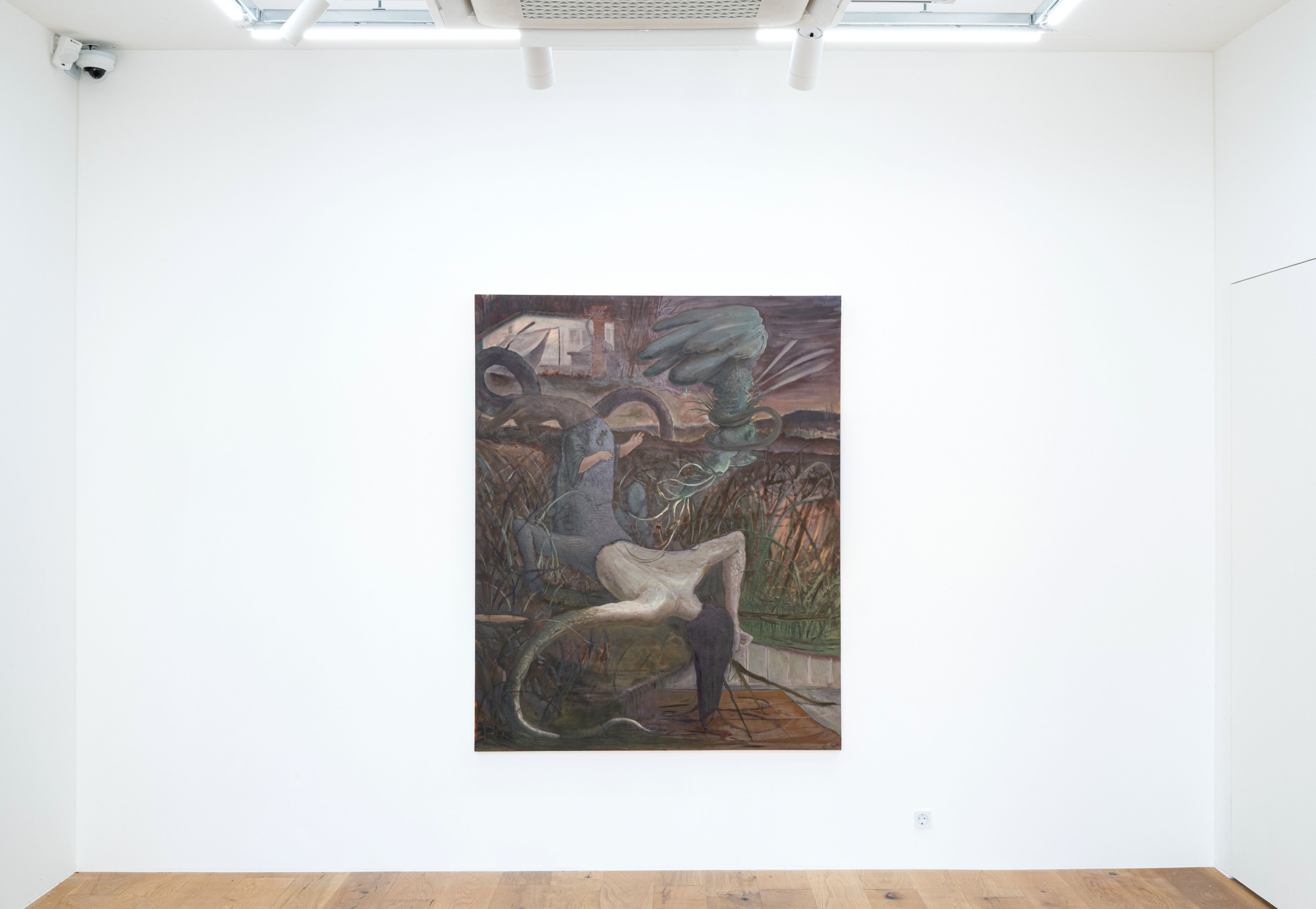
Installation view of 《From The Dead Center of Nowhere》 © KICHE
KICHE
presents a solo exhibition 《From The Dead Center of
Nowhere》, by artist Nam Seokwoo, on view through
November 7.
Nam
Seokwoo’s paintings are grounded in the tangible and intangible impressions he
encounters on his way to and from the studio: the gestures and voices of
passersby, smells, the texture of the air against his skin, and the memories,
reveries, and emotions that linger in his mind.
Gathering
fragments of sensation submerged in consciousness, he moves between past and
present, imagination and reality, giving shape to figures and breathing life
into the stories he constructs. For Nam, painting is akin to the stage of a
one-act play, where the relationship between “the world” and “the self” is
contemplated within a framework woven from images and narratives.
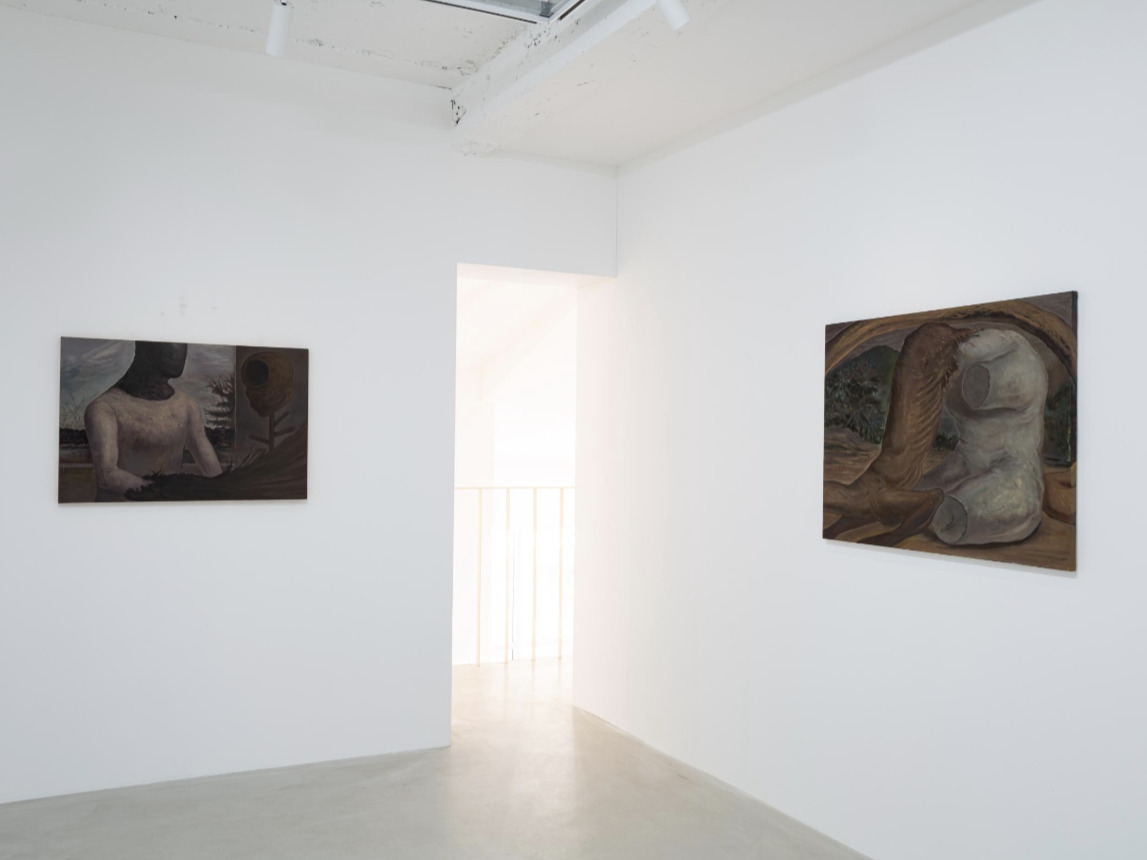
Installation view of 《From The Dead Center of Nowhere》 © KICHE
The
title of Nam’s third solo exhibition, 《From the Dead Center of Nowhere》, comes from a sentence in a novel. The artist often has the uncanny
experience of situations encountered in books overlapping with the passage of
everyday life. Even while walking around his studio, he finds himself suddenly
wondering where he is and what this space is for.
In
those moments, the reality in which he stands temporarily becomes “a place that
is nowhere.” Whenever his hand cramps, for instance, he recalls an old man’s
left hand curling like a hawk’s talon in the middle of the sea.
At
other times, he confuses the world of an elderly locksmith with the dreams of
someone heading out into rough waters. In this way, the landscapes inhabited by
literary characters continually intersect with his own reality.
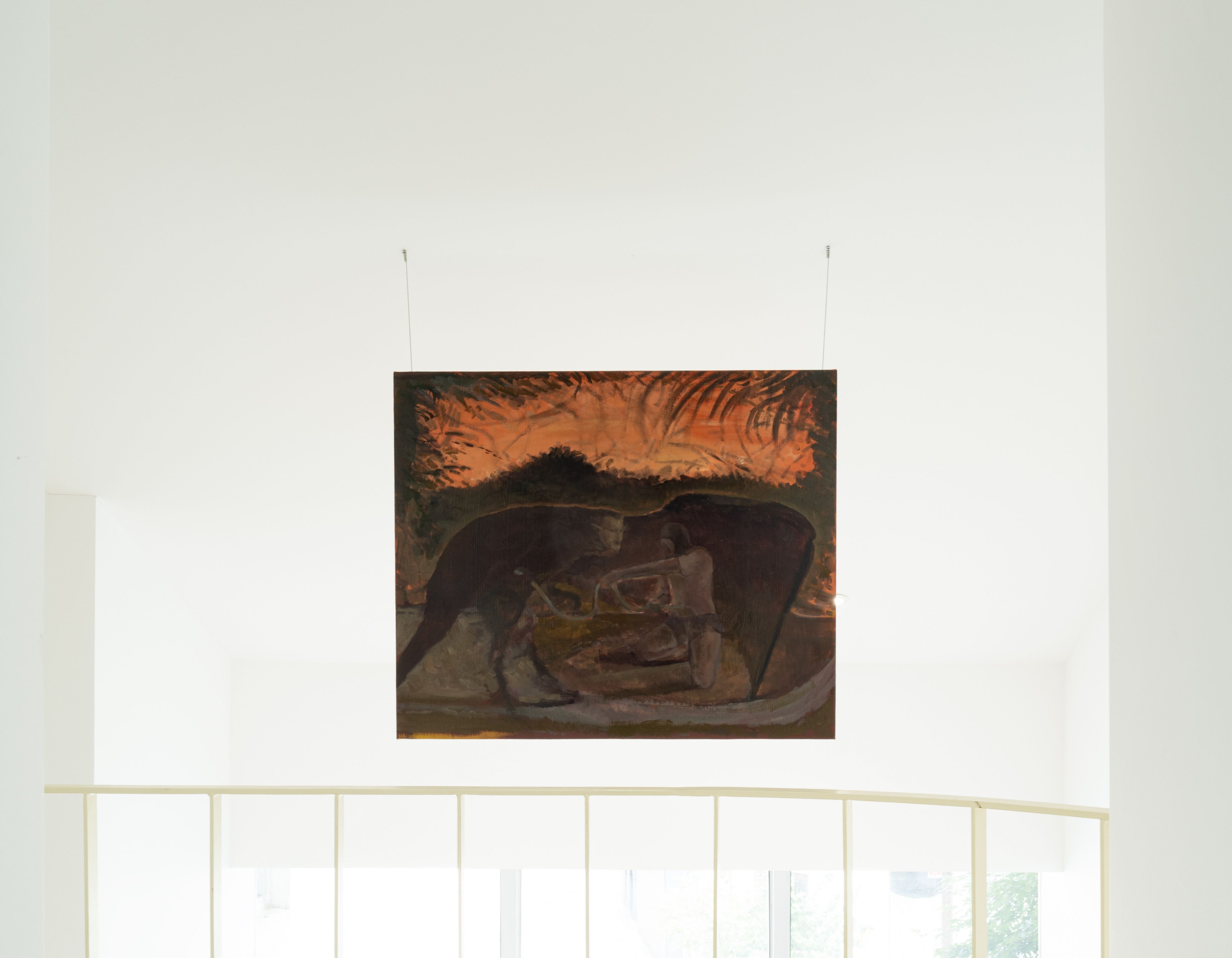
Installation view of 《From The Dead Center of Nowhere》 © KICHE
Faces are seldom clearly visible in
Nam’s paintings. The empty “speech bubbles” he often uses in their place become
symbolic signs that guide the events unfolding on stage toward an open ending.
As his practice develops, these speech bubbles take on increasingly varied
forms, becoming caves, musical instruments, boxes, and jars.
While the scenes he creates present
highly specific images and events, their ambiguous editing and omissions
prevent them from resolving into a single, complete narrative. The figures,
places, and times he paints thus occupy a threshold: the dead center of
nowhere. And there the artist pauses, quietly asking, “Where would you like to
go now?”