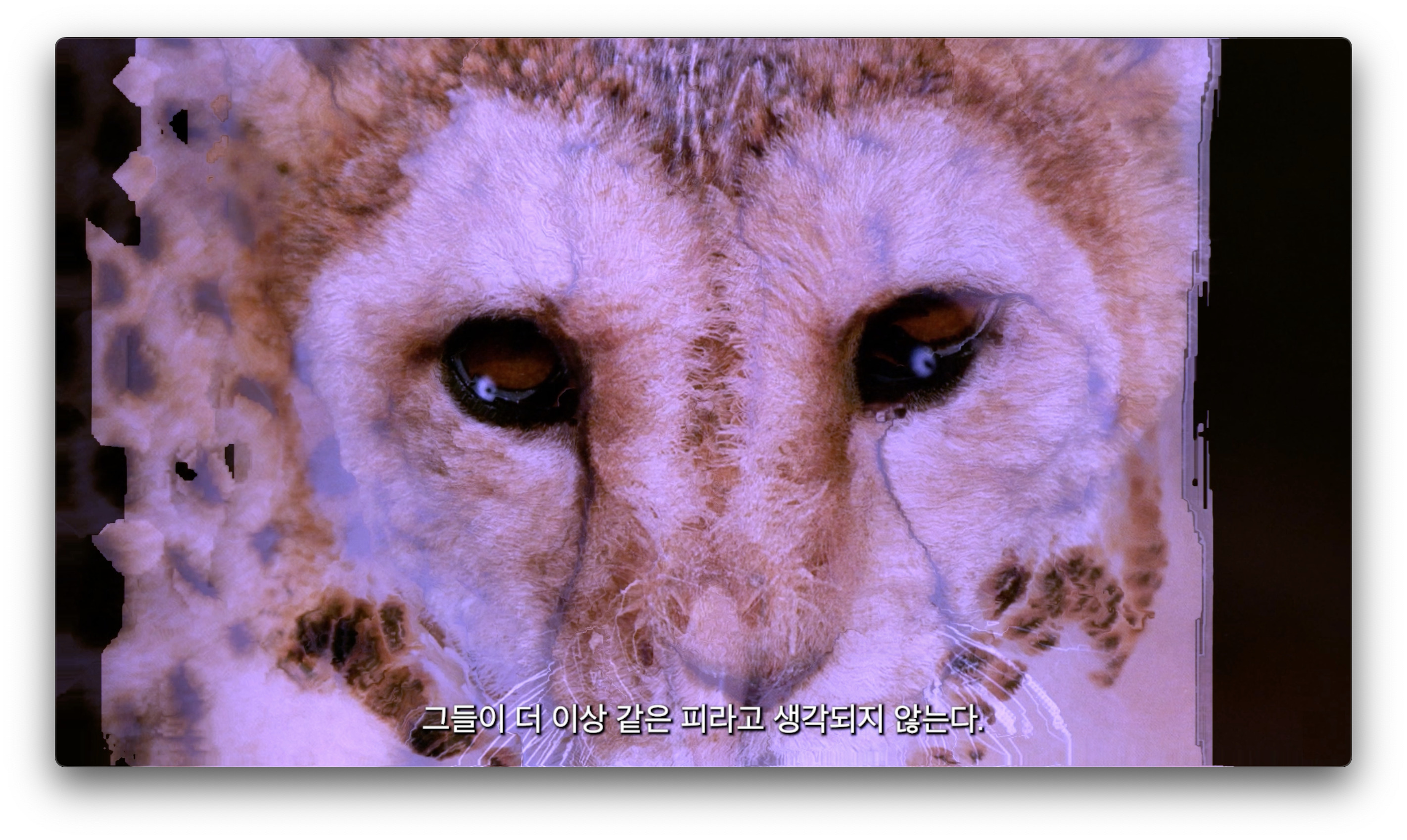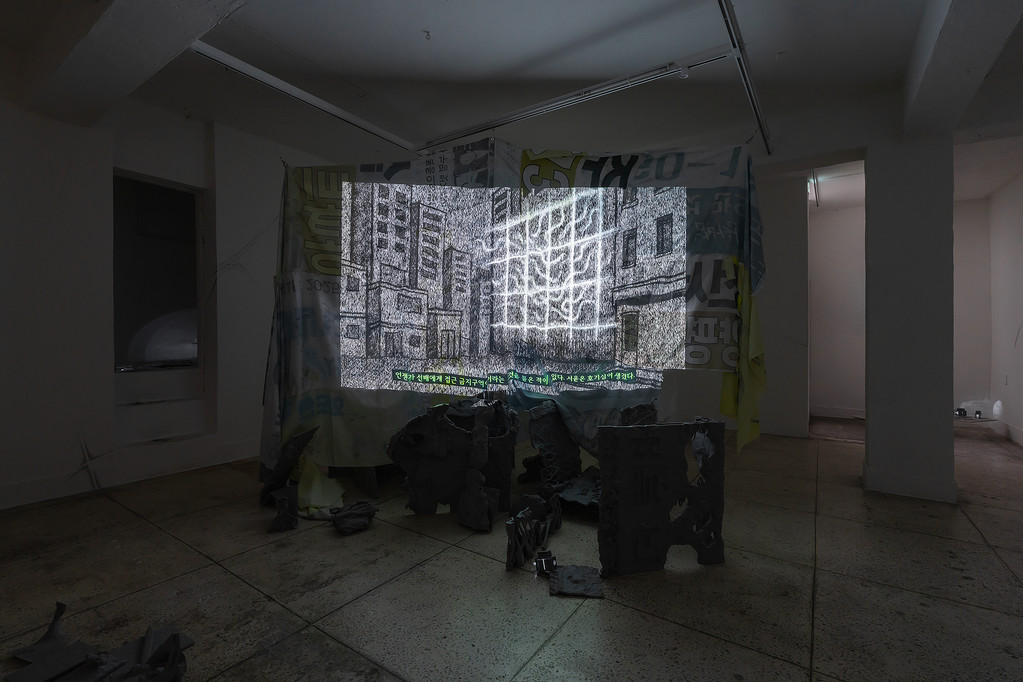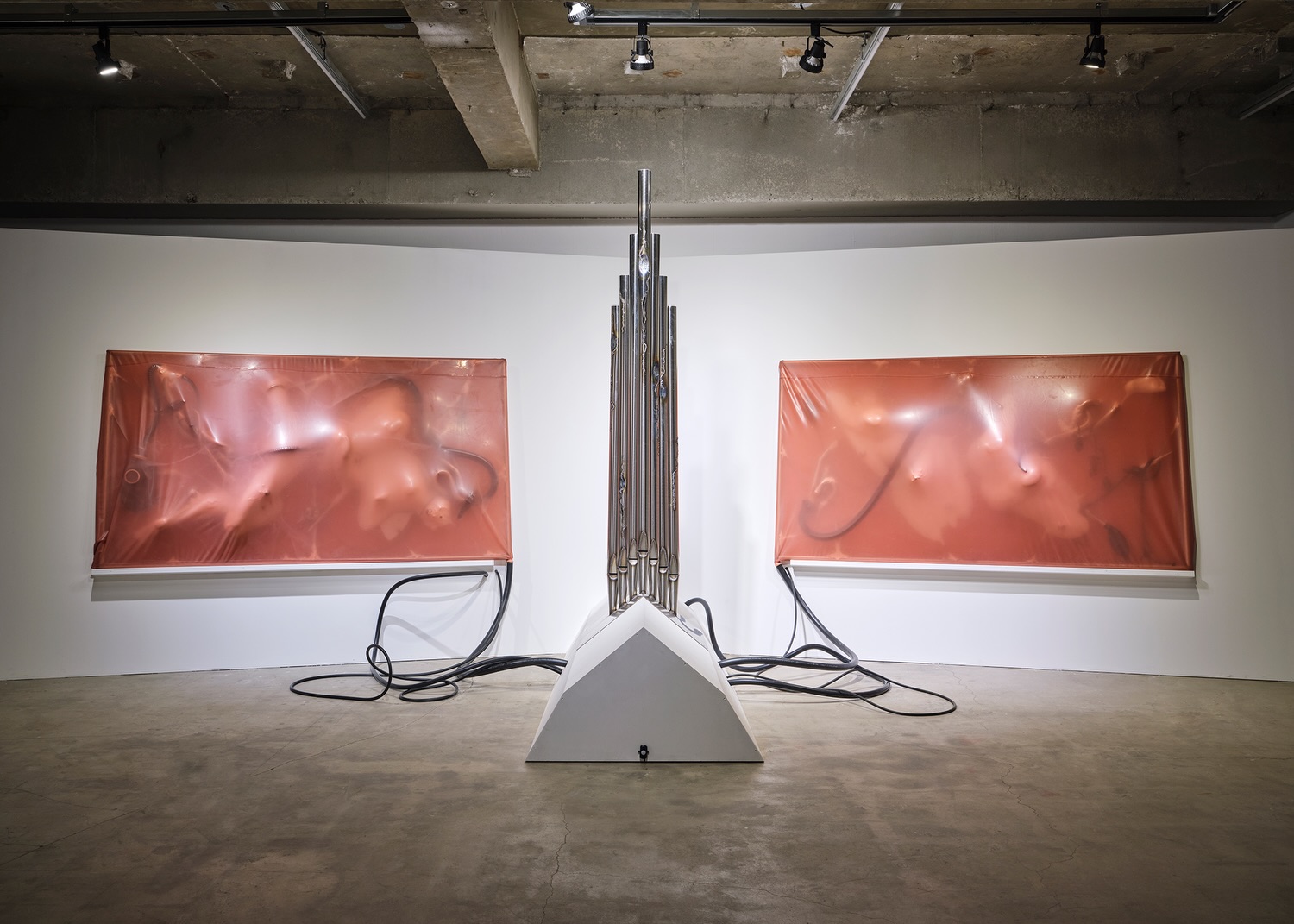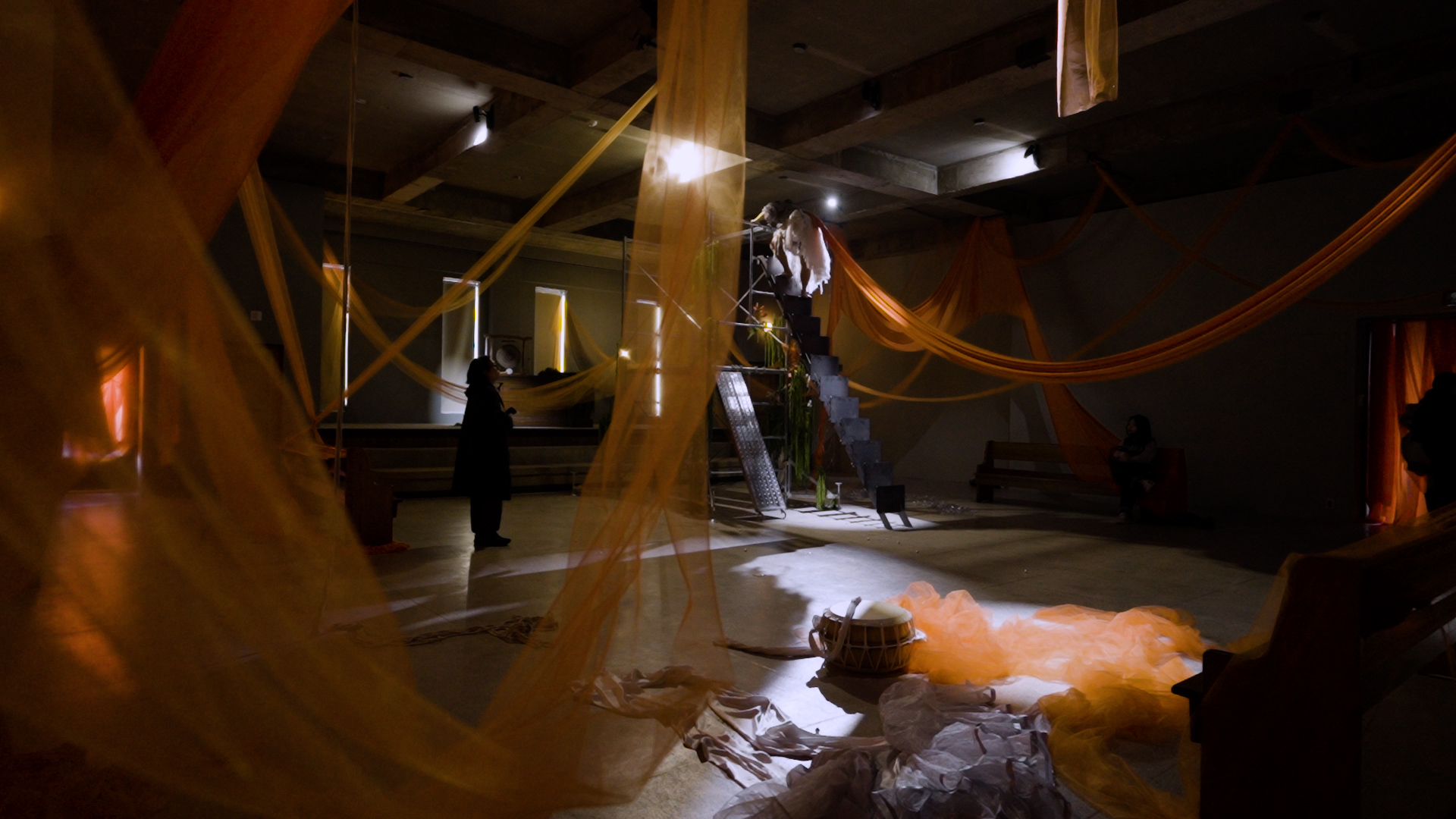

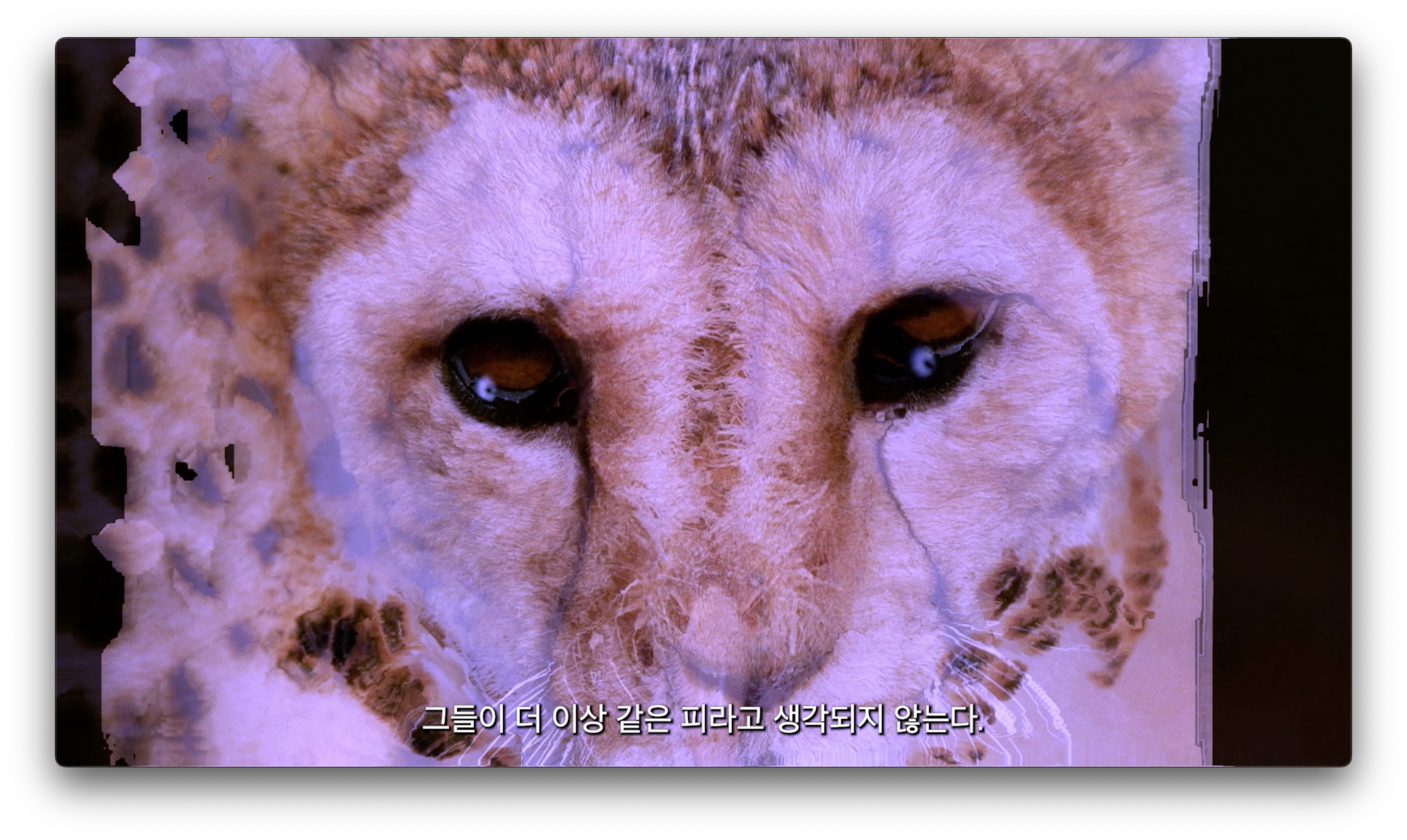
Hye Joo Jun, Delusion - How to Face the Lost Lives (still), 2025, Single-channel video, color, sound, 10min 27sec. © SONGEUN Art and Cultural Foundation and the Artist. All rights reserved.
SONGEUN presents 《Endoskopeia》, a solo exhibition by Hye Joo Jun, winner of the 22nd SONGEUN Art
Award, from June 19 to August 1.
In 《The 22nd
SONGEUN Art Award Exhibition》 (2022), Jun presented
Hummer (2022), a work that expanded her inquiry into
invisible materials, environmental flows, and their effects on the body and
society.
Focusing on structural parallels between
energy resource extraction, military technologies, and the ecological dispersal
of pollen, the work sensorially evoked mechanisms of infiltration that often
escape perception through the use of plant and pollen specimens, highly
directional speakers, and reconstructed sound.
By revealing the ways in which external
environments shape both human bodies and social structures, Hummer
marked a turning point in the artist’s practice, leading to a more sustained
exploration of the interconnected relationships that constitute the world
through microscopic matter and sensory experience.
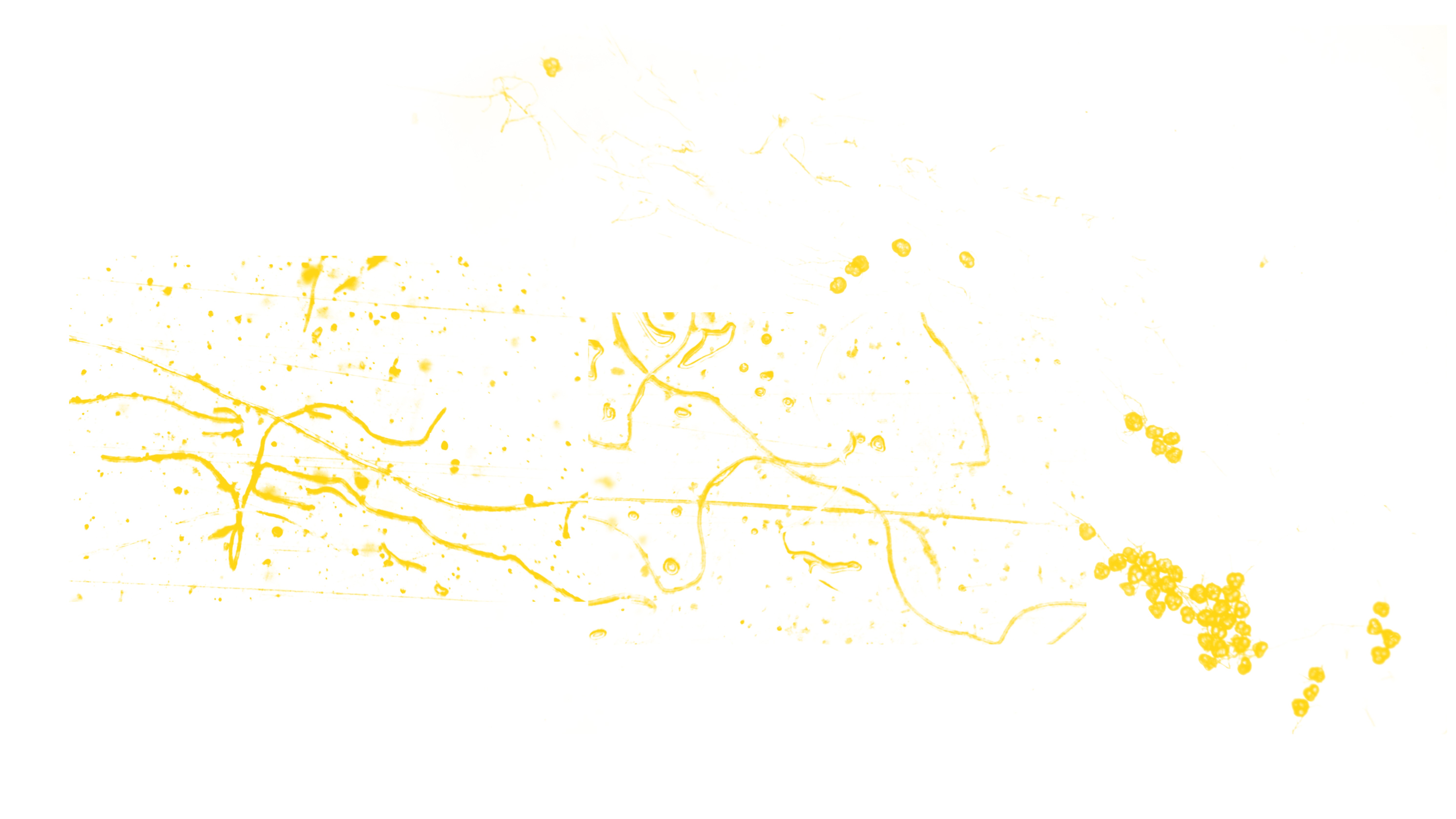
Hye Joo Jun, Refugia, 2025, Pollen, silkscreen, 3.55x28m © SONGEUN Art and Cultural Foundation and the Artist. All rights reserved.
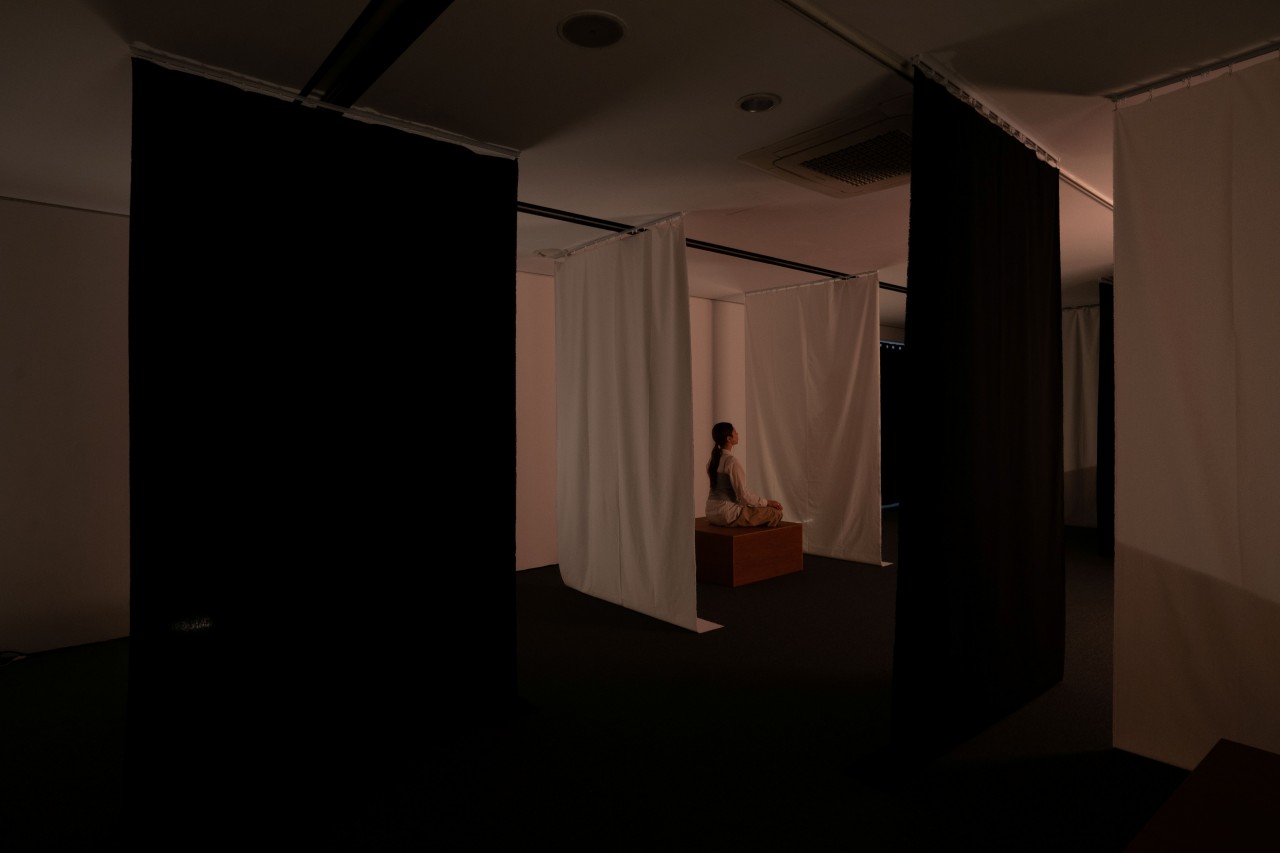
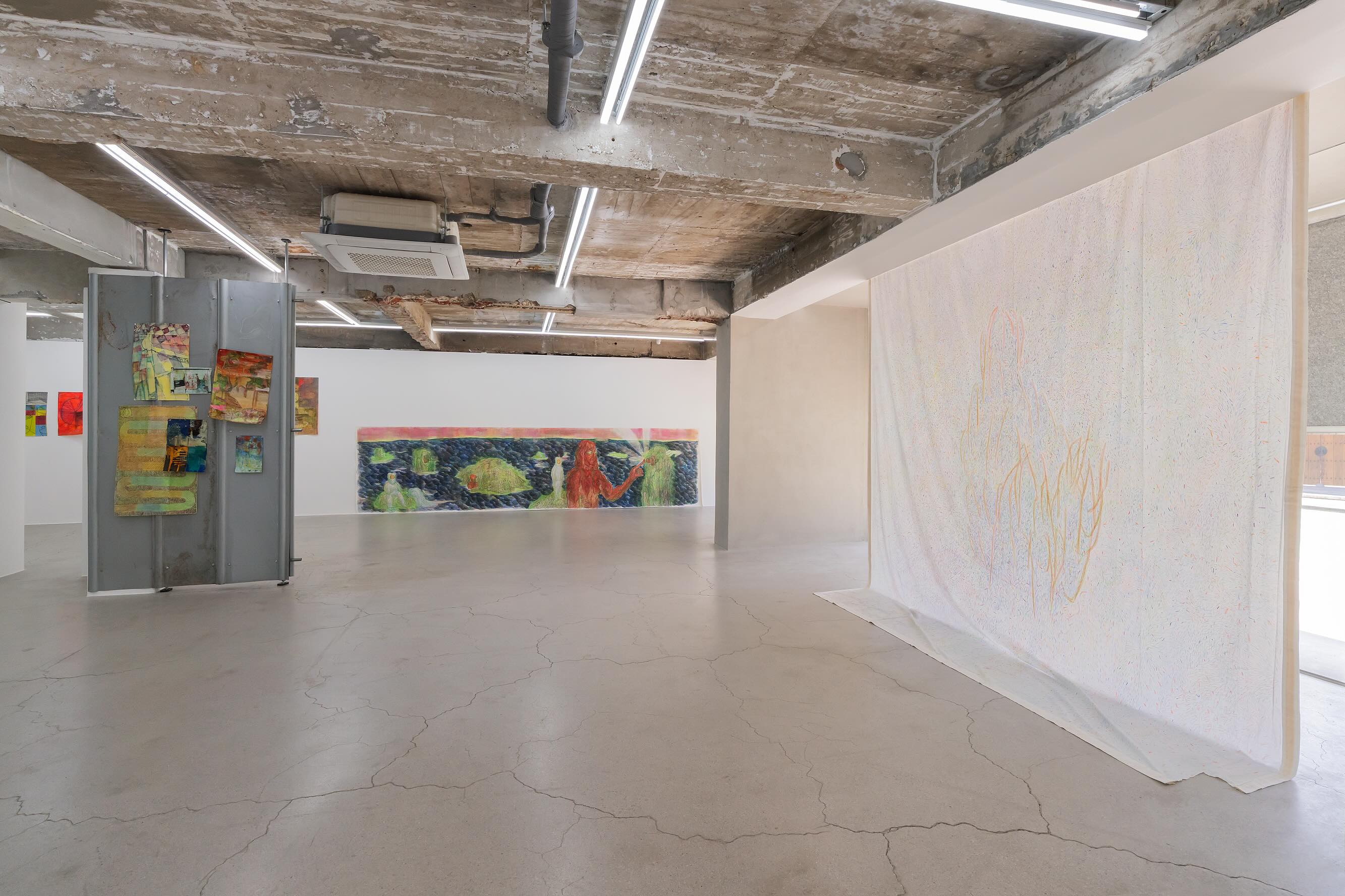
《Endoskopeia》 takes
its title from the Greek roots endo (“within”) and skopein (“to observe”). The
exhibition examines the processes through which the external world enters and
permeates the body, transforming the entire exhibition space into a tubular
structure through which visitors move.
As audiences travel through a sequence that
unfolds from geological strata to growth and ultimately the atmosphere, they
encounter the ways in which microscopic airborne entities traverse history and
ecology, technology and power, as well as bodies and societies.

Hye Joo Jun, All-Over (still), 2022, Single-channel video, 7min 24sec. © SONGEUN Art and Cultural Foundation and the Artist. All rights reserved.
Traces accumulated within the earth pass
through systems of growth and control before expanding into sensations of
atmosphere and circulation, revealing that the boundaries traditionally
separating humans from their environments are in fact situated within ongoing
processes of exchange and transformation.
While Jun’s previous works often explored
the relationship between humans and their surroundings through observing,
collecting, classifying, and arranging objects from the world around her, this
exhibition constructs an environment in its own right.
Within it, the human body becomes a sensory
site that responds to air, humidity, and sonic vibrations, inviting visitors to
experience their entanglement with the forces that continuously shape both
bodies and environments.