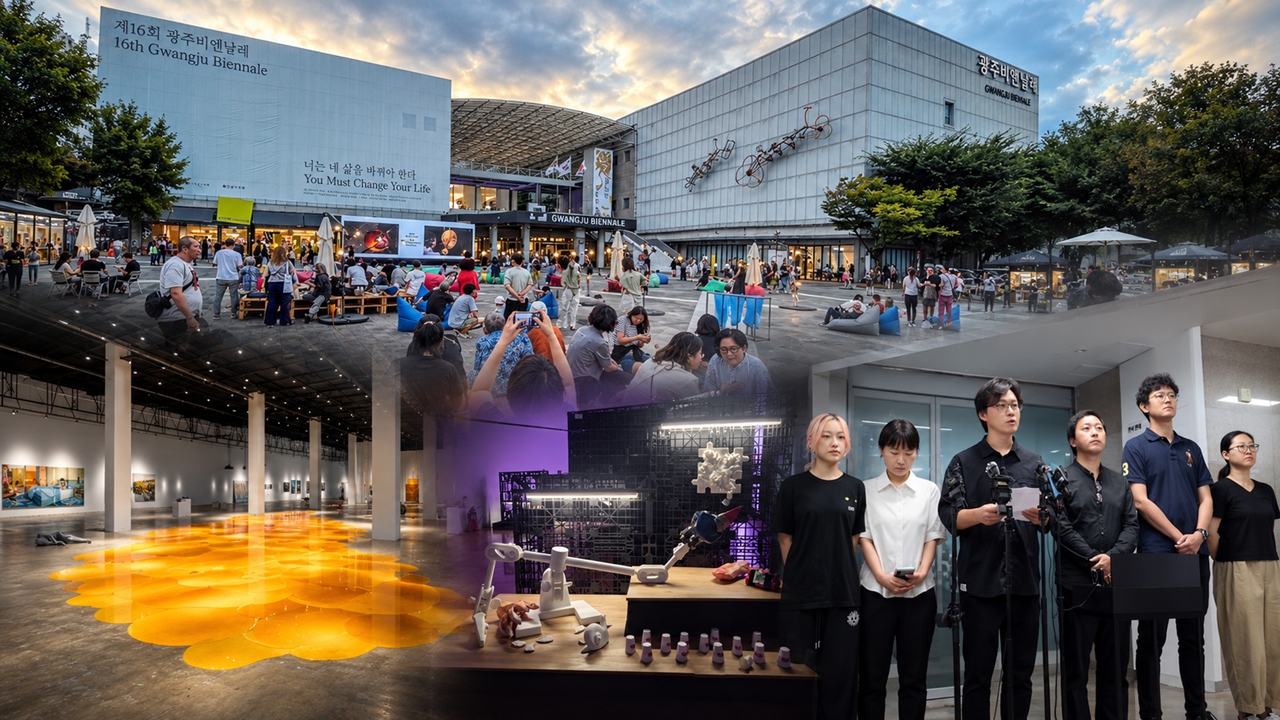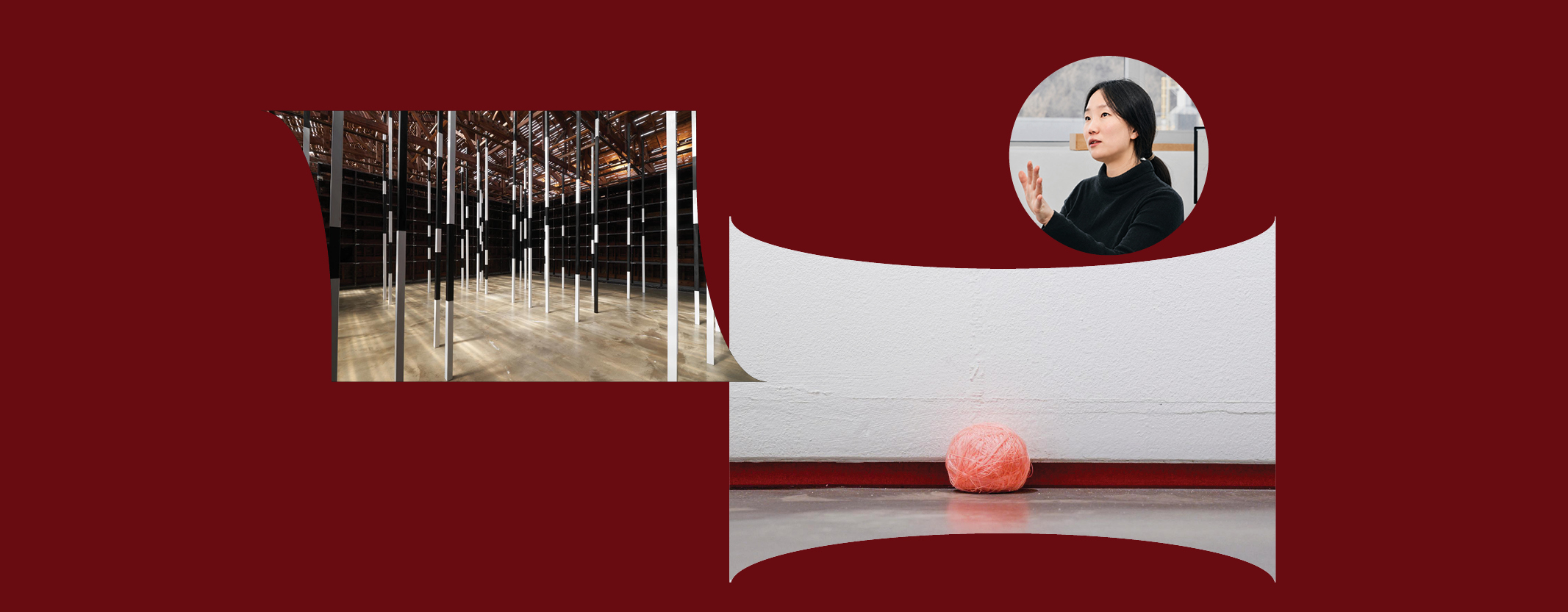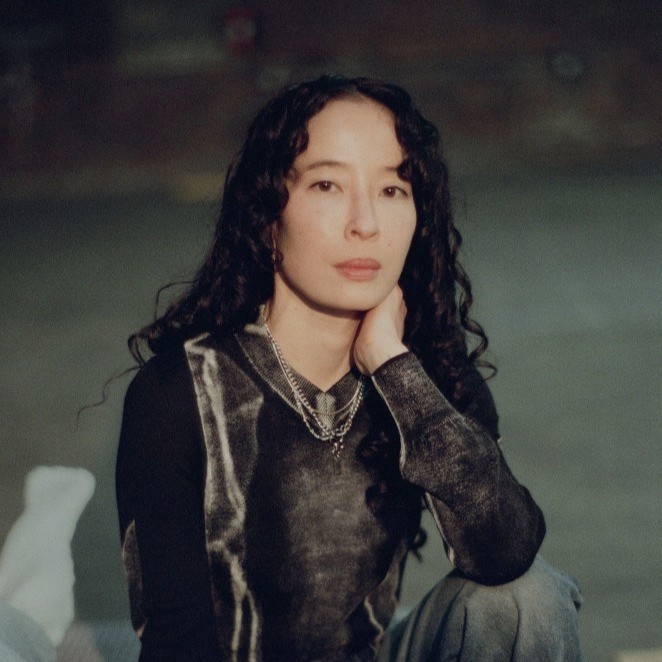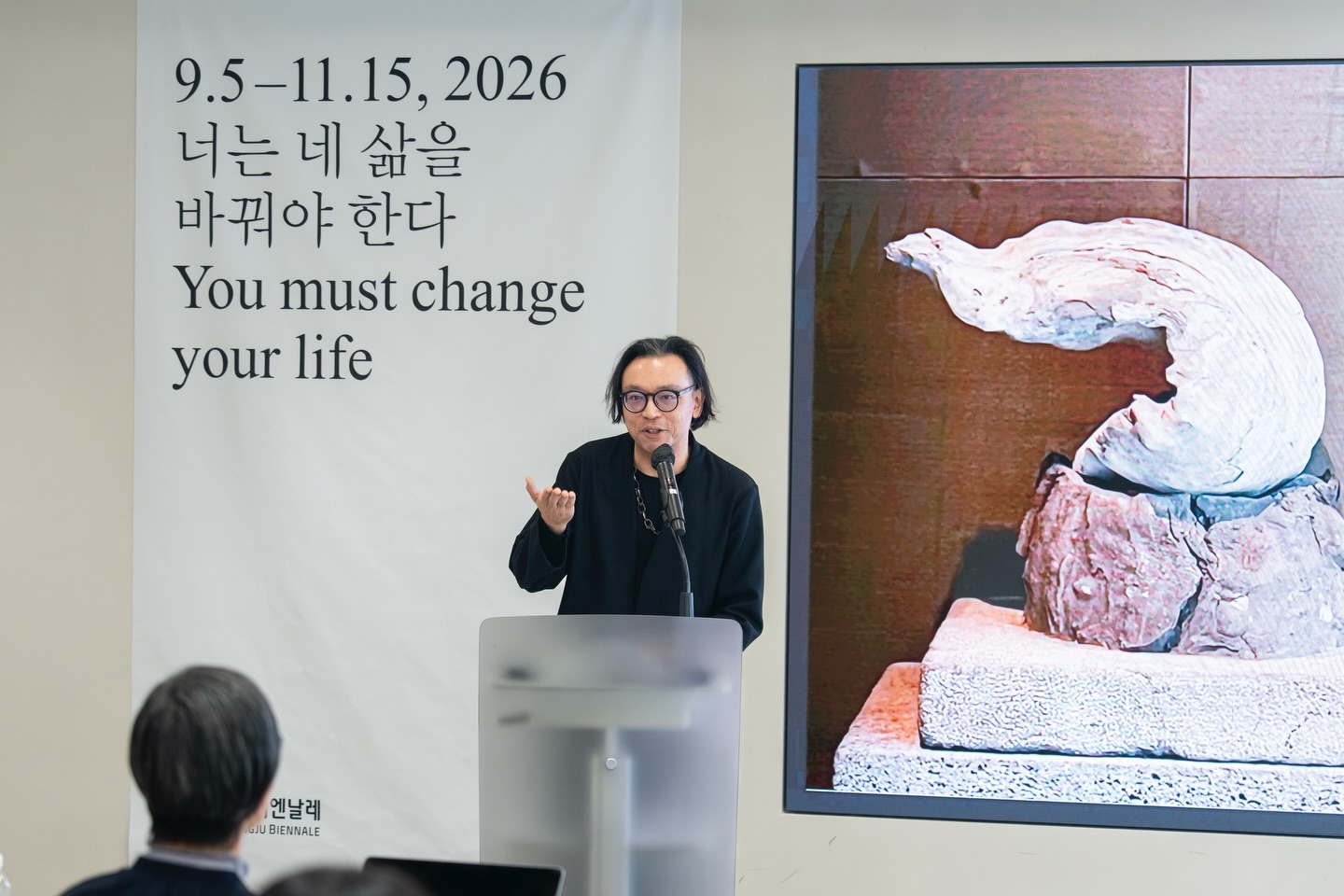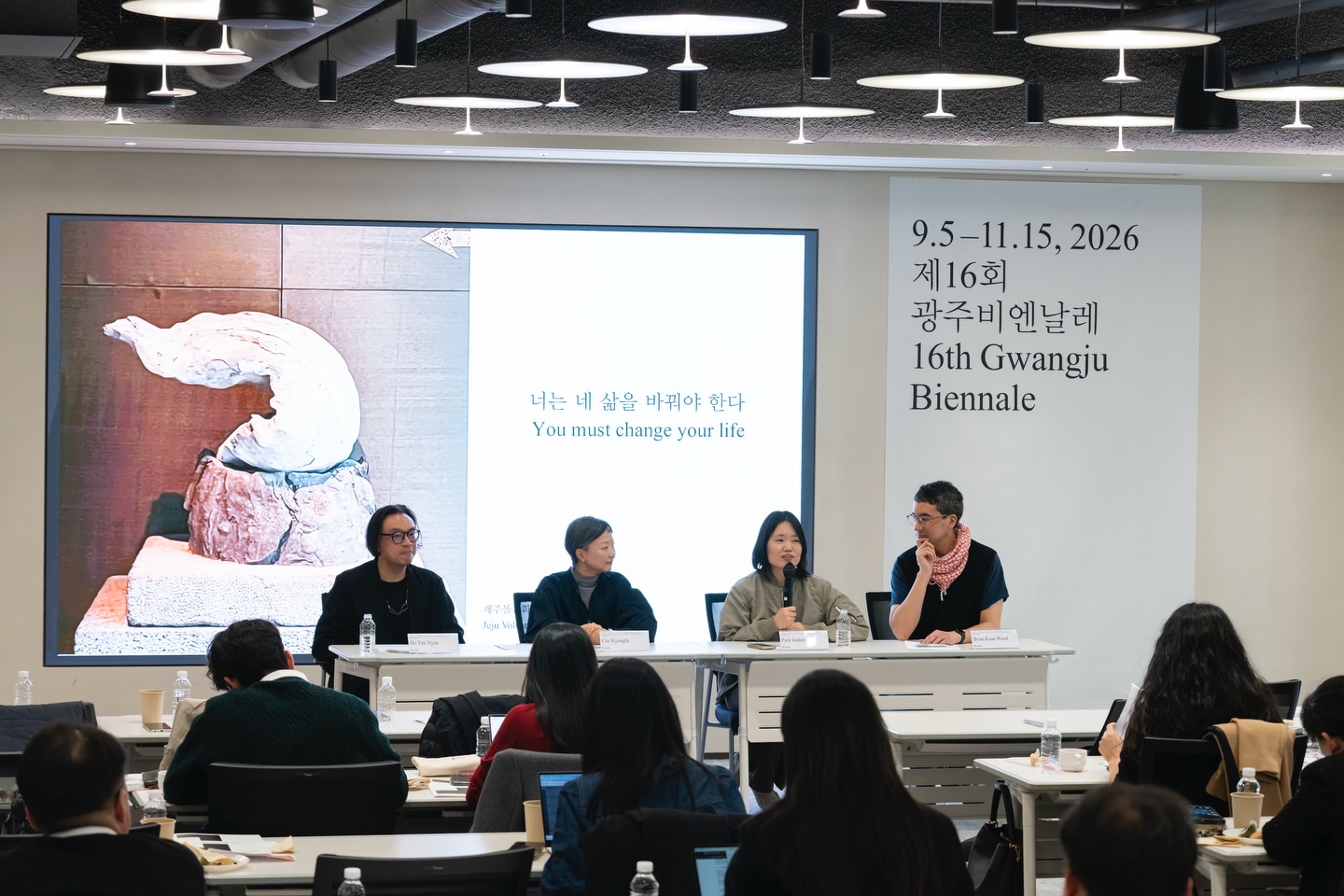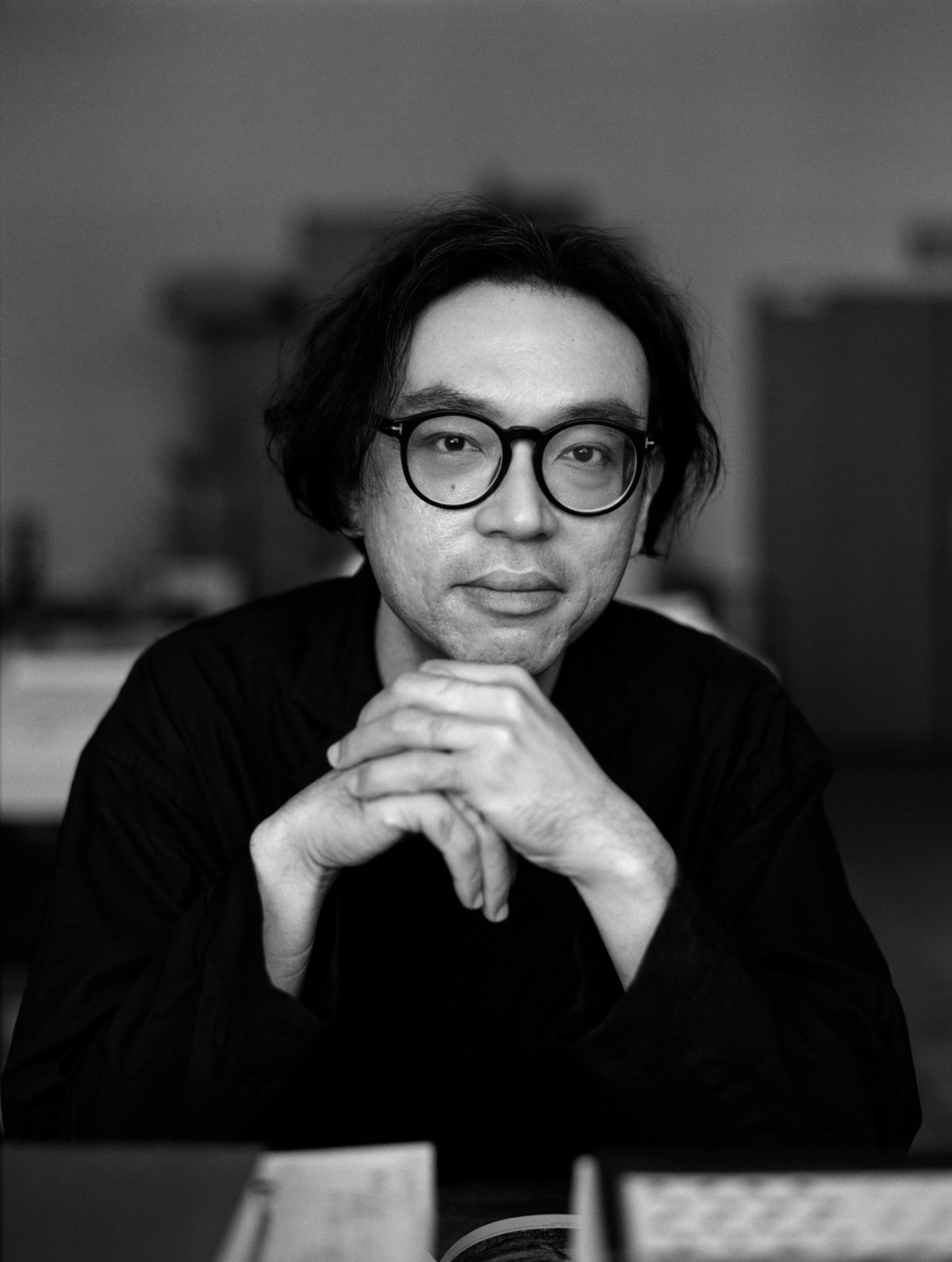

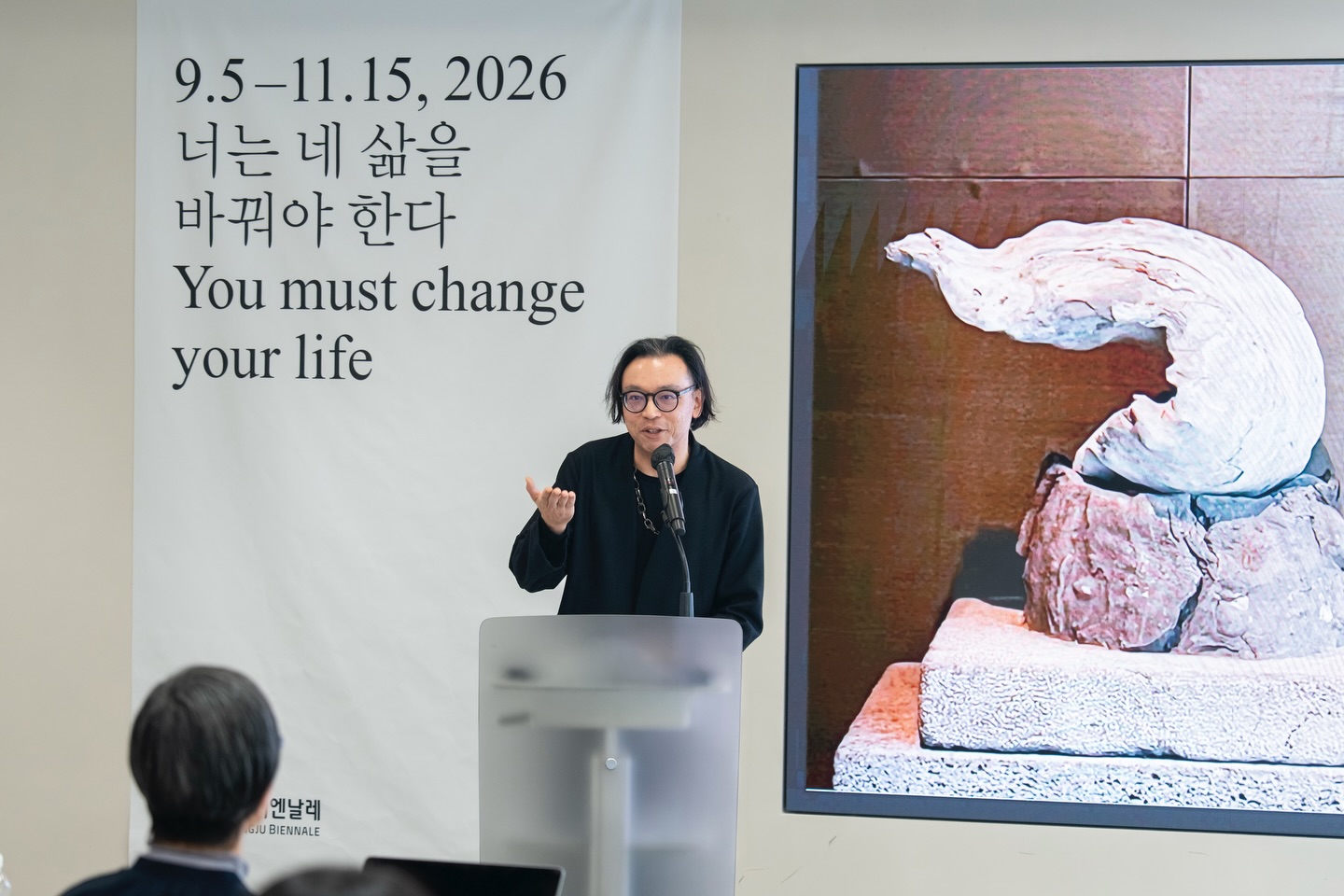
Ho Tzu Nyen, Artistic Director of 16th Gwangju Biennale © Gwangju Biennale
The Gwangju Biennale Foundation
today announced the 43 participating artists and groups selected for the 16th
Gwangju Biennale.
The roster, selected by Artistic
Director Ho Tzu Nyen together with curators Park Gahee, Brian Kuan Wood, and
Che Kyongfa, brings together voices from diverse generations and regions.
Through their sustained artistic practices, the participating artists explore
how new possibilities and ways of living emerge and take shape.
This edition of the Biennale
approaches transformation as an ongoing process of practice through which
bodies and modes of perception are continually reconfigured. While change often
becomes most visible in moments of rupture and crisis, it also unfolds through
the gradual accumulation of everyday actions and experiences.
In this process, individuals are
shaped by their encounters with others, expanding the possibilities for
transformation through mutual influence and exchange.
Artistic Director Ho Tzu Nyen
stated, “We envision this Biennale as a space of encounter and solidarity,
where practices and experiments taking place across different scales and fields
can come together to engage in dialogue, raise questions, and, above all,
amplify one another’s voices.”
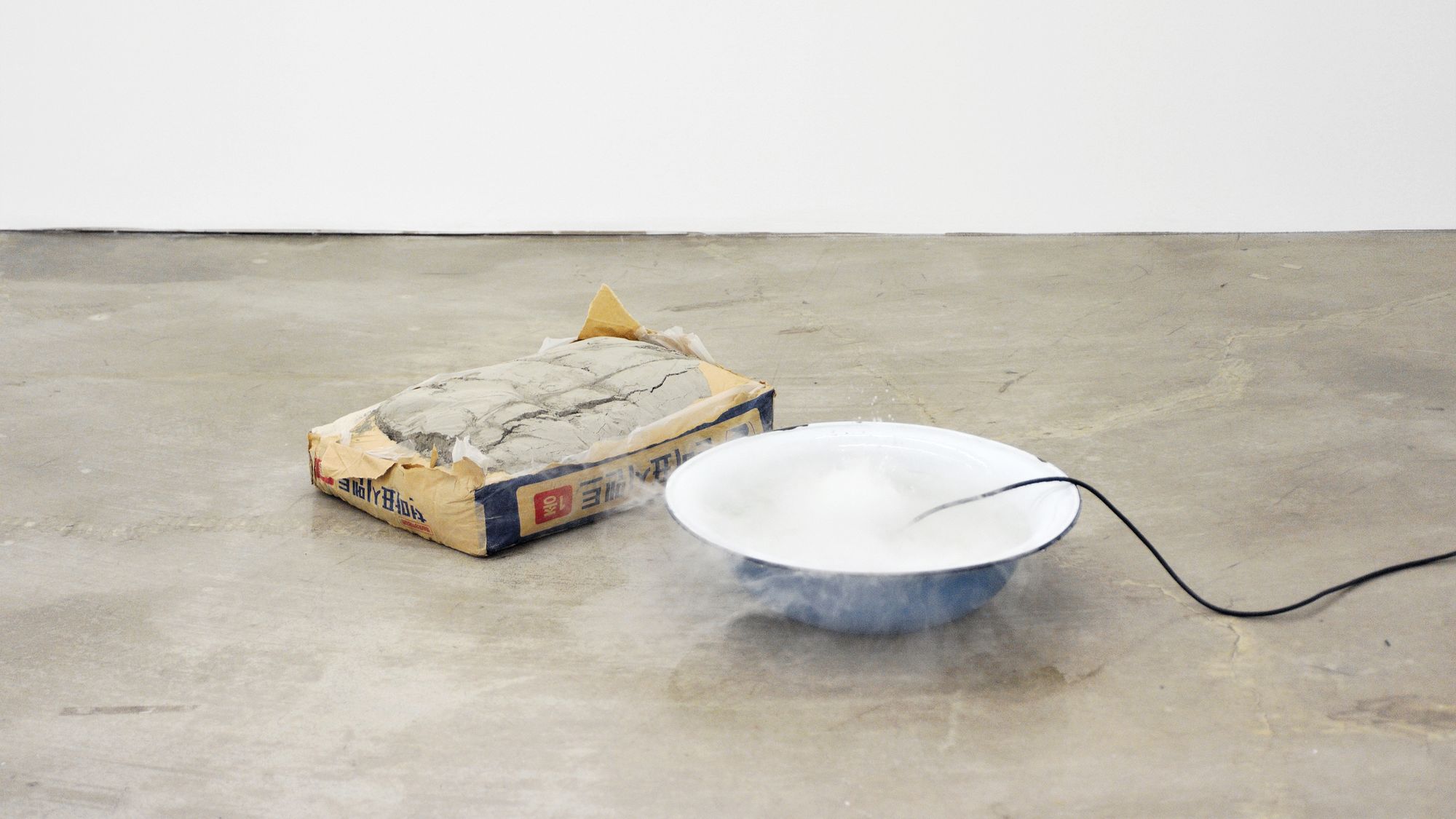
Nina Canell, Perpetuum Mobile (25 kg), 2009 © Nina Canell
The exhibition unfolds as a journey
across multiple scales, ranging from the molecular to the cosmic. From intimate
gestures and familiar bonds to social relations and resonances that traverse
different worlds, the participating artists approach the question of
transformation in distinct ways.
From the molecular poetics found in
the work of Nina Canell, to the existential weight of post-socialist life
embedded in the paintings of Wang Jiahao, and the Sufi-inflected transcendence
evoked through breath, movement, and repetition in the work of Rafik Greiss,
these practices explore new ways of sensing and inhabiting relationships
between bodies, histories, and others.
Techniques of transformation and
self-transformation also emerge through the artists’ performative practices.
Tehching Hsieh and Amanda Heng have long treated life itself as an artistic
medium, sustaining practices grounded in repetition, discipline, and
concentration. Their works reshape perception and propose new ways of
experiencing and living through time.
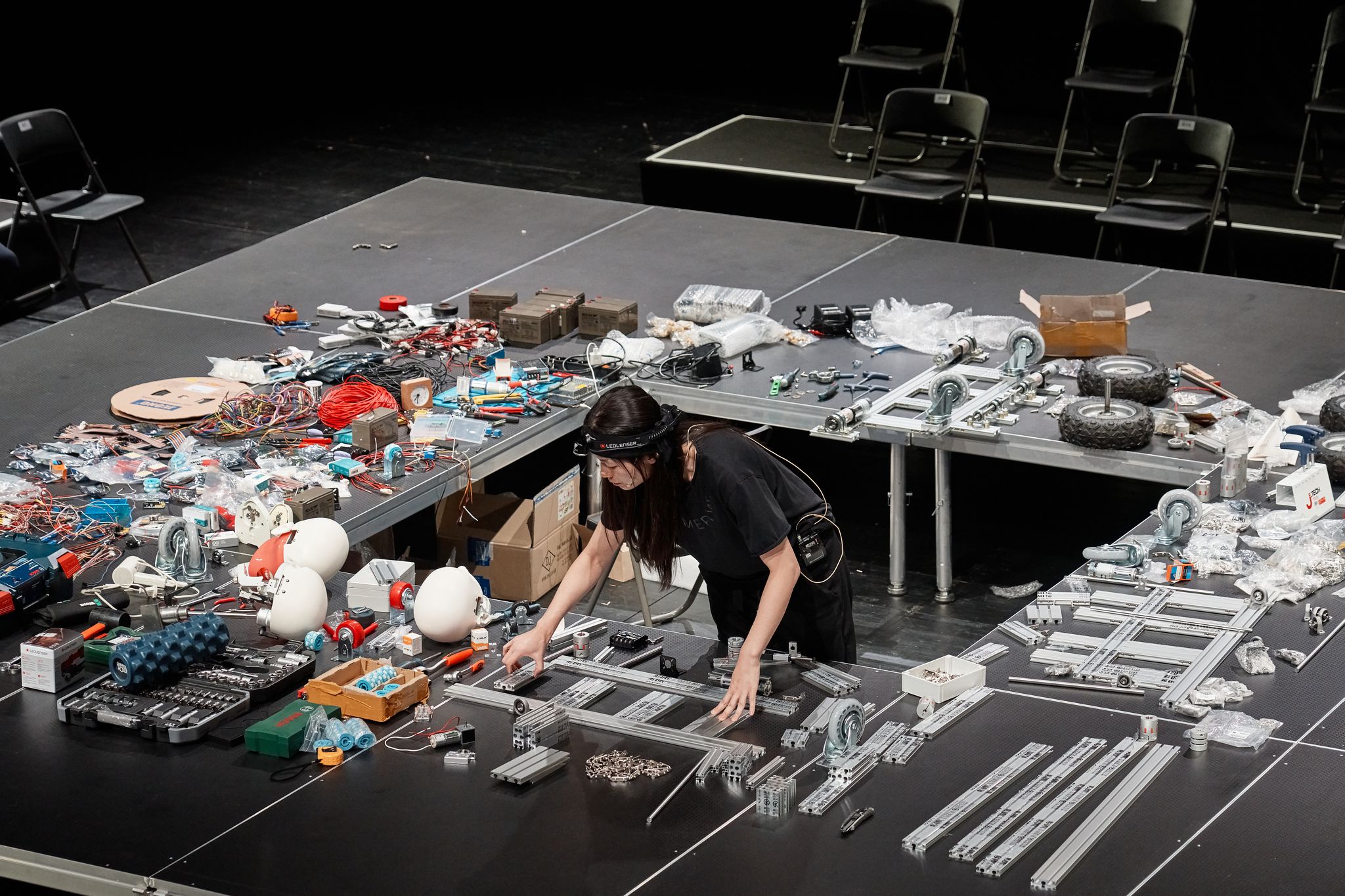
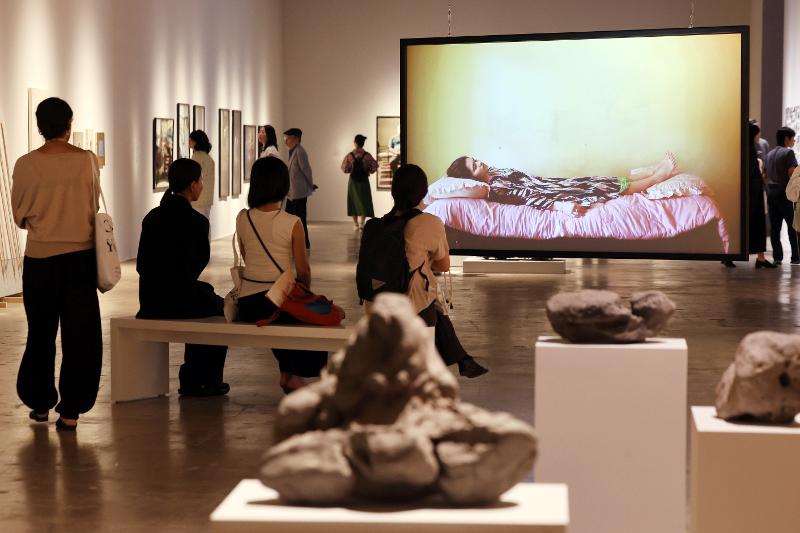
Geumhyung Jeong, Making Show, 2021 © Geumhyung Jeong
The works of A K Dolven, Matthew
Barney, Geumhyung Jeong, and Angela Goh examine the body as a site of continual
becoming through processes of affirmation and restraint, estrangement and
reconstruction.
Meanwhile, the work of Mona
Benyamin takes the family itself as an unfamiliar object of inquiry,
reconsidering and reimagining the meaning of intimacy within a world marked by
political injustice, precarity, and absurdity.
Following the journey of Rim
Dongsik, who has long sought new ways of living alongside nature, visitors will
encounter natural artist Woo Pyongnam (Jongsun). Nearby, they will also encounter Chunseol Tea (Spring Snow
Tea), cultivated by Heo Baekryeon, a master of Southern School literati
painting who founded the Gwangju Agricultural High Technical School in 1947 and
devoted his life to bringing together art, agriculture, nature, and education.
For Christian Nyampeta, the body is
activated through its relations with other bodies, amplifying collective
capacities through shared learning and solidarity.
In the work of Kiri Dalena, the
body moves across boundaries—from the molecular individual to the family unit,
and further into the collective body of people gathered in protest. In the
visions of Saodat Ismailova and Sohrab Hura, the body ultimately begins to
resonate with other worlds beyond itself.
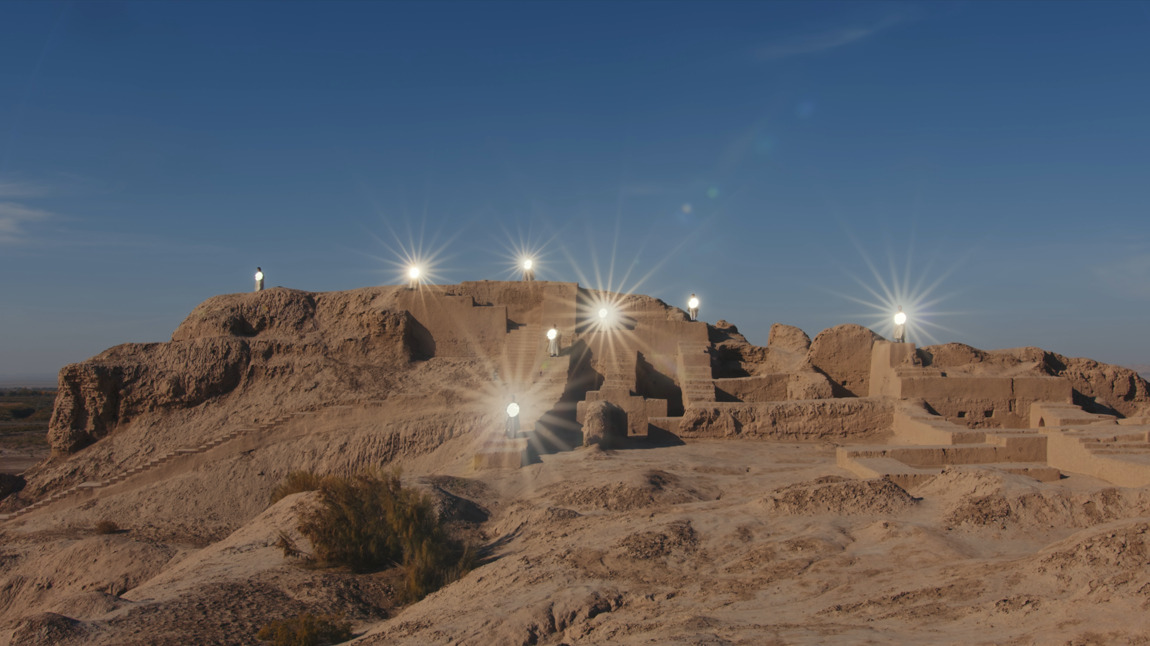
Saodat Ismailova, Melted into the Sun, 2024 © Saodat Ismailova
In bringing together practices that span a
wide range of scales and intensities, this edition of the Biennale proposes
artistic practice itself as a process of cultivating the capacity to sense,
endure, relate, imagine, and ultimately generate change. Art emerges here as a
practice of repetition and discipline through which such capacities are
continually tested, renewed, and reinvented.
The Biennale approaches Gwangju not merely
as a site for exhibition, but as a city where artistic practice, collective
action, and political transformation have long been inseparably intertwined.
Gwangju carries a history of creatively transforming conditions of oppression
and crisis, and that experience continues to resonate as a living reality in
the present.
In this context, the 16th Gwangju Biennale
noted the significance of presenting works by the mothers of the May Mothers
House as part of the exhibition. Their paintings embody resilience,
persistence, and creativity, and the Biennale regards the opportunity to share
these qualities with visitors as especially meaningful.
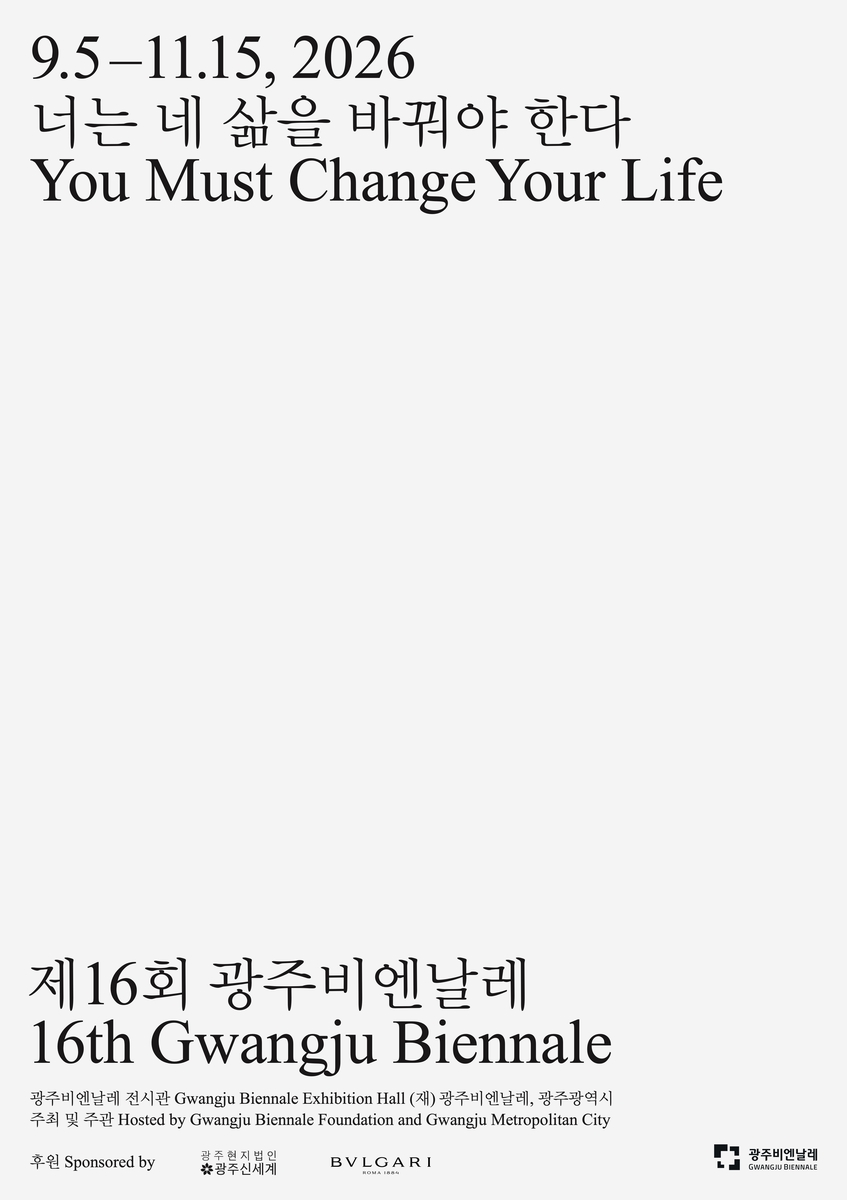
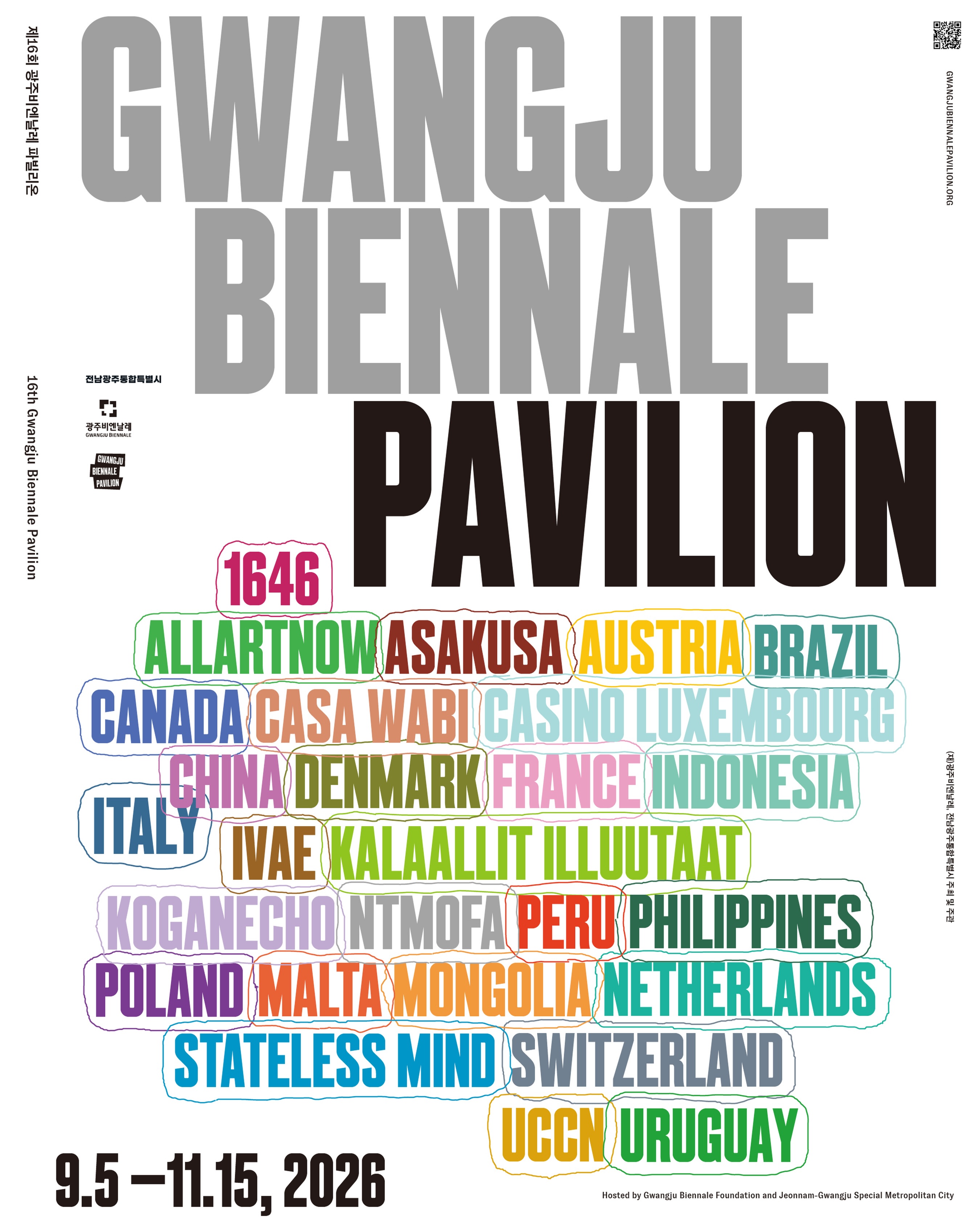
Poster image of the 16th Gwangju Biennale © Gwangju Biennale
Participating artists
Matthew Barney, Jean Barth, James Benning,
Mona Benyamin, Rossella Biscotti, CAMP, Nina Canell, Lygia Clark, Kiri Dalena
& Ben Brix, A K Dolven, İnci Eviner, Angela Goh, Goldin+Senneby, Jacqueline Kiyomi Gork,
Rafik Greiss, Amanda Heng, Heo Baekryeon (Gwangju Agricultural Technical High
School), James T. Hong, Tehching Hsieh, Sohrab Hura, Saodat Ismailova,
Volcanoes of Jeju (Jeju Stone Park), Jeong Geumhyung, E Roon Kang, Sunik Kim,
Július Koller, Daisuke Kosugi, Kwon Byungjun and Park Chan-kyong, Lu Yang, May
Mothers House, Melvin Moti, Nam Hwayeon, Christian Nyampeta, Bhenji Ra, Rim
Dong Sik and Nature Artist Woo Pyongnam (Jongsun), Ryu Hankil, Sasaki Ken,
Suzuki Akio, Ullimsanbang (Huh Ryeon, Huh Hyeong, Huh Geon, Huh Lim, Huh Moon,
Hur Jin), Wang Jiahao, Wang Tuo, Maya Watanabe