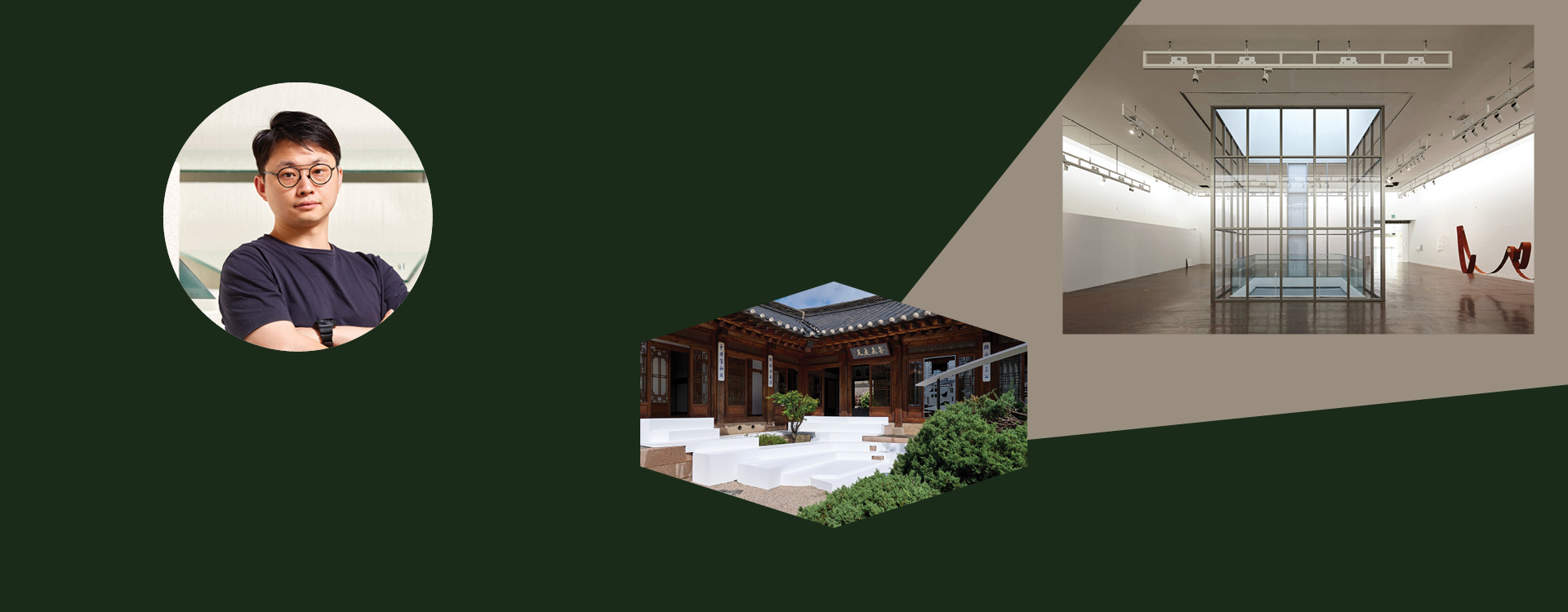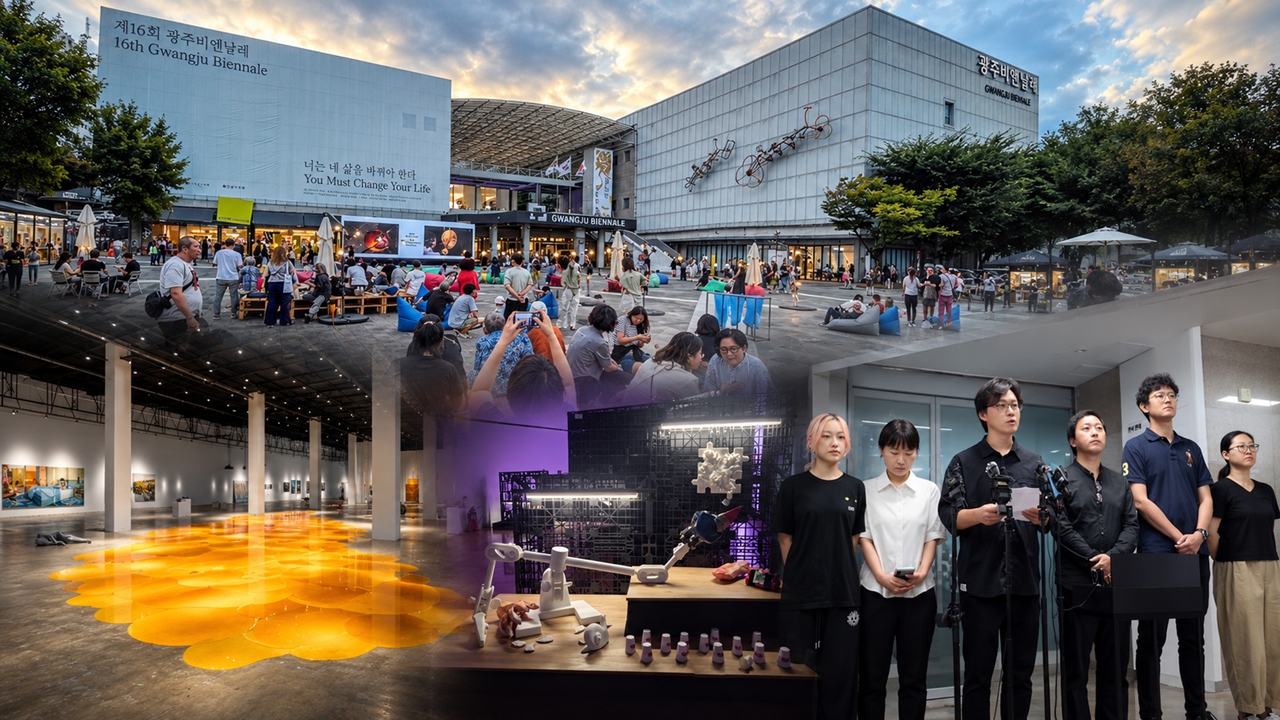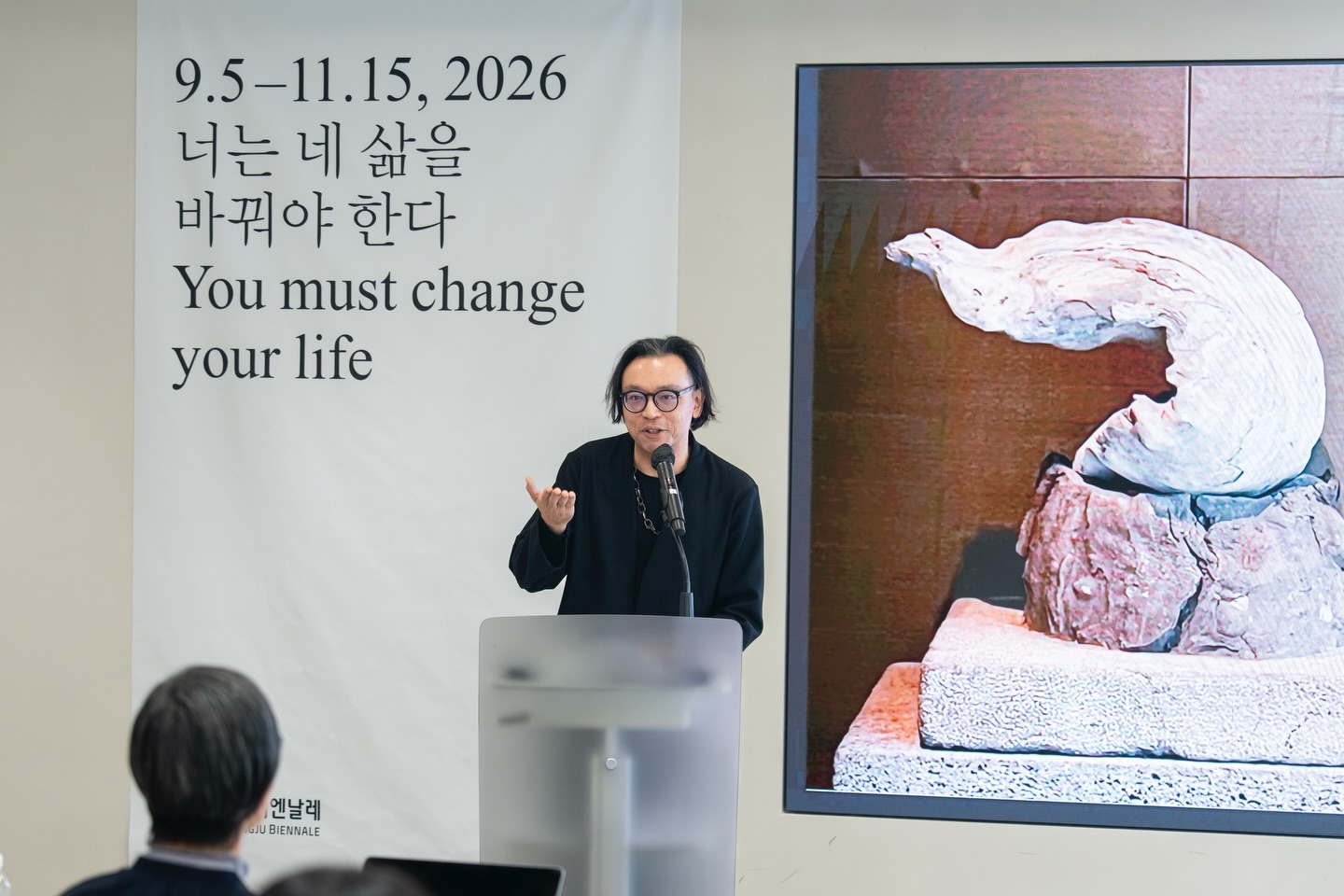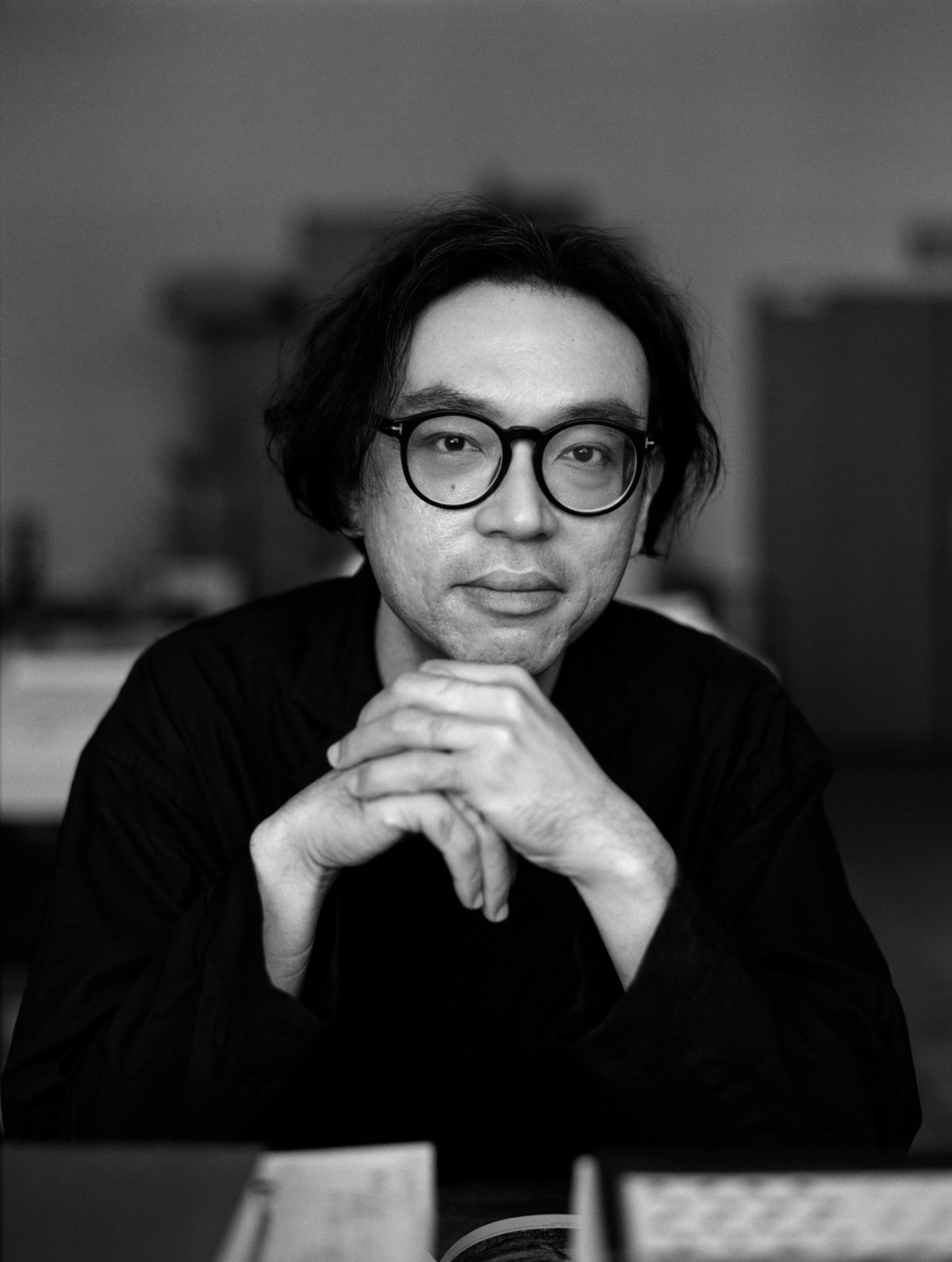

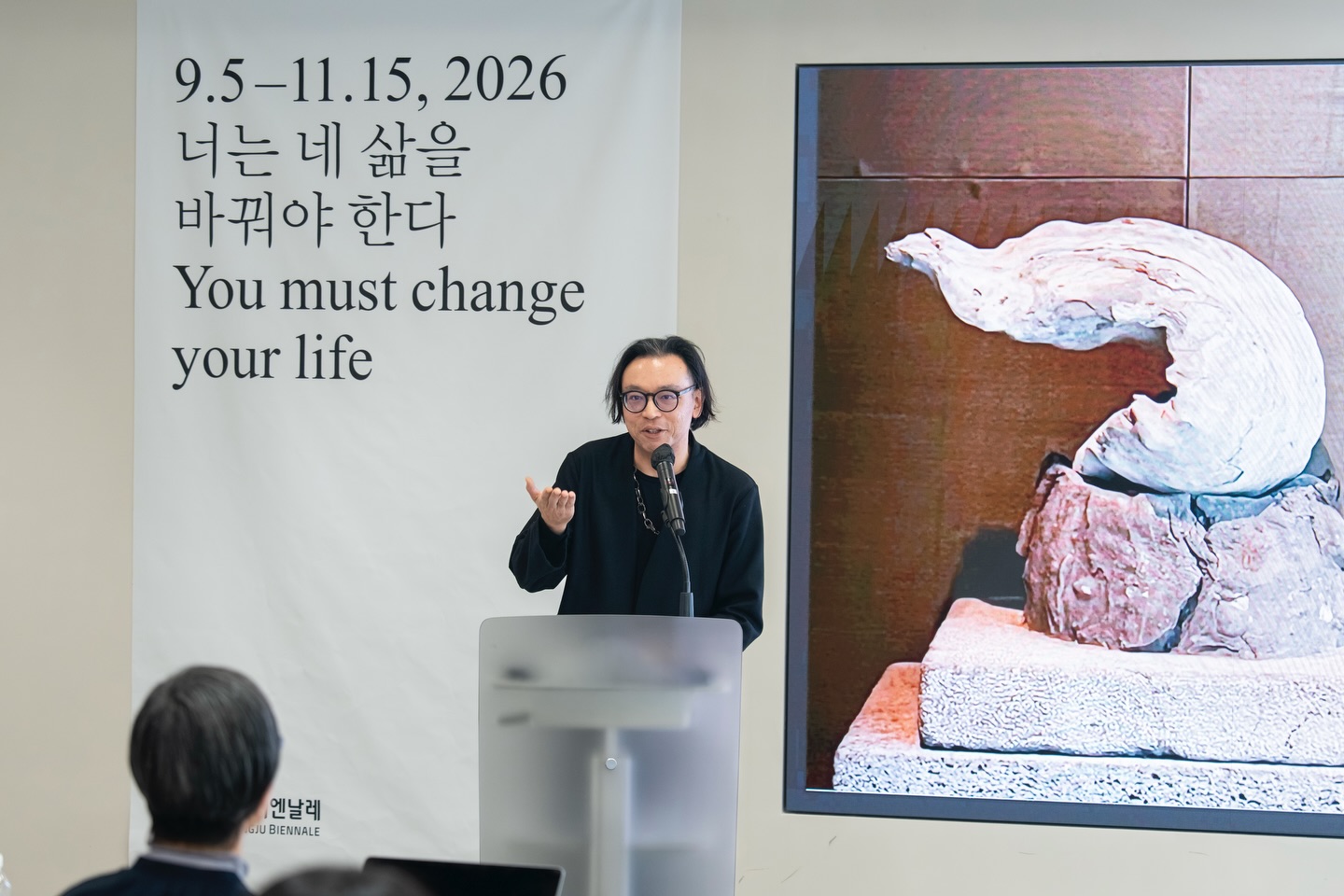
Artistic Director Ho Tzu Nyen speaking about the theme of the 16th Gwangju Biennale on the 12th. ©Gwangju Biennale
On the
12th, the Gwangju Biennale Foundation announced the theme of the 16th Gwangju
Biennale, 《You Must Change Your Life》, at a press conference.
The
exhibition title is inspired by the final line of the poem Archaic
Torso of Apollo by Rainer Maria Rilke, drawing attention to the
transformative power of art in responding to the various crises and urgent
issues we face today.
Published
in 1908, Rilke’s poem features an imagined fragmented ancient sculpture. The
statue evokes an overwhelming emotional energy in the viewer, urging a new
resolution and a change in life. This powerful encounter ultimately culminates
in the poem’s final line—“You must change your life”—which brings the poem to
its dramatic climax.
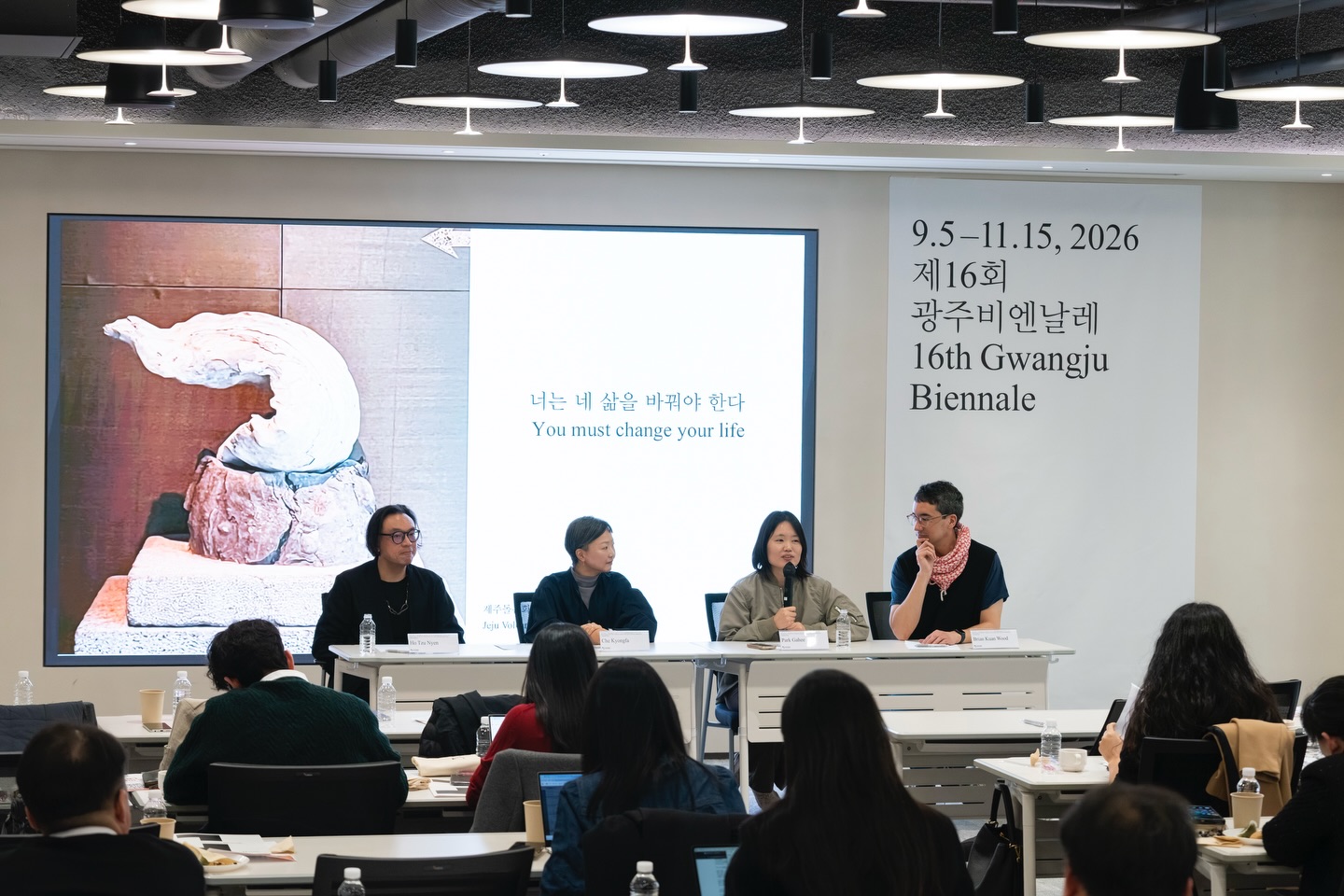
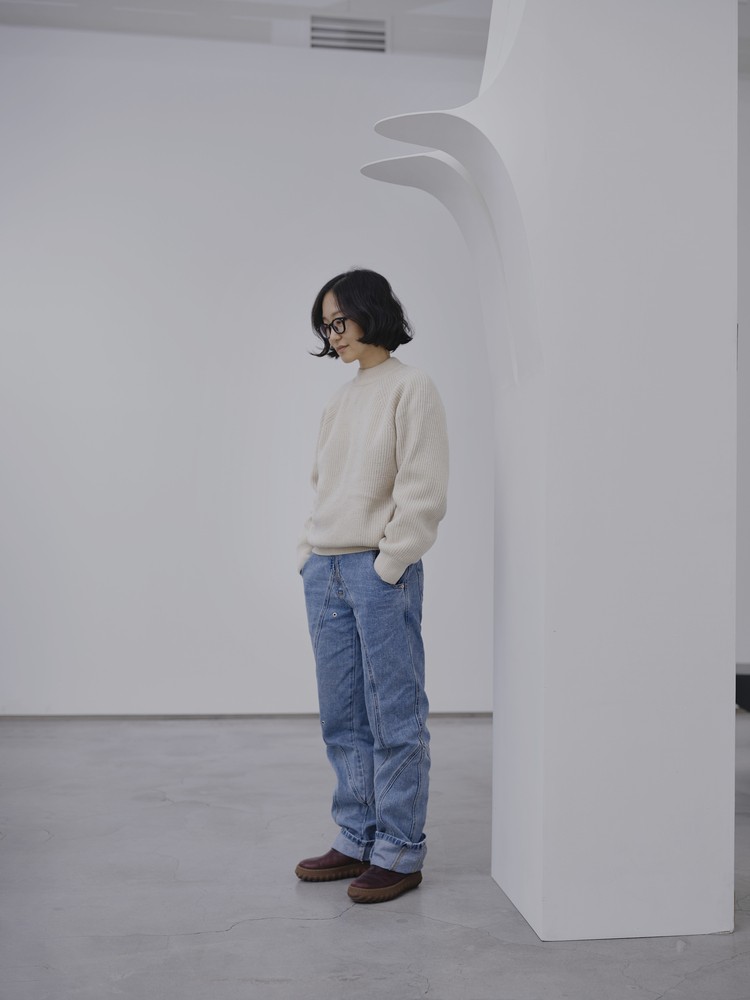
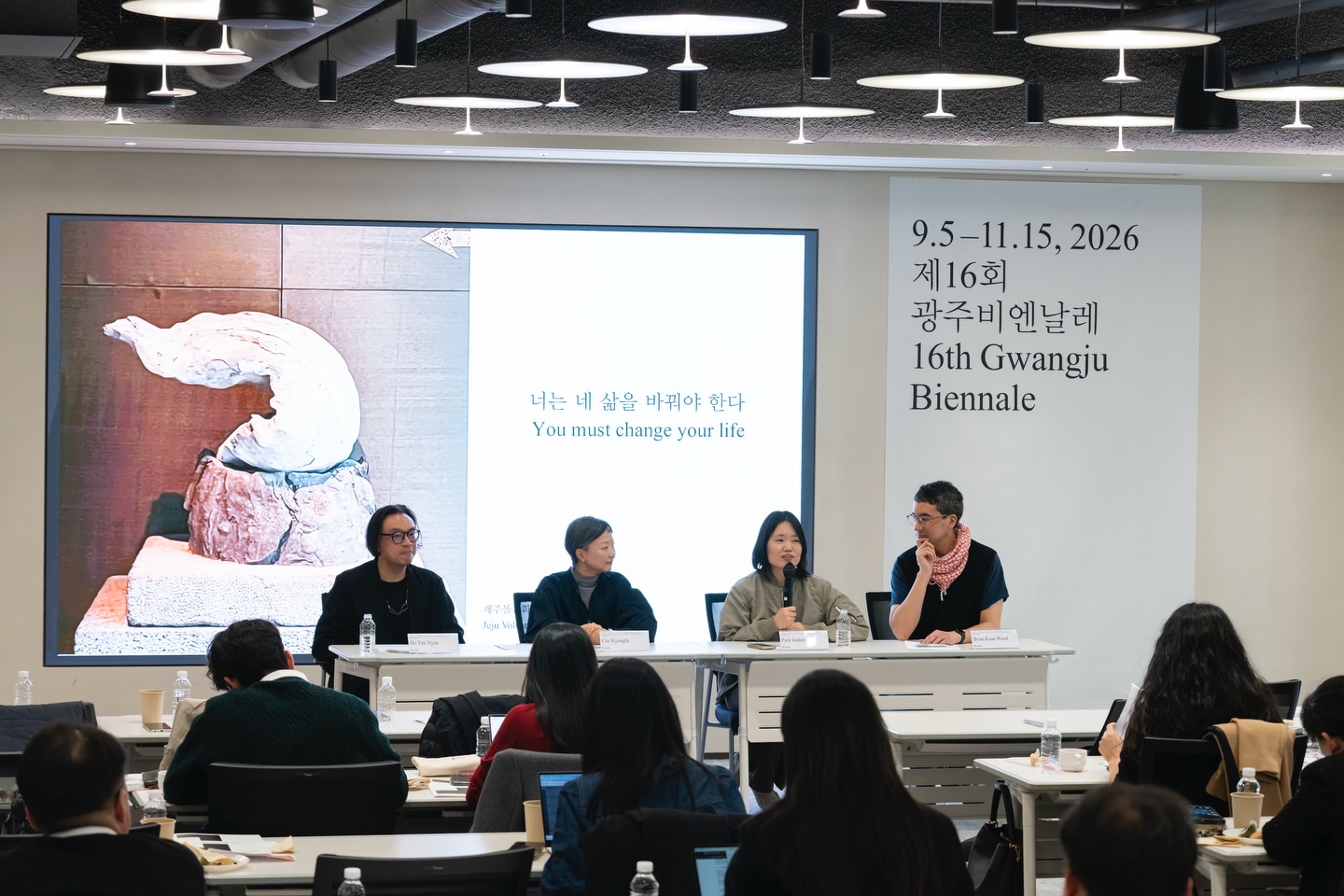
(from the left) Ho Tzu Nyen, Che Kyongfa, Park Gahee, Brian Kuan Wood ©Gwangju Biennale
However,
the poem does not specify how one should change one’s life. Instead, it leaves
open the possibility of transformation, preserving a potential space in which
change might occur.
Beginning
from this possibility, the 16th Gwangju Biennale approaches “change” as an
artistic method, exploring the ways in which artists experiment with new modes
of living, structures of power, and forms of relationship.
Artistic
Director Ho Tzu Nyen stated, “This exhibition will be a journey in which
visitors experience ‘change’ at various scales and speeds.” He continued, “Few
cities embody the ideals and experiences of transformation as powerfully as
Gwangju. The city’s history of struggle for democracy continues to resonate
deeply around the world today. Here, change is not an abstract concept but a
living history.”
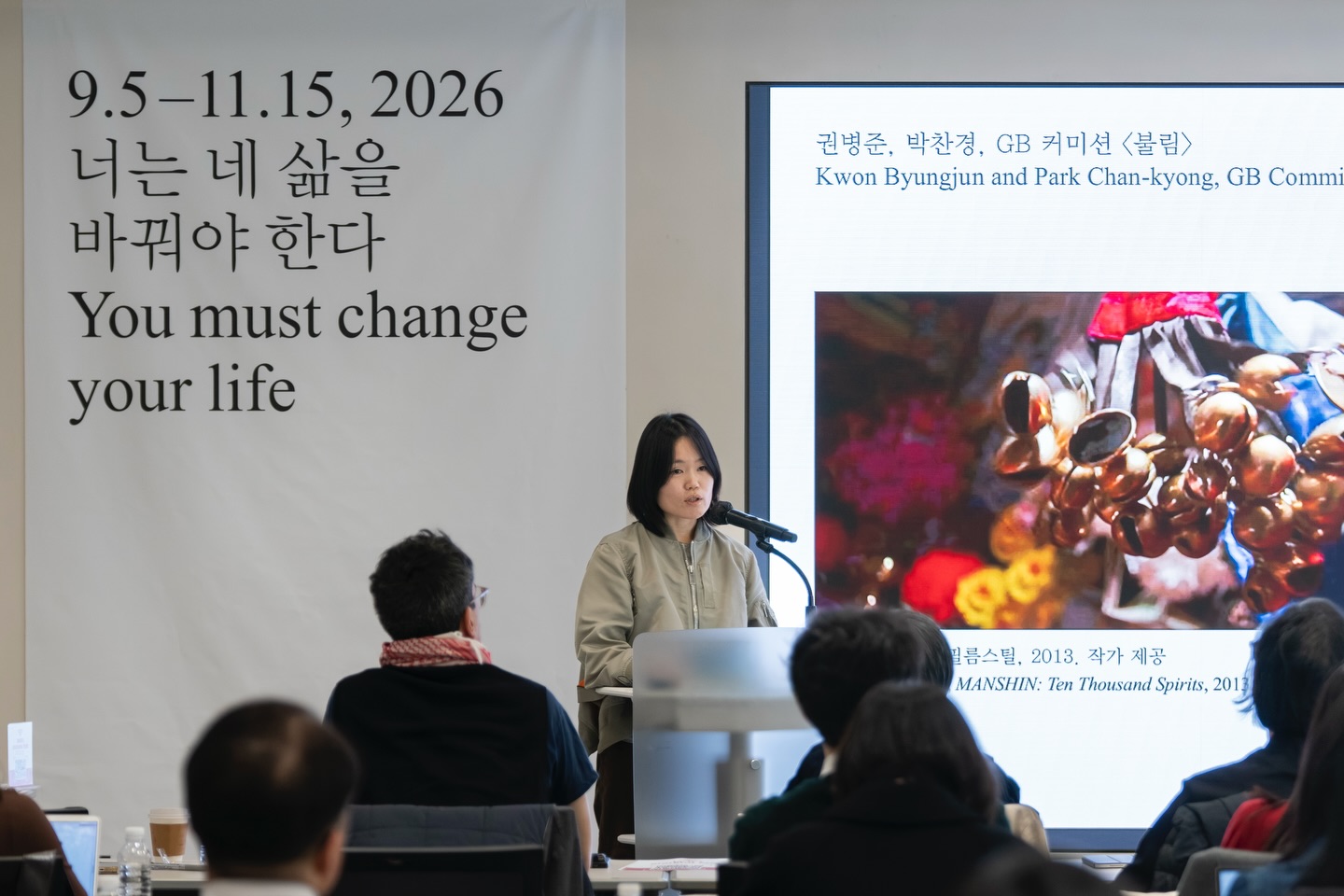
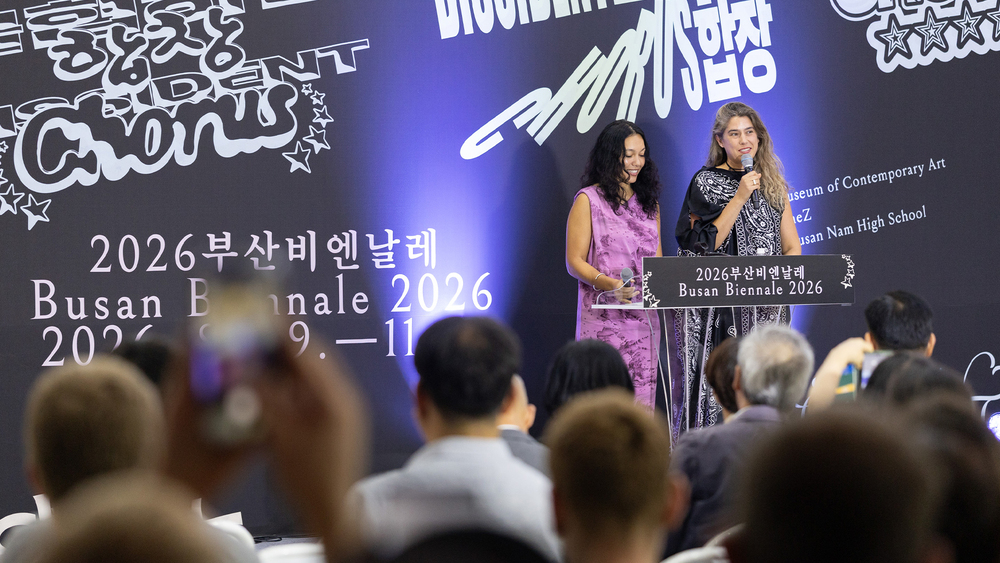
Curator Park Gahee speaking about the theme of the 16th Gwangju Biennale on the 12th. ©Gwangju Biennale
The core
of the 16th Gwangju Biennale, 《You Must Change Your
Life》, lies in the idea that transformation is
sustained over time through experimentation and practice. Repeated acts of
practice shape our worldview and ultimately determine the ways in which we
live. In this sense, the exhibition regards artistic practice as a living
example of creative resilience—a way of responding to change through
imagination and action.
The
exhibition also begins by considering artistic practice as a method through
which the experience of change is physically encountered and accumulated.
Participating artists explore the various conflicts and challenges faced by
individuals and communities through material, psychological, and lived
transformations.
This
edition of the Biennale adopts a more condensed format, featuring the smallest
number of participating artists in its history. By focusing on density rather
than scale, the exhibition brings together works that traverse different
moments in the artists’ lives and practices, offering a more in-depth approach.
Rather than presenting individual works as isolated fragments, it seeks to
reveal the evolving forms of artistic practice that unfold over time.
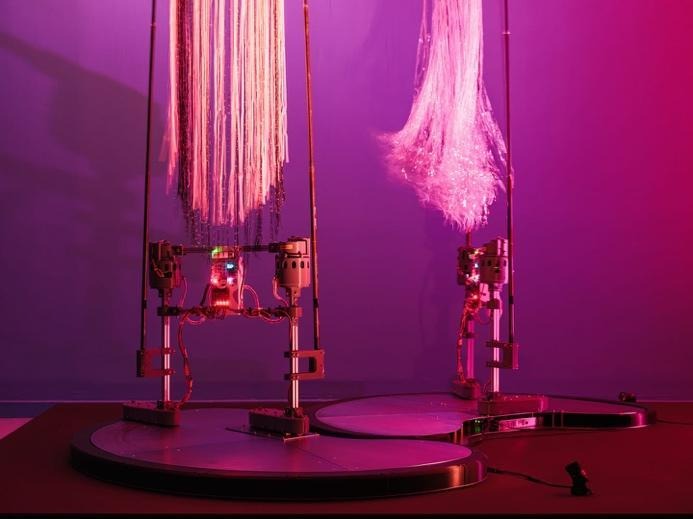
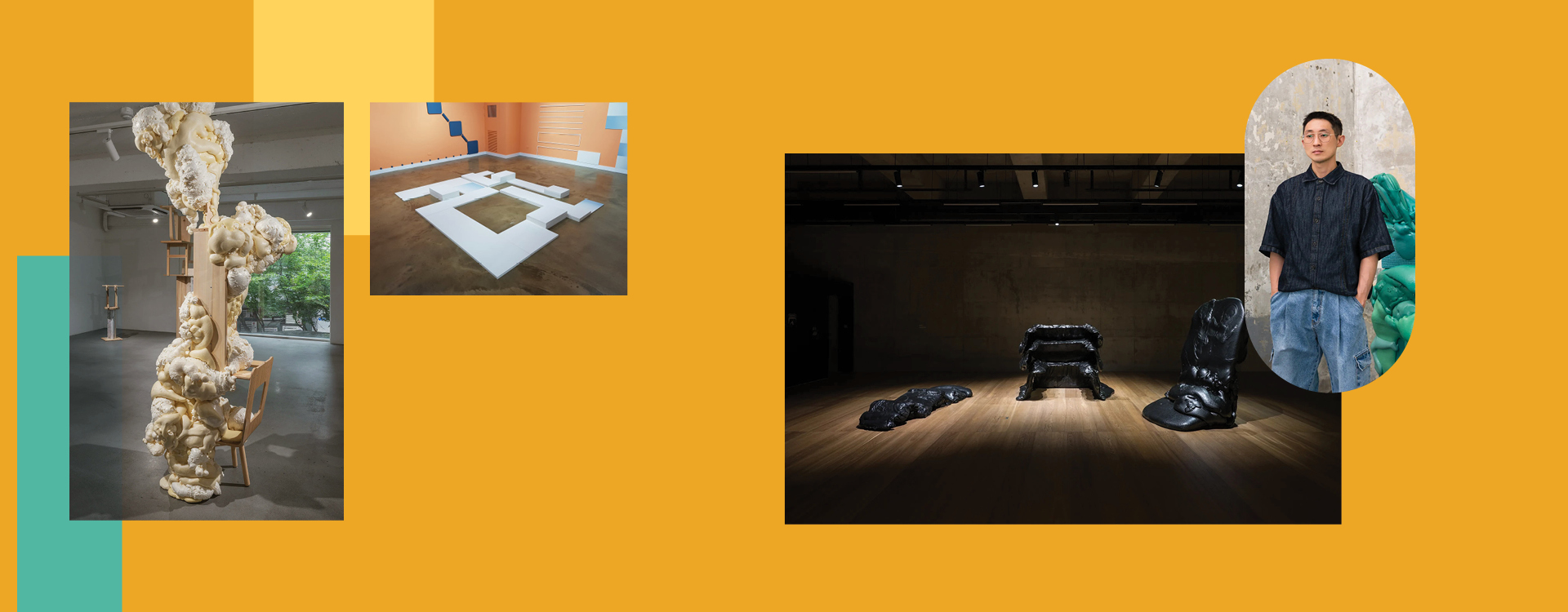
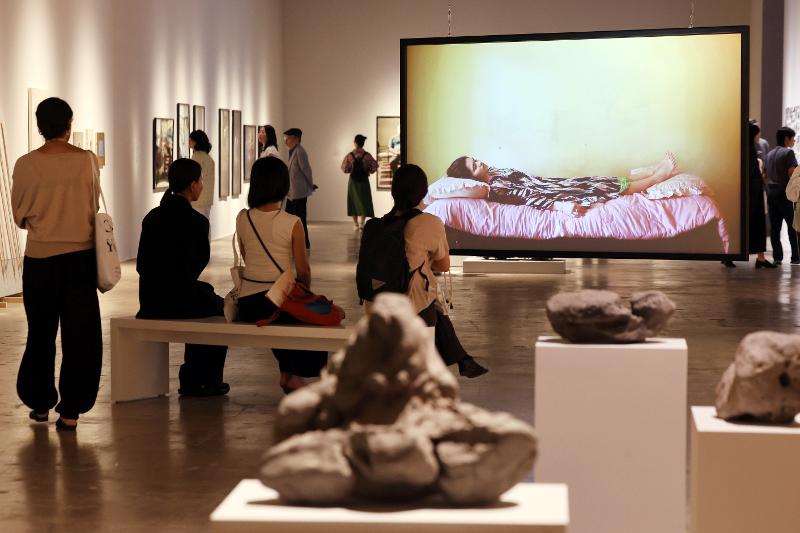
Byungjun Kwon, Opening Blooming from the center; Golden Flower of Potential, 2025, Commissioned by The 13th Seoul Mediacity Biennale. Courtesy of the artist. Photo: Hong Cheolki. ©Seoul Museum of Art
《You
Must Change Your Life》 examines how transformation
operates across the body and throughout society. It also focuses on the ways in
which art, through repetitive and sustained practice, can cultivate the
capacity to recalibrate the directions of forces that move the world.
Commissioned
works that exemplify the theme of this edition of the Gwangju Biennale will be
presented by Byungjun Kwon and Park Chan-kyong, Jacqueline Kiyomi Gork, and
Hwayeon Nam.
Among
them, Byungjun Kwon and Park Chan-kyong are currently developing a
participatory sound installation project inspired by soe-geollip, a traditional
communal practice in which metal objects were collected from members of a
community to produce ritual instruments wishing for collective well-being. For
this project, the artists are inviting citizens to donate unused metal objects,
which will then be incorporated into the installation.
This
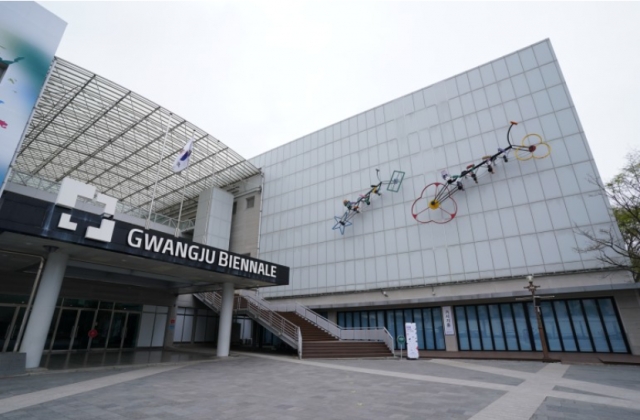
edition of the Biennale is led by Artistic Director Ho Tzu Nyen, with curators
Park Gahee, Brian Kuan Wood, and Che Kyongfa. It will be held for 72 days, from
September 5 to November 15, 2026, at the Gwangju Biennale Exhibition Hall in
Gwangju.
Further
details on participating artists and commissioned works will be announced
sequentially in the coming months.