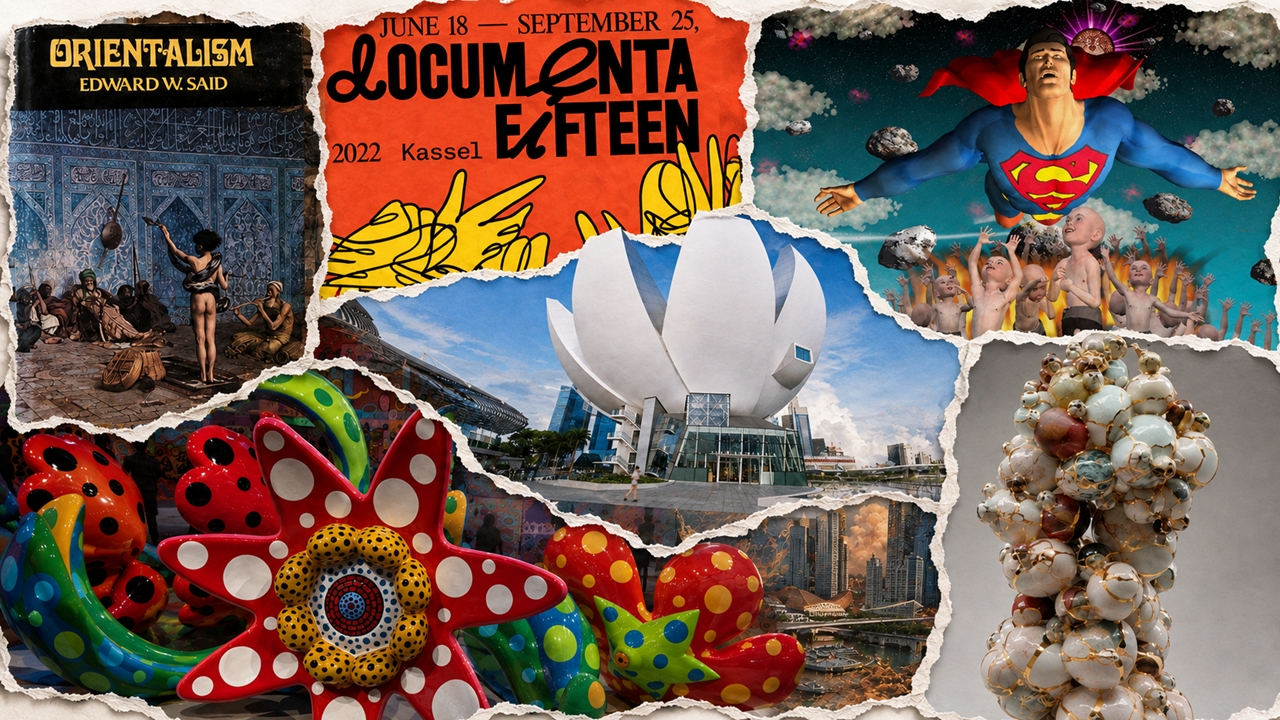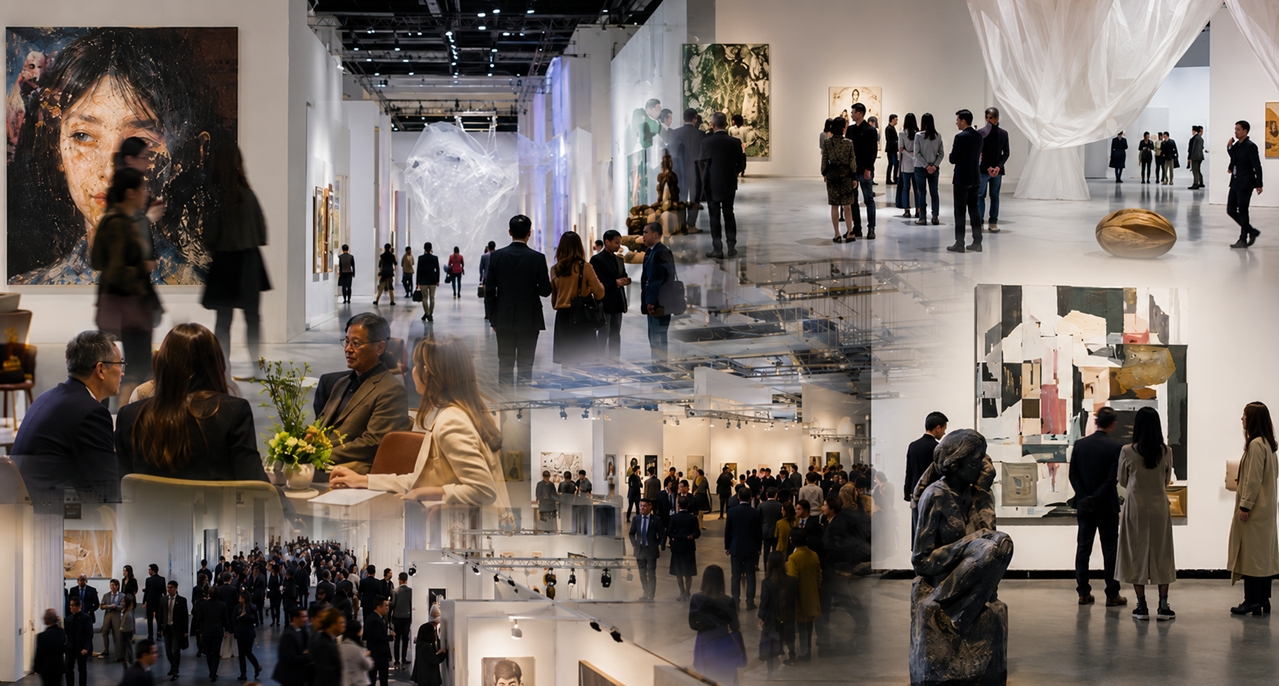

One of the most powerful languages in
contemporary art today is “critique.” Exhibitions question society,
institutions dismantle power, and the curatorial produces discourse that moves
across boundaries. Museums and biennales function as platforms for interpreting
politics and society, history and identity.
What matters is that this critical language
has become a central apparatus of contemporary art. At the same time, it has
begun to solidify into an institutional grammar.
Critique was once a language that created
fissures in the existing order. Yet in today’s international contemporary art
world, critique increasingly functions as a standard language operating within
the institution itself. Keywords such as postcolonialism, borders, diaspora,
gender, otherness, mobility, and community now function beyond the concerns of
individual exhibitions, forming a shared discursive structure that organizes
the international art system as a whole. A language that emerged as resistance
to dominant power has shifted into a central grammar that produces new
structures of legitimation.
How Did Critique Become an
Institutional Language?
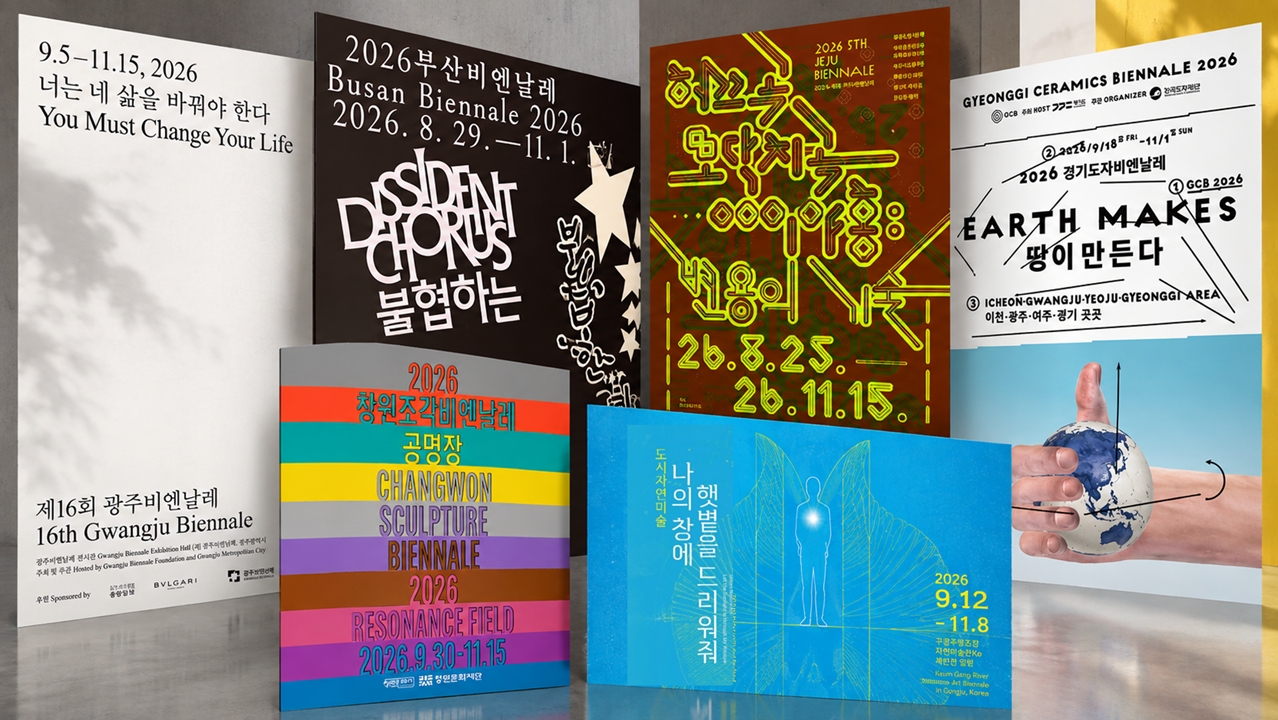
The expansion of the biennale system since
the 1990s has accelerated this transformation. Contemporary art was no longer
understood only within the art history of a particular nation. After
globalization, it was reorganized as a field for interpreting political and
social conditions. International exhibitions increasingly began to revolve
around social agendas, historical memory, coloniality and postcoloniality,
identity, and mobility. In this process, the curator emerged not merely as an
exhibition organizer but as an authorial figure and a producer of discourse.
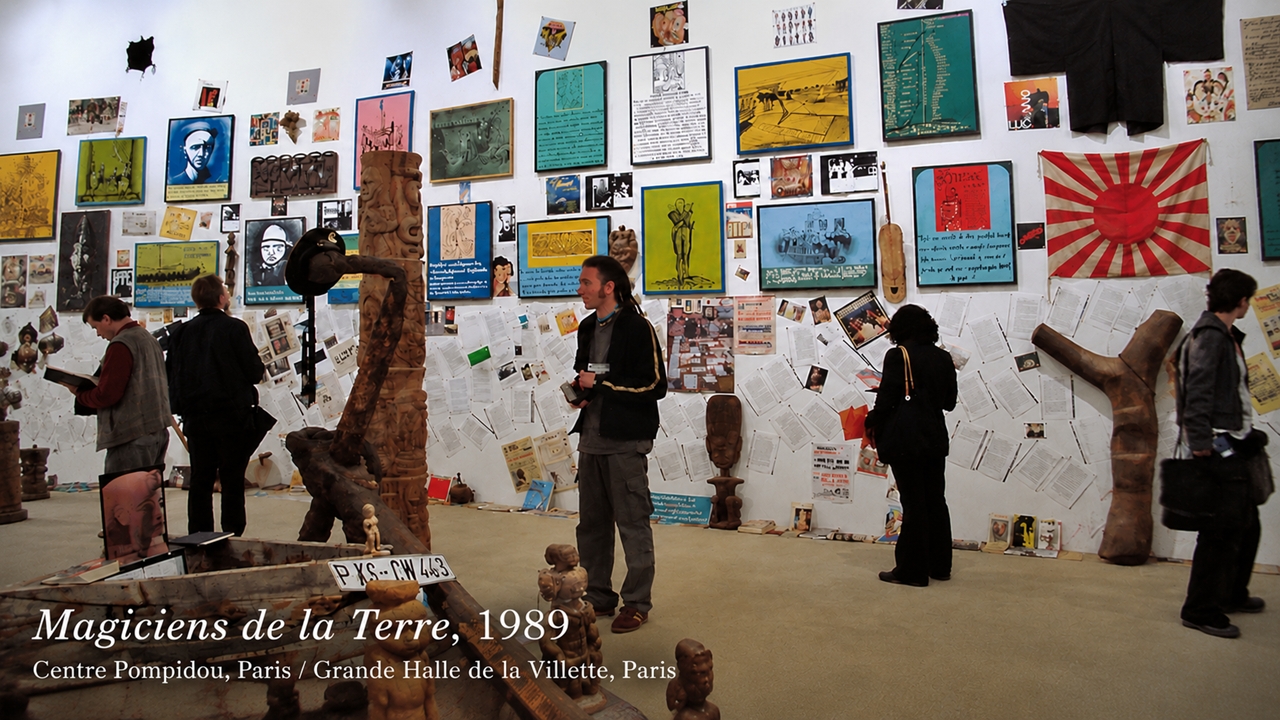
One important starting point for this
transformation was Harald Szeemann (1933–2005). After Szeemann, the curator
came to be understood not as an exhibition administrator, but as an independent
author who designs the conceptual structure of an exhibition. Later, Okwui
Enwezor (1963–2019) expanded the political and historical horizons of
international exhibitions by combining the global biennale model with
postcolonial discourse. Hans Ulrich Obrist (1968– ) reconfigured curating as a
process of knowledge production centered on interviews, archives, research, and
collaboration.
This trajectory was further expanded into
the conceptual discourse of “the curatorial” by theorists including Irit Rogoff
(1949– ). Curatorial theory understood the exhibition not simply as a site of
aesthetic experience or the presentation of artworks, but as a field in which
knowledge production and critical practice take place. Within this shift, the
artwork was no longer treated only as an independent aesthetic object. The
relations, structures, contexts, and languages surrounding the artwork also
emerged as central elements of the exhibition.
This transformation broadened the horizons
of contemporary art. Exhibitions became spaces that read social reality through
artworks, revealed historical silences, and newly called forth subjects and
regions that had been excluded from existing art history. Yet it is precisely
at this point that another problem arises. When the critical curatorial hardens
into a repeatable institutional language, critique begins to function not as a
living question, but as an already sanctioned attitude.
Many international exhibitions today appear
to speak about different subjects, yet in practice they operate within highly
similar grammars. Borders and mobility, memory and the body, identity and
community, coloniality and otherness are repeated again and again. These issues
remain important. However, when they become excessively institutionalized,
discourse no longer functions as a device for rethinking reality, but as a form
that guarantees the legitimacy of the exhibition.
Curatorial Power and the
Reinforcement of Interpretive Structures
One of the most significant changes in
contemporary art concerns the relationship between the artwork and the
curatorial. Whereas the curator in the past was closer to someone who selected
and arranged works, today the curator has moved into the position of designing
the interpretive structure of the entire exhibition. Artworks increasingly
begin to function less as independent entities and more as cases placed within
a discursive structure.
As a result, the exhibition has
increasingly become a “space to be read.” Before experiencing the work
sensorially, the viewer passes through lengthy texts and conceptual structures.
The artwork is interpreted within political and social contexts before it is
encountered as a visual experience. In this situation, curatorial language
functions not merely as explanation, but as a form of power that defines the
meaning of the artwork itself.
At this point, curatorial discourse
occupies a paradoxical position. It originally emerged to dismantle structures
of power and critique the closed nature of art institutions. Today, however, it
has become another system of criteria that determines which discourses are
contemporary, which attitudes are ethical, and which works can be
institutionally sanctioned on the international stage. Critique is no longer a
question thrown at the institution from outside; it is being repositioned as a
language that legitimizes works and exhibitions from within the institution.
Within this structure, artists are also
required to occupy specific discursive positions. Rather than the formal
density or sensorial necessity of the work, what is first demanded is its
connection to a social agenda. An artist’s work is more easily legitimized when
it is interpreted within the conceptual framework required by the exhibition
than when it unfolds through its own internal logic. At this point, the artwork
is treated less as a complex field of experience and more as evidence
explaining a predetermined theme or ethical position.
The Deferral of Judgment and
the Automation of Critique
What is most seriously weakened within this
structure is “judgment.” Many institutions today do not actively carry out
judgments regarding the formal achievement or sensorial density of artworks.
Instead, they operate by legitimizing specific discursive positions and social
attitudes. Discussions of form diminish, while exhibitions increasingly shift
toward questions of ethical and political legitimacy.
The issue is not that exhibitions engage
with social discourse. The more fundamental issue is that discourse has begun
to replace judgment regarding the sensorial density and formal achievement of
artworks. At this point, the artwork is no longer an object to be experienced
and judged independently, but is placed as a case that proves an already
established theme or attitude.
What emerges as a result is the “automation
of critique.” Critique should operate within a state of living tension. Yet
critique today is often repeated within predictable language and sanctioned
forms. Institutional critique has become a safe language inside the
institution, and political attitude has begun to function as a form of cultural
capital within the international system.
In this situation, contemporary art finds
itself in a paradoxical condition. It constantly speaks of new discourses, yet
in practice it repeats the same language. It speaks of diversity, yet the
structures of legitimation become increasingly standardized. It speaks of
critique, yet that critique has already been stably incorporated into the
system. The institution does not exclude critique; it absorbs critique into its
own mode of operation.
The Erosion of Sensory
Experience
What has been most significantly weakened
in this process is sensory experience. Art operates as experience before it
becomes explanation. Color and form, matter and time, density and rhythm act
directly through human sensation. An artwork reaches the viewer through
dimensions that cannot be fully reduced to language. It is precisely this
inexplicable layer of sensory experience that distinguishes art from a simple
message or claim.
Yet in many exhibitions today, artworks
function less as objects of sensory experience and more as objects of
conceptual reading. The viewer reads text rather than pausing before the work.
The structure of discourse must be understood before the tension of the image
can be felt. The exhibition’s thematic statement preempts the meaning of the
work before the density of matter and the rhythm of form can take effect. As a
result, art increasingly moves away from the realm of visual experience and
begins to operate like a sociological or political device.
Art cannot be separated from reality.
Addressing the problems of contemporary society is also important. However,
when art is reduced to a medium for delivering political positions, the artwork’s
distinctive sensory power and formal density are weakened. The critical force
of art does not derive solely from the ethical validity of its subject matter.
It also arises from the way form makes the world perceptible differently, the
way matter unsettles thought, and the way images generate tensions that precede
language.
Therefore, the task of the
post-contemporary condition does not lie in removing discourse. The core task
lies in reconstructing the relationship between discourse and sensation.
Exhibitions must be able to raise social questions. At the same time, the artwork
must not become a mere tool for explaining those questions; it must be a field
that generates thought on its own through the dimensions of sensation and form.
Questions After the
Post-Contemporary
The central issue today is not the
existence of critique, but the institutionalization of critique. When
discourse, once a living question, becomes fixed as a repeatable system
language, contemporary art enters an increasingly self-replicating structure.
The institution appears to renew itself through critique, but in reality it
stabilizes its own order by repeating only those forms of critique that have
already been legitimized.
The direction that art after the
post-contemporary must take is not a return to past formalism. Nor is it the
exclusion of political discourse. What is necessary is the recovery of tension
between sensation and thought, form and critique, experience and structure. The
artwork may remain deeply connected to social reality. Yet that connection
should not be produced by imposing external discourse onto the work; it must
arise necessarily from the work’s form and matter, time and sensation.
Exhibitions can produce discourse. Yet that
discourse must begin not from repeated languages of legitimation, but from the
necessity of the artwork itself. Critique must not be a safely repeated
attitude within the institution, but a force that generates tension again
between artwork and viewer, sensation and judgment. For contemporary art to
regain new possibilities, it must recover the power of experience and judgment
generated by the artwork, rather than rely on the language that explains it.
Art after the post-contemporary begins
again precisely at this point: not by repeating the institutionalized language
of critique, but by recovering the power of sensation and judgment that the
artwork generates on its own.
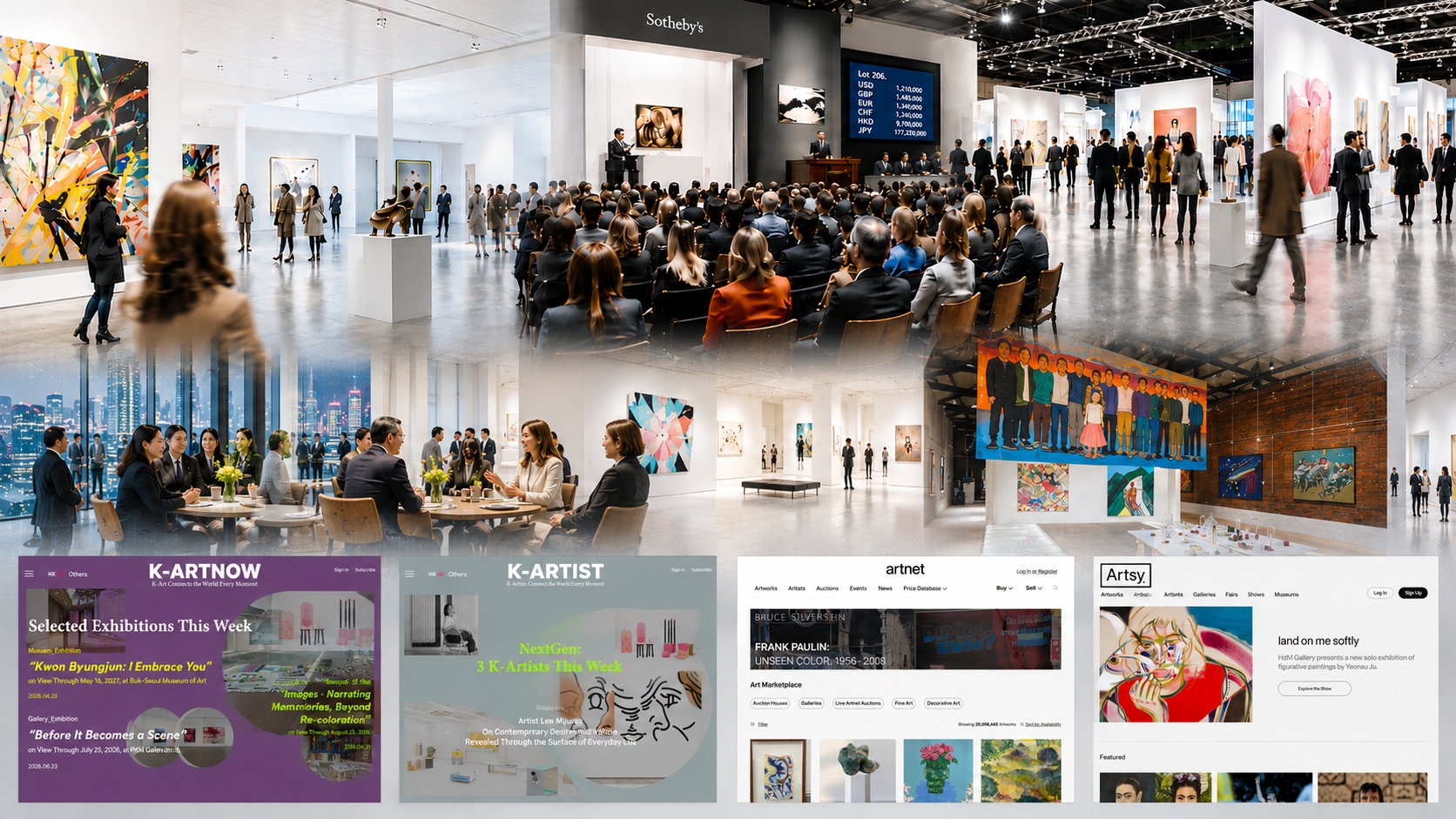
Jay Jongho Kim graduated from the Department of Art Theory at Hongik University and earned his master's degree in Art Planning from the same university. From 1996 to 2006, he worked as a curator at Gallery Seomi, planning director at CAIS Gallery, head of the curatorial research team at Art Center Nabi, director at Gallery Hyundai, and curator at Gana New York. From 2008 to 2017, he served as the executive director of Doosan Gallery Seoul & New York and Doosan Residency New York, introducing Korean contemporary artists to the local scene in New York. After returning to Korea in 2017, he worked as an art consultant, conducting art education, collection consulting, and various art projects. In 2021, he founded A Project Company and is currently running the platforms K-ARTNOW.COM and K-ARTIST.COM, which aim to promote Korean contemporary art on the global stage.