
Introduction
The discussion
thus far converges on a single question.
Where does the
future of Korean contemporary art begin? Can that future be explained solely
through more exhibitions, faster international expansion, larger market scales,
and increasingly elaborate discursive rhetoric?
Or, despite the
accumulation of such visible achievements, why is Korean contemporary art still
not fully recognized as a field capable of proposing its own criteria?
This series has
consistently addressed this question through a unified line of inquiry. The
central crisis of contemporary art today does not lie in a depletion of
meaning, but in the weakening of its structure of value judgment.
Korean contemporary
art continues to produce extensively and maintains a high sensitivity to
social, political, and technological conditions. Yet the structure through
which these productions are evaluated—through which it is determined what has
been achieved, what has failed, and which forms and strategies may lead to the
next stage—has become increasingly fragile. Within this void, the market,
institutions, external signals, and the outcomes of selection begin to function
as proxies for value, while the internal capacity for judgment diminishes.
The conditions
of the post-contemporary refer precisely to this state.
What is now
required is not the introduction of new terminology or meaning from outside
Korean contemporary art. Rather, it is the reorganization of what has already
been produced within, so that it can be subjected to meaningful value judgment.
Here, “value
judgment” does not refer to a simple expression of preference or to
hierarchical ranking based on authority. It refers to the act of
articulating, in an analyzable language of art, what constitutes actual
achievement across artworks, exhibitions, institutions, markets, records, and
interpretations—and transforming those articulations into criteria that can be
accumulated.
In this
sense, judgment is not a technique of exclusion but a technique of
accumulation, and a minimal condition for making such accumulation possible as
a public record.
From this
perspective, the future of Korean contemporary art cannot be reduced to the
notion of “internationalization.” International visibility and expanded
networks are undeniably important. However, the center is not formed by being
more visible, but by being able to articulate what is significant.
For Korean
contemporary art to be recognized not merely as a case within the global art
world but as a source of criteria, it must first establish structures through
which artworks, exhibitions, discourses, and institutional achievements
produced internally can be properly evaluated and recorded.
Such a structure
must be developed and reconfigured across multiple levels simultaneously.
First,
there must be a restoration of analytical language for artworks—the ability to
analyze and articulate artistic achievement through the internal language of
art.
One of the most
weakened aspects of the Korean art scene today is the capacity to describe,
with precision, what an artwork has accomplished. Many texts remain at the
level of explaining the artist’s intention or thematic concerns, without
translating the content and form of the work into a language that can operate
within an international art discourse.
Under such
conditions, accumulation is impossible. If one cannot articulate what
constitutes achievement in a language that is publicly intelligible and
accumulable, one cannot establish the basis for future criteria. Criticism must
therefore move beyond contextual explanation and reassert its role as an
analytical apparatus capable of publicly determining both achievement and
limitation.
Second,
it is necessary to institutionalize post-exhibition evaluation structures.
Exhibitions
should not be consumed merely as events that occur between opening and closing.
The problems they set, the criteria by which they are composed, their modes of
realization, their formal effects and limitations, and the organization of
viewer experience must be publicly recorded and critically reassessed.
What is required
is not a promotional report, but an evaluative structure that allows the
results of exhibitions to feed back into future curatorial frameworks. Without
institutional records that identify what was realized and what was not, which
attempts proved structurally effective and which remained within repetitive
conventions, exhibitions remain episodic events rather than foundations for new
value.
Third,
a structural distinction must be maintained between market signals and value
judgment.
In a capitalist
system, market responses cannot be ignored. Prices, transactions, repeated
exposure, collector choices, and institutional acquisitions all constitute
significant data. However, when these signals begin to substitute directly for
artistic achievement and value, internal judgment structures collapse.
Market outcomes
must remain objects of interpretation, not endpoints of judgment. What is
needed is a language capable of analyzing why certain forms are repeatedly
selected, how specific types of work acquire value signals, and to what extent
those signals correspond to—or diverge from—actual artistic achievement. This
is not a matter of ethically endorsing or rejecting the market, but of
developing the capacity to interpret it structurally.
Fourth,
collections and archives must be reconfigured as mechanisms for the long-term
production of criteria.
A collection
should not be understood merely as an accumulation of ownership, but as an
accumulation of value judgments. When the reasons for selecting particular
works are articulated publicly—grounded in aesthetic and art-historical
considerations—the collection becomes a long-term reference point.
Likewise, digital
archives must function not as tools of promotion, but as infrastructures of
judgment. Only when an artist’s works, exhibition histories, images, critical
texts, collection records, translations, and market data are systematically
structured and accumulated can the evolution of form and the movement of
discourse be meaningfully analyzed. In environments where records are
fragmented or lost, the authority of interpretation inevitably shifts outward.
Fifth,
there must be a capacity within Korean art to produce its own concepts.
Korean
contemporary art has demonstrated a strong sensitivity and responsiveness to
global developments, which has been one of its key strengths. However,
responsiveness alone cannot generate criteria. What matters is the ability to
conceptualize what has already occurred—to articulate what remains valid and
what has been exhausted.
A concept is not
rhetorical decoration or descriptive language, but a compressed form of
accumulated judgment.
In a field where
judgment does not accumulate, concepts cannot endure. For Korean contemporary
art to function as a reference point within the global art world, it must move
beyond translating external theories and instead articulate its own language as
an analytical framework of its internal conditions.
From
the Age of Production to the Age of Judgment
Ultimately, all
of these levels converge on a single issue.
Over the past
decades, Korean contemporary art has experienced an expansion in the number of
exhibitions, a widening of artistic activity, and an increased connection to
international networks. Yet what is now required is not an acceleration of
production.
What is required
is the construction of a structure that allows more precise judgments to be
made about what has already been produced—one that enables those judgments to
accumulate and to function as the basis for future production. In other words,
what is needed is a transition from the age of production to the age of
judgment.
This transition
cannot be achieved through declarations alone.
It becomes
possible only when the attitudes of individual texts, the language of
criticism, the methods of exhibition evaluation, the recording systems of
institutions, the design of platforms, the criteria of collections, and the
analysis of market data are each developed with a high level of professional
rigor within their respective domains.
Judgment does not
emerge from the authority of a single agent; it becomes a structure—an
infrastructure—only when analyses accumulated across different domains are
publicly shared.
Without such a
structure, achievements do not remain, failures cannot be revised, and the
future remains at the level of abstract rhetoric.
Moving
Forward
“The
Conditions of the Post-Contemporary and the Future of Korean Contemporary Art”
is not a name for declaring a new era. It is a response to the
necessity for Korean contemporary art to reconsider its own conditions with
greater precision. It marks the starting point for a transition—from a position
that affirms external judgments to one that produces its own criteria.
The future of
Korean contemporary art does not lie in producing more works. It lies in the
capacity to continuously determine what among those works should remain, and in
the ability to establish transparent archival systems that allow such judgments
to exist as public structures—structures through which new values and meanings
can be generated.
In
this sense, ‘The Conditions of the Post-Contemporary’ do not name a completed
state, but rather a demand of the present moment: that Korean contemporary art
must return to itself, reassess its conditions, and begin to produce value on
its own terms.
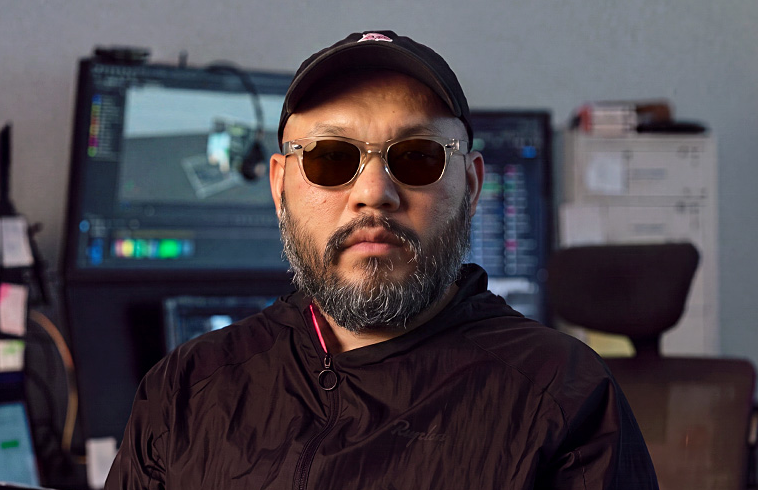
Jay Jongho Kim graduated from the Department of Art Theory at Hongik University and earned his master's degree in Art Planning from the same university. From 1996 to 2006, he worked as a curator at Gallery Seomi, planning director at CAIS Gallery, head of the curatorial research team at Art Center Nabi, director at Gallery Hyundai, and curator at Gana New York. From 2008 to 2017, he served as the executive director of Doosan Gallery Seoul & New York and Doosan Residency New York, introducing Korean contemporary artists to the local scene in New York. After returning to Korea in 2017, he worked as an art consultant, conducting art education, collection consulting, and various art projects. In 2021, he founded A Project Company and is currently running the platforms K-ARTNOW.COM and K-ARTIST.COM, which aim to promote Korean contemporary art on the global stage.