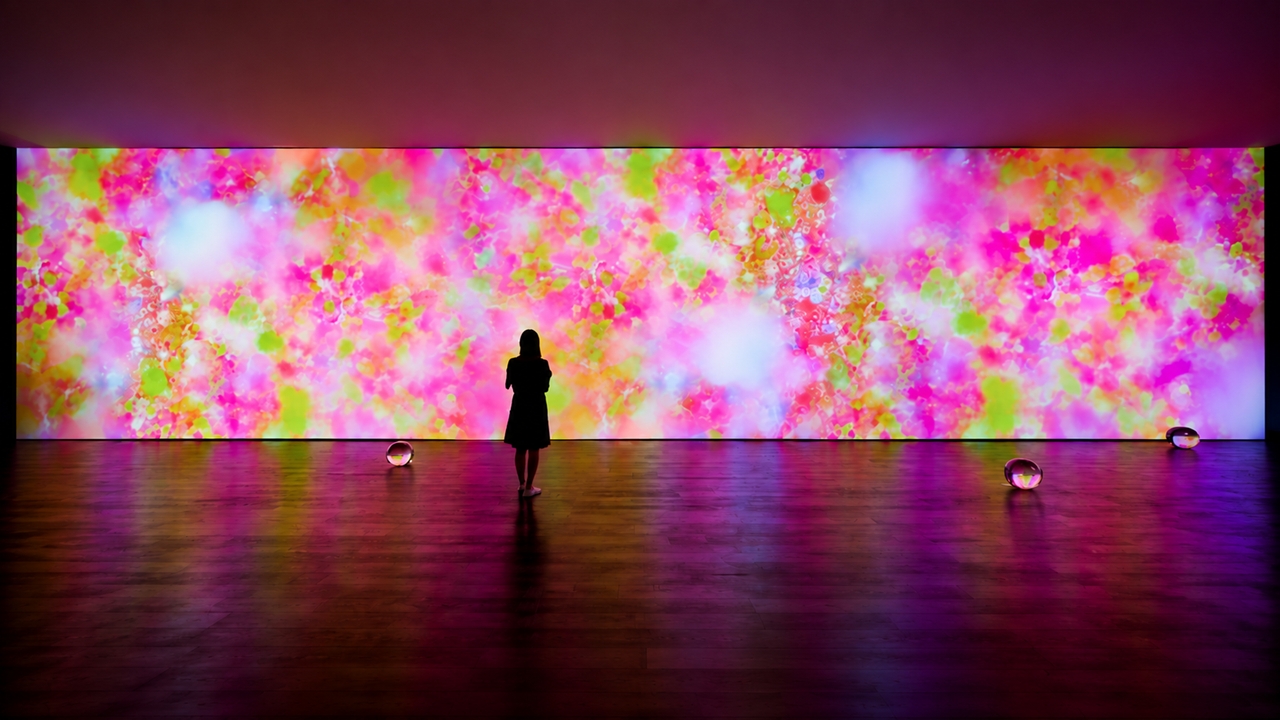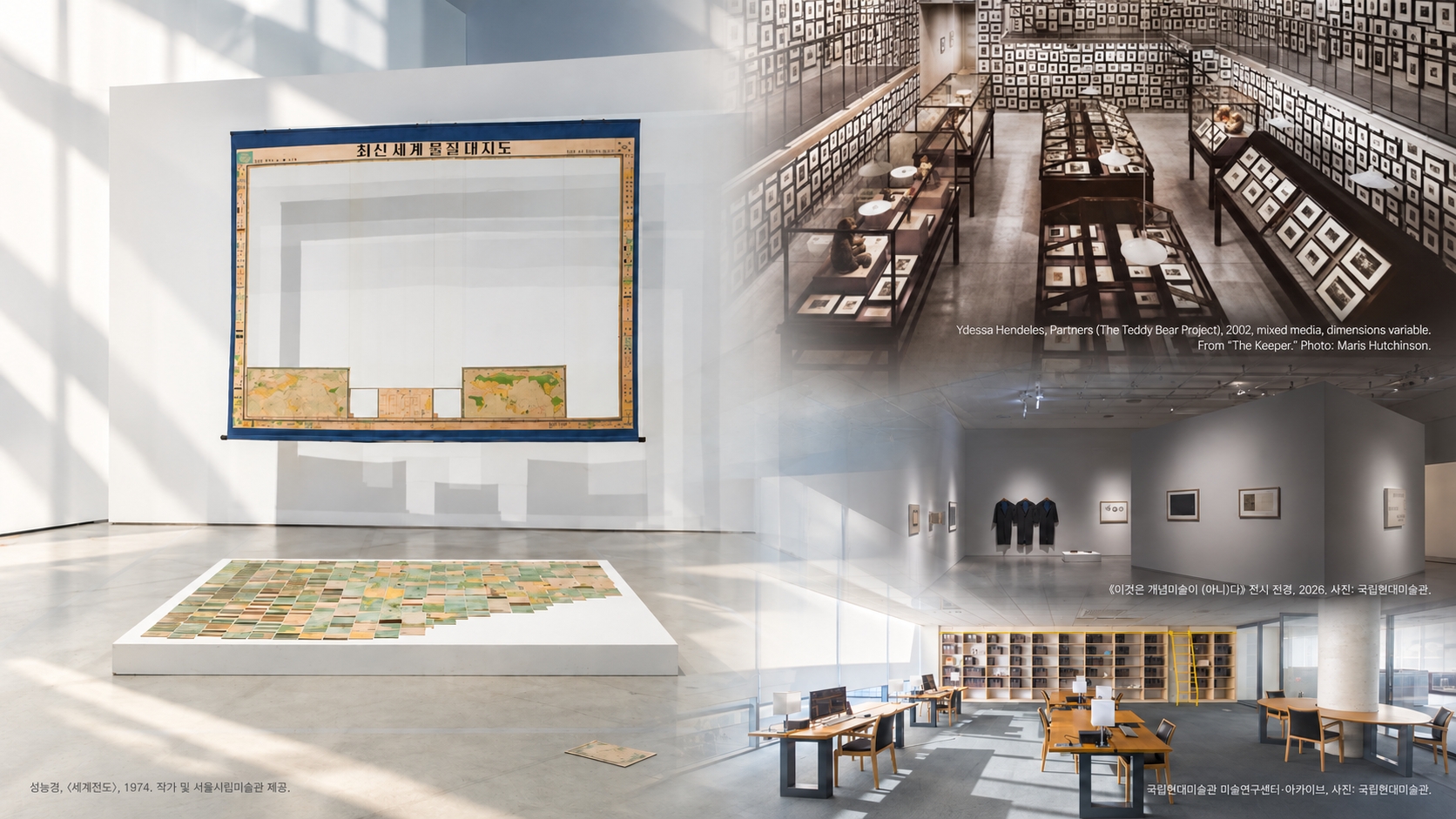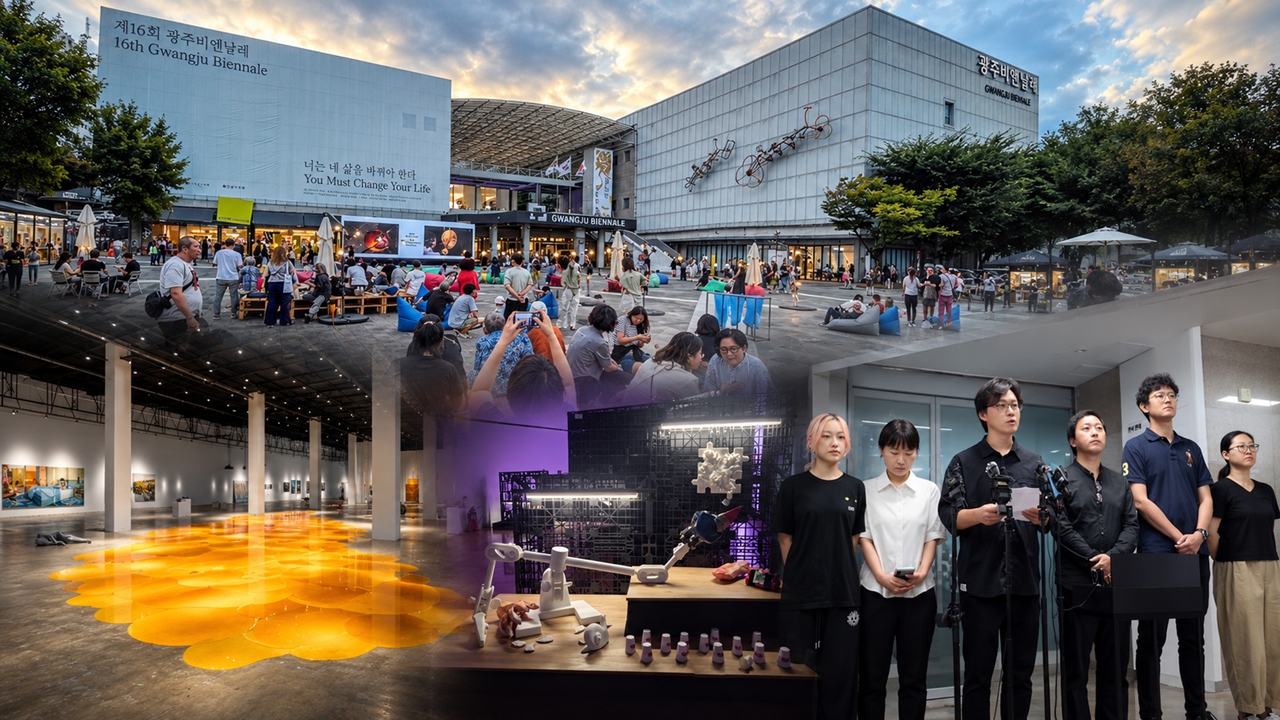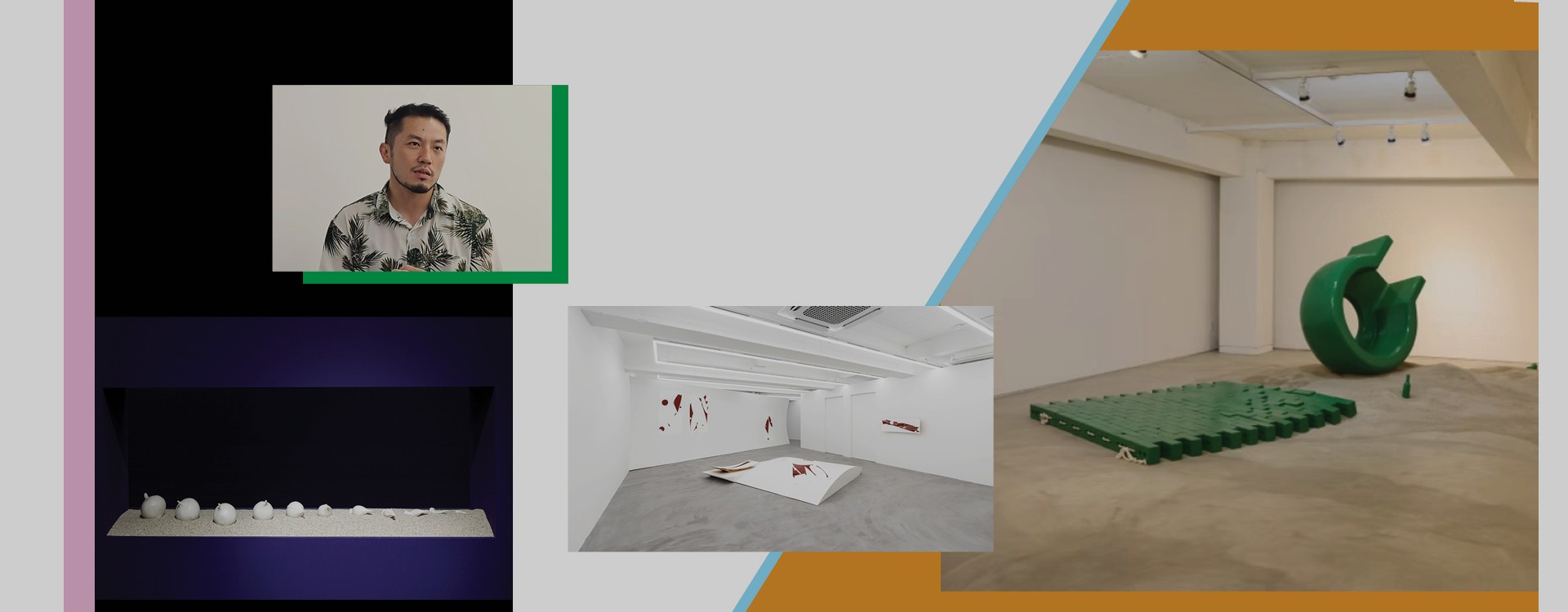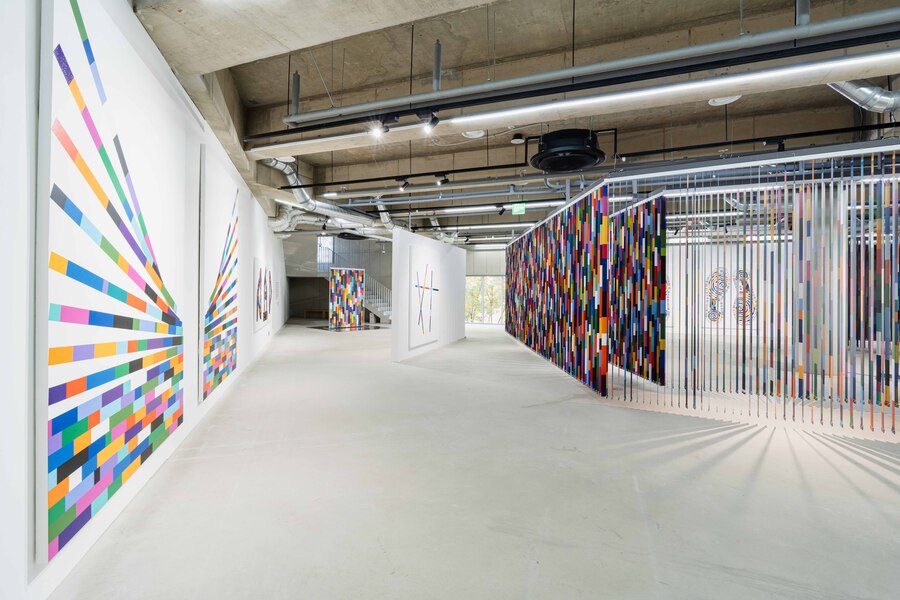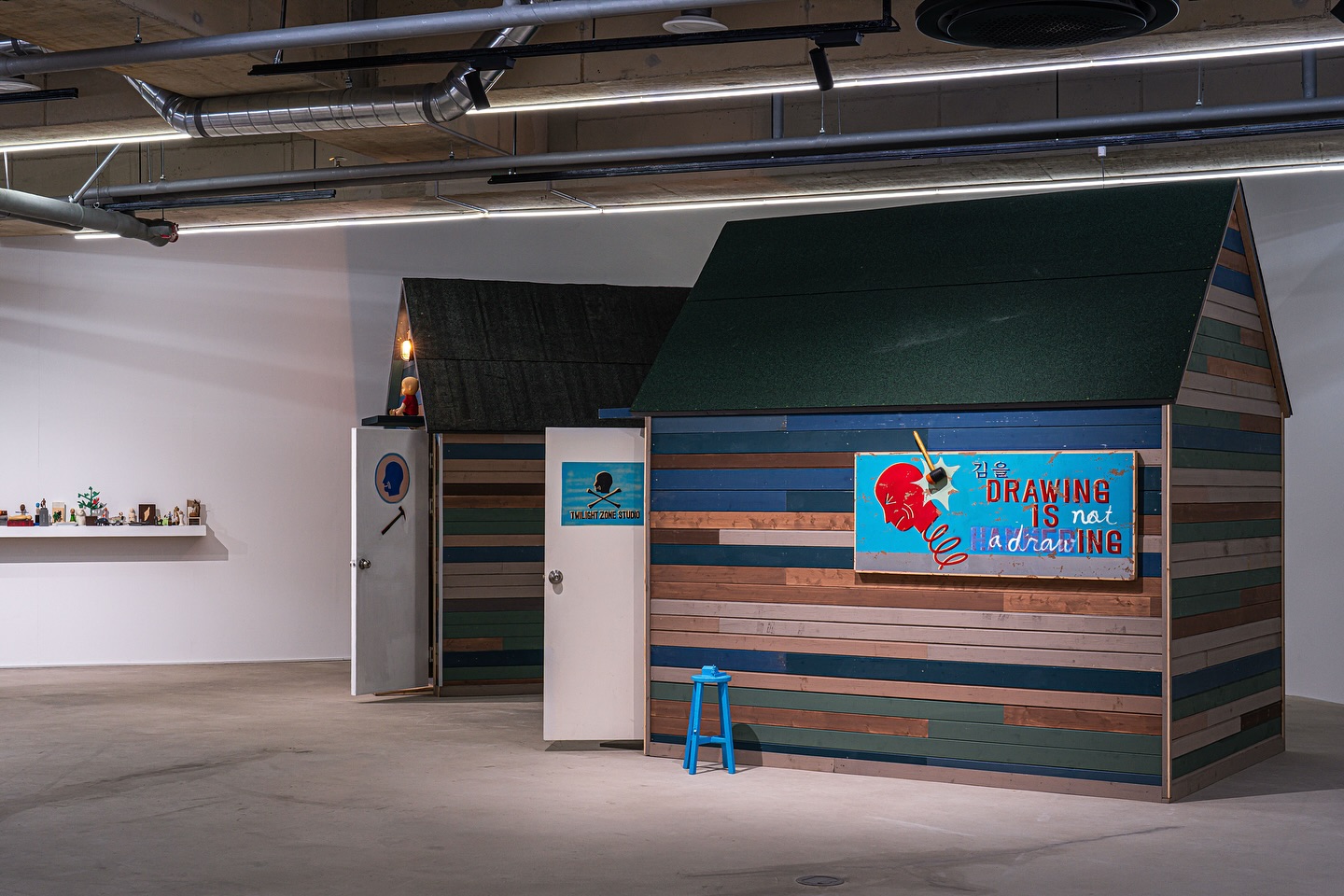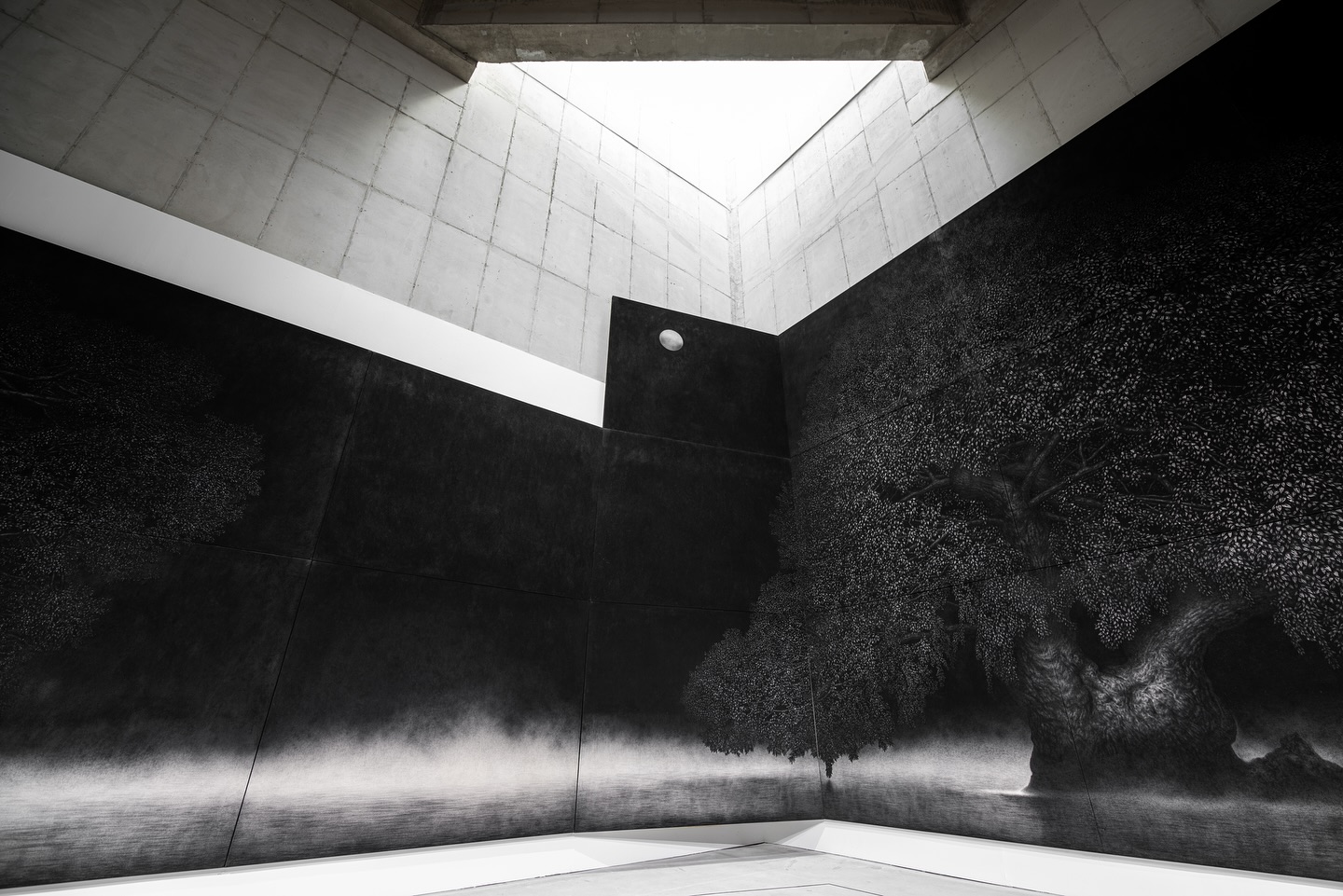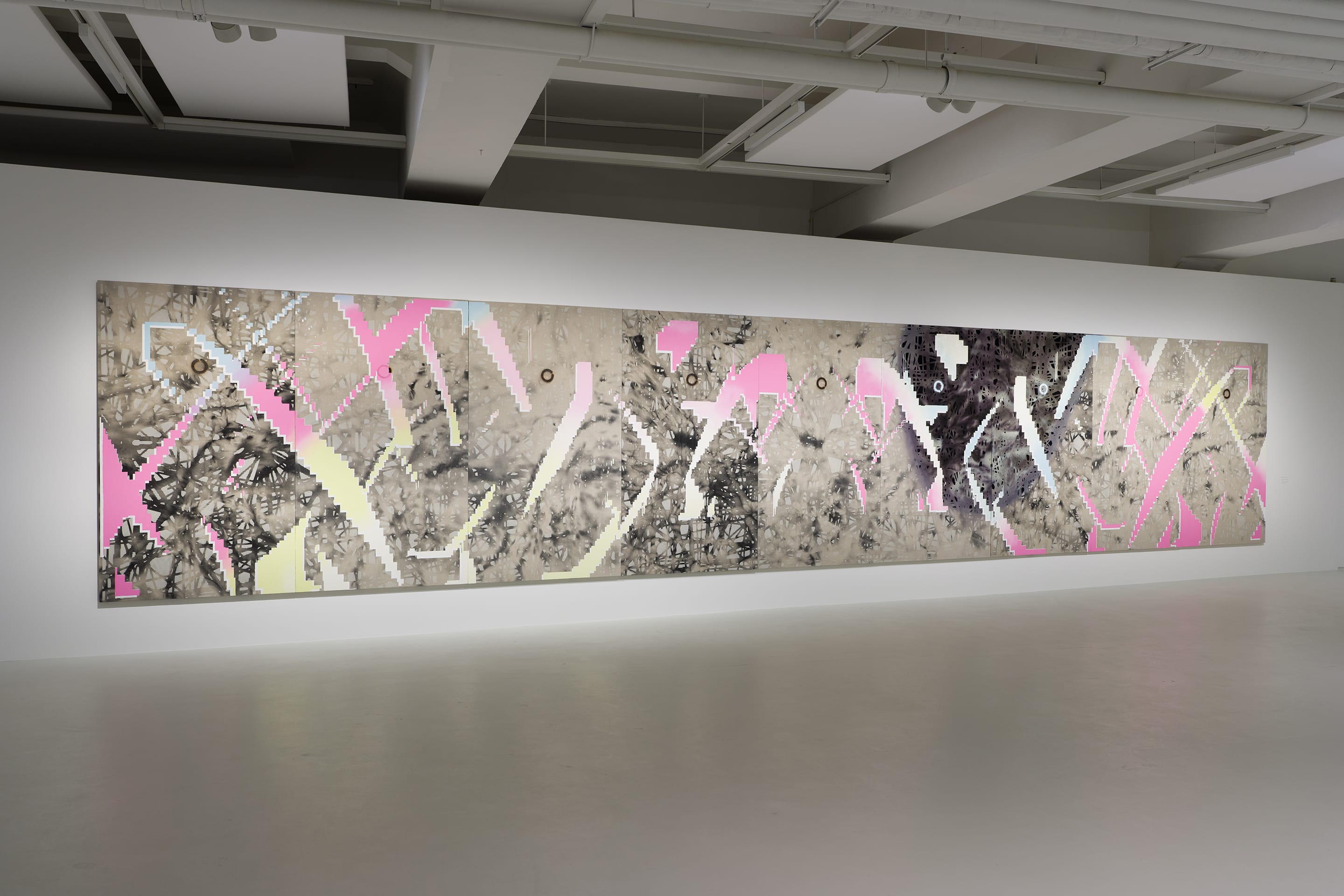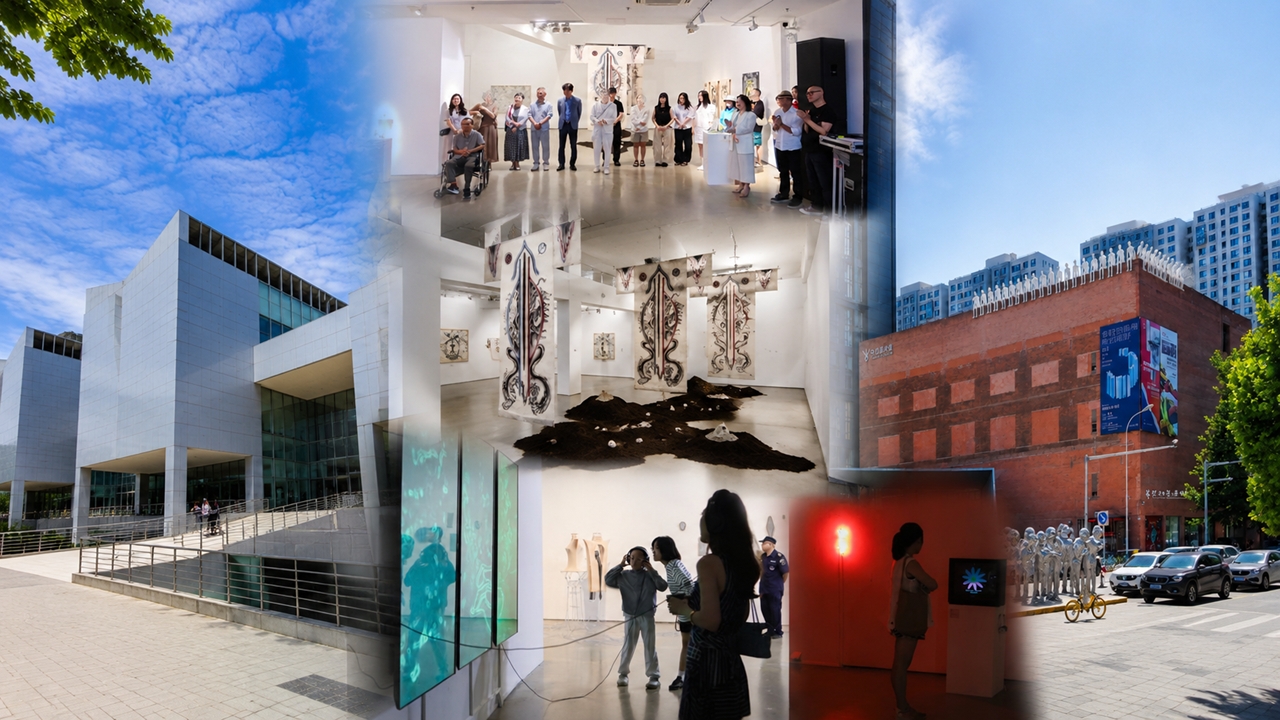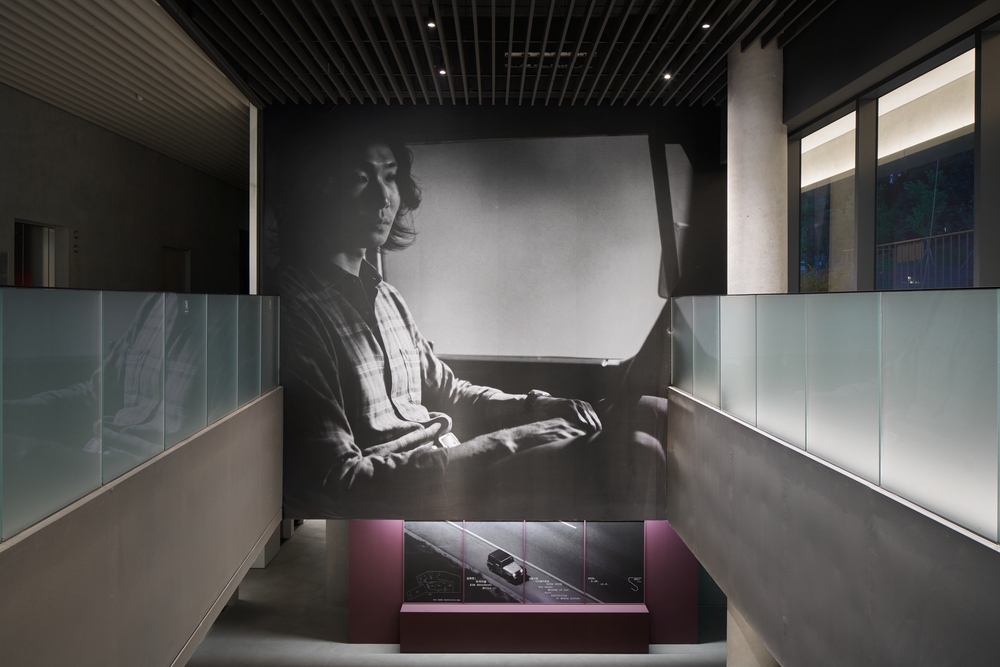

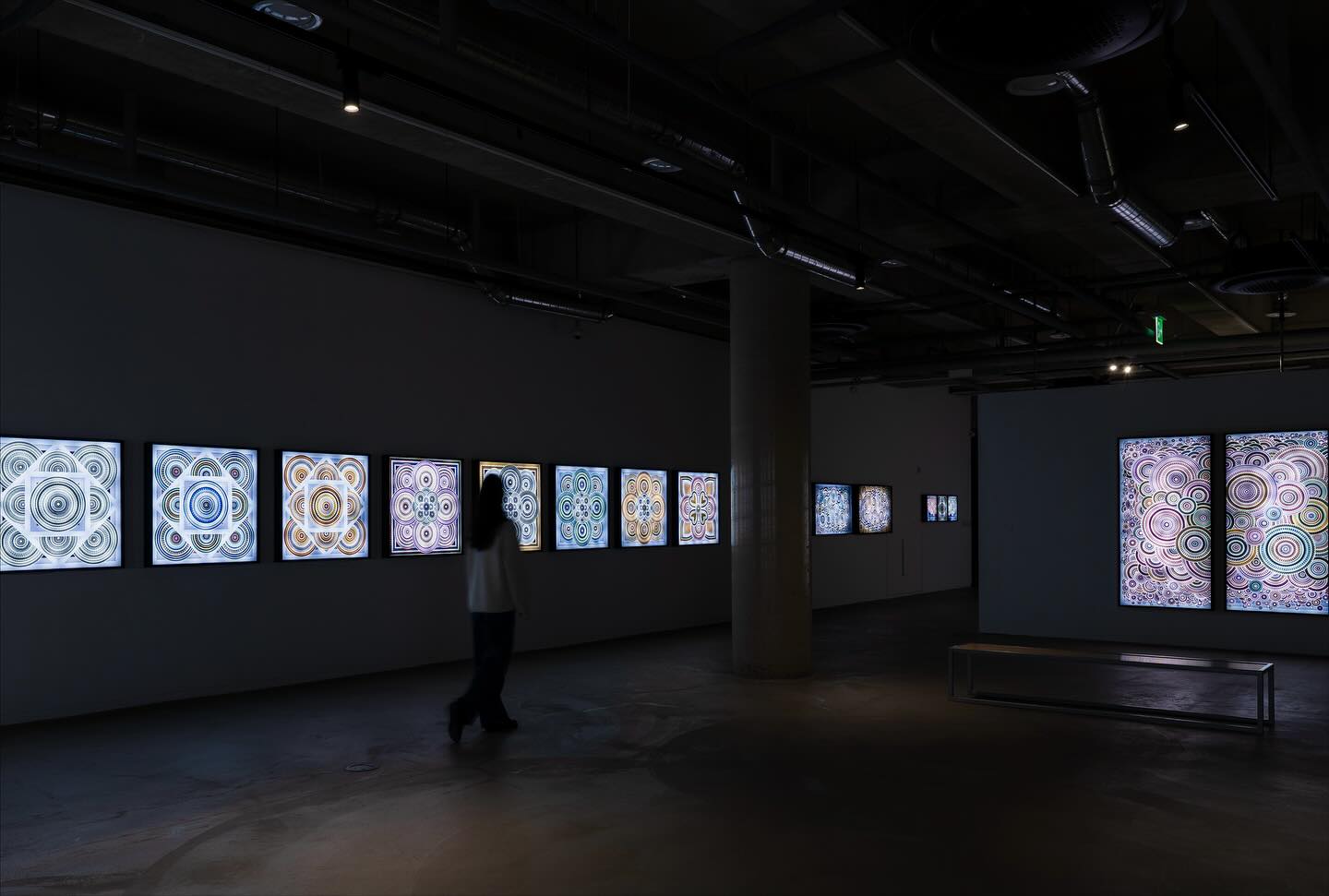
Installation view of 《Beyond Cinema》 ⓒSavina Museum of Contemporary Art.
Savina Museum
of Contemporary Art presents a solo exhibition 《Beyond
Cinema》 by artist Kim Bum Su, until December 31.
This
exhibition reinterprets analog film—no longer in use since the adoption of
digital projection systems—as a medium of contemporary art, offering a new
visual experience that moves fluidly across the boundaries of past and present,
emotion and memory, and the two-dimensional and the three-dimensional.
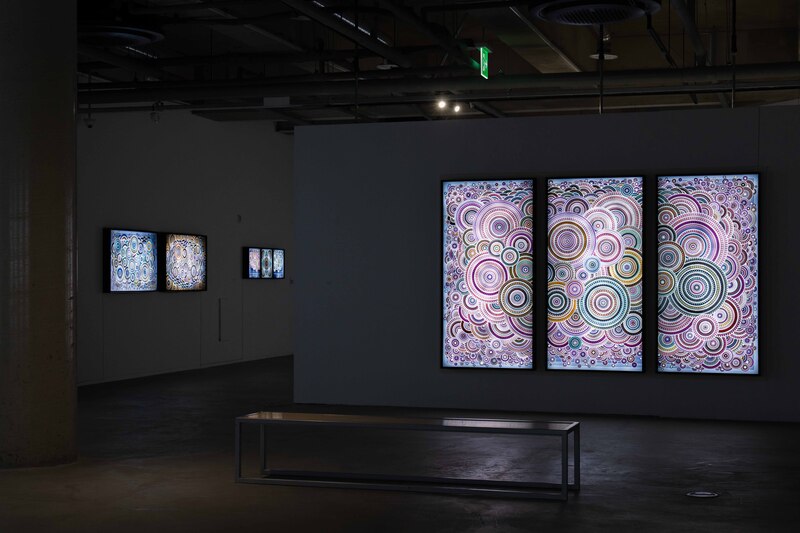
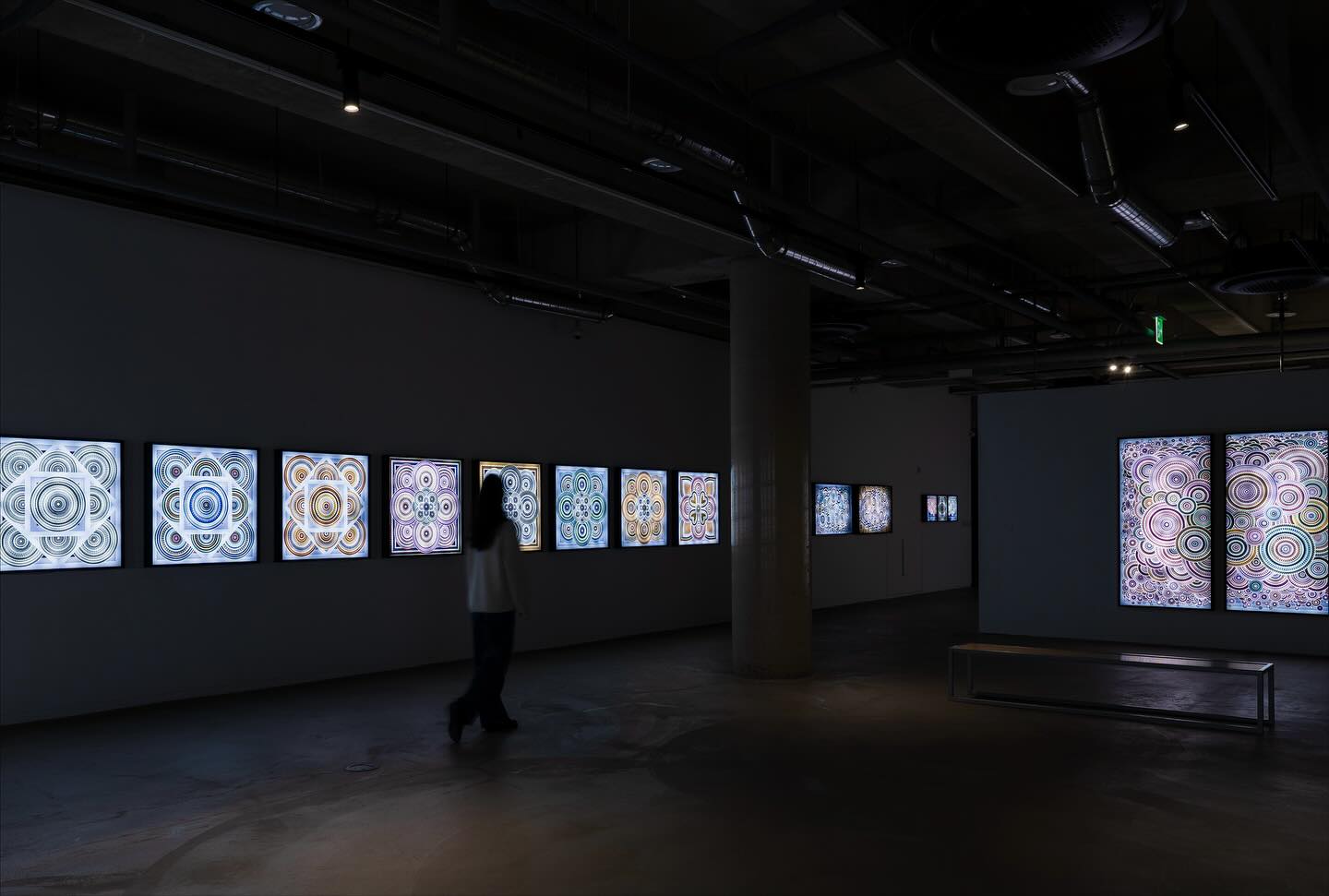
Installation view of 《Beyond Cinema》 ⓒSavina Museum of Contemporary Art.
Analog film functions like a time capsule, holding the dreams,
conflicts, desires, and loves of people who lived in past eras. The artist cuts
and recombines discarded film in various formats—35mm, 16mm, 8mm—fixing them
onto a flat surface through painterly compositions such as bilateral geometric
patterns and circular structures. Though physically flat fragments, the film
pieces create sculptural layers and visual depth through arrangement, overlap,
and interaction with light.
This process transforms the temporality and narrative quality
inherent to cinema into a static visual language of memory and emotion. LED
lights shining from within the works reveal hidden images embedded in the film,
guiding viewers into an immersive experience as if embarking on a journey
through time.
The transformation of discarded film into a
painterly medium demonstrates how contemporary art can serve as a vehicle for
retrieving forgotten memories and reinterpreting the spirit of an era.

Installation view of 《Beyond Cinema》 ⓒSavina Museum of Contemporary Art.
In conclusion, 《Beyond Cinema》 offers
insights that extend beyond media experimentation, traversing the boundaries
between time, emotion, memory, and form. By reconstructing the emotional
fragments embedded in analog film through color and structure—and by
translating flowing time into a static visual language—the exhibition proposes
an artistic method for preserving memory.
Through experiments that cross the formal and conceptual
boundaries of sculpture, painting, and cinema, this exhibition suggests new
directions and expanded possibilities for contemporary art.