
The Closer You Look, the
Farther It Recedes
Marina Rheingantz’s 《Míope》 is on view at White Cube Seoul
through October 24. Marking the Brazilian artist’s first solo exhibition in
Korea, the show brings together new works produced over the past year in her São
Paulo studio.
The title 《Míope》 means “myopic” in Portuguese. As the title suggests, the exhibition
explores how images shift between near and far vision. For Rheingantz,
landscape is not a fixed scene but an image in constant transformation, shaped
by distance, memory, and the materiality of paint.
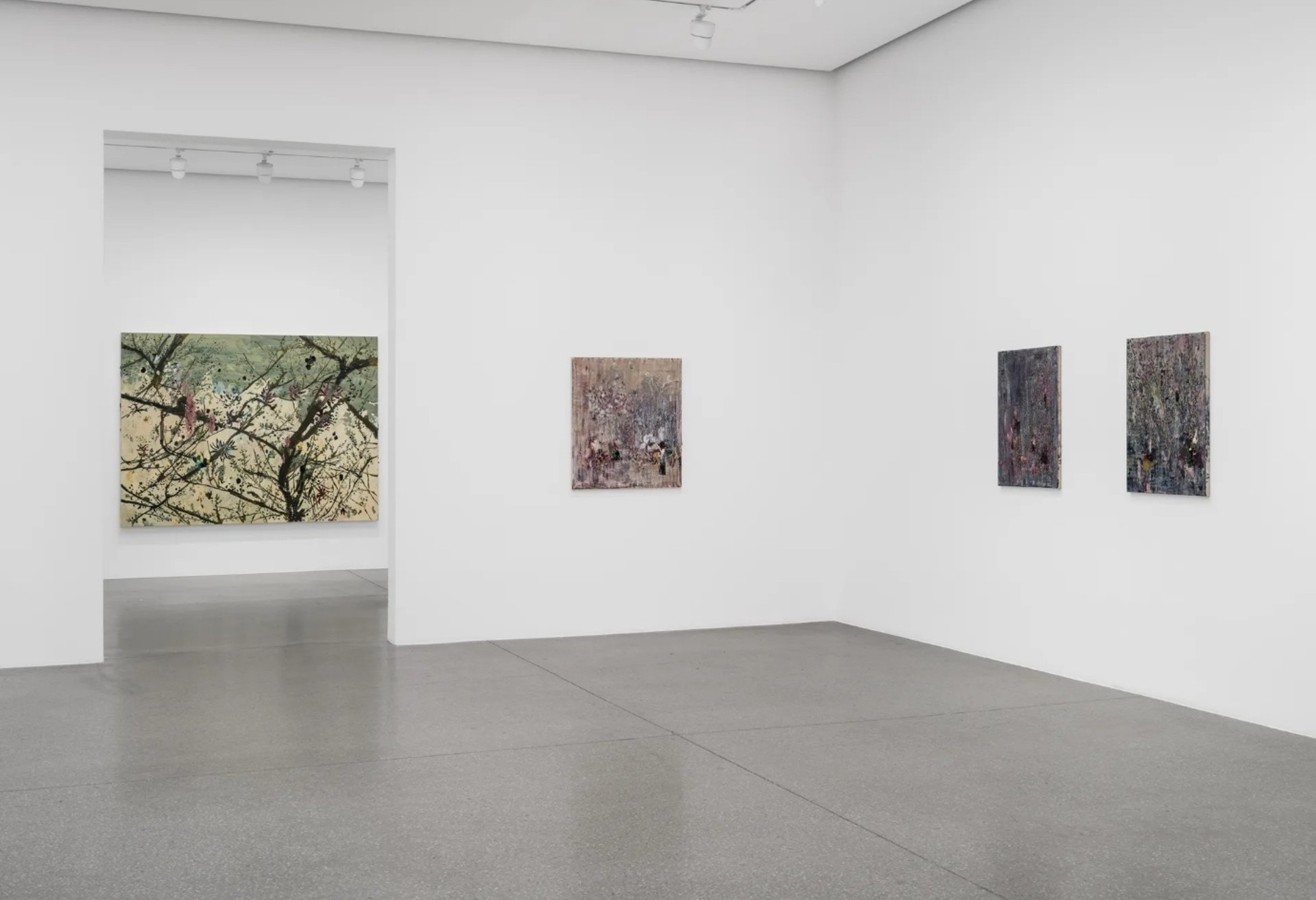
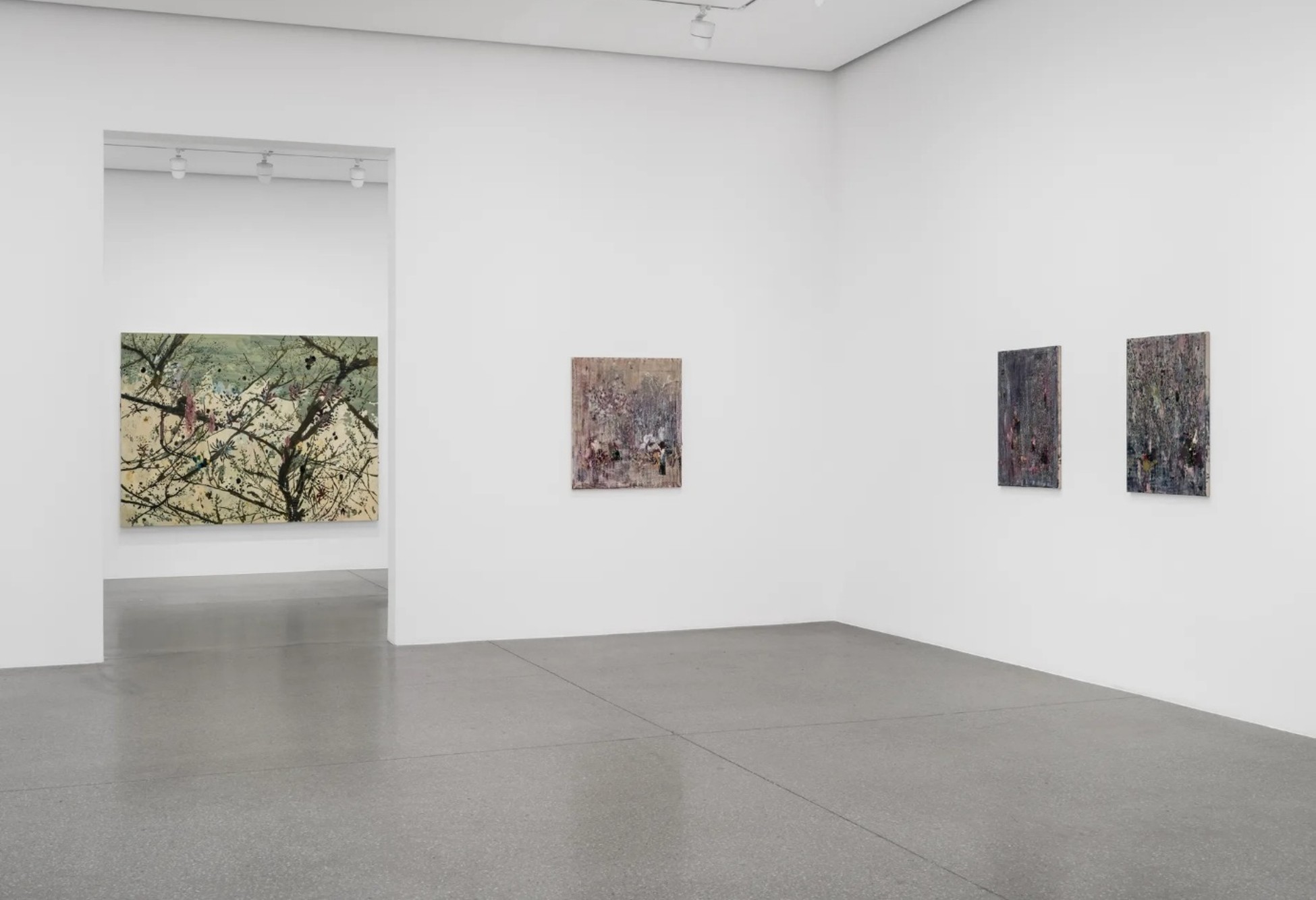
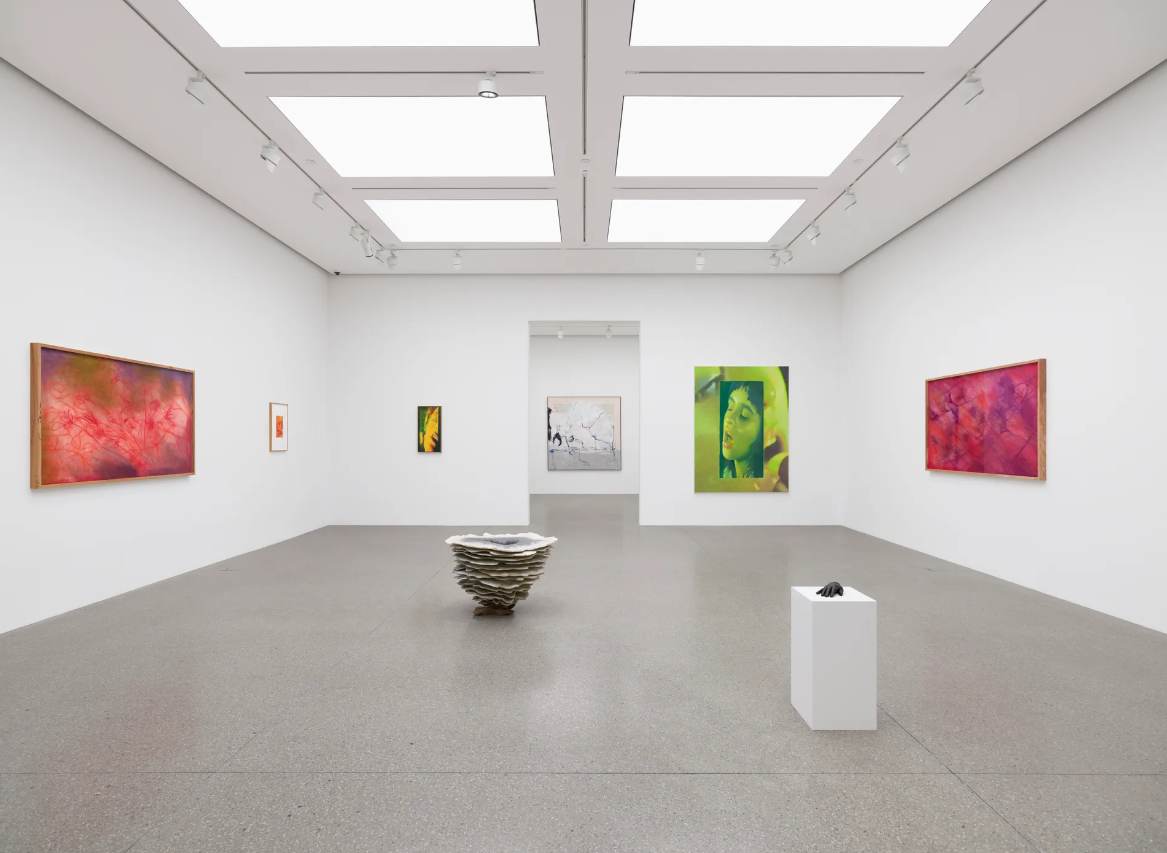
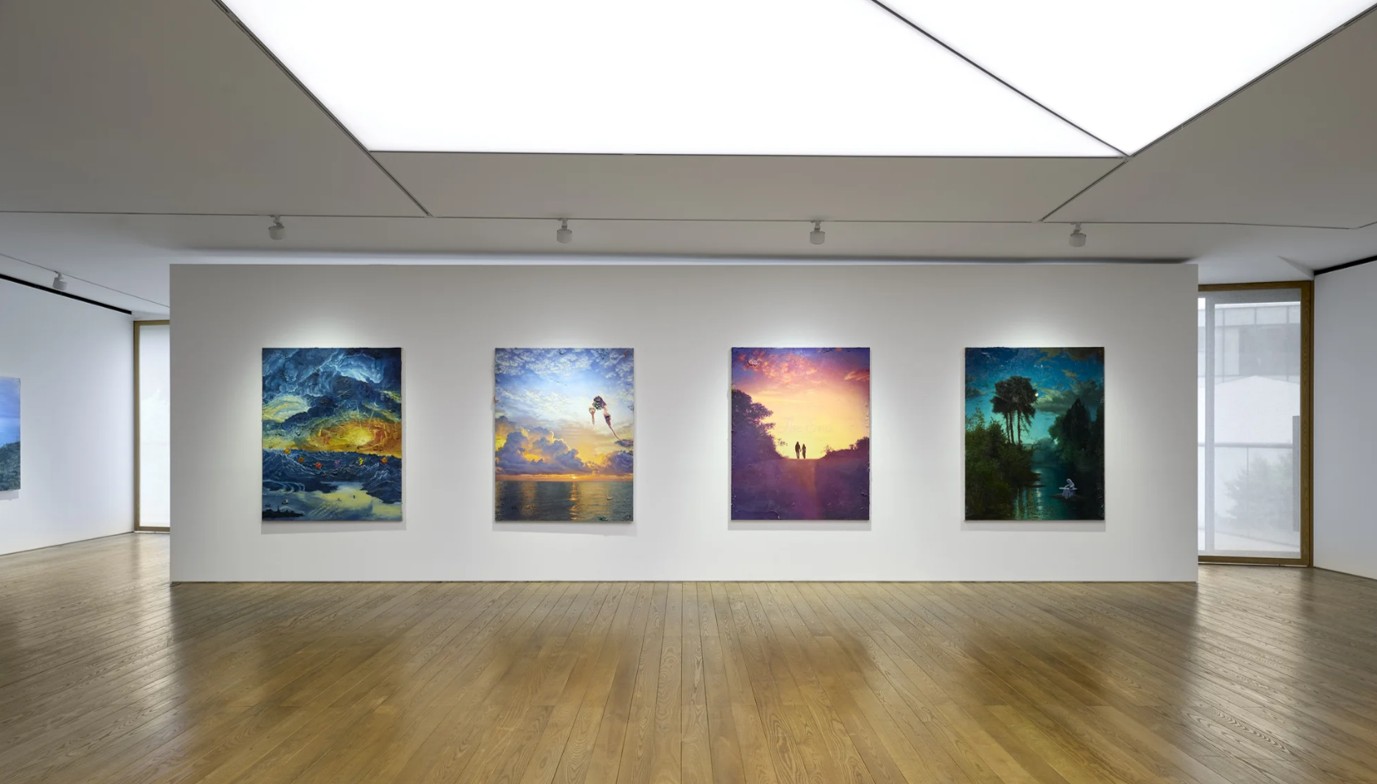
Installation view, White Cube Seoul / Photo: White Cube Seoul
An Unstable Gaze and a Shifting
Landscape
Rheingantz’s landscapes do not point
clearly to a specific place or moment in time. Memories of the Brazilian
countryside, photographs she has accumulated, and visual references drawn from
painting and textiles overlap to form fluid, shifting pictorial spaces.
Observed scenes, remembered images, and
sensory impressions of nature are layered together, allowing her landscapes to
move beyond the representation of any single, identifiable place.
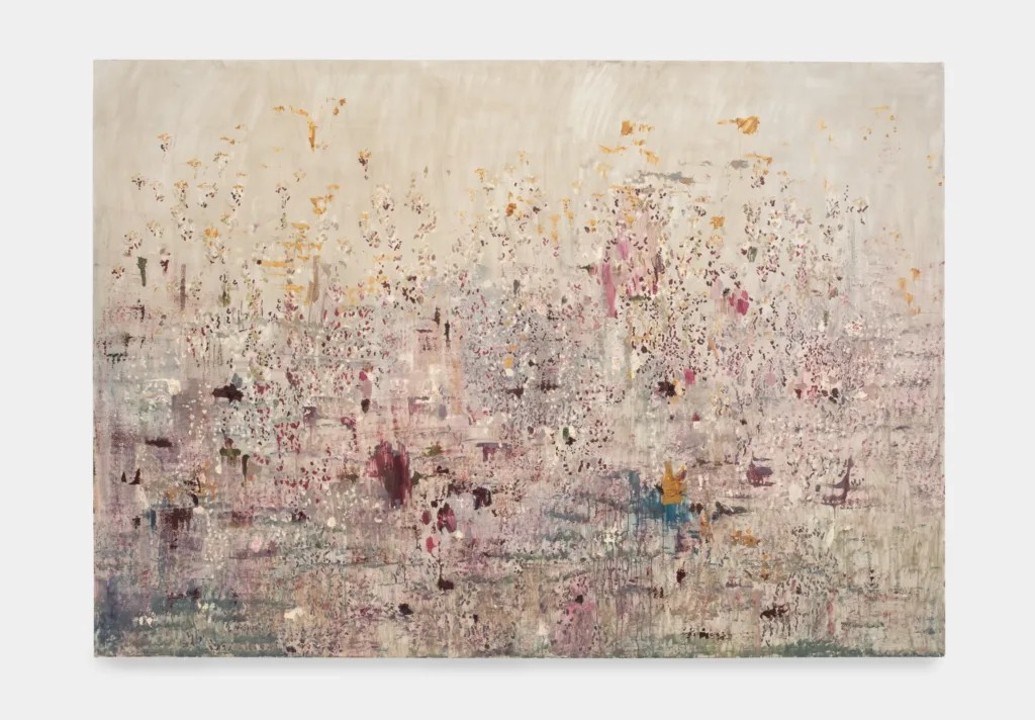
Marina Rheingantz, Míope, 2026, oil on canvas, 210 x 300 cm / Photo: White Cube Seoul
The title work, Míope
(2026), most directly embodies this approach. Forms suggestive of vegetation or
terrain sharpen and dissolve across the surface, while some overlap to create
the impression of double or even triple vision. With no stable horizon or fixed
vanishing point, viewers are repeatedly prompted to reconsider scale and
distance.
Images That Dissolve as You
Move Closer
What matters in Rheingantz’s painting is
not the precise identification of what is being seen. Rather, the work
foregrounds how unstable and conditional the act of seeing can be.
From a distance, the image may read as a
coherent landscape. Up close, however, it breaks apart into brushstrokes,
stains, layers of paint, and traces of gesture. Moving closer does not
necessarily provide more information; instead, it can mean losing sight of the
image as a whole.
Her paintings are built through repeated
processes of construction and erasure. Paint is layered and removed, diluted
pigment is allowed to run, and material accumulates across the surface. The
result is less a flat representation of landscape than a terrain in itself—one
shaped by erosion and sedimentation, formation and disappearance.
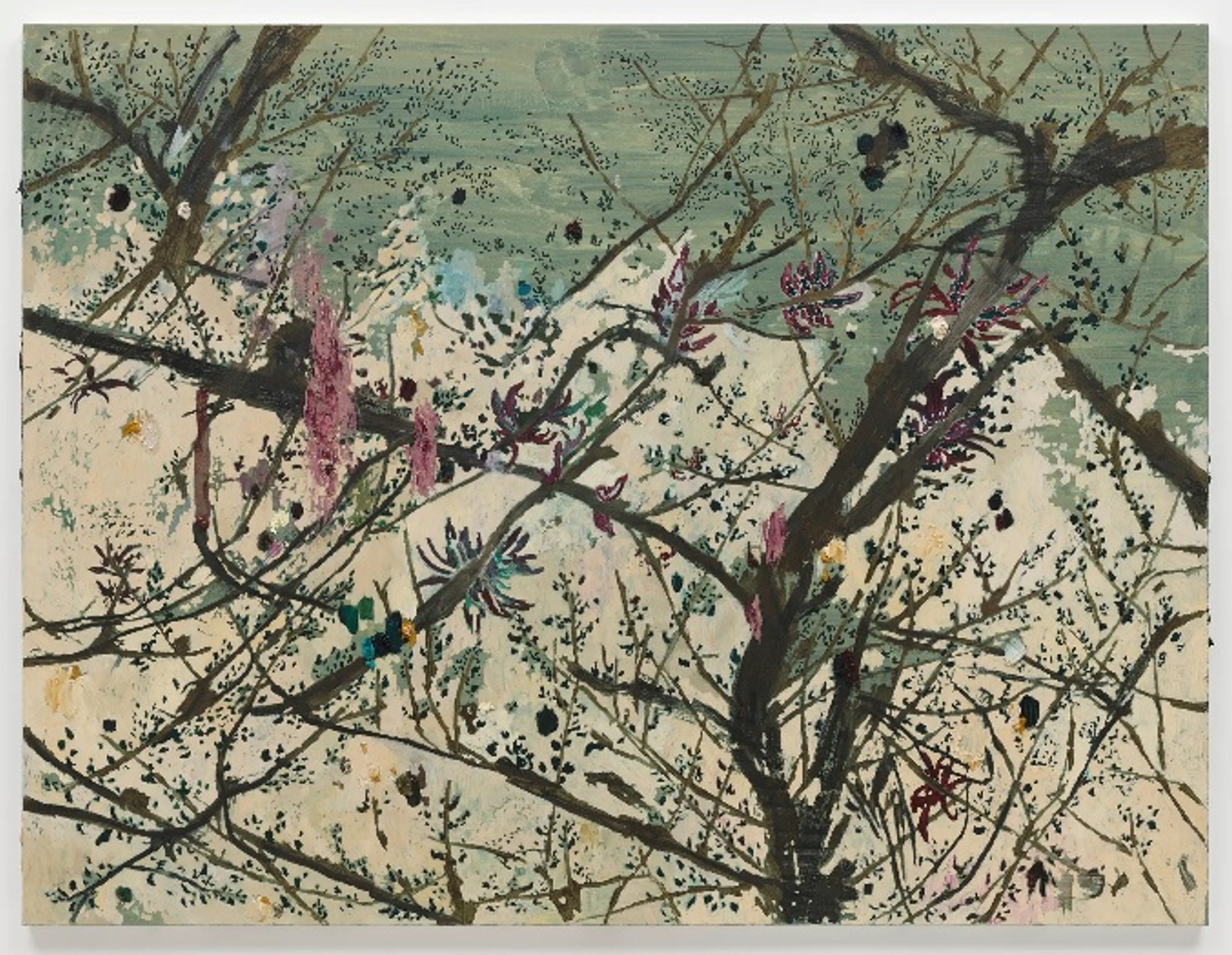
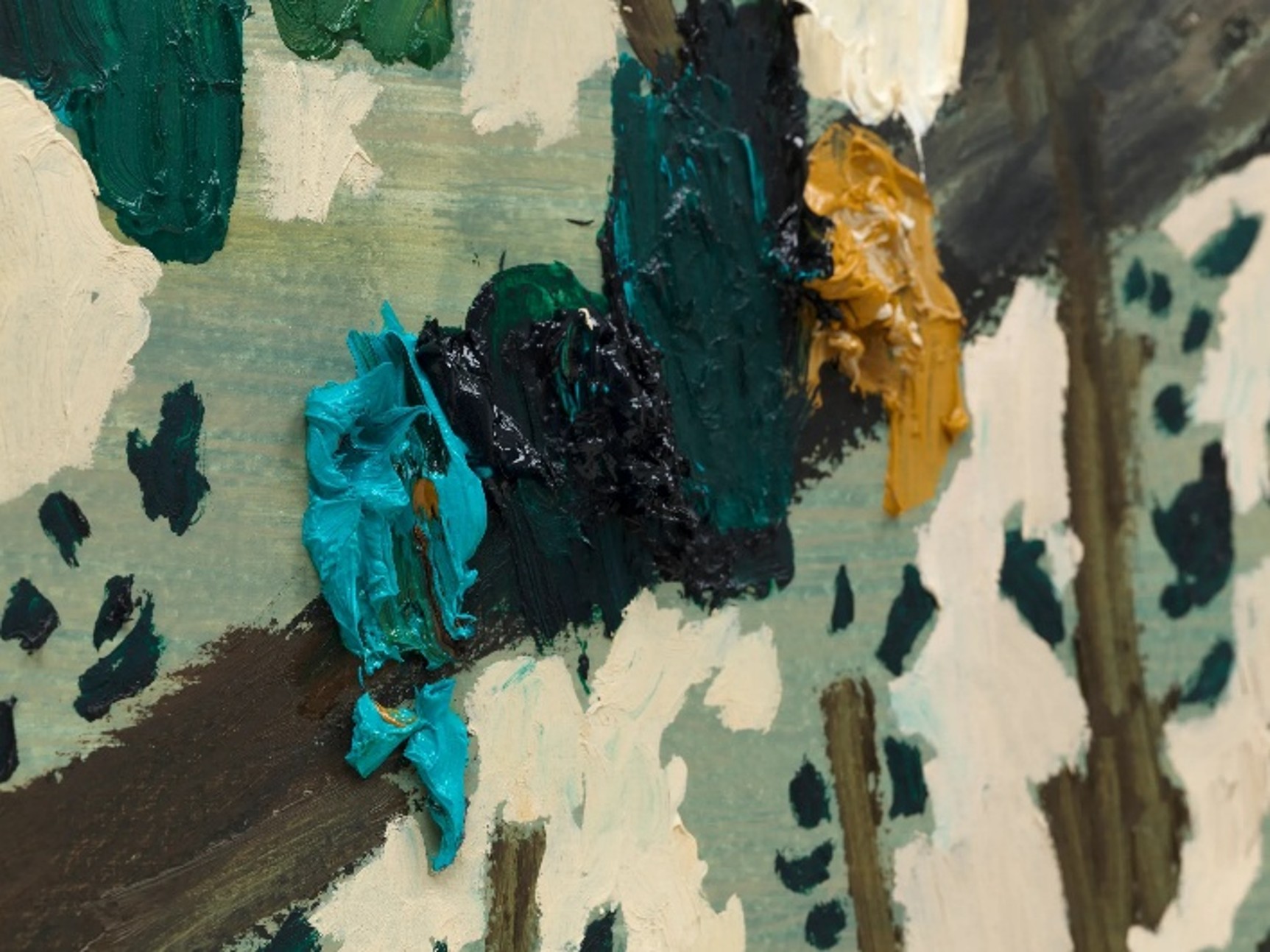
Marina Rheingantz, Bromélia Caranguejo, Oil on canvas, 190 x 252.5 cm
Top: full view of the work, Below: detail of the work / Image courtesy of White Cube Seoul
Between Figuration and
Abstraction
In Bromélia Caranguejo,
branch-like forms appear to occupy the foreground, yet the green and off-white
planes behind them do not recede according to conventional perspective.
In smaller works such as Periquita,
Caracol, and Taturana,
thick paint, stains, and oil-stick marks create surfaces reminiscent of aged
frescoes or peeling wallpaper.
Although the titles retain specific
references to Brazilian flora and fauna, the images themselves remain suspended
between figuration and abstraction.
This approach makes clear that Rheingantz
is not attempting to reproduce a particular site. For her, landscape is an
image that continues to change through the acts of seeing, remembering,
forgetting, and looking again.
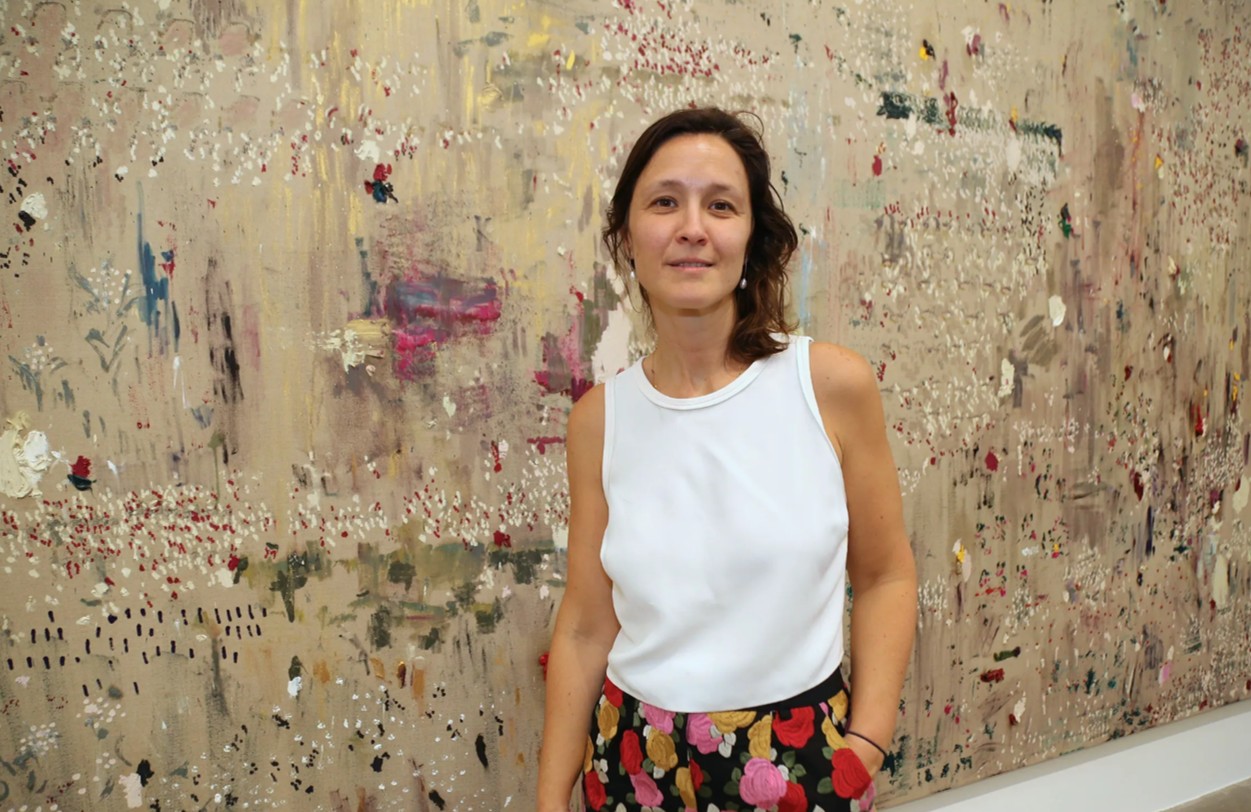
Marina Rheingantz / Photo: Denise Andrade, 2022
About the Artist
Marina Rheingantz was born in Araraquara,
Brazil, in 1983 and is currently based in São Paulo. Drawing on memories of
Brazil’s natural and rural environments, she has developed a practice spanning
painting and textile works, expanding the traditional genre of landscape into
questions of memory, materiality, and perception.
Recent solo exhibitions have been presented
at ICA Milano, Musée des Beaux-Arts de Nîmes, and White Cube London. She also
participated in the 15th Gwangju Biennale in 2024. Her work is held in major
international institutional and private collections, including the Centre
Pompidou in Paris, the Solomon R. Guggenheim Museum in New York, Tate in
London, the Stedelijk Museum Amsterdam, LACMA, and the Pinault Collection.
White Cube
White Cube is an international contemporary
art gallery founded in London in 1993, closely associated with the emergence
and international visibility of a new generation of British artists in the
1990s. Since then, it has expanded beyond London with spaces in Hong Kong,
Paris, New York, and Seoul, while continuing to present an international
program of contemporary art.
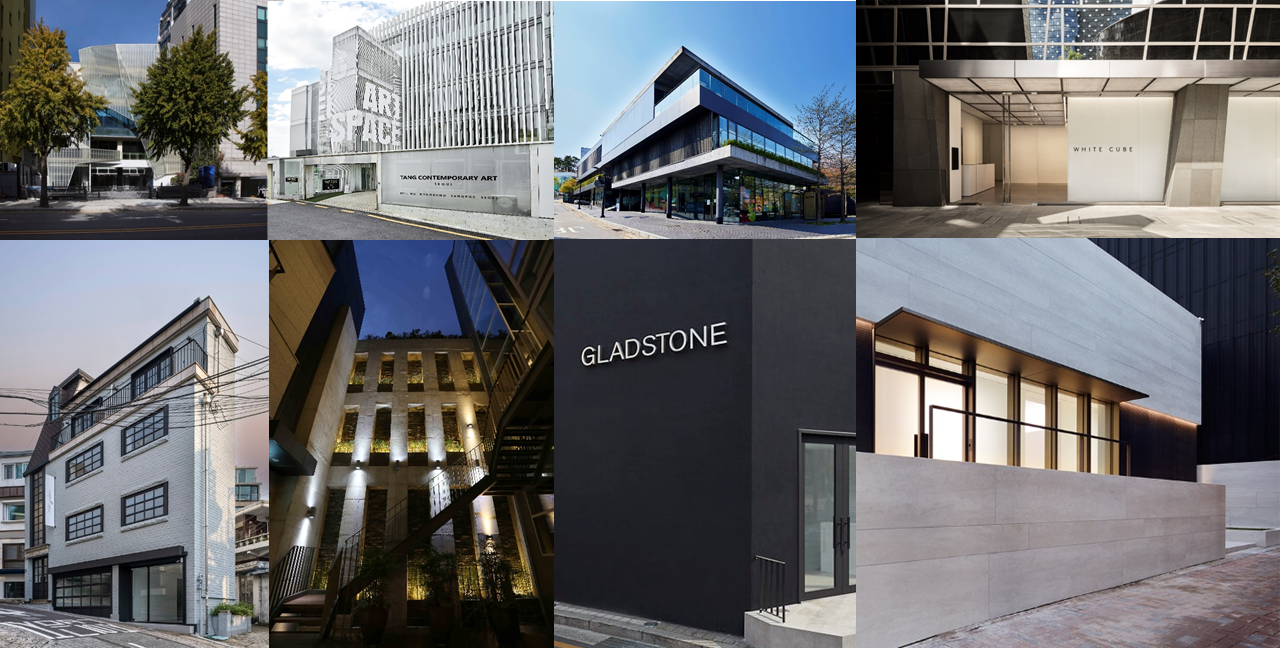
White Cube Seoul opened in 2023 near Dosan
Park in Gangnam. Spanning more than 300 square metres, the space includes
exhibition galleries, private viewing rooms, and offices. It is White Cube’s
second permanent location in Asia, following Hong Kong.
Exhibition Information
Exhibition: Marina Rheingantz 《Míope》
Dates: September 1–October 24, 2026
Venue: White Cube Seoul (6 Dosan-daero 45-gil, Gangnam-gu, Seoul)
Website: White
Cube Seoul