
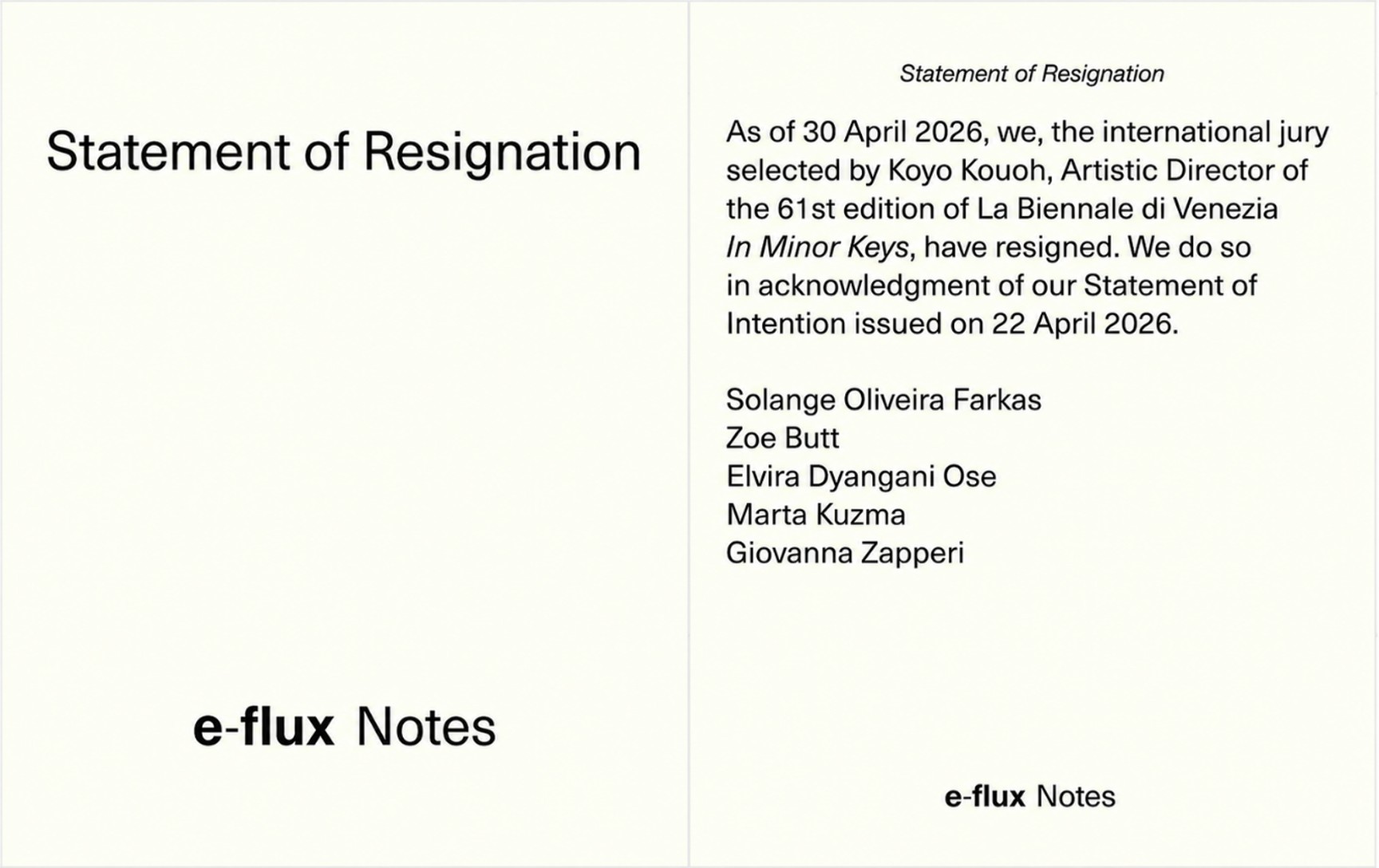
Statement of resignation issued by the five members of the international jury. / Photo: Screenshot from e-flux Instagram
On April 30,
2026, all five members of the international jury for《In
Minor Keys》, the 61st International Art Exhibition of
the Venice Biennale, resigned just nine days before the exhibition’s opening.
Led by jury
president Solange Oliveira Farkas, the jury members Zoe Butt, Elvira Dyangani
Ose, Marta Kuzma, and Giovanna Zapperi released a brief statement of
resignation through e-flux.
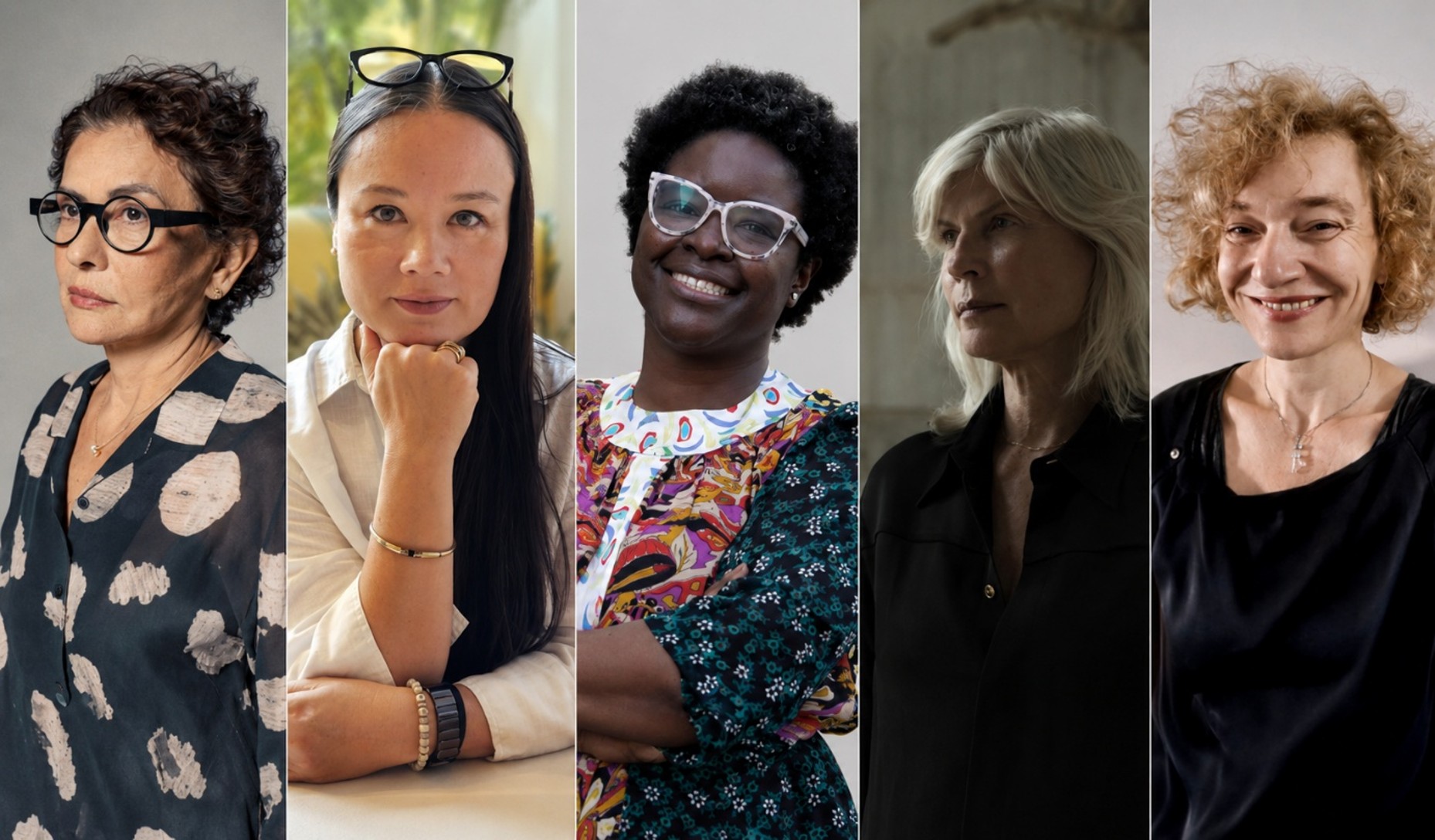
From left: Solange Oliveira Farkas, Zoe Butt, Elvira Dyangani Ose, Marta Kuzma, and Giovanna Zapperi. / Photo: en.ara.cat
Solange Oliveira
Farkas is the founding director of VideoBrasil and has long worked on
curatorial practices related to Latin American and Global South media culture
and non-mainstream art discourse. Zoe Butt is a curator known for introducing
contemporary art from Vietnam and Southeast Asia to the international art
world.
Elvira Dyangani
Ose, originally from Equatorial Guinea, has focused on public art and
postcolonial discourse. Marta Kuzma has engaged extensively with critical art
discourse surrounding Eastern Europe and the post-Soviet region, while Giovanna
Zapperi is an art historian specializing in feminist art history and
contemporary art theory.
At the center of
the controversy was the participation of the Russian and Israeli national
pavilions. In a previously released〈Statement of
Intention〉, the jury announced that national
pavilions representing countries whose leaders had been indicted by the
International Criminal Court (ICC) would be excluded from consideration for the
Golden Lion and Silver Lion awards. The statement was widely interpreted as
targeting Russia and Israel, immediately triggering strong backlash.
Israel’s Ministry
of Foreign Affairs condemned the decision as the politicization of art and
anti-Israeli political propaganda. Italian Minister of Culture Alessandro Giuli
declared a boycott of the Biennale preview and opening ceremony, while the
European Union decided to withdraw approximately €2 million in funding
previously allocated for the 2028 Venice Biennale due to issues surrounding
Russian participation.
Ultimately, the
jury resigned, and the Venice Biennale Foundation announced that the existing
Golden Lion award structure would be abolished and replaced with a
visitor-voted “Visitors’ Lions” system, with the awards ceremony postponed to
the closing day on November 22.
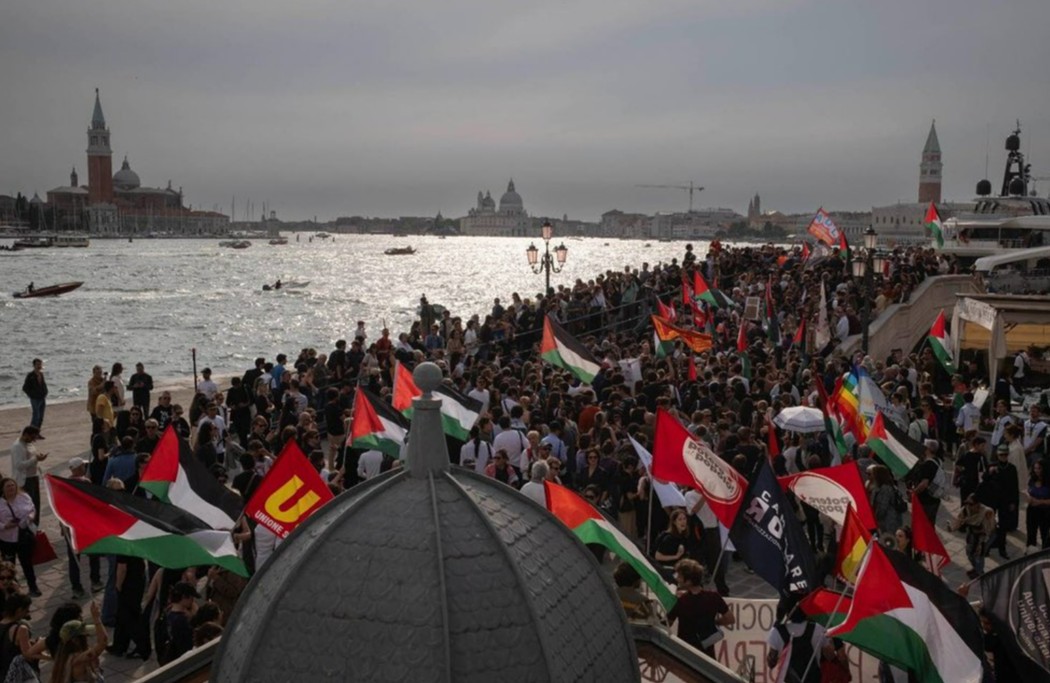
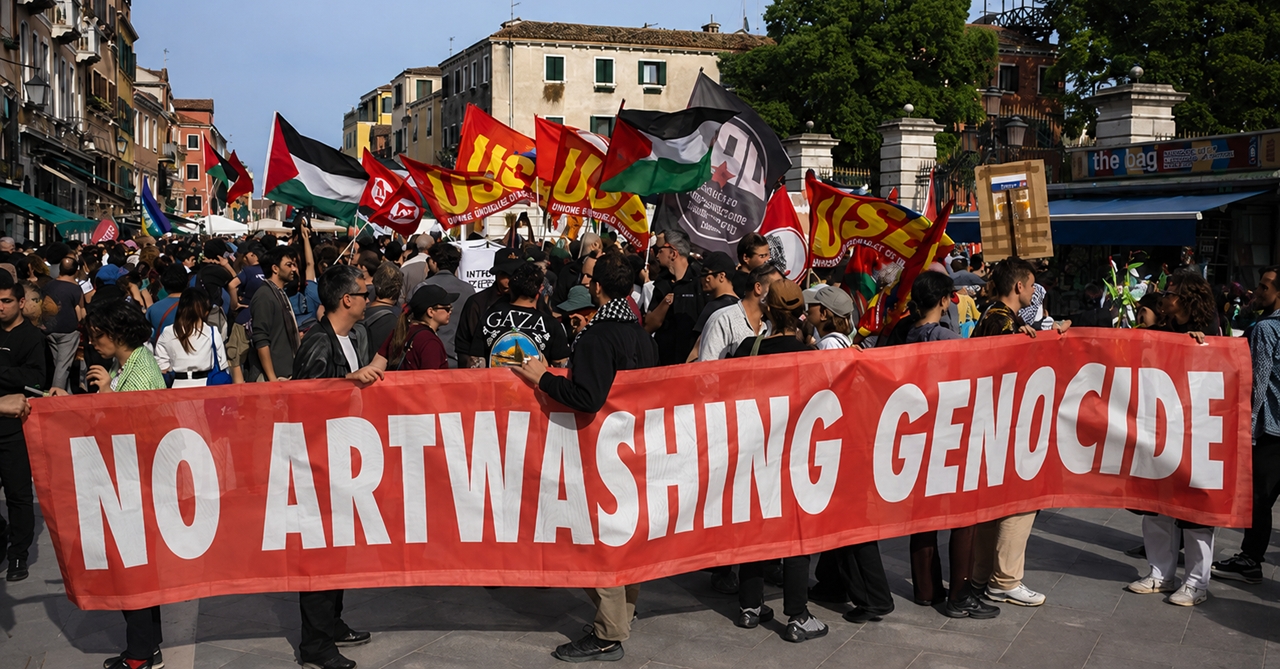
Artists and activists including workers and participants of Biennale, take part in a demonstration calling to close the Israeli Pavilion at the 61st Venice Art Biennale. During the day, a strike was announced in the city, 18 counties closed their pavilions, and other artists covered their work in the main exhibition. / Photo and information courtesy of @Oren_ziv.
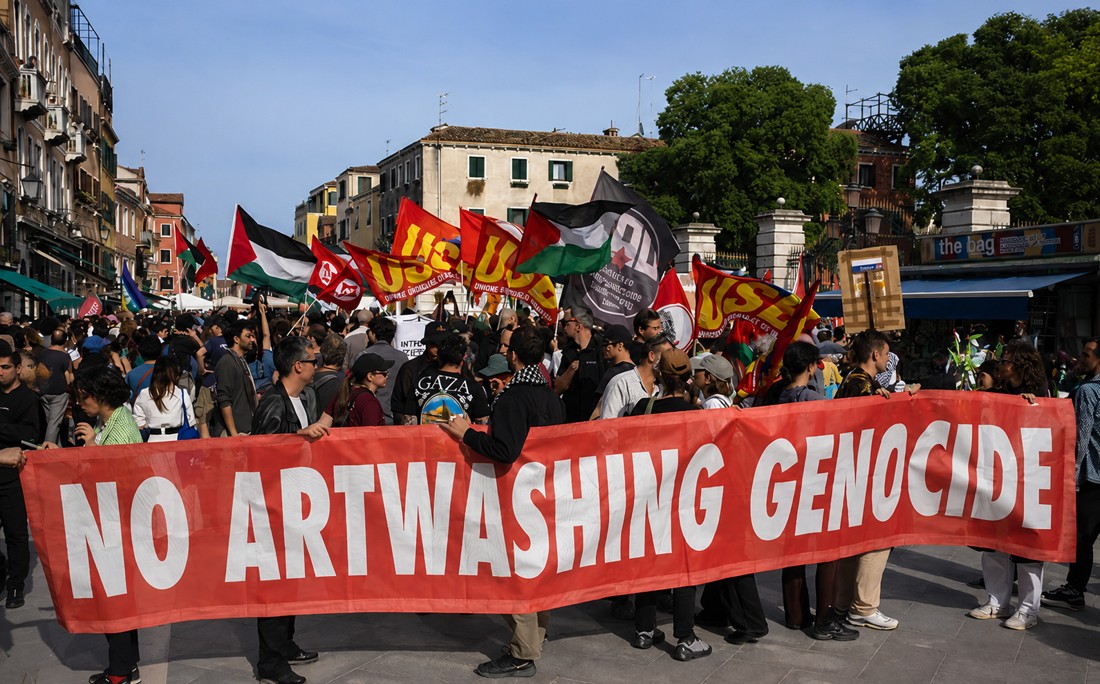
Venice Biennale protesters, including Biennale workers, participating artists, and activists, march with a banner reading “NO ARTWASHING GENOCIDE,” calling for the closure of the Israeli Pavilion at the 61st Venice Biennale. / Photo and information courtesy of @Oren_ziv.
Between
Artistic Autonomy and Political Responsibility
For decades, the
international art world has regarded artistic autonomy and freedom of
expression as core principles. Museums and biennials functioned as public
spaces that maintained a degree of distance from political reality while also
providing a framework for critical reflection on that reality.
Today, however,
that boundary has become far more complex. War, human rights issues, state
violence, and platform politics now circulate in real time. The participation
of national pavilions, sponsorship structures, artists’ statements, and even
institutional silence have all become subjects of public debate.
Contemporary art
no longer remains in a position of observing reality from the outside.
Political conflict, market systems, technological change, and questions of
identity now operate not only as themes within artworks, but also as conditions
shaping how exhibitions are organized and interpreted.
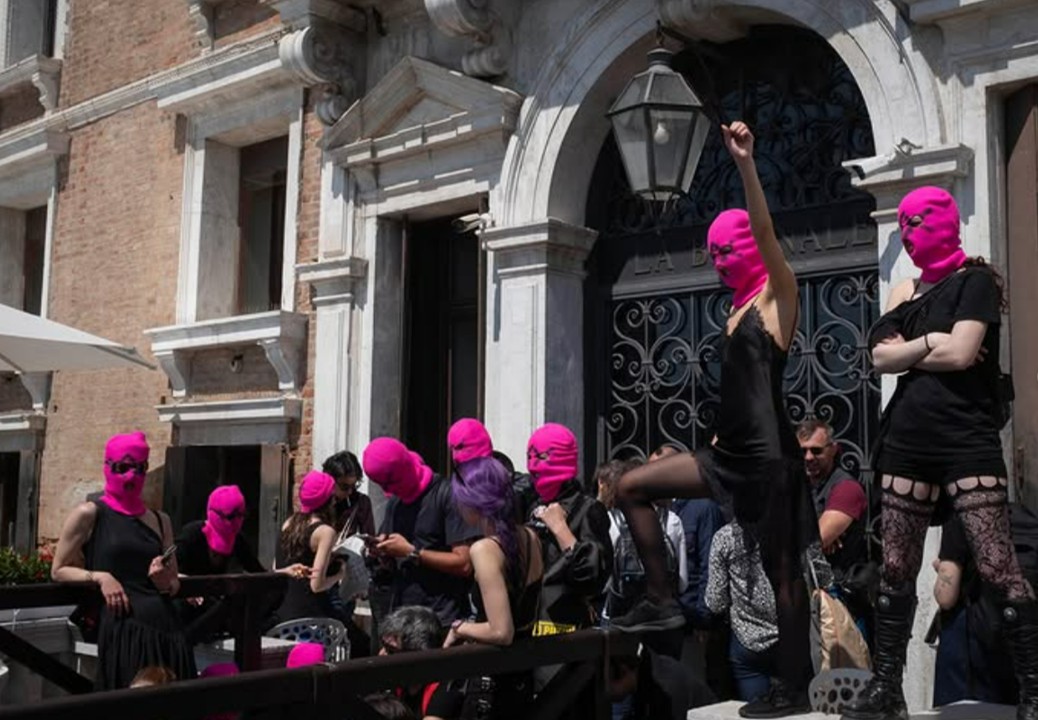
Members of @pussyriot and other activists protest at the Venice Biennale against the participation of Russia. / Photo and information courtesy of @Oren_ziv.
Many
international exhibitions today address issues such as gender, colonialism,
environment, refugees, and war. In this context, not only the formal and
sensory qualities of artworks, but also the positions taken by artists and
institutions, have become important elements of interpretation.
Platform
environments accelerate these changes even further. Works are circulated online
before they are slowly experienced within exhibition spaces, and exhibitions
themselves are increasingly consumed as shareable visual moments.
As a result,
artistic autonomy and political responsibility are no longer separable within
today’s international art world. What matters now is how art constructs its
relationship with reality through form, perception, and institutional language.
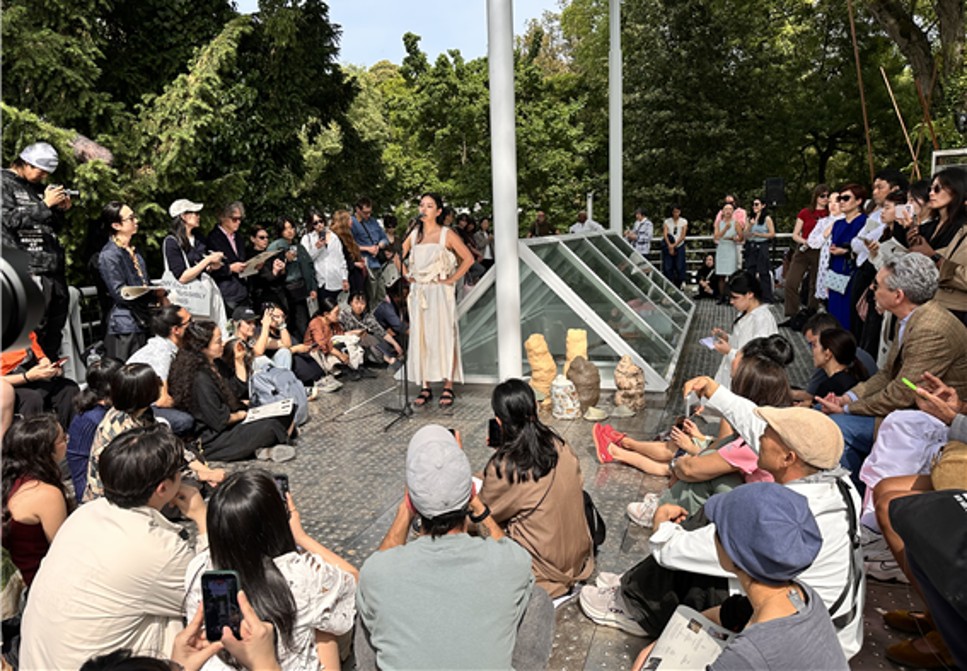
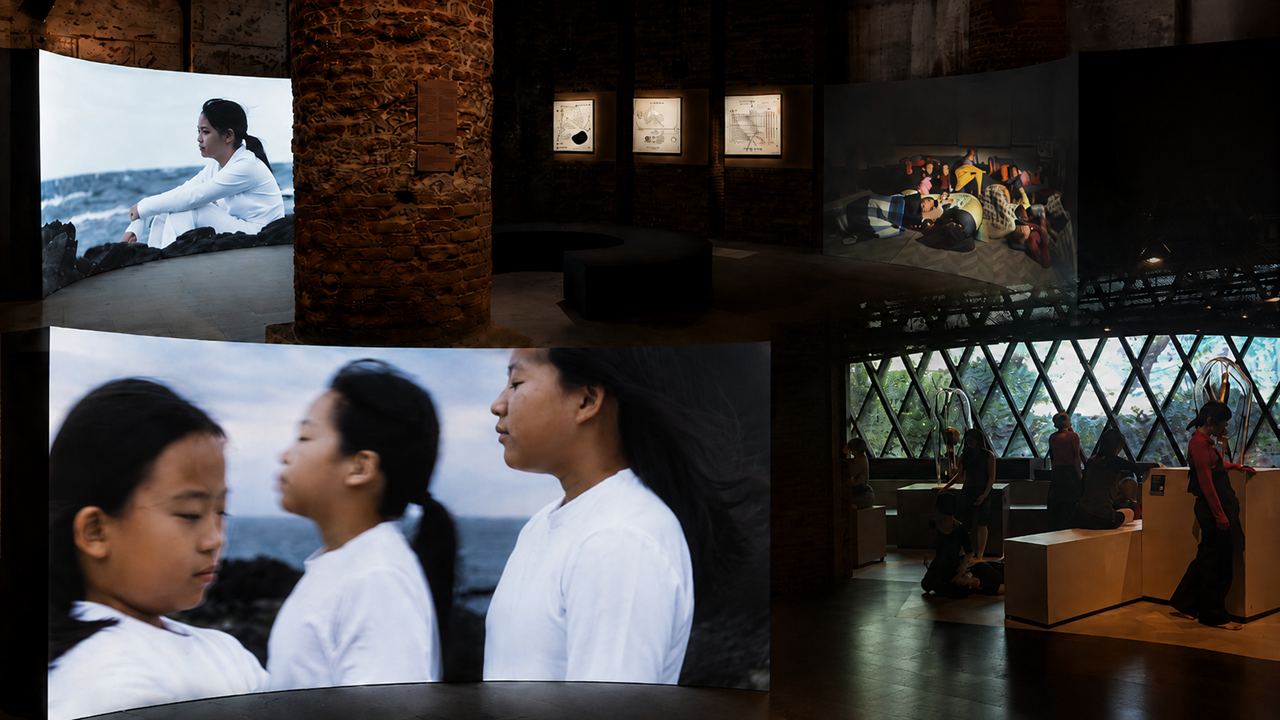
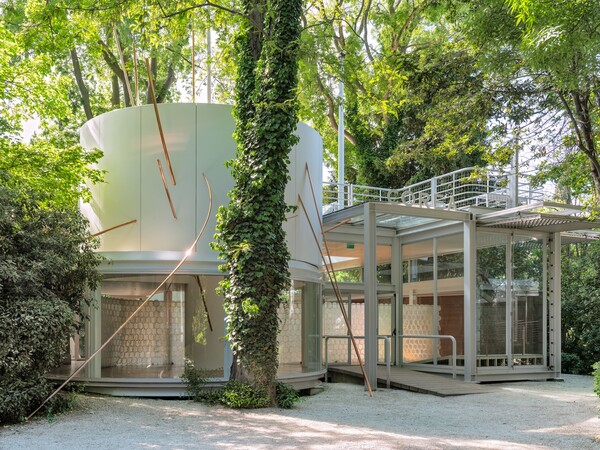
Opening ceremony of the Korean Pavilion exhibition at the 61st International Art Exhibition of the 2026 Venice Biennale. / Photo: Arts Council Korea (ARKO)
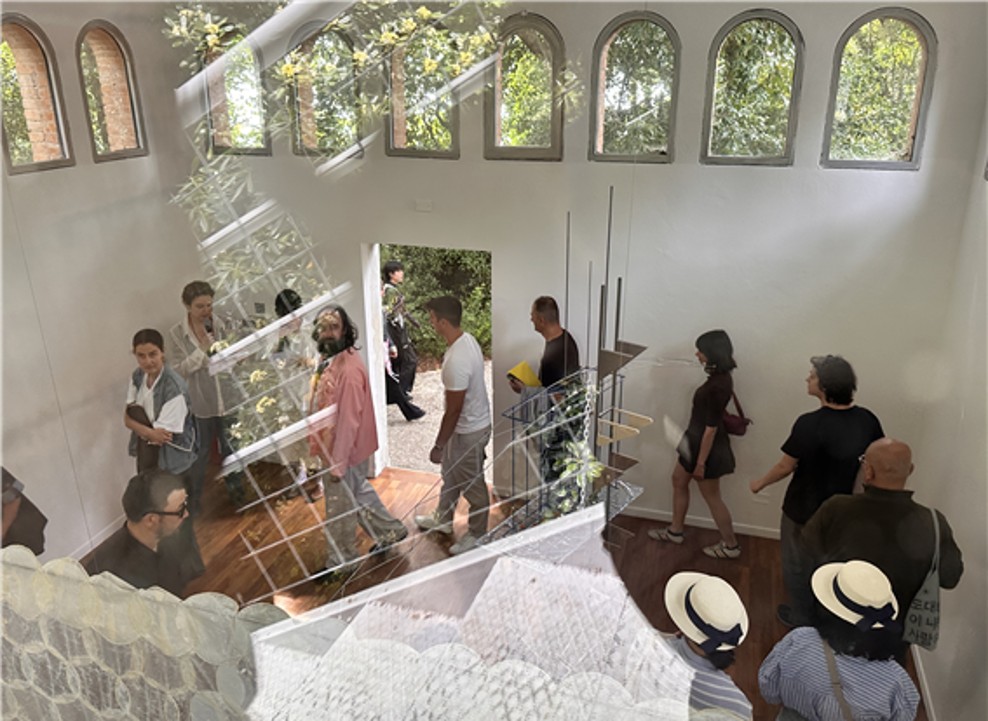
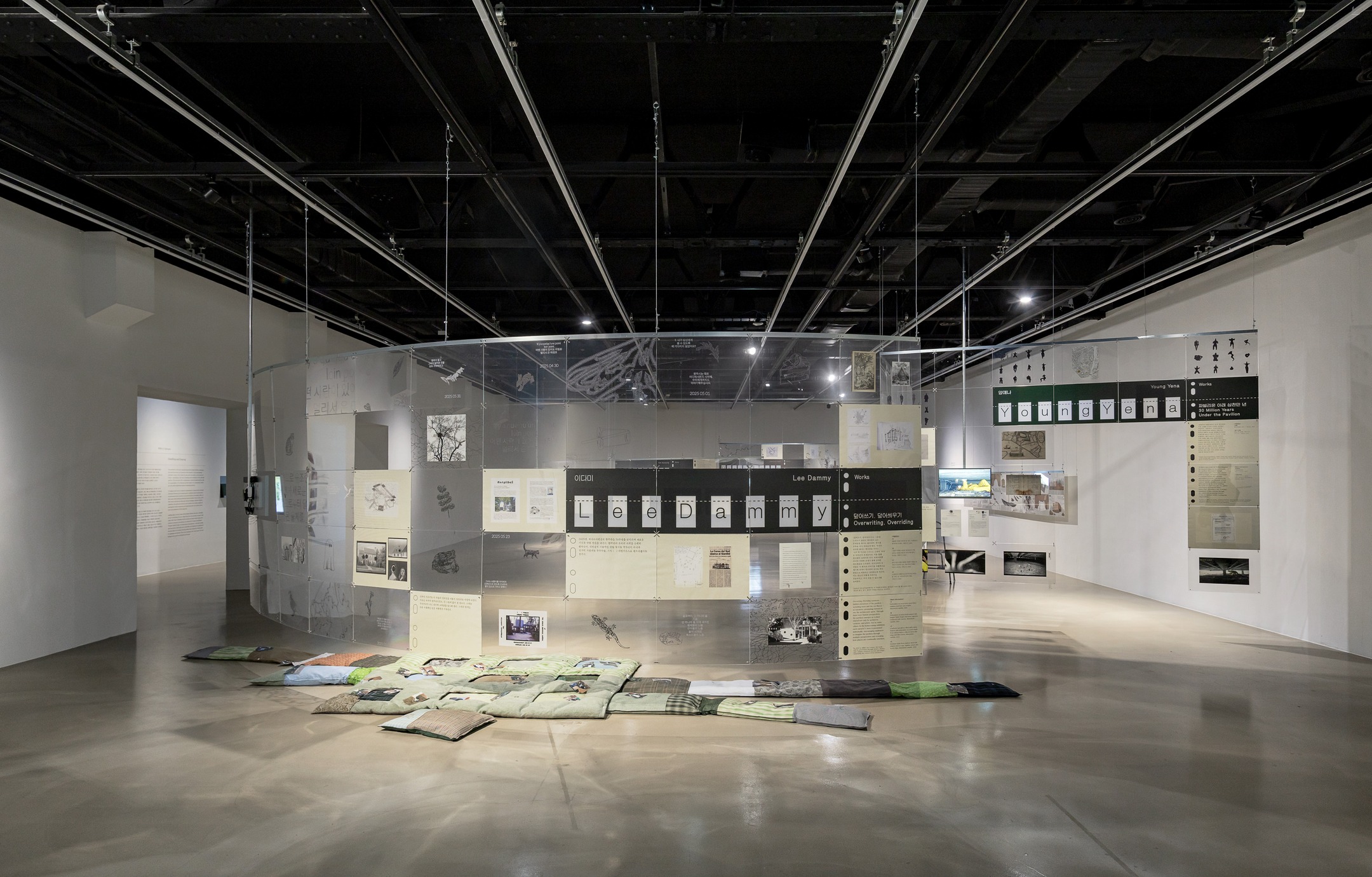
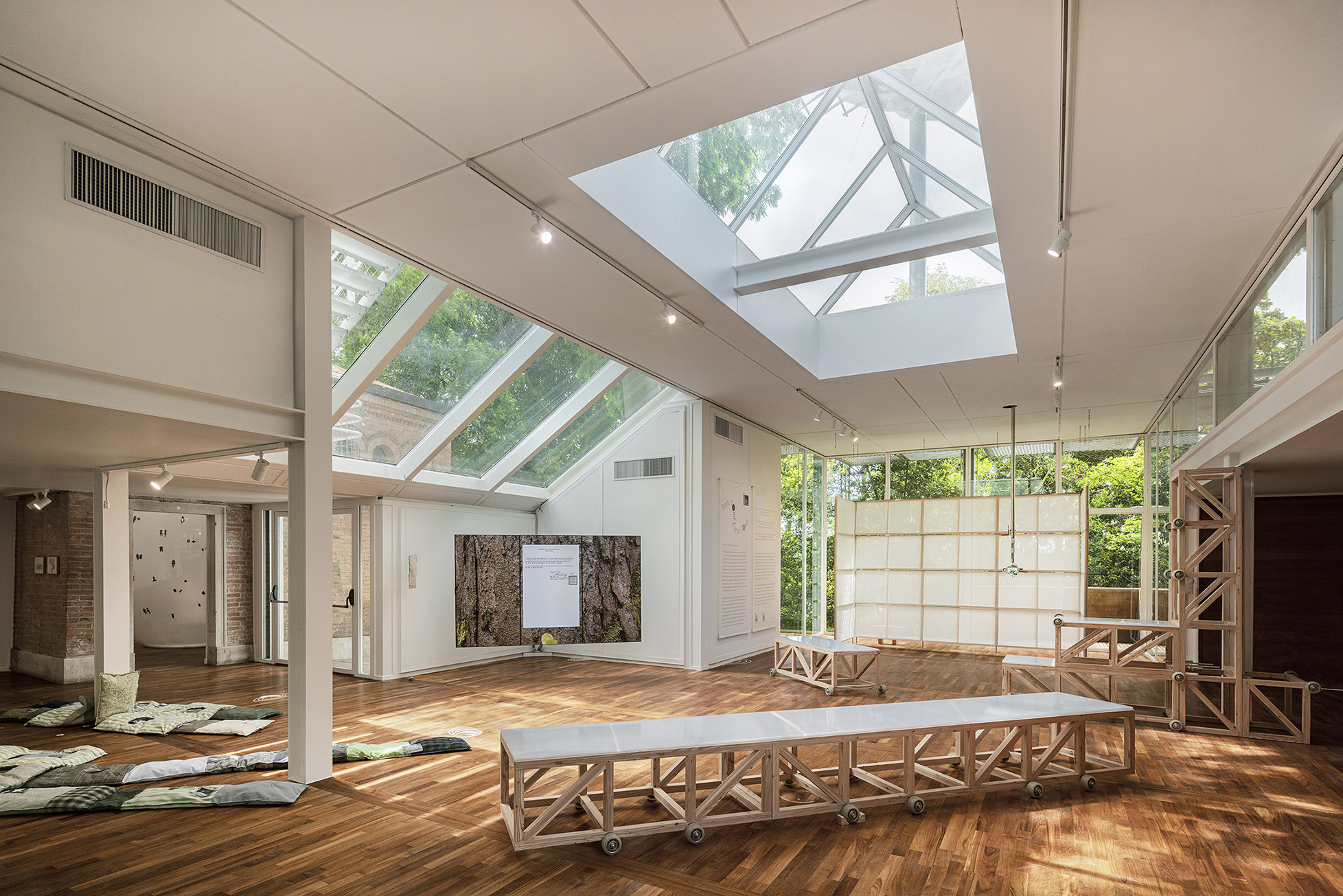
Installation view of the Korean Pavilion at the 61st International Art Exhibition of the 2026 Venice Biennale. / Photo: Arts Council Korea (ARKO)
Questions
Facing Korean Contemporary Art
The mass
resignation of the Venice Biennale jury shows that the international art world
can no longer operate according to the structures of the past. War and human
rights, national pavilions and institutions, artistic autonomy and political
responsibility are no longer separate issues. Contemporary art has already
entered the eye of the storm.
This shift also
raises important questions for Korean contemporary art.
Until now, the
Korean art world has invested significant energy in entering the global system
through participation in international art fairs and biennials, growing
interest from overseas galleries and institutions, and the expanding
international visibility of younger artists.
What matters now,
however, is no longer participation itself, but how Korean contemporary art
interprets a global art world whose structures are becoming increasingly
unstable.
The Korean art
scene is also being absorbed into a system driven by speed and visibility.
Works are exposed to the market before sufficient accumulation and development,
exhibitions circulate primarily through image consumption, and critical
discourse weakens amid SNS-driven reactions and market visibility.
For this reason,
Korean contemporary art cannot remain at the level of merely following
international trends. Korea’s compressed modernization, divided national
reality, hyper-urbanization, platform culture, extreme competition, social
isolation, and changing digital sensibilities collectively represent an
intensely condensed version of the instability and structural conflicts shaping
the world today.
Korean
contemporary art cannot avoid this storm. What matters is not being swept away
by it. Rather than repeating the language of the global art world, it must
reinterpret the realities Korean society is passing through with its own
sensibility and structure. That interpretation must evolve into a new set of
standards operating across artworks, exhibitions, criticism, institutions,
markets, and platforms.
References
- Associated Press (AP) – “The Venice Biennale previews in chaos as war follows art into the world's oldest exhibition”
- The Guardian – “Venice Biennale jury quits amid row over participation of Russia”
- Reuters – “Venice Biennale thrown into fresh turmoil as art jury resigns”
- e-flux – “Statement of Resignation”
- La Biennale di Venezia – “The resignations of the International Jury of the Biennale Arte 2026”
Jay Jongho Kim graduated from the Department of Art Theory at Hongik University and earned his master's degree in Art Planning from the same university. From 1996 to 2006, he worked as a curator at Gallery Seomi, planning director at CAIS Gallery, head of the curatorial research team at Art Center Nabi, director at Gallery Hyundai, and curator at Gana New York. From 2008 to 2017, he served as the executive director of Doosan Gallery Seoul & New York and Doosan Residency New York, introducing Korean contemporary artists to the local scene in New York. After returning to Korea in 2017, he worked as an art consultant, conducting art education, collection consulting, and various art projects. In 2021, he founded A Project Company and is currently running the platforms K-ARTNOW.COM and K-ARTIST.COM, which aim to promote Korean contemporary art on the global stage.