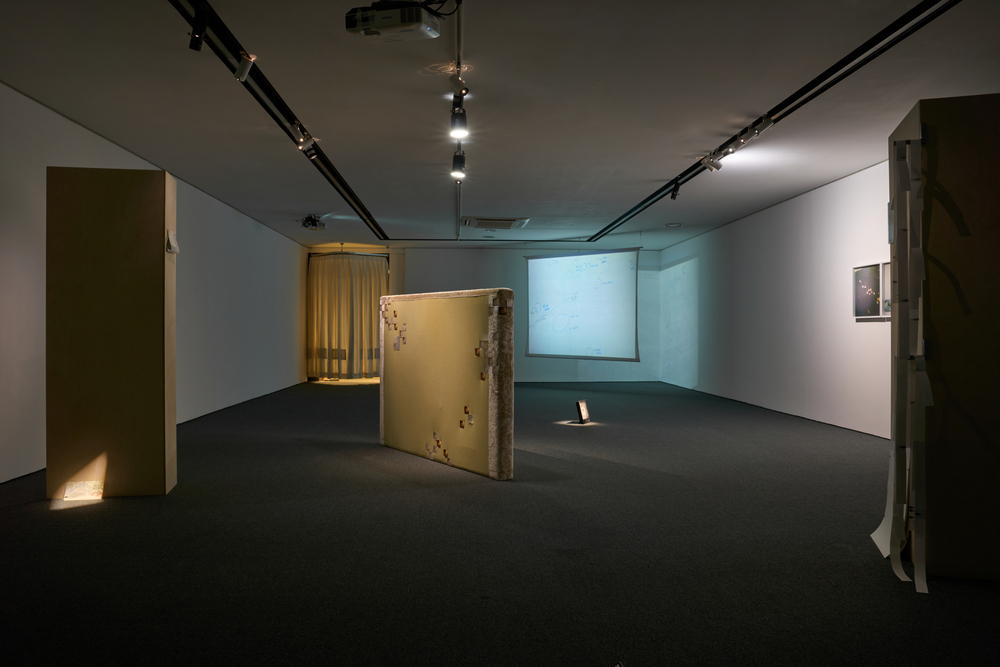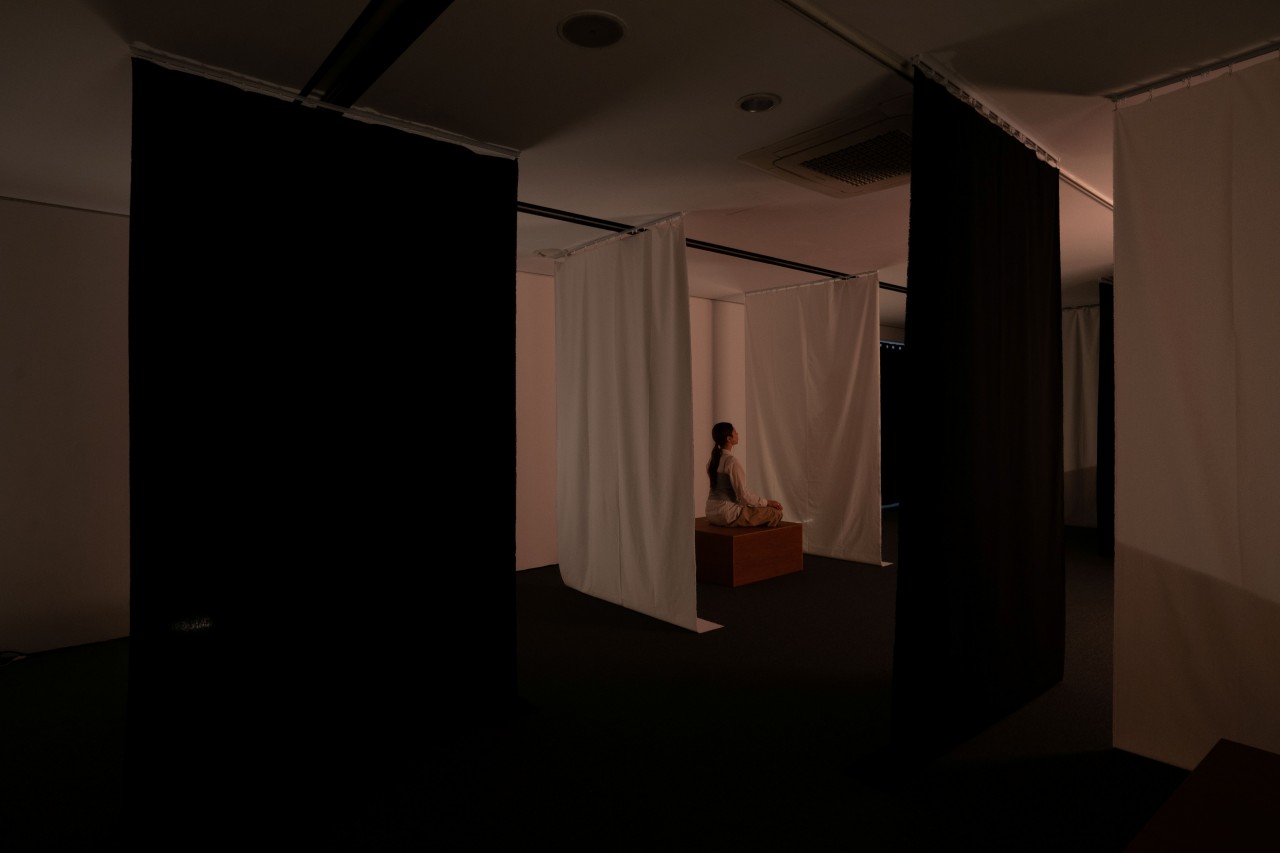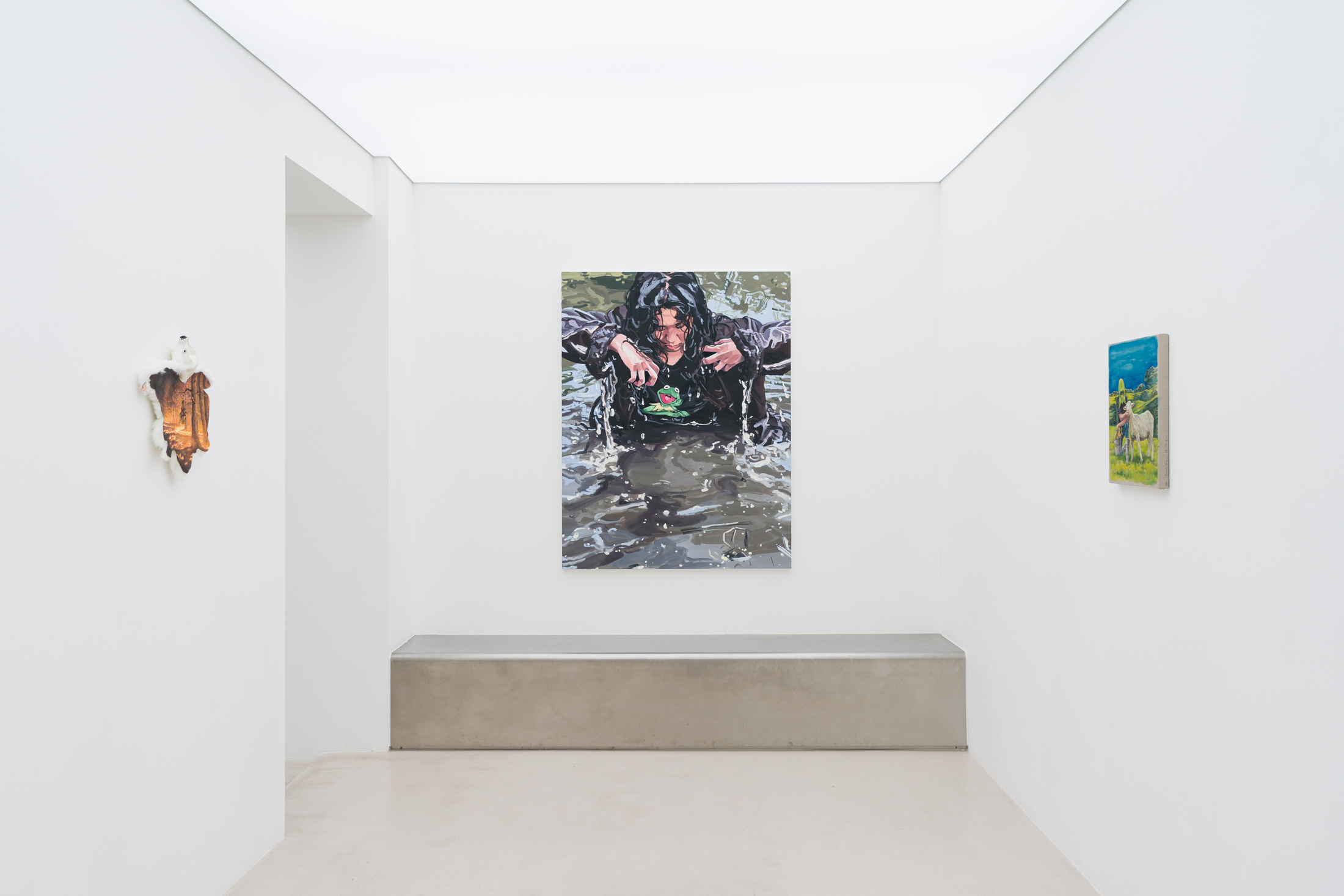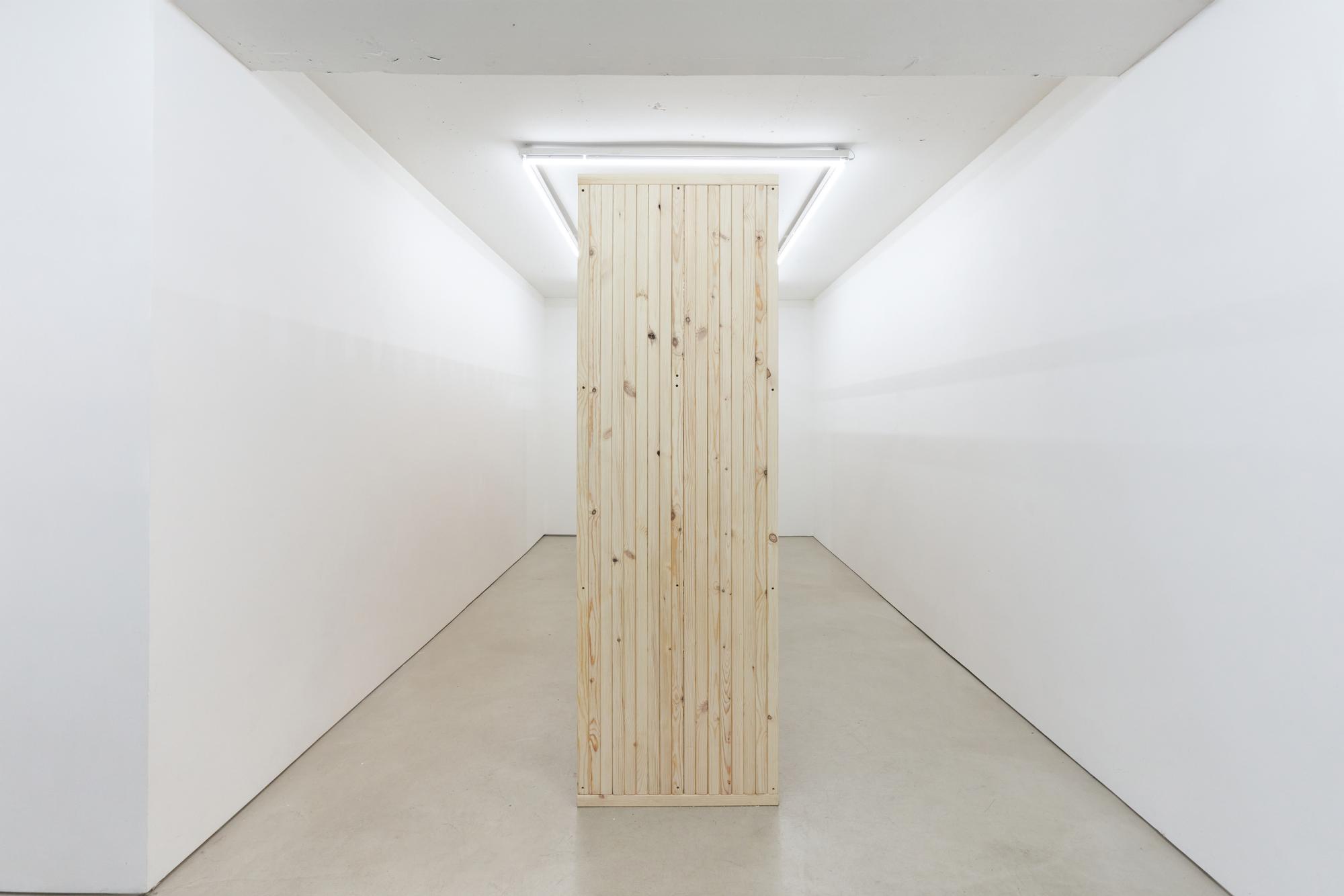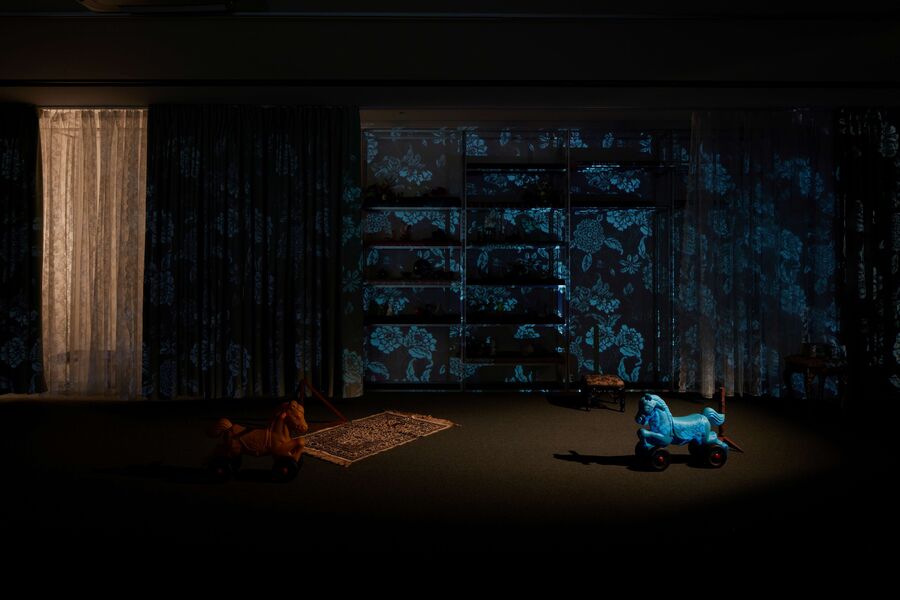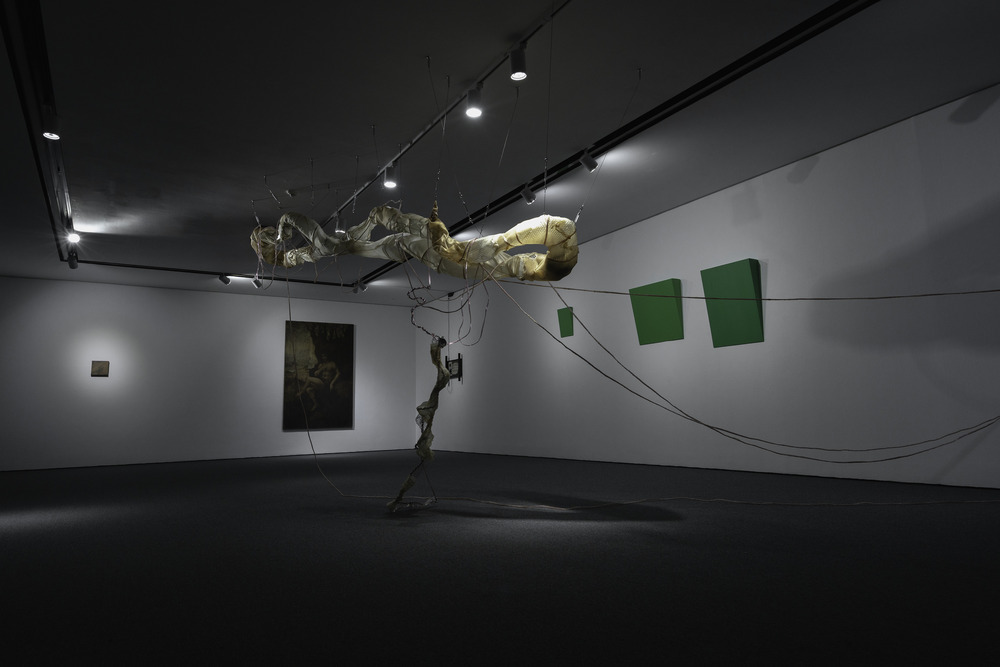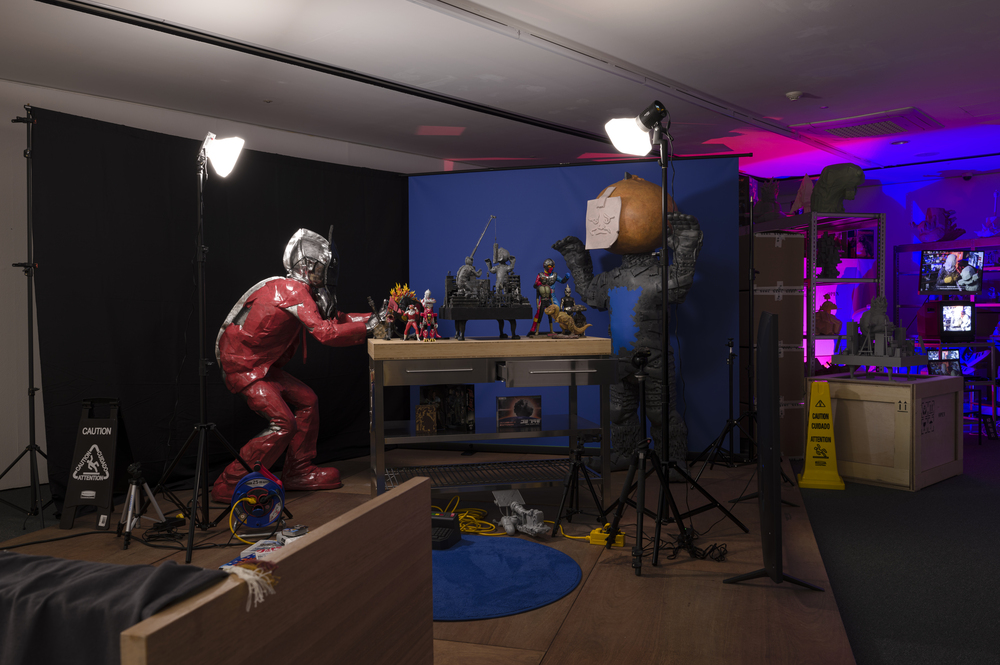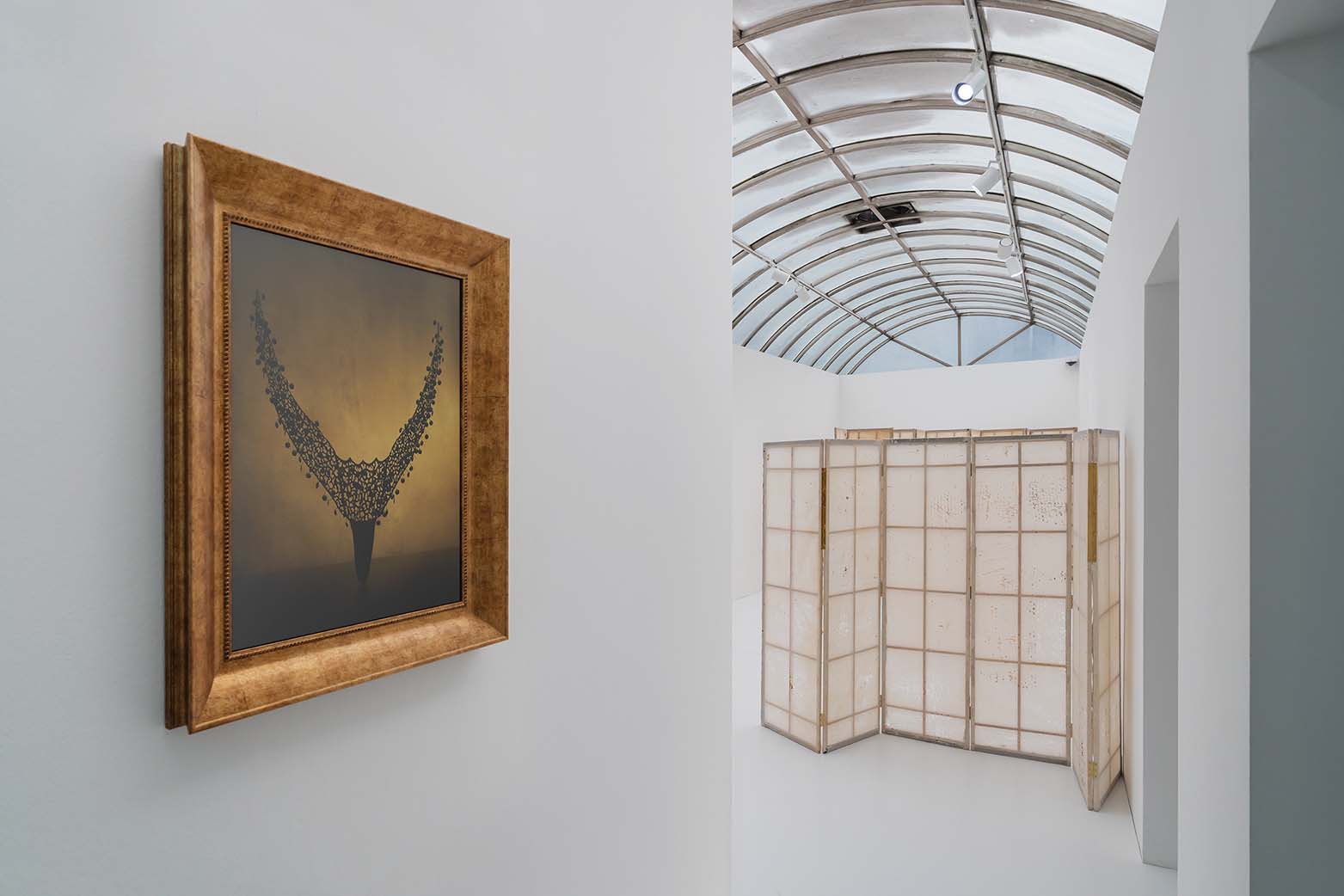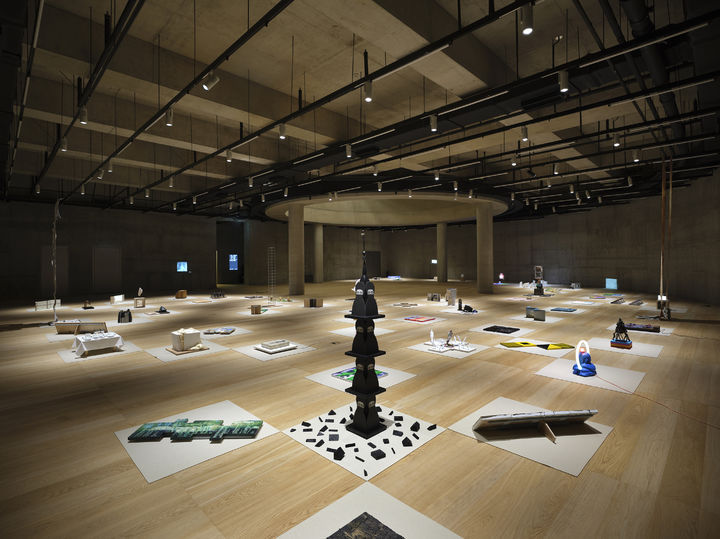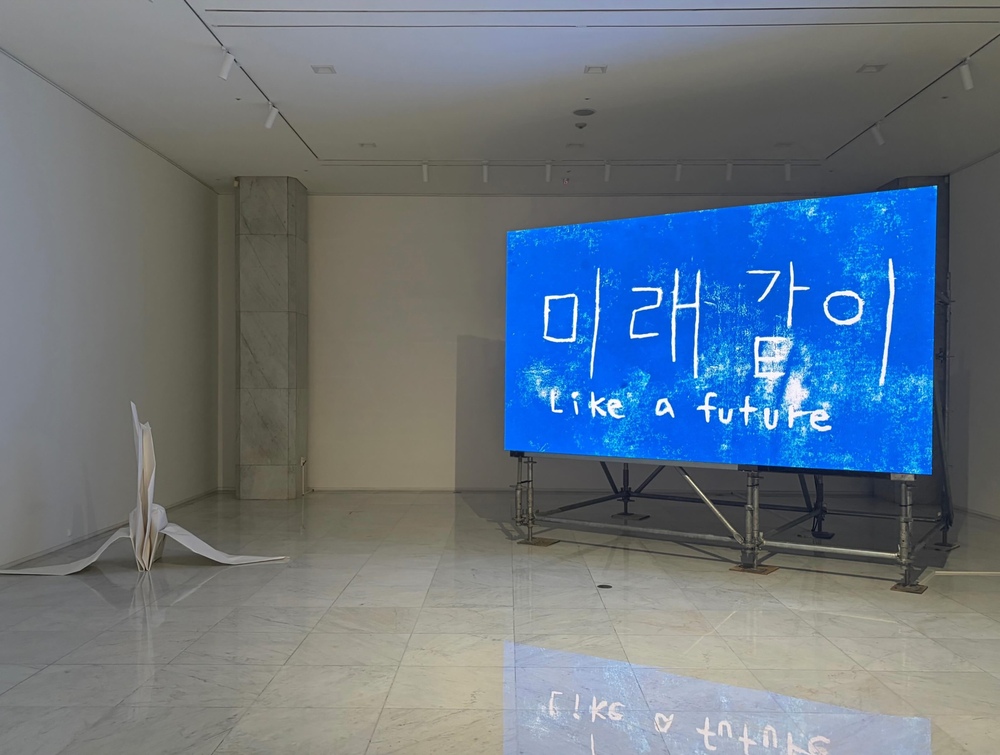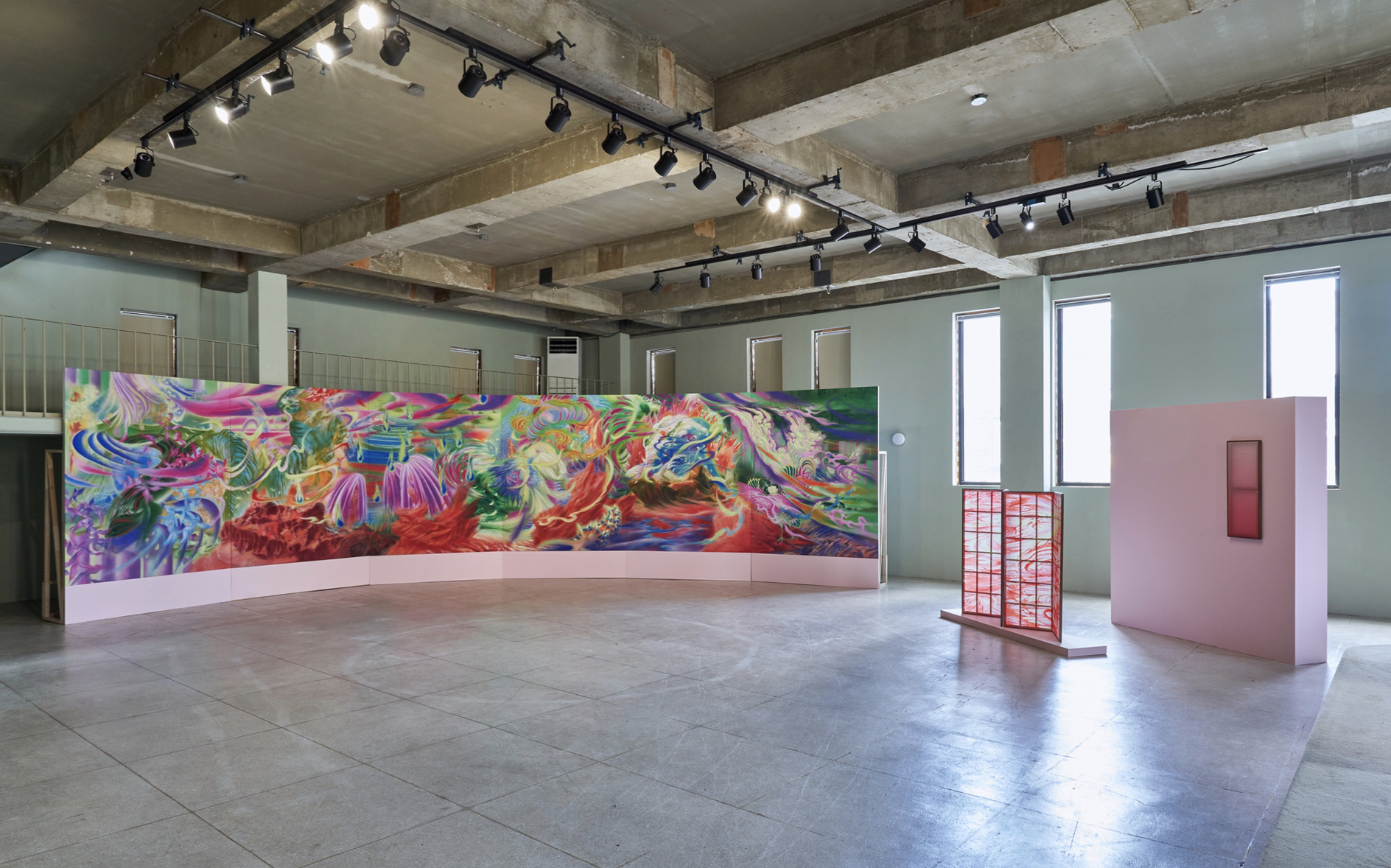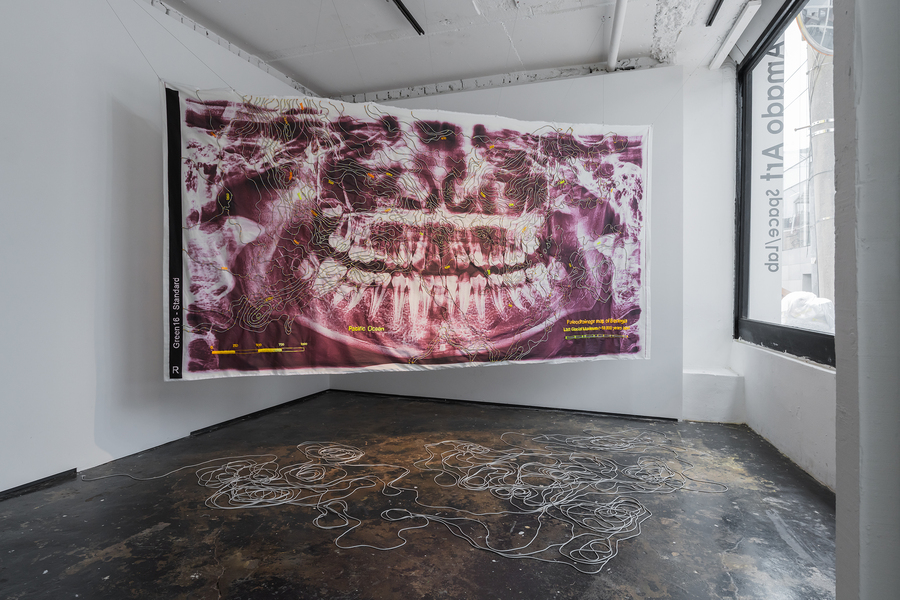

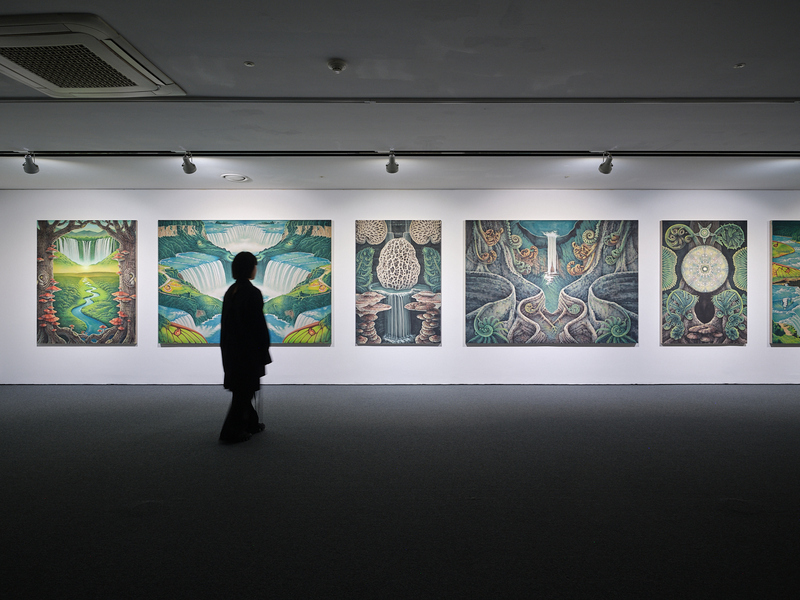
Installation view of 《Mirror Corridor》 ©Perigee Gallery
Perigee Gallery presents a solo exhibition 《Mirror Corridor》 by artist Jang Jongwan, on
view through April 25. Jang Jongwan has steadily depicted landscapes of what
appears to be an ideal natural world and the ecosystem that exists within it.
Current exhibition, 《Mirror Corridor》 shows another direction in his work while not departing from the
trajectory he has been pursuing thus far.
This work folds and unfolds like a
decalcomania, forming a singular terrain. Rather than representing an actual
time and space, it constructs a virtual world that maintains its balance
through repetition and replication.
Although it does not follow a clear
narrative structure, the work—reminiscent of the world-building found in
fantasy novels or films—is recreated on the basis of elements drawn from
reality. In this sense, Jang’s painting can be understood as a unified spatiotemporal
realm in which reality and the virtual originate from one another, like
mirrored images in a decalcomania.
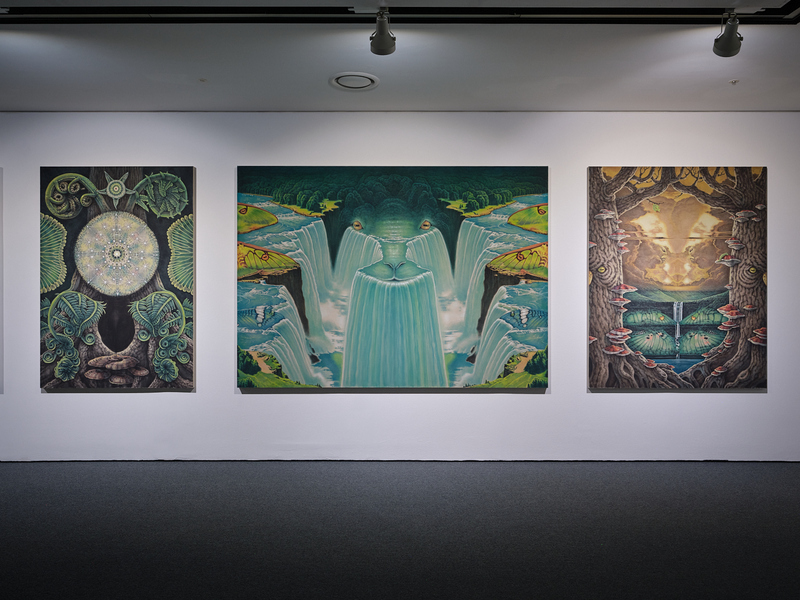
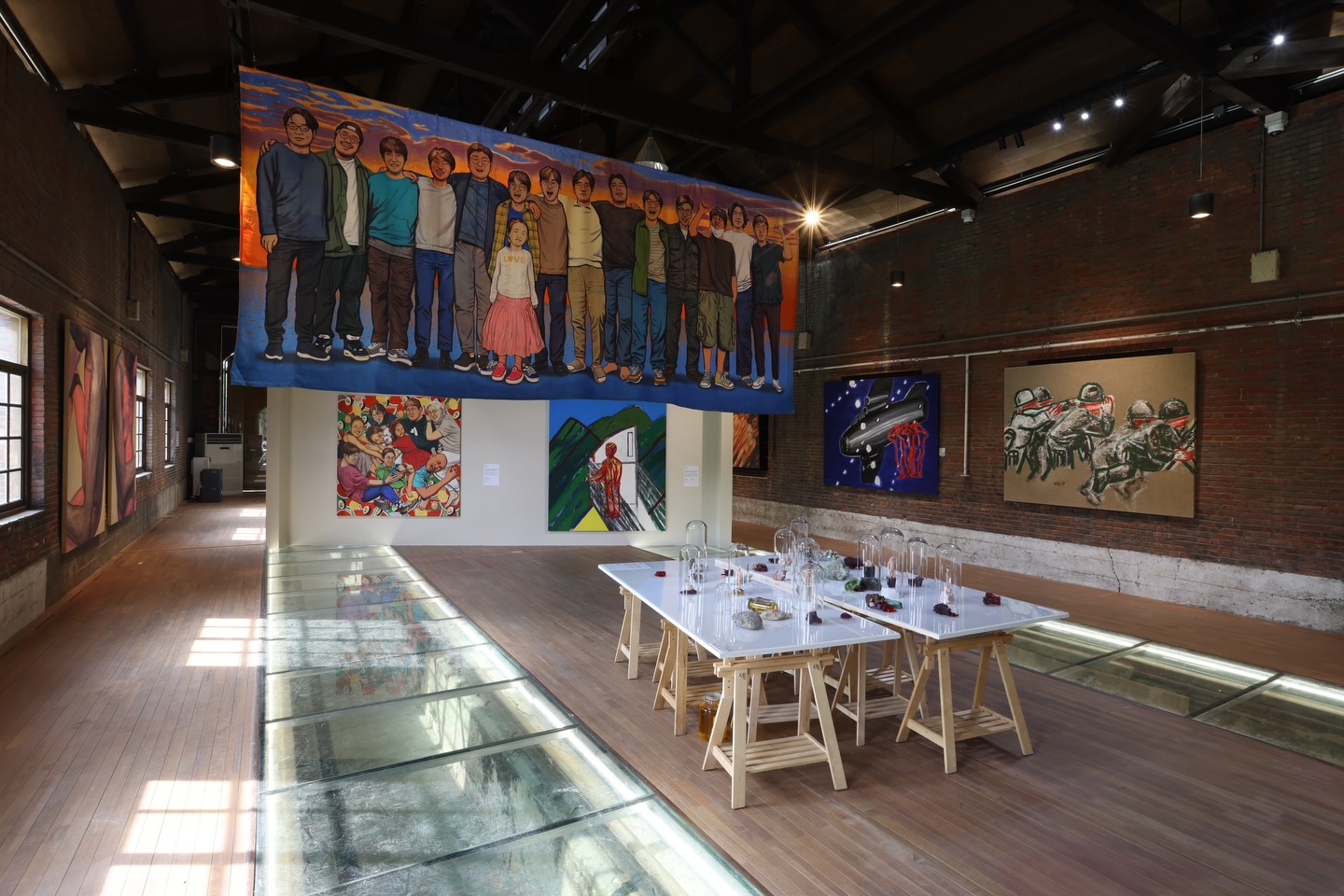
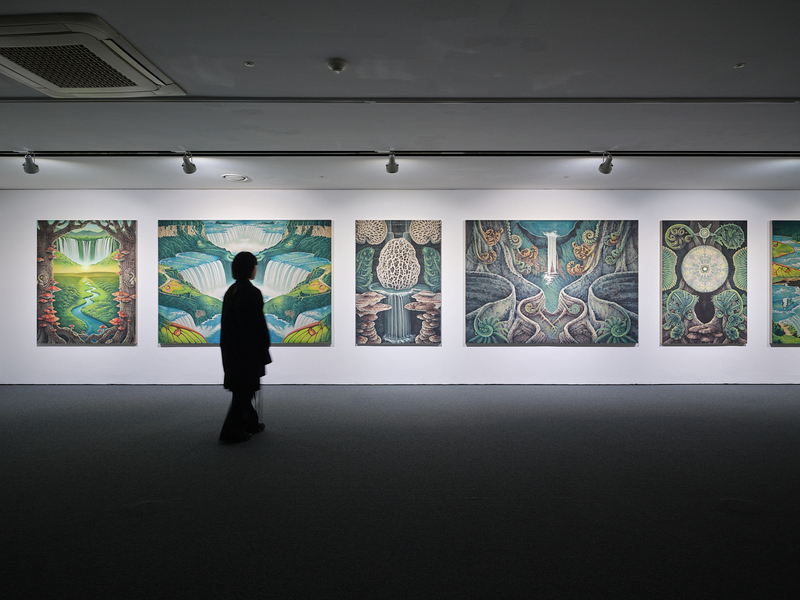
Installation view of 《Mirror Corridor》 ©Perigee Gallery
The world the artist imagines is not a
distant realm separated from us, but one that exists in close proximity. It can
be understood as a space shaped by the possibility that accumulated choices
might have unfolded differently, or by an imagining of the starting point of a
new society. Imagination, as a virtual spatiotemporal realm imbued with the
artist’s life and aspirations for the future, leads to the question of what his
paintings ultimately seek to reveal.
In this exhibition, the structural
composition of both the works and the display itself is particularly
pronounced. Works produced in pairs under identical titles are symmetrically
installed on either side of a central vanishing point, transforming the gallery
into a corridor of mirrored balance. These symmetrical landscapes appear like
valleys or waterfalls whose depths cannot be measured, where heterogeneous
elements converge to create a serene and majestic atmosphere.
Such stillness is made possible precisely
because it belongs to a virtual spatiotemporal realm; at the same time, the
anxieties of reality surface as a longing for balance and harmony. This is not
a form of escapism into fantasy, but rather an attitude that seeks to confront
reality and the virtual simultaneously.
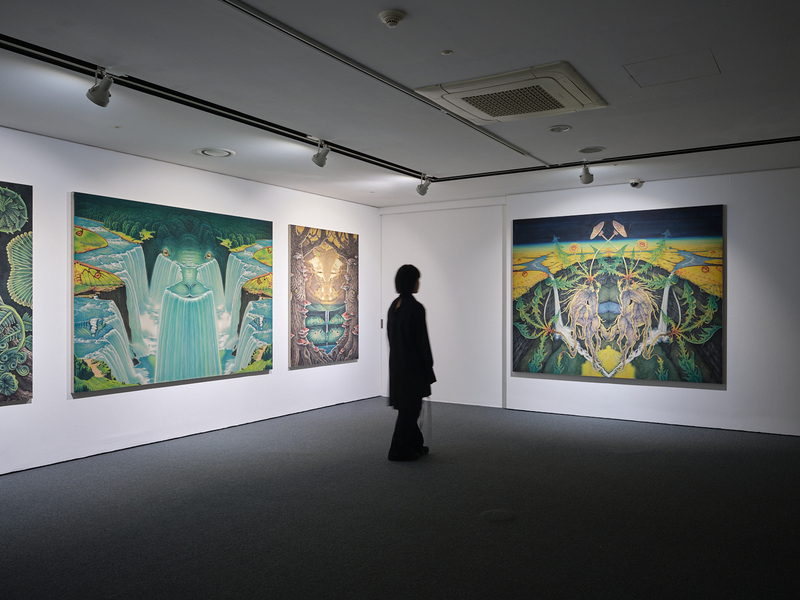
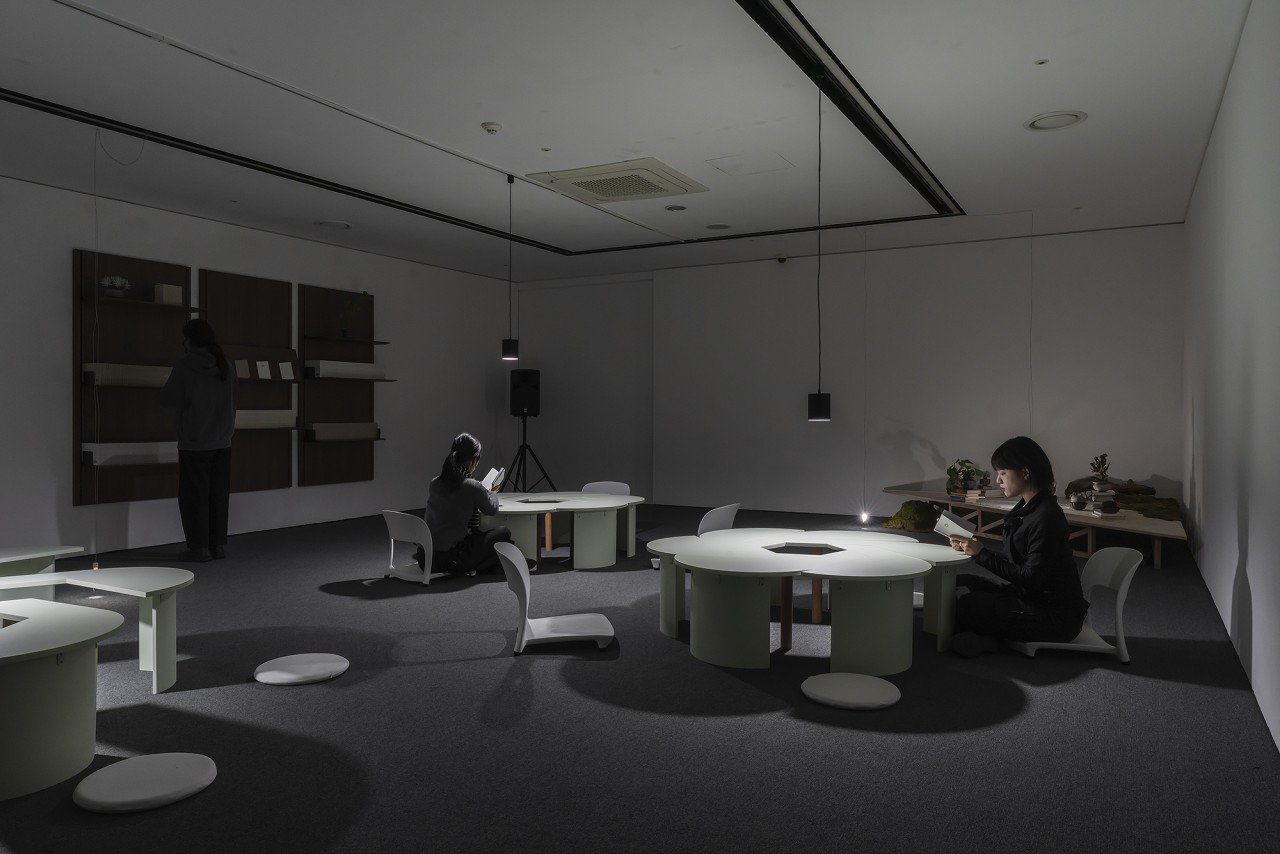
Installation view of 《Mirror Corridor》 ©Perigee Gallery
Another key structural element is the
vanishing point. The vanishing point functions as a site that prompts a renewed
awareness of one’s position in the “here and now,” while simultaneously evoking
the very experience of passing through that perceptual process. The world
beyond the vanishing point ultimately reconnects with the reality in which we
live, forming a structure that reflects the virtual and the real back onto one
another—much like the exhibition’s title, ‘Mirror.’
《Mirror Corridor》
establishes a cyclical structure in which one moves from reality to the virtual
and then returns once again to reality through the interplay of bilateral
symmetry and the vanishing point. In this return, reality is no longer
perceived as the same as before, but as a newly recognized and transformed
reality.