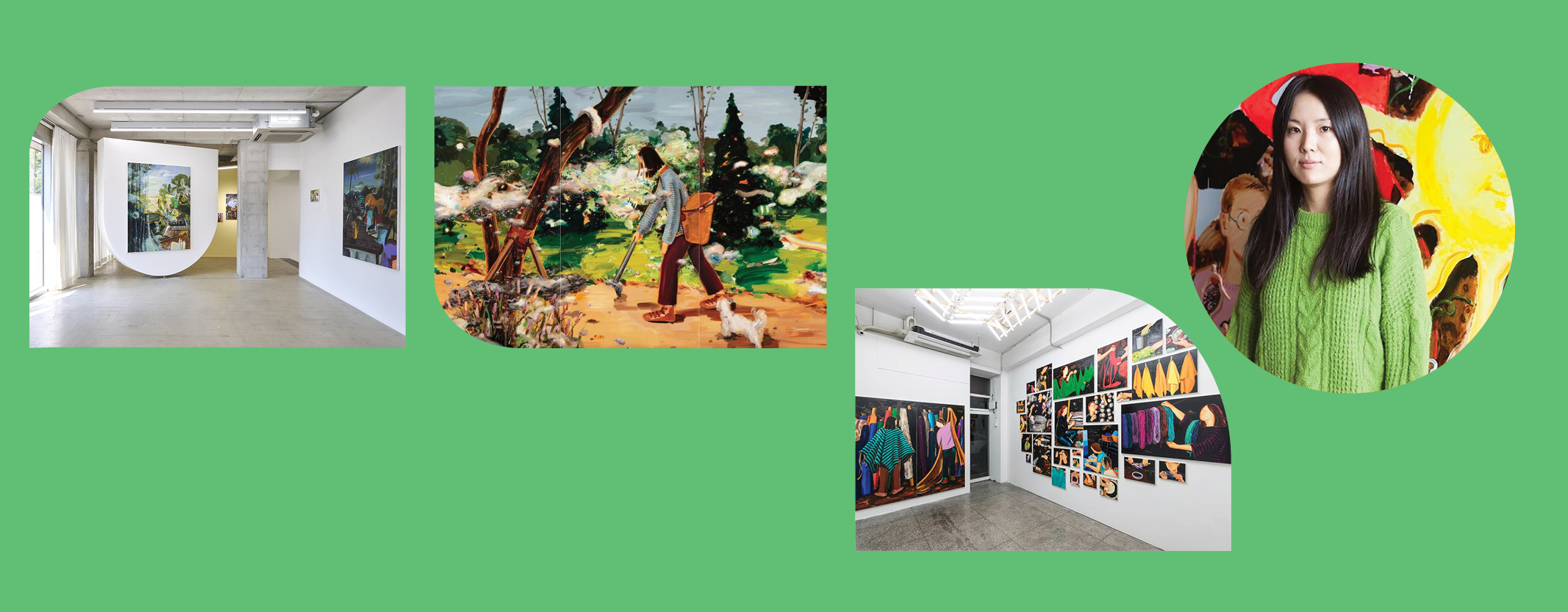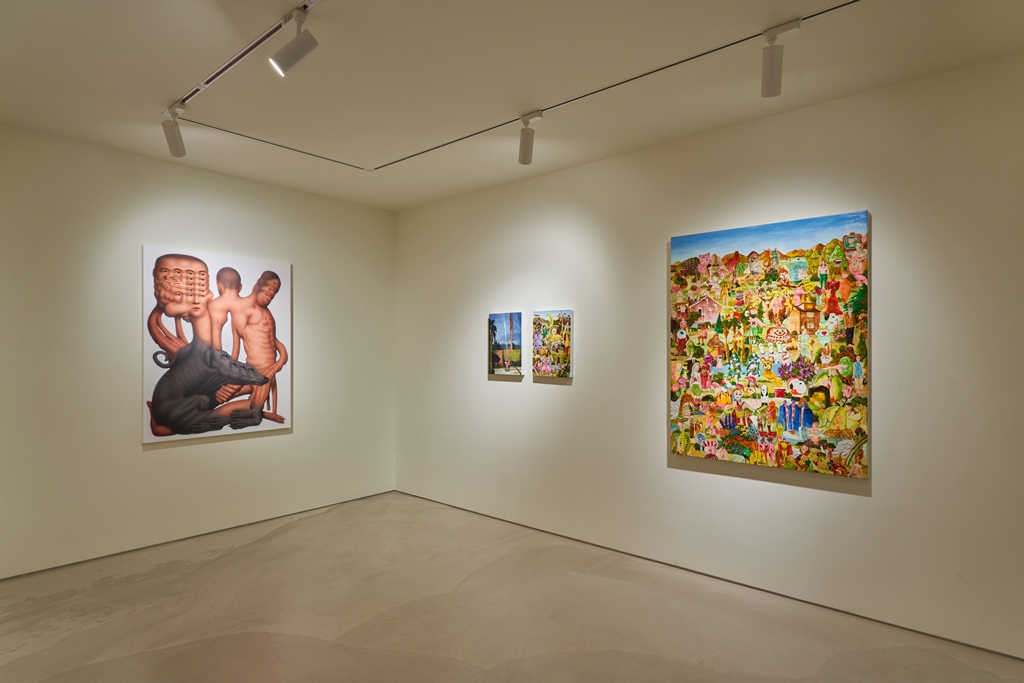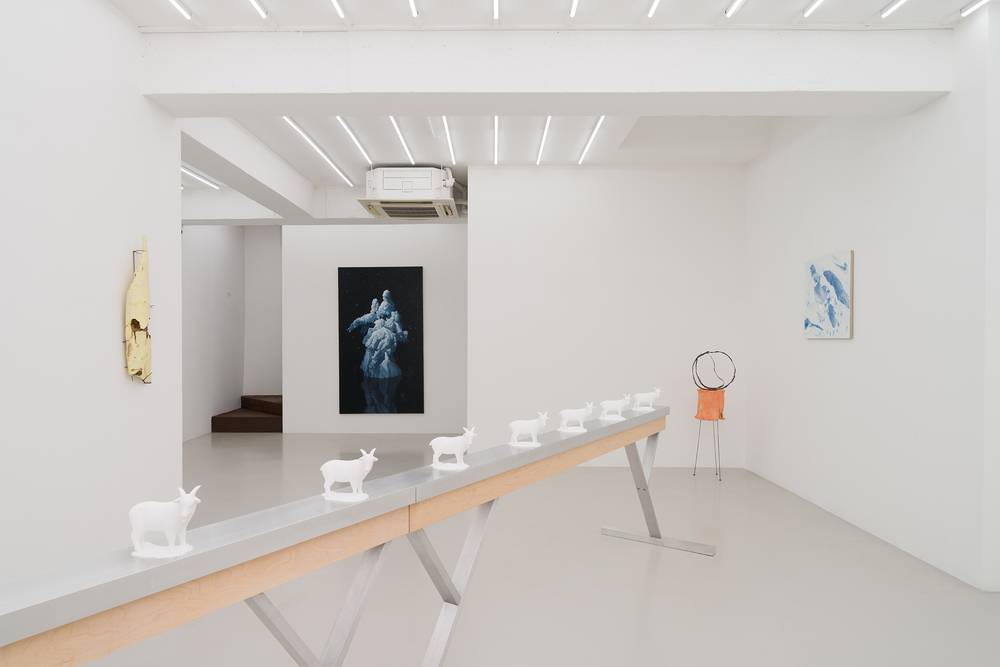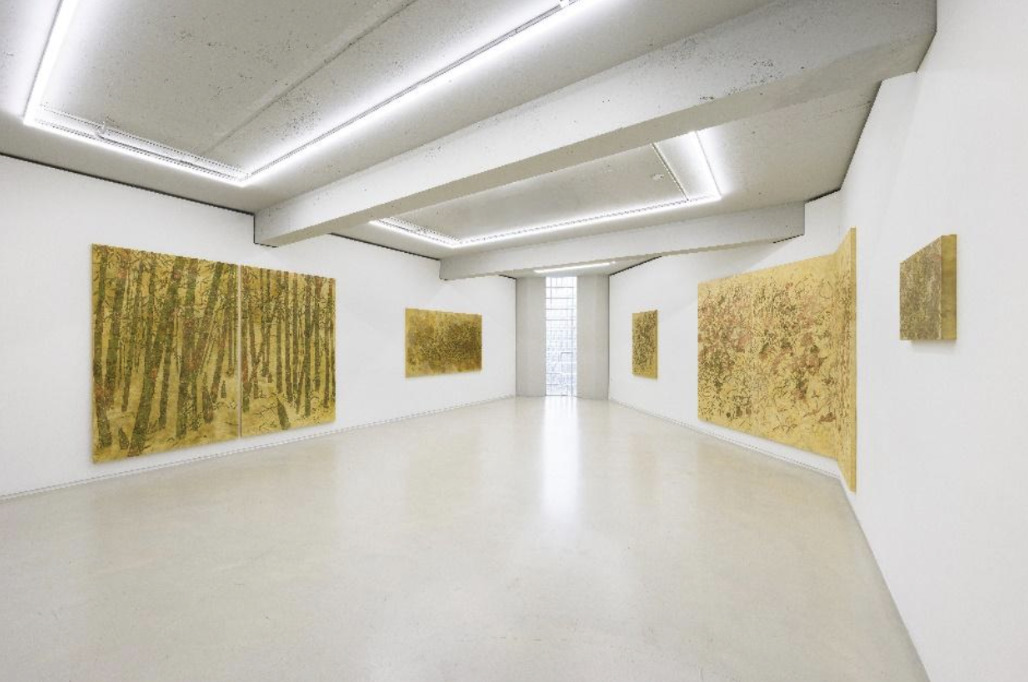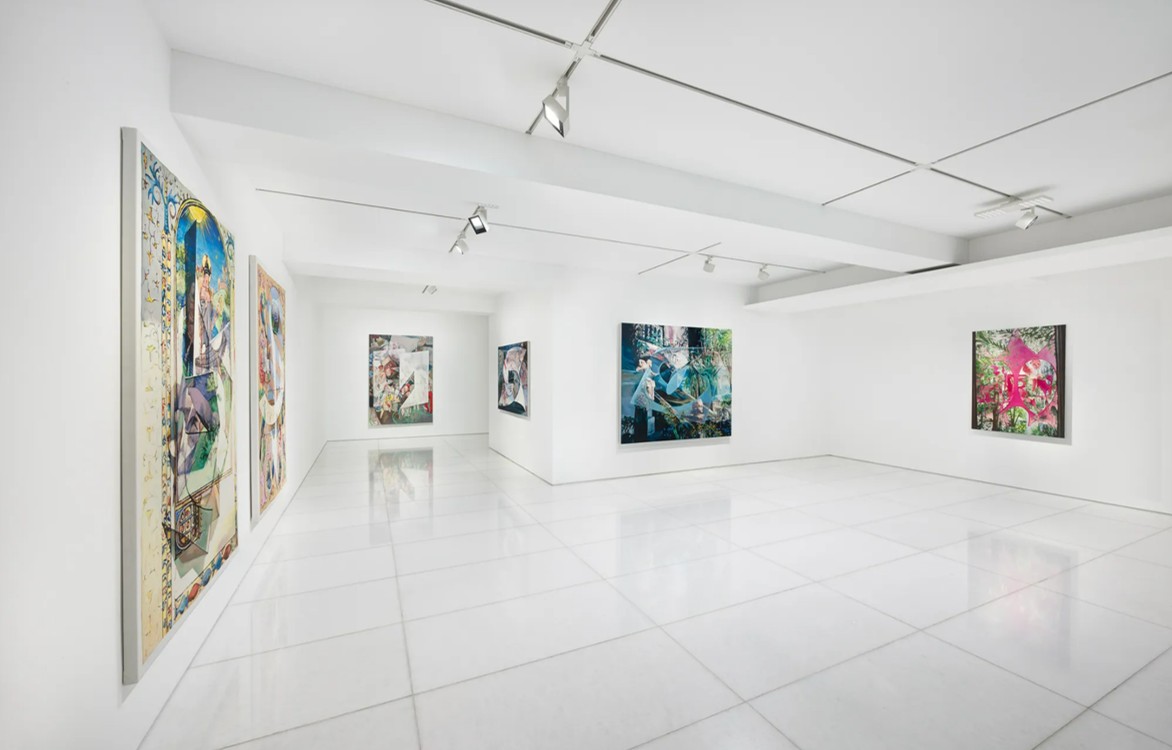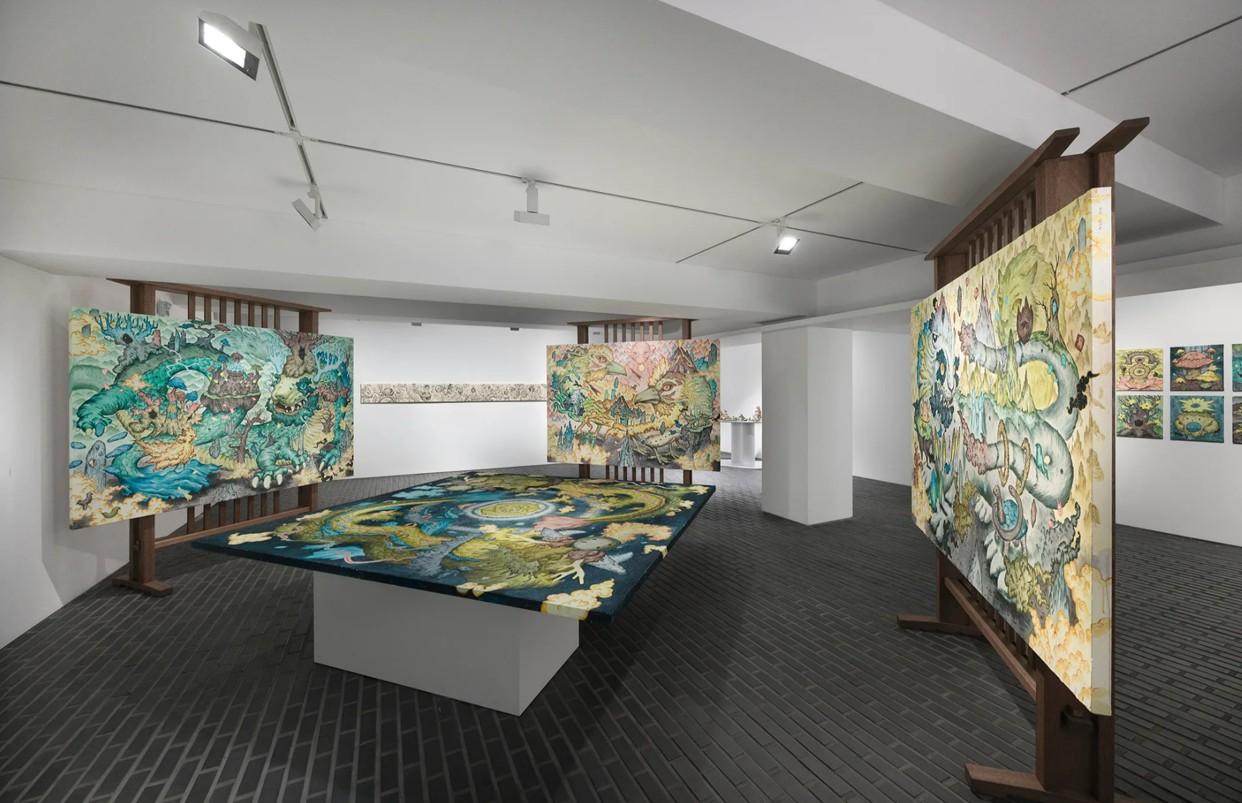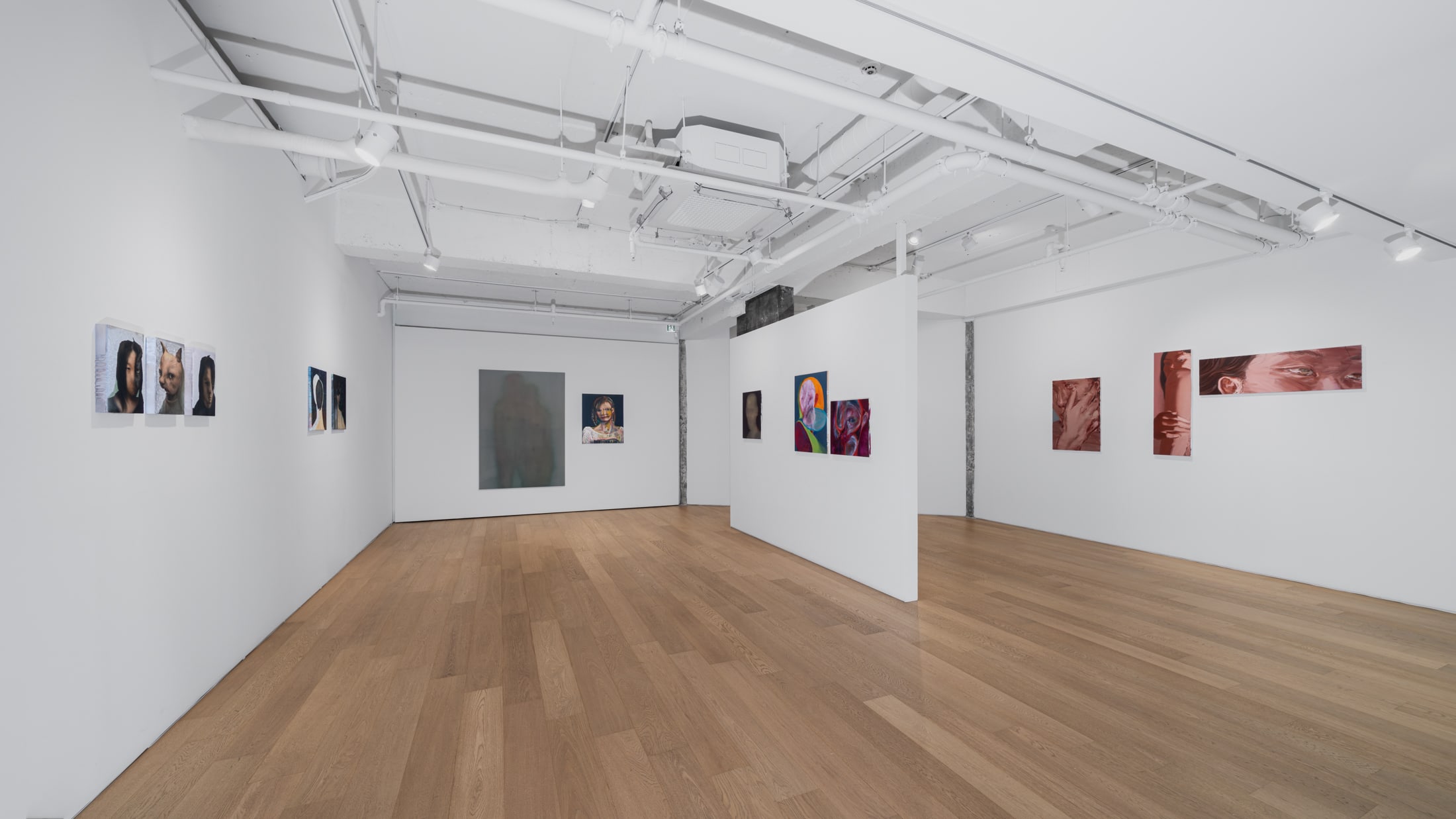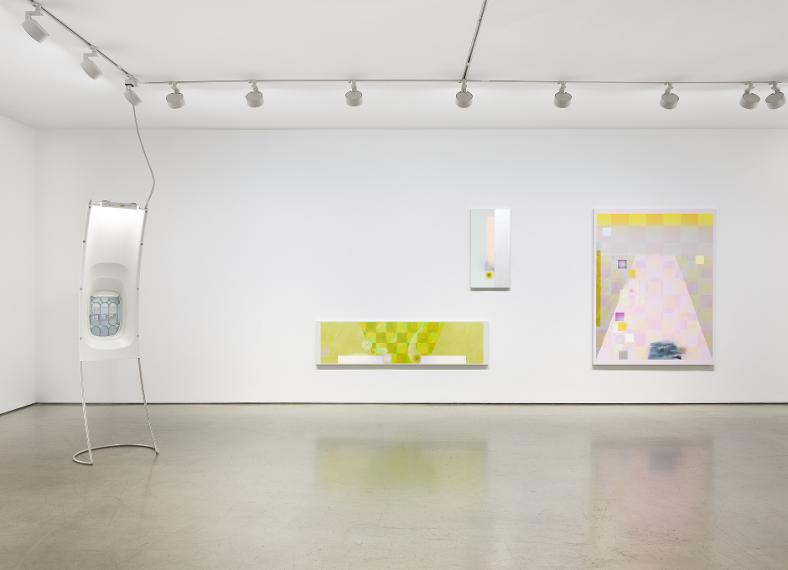

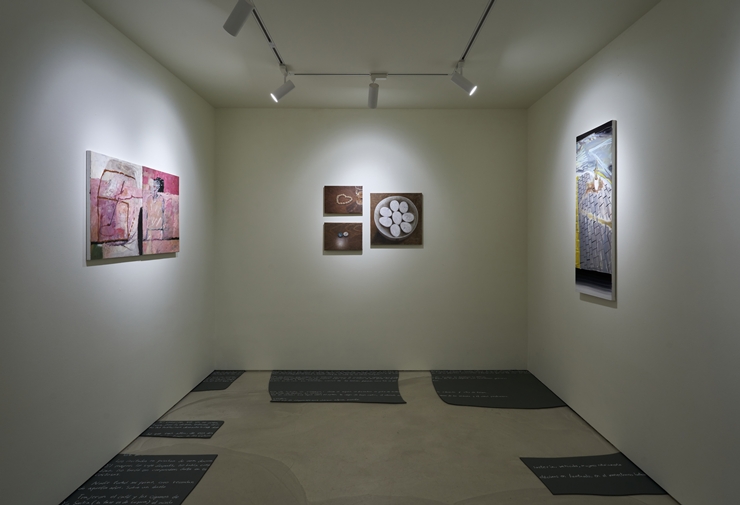
Installation view of 《Di-Stance》 ©Laheen Gallery
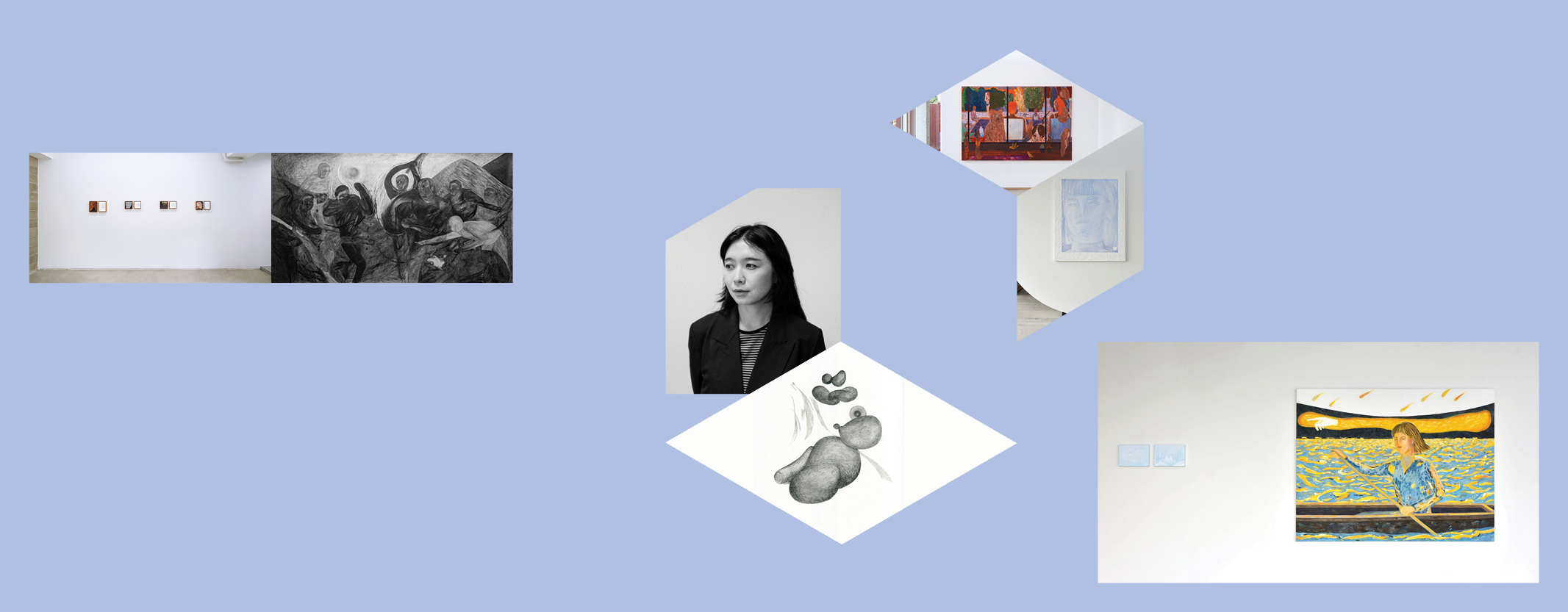
Laheen Gallery presents three-person exhibition 《Di-Stance》 by Kim Sangso, Lim Yunmook, and
Jang Seungkeun, on view through March 28.
《Di-Stance》
is an exhibition that reflects, through painting, on the
condition in which the “interval” between scenes is perceived prior to the
question of “what has been seen” within today’s fragmented visual environment.
The title 《Di-Stance》 divides
the word Distance into Di- (interval) and Stance (attitude), proposing as its
central concept the point at which the distance that emerges the moment a work
is placed in the world intersects with the practice of negotiating that
distance.
In doing
so, 《Di-Stance》 suggests
painting not as the delivery of a completed message, but as a dispositif that
sustains relationships through the density of gaps.
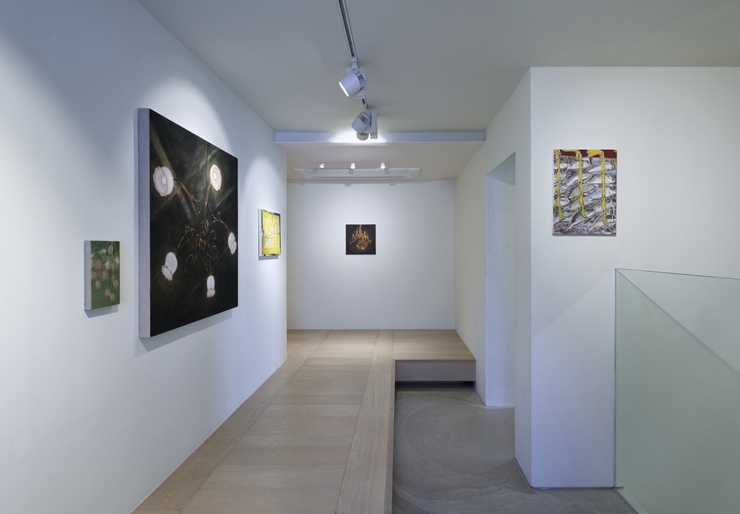
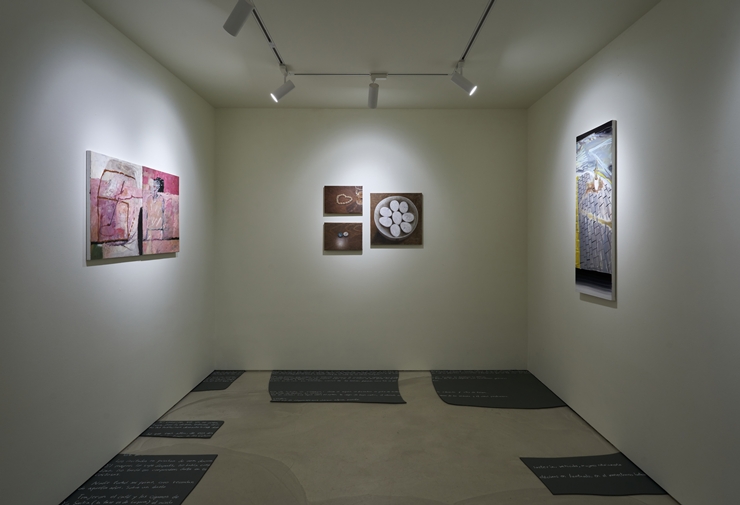
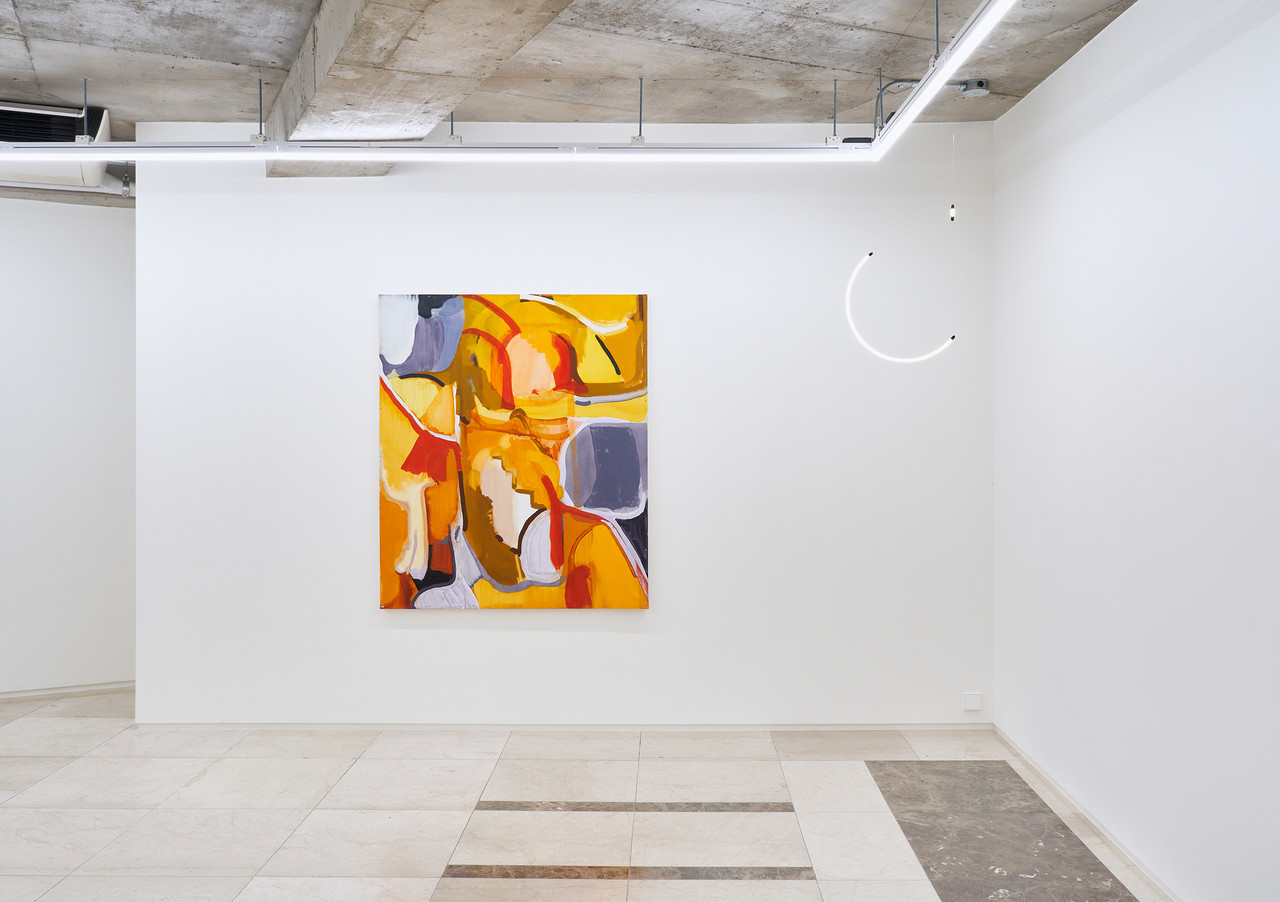
Installation view of 《Di-Stance》 ©Laheen Gallery
Kim Sangso constructs his paintings by
obliquely juxtaposing fragmentary scenes captured from everyday life and
deliberately leaving absences, allowing the canvas to resist being sutured into
a single narrative and instead open onto multiple lines of reading. As a
result, his works operate not as vehicles for delivering a complete message,
but as a minimal language that activates the viewer’s interpretation, forming a
conversational field where divergent readings intersect.
Lim Yunmook builds his practice around
painting what is both “seen” and “felt,” grounding his work in the accumulation
and layering of impressions that remain on the canvas rather than foregrounding
predetermined conclusions. By pairing similar moments and arranging them side
by side, he reveals the “between” in which two scenes reflect one another.
Leaving behind “unexplained intervals” that prevent the image from closing into
a singular meaning, he secures the distance through which relationships can
take shape.
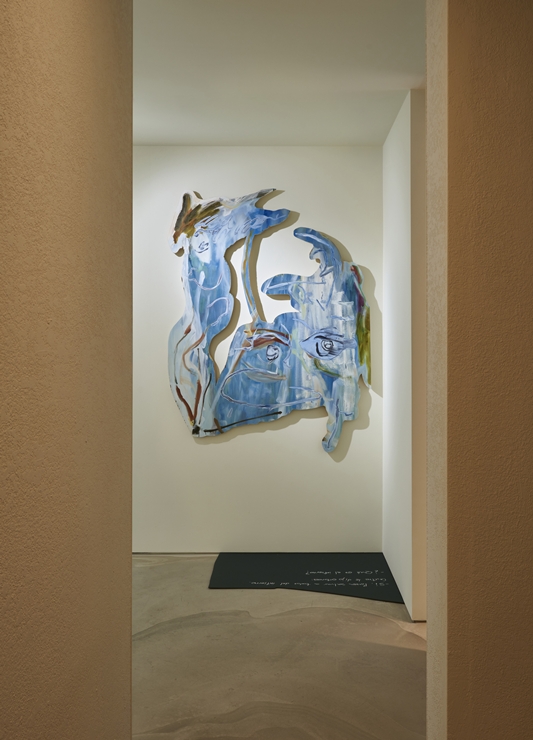
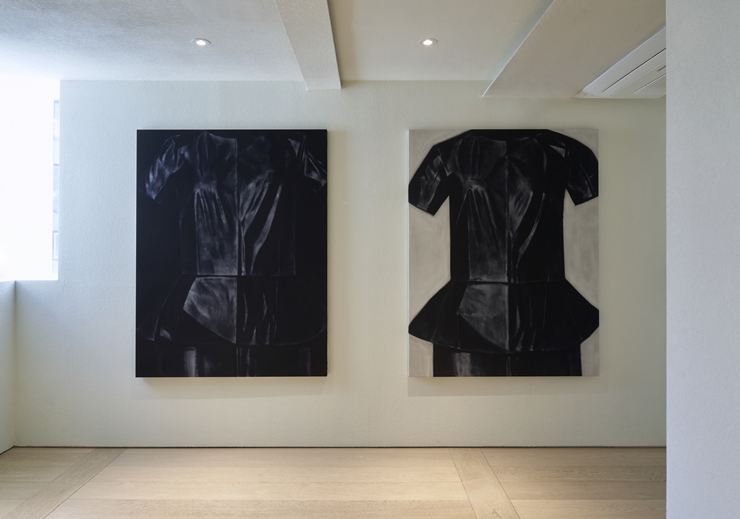
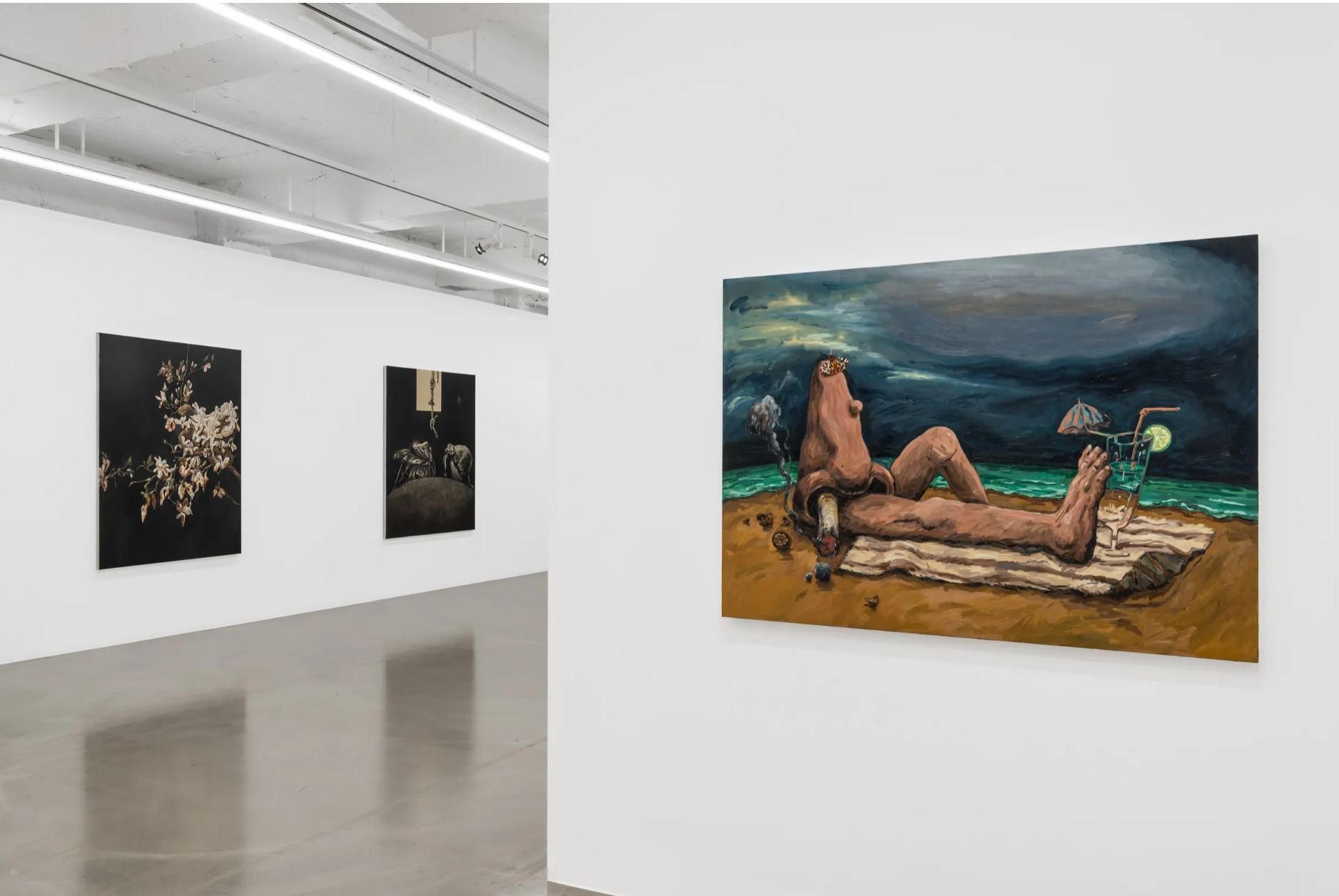
Installation view of 《Di-Stance》 ©Laheen Gallery
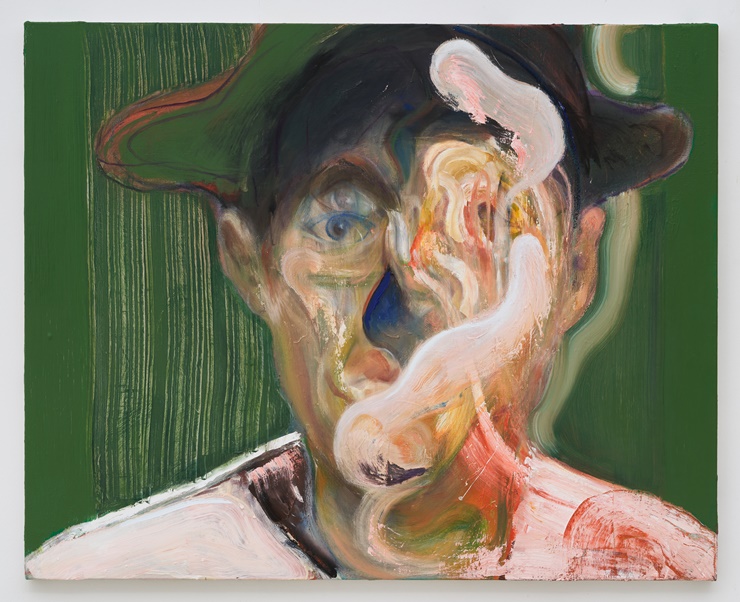
Jang Seungkeun translates into painterly
language the attitude of enduring the discomfort that arises from a living
condition in which residence and studio overlap, without evading the
bewilderment and isolation it entails. Thick brushstrokes, overpainting, loose
contours, and lingering touches disturb rather than seal boundaries, suspending
the closure of meaning. In doing so, he refines into formal terms a stance that
withstands the misunderstandings, errors, and precarious distances his works
inevitably generate.
Through the distinct painterly operations of these three
artists, Laheen Gallery seeks to articulate with precision the condition in
which meaning remains in motion within relational tension, rather than settling
into a single conclusion—framing this dynamic as a question of “distance.”