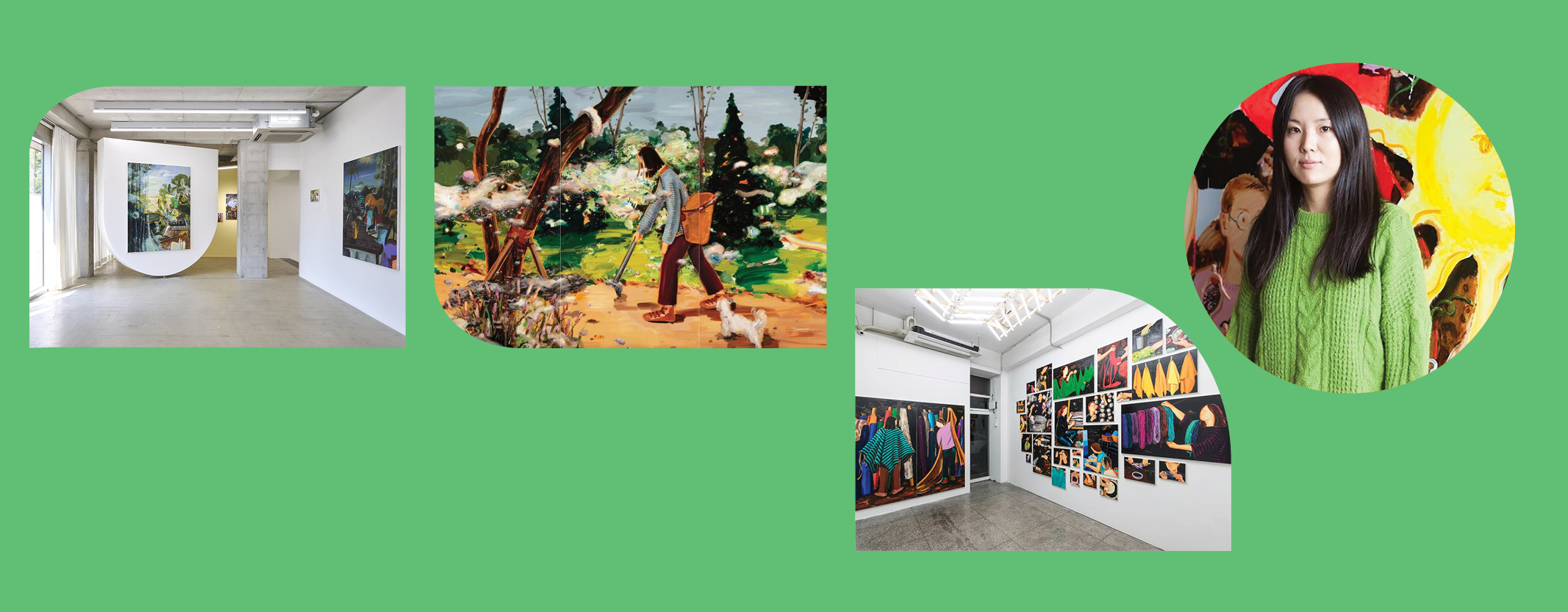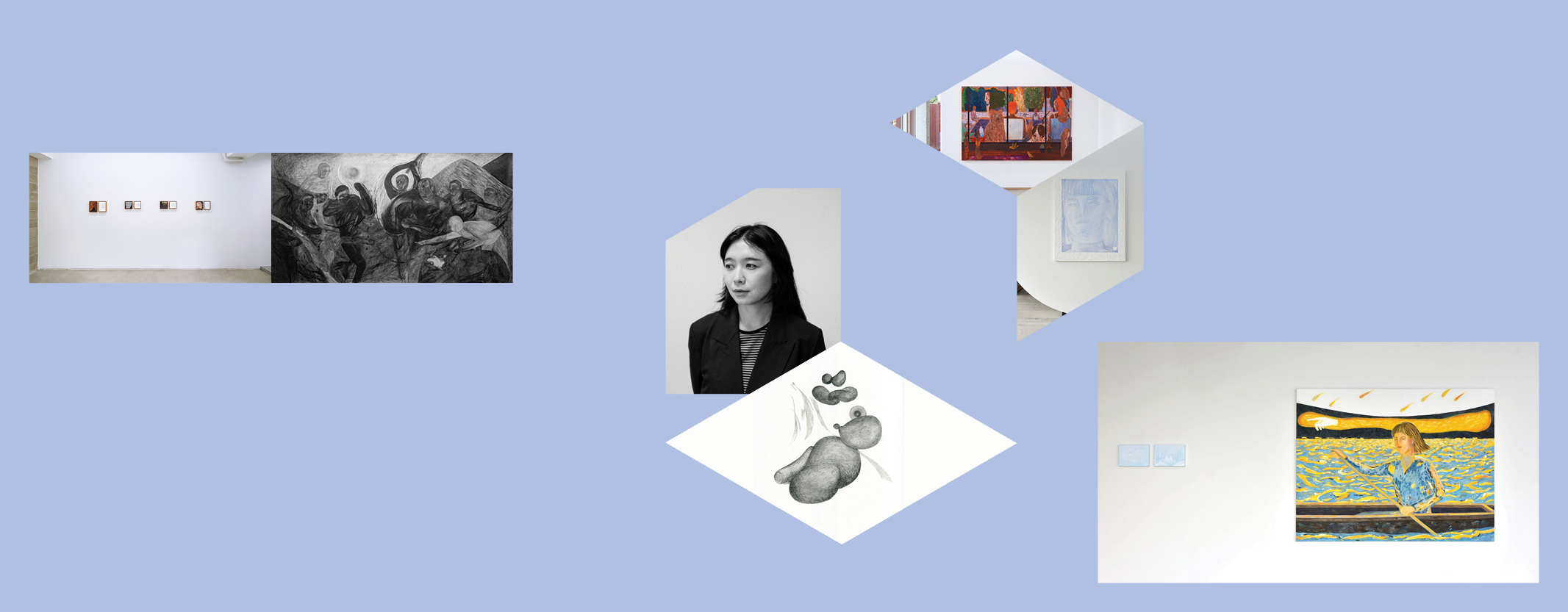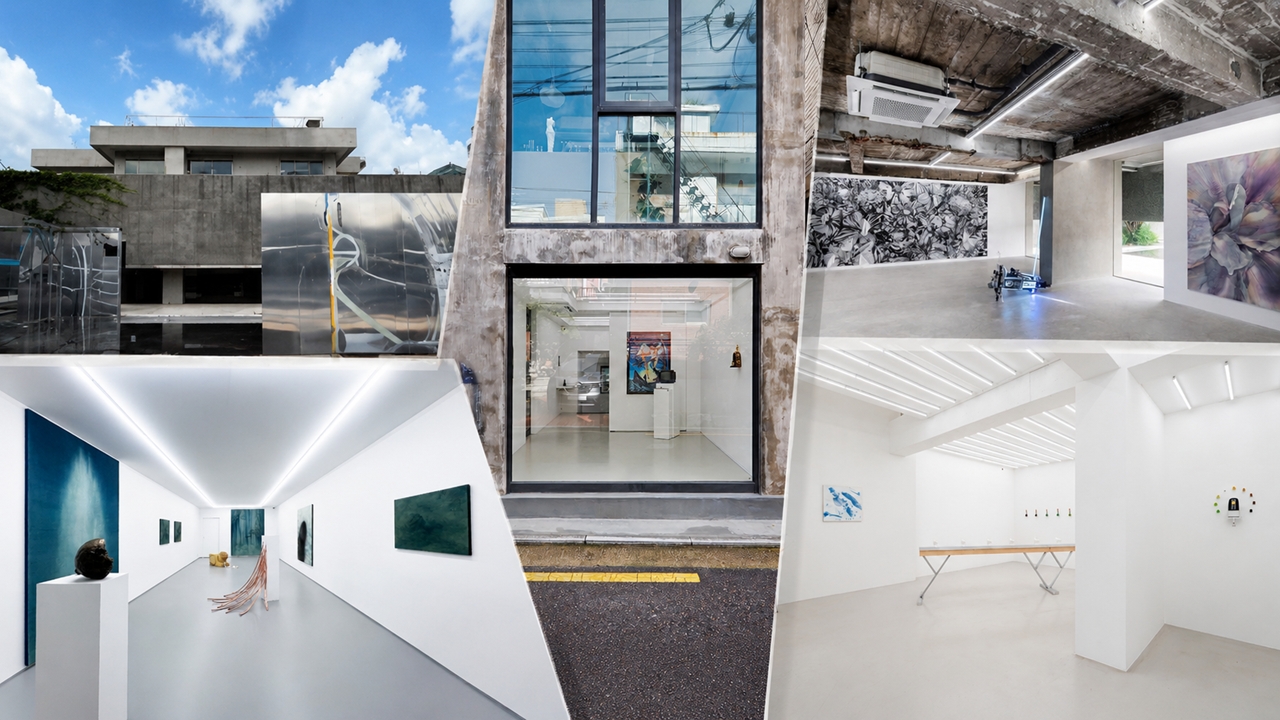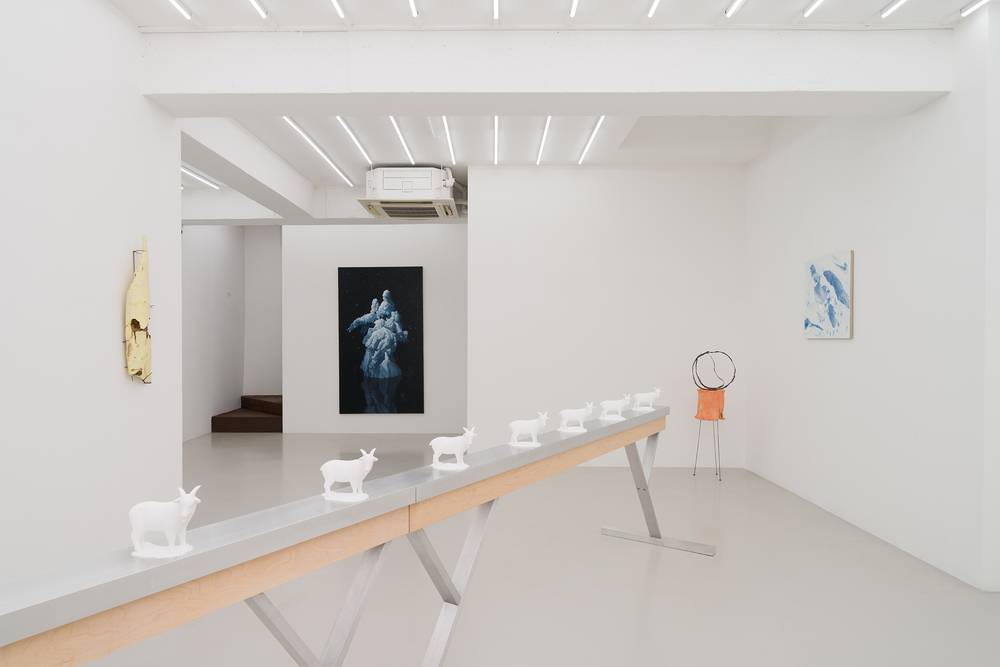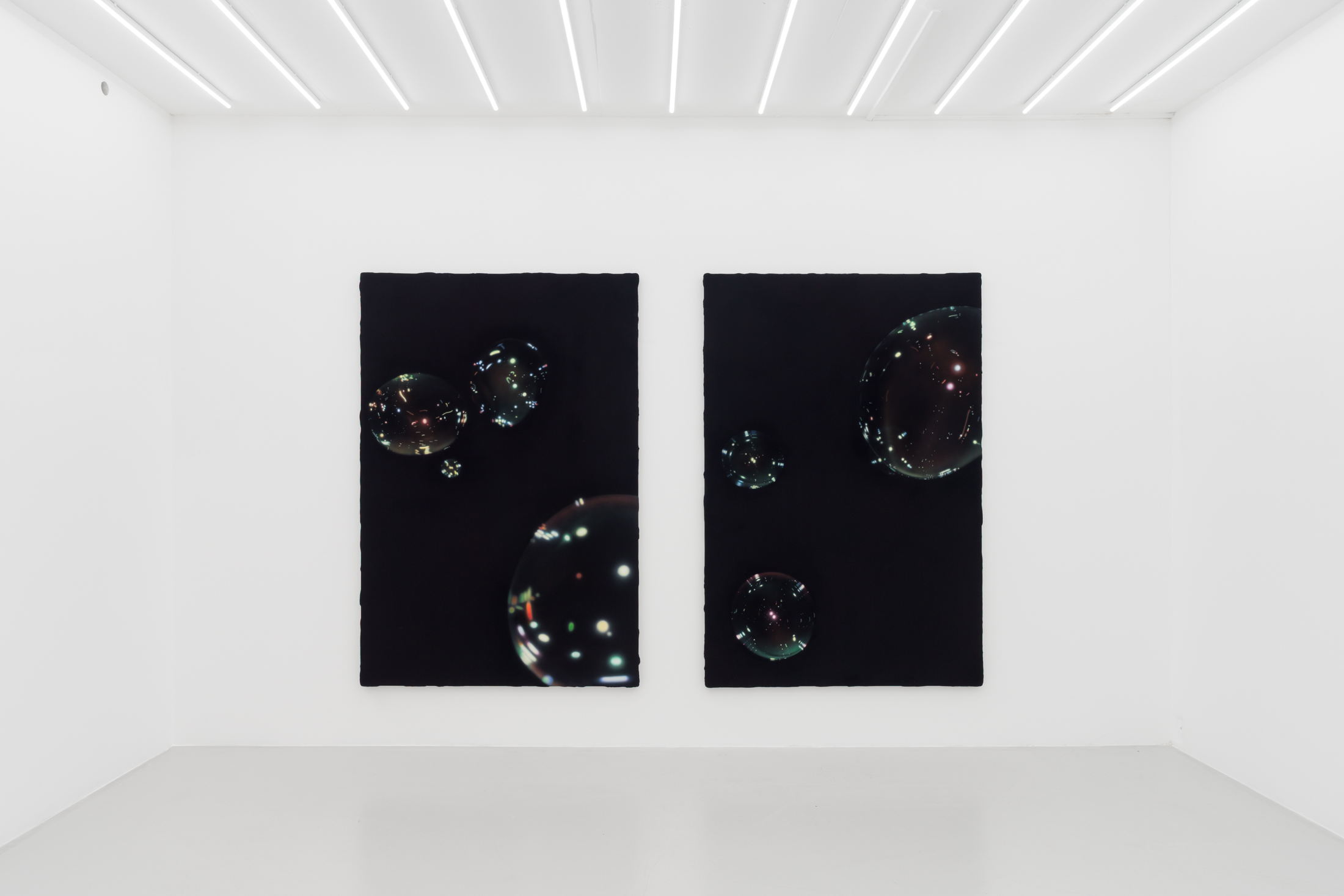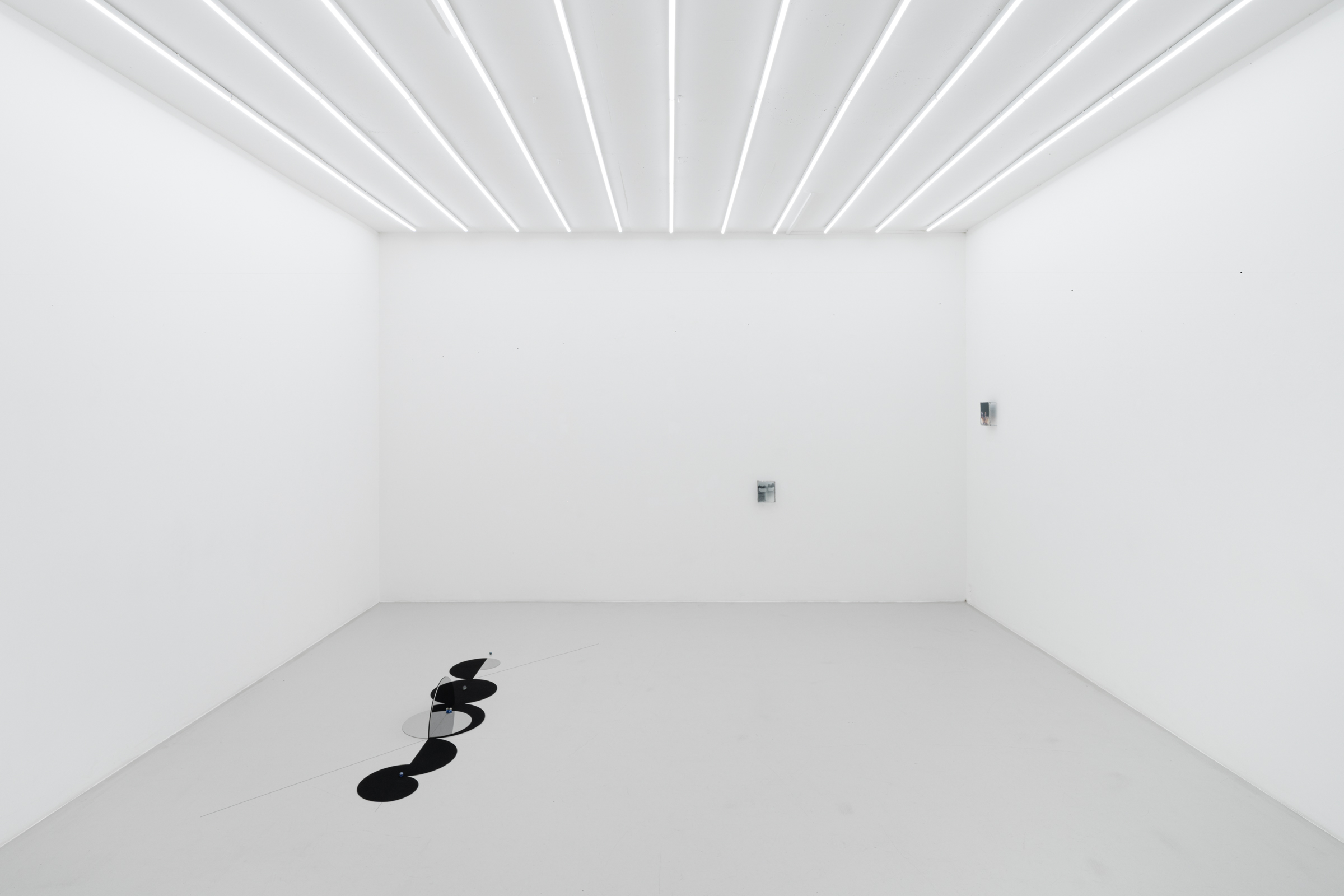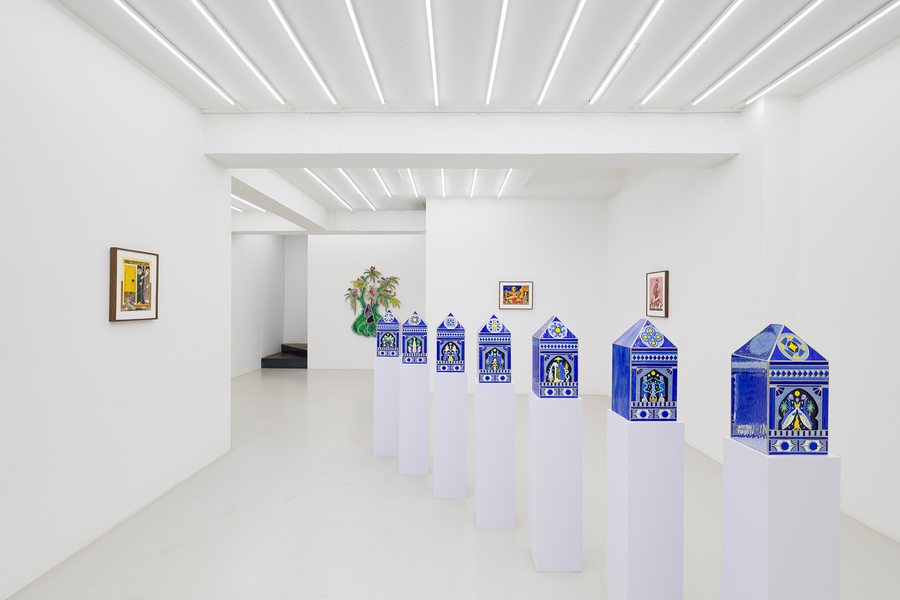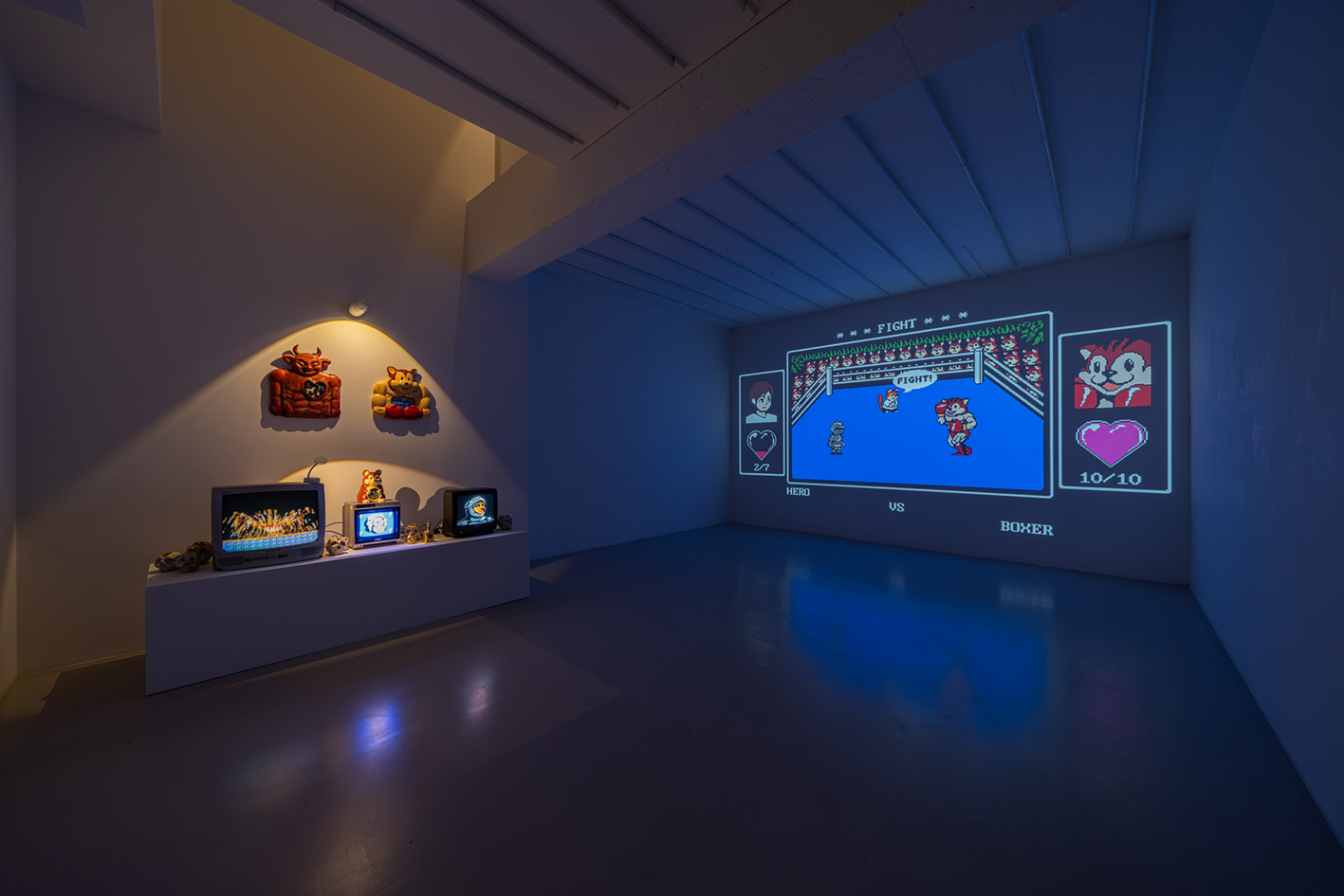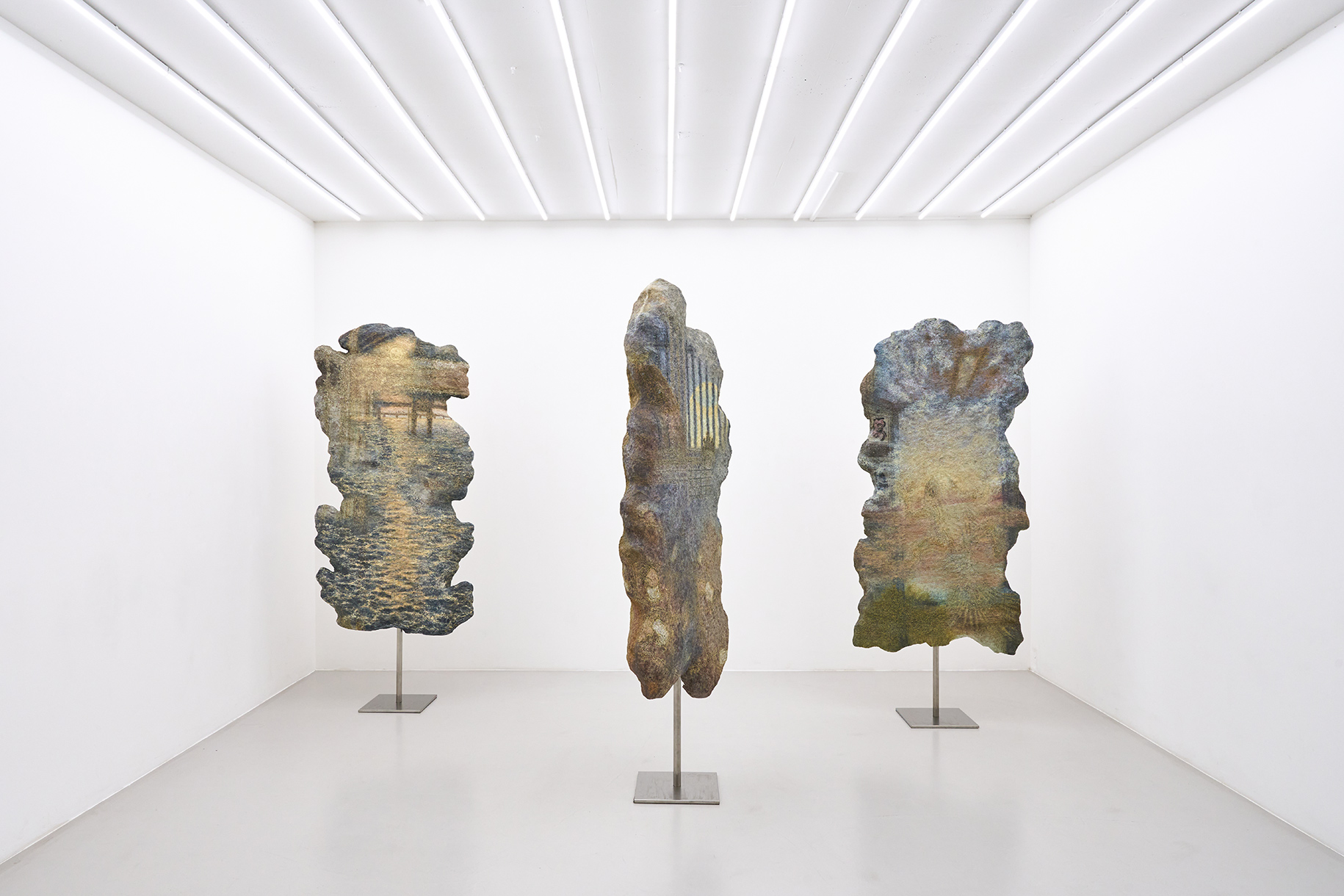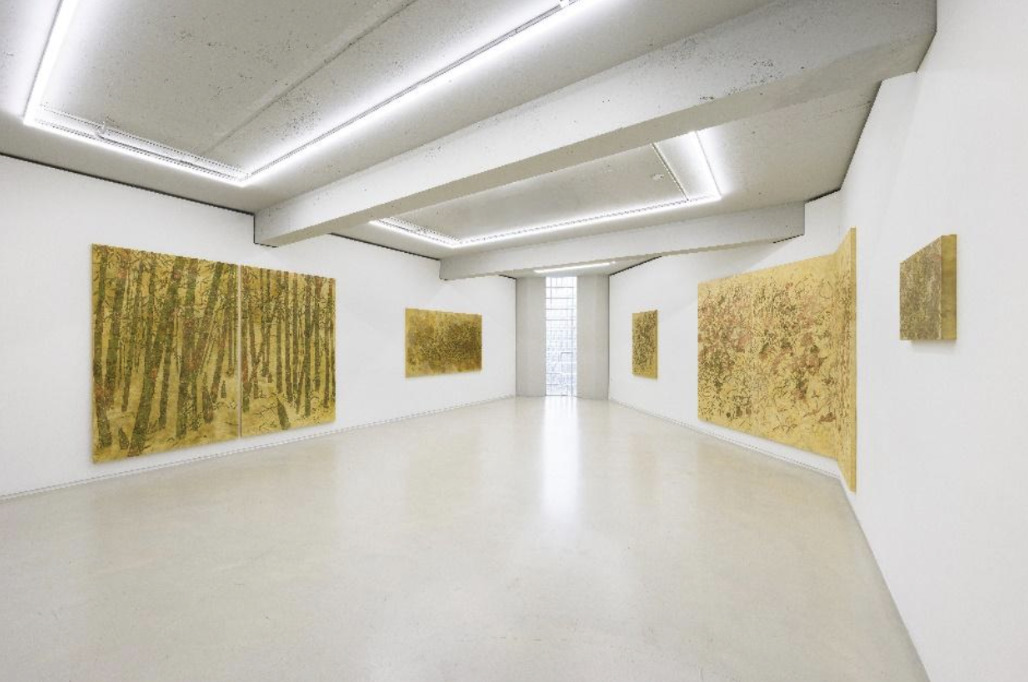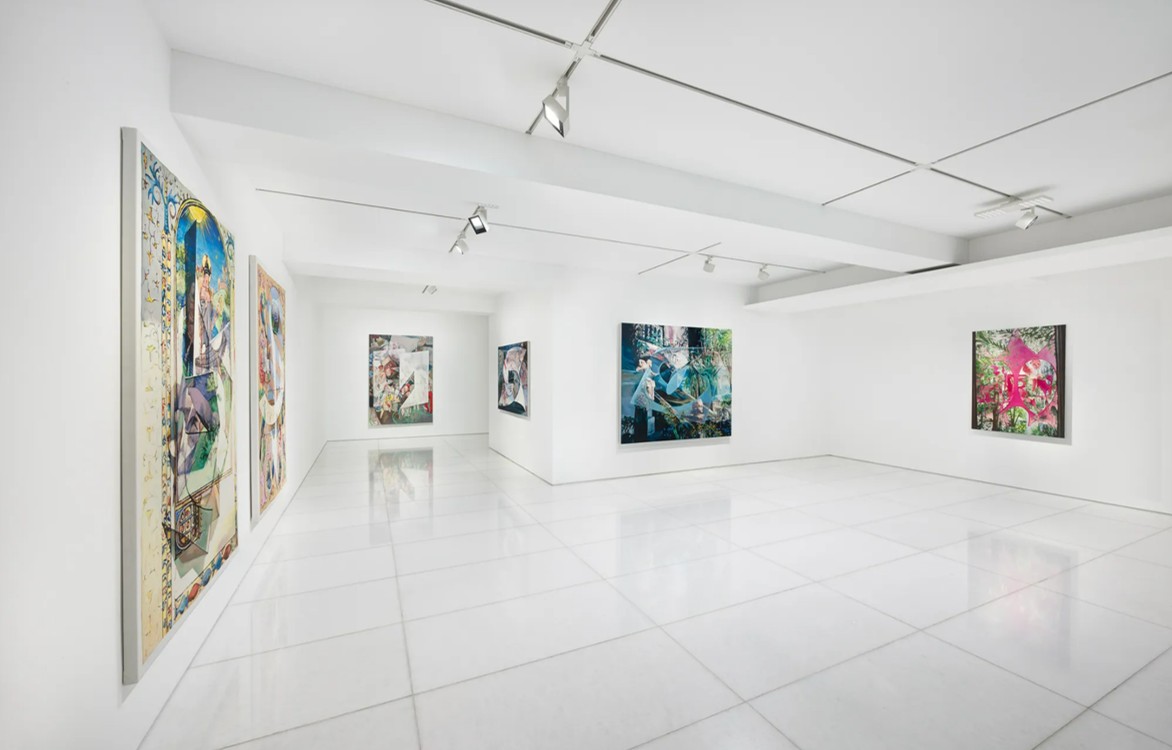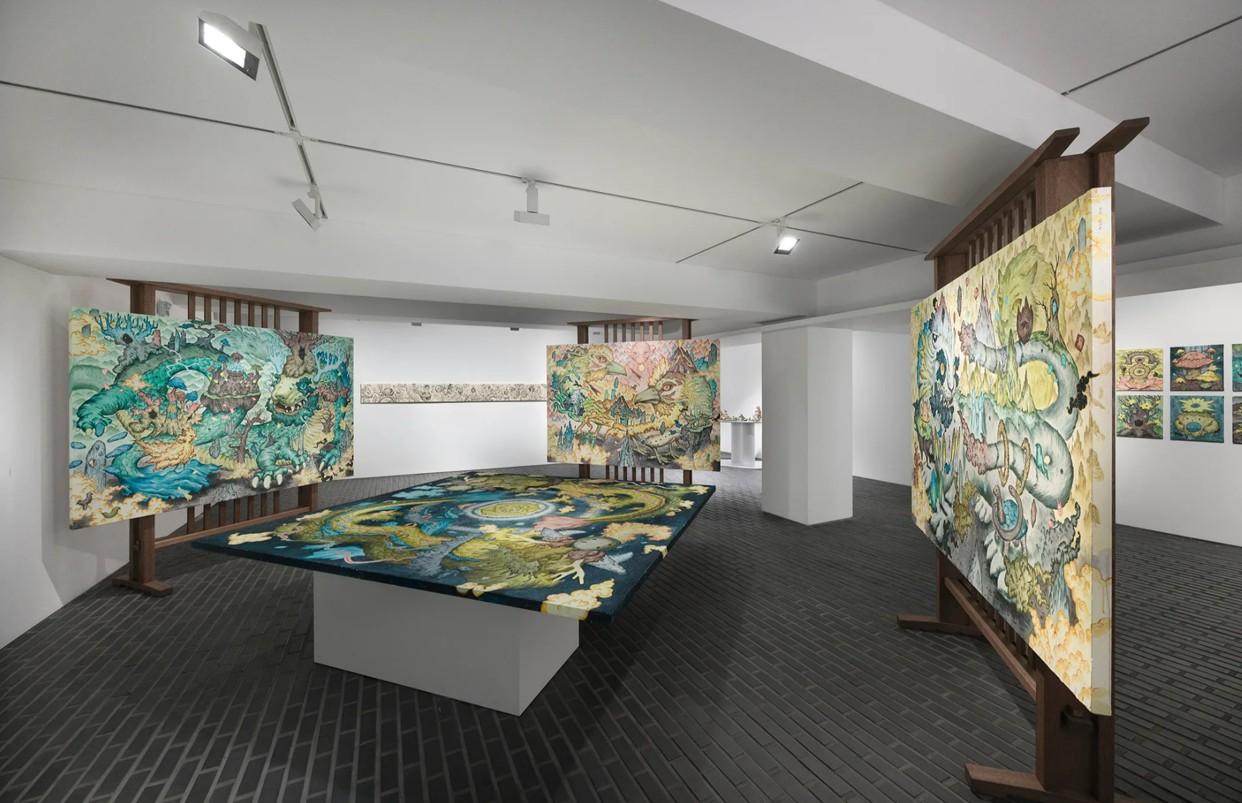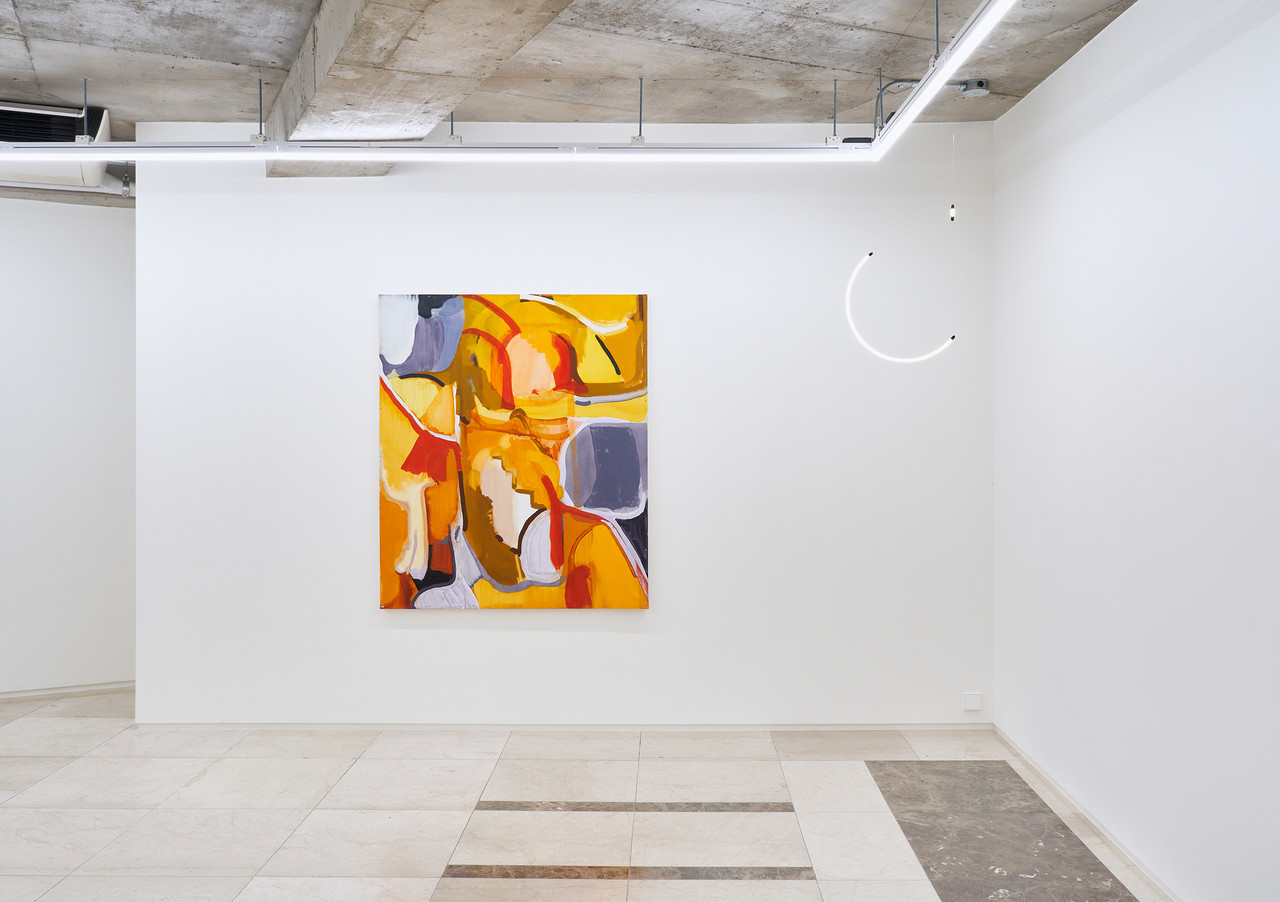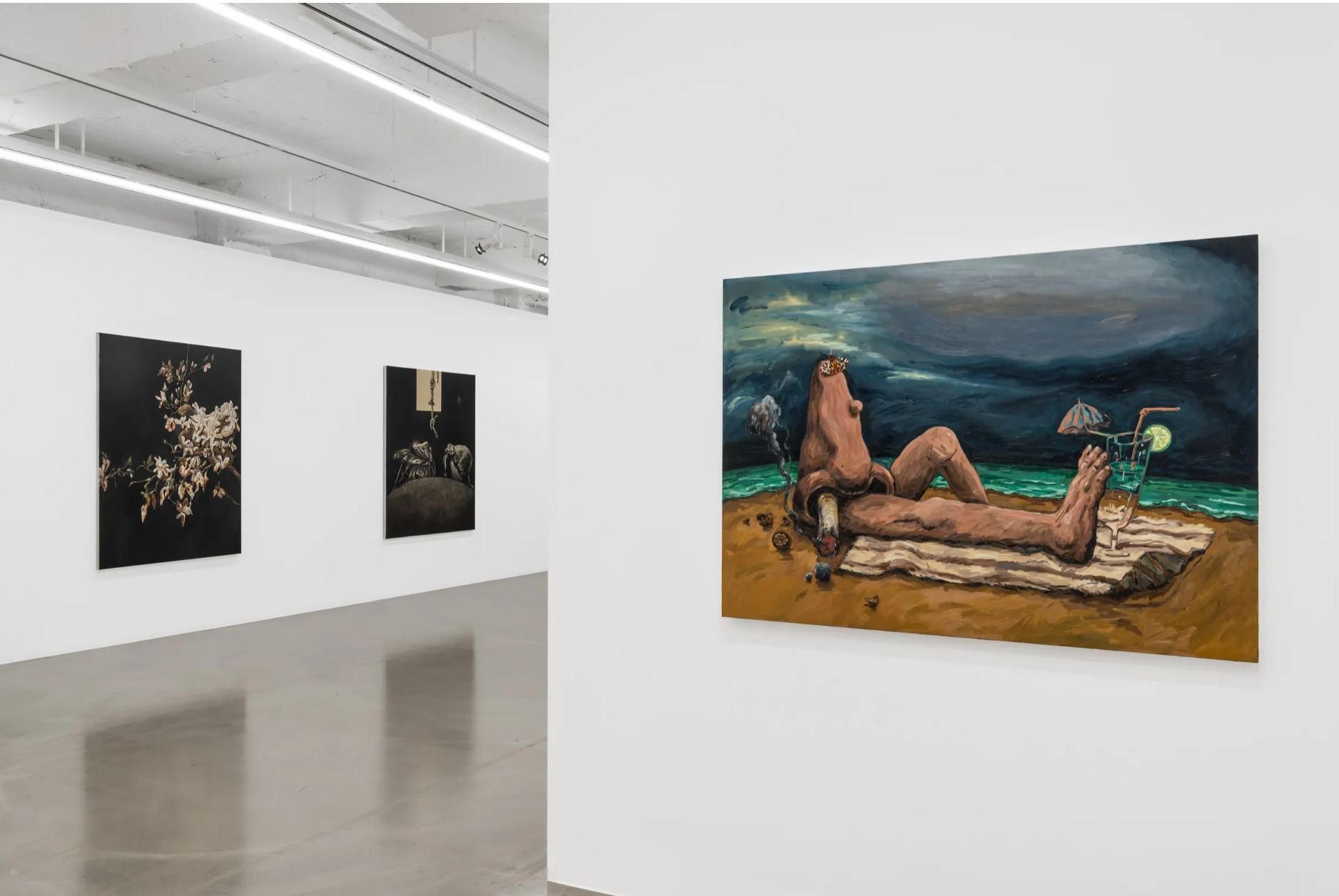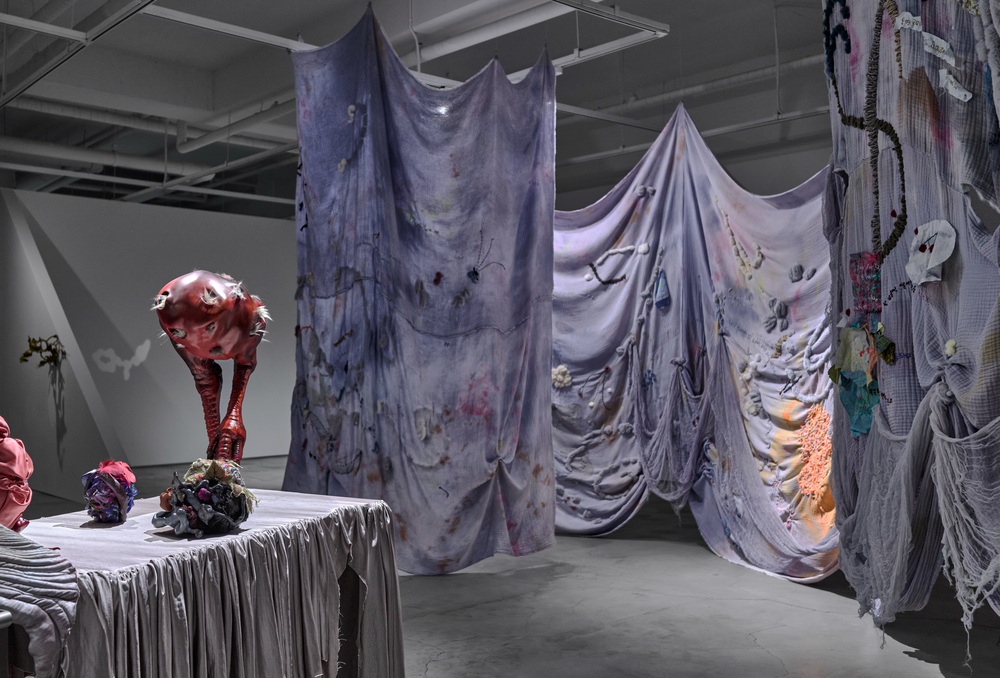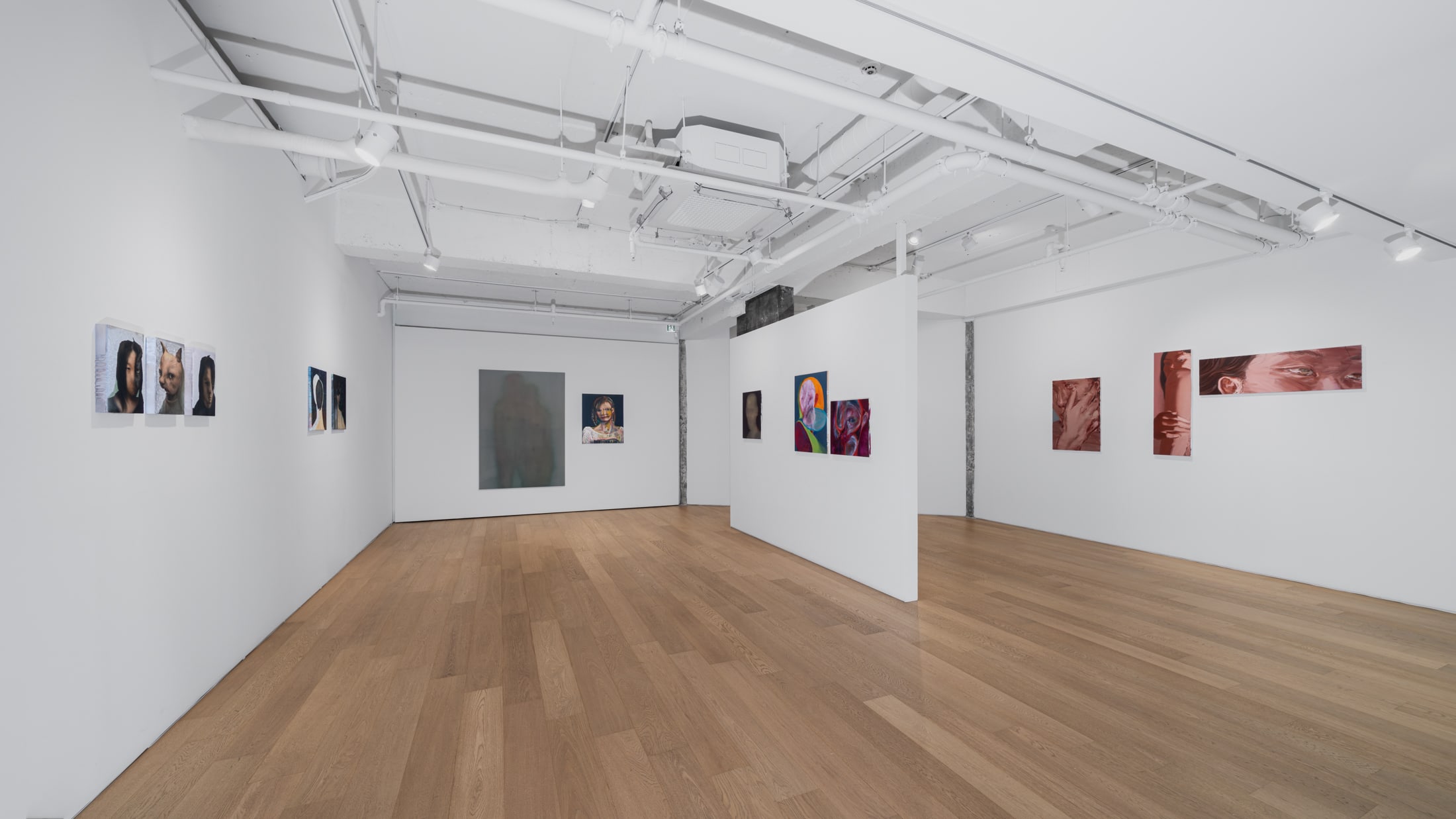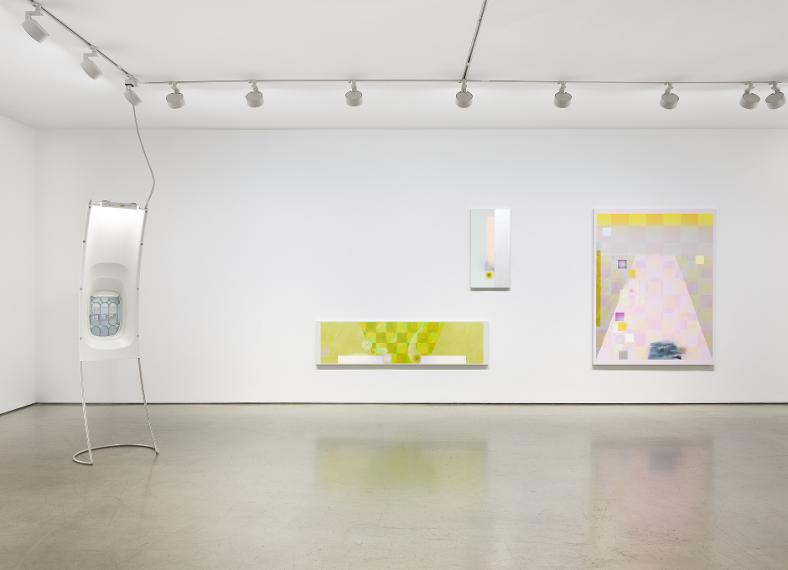

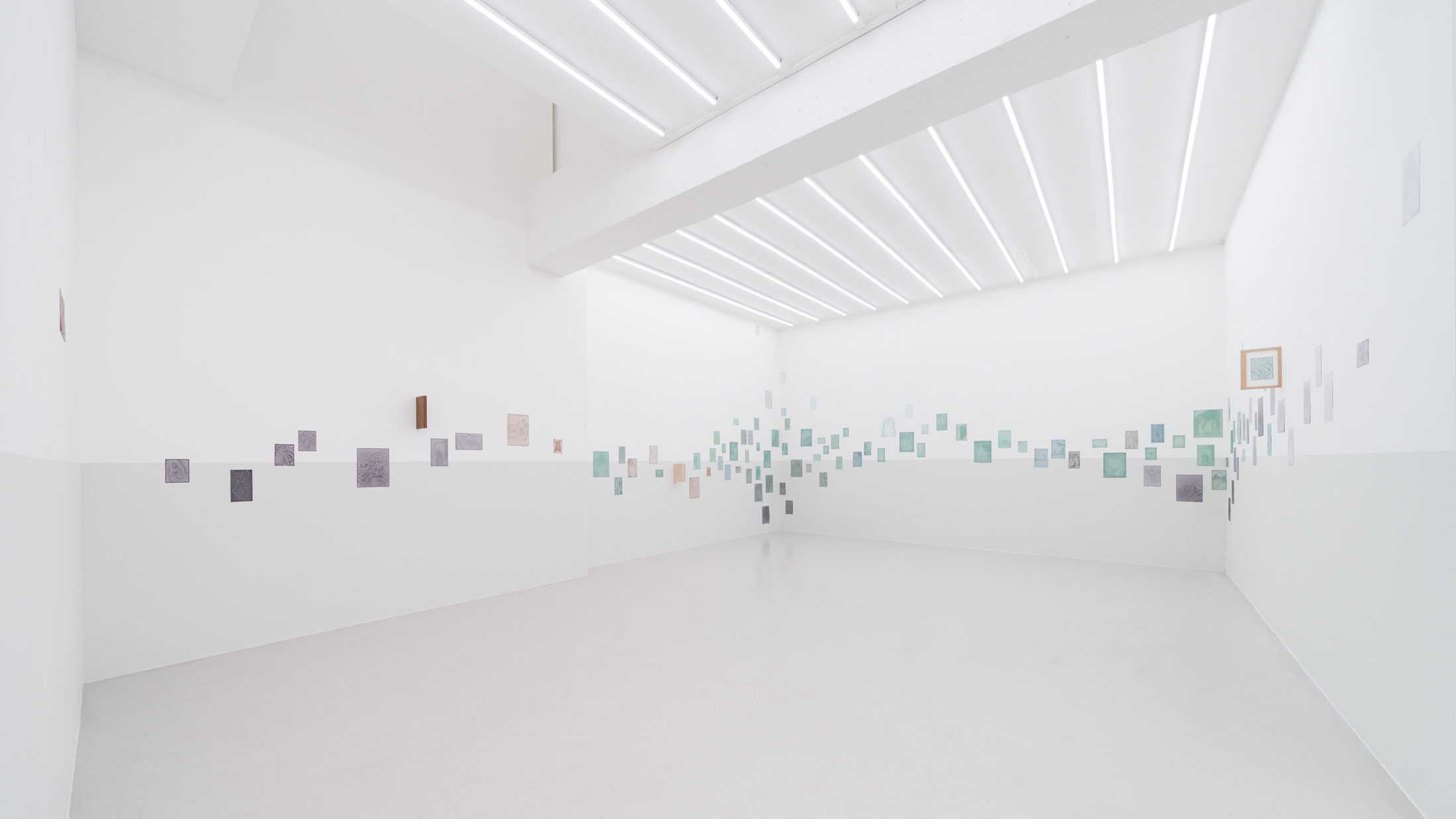
Installation view of 《Letters from Yesterday》 ©ThisWeekendRoom
ThisWeekendRoom presents a solo exhibition 《Letters from Yesterday》 by artist Dongwan
Kook, on view through March 14.
Dongwan Kook has recorded her dreams as a
form of diary, contemplating the universal realities that surface through the
personal unconscious. A distance inevitably remains between dreams and the
handwritten pages. And still, certain fragments are perceived as complete
worlds, holding everything the dreamer has witnessed, from inner visions to the
most trivial details of everyday surroundings.
In the artist’s work, language returns to a
state before meaning. Rather than being deciphered as specific signs, it
persists as traces that are transposed into abstracted letters and geometric
forms. Dreams, in essence, are sensations that exist before they are organized
into words, and the moment they are recorded, they are already partially
erased.
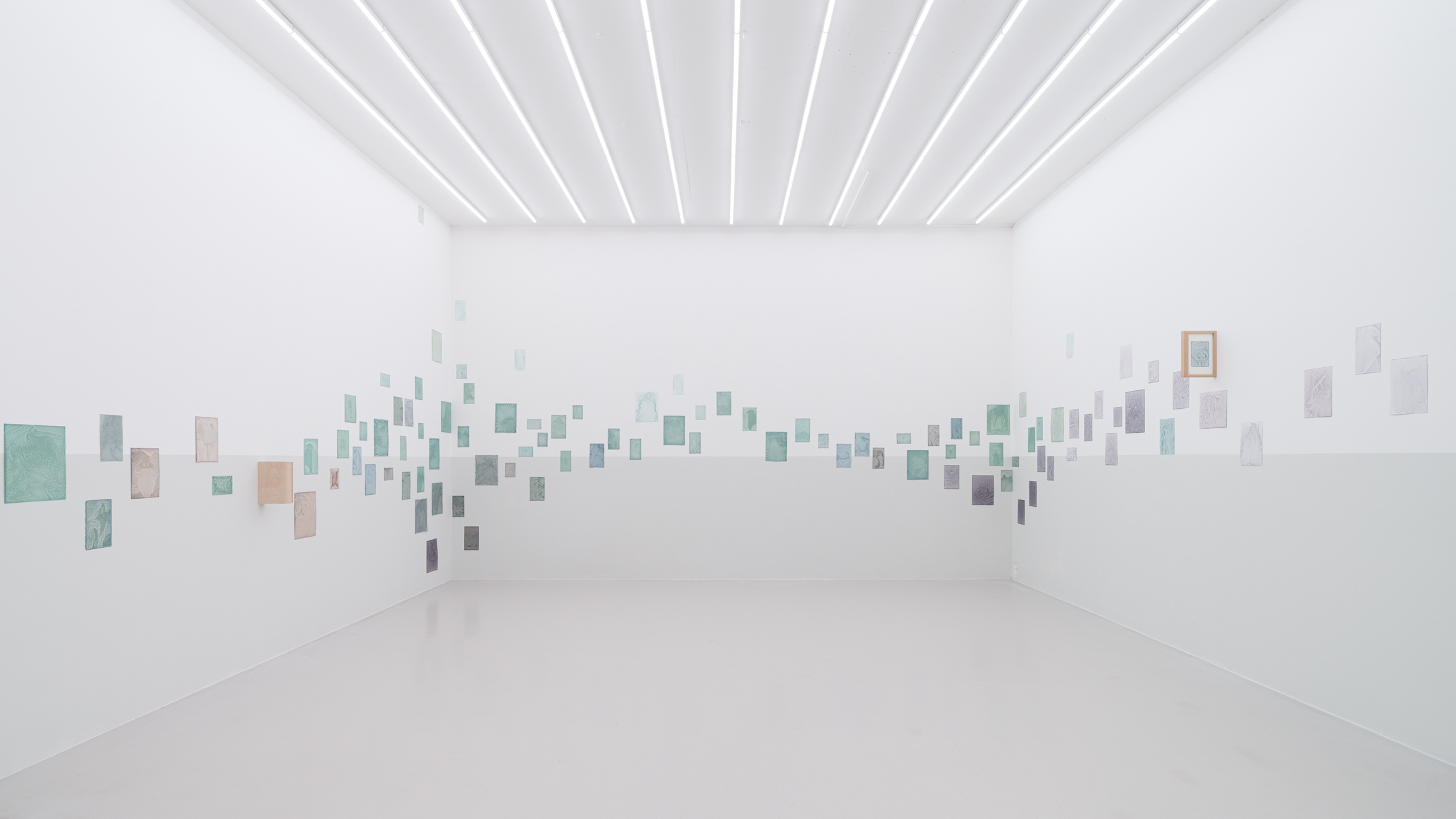
Installation view of 《Letters from Yesterday》 ©ThisWeekendRoom
As the artist pondered ways to preserve
them or take leave of them, thoughts of death naturally surfaced. In the
exhibition, she presents Kkokdu rendered in the form of books. Kkokdu are
wooden figures traditionally used to adorn funeral biers in Korean rites,
serving as guides who lead the deceased into the afterlife. Taking the form of
books, the artist’s Kkokdu function almost like self-portraits, guiding viewers
gently yet decisively into the quiet and tumultuous terrain of the unconscious.
Tracing the subtle ripples of inner
resonance, Kook turns toward long unresolved presences that remain distant and
persistent. She comes to regard dreams as having the material properties of
water, and begins to draw up those dwelling beneath the depths, one by one,
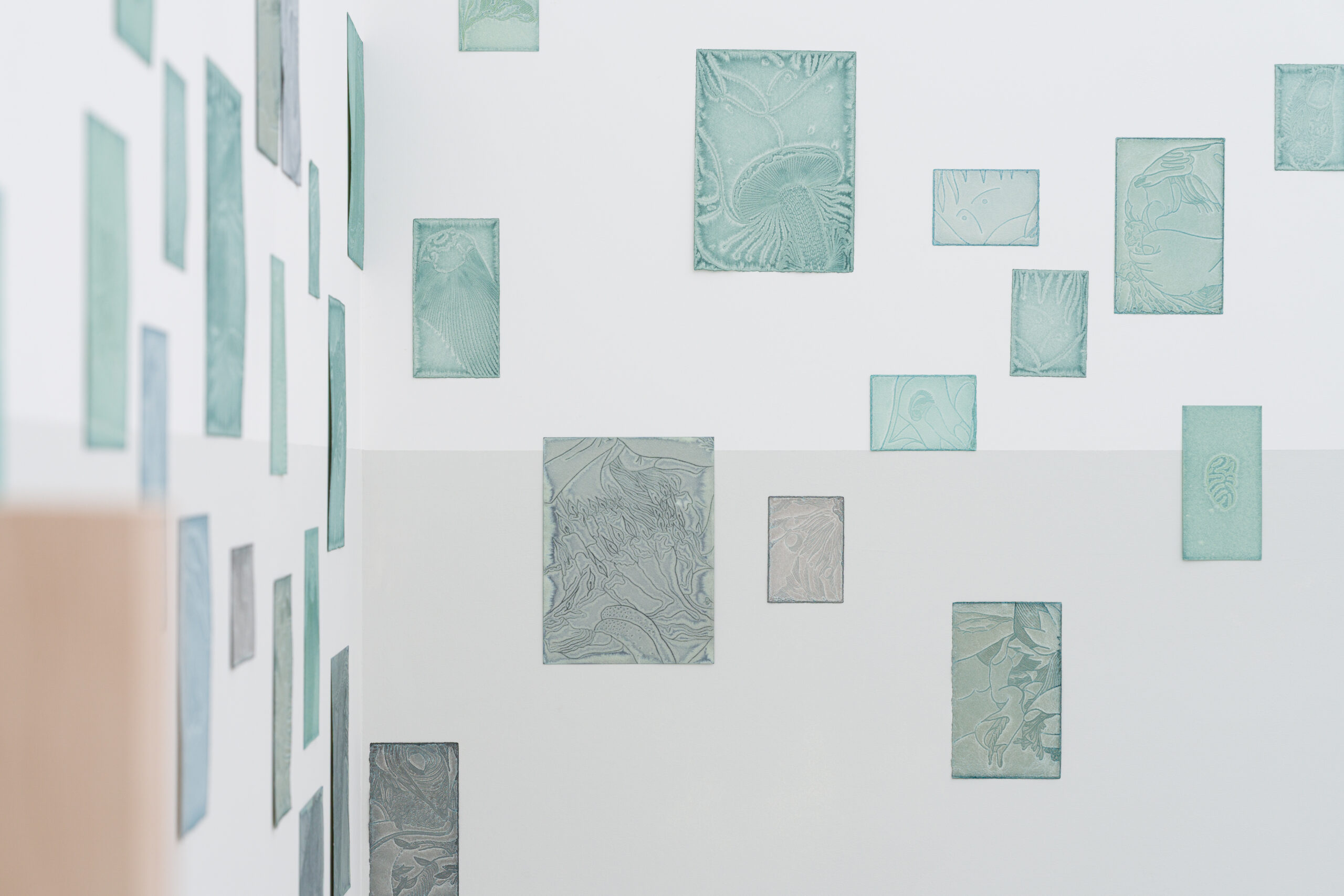
using paper as a kind of net. The process unfolds by mixing ink into clear
water, then submerging sheets of paper incised with images using a sharp awl.
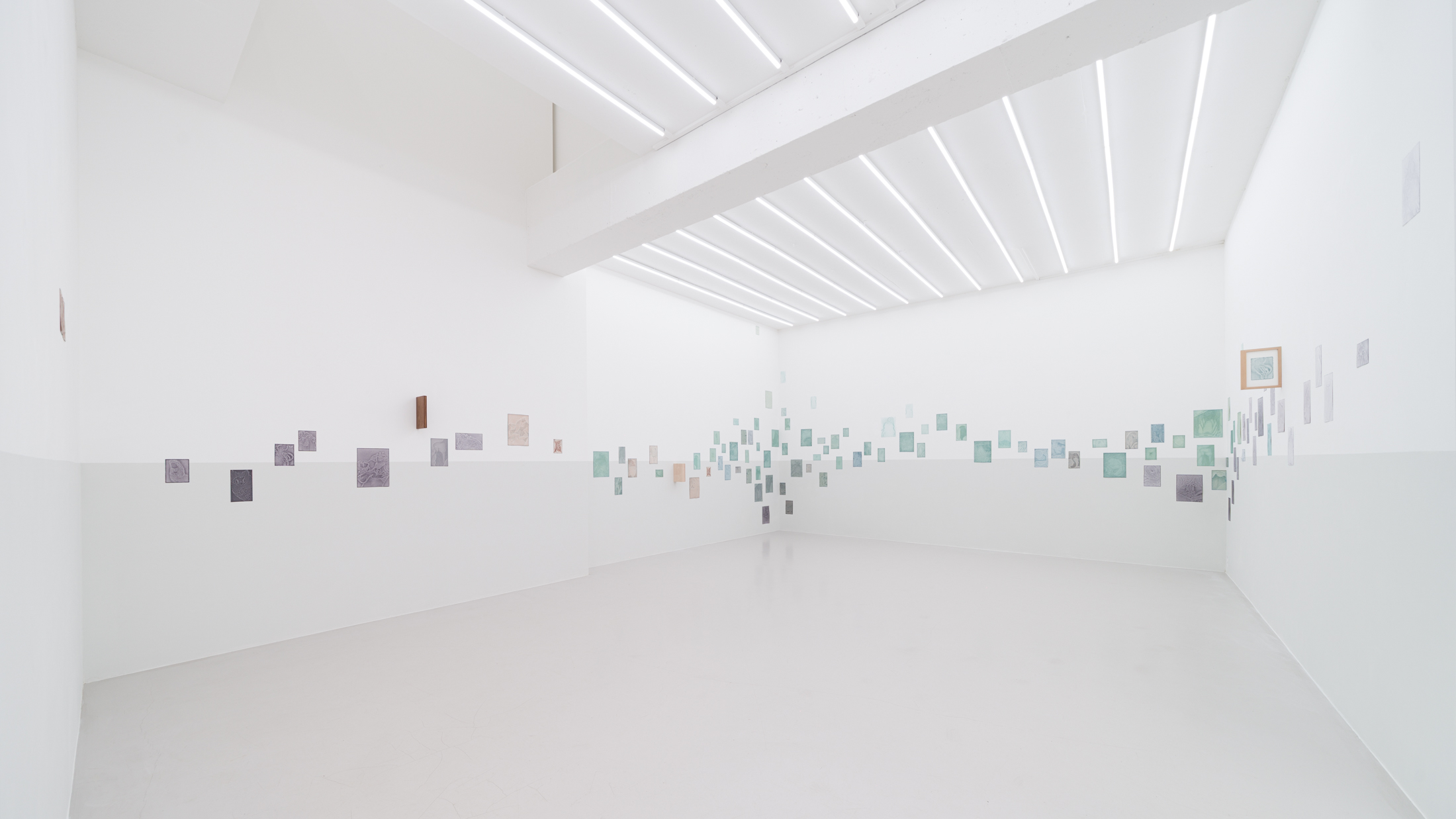
Installation view of 《Letters from Yesterday》 ©ThisWeekendRoom
Pigment seeps into the scratched marks, and
as the paper is lifted out and left to dry, it releases the ink it has absorbed
onto the scarred surface. Droplets swell like beads of blood, and in time form
small and large knots on the reverse side. Quietly waiting for this to happen,
or gently wiping the surface by hand, becomes in itself a repetition of
wounding and healing.
As she observes the spreading ink, the
artist meditates on faces and scenes that refuse to fade, clinging with
particular insistence. The ’Epistrophe’ series bears witness to this stance, repeatedly
presenting motifs that appear somewhat similar. Yet each work carries its own
distinct patterns and stains, and together they occupy the space as
intersecting waves, suggesting that even recurring dreams can never be
identical.
From
these rubbings drawn up from beyond the surface emerge imagined landscapes
populated by figures and forms: myself, an older sister, a younger sibling, a
mother, a fetus; a white dove; forests and tangled vines; pumpkins, mushrooms;
campanulas; the moon; houses, villages, temples; books, beads, candles, and
scribbles, coalescing into a dreamlike terrain.