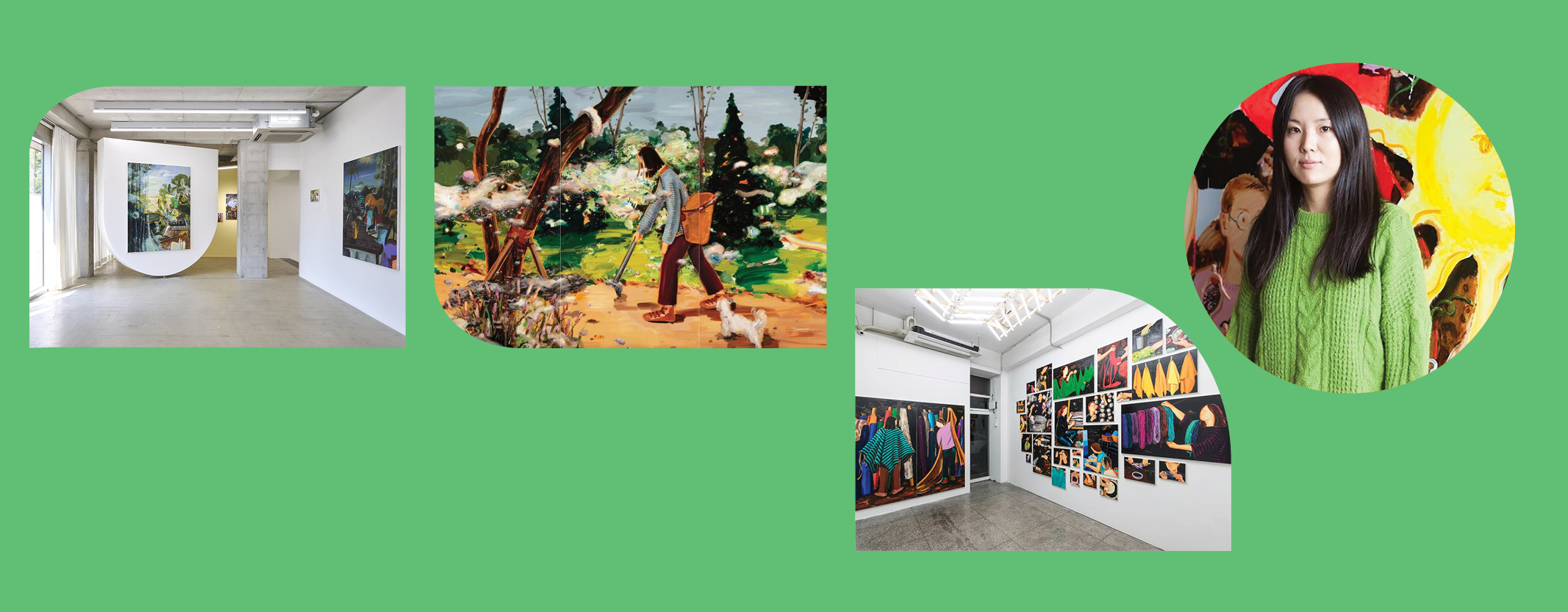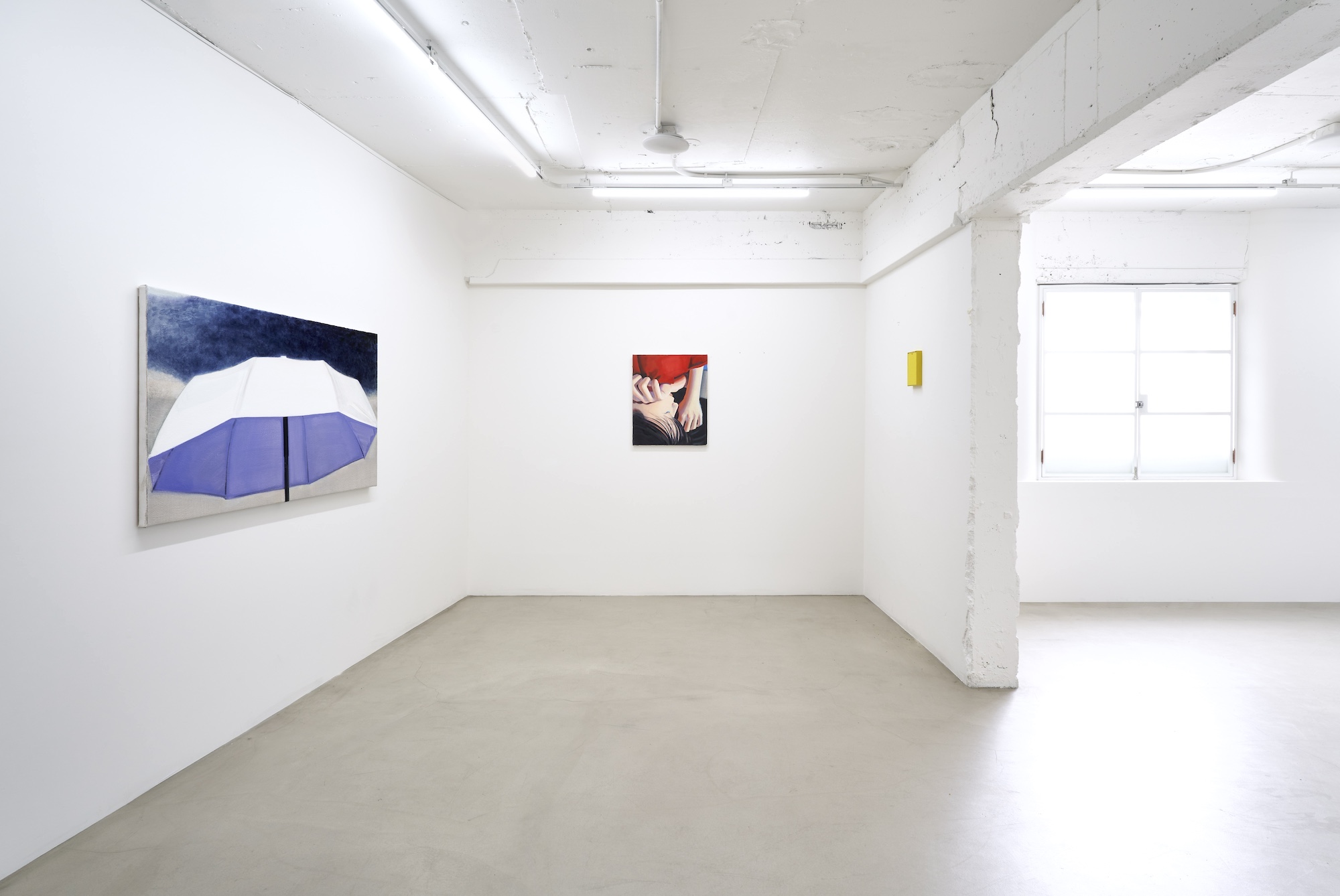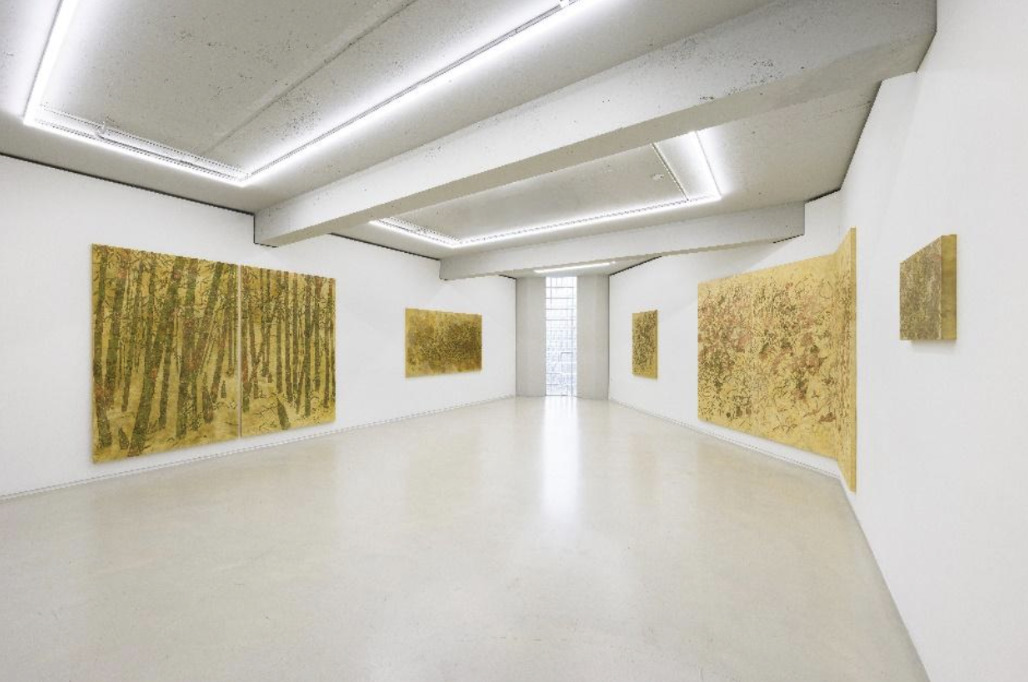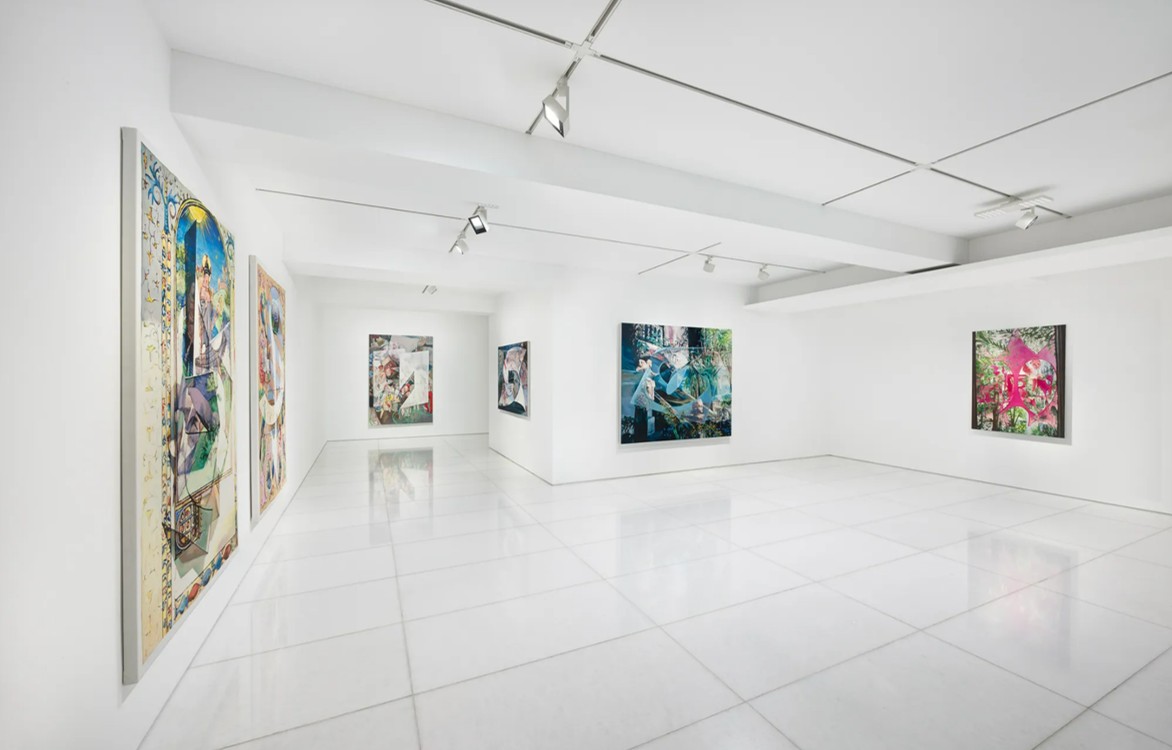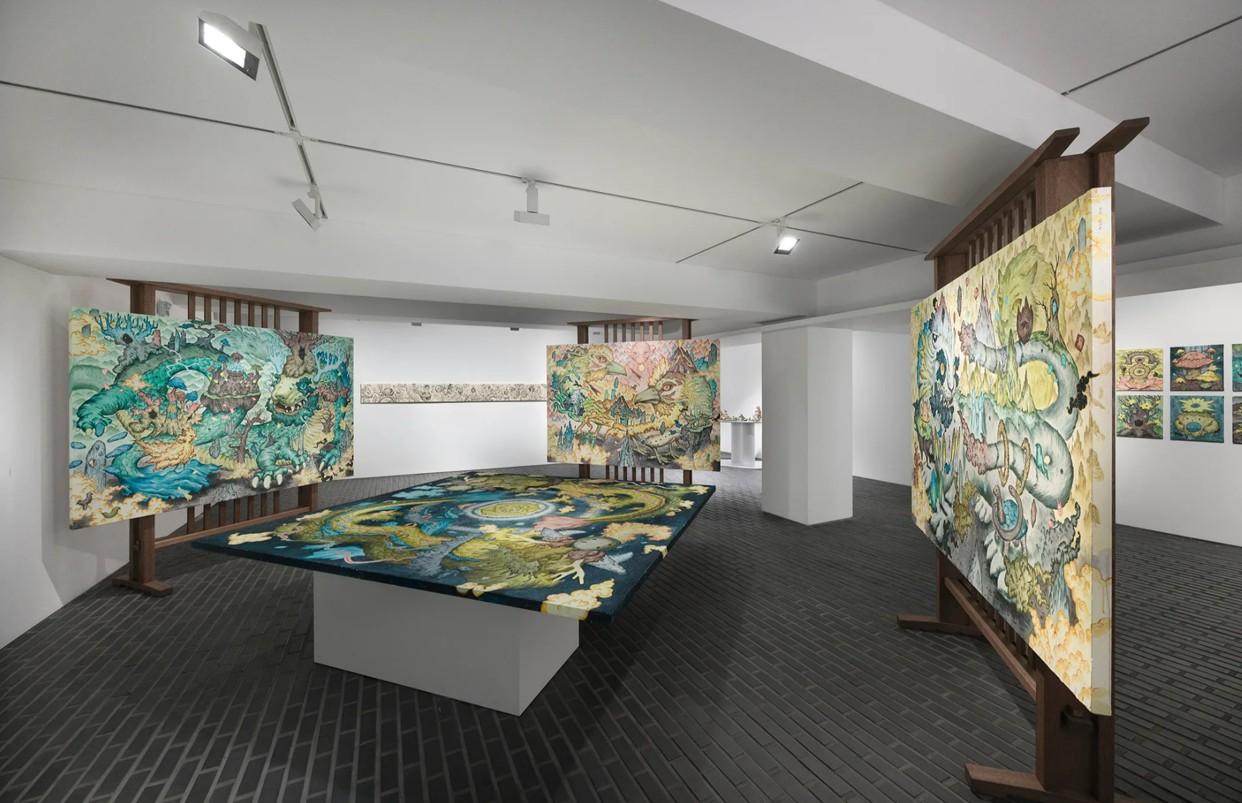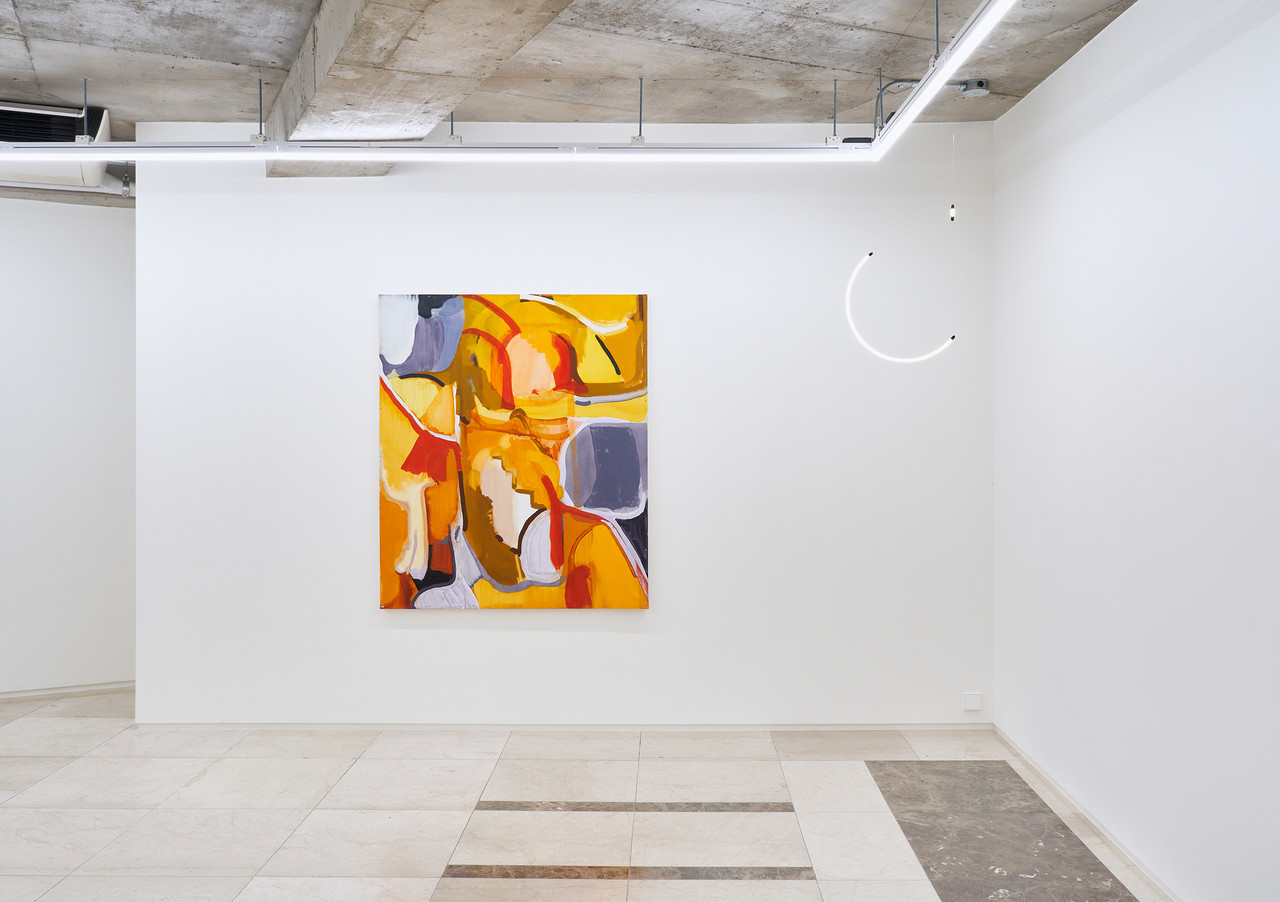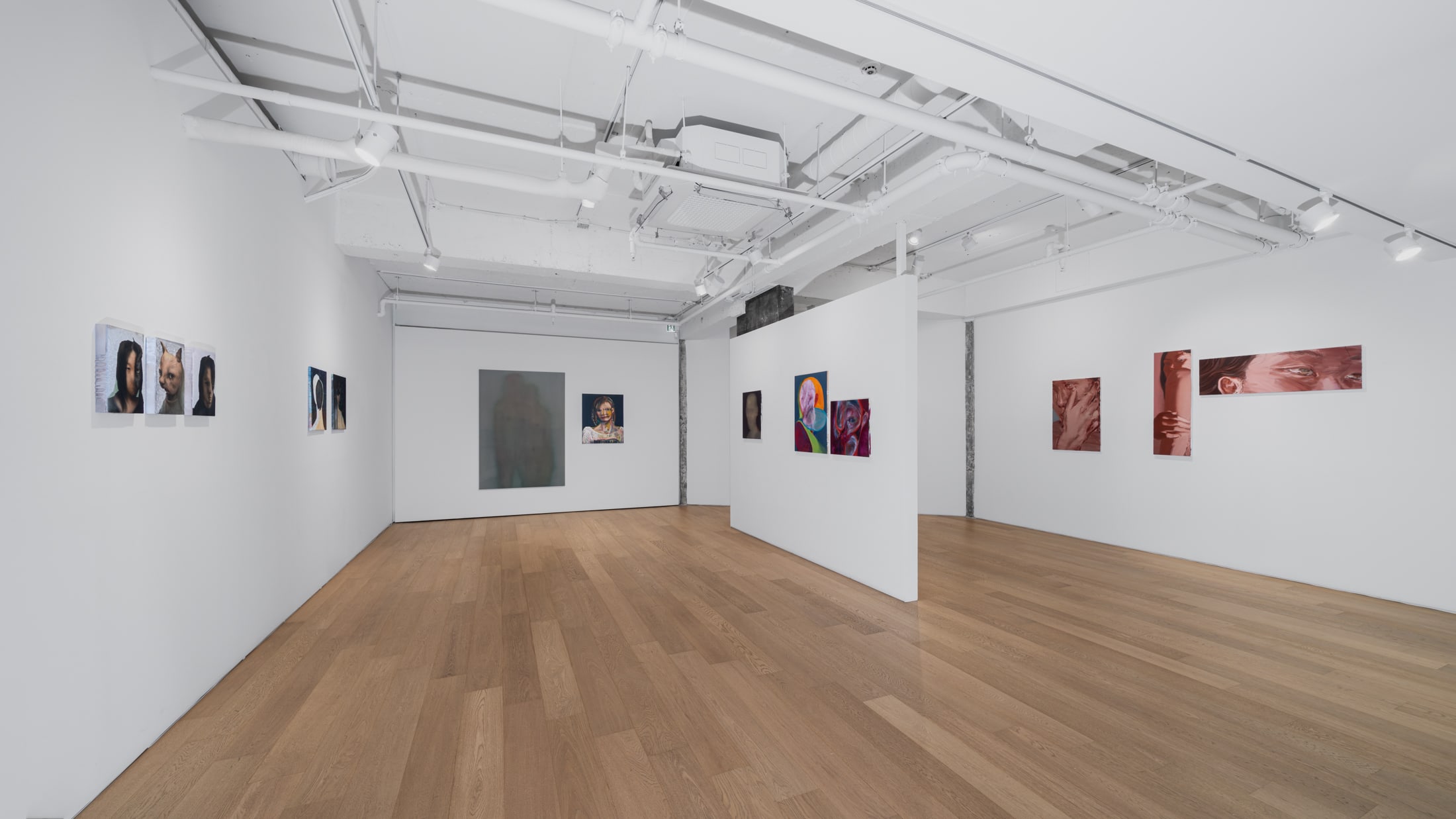

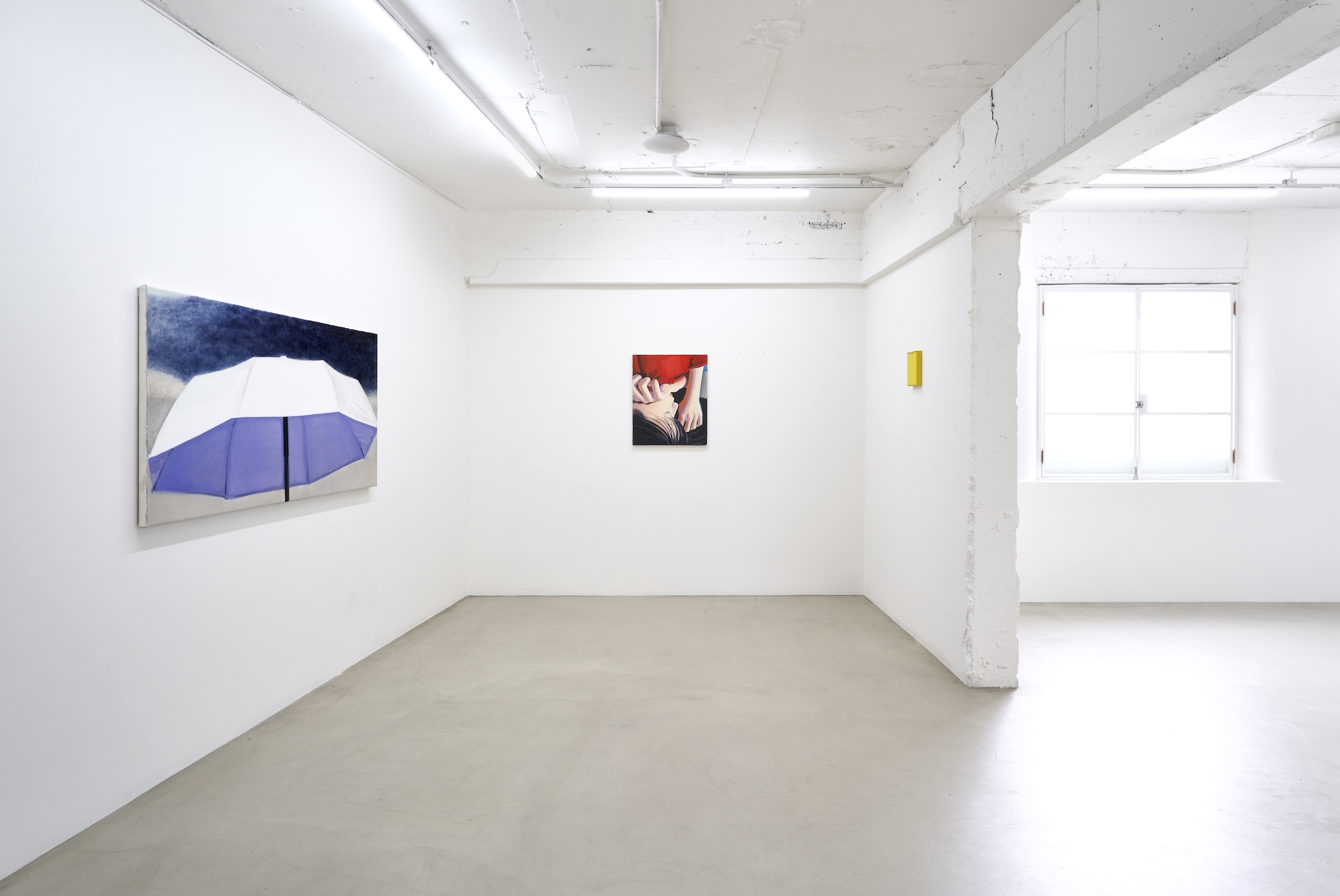
Installation view of 《Too Sunny》 © Komplex
Komplex presents a solo exhibition 《Too
Sunny》 by artist Yiji Jeong, on view through June 27.
The artist paints the beauty of things that stay close beside
us. Sunlight, love, and things like love: a loved one resting on my knees, a
glass of lemonade held in her hand. Morning glories from a distant place, light
flickering across her face turned away from the sun, the shadow it casts,
moisture in the eyes.
A snowball kept in the freezer from last winter, the temperature
surrounding a still life, and the colors filling the space around it. Through
painting, Jeong preserves these moments of beauty—beauty she wished could
remain forever.
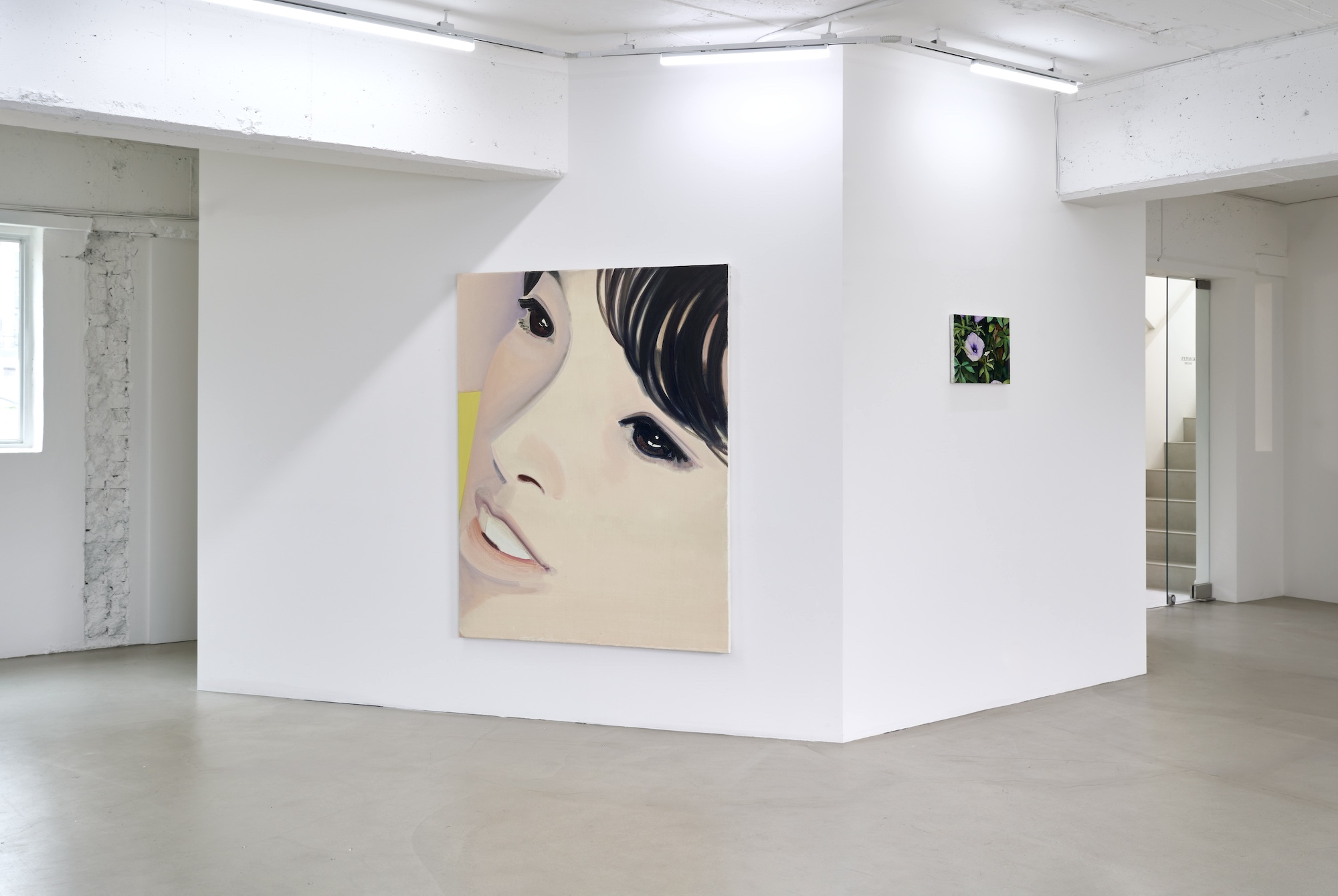
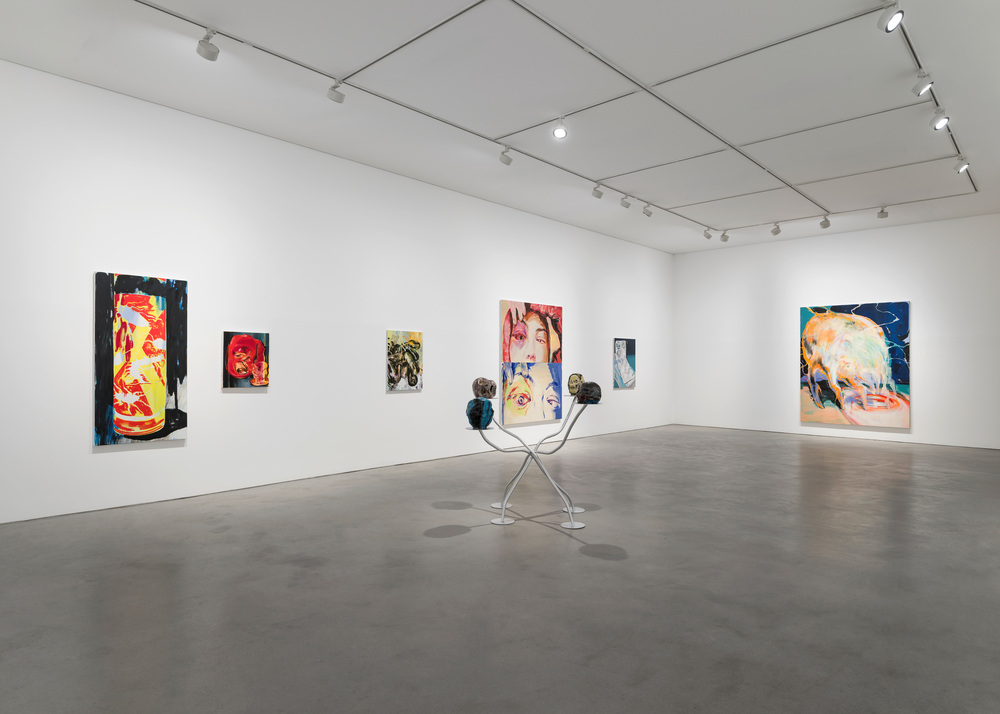
Installation view of 《Too Sunny》 © Komplex
Moments are first captured quickly through a camera, drawing, or
sketch, then continually edited so that these initial records move closer to
the scene as it was experienced through her senses. When working with a
smartphone camera, she zooms in to draw the subject nearer, composing images in
which the motif and structure she wishes to paint come into sharper focus.
In the process, many of the forms and colors that once occupied
the background are removed. The filtered image is cropped again and again,
gradually coming to resemble the scene she saw, heard, smelled, and touched.
As she repeatedly studies the play of light and
shadow upon her subjects, tracing the most delicate points she wishes to paint
within the edited frame, much of the perspective and spatial depth originally
recorded by the camera falls away. What remains becomes increasingly flattened,
transformed into an image that edges closer to painting.
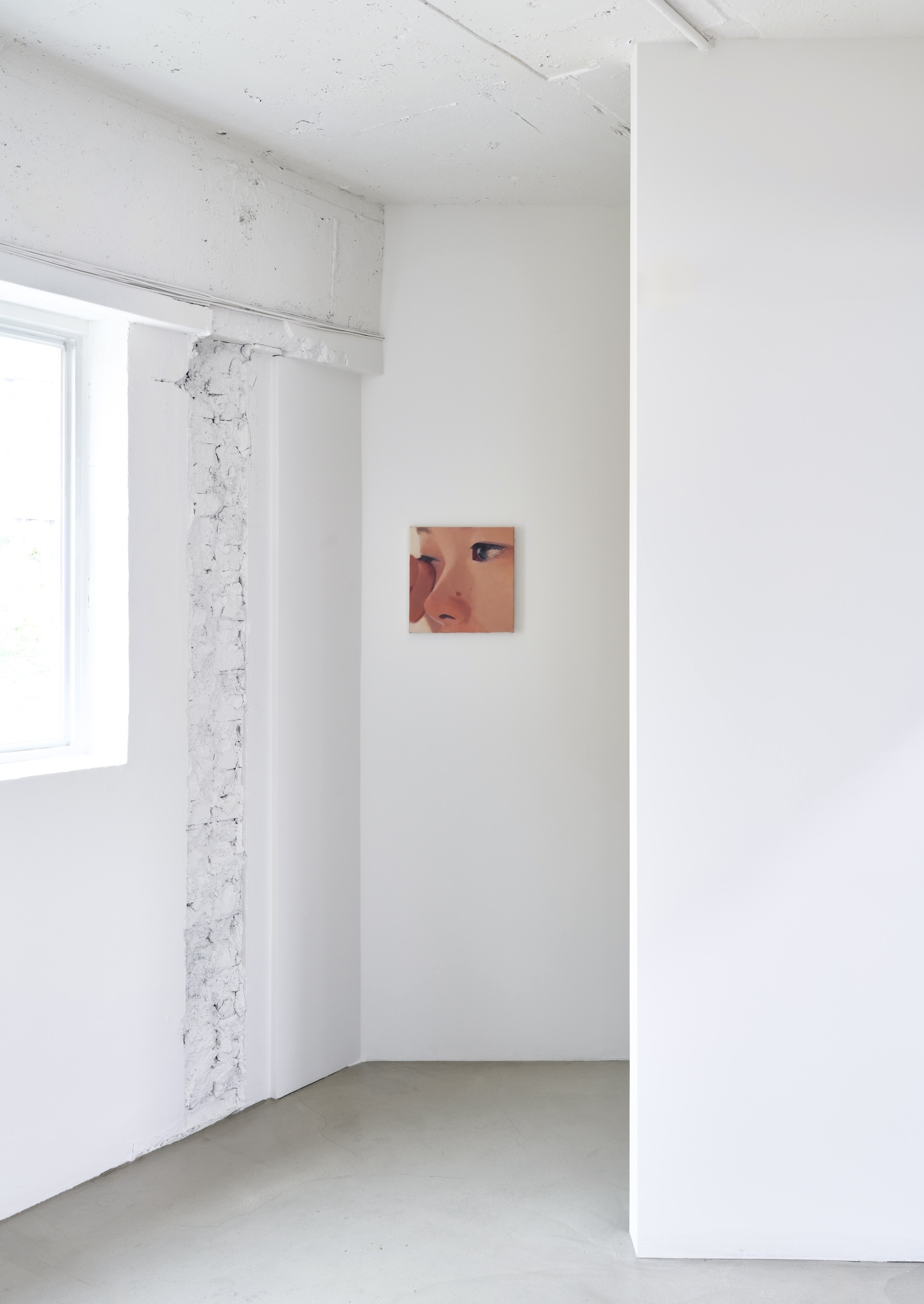
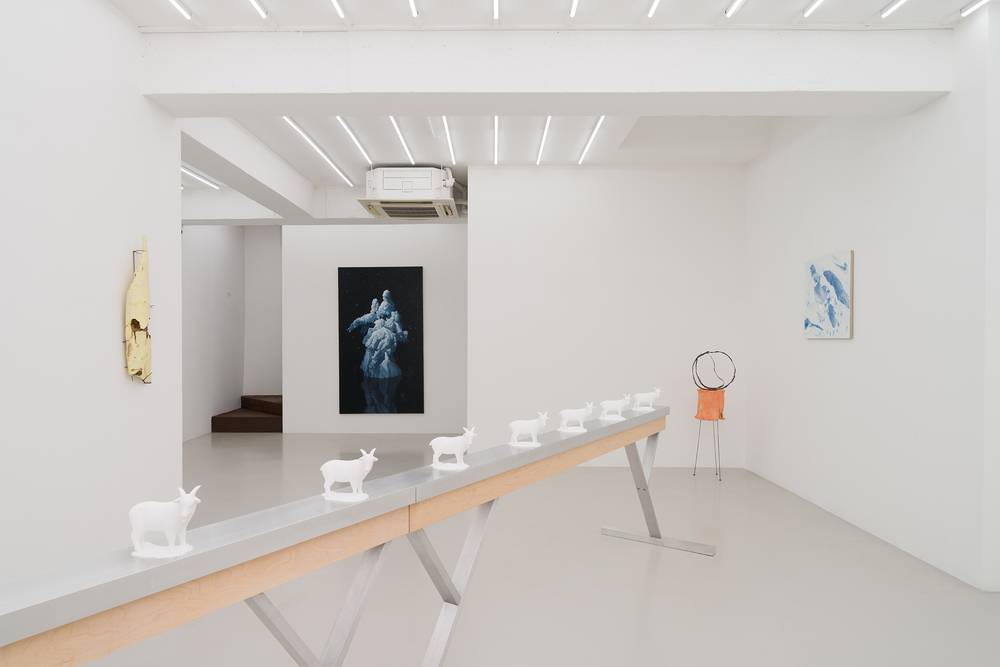
Installation view of 《Too Sunny》 © Komplex
Drawing rectangular borders over and over again on paper crossed
by sketch lines—a process of determining what will ultimately be transferred to
the canvas—is likewise an effort to bring sensation and painting into closer
alignment.
Even after translating these refined images into oil and paint,
the artist returns to the memory of that particular gaze and state of mind.
Recalling the moment, she once again removes sections of canvas, trimming and
adjusting the scale and proportions of the image.
Through this repeated process of subtraction, narrowing, and
preservation, the painting finally arrives at the form of a fleeting image—one
that was not only seen, but also imagined and contemplated.
These images possess a tangible physical form, yet they also
carry emotion and reflection. They are the shapes that briefly shimmered into
being, both within and beyond the artist herself.