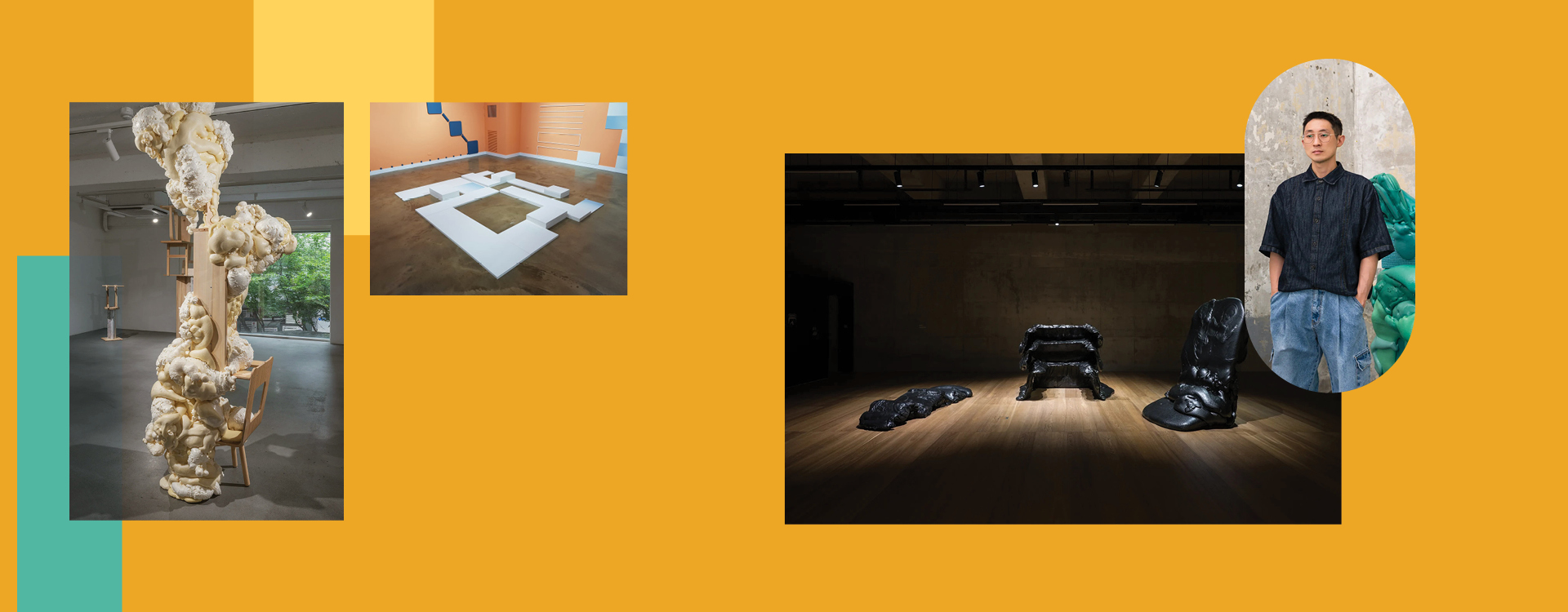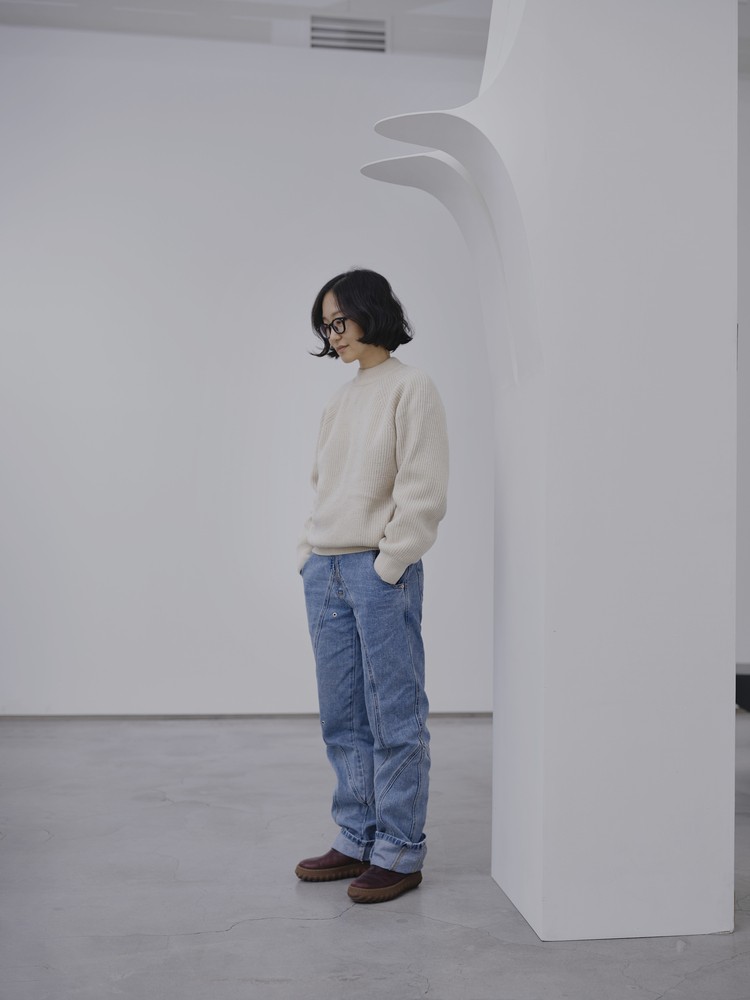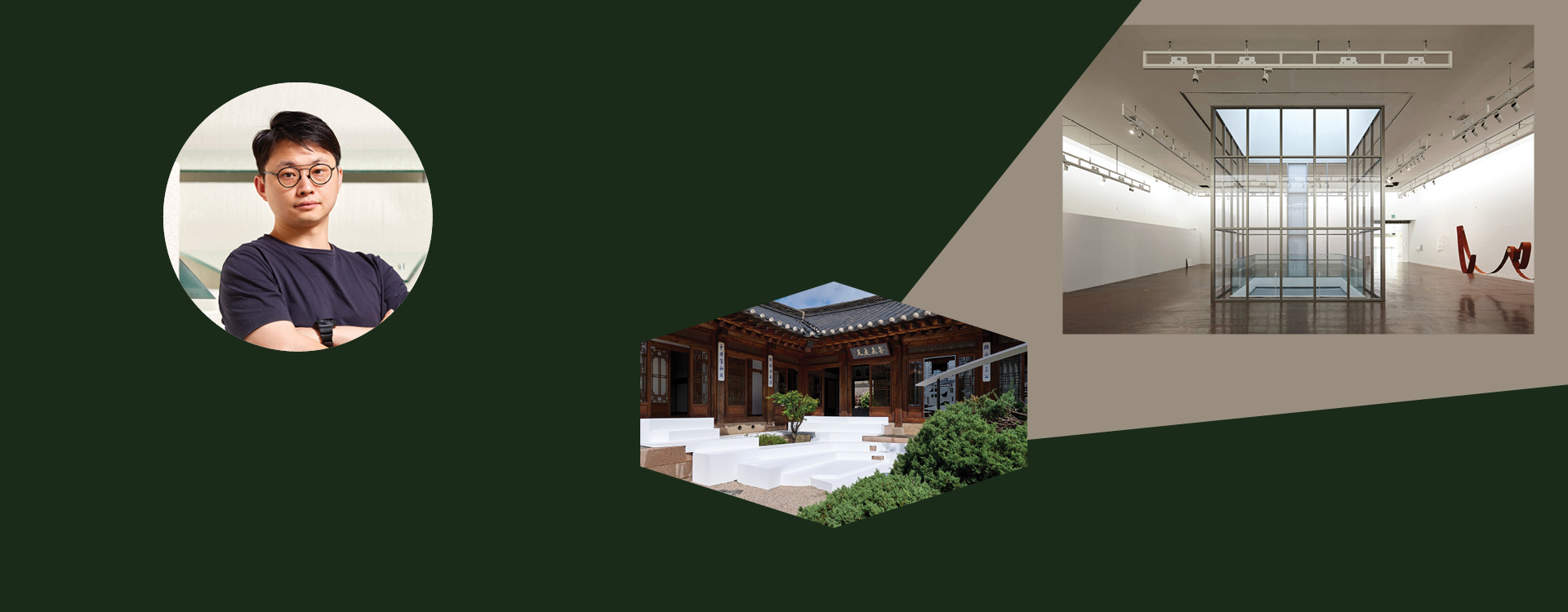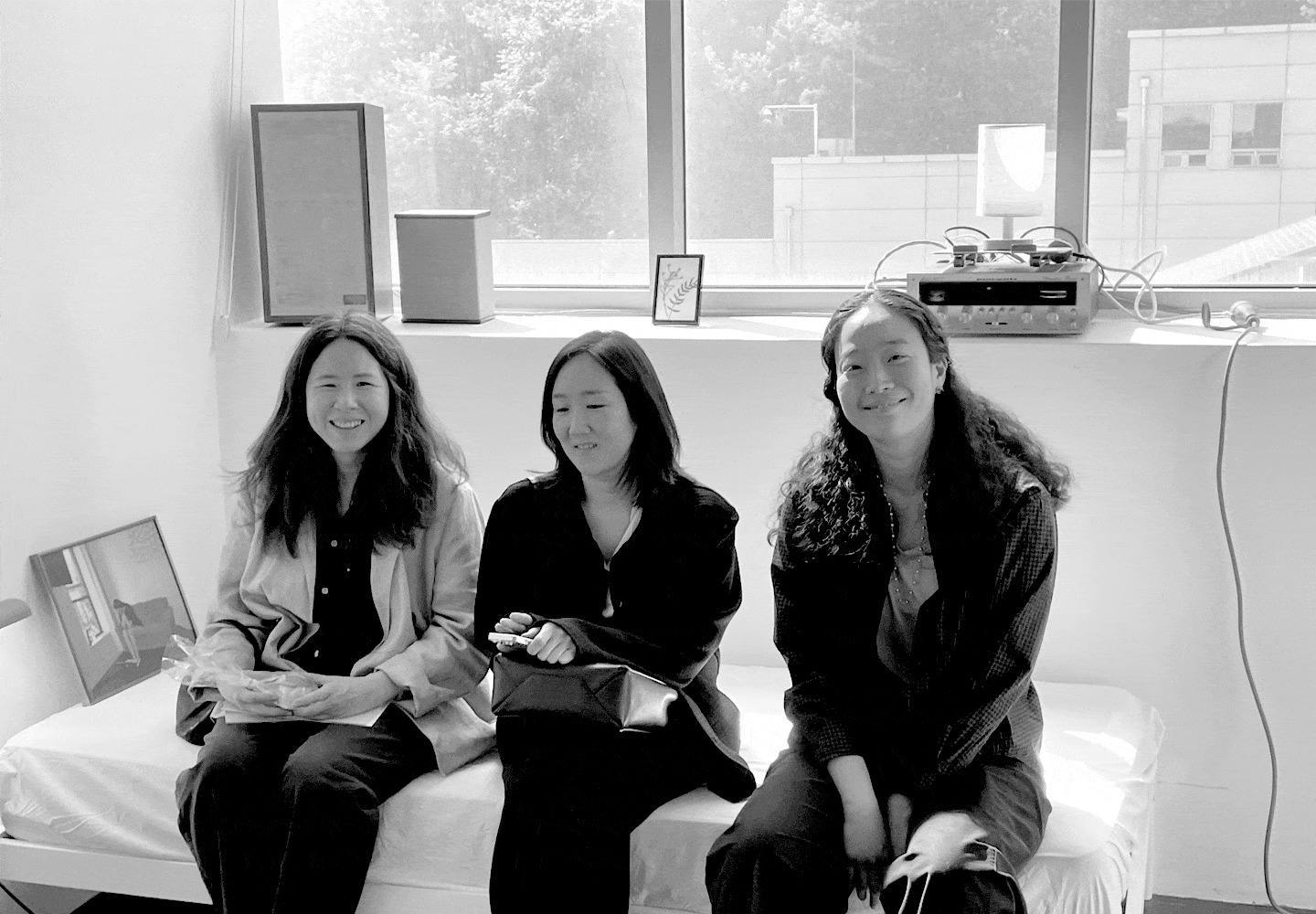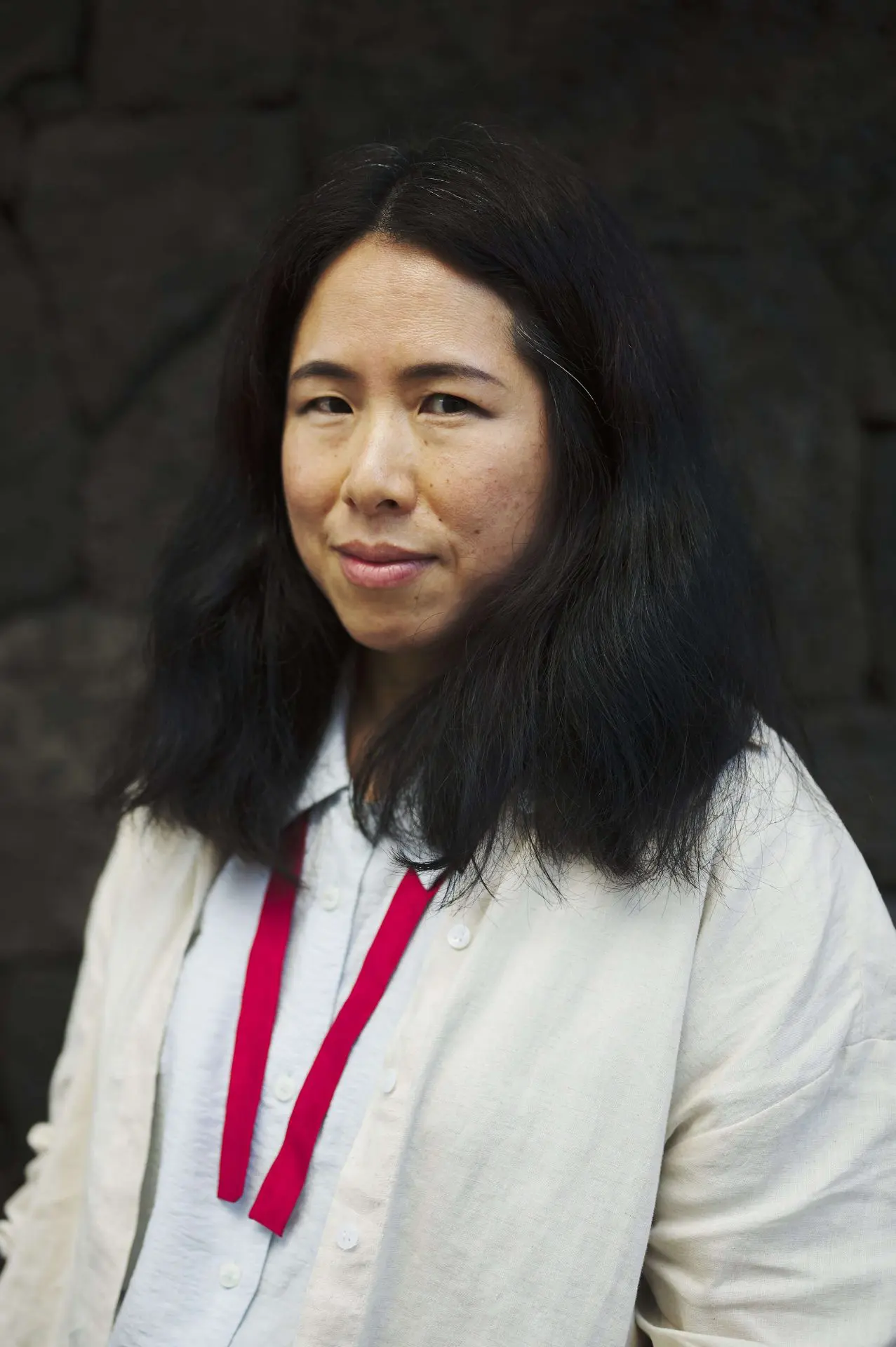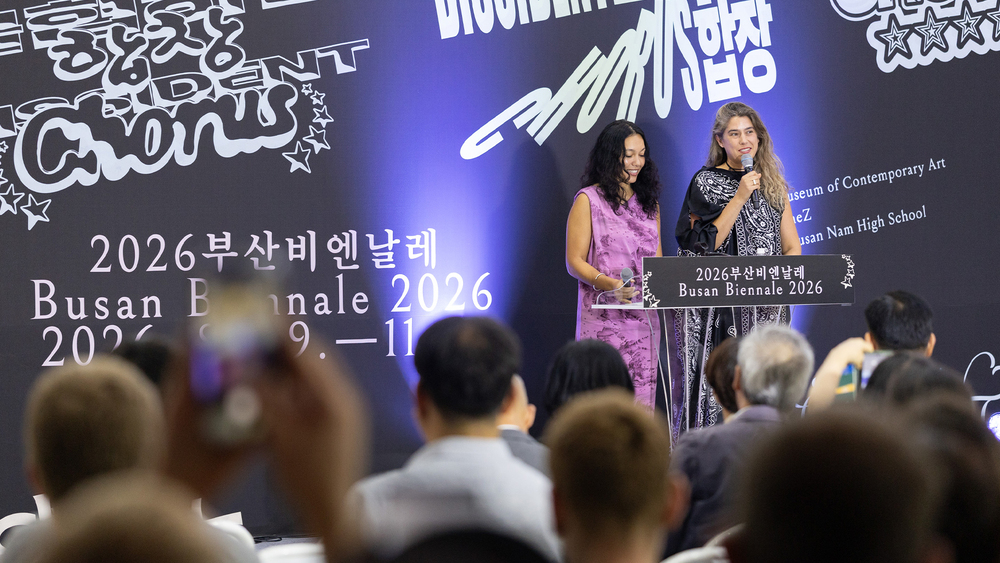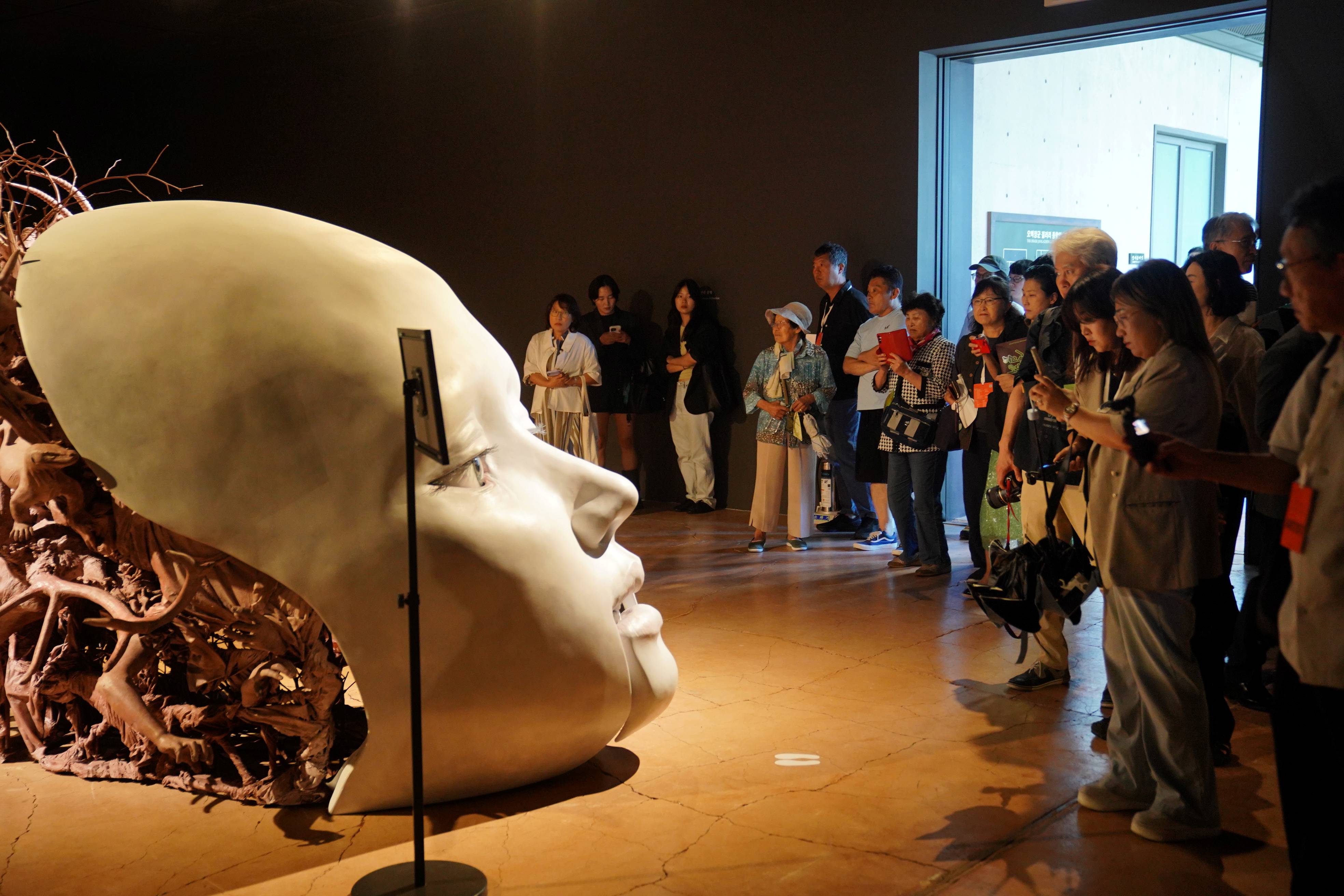

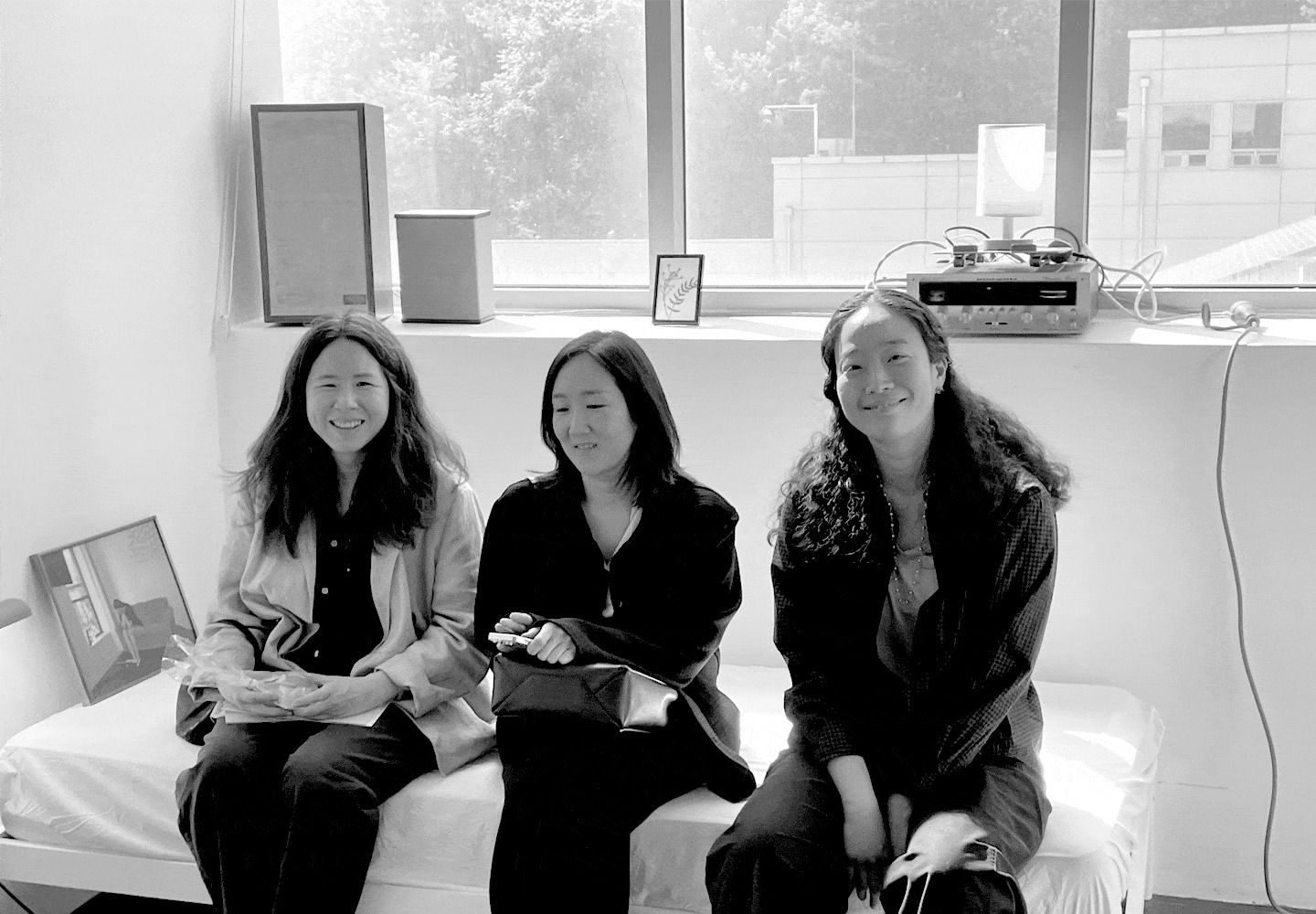
(from the left) Binna Choi, Goen Choi, Hyeree Ro. Photo: Donghwan Kam. ©ARKO.
On
March 19, the exhibition plan for the Korean Pavilion at the 61st International
Art Exhibition of the Venice Biennale 2026 was unveiled. The exhibition is led
by artistic director Binna Choi, with Hyeree Ro and Goen Choi participating as
featured artists.
Under
the title 《Liberation Space:
Fortress/Nest》, this year’s Korean Pavilion reimagines
the pavilion as a temporary monument for “liberation space.” Through this
framework, the exhibition seeks to guide audiences toward sensing connection
and resilience through sensory shifts in the body, space, and material—amid the
conditions of a fractured contemporary world.
“Liberation
space” refers both to the historical transitional period (1945–48), when Korea
sought to build a new nation following liberation from Japanese colonial rule,
and to an ongoing space of practice—one that continues to engage with new
concepts of sovereignty and processes of world-making.
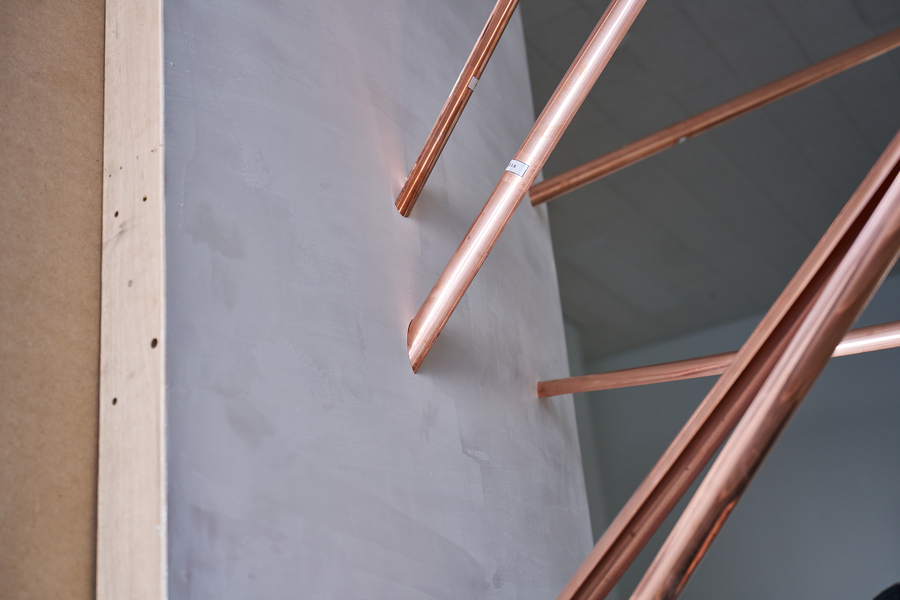
Goen Choi, Meridian (work-in-progress), 2026. Photo: Jongchul Lee. ©2026 Korean Pavilion.
As
a monument to “liberation space,” the Korean Pavilion is conceived as a site
where contrasting sensibilities—likened to a “fortress” and a “nest”—coexist.
Extending from this, the (liberation) movement enacted through the monument
will expand into an anthology, fellowship and network-based activities, and
eventually a homecoming exhibition.
Within
this framework, artists Goen Choi and Hyeree Ro—who have each developed
sculptural constructions and performative situations grounded in contrasting
sensory systems—intervene in the pavilion. Through their respective sculptural
installations and performances, titled Meridian and Bearing,
they open new pathways and forms of circulation within the space.
Choi’s
Meridian refers to both longitudinal lines and bodily energy
channels, while Ro’s Bearing signifies not only a mechanical
device that supports rotational movement, but also encompasses layered meanings
such as sustaining, enduring, redirecting, yielding, and giving birth. Within
stations constructed for autonomy and symbiosis, performers selected through an
open call will carry out specific rituals each day, moving through these
stations over the course of the exhibition.
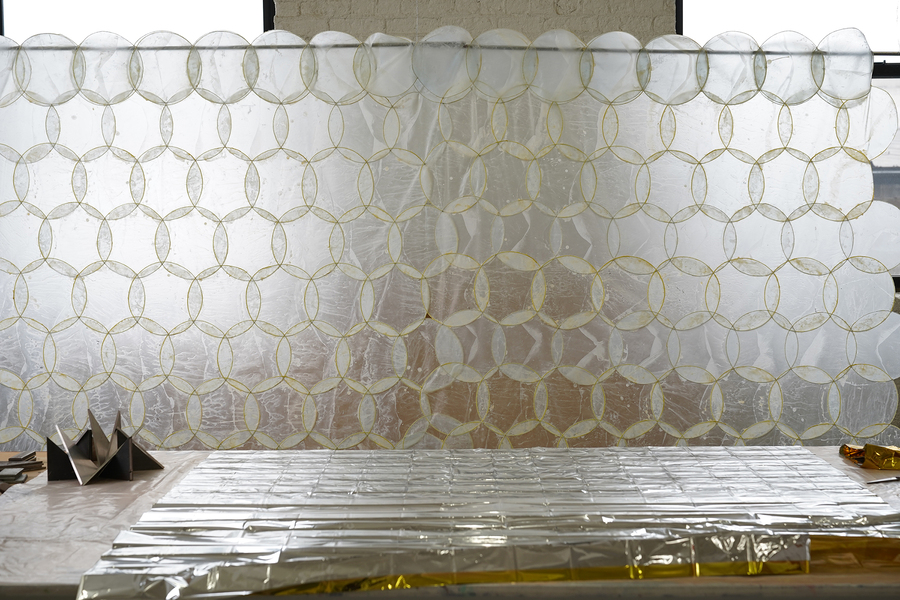
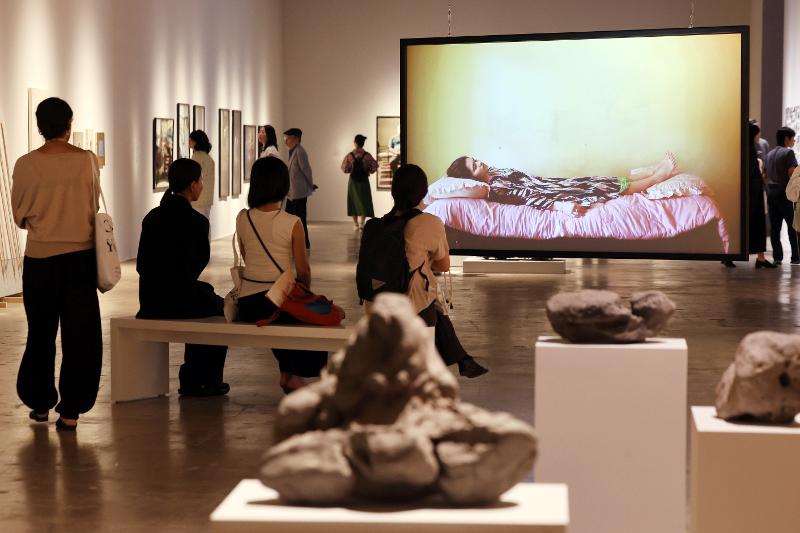
Hyeree Ro, Bearing (work-in-progress), 2026. Photo: Orlando Thompson. ©2026 Korean Pavilion.
《Liberation Space: Fortress/Nest》 extends
beyond a circle of fellow artists by inviting a wide range of creators and
activists from across cultural and social fields as fellows, thereby expanding
the Korean Pavilion’s sense of movement and solidarity as a monument to
“liberation space.” Invited fellows include farmer-activist Hooju Kim, artist
and singer Lang Lee, Nobel Prize–winning novelist Han Kang, photographer Yezoi
Hwang, and artist Christian Nyampeta.
Their
works and practices engage with specific moments in Korean history—such as the
“Candlelight Revolution,” the impeachment protests following the December 3
martial law declaration, the Gwangju Uprising, and the Jeju April 3rd Uprising
and Massacre—and will be articulated through their presence and voices within
Bearing and its stations.
In
addition, the Korean Pavilion will, for the first time, collaborate with the
Japan Pavilion in the Giardini—featuring artist Ei Arakawa-Nash and curated by
Takahashi Mizuki and Horikawa Lisa—marking an unprecedented partnership between
the only two Asian national pavilions in the Giardini. This gesture signals the
necessity of continuing the practice of liberation beyond historical tensions
and oppositions.
Furthermore,
during the exhibition period, leading organizations from Korea and around the
world engaged in practices of “liberation space” will be invited to form a
network. Through their collaboration, a concrete vision of this imagined
liberation space will be articulated in a subsequent homecoming exhibition.
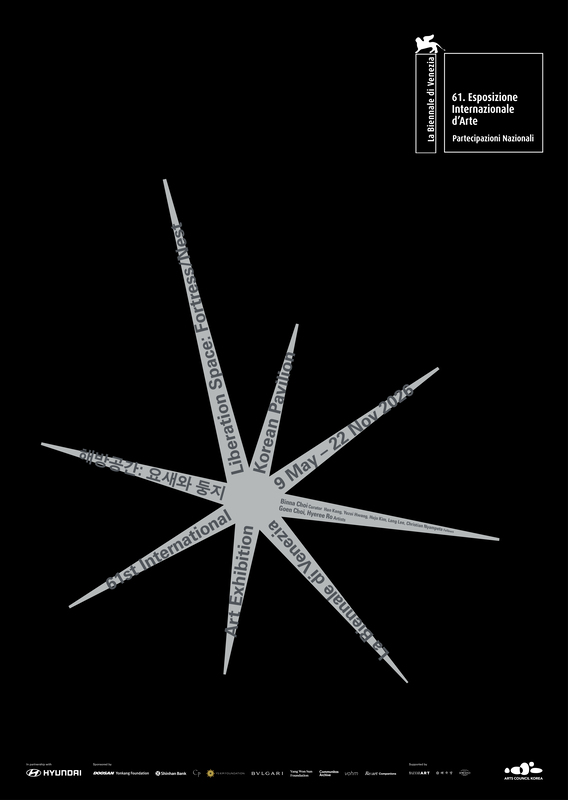
Poster image of the 61st International Art Exhibition - La Biennale di Venezia Korean Pavilion ©2026 Korean Pavilion.
The
homecoming exhibition, to be held at the ARKO Art Center in 2027, will go
beyond a retrospective or reenactment of the Venice presentation, instead
taking the form of a platform for mutual learning and collaboration grounded in
cultural and artistic practices.
In
addition, an anthology (reader) serving as an archive of both the Korean
Pavilion exhibition at the Venice Biennale and the subsequent homecoming
exhibition will be published in two volumes—one for each exhibition. Following
the homecoming show, a traveling exhibition is also planned, including a
presentation at the Korean Cultural Center Los Angeles.
Meanwhile,
the International Art Exhibition of the Venice Biennale, which began in 1895,
is the world’s oldest and one of the most influential international art events.
The 61st edition in 2026 will run for approximately seven months, from May 9 to
November 22, across venues including the Giardini and the Arsenale in Venice.
The
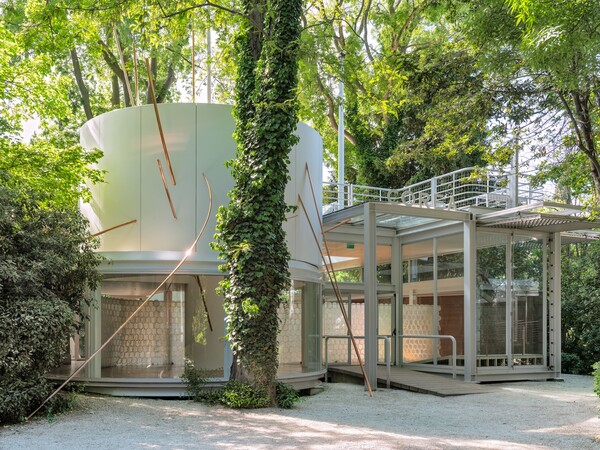
Korean Pavilion will hold its press opening on May 6 at 11 a.m. for Korean
media and at 1 p.m. for international press, followed by the official opening
ceremony at 4 p.m.