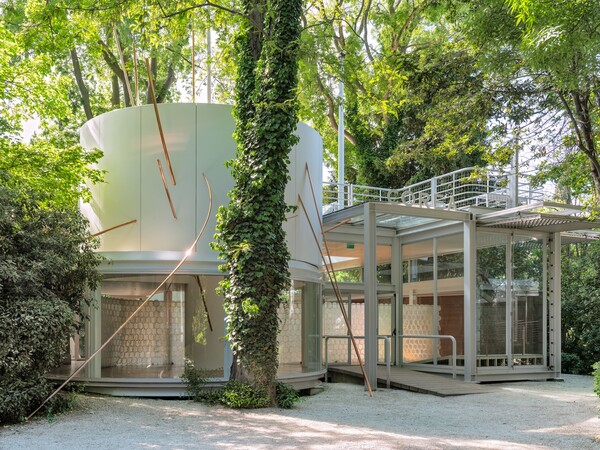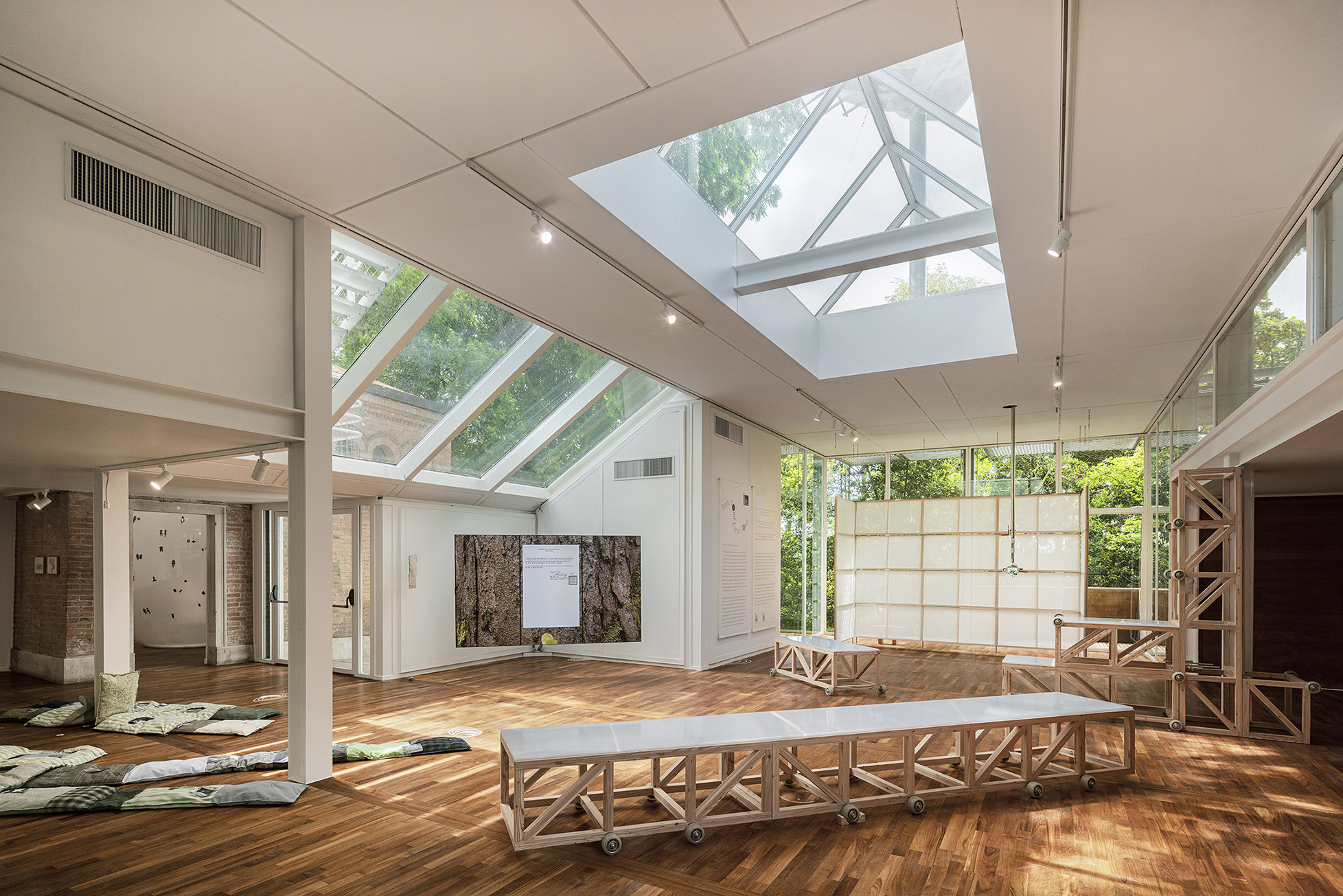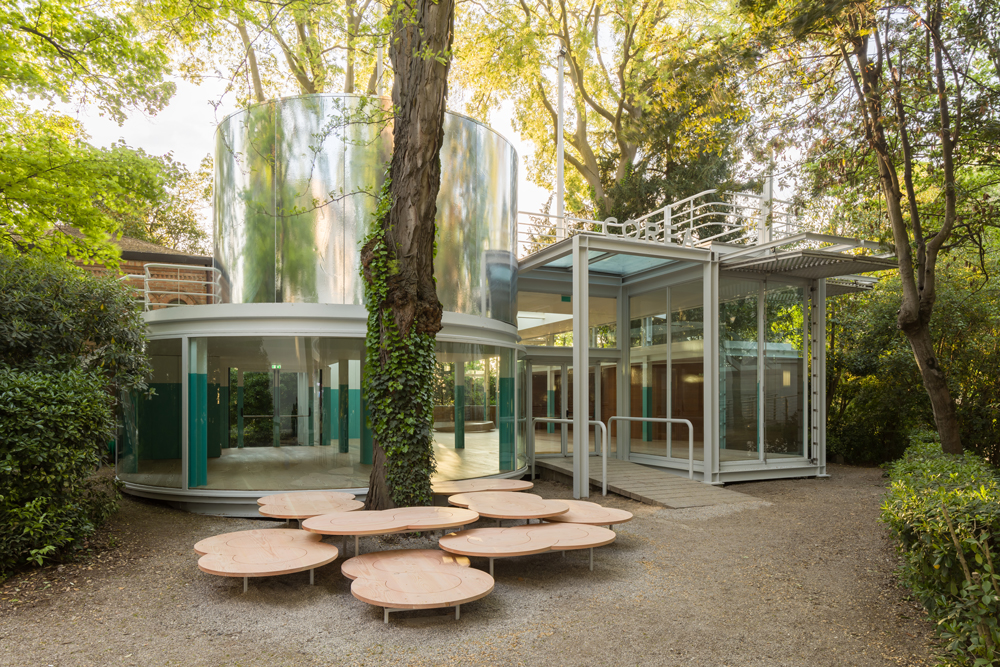

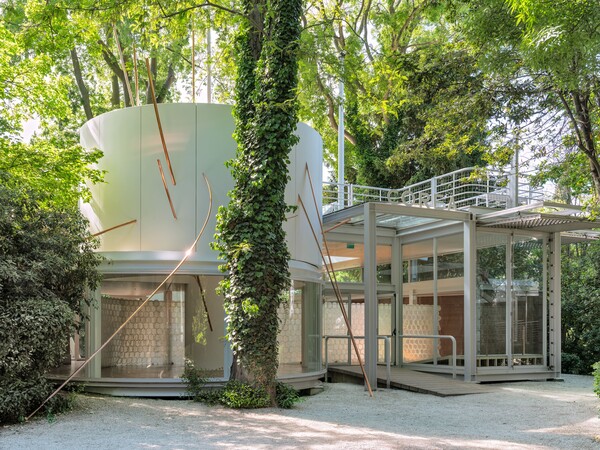
Installation view of the Korean Pavilion, 2026. Photo by Donghwan Kam. © ARKO
On May
9, the Korean Pavilion exhibition 《Liberation Space:
Fortress/Nest》 at the 61st Venice Biennale was
unveiled. The exhibition is curated by artistic director Binna Choi and
features works by artists Hyeree Ro and Goen Choi.
The
Korean Pavilion is one of the 30 permanent national pavilions representing 32
countries located in the Giardini of the Venice Biennale, and it opened in 1995
as the 26th pavilion. Drawing on this historical and spatial context, the
exhibition presents the sensibilities of modern Korean history alongside
contemporary modes of thought to an international audience.
The
exhibition frames the Korean Pavilion as a temporary monument to “liberation
space,” understood both as a historical transitional moment and as an ongoing
site of movement. Artistic director Binna Choi focuses on the pavilion’s
contrasting qualities—as a “fortress” associated with boundaries and defense,
and as a “nest” that shelters and nurtures life. Through the sculptural
installations and performative practices of the two participating artists, the
exhibition reexamines the relationships between body, space, and material.
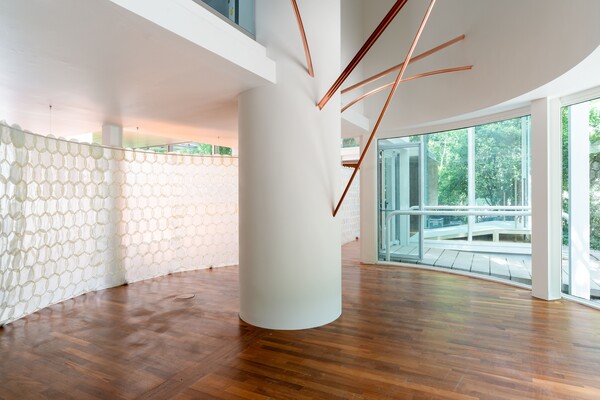
Installation view of the Korean Pavilion, 2026. Photo by Donghwan Kam. © ARKO
Goen
Choi presents Meridian, a sculptural installation using
copper pipes to evoke the flows of body and space suggested by meridians and
energy channels, while Hyeree Ro expands the notions of support, transition,
and coexistence into a performative practice through Bearing,
composed of an organza-structured 움/막 (shelter) and eight stations.
At each
station, performers selected through an open call carry out specific rituals
daily throughout the exhibition period, transforming the Korean Pavilion from a
fixed exhibition site into a space where movement and relationships
continuously emerge.
The
exhibition also broadens the pavilion’s sense of movement and solidarity as a
monument to liberation space by inviting not only fellow artists but also
creators and activists from diverse cultural and social fields as fellows. The
invited fellows include activist-farmer Huju Kim, writer and singer Lang Lee, Nobel
Prize-winning novelist Han Kang, photographer Yezoi Hwang, and artist Christian
Nyampeta.
Their
contributions are either included in Liberation Space: Reader (1)
or installed within the stations that constitute Bearing.
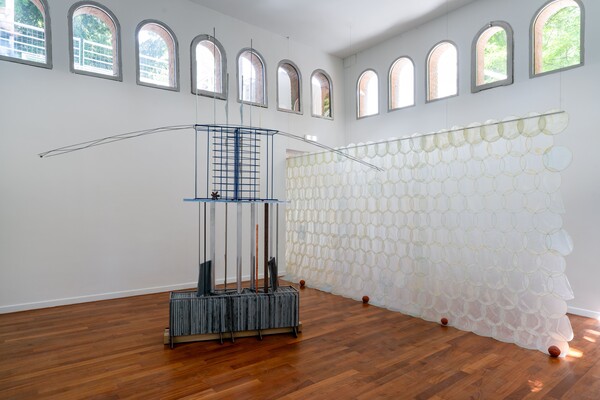
Installation view of the Korean Pavilion, 2026. Photo by Donghwan Kam. © ARKO
Liberation
Space: Reader (1) forms a key component of the exhibition. The
publication includes the artistic director’s curatorial notes, conversations
between the artists and fellows, as well as writings and images contributed by
the fellows. It also features essays by sociologist Avery F. Gordon and Native
Hawaiian scholar, poet, and activist Jamaica Osorio.
In her
essay, Avery F. Gordon examines the historical “liberation space” of Korea
through the lens of the Yeosu–Suncheon Incident, expanding its interpretations
and meanings. Meanwhile, Jamaica Osorio redefines the concepts of “liberation”
and “sovereignty” through the ideas of care and sanctuary. The publication can
be accessed at the “Sharing Station” within the exhibition space and is also
available through the exhibition website(https://pavilion2024dev.github.io).
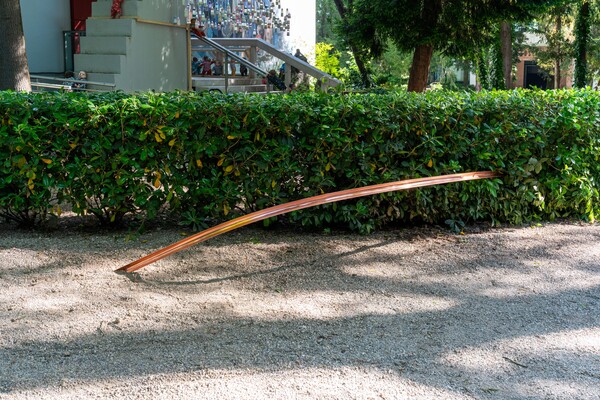
Installation view of the Korean Pavilion, 2026. Photo by Donghwan Kam. © ARKO
The
Korean Pavilion is also presenting the first-ever collaboration between the
only two Asian national pavilions in the Giardini: the Korean and Japanese
Pavilions. Beginning with a joint breakfast event during Art Basel Hong Kong
last March, the collaboration continues through exhibition-based works and
performance programs.
In
connection with the Japanese Pavilion exhibition 《Grass
Babies, Moon Babies》, part of Goen Choi’s
Meridian extends into the Japanese Pavilion site, crossing
the grove that functions as a boundary between the two national pavilions. In
addition, a “Liberation Space Monument” guide is stationed within the Japanese
Pavilion, expanding the visitor pathway into part of the Korean Pavilion
exhibition.
Meanwhile,
the “bearer” performing Hyeree Ro’s Bearing takes a baby
doll—one of the central elements of the Japanese Pavilion exhibition—on a daily
walk to the Korean Pavilion, circulating through the eight stations that
compose Bearing.
Regarding
the exhibition, Lee Bum-Hun, Chairperson of the Arts Council Korea, stated that
it is “an attempt to expand the historical context of modern Korean history
through the concept of ‘liberation space’ into a contemporary sensibility and
to share it within the international art scene.” He added that “rather than
remaining a singular outcome, the exhibition proposes new possibilities for the
Korean Pavilion through its expansion into performance, collaboration, and
networks.”