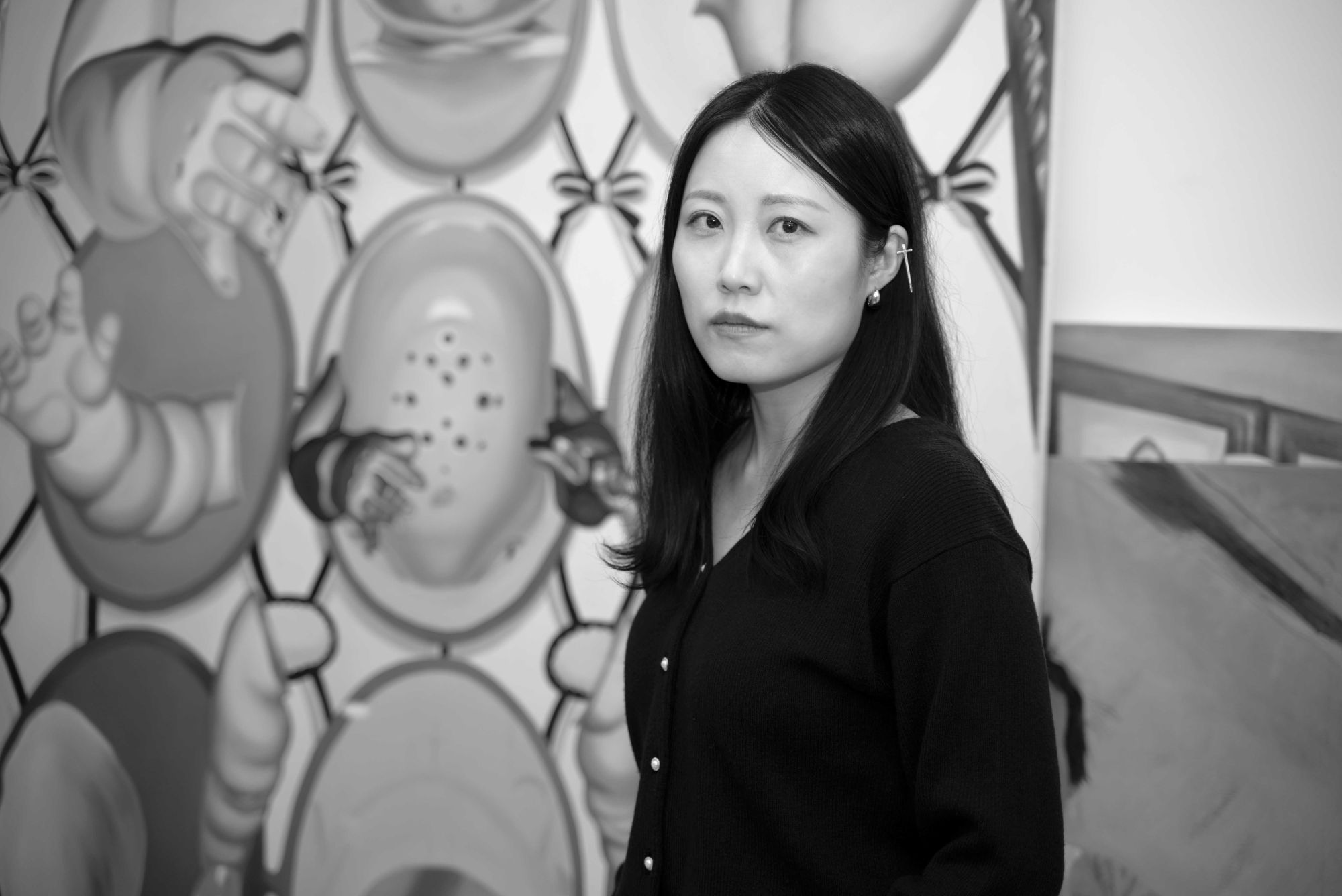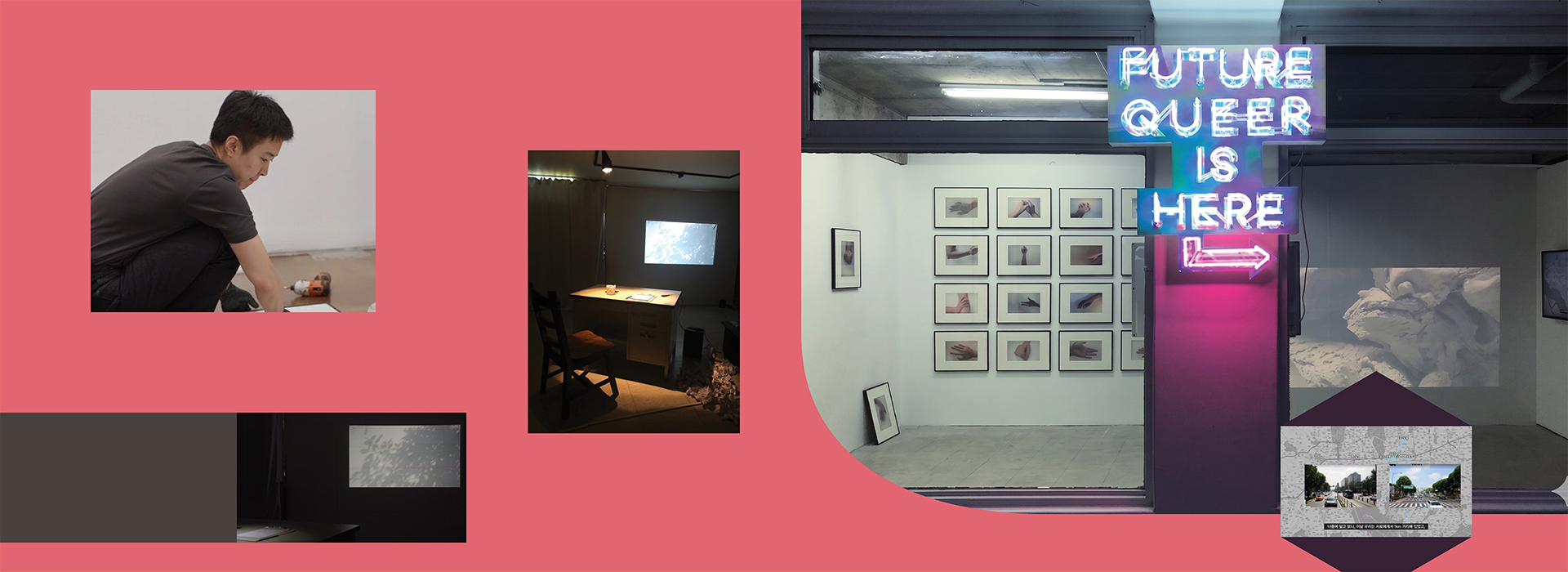

Critical Hit (b. 1988) records the voices
of socially marginalized individuals through a range of media including
painting, drawing, and video, while revealing the realities in which these
lives are omitted or distorted within biased social structures. Centering
practices of solidarity and direct engagement in the field, the artist has
developed a visual language that confronts social inequality and hierarchical
systems.
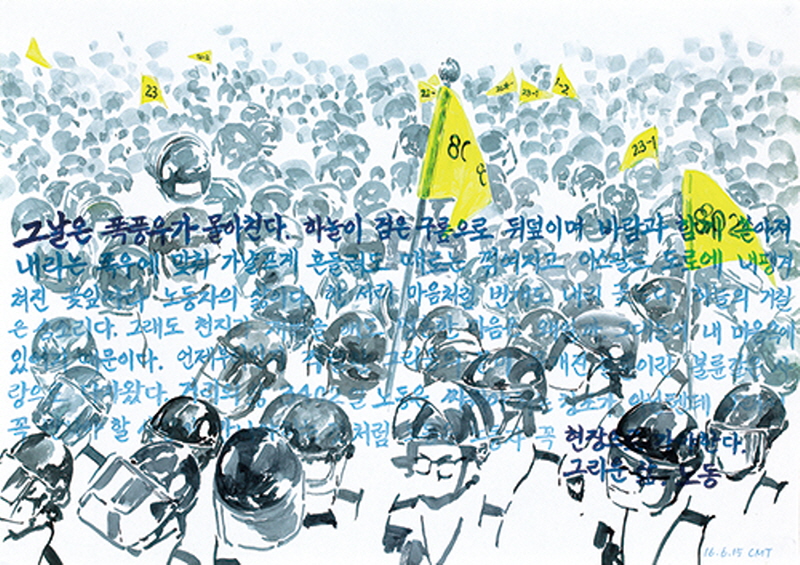
Critical Hit, Facebook Drawing, 2016 © Critical Hit
In her early works, Critical Hit sought to
overturn existing systems that sustain discriminatory orders while attempting
to construct alternative worldviews. For example, in the 2016 solo exhibition 《News Feed》, the artist drew attention to
contemporary events overlooked by mainstream public media through the small and
personal voices circulating on social media platforms, translating them into
drawings.
At the time, incidents including the
ongoing calls to uncover the truth behind the Sewol Ferry Disaster were
unfolding one after another. Encountering these stories through Facebook,
Critical Hit began drawing in the hope that such voices would not simply
disappear or fade away.
She first gathered posts from her Facebook
news feed that felt too urgent to ignore — events that demanded solidarity,
carried pressing significance, or contained crucial social contexts. She then
researched articles and photographs related to each incident, reconstructing
texts and images marked by distinctly personal perspectives into her drawings.
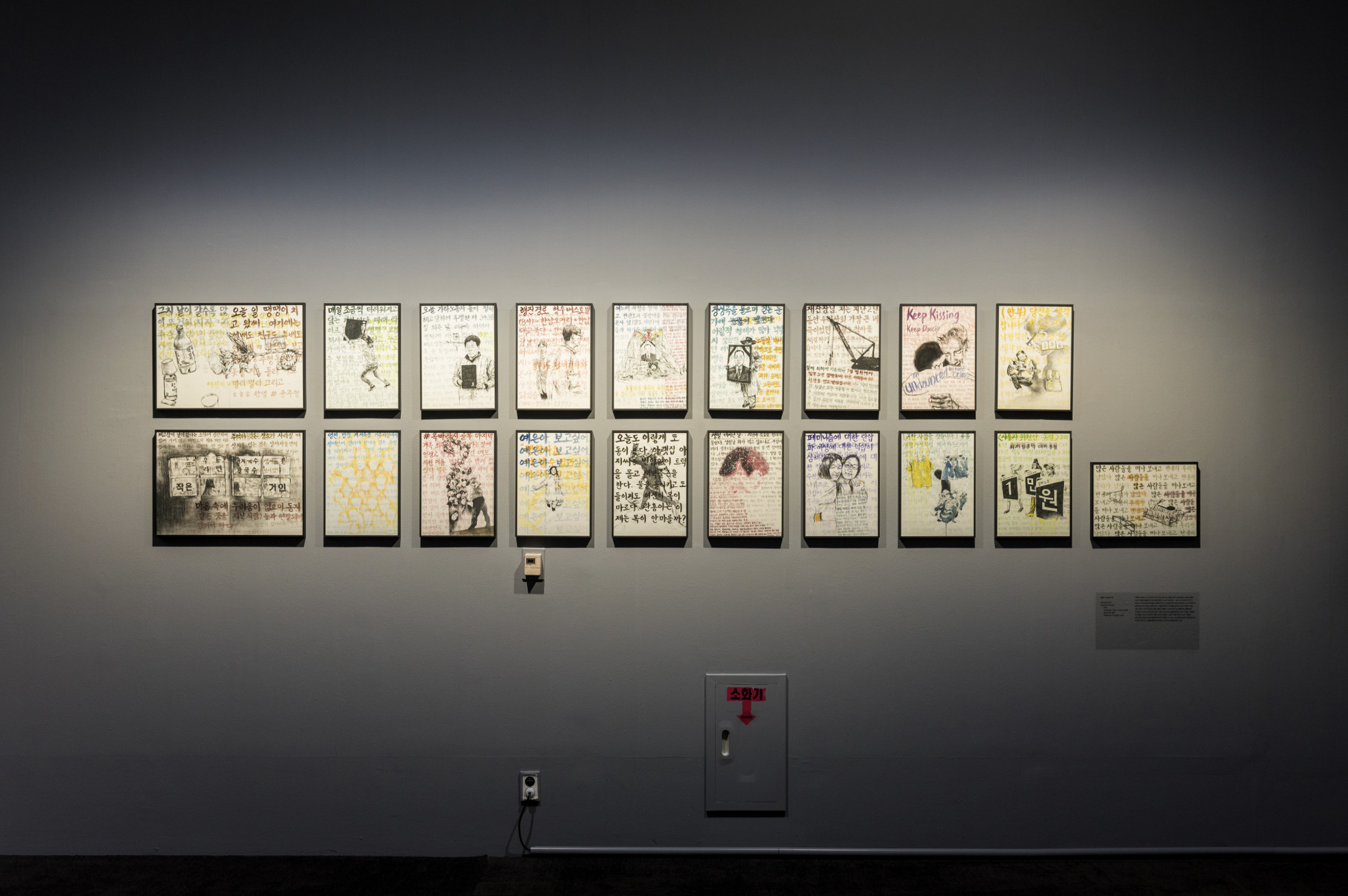
Critical Hit, Facebook Drawing, 2016 © Critical Hit
On Facebook, the news feed is quickly
filled with new posts and advertisements the moment one looks away, causing
previous stories to be swept aside and forgotten. Critical Hit saw in this
rapid cycle of overwriting, replacement, and forgetting a resemblance to the
ways social incidents themselves disappear from public consciousness.
Through her drawings, the artist attempted
to hold onto the events and voices that continuously receded from the timeline
like an ebbing tide each day, preserving these social incidents as collective
memories that would not be so easily washed away.
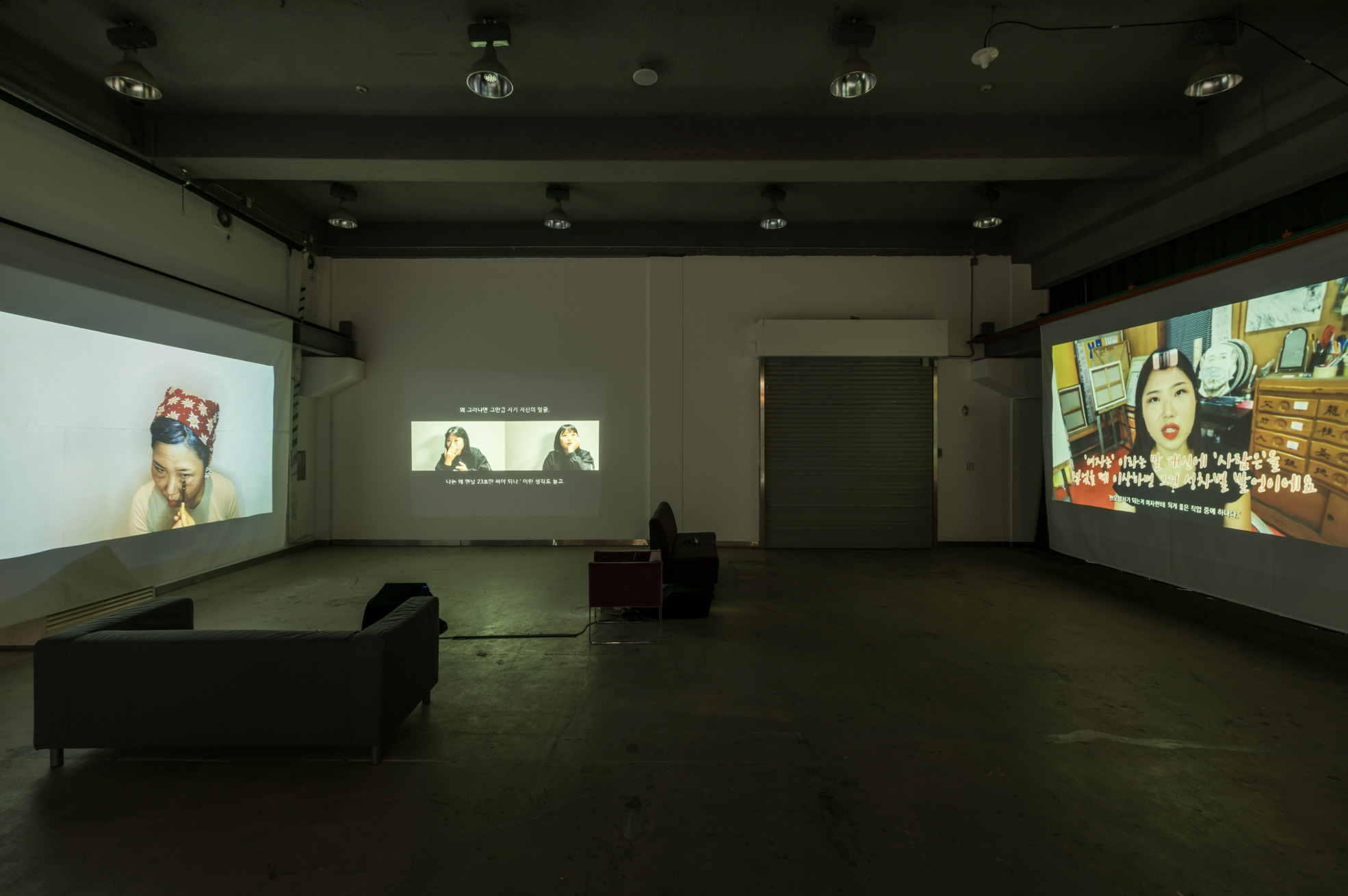
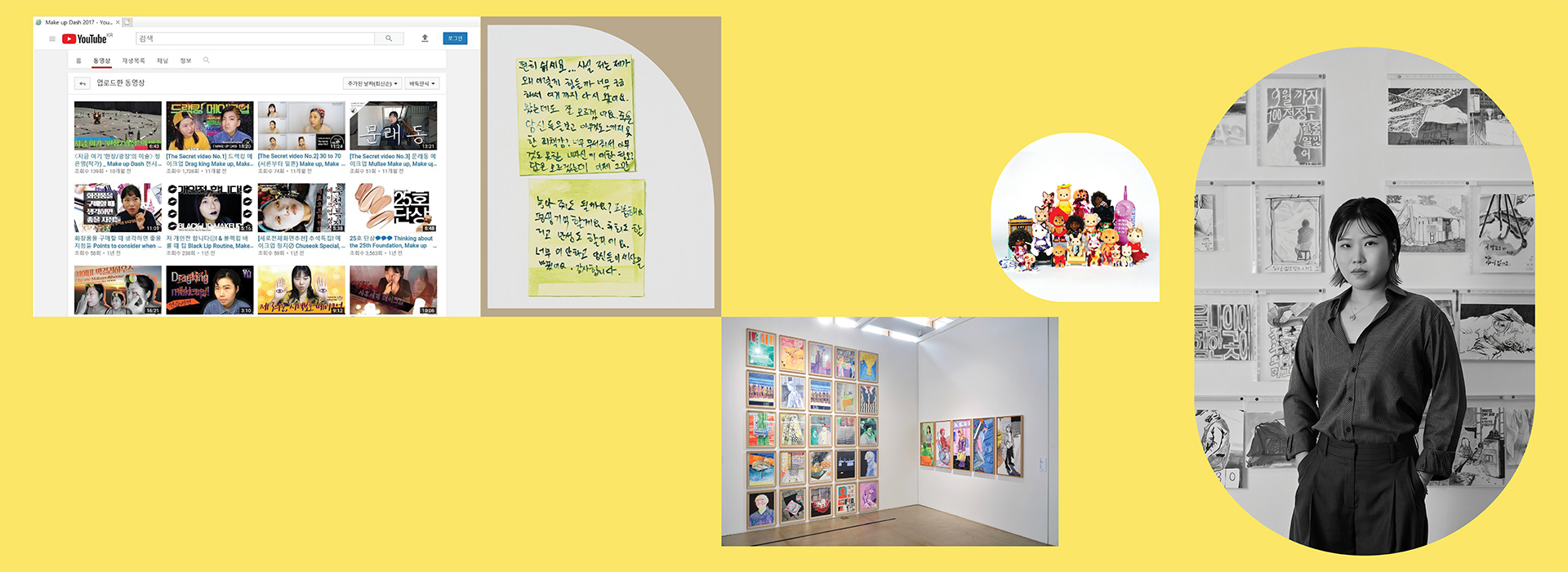
Installation view of 《Make up Dash》 (Seoul Art Space Mullae StudioM30, 2017). Photo: Hong Cheolki. © Critical Hit
In the following year’s solo exhibition 《Make up Dash》, Critical Hit appropriated the
technique of “makeup” to call attention to fixed perceptions surrounding women
and queer individuals, while proposing another mode of solidarity with them.
The project began from the artist’s experience of watching makeup-related
content on YouTube and feeling a sense of discomfort toward it.
In beauty YouTube channels primarily
targeting women, phrases such as “being loved by your boyfriend,” “plastic
surgery makeup,” and “being pretty is everything” appeared repeatedly. The
artist recalls feeling that these messages framed women’s appearance as a form
of “competitiveness,” creating pressure to become beautiful by any means
necessary.
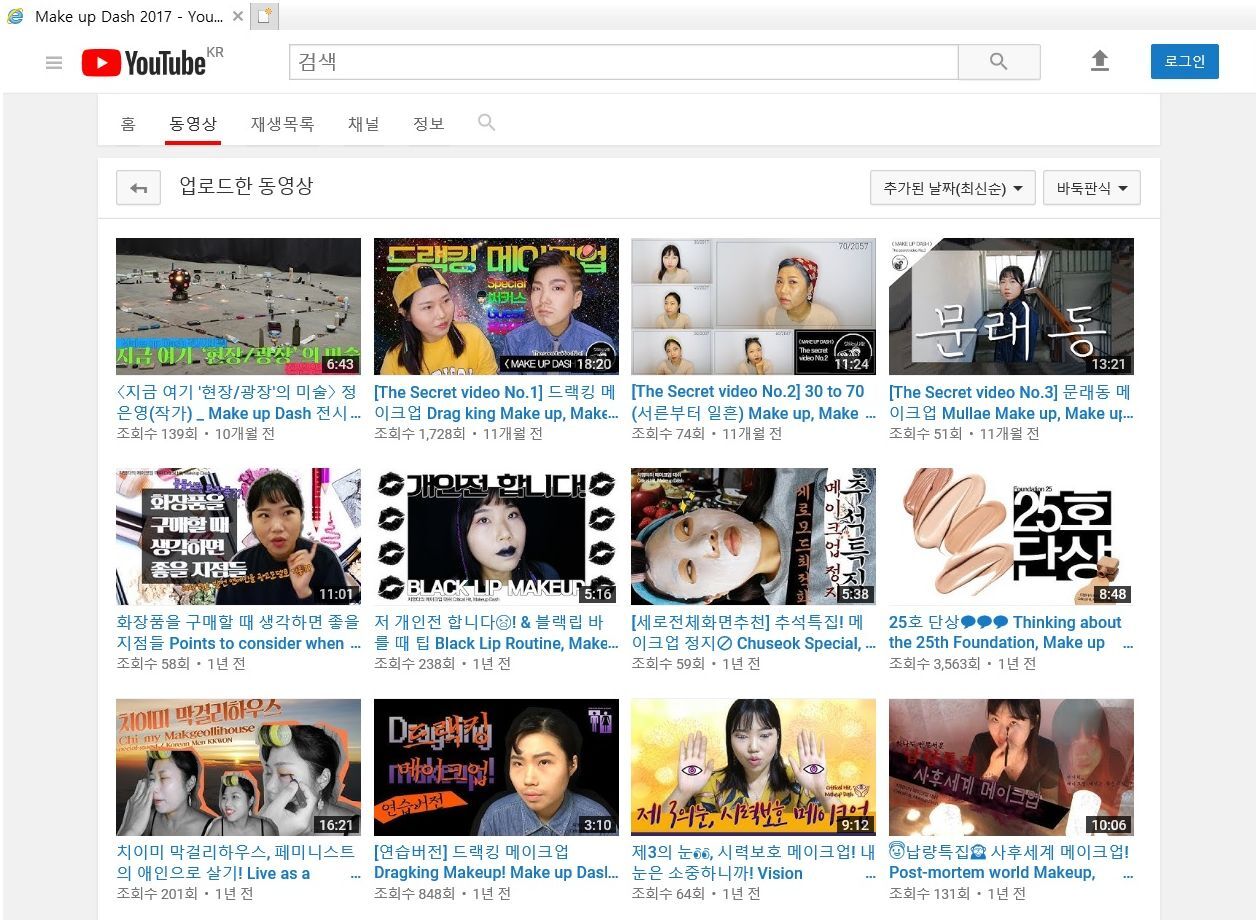
Critical Hit, Make up Dash, 2017, 25 broadcasts, 2 live broadcasts, 1 exhibition critique © Critical Hit
These uncomfortable aspects, however, were
not simply problems inherent to individual YouTubers, but rather stemmed from
broader social standards that define “femininity.” Within socially constructed
ideals of beauty, women are expected to wear makeup while appearing as though
they are not wearing any at all, while at the same time being expected to
maintain bare faces that look flawlessly made-up and without blemish.
Critical Hit critically examines these
standards, which operate with particular harshness toward women, and
appropriates the format of beauty YouTubers’ broadcasts as a way of moving
through and exposing their contradictions. Through this strategy, the artist
attempts to transform formats that reproduce discrimination and hatred into
structures capable of revision, intervention, and change.
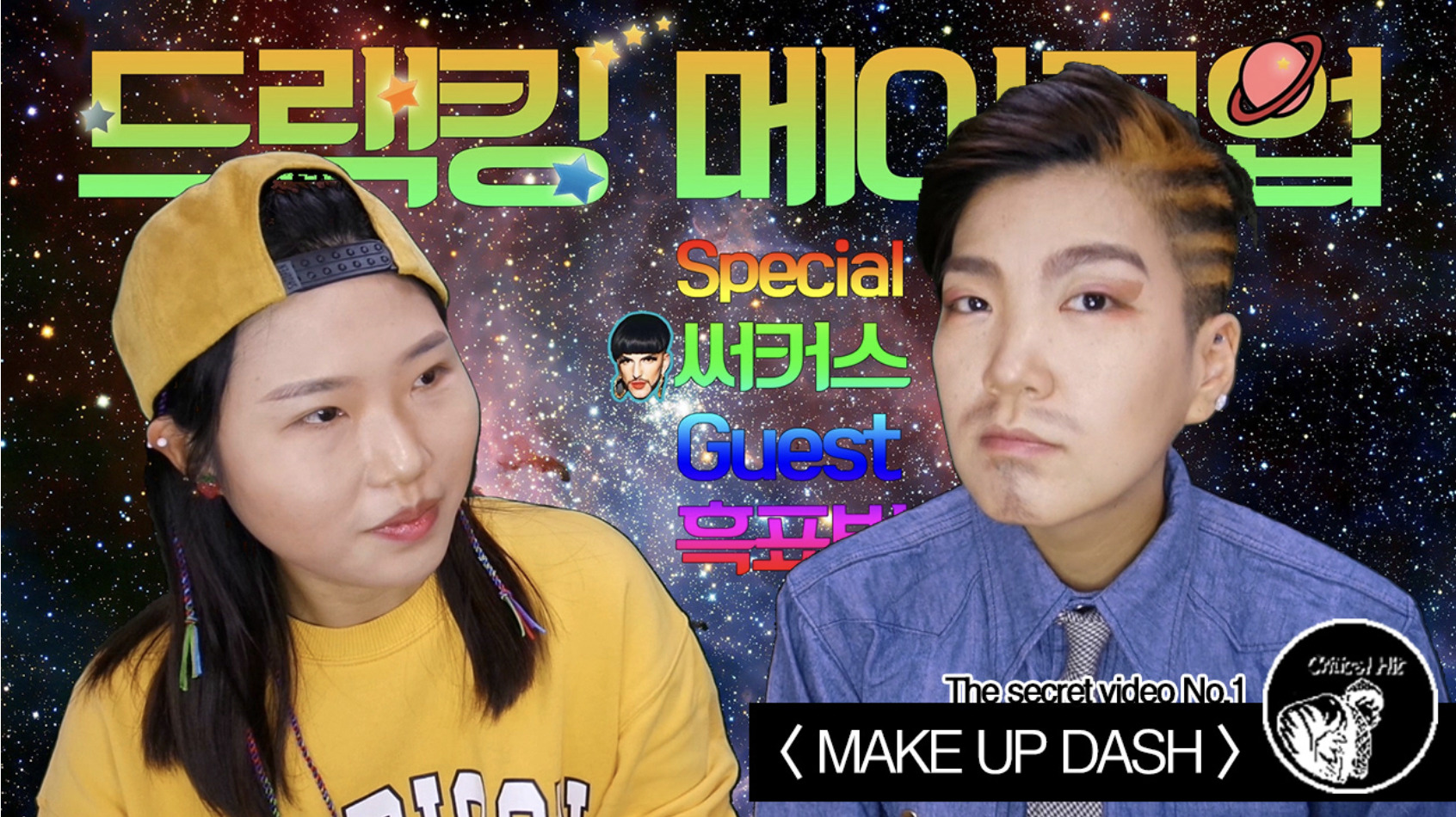
Critical Hit, Drag King Make up, 2017, Single-channel video in YouTube, 18min 20sec. © Critical Hit
In the resulting work ‘Makeup Dash’ series
(2017), Critical Hit becomes a beauty YouTuber herself, presenting one makeup
look each week while using the process as a platform to discuss women’s rights
and gender equality. At first glance, her channel appears little different from
those of other beauty creators, yet the purpose of her makeup is not to appeal
to or please others.
For instance, through different makeup
concepts, the artist addresses social and political issues: resisting
discrimination and hatred (Struggle makeup), exposing the
marginalization of female characters relegated to supporting roles
(Doraemon Makeup), and questioning the foundation market
dominated by shades labeled “No. 21” and “No. 23” (Thoughts on No.
25).
In this sense, ‘Make up Dash’ attempts to
subvert what society defines as the most “feminine” act — makeup itself — in
order to challenge the norms associated with femininity.
At the same time, the artist also used
makeup to confront prejudices embedded within a world divided rigidly between
male and female identities. During queer festivals held throughout the project
period, she expressed solidarity through works such as Rainbow Makeup,
while Drag King Makeup — created by a heterosexual cisgender
woman seeking to explore her own masculinity — challenged the logic of gender
binaries.
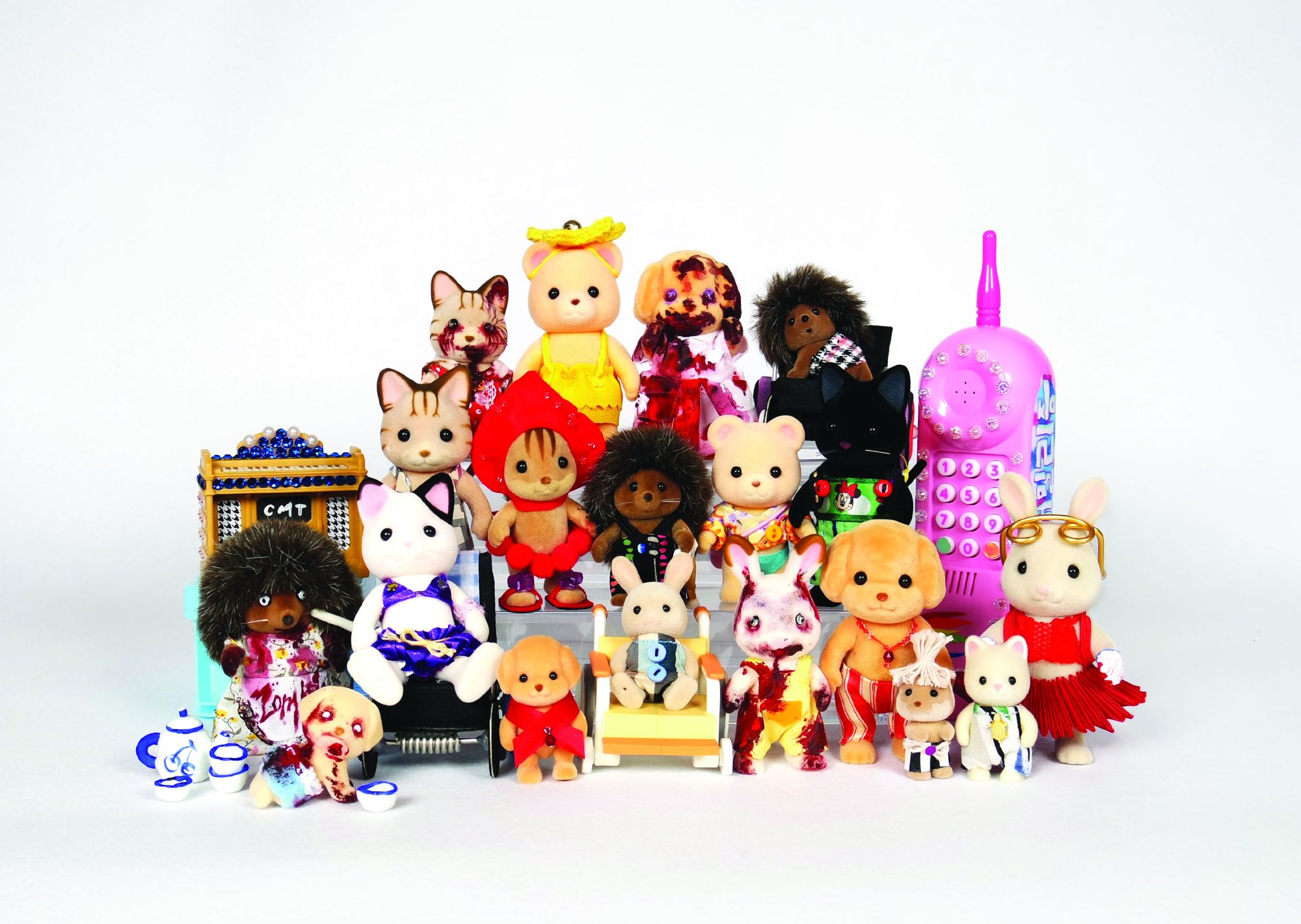
Critical Hit, Sylvanian Familism, 2019, Single-channel video, 5 episodes, 32min 55sec. © Critical Hit
The 2019 video work Sylvanian
Familism by Critical Hit likewise centers on themes of solidarity.
Using Sylvanian Families animal figurines, the artist created a puppet theater
grounded in a feminist perspective. Reconfiguring the toy franchise’s original
worldview — which idealized the conventional nuclear family — she introduced a
community inhabited by diverse minorities and marginalized identities.
Through this work, the artist proposes the
possibility of people with different backgrounds and attributes living
together, while attempting an artistic intervention aimed at envisioning a
society free from discrimination.
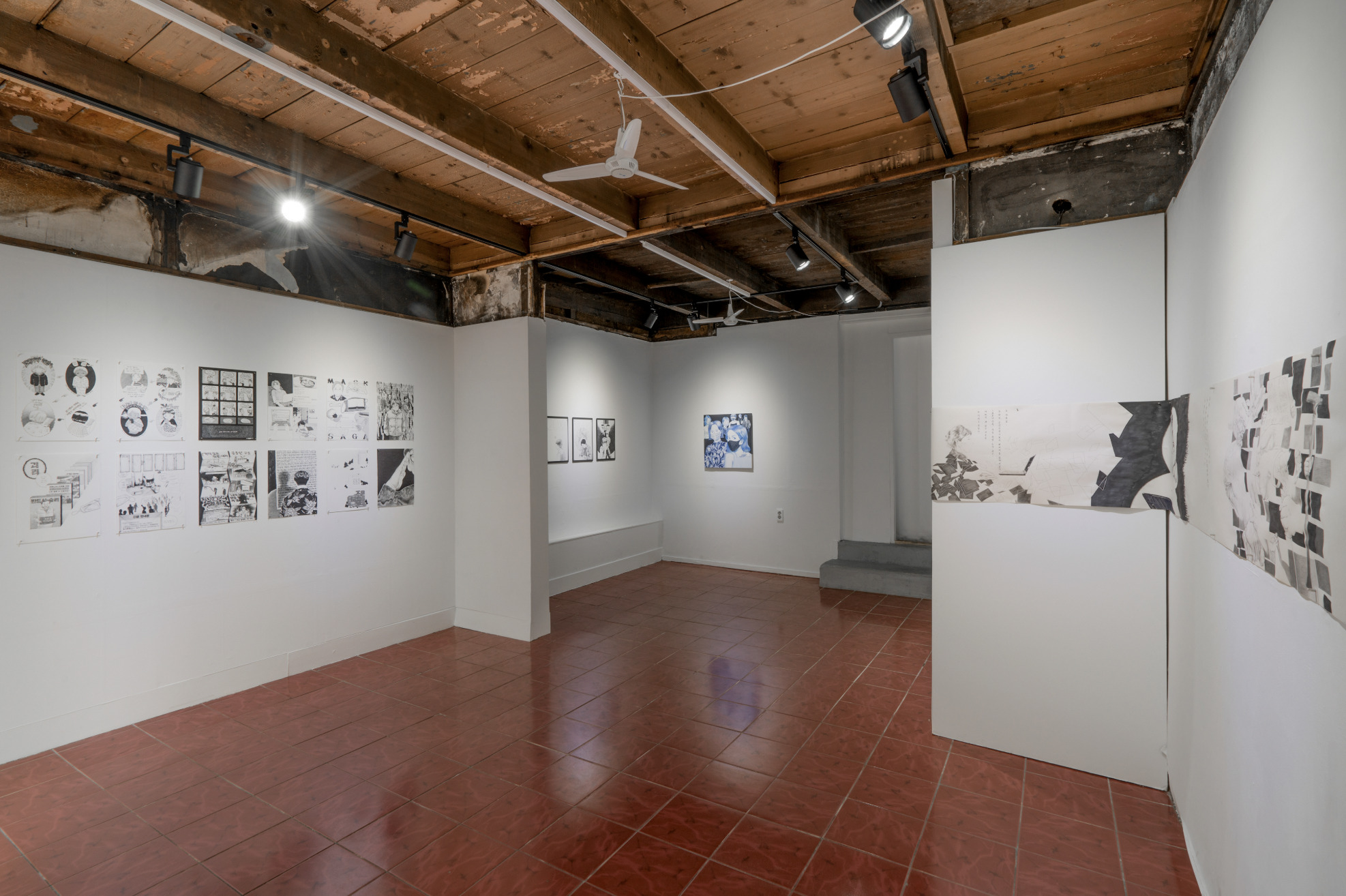
Installation view of 《Disaster Drawing》 (Space Imsi, 2021). Photo: Chulgyu Jin. © Critical Hit
Meanwhile, following the outbreak of the
COVID-19 pandemic, Critical Hit began producing works that visualize the
everyday lives of minorities made even more vulnerable by disaster. Emerging
from this context, the 2021 solo exhibition 《Disaster
Drawing》 articulated the unequal social structures
revealed through the disaster of COVID-19 by borrowing the format of an
illustrated catalogue or encyclopedia.
Through the lives of minorities who
inevitably become the most vulnerable in times of crisis, the artist exposes
how social systems had already been excluding certain individuals long before
the disaster itself, and how the pandemic merely functioned as a catalyst that
made these preexisting inequalities visible.
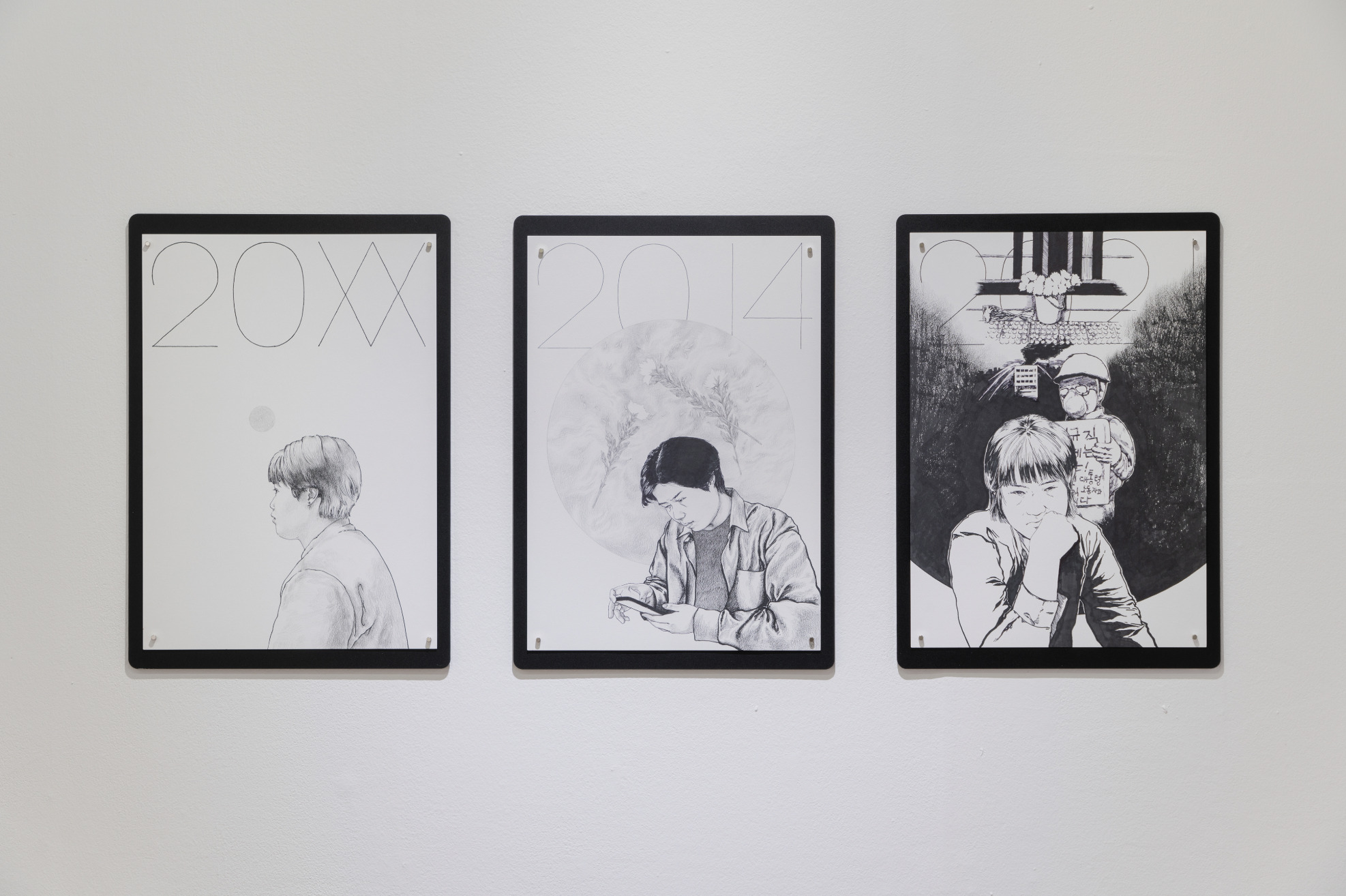
Installation view of 《Disaster Drawing》 (Space Imsi, 2021). Photo: Chulgyu Jin. © Critical Hit
The drawing project ‘Disaster Drawing,’
which shares its title with the exhibition, takes the form of a “catalogue,”
yet it is not concerned with explaining how the coronavirus emerged or what
kinds of quarantine systems were implemented to contain it.
Instead, Critical Hit collects fragments of
unequal social structures that were exposed through the pandemic as a catalyst,
documenting the problems faced by those living within vulnerable social
conditions.
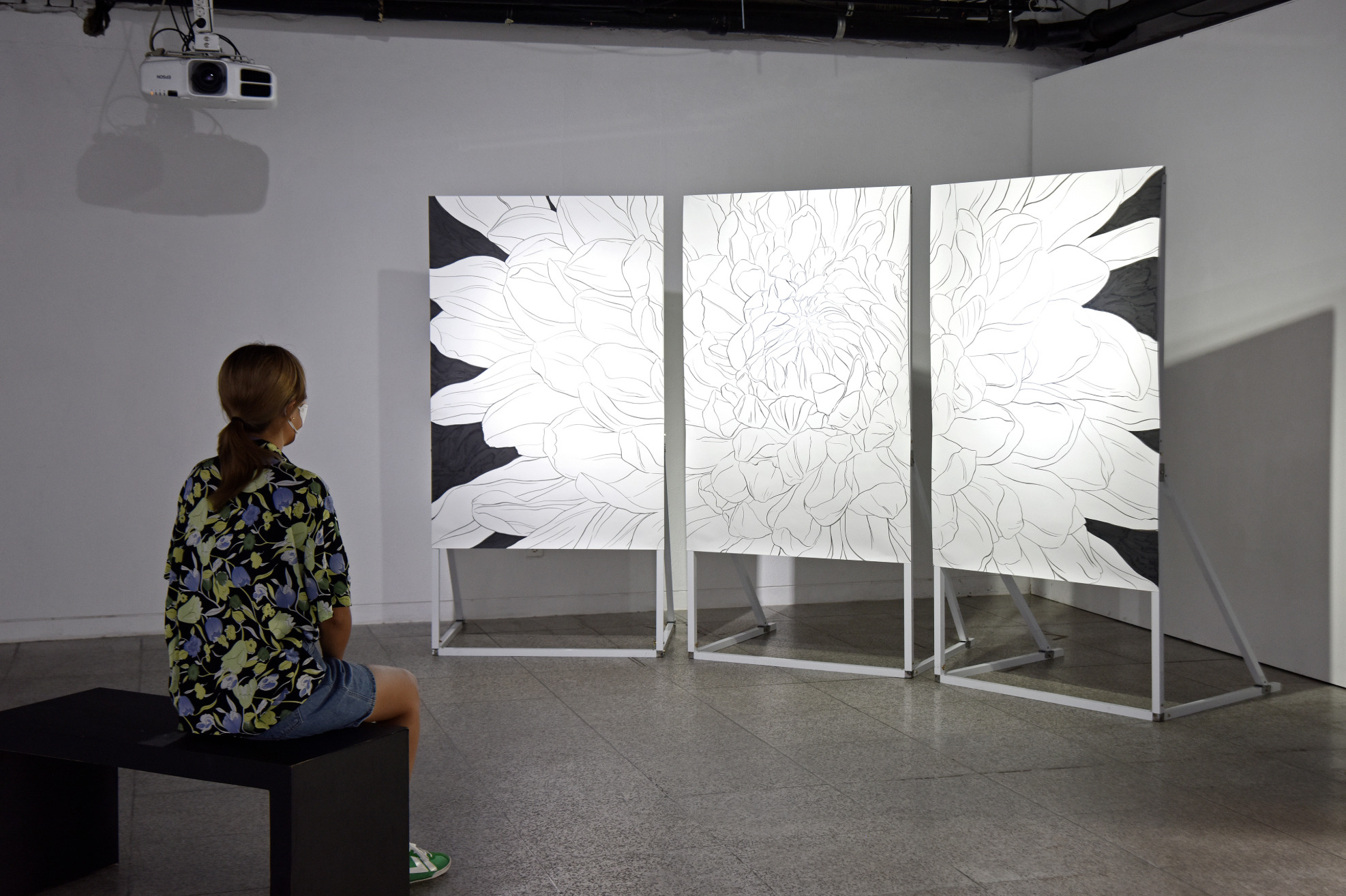
Installation view of 《Under the Paper》 (Post Territory Ujeongguk, 2022) © Critical Hit
The 2022 solo exhibition 《Under the Paper》, held at Post Territory
Ujeongguk, extended the ‘Disaster Drawing’ project by examining the problems
that emerged as an unequal society began to collapse under the disaster of
COVID-19.
In particular, through this exhibition,
Critical Hit sought to consider what kinds of unresolved knots a community must
confront first when attempting to respond to a pandemic through technology and
politics alone, without practices of mourning or solidarity.
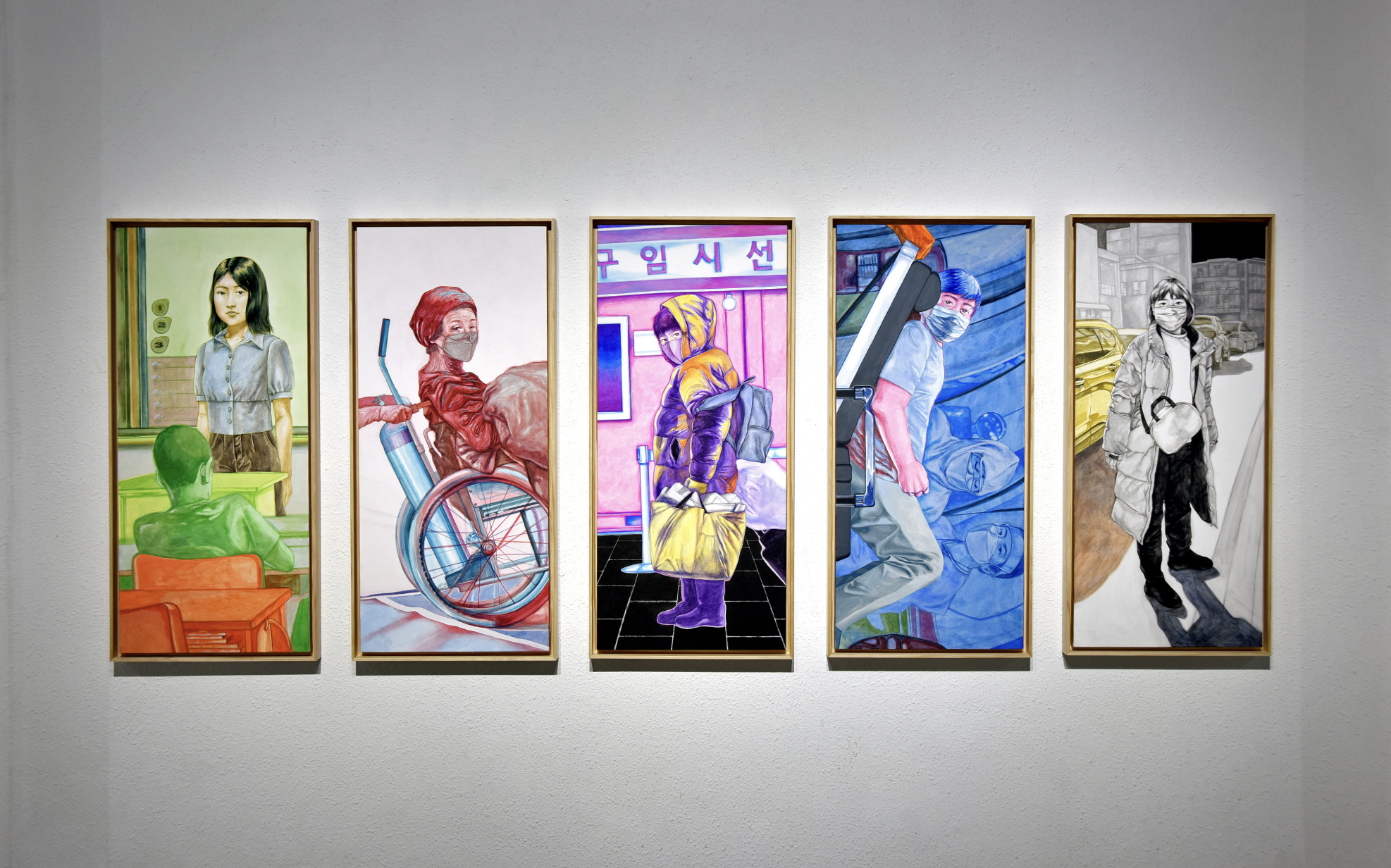
Installation view of 《Under the Paper》 (Post Territory Ujeongguk, 2022) © Critical Hit
Beyond the material simplicity implied by
the phrase “under the paper,” Critical Hit sought to address the realities
faced by minorities who can prove their existence only through official
documents, as well as broader social conditions in which entire lives are
reduced to a single sheet of paper.
This includes the reality of unhoused
individuals who could eat only by presenting weekly negative COVID test
certificates, migrants who were required to produce health insurance cards in
order to purchase public masks, and families forced to turn away from nursing
homes after staring only at official notices posted on the doors, unable to see
their loved ones.
By recalling those forgotten beneath the
slogans of recovery and healing, Critical Hit visualizes the conditions they
endured, ultimately asking what values must not be forgotten in order to
rebuild a sense of community after disaster.
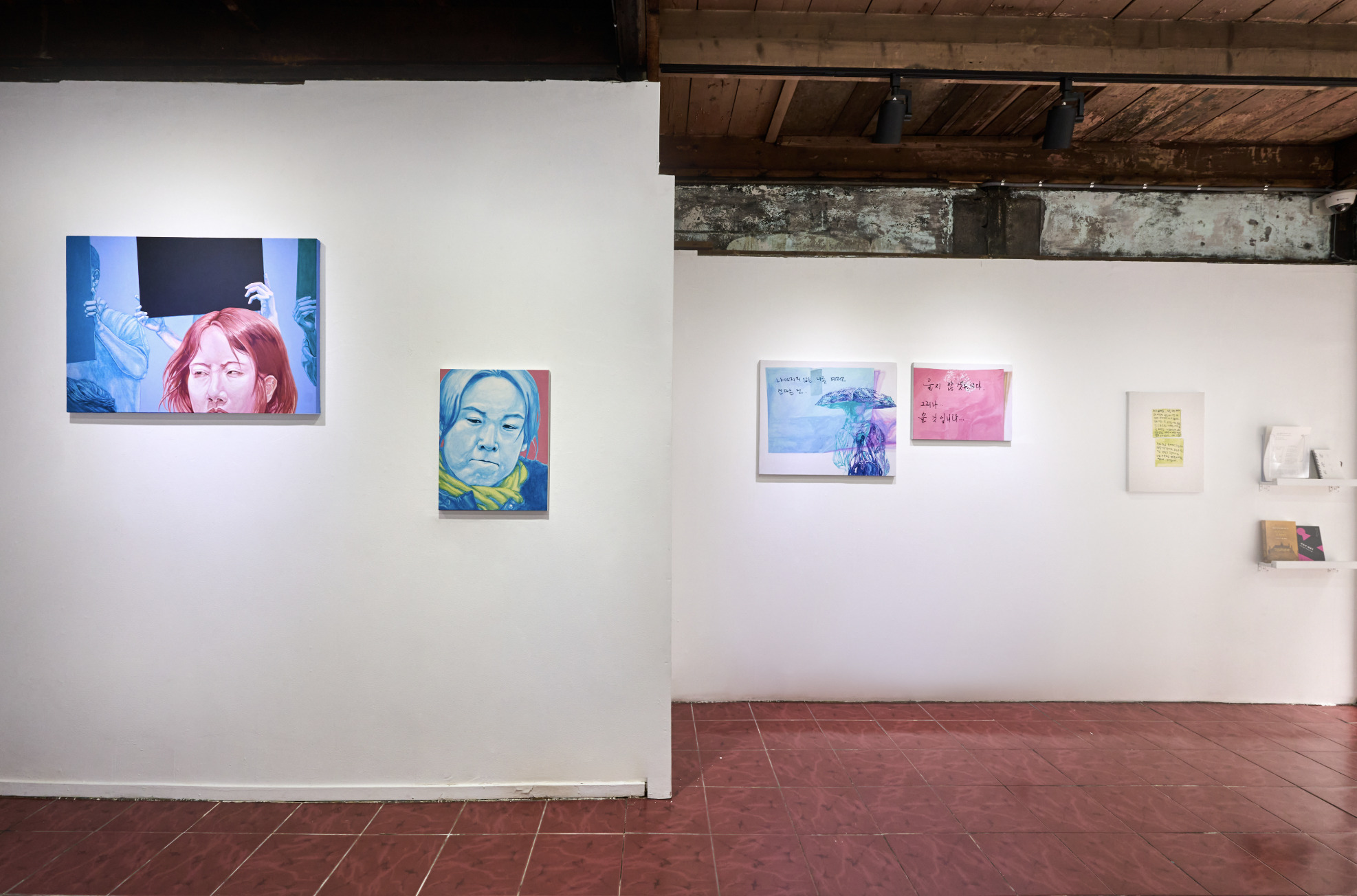
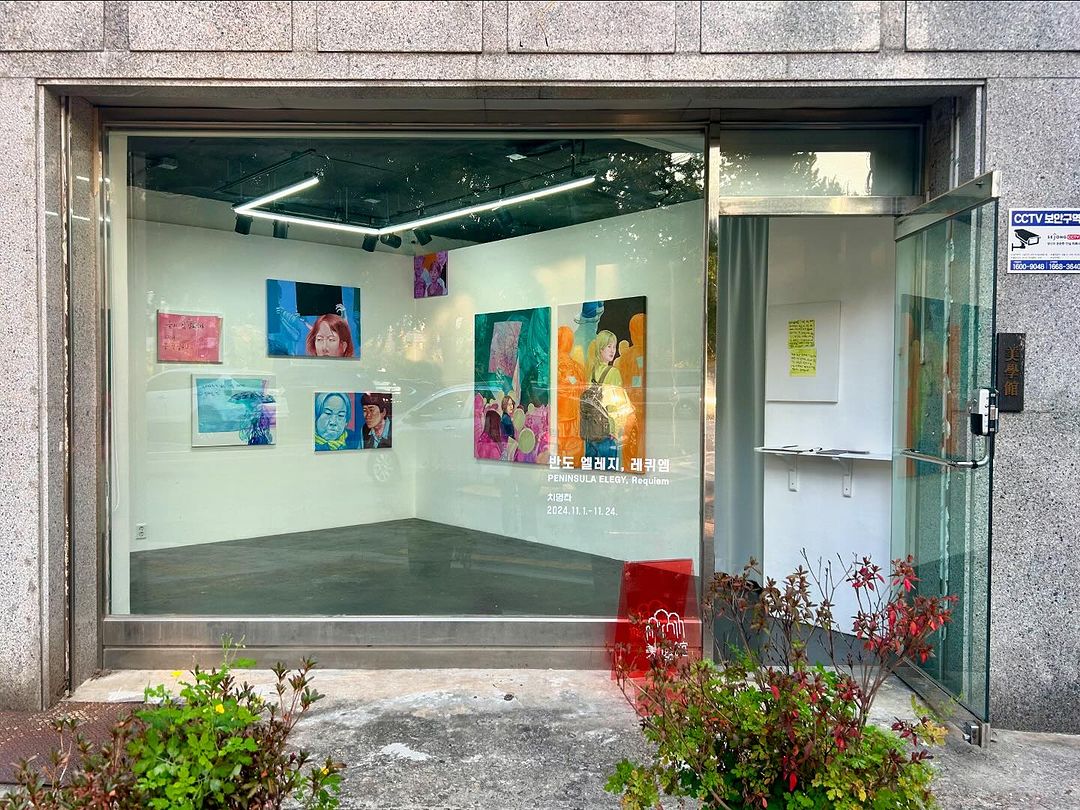
Installation view of 《PENINSULA ELEGY》 (Space Imsi, 2024). Photo: Choi Chullim. © Critical Hit
Furthermore, through the ‘PENINSULA ELEGY’
series (2024), Critical Hit turned her attention to the grief experienced by
those who continue mourning and commemorating victims within a Korean society
that neglects collective recovery from disasters and conceals the truth
surrounding such tragedies.
Through the emotional framework of the
“elegy” — a form associated with lamentation and mourning for the dead — the
artist repositions grief, often dismissed as a merely private or minor emotion,
as an indispensable process of collective remembrance.
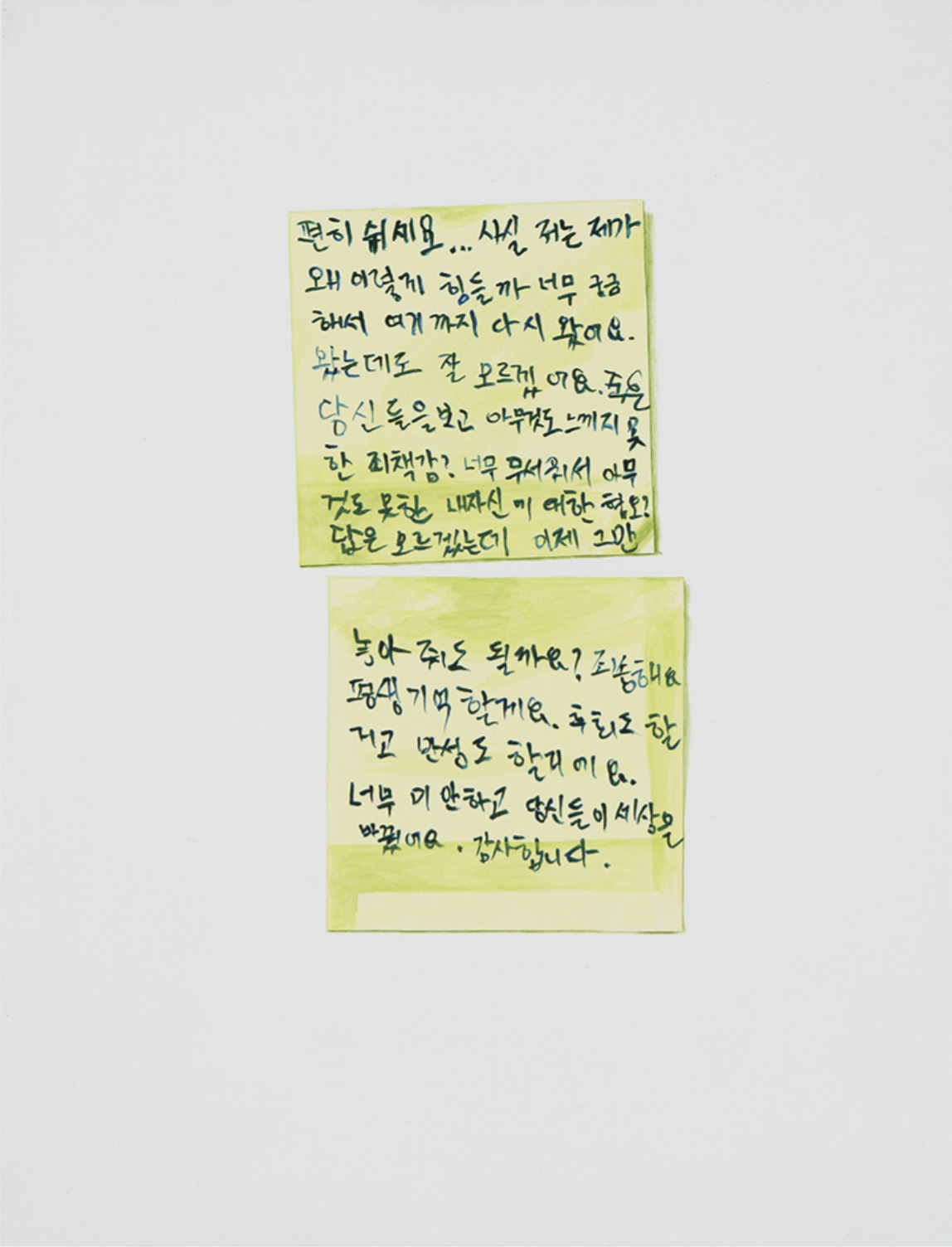
Critical Hit, 너무 미안하고 당신들이 세상을 바꿨어요. (I’m So Sorry, and You Changed the World) 2024, Acrylic on canvas, 53x41cm © Critical Hit
‘PENINSULA ELEGY’ approaches the various
forms of sorrow experienced by members of communities mourning social disasters
through the emotional framework of the “elegy.” By revealing different kinds
and stages of grief, the project broadens the spectrum through which sorrow can
be understood, proposing grief as an essential and natural process necessary
for sustaining memory and remembrance.
In this series, Critical Hit recalls onto
paper the Sewol Ferry Disaster, the Seoul Halloween crowd crush, and the hidden
realities exposed during the pandemic period. For instance, in the work
너무 미안하고 당신들이 세상을 바꿨어요. (I’m So Sorry, and You
Changed the World) (2024), the artist redraws the Post-it messages
left behind by citizens following the Itaewon tragedy.
The handwriting, spelling, pressure of the
pen, and even the crumpled condition of the notes are carefully reproduced,
evoking the memories and emotions of that moment.
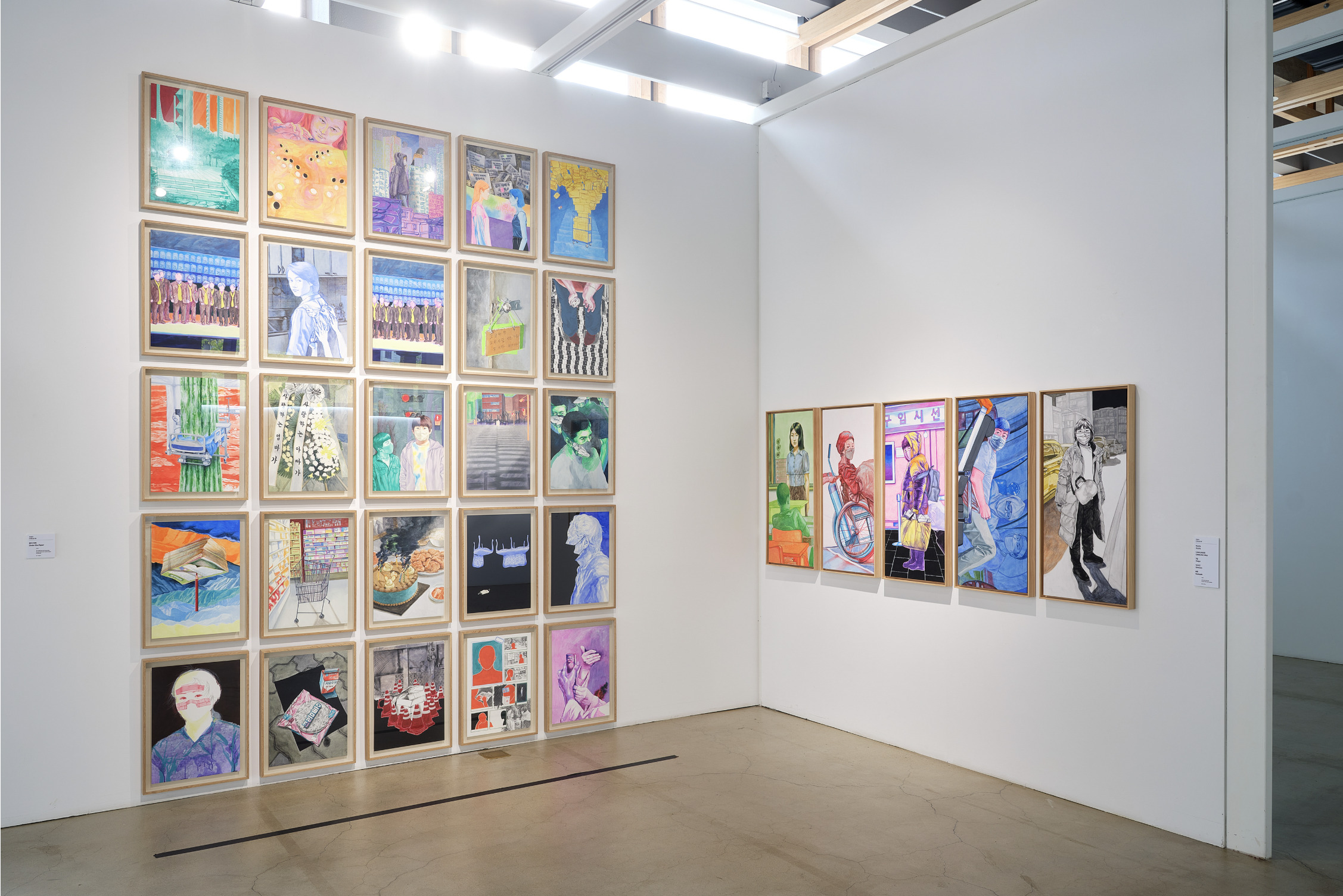
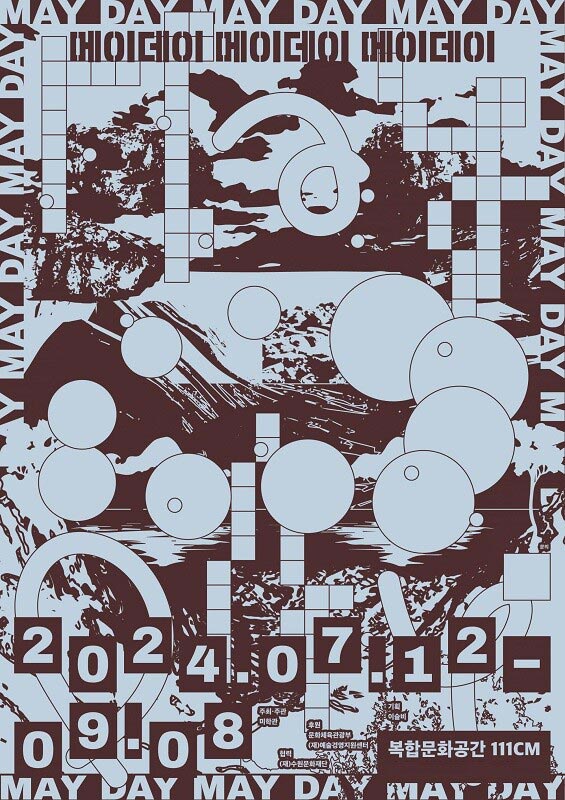
Critical Hit, ‘Under the Paper’ Series, 2022-2023, Installation view of 《MAY DAY MAY DAY MAY DAY》 (111CM Community, 2024) © Critical Hit
In this way, Critical Hit has continued to
expose the unstable systems underlying social disasters and tragedies, while
visualizing the lives of minorities made even more vulnerable by them. Her
practice retrieves and revives fragments of memory that are gradually forgotten
and omitted within a contemporary society that consumes and absorbs social
catastrophe as spectacle, ultimately creating a space in which collective
mourning can take place.
“I am experimenting with ways in
which art can intervene materially in the foundations of everyday life.”
(Critical Hit, Artist’s Note)
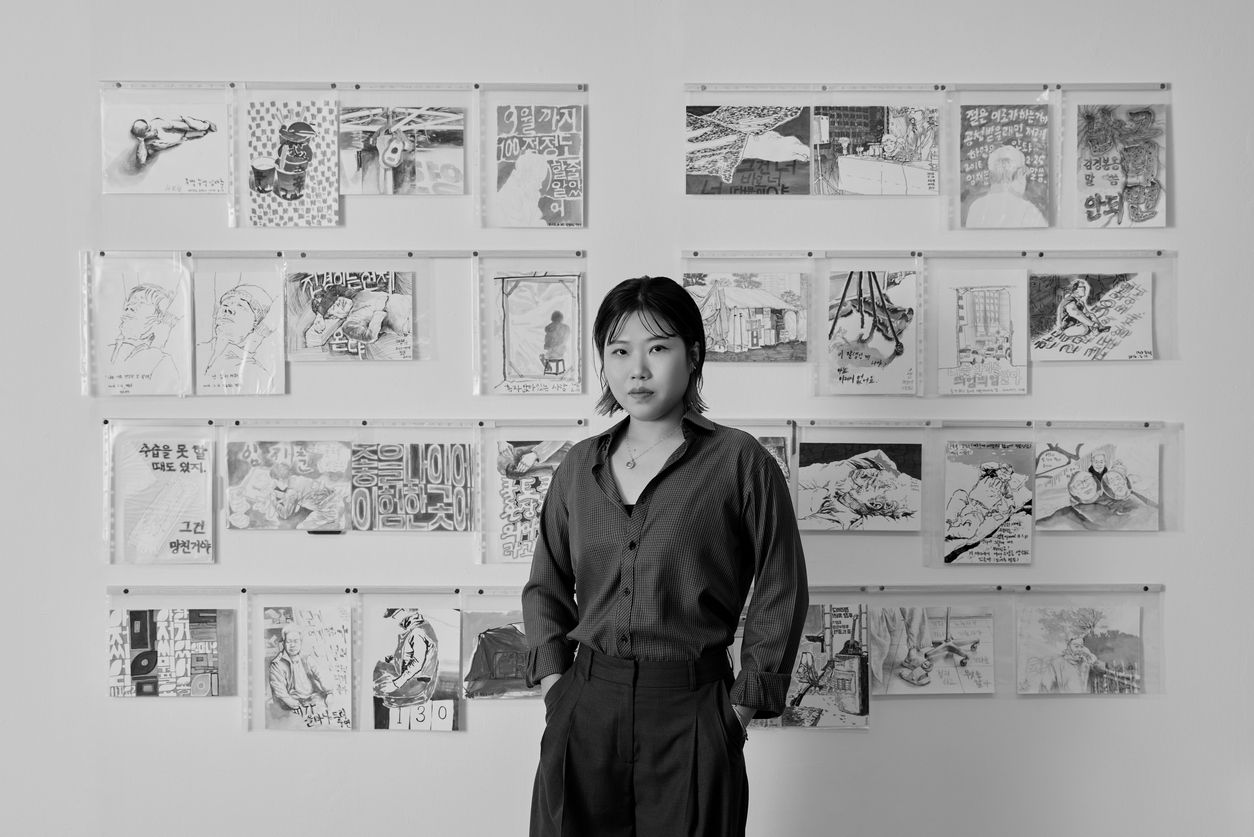
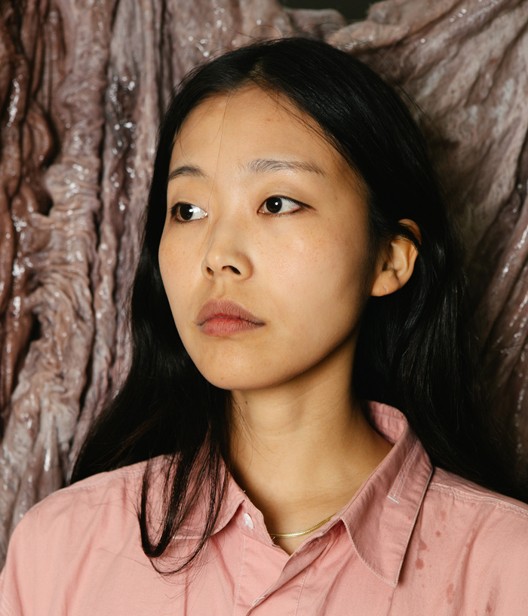
Artist Critical Hit © Incheon Art Platform
Critical Hit graduated from the Department
of Painting at Sejong University. Her solo exhibitions include 《PENINSULA ELEGY, Requiem》 (Mihakgwan Philosopher's
Stone, Seoul, 2024), 《PENINSULA ELEGY》 (Space Imsi, Incheon, 2024), 《Under the
Paper》 (Post Territory Ujeongguk, Seoul, 2022), and 《Disaster Drawing》 (Space Imsi, Incheon,
2021).
She has also participated in numerous group
exhibitions, including 《Who Is Your Family?》 (Jeju National University Museum, Kyungpook National University Art
Museum, Kunsan National University Museum of Art, Jeju, Daegu, Gunsan, 2025), 《MAY DAY MAY DAY MAY DAY》 (111CM Community,
Suwon, 2024), the 2023 Gwangju Media Art Festival (Gwangju Media Art Platform,
Gwangju, 2023), 《So-Called Normal Family》 (Suwon Museum of Art, Suwon, 2023), 《Vita
Nova_New Life》 (Incheon Art Platform, Incheon, 2022),
and 《Follow, Flow, Feed》 (ARKO
Art Center, Seoul, 2020).
Critical Hit participated in the 2025
residency program at Incheon Art Platform, and her works are included in the
collections of the MMCA Art Bank and the Yangju City Chang Ucchin Museum of
Art.
References
- 치명타, Critical Hit (Artist’s Website)
- 인천아트플랫폼, 치명타 (Incheon Art Platform, Critical Hit)
- 공간해방, [전시 개요 및 작가 노트] 뉴스피드 (Space Haebang, [Exhibition Overview & Artist’s Note] News Feed)
- 문래예술공장, [작가 노트] 메이크업 대쉬 (Mullae Art Factory, [Artist’s Note] Make up Dash)
- 영화공간 주안, [전시 개요] 실바니안 패밀리즘 (Cine Space Juan, [Exhibition Overview] Sylvanian Familism)
- 임시공간, [전시 개요 및 작가 노트] 재난도감 (Space Imsi, [Exhibition Overview & Artist’s Note] Disaster Drawing)
- 탈영역우정국, [전시 개요 및 작가 노트] Under the Paper 종이 아래 (Post Territory Ujeongguk, [Exhibition Overview & Artist’s Note] Under the Paper)
- 미학관, [전시 개요 및 서문] 반도 엘레지, 레퀴엠 (MIHAKGWAN Philosopher's Stone, [Exhibition Overview & Preface] PENINSULA ELEGY, Requiem)