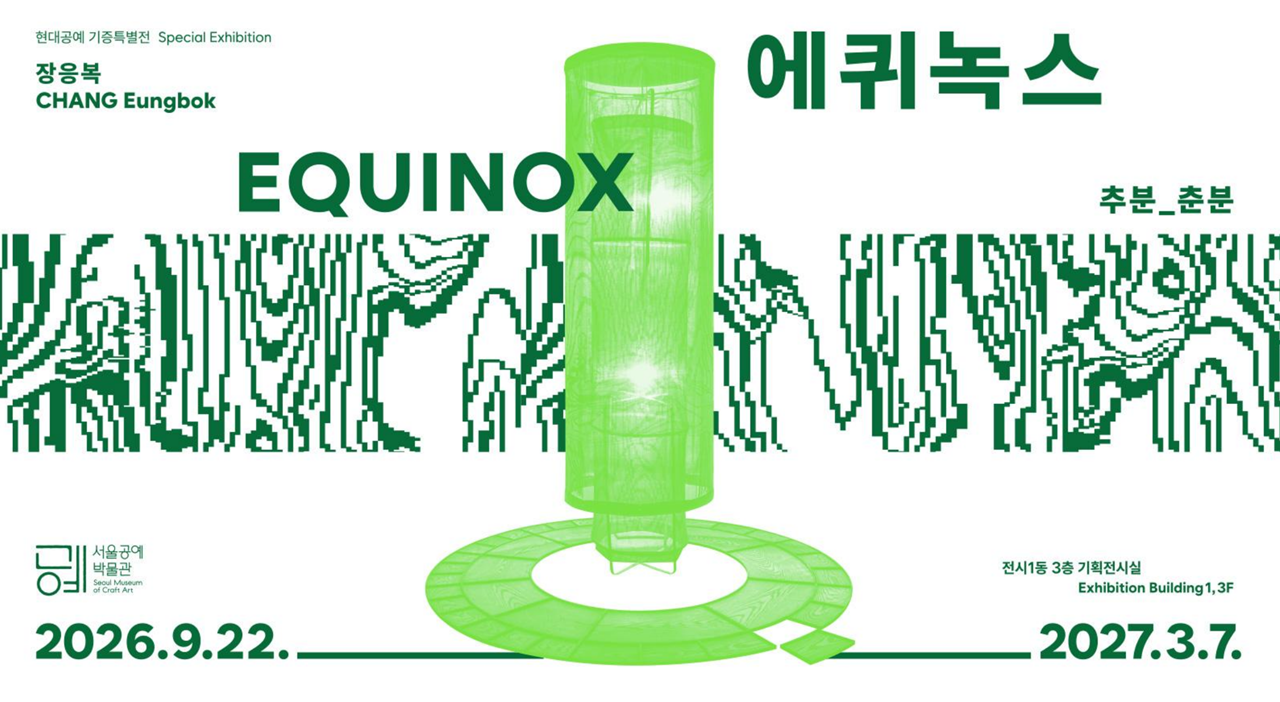

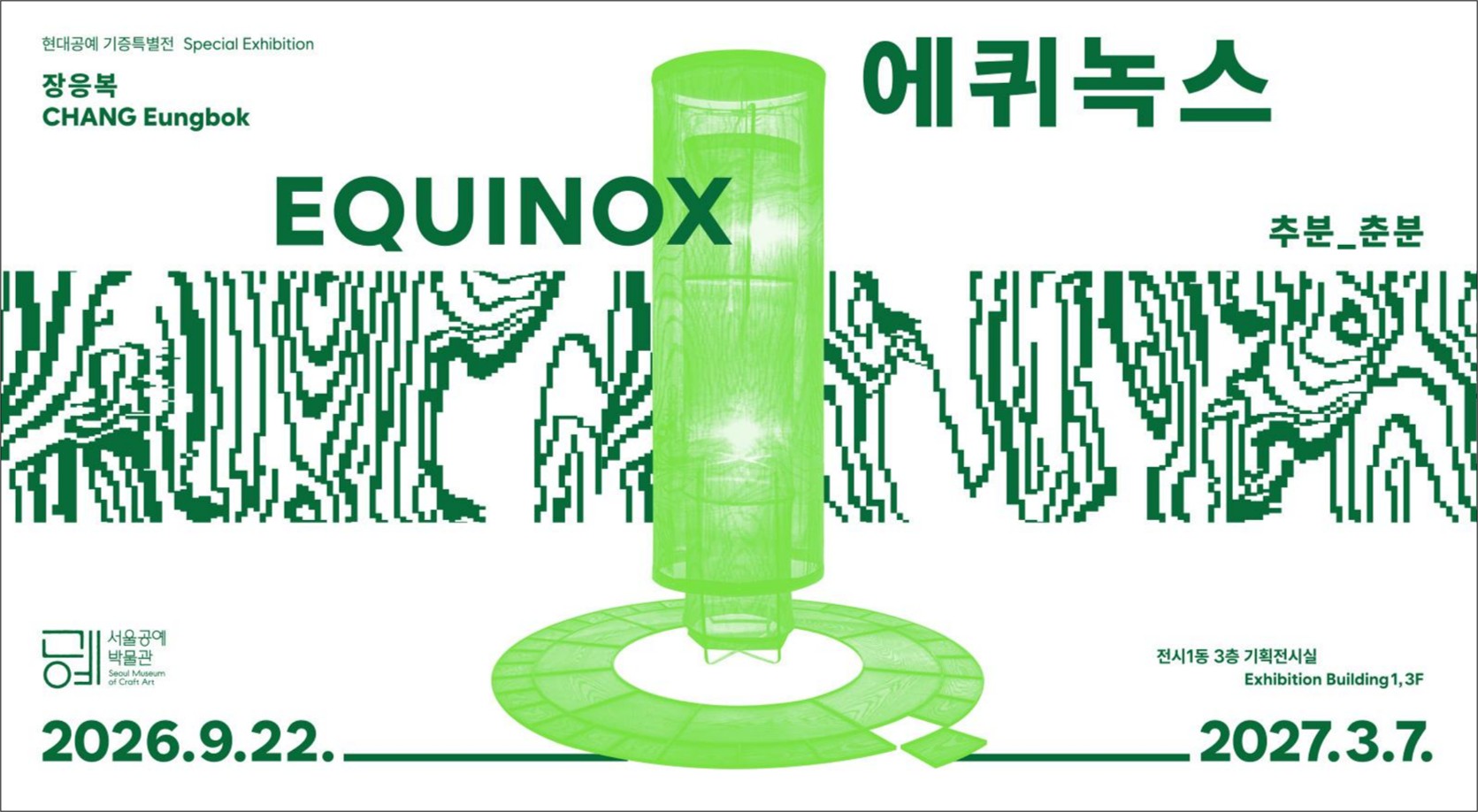
Exhibition poster / Courtesy of the Seoul Museum of Craft Art
On view at the Seoul Museum of Craft Art
from September 22, 2026, to March 7, 2027, “Equinox” explores how Chang Eungbok
brings the beauty of Korean traditional culture and nature into contemporary
living environments. Surveying some four decades of her practice, this special
exhibition celebrating a donation of contemporary craft presents approximately
400 works, ranging from pattern designs and everyday objects to furniture,
lighting, and spatial installations.
Chang is a designer whose textile-based
practice connects craft with interiors. In 1986, she founded MONO, a shop
encompassing textiles, furnishings, and interior design, where she introduced
fabrics informed by Korean culture and aesthetics. Collaborations with
craftspeople across disciplines have since expanded the uses of her patterns.
In her work, pattern does more than adorn a surface. It connects materials and
techniques, shapes the atmosphere of furniture and interiors, and brings a
sense of nature and the seasons into everyday life.
The title “Equinox” refers to the moments
in spring and autumn when day and night are nearly equal in length. The
exhibition’s Korean subtitle, “Autumnal Equinox_Vernal Equinox,” makes this
seasonal connection explicit. Opening around the autumnal equinox and closing
ahead of the following spring’s, the exhibition reflects Chang’s interest in
natural cycles and balance. Its three sections—“House of Patterns,” “House
within a House,” and “Circling the Pagoda”—trace how a single motif can develop
into an object and, in turn, a spatial environment.
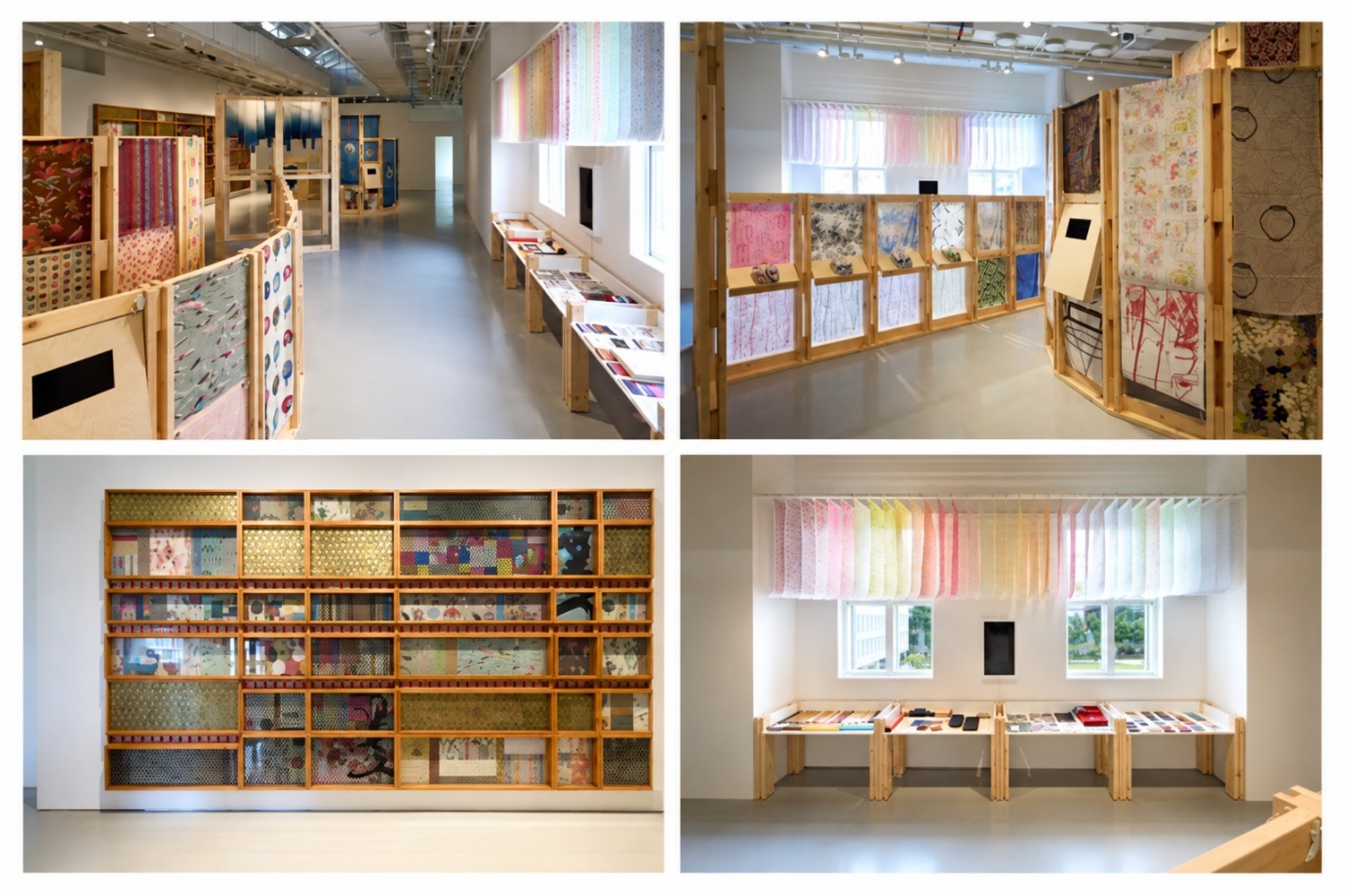
Installation views of “House of Patterns,” including Patchwork Wall (bottom left), in 《Equinox》 / Courtesy of the Seoul Museum of Craft Art
The first section, “House of Patterns,”
introduces more than 100 patterns designed by Chang. Their sources include
traditional Korean painting, everyday objects, and the natural world. Familiar
forms—flowers, fish, fans, and spoons—become new patterns through repetition
and variation. Color, line, and the rhythm of these forms offer an immediate
way into the work, even for visitors unfamiliar with Korean traditional
culture.
A key work, Patchwork Wall,
brings together patterns rendered in silk, hanji, glass, and other materials
within 72 wooden frames. Hanji, traditional Korean paper, sits alongside fabric
and glass, creating contrasts in surface and texture. The frames contain images
of peonies, traditional flower-adorned shoes, fish, and sipjangsaeng,
the ten symbols of longevity. This traditional group of motifs includes the
sun, mountains, pine trees, and cranes. Gathered within a single wall, these
symbols and everyday objects reveal how imagery embedded in Korean life can
become part of contemporary design.
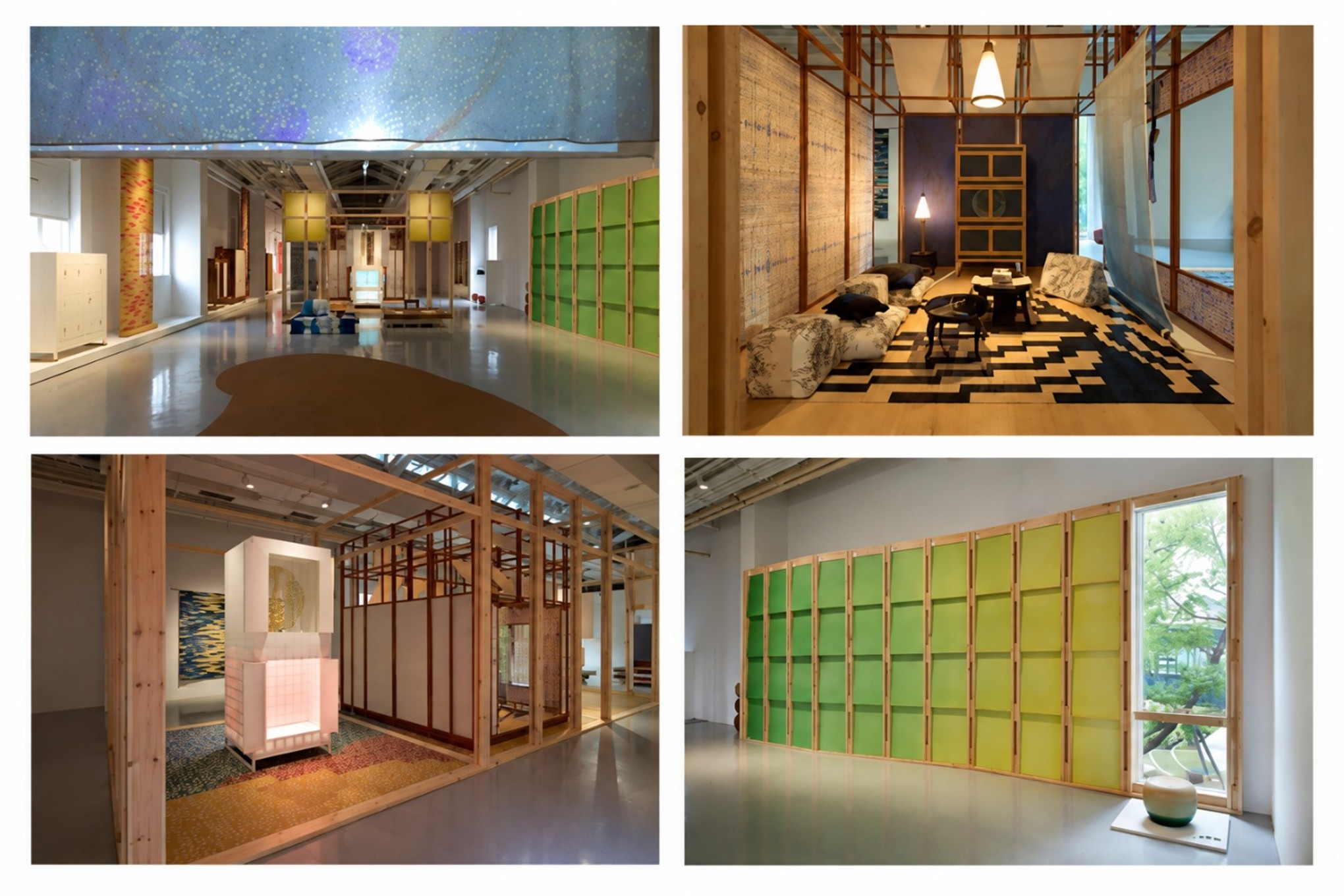
“House within a House” installation view (top left), House–House (top right), Light Pillar Cabinet (bottom left), and Ginkgo Tree (bottom right), in 《Equinox》 / Courtesy of the Seoul Museum of Craft Art
Patchwork Wall rewards both close attention to individual motifs and a broader
view of the composition. Small frames containing different colors and materials
come together to form a larger whole, reflecting Chang’s approach to bringing
distinct craft disciplines into dialogue.
In the second section, “House within a
House,” patterns extend into everyday objects, furniture, and interiors. Chang
has imagined small yet complete dwellings through the structures of furniture
and chaekgado, a genre of traditional Korean painting
depicting books and assorted objects arranged on shelves. Her connection
between furniture that holds objects and homes that accommodate people creates
another living environment within the gallery.
House–House is a modular installation in which a wooden framework can be
combined with patterned hanji and textiles, furniture, and handcrafted
household objects. The frame, its surfaces, and the objects placed within it
define the space together. Here, visitors can see how Chang’s patterns acquire
scale, density, and atmosphere within a living environment.
This section also presents the ‘Jijang’
series, which reinterprets traditional objects, alongside Twenty-Four
Solar Terms Hwamunseok and Ginkgo Tree. A hwamunseok
is a traditional floor mat woven from plant fibers to create
decorative patterns, while the twenty-four solar terms divide the year into
intervals that mark seasonal change. The work’s title brings together an
everyday furnishing and a way of observing nature’s rhythms. Through pattern
and craft, the passage of the seasons finds a place within the home.
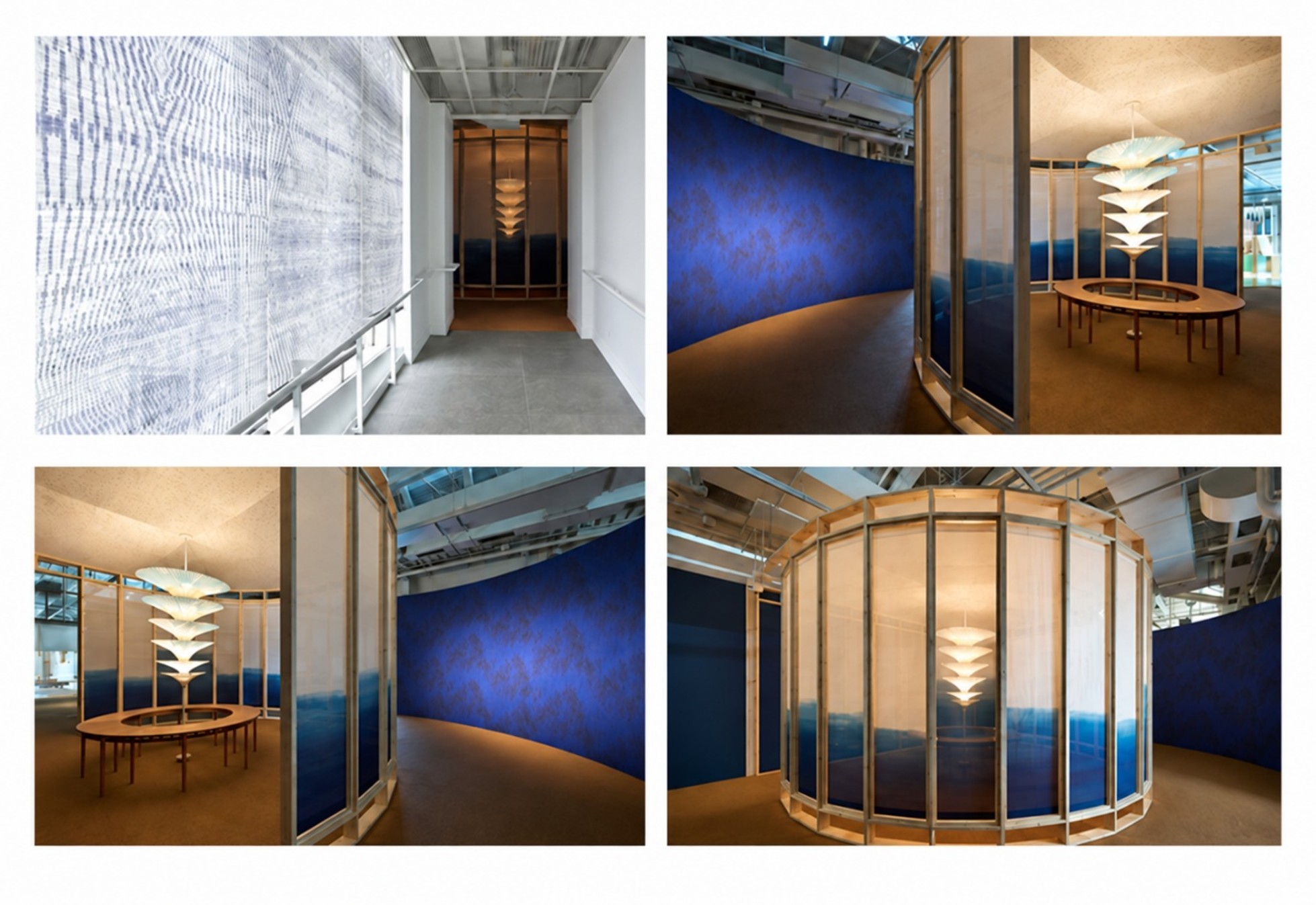
Entrance to 《Equinox》 (top left) and installation views of “Circling the Pagoda” / Courtesy of the Seoul Museum of Craft Art
The final section, “Circling the Pagoda,”
brings patterns, crafted objects, moving images, and sound together in an
immersive environment. Its Korean title, “tapdori”, refers to the
practice of walking around a pagoda. The indigo-blue works Longing
for Mount Geumgang and Sea encircle the
space, while the Nanghwa Paper Umbrella Chandelier,
based on the structure of traditional paper umbrellas, occupies its center.
Beneath constellation patterns, visitors move through a landscape that unfolds
from mountains to sea and sky.
Sea was created
in collaboration with Jeong Gwan-chae, a master dyer recognized under Korea’s
National Intangible Heritage system. The work uses “jjok” dyeing, a
traditional method of coloring cloth blue with dye derived from the indigo
plant. As this blue expands into a surrounding landscape, color itself becomes
central to the experience of the exhibition.
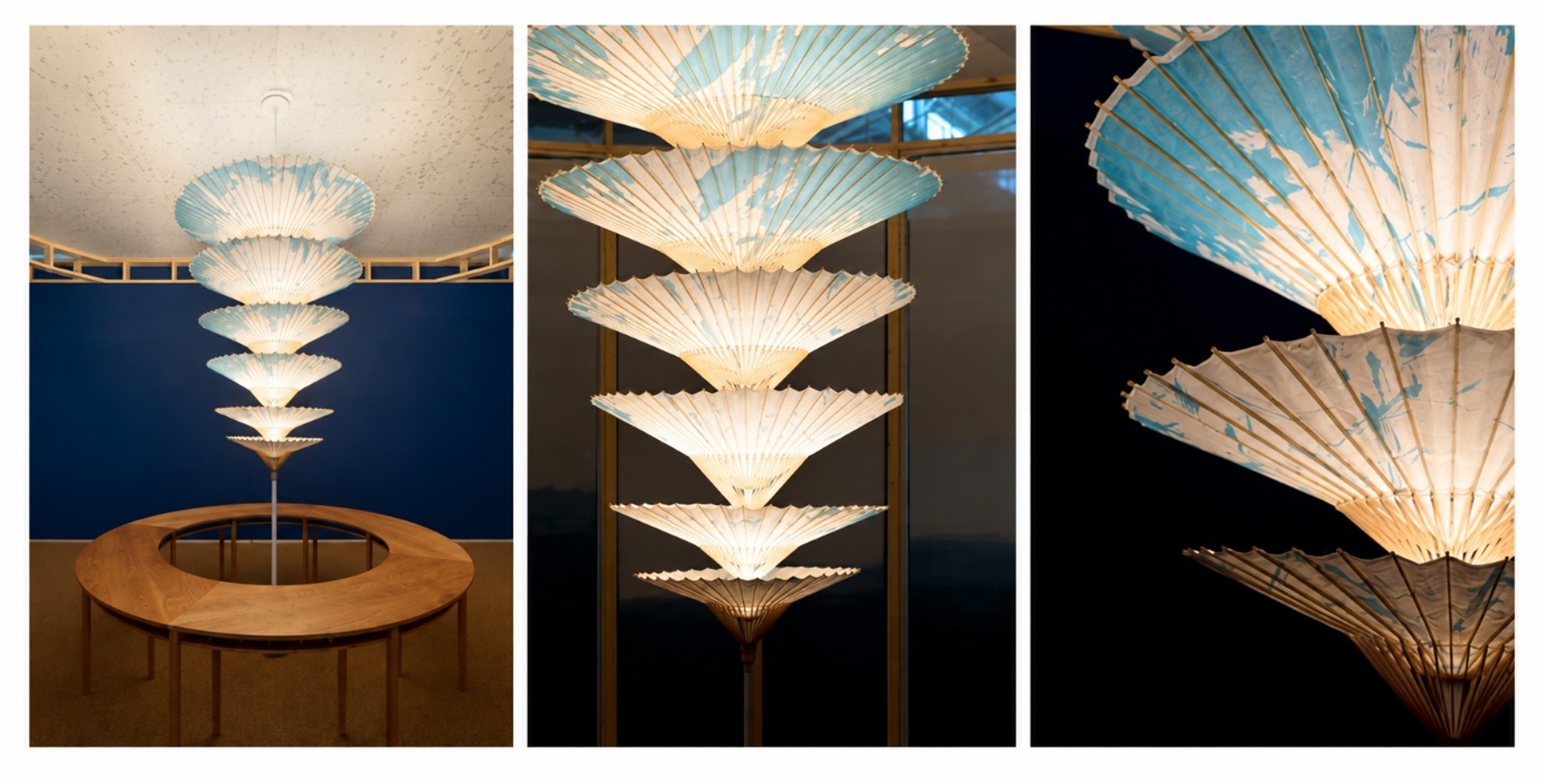
Installation view and details of Nanghwa Paper Umbrella Chandelier in “Circling the Pagoda,” part of 《Equinox》 / Courtesy of the Seoul Museum of Craft Art
The Nanghwa Paper Umbrella
Chandelier was made with Yoon Kyu-sang, a master paper umbrella
maker recognized under Jeonbuk Special Self-Governing Province’s Intangible
Heritage system. Known as jiusan, these traditional
umbrellas consist of a frame covered with paper; a jiusanjang
is a craftsperson who preserves and practices the techniques used to make them.
In this work, the open umbrella becomes a lighting structure. Umbrellas of
different sizes rise in tiers to form the centerpiece of the space, their paper
surfaces and supporting ribs giving the chandelier its shape and character. The
same section also presents Fan Table, developed with
the furniture design studio Standard A.
Collaboration is another thread running
throughout the exhibition. Chang has connected her patterns with skills in
dyeing, weaving, woodworking, and paper umbrella making. The process involves
retaining the distinctive qualities of each material and technique while
allowing them to work together within a shared living environment. As visitors
move through the exhibition, they encounter not only the patterns but also the
skills and sensibilities of the people who transform them into objects and give
them a place in space.
《Equinox》 offers an
encounter with Korean craft through the relationships between color, material,
object, and space. Visitors need not recognize every traditional motif or
understand its symbolism to appreciate the work. The rhythm of repeating
patterns, the textures of paper, fabric, and wood, and the interplay of indigo
and light offer their own ways in. Through these experiences, the exhibition
invites visitors to consider how Korean traditions can continue to take shape
in contemporary homes and everyday life.
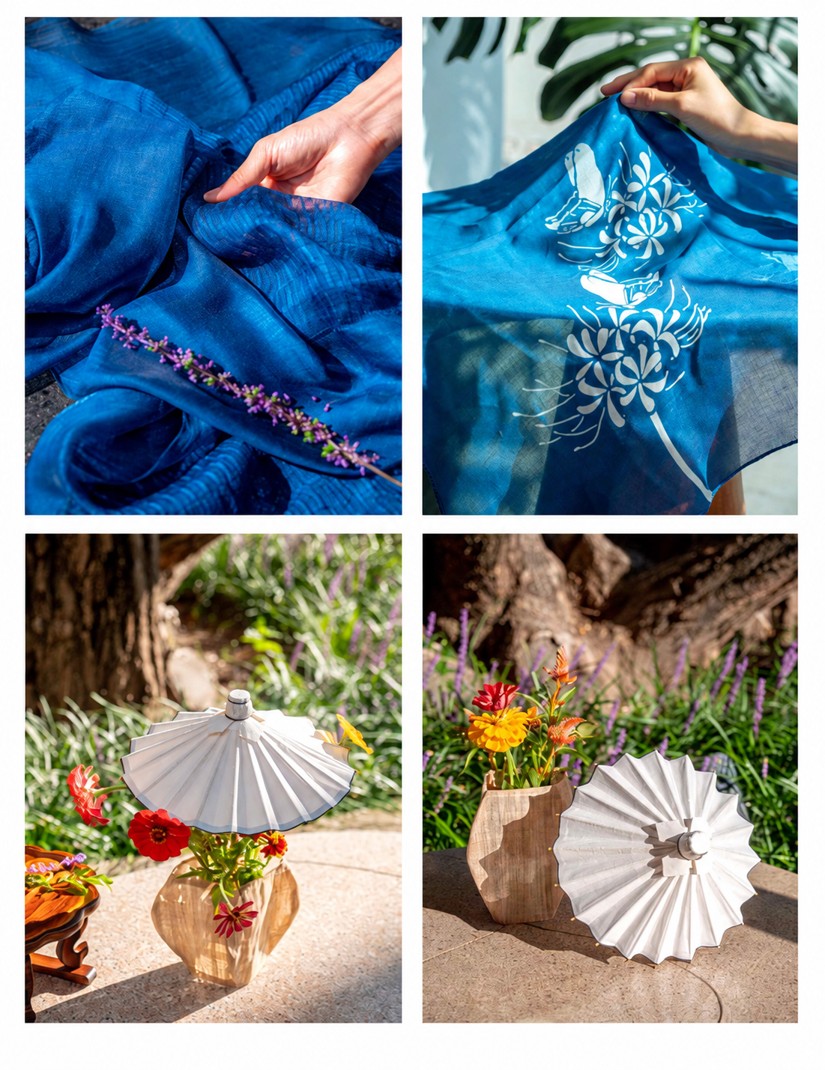
Images related to the exhibition’s hands-on programs: indigo-dyed textiles (top) and traditional paper umbrellas (bottom) / Courtesy of the Seoul Museum of Craft Art
The exhibition is accompanied by talks and
workshops. On October 17, Chang will discuss her practice and the relationship
between craft and design. Pattern-design workshops for design students and
working professionals will take place on November 20 and December 18. An
indigo-dyeing class at Jeong Gwan-chae’s workshop in Naju and a paper umbrella
class at Yoon Kyu-sang’s workshop in Jeonju are also planned. Registration
details and participation requirements are available on the museum’s website.
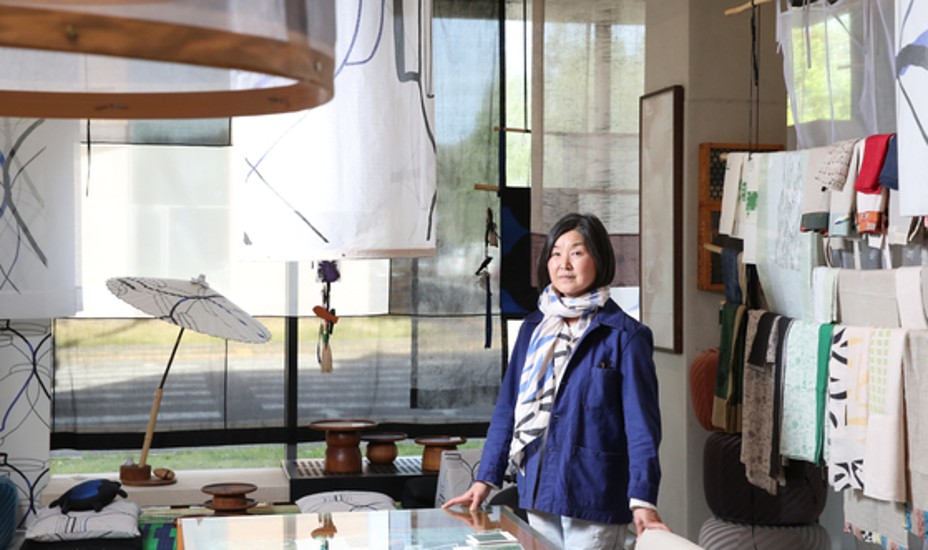
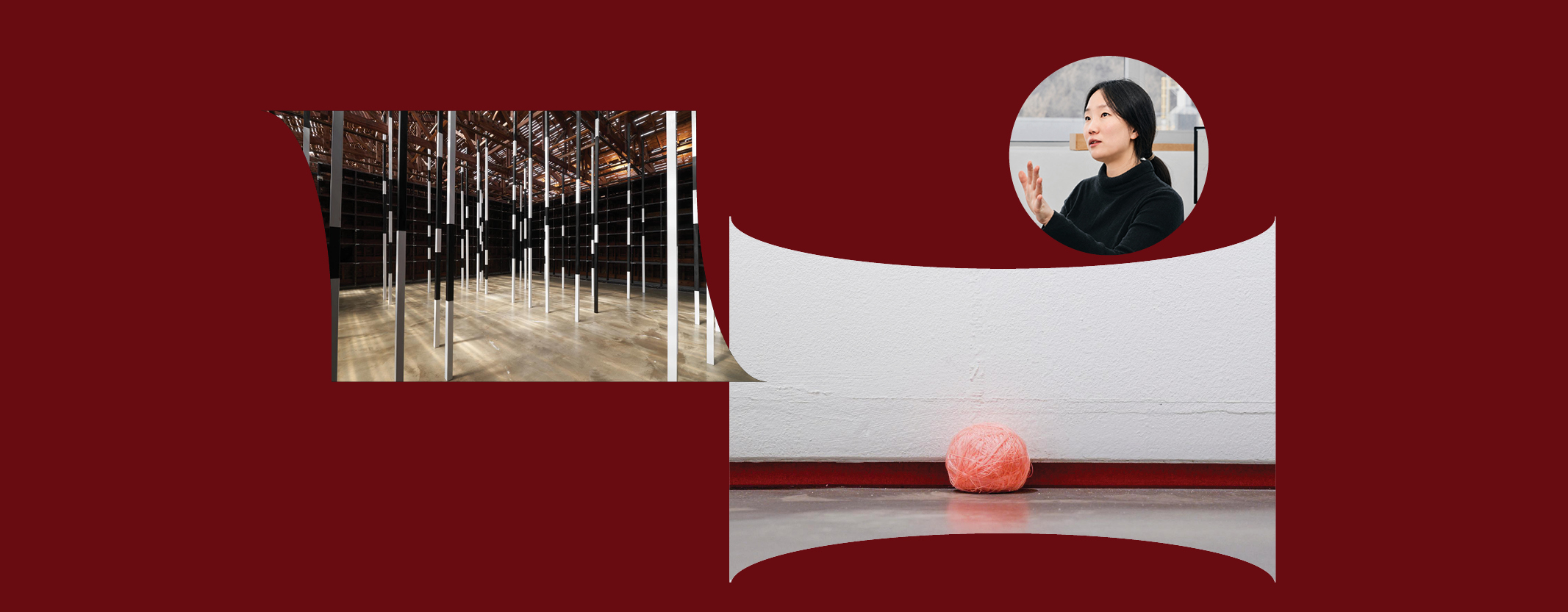
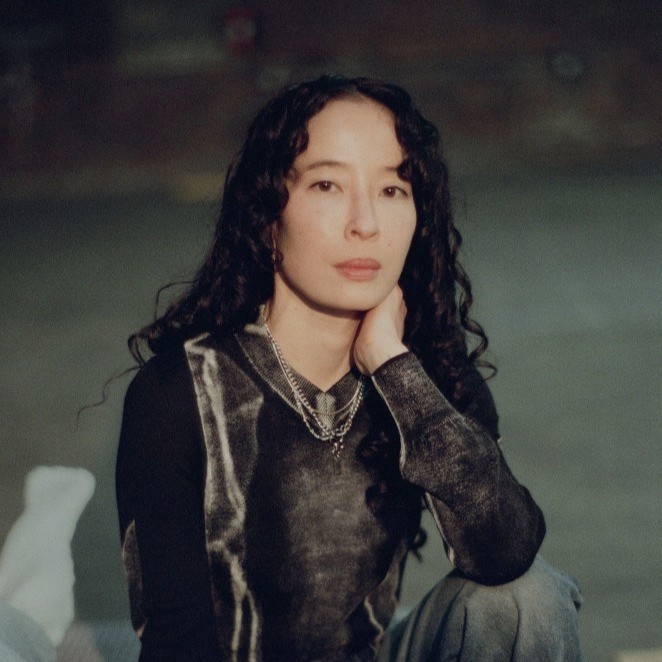
Chang Eungbok / Courtesy of the Seoul Museum of Craft Art
About Chang Eungbok
Chang Eungbok (b. 1961) is a designer who
develops motifs drawn from Korean traditional culture and nature into textiles,
furniture, and spatial environments. She graduated from Hongik University’s
Department of Textile Art and founded MONO, the predecessor of Monocollection, in 1986.
Through collaborations with master
craftspeople across disciplines, she has brought Korean aesthetics into
contemporary living environments. Her work is held in collections including the
Seoul Museum of Art and the Victoria and Albert Museum in London.
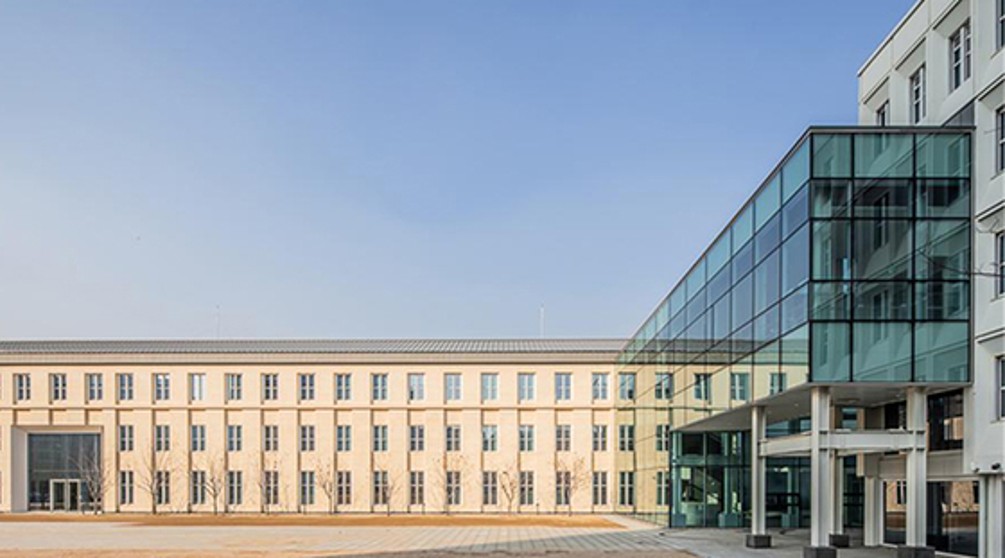
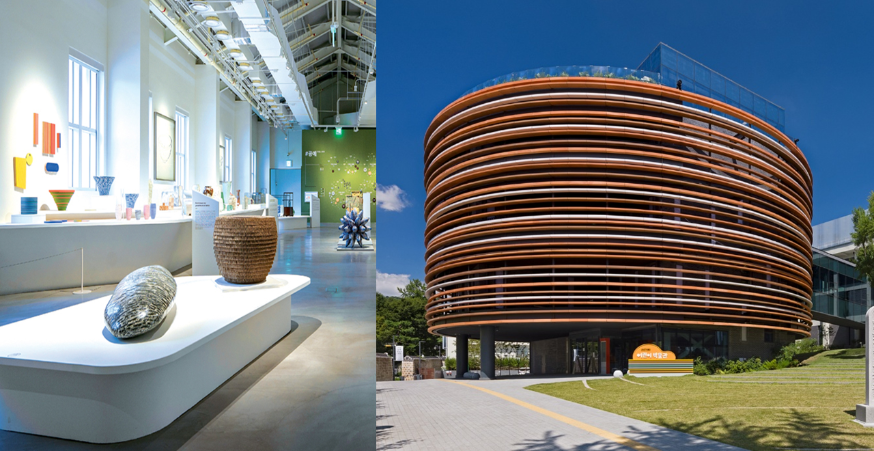
The Seoul Museum of Craft Art, at the entrance to the Bukchon neighborhood / Courtesy of the Seoul Museum of Craft Art
About the Seoul Museum of Craft
Art
The Seoul Museum of Craft Art is a
municipal museum exploring the materials, techniques, and everyday cultures of
Korean craft, from traditional practices to contemporary work. Located in
Anguk-dong in Seoul’s Jongno district, it presents exhibitions and educational
programs that examine the many ways craft connects art with daily life.
Exhibition Information
Dates:
September 22, 2026–March 7, 2027
Venue: Special Exhibition Gallery, 3F, Exhibition Building 1, Seoul
Museum of Craft Art
Address: 4 Yulgok-ro 3-gil, Jongno-gu, Seoul
Source: Exhibition press materials provided by the Seoul Museum of Craft
Art
Exhibition website: Equinox —
Seoul Museum of Craft Art