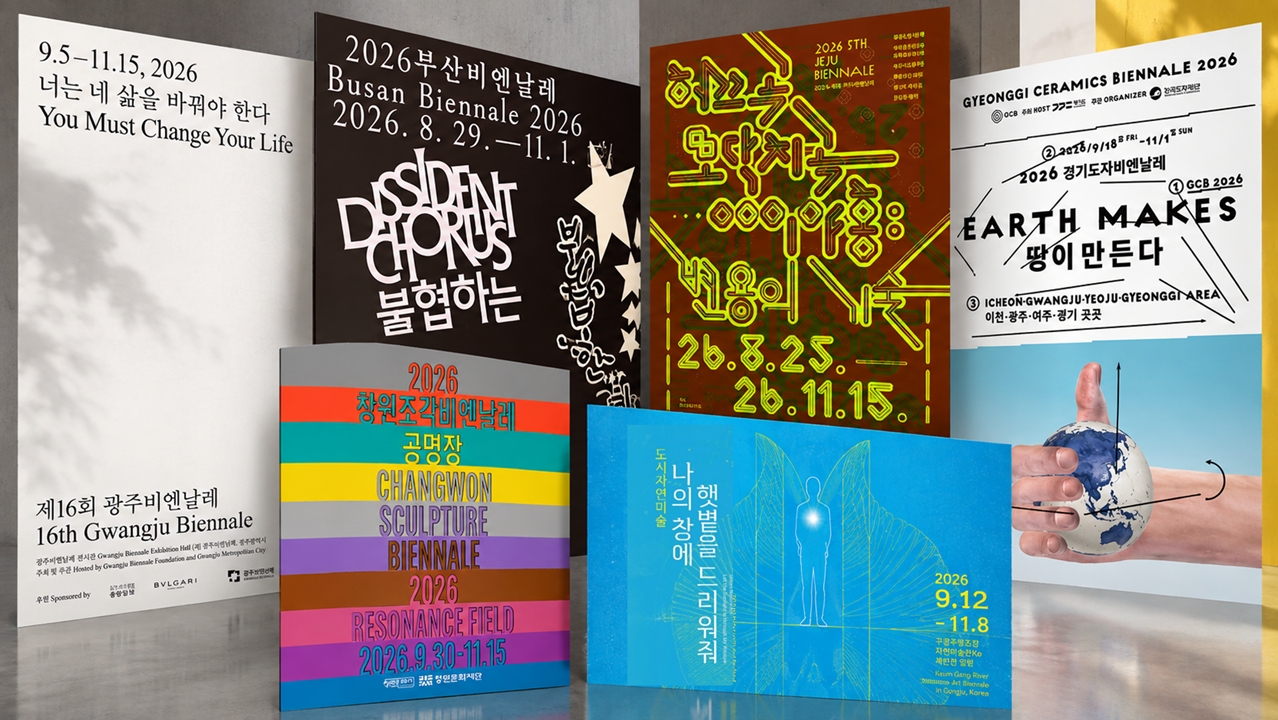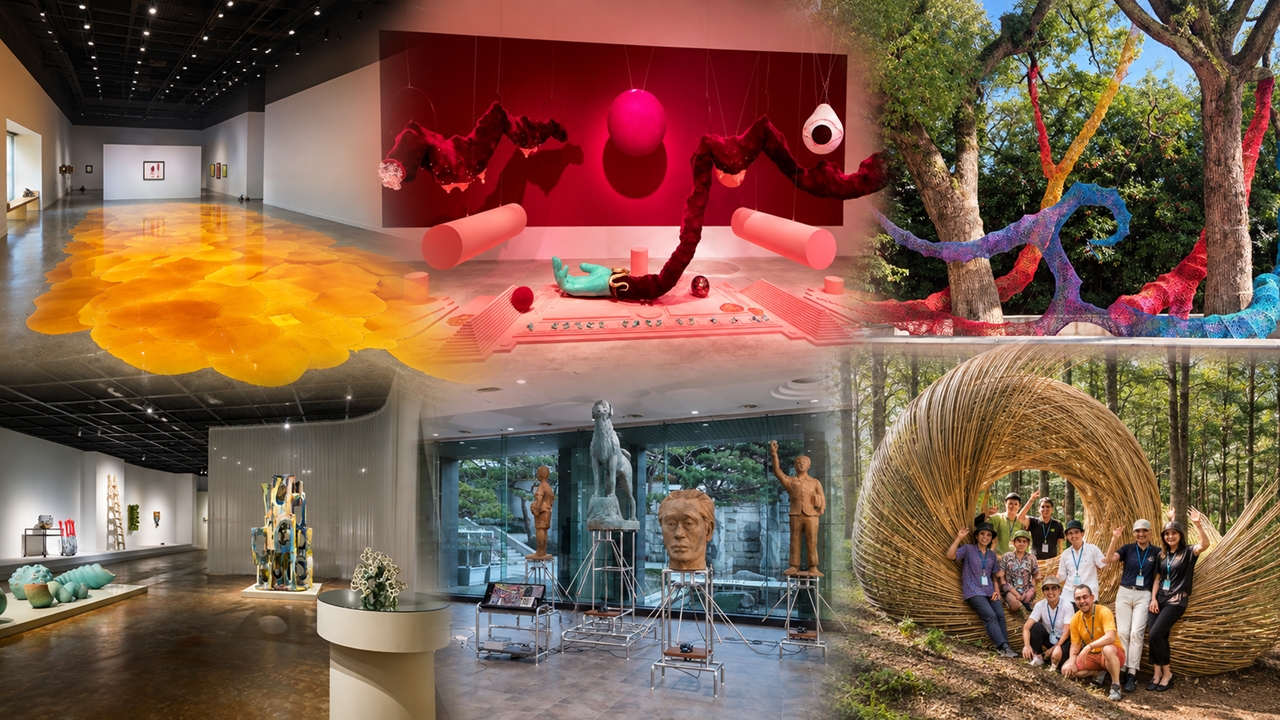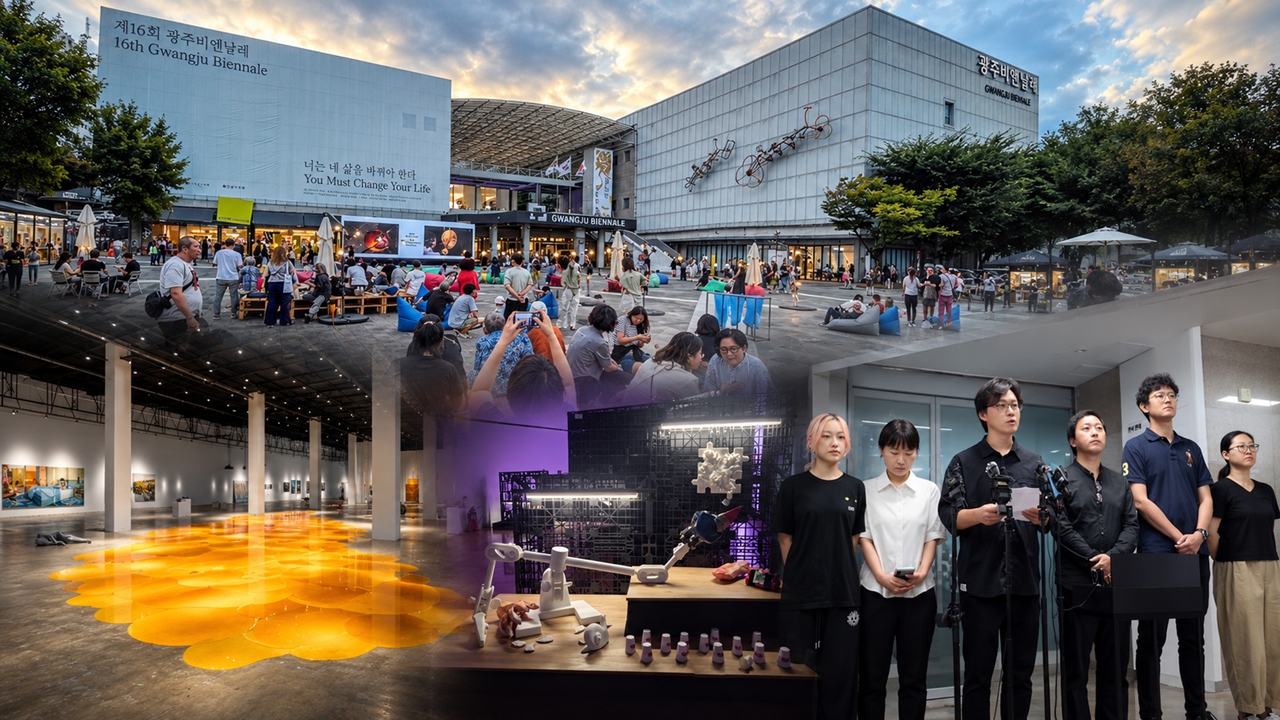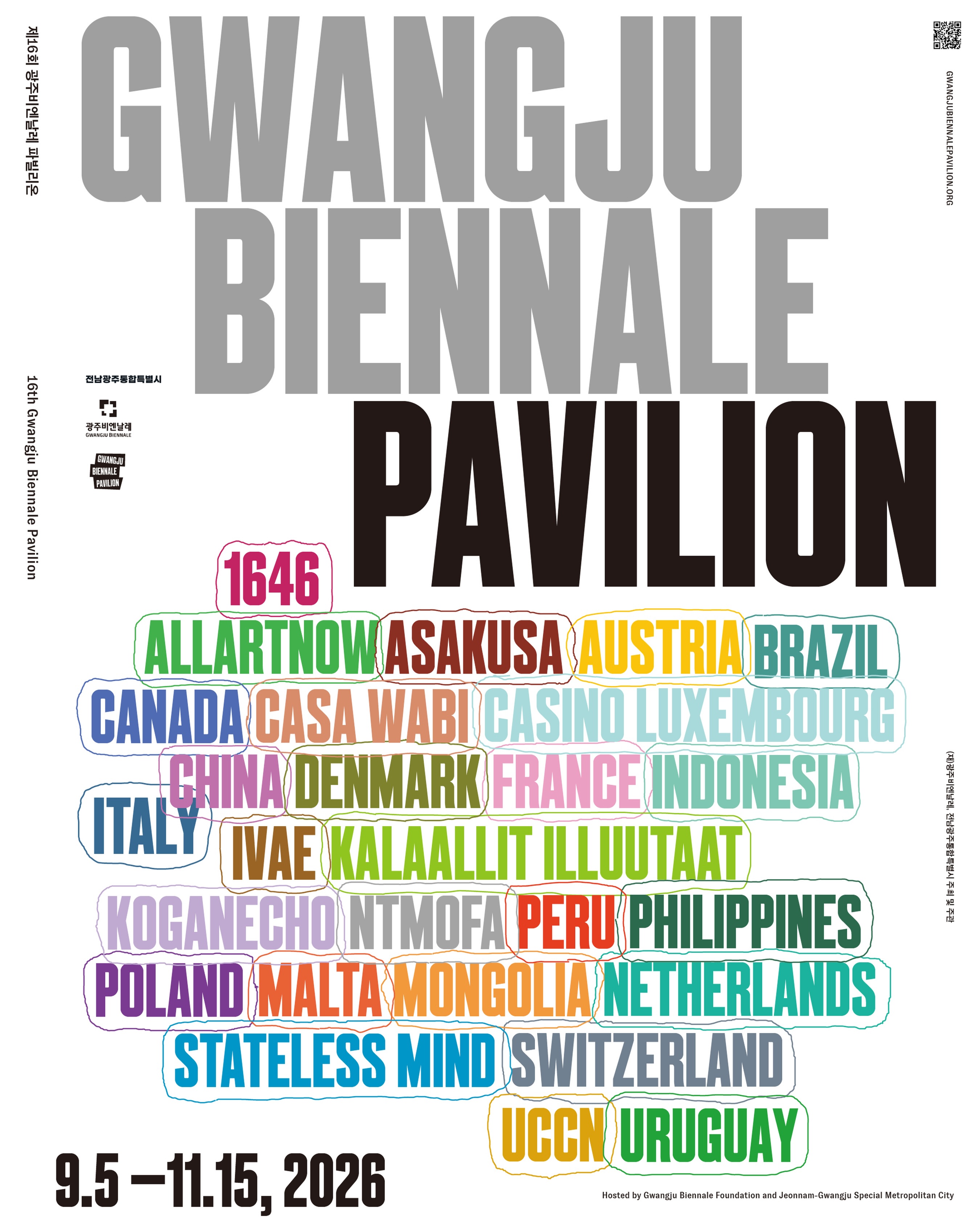

This autumn, biennales of different
character will take place, or are about to open, across six regions of Korea—Gwangju,
Busan, Jeju, Gyeonggi, Changwon, and Gongju. The fact that so many
international art events are being held across the country within a single
season speaks to the scale and expanding reach of Korea’s art ecosystem.
Yet when one visits the official websites
of these institutions, another scene emerges behind the spectacle of their
opening ceremonies. Click on the “Past Exhibitions” menu and the visitor is met
with something like an empty room. The basic framework remains—the exhibition
title, dates, and list of participating artists—but the records that would give
substance to that framework—the places where the works were installed, what
they attempted to articulate, the curatorial logic behind the exhibition, and
the critical responses it generated—are rarely connected in any meaningful way.
The buildings remain, but the rooms inside
them are empty. Korea’s biennales are, at present, building houses like these.
A biennale is a cultural institution in
which artists, curators, and local communities come together over a defined
period to produce new works and discourses. The artists invited, the works
commissioned, and the themes adopted are important historical evidence of what
the art world of a particular period was sensing, questioning, and attempting
to understand.
The fact that an exhibition has closed does
not diminish its value as historical evidence. A biennale moves beyond the
status of a one-time spectacle and becomes an intellectual institution only
when, after its closure, the exhibition continues to be studied, debated, and
carried forward into the work of subsequent generations. The key mechanism that
makes this possible is the archive.
What Is an Archive?
An archive is not a warehouse in which
materials are simply accumulated. It is a structure that preserves and
reconnects the relationships between them.
Consider a single work of art. Its title
and artist’s name are not enough to fully understand it. When was it made? What
materials does it comprise? Where was it positioned within the exhibition
space? How was that position connected to the logic of the curatorial project?
How was the work interpreted by critics at the time? Only when these different
layers intersect does the work become an object of research and interpretation.
Without those connections, photographs
remain photographs, catalogues remain catalogues, and artist biographies remain
artist biographies. The materials survive, but the relationships between them
disappear. What remains is not a complete archive, but something closer to the
fragments of one.
It is a mistake to believe that such
deficiencies can be concealed by the sophistication of a website. A polished
layout and a functioning search engine are of little use if the site lacks
substantive content and a meaningful structure of connections. A page may
imitate the appearance of an archive, but without content and context it is
less a public record than a promotional instrument borrowing the language of
documentation.
Gaps in the Record
Once an exhibition ends, the works are
dismantled and the spaces return to their previous state. The sensory event
that unfolded during the exhibition begins to disperse. What remains is the
record.
Without installation photographs and
exhibition plans, it becomes difficult to reconstruct the relationship between
the works and the spaces that contained them. Without detailed information
about the works, there is no reliable way to determine what the artists were
attempting to do. Without curatorial statements and criticism, the exhibition’s
questions and contemporary reception can no longer be properly examined or
compared.
As these three layers of loss accumulate,
an exhibition survives only through a few lines of institutional press material
and the fading memories of those who experienced it. Works that might deserve
reassessment are denied that possibility, while unsuccessful curatorial
projects lose the chance to become resources for future editions.
The Uncomfortable Paradox of
the Gwangju and Busan Biennales
Founded in 1995, the Gwangju Biennale has
continued for more than three decades. The Busan Biennale traces its origins to
the Busan Youth Biennale, established in 1981, and has accumulated more than
four decades of history. After such a substantial period of activity, both
should have become some of the thickest historical strata documenting the
transformation and international expansion of Korean contemporary art.
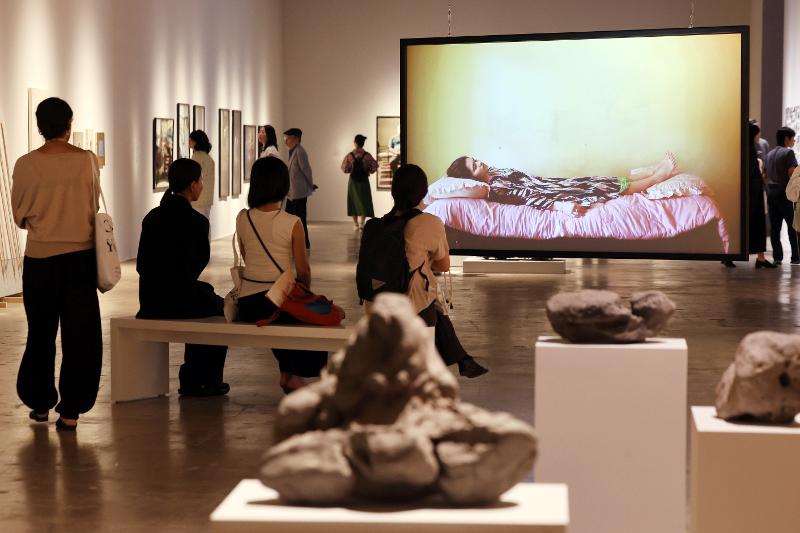
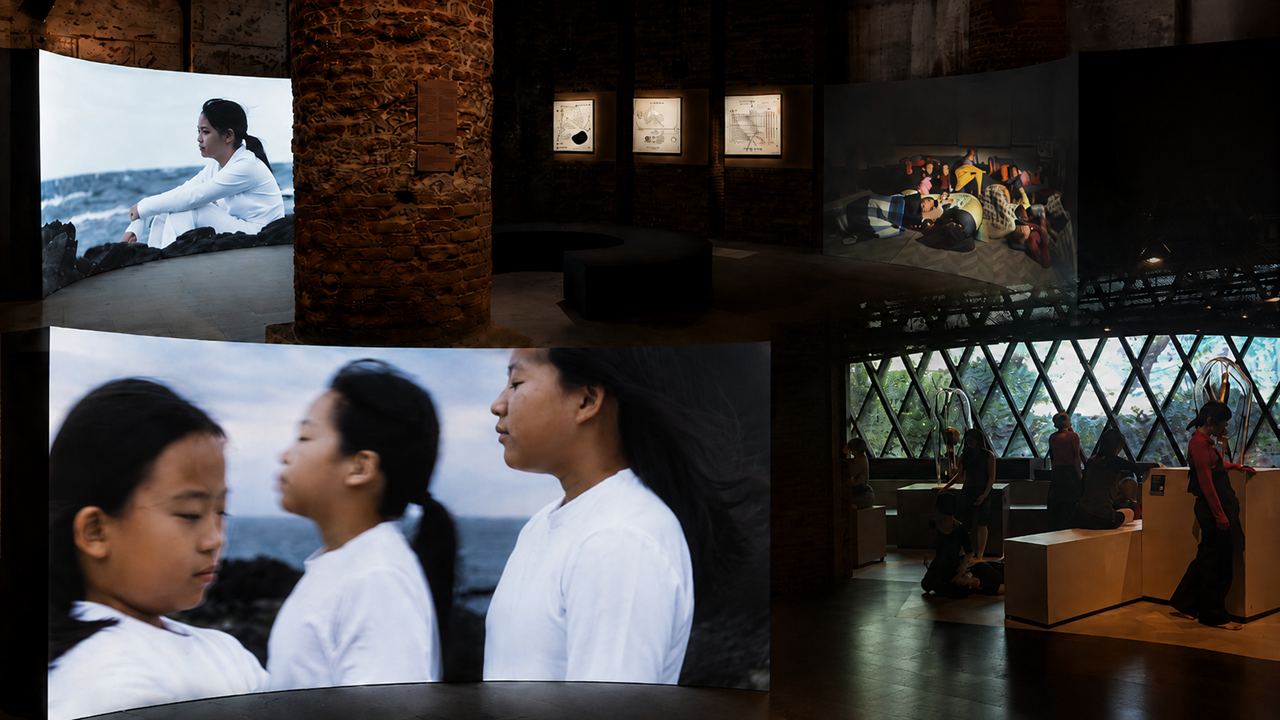
The Gwangju Biennale has already
demonstrated the possibility of such an archive. In 2024, marking its thirtieth
anniversary, it presented the special archival exhibition 《Madang—Where We Become Us》 in Venice,
making public posters, tickets, leaflets, VHS tapes, exhibition plans, and
other materials. The exhibition demonstrated that the Gwangju Biennale could
reconstruct its past records not merely as stored documents, but as historical
assets.
At the same time, the exhibition left an
important task unresolved. The density of documentation and level of scholarly
accessibility achieved through a special exhibition must not remain a one-time
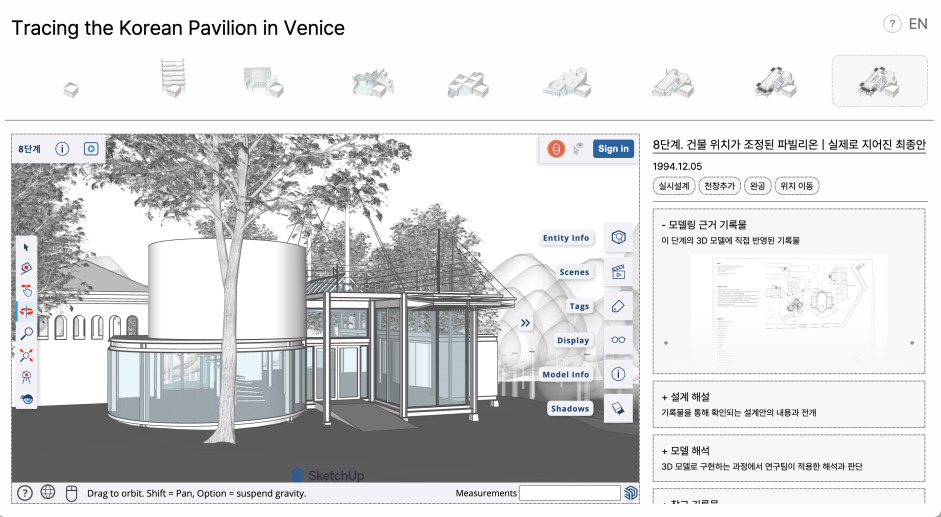
event. They need to develop into a digital archive that can be accessed
continuously.
If institutions with histories as long as
those of the Gwangju and Busan Biennales have yet to establish a system for
consistently connecting and making their past exhibitions and materials
accessible, the situation of younger biennales is unlikely to be fundamentally
different. The issue is not simply whether materials exist. It is also where
they are located, how they are organised, and who can access them—and by what
means.
Questions Institutions Must Ask
Themselves
What do we possess? Where are those
materials now? Which of them are publicly accessible, and what procedures are
required to consult those that are not? Are the scattered fragments connected
to one another?
If an institution cannot answer these
questions, then even an extensive body of material lying within its walls is
effectively nonexistent for outside researchers. Possessing documents and
transforming them into public knowledge are entirely different responsibilities.
This requires institutions to determine,
from the planning stage of an exhibition, what must be preserved as part of its
record. Once the exhibition ends, materials must be reviewed, sources verified,
and documentation made publicly available. Even when a website is redesigned,
the addresses and relational structure of existing materials must remain
intact.
This work also requires a dedicated team
and stable funding. A one-time project to organise historical materials must be
distinguished from the ongoing responsibility of managing records generated by
new exhibitions.
The Venice Biennale, founded in 1895,
established the Historical Archive of Contemporary Arts, known as ASAC, in
1928. ASAC has spent decades collecting and cataloguing books, photographs,
films, posters, documents, and press materials. Today, its ASAC database brings
together information on the Biennale’s events and its archival collections
within a single system.
What Korean biennales should learn from
ASAC is not the scale of its facilities or the size of its holdings. It is the
attitude that transformed record-keeping from a temporary project into a
permanent way of being for the institution.
Conclusion: The True Value of
Digital Archives
The next step for Korean biennales does not
lie simply in staging more events. It lies in preserving exhibitions that have
already taken place, as well as those currently underway or about to open, as
subjects for future research and criticism.
When artists and works, exhibitions and
spaces, curatorial frameworks and criticism, records and research are
connected, the achievements of a biennale move beyond the success of a single
edition. They become historical evidence of the aesthetic transformations and
art-historical development of Korean contemporary art.
A digital archive is a public knowledge
infrastructure that allows us to determine and verify the aesthetic
significance of particular works and exhibitions, as well as the position they
occupy within the history of Korean contemporary art.
The value of a biennale, therefore, cannot
be judged solely by the number of editions it has held or the scale of its
events. It will be demonstrated by how faithfully it documents the aesthetic
and art-historical value of the art and knowledge it produces, and how
successfully it transmits them to the future. The records that remain on its
website—and those that have disappeared—already reveal both the possibilities
and the limitations of that task.
References
- The 16th Gwangju Biennale, 《You Must Change Your Life》, September 5–November 15, 2026
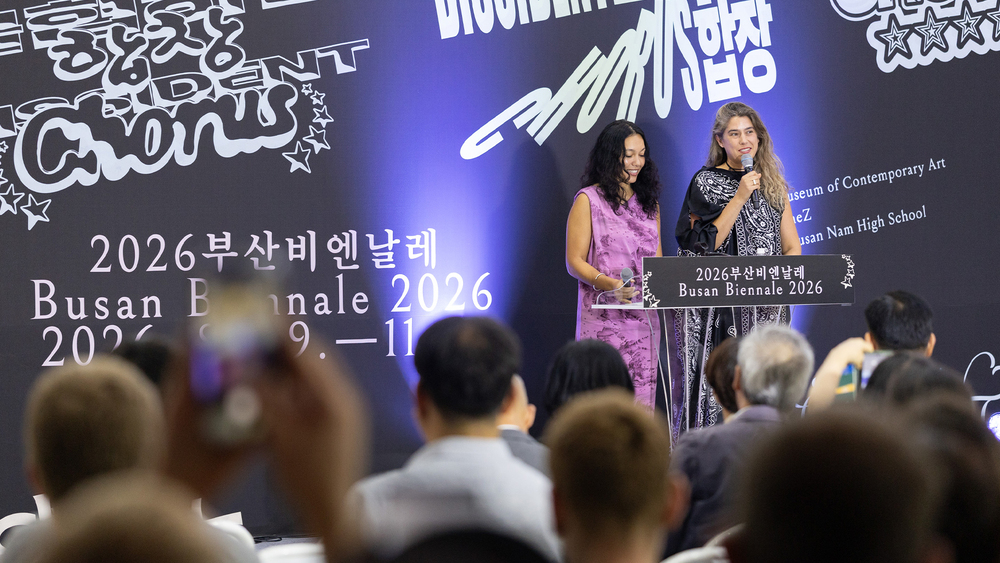
- Busan Biennale 2026, 《Dissident Chorus》, August 29–November 1,
2026
- The 5th Jeju Biennale, 《Heokkeugok Modakchigok
Iyahong: The Art of Transformation》, August 25–November
15, 2026
- Gyeonggi Ceramics Biennale 2026, 《The Earth Makes》, September 18–November 1, 2026
- Changwon Sculpture Biennale 2026, 《Resonance Field》, September 30–November 15, 2026
- Geumgang Nature Art Biennale 2026, Gongju,
September 12–November 8, 2026
- Historical Archive of Contemporary Arts, ASAC, La
Biennale di Venezia
- 《Madang—Where We Become Us》, the Gwangju Biennale 30th-anniversary archival exhibition, April
18–November 24, 2024, Venice
Jay Jongho Kim graduated from the Department of Art Theory at Hongik University and earned his master's degree in Art Planning from the same university. From 1996 to 2006, he worked as a curator at Gallery Seomi, planning director at CAIS Gallery, head of the curatorial research team at Art Center Nabi, director at Gallery Hyundai, and curator at Gana New York.
From 2008 to 2017, he served as the executive director of Doosan Gallery Seoul & New York and Doosan Residency New York, introducing Korean contemporary artists to the local scene in New York. After returning to Korea in 2017, he worked as an art consultant, conducting art education, collection consulting, and various art projects.
In 2021, he founded A Project Company and is currently running the platforms K-ARTNOW.COM and K-ARTIST.COM, which aim to promote Korean contemporary art on the global stage.