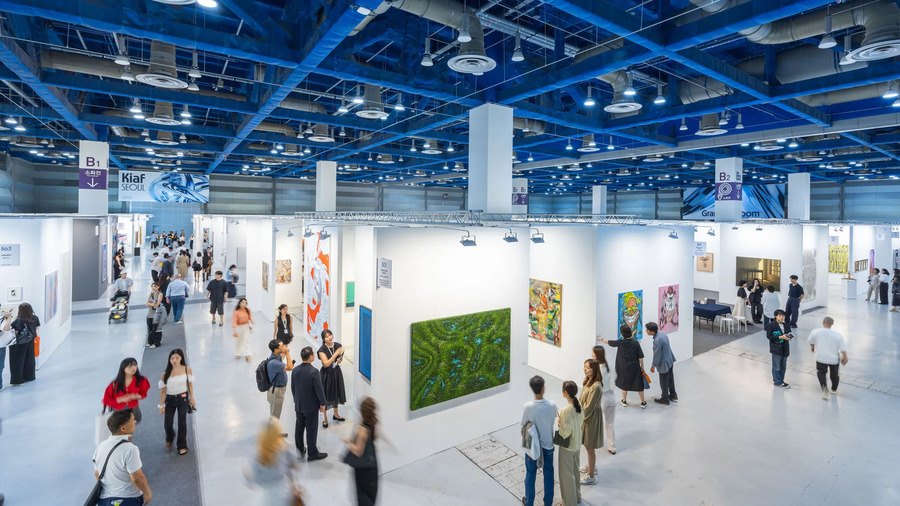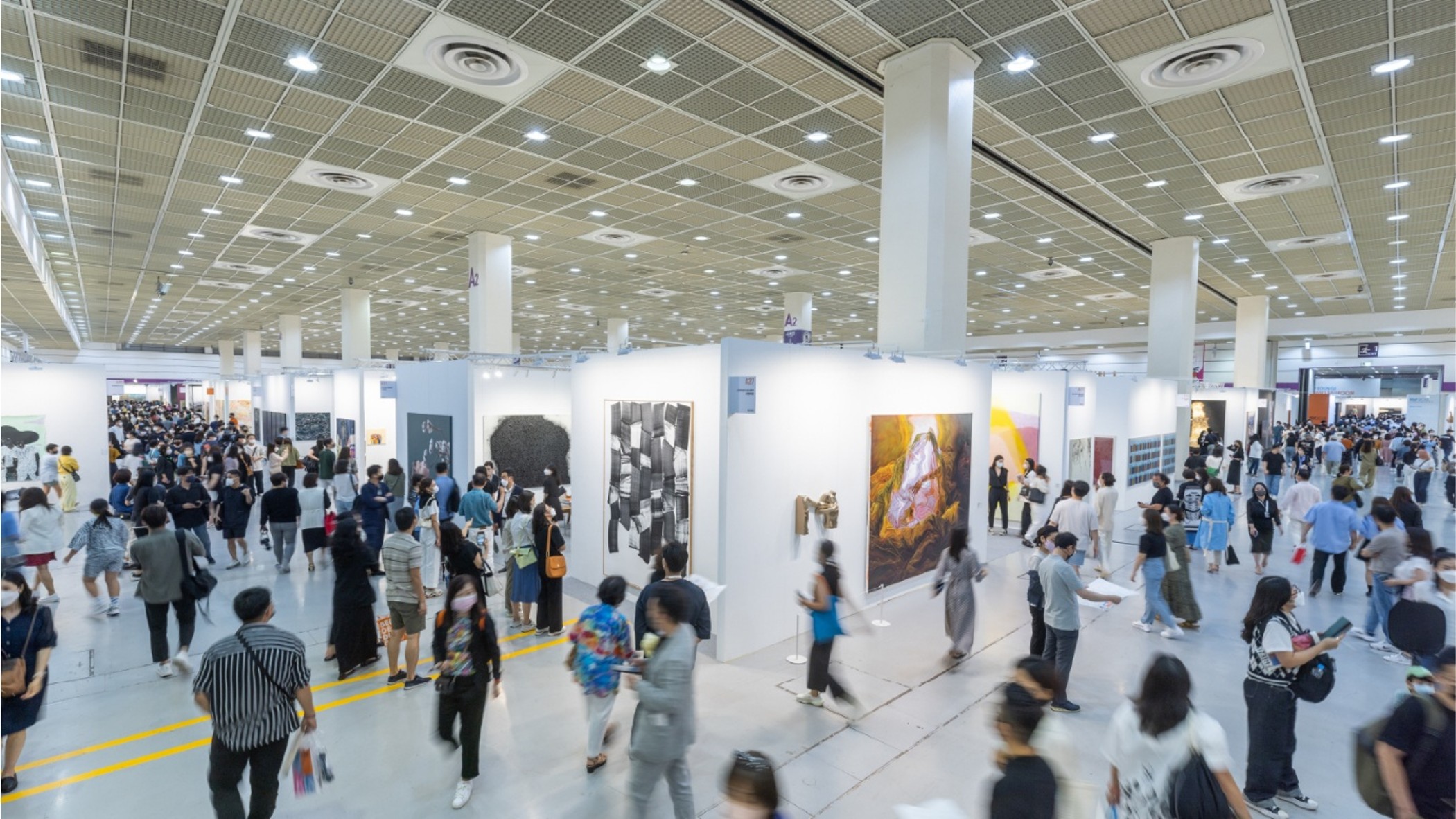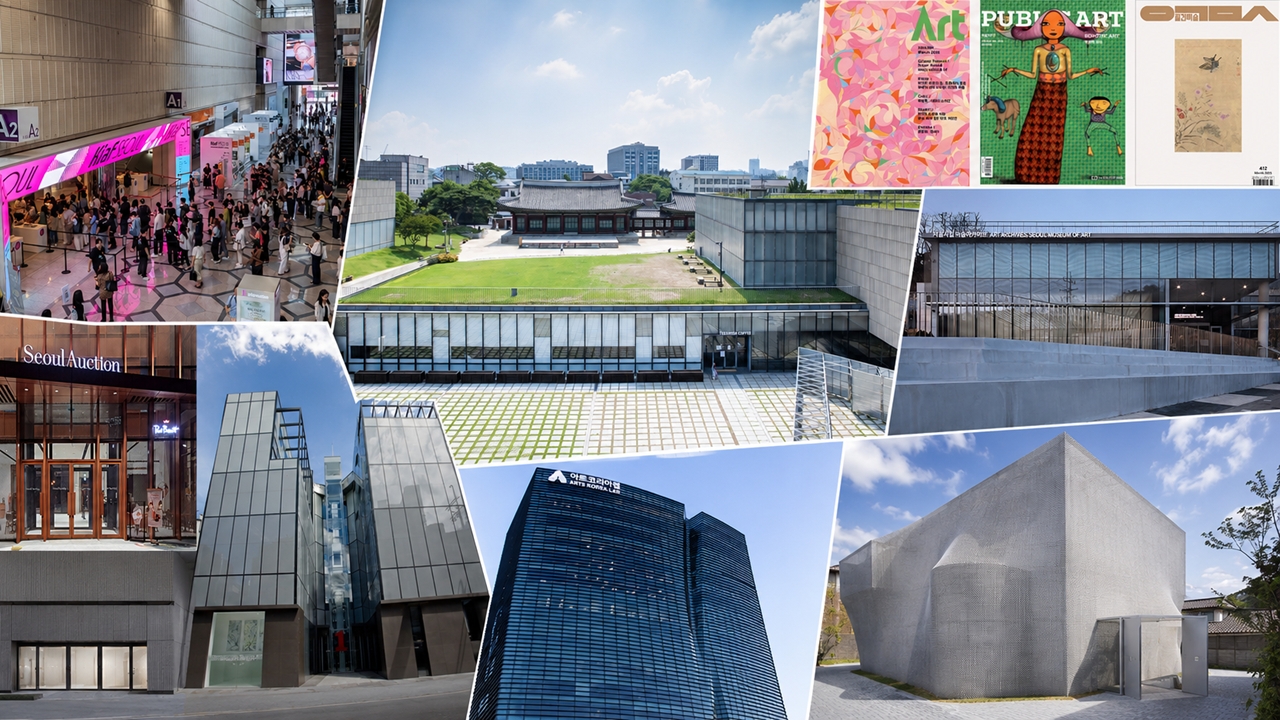
Kiaf SEOUL and Frieze Seoul both open on
September 2 this year. From August 31 to September 6, Seoul Art
Week 2026 will unfold across the city. With 135 visual arts
institutions and venues taking part—including museums, galleries, art fairs,
alternative spaces, and emerging art spaces—Seoul will be transformed into a
citywide art scene for an entire week.
Yet the art fairs alone are not enough to
experience Seoul Art Week in full. While Kiaf and Frieze offer a concentrated
view of the global art market, Seoul’s museums and exhibition spaces provide a
deeper understanding of the historical foundations of Korean art, the changes
it has undergone, and the directions it is taking today.
This year, in particular, visitors can
encounter the many histories and languages of Korean art at once: from the
emergence of Korean abstraction and the development of Dansaekhwa to the
contemporary expansion of Korean painting, as well as practices exploring
migration and identity, social systems, immaterial sensations, and the digital
environment.
These exhibitions do not propose a single,
shared idea of “Koreanness.” Rather, Korean art today has been shaped by
artists from different generations, each of whom has developed a distinct
artistic language in response to the conditions and experiences of their own
time.
We have selected seven exhibitions that
international art professionals, collectors, and art enthusiasts visiting Korea
for Seoul Art Week should not miss.
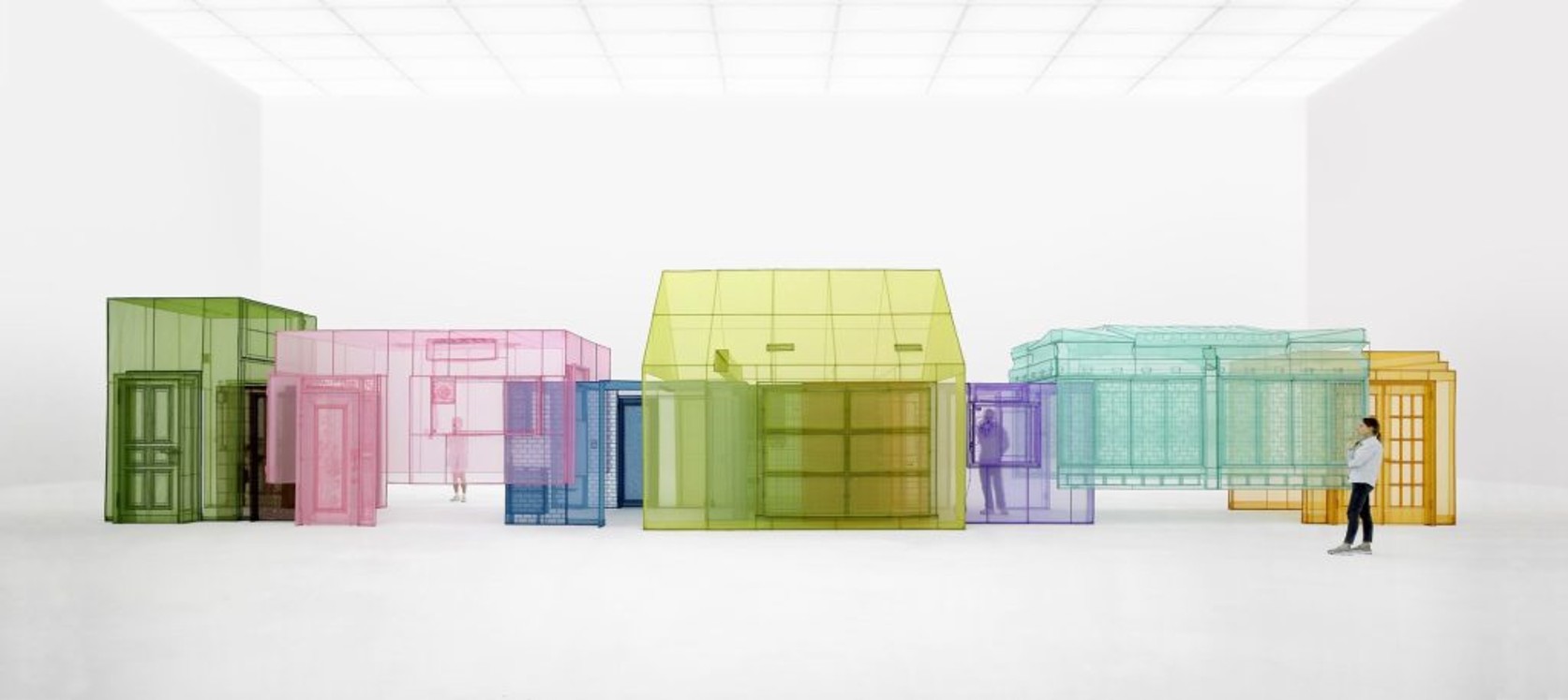
Photo: Jeon Taeg. © Do Ho Suh. Courtesy of Tate.
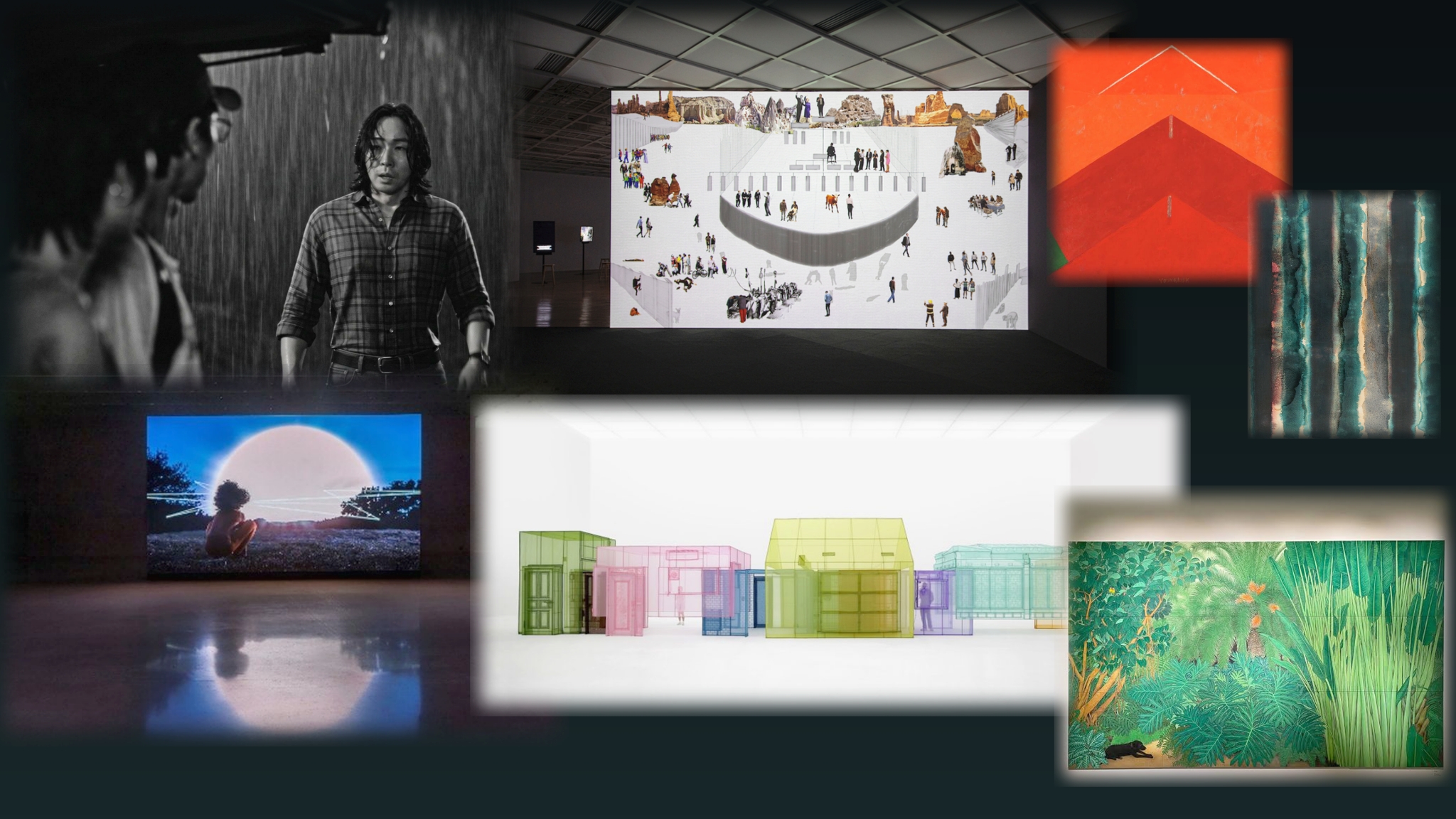
Do Ho Suh — Home, Movement, and
Spaces of Memory
Among the exhibitions deserving particular
attention during this year’s Seoul Art Week is Do Ho Suh’s major solo
exhibition at the National Museum of Modern and Contemporary Art, Korea (MMCA)
in Seoul.
Taking “home” as his point of departure,
Suh has long explored migration and habitation, the individual and the
collective, and memory and identity. By reconstructing architectural spaces in
which he has lived using translucent fabric, or connecting places he has experienced
in different cities, he transforms the home from a physical structure into a
place carried in the body and memory.
In Suh’s work, doors and corridors, stairs
and walls, and floors are more than architectural elements. They function as
structures of memory, revealing the time and experience accumulated as an
individual passes through a particular place. His lightweight, portable fabric
houses are both meticulous records and precarious structures that can be folded
and carried elsewhere at any moment.
The exhibition surveys Suh’s practice from
his early work to major pieces and ongoing projects. It includes the
large-scale installation Nest/s (2024), allowing
visitors to trace the development of his decades-long meditation on space and
movement.
Born in Seoul and active across the United
States, the United Kingdom, and other parts of the world, Suh has made movement
both a condition and a subject of his practice. Although he is already well
known internationally, encountering his work again in Seoul carries particular
resonance.
The exhibition reveals how an artist who
began in Korea and moved through the world transformed the personal question “Where
is home?” into a universal contemporary concern.
Exhibition Information
Exhibition: 《Do
Ho Suh》
Dates: August 27, 2026–February 9, 2027
Venue: National Museum of Modern and
Contemporary Art, Korea (MMCA), Seoul
Address: 30 Samcheong-ro, Jongno-gu, Seoul
Closed: Mondays and January 1
Admission and reservations: Check whether
advance booking is required before visiting
Website: MMCA,
《Do Ho Suh》
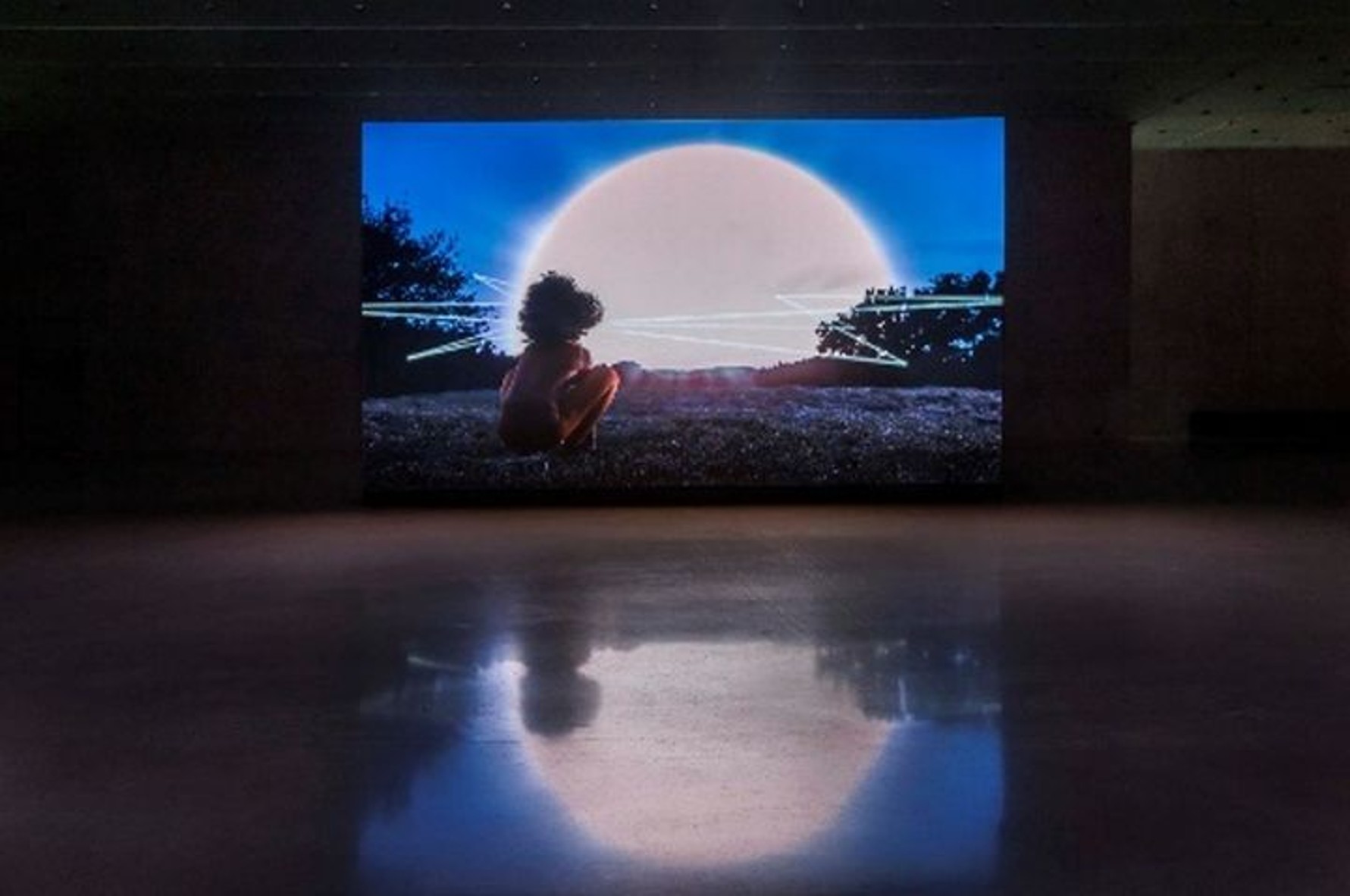
Installation view of 《Land of OUSSS [GRAVITTA]》, 2026, Kunsthaus Bregenz; [EB] Evocative Burst, 2025. Photo: Markus Tretter. © Koo Jeong A, Kunsthaus Bregenz.
Koo Jeong A: 《OUSSSMOS》 — Sensing the Invisible
On September 5, toward the end of Seoul Art
Week, Leeum Museum of Art will open Koo Jeong A’s solo exhibition 《OUSSSMOS》. Those wishing to see
the exhibition during Seoul Art Week will need to schedule their visit for
September 5 or 6.
Koo, who represented Korea at the 60th
Venice Biennale, has spent more than three decades exploring the relationship
between space and forces that are not readily visible. Her practice encompasses
scent, light, magnetism, phosphorescent materials, sound, architectural
interventions, and skateparks.
Koo’s work moves beyond the conventional
experience of viewing a sculpture or installation as an autonomous object.
Elusive elements—the scent and light of a space, its temperature and
atmosphere, and the movement of visitors—interact to form a sensory
environment.
This is the largest museum solo exhibition
of Koo’s work ever held in Korea. It brings together central elements that have
run through her practice, including phosphorescence, skateparks, magnets, and
scent.
《OUSSSMOS》
is the third chapter in an exhibition project following 《Land of OUSSS [KANGSE]》 at LUMA Arles in
France in 2025 and 《Land of OUSSS [GRAVITTA]》 at Kunsthaus Bregenz in Austria in 2026. It expands the multiple
layers of “OUSSS” explored in the earlier exhibitions into a single cosmic
environment.
The exhibition is not confined to the M2
gallery. Works permeate the museum, appearing in the lobby, in concealed spaces
between walls, and within the M1 permanent exhibition of Korean traditional
art. In doing so, they blur the boundaries between contemporary and traditional
art, and between galleries and communal areas. Rather than following a
prescribed sequence, visitors encounter works unexpectedly as they move through
the museum.
Rather than offering fixed meanings, Koo’s
work invites visitors to discover subtle changes and unfamiliar sensations for
themselves. As important as the visible works are the atmosphere and energy
surrounding them, and the sensations that arise between the visitor’s body and
the space.
If Do Ho Suh asks what space means to a
person in motion, Koo Jeong A asks how deeply we are capable of sensing that
space.
Exhibition Information
Exhibition: 《Koo
Jeong A: OUSSSMOS》
Dates: September 5–December 27, 2026
Venue: Primarily M2 at Leeum Museum of Art,
extending into the lobby and the M1 permanent exhibition of Korean traditional
art
Address: 60-16 Itaewon-ro 55-gil,
Yongsan-gu, Seoul
Closed: Mondays and January 1
Admission: Advance online reservation
recommended
Website: Leeum Museum of Art, 《Koo Jeong A: OUSSSMOS》
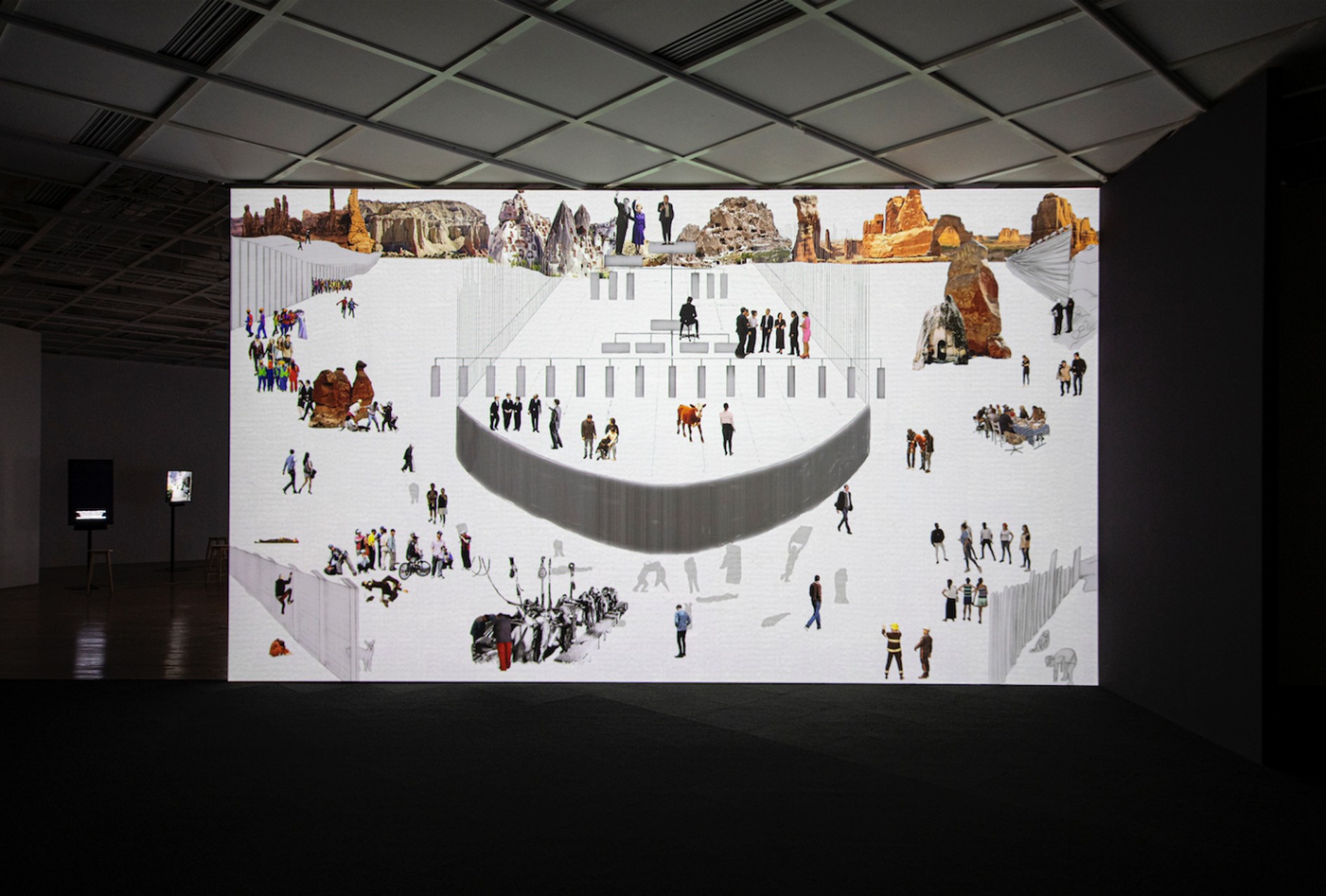
Yang Ah Ham, 〈Undefined Panorama 2.0〉, 2019. Single-channel video, color, sound (remastered in 2026), 7 minutes. Photo: Nam Seowon. Courtesy of Art Sonje Center.
Yang Ah Ham: 《Undefined Panorama》 — Ways of
Seeing the World
Art Sonje Center is currently presenting
Yang Ah Ham’s solo exhibition 《Undefined Panorama》.
Since the mid-1990s, Ham has investigated
the relationship between social structures and the individual through moving
image, installation, and long-term research-based projects. Spanning all three
floors of Art Sonje Center, this exhibition brings together new works, key
pieces, and archival materials from the artist’s ongoing ‘Undefined Panorama’
project, which began in 2018.
The project’s central concerns took shape
in response to a tragic event that shook Korean society in 2014. Confronted
with the suffering experienced by individuals and communities when social
systems fail, Ham asked what she could do as an artist. This question led her
to develop the ‘Undefined Panorama’ project in earnest from 2018 onward.
At the center of the exhibition is the new
work Undefined Panorama 4.0 (2026). The eight-channel
video is installed inside a large circular structure, enveloping the viewer.
Against the backdrop of society’s transition from industrial capitalism to
financial and data capitalism, the work considers how the individual body and
everyday life—and the relationships between human beings, society, and nature—have
changed.
The viewer does not stand outside the
panorama as an observer looking down upon it, but enters the circular structure
and becomes part of a network connecting events and people. The conventional
panoramic viewpoint, which claims to command the world in a single glance, is
rendered impossible.
Another new work, Listening
Speaker, Speaking Other (2026), gathers private monologues from
individuals living in different parts of the world. Their disparate languages
and experiences are not consolidated into a single conclusion or grand
narrative. Rather than interpreting or speaking on behalf of others, the work
asks whether a relationship might begin with the act of listening.
The exhibition also includes major works
connected to the project: Sleep (2015–2016), which
addresses social systems and individual anxiety during disasters; Undefined
Panorama 2.0 (2019), which traces the structures and inequalities
of financial capitalism; and Hunger 2.0 (2023), which
examines structurally produced hunger.
Here, “panorama” does not mean a complete
vista from which the entire world can be surveyed at once. Instead, it becomes
a concept through which Ham questions whether a complex and interconnected
world can ever be understood from a single perspective.
Today, we encounter more information and
images than ever before, yet they are constantly selected and edited by
algorithms, media, and political and economic systems. Is the world we see the
whole, or merely one image constructed by someone else?
The exhibition demonstrates that Korean
contemporary art engages the international art world not only through
recognizably Korean images or materials, but also through sustained
investigations into universal questions: the relationship between social systems
and individuals, and between human and nonhuman beings.
Exhibition Information
Exhibition: 《Yang
Ah Ham: Undefined Panorama》
Dates: July 31–October 4, 2026
Venue: Art Sonje Center
Address: 87 Yulgok-ro 3-gil, Jongno-gu,
Seoul
Hours: Tuesday–Sunday, 12:00–7:00 p.m.
Closed: Mondays
Website: Art
Sonje Center, 《Yang Ah Ham: Undefined
Panorama》
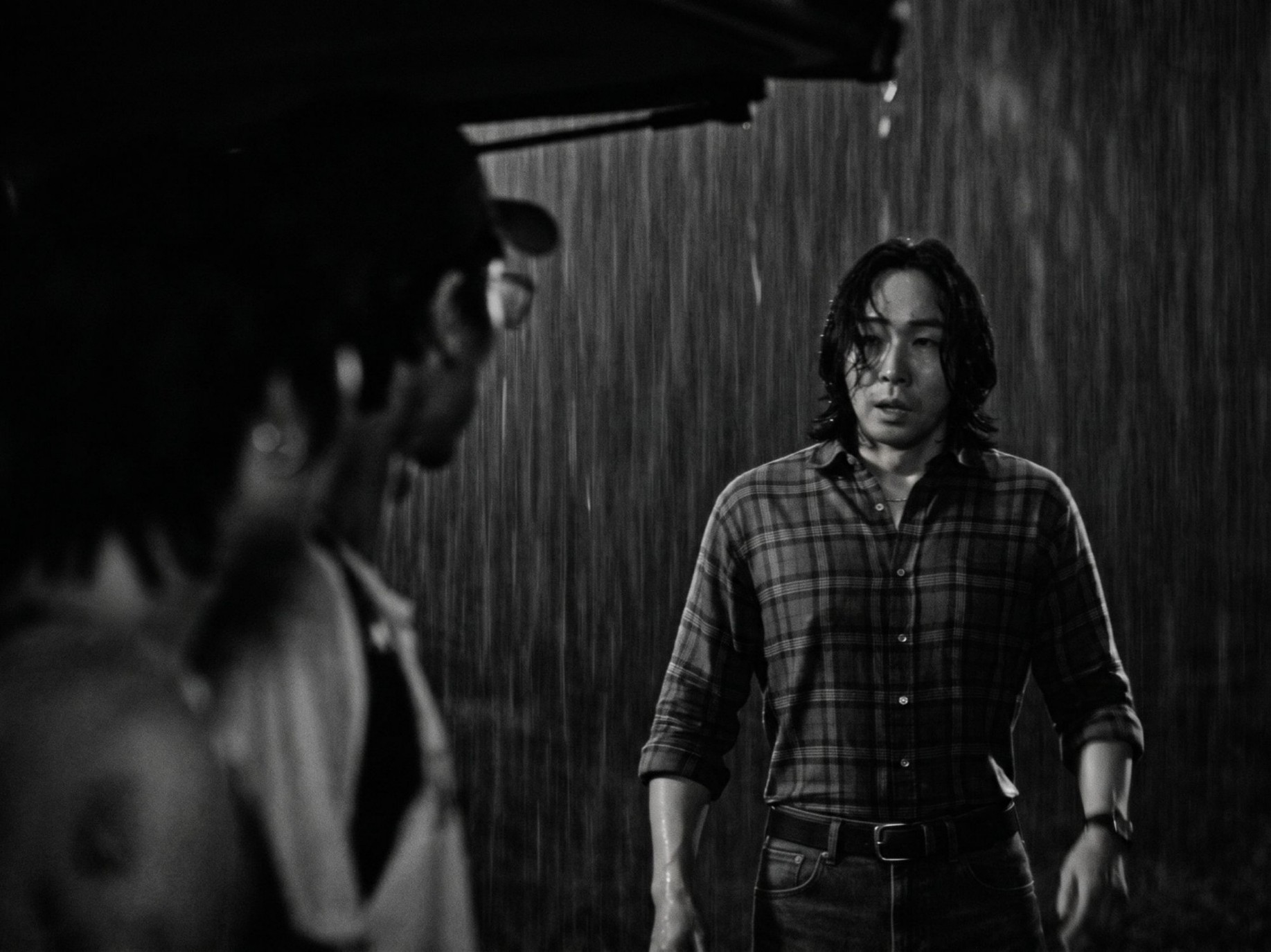
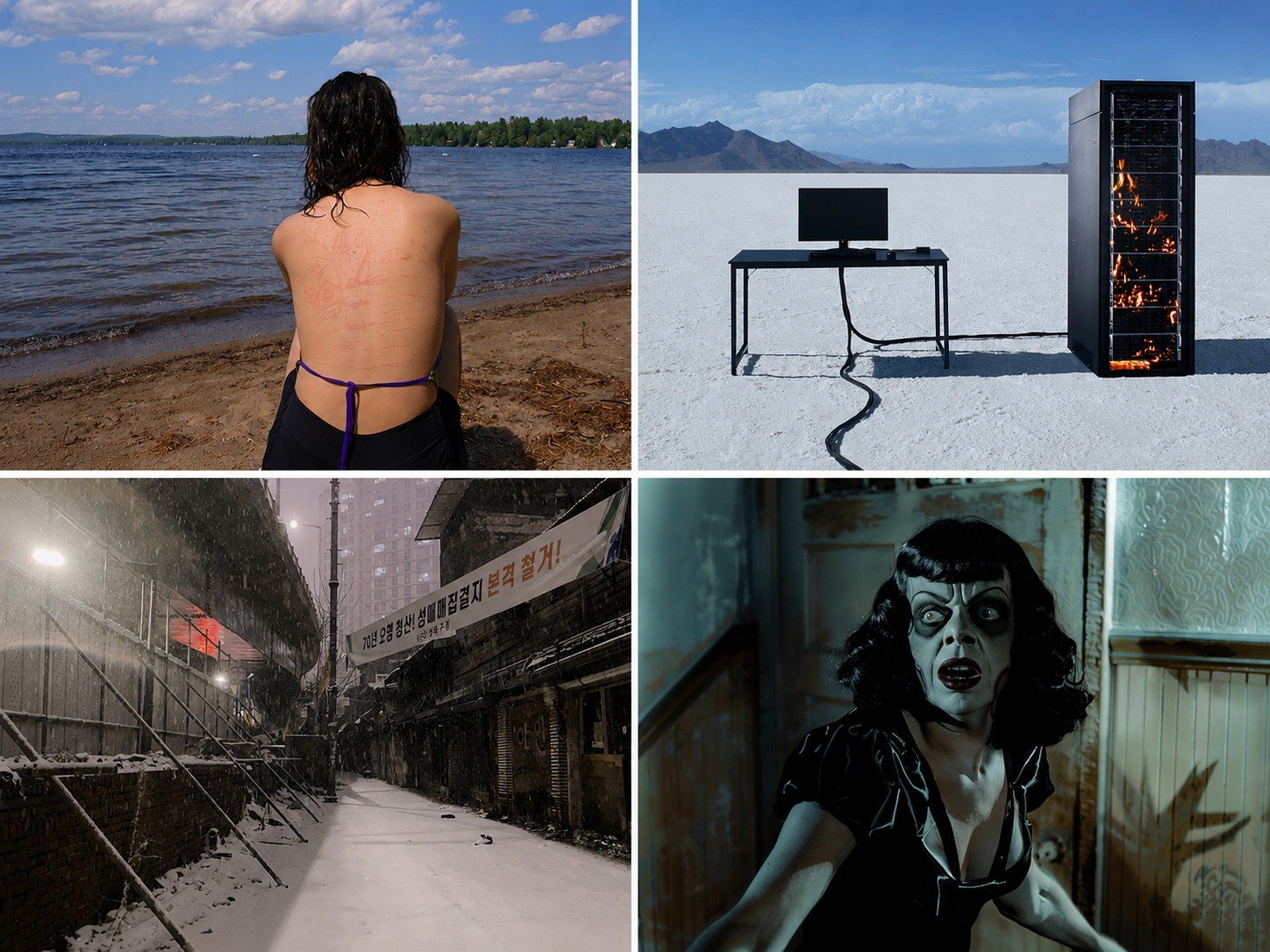
Kim Heecheon, Cured, 2026. Four-channel video, 5.1 channel audio, black, color, 35 minutes. Commissioned and supported by the Seoul Museum of Art.
Kim Heecheon: 《Moles》 — New Sensibilities in a Digital
Reality
Kim Heecheon’s 《Moles》 at Seo-Seoul Museum of Art offers one of the most compelling
explorations of how digital technology is reshaping perception and identity in
Korean contemporary art.
Kim has explored how technological
environments—including smartphones, GPS, game engines, digital images, and
virtual spaces—transform human perception and identity. In his work, reality
and the virtual do not stand in opposition. In a world where smartphones,
games, online platforms, and artificial intelligence are already embedded in
everyday life, physical and digital realities are deeply intertwined.
We use screens to find our way, form
relationships, store memories, and see ourselves. Digital technology, in this
context, is no longer merely a tool that supplements reality. It changes the
very ways in which we experience time, perceive the world, and construct the
self. Through the languages of moving image, games, photography, and
installation, Kim captures the new sensibilities produced by this
transformation.
The exhibition centers on recent and new
works created since 2023. These include the self-playing games Cutter3
(2023) and Double Poser (2023), made with the Unity
game engine, as well as the new works Lemon (2026)
and the four-channel video Cured (2026).
Made with generative artificial
intelligence, Cured is a multichannel video that
considers how the image ecology of the near future might transform the world
and human perception. In an environment where technology recedes from view and
the distance between human beings and systems collapses, it asks how much of
the world we see and experience can truly be called our own.
The newly unveiled photographic work .dng
(2026) consists of approximately 100 images selected from 5,841 photographs
taken by the artist on his mobile phone. Rather than following a fixed subject
or complete narrative, the work records the passage of time and incidental,
discontinuous experiences, revealing another way in which digital images
accumulate memory and everyday life.
The “moles” of the exhibition title are
beings that travel underground between different game worlds. They symbolize a
desire to escape environments constructed by technology, while also suggesting
a new kind of subject: one that is not fixed within a single world or identity,
but passes between multiple realities.
The exhibition venue itself is also
noteworthy. Seo-Seoul Museum of Art is the first public art museum in
southwestern Seoul and the city’s first public museum dedicated to new media.
Its programs focus on contemporary art that experiments with new technologies,
media, and visual languages.
Although the museum lies some distance from
Seoul’s established art districts such as Samcheong-dong and Hannam-dong, the
exhibition offers an important perspective on how a new generation of Korean
artists understands the relationship between technology and reality, images and
identity.
Exhibition Information
Exhibition: Seo-Seoul Museum of Art Solo
Exhibition of Media Artist, 《Kim Heecheon: Moles》
Dates: August 20–November 8, 2026
Venue: Galleries 1 and 2 and Multipurpose
Hall, B1, Seo-Seoul Museum of Art
Address: 65 Siheung-daero 79-gil,
Geumcheon-gu, Seoul
Hours: Tuesday–Friday, 10:00 a.m.–8:00
p.m.; weekend and public-holiday hours vary by season
Closed: Mondays and January 1
Admission: Free
Website: Seoul
Museum of Art, 《Kim Heecheon: Moles》
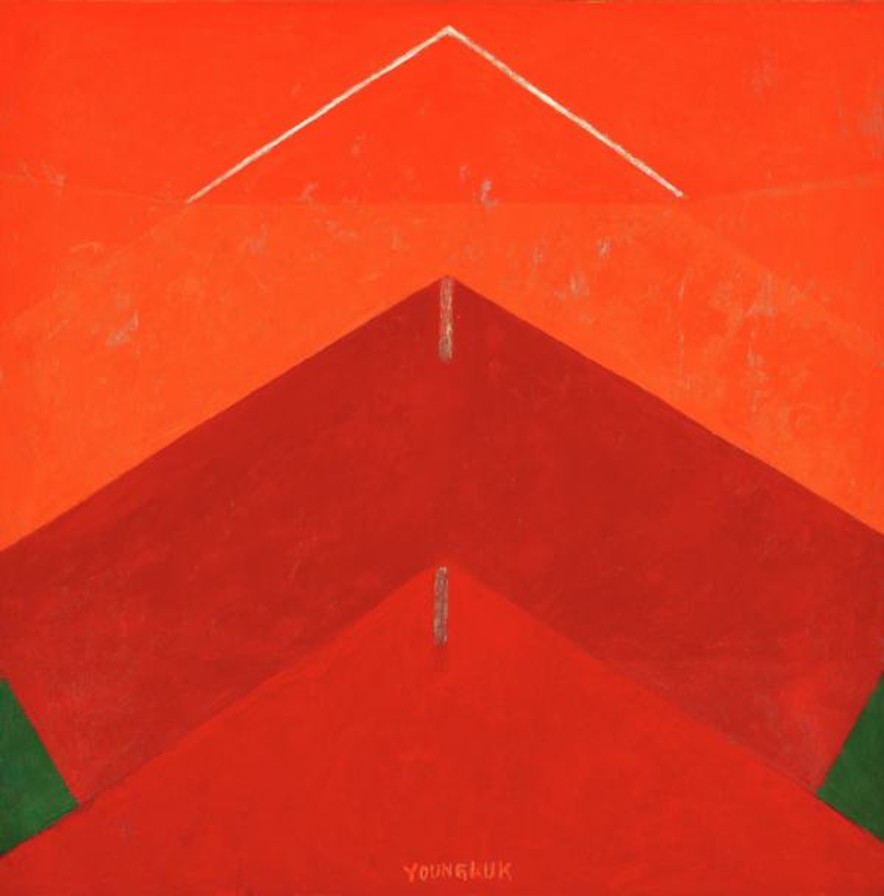
Yoo Youngkuk, Work, 1999. Oil on canvas, 105 x 105 cm. ©Yoo Youngkuk Art & Culture Foundation.
Yoo Youngkuk: 《A Mountain Within Me》 — At the Origins
of Korean Abstraction
To understand Korean contemporary art, it
is necessary to look not only at artists working today, but also at how earlier
generations developed their own languages of modern art under particular
historical conditions.
《Yoo Youngkuk: A Mountain Within Me》 at the Seoul Museum of Art commemorates the 110th anniversary of
the birth of Yoo Youngkuk (1916–2002), a pioneer of Korean abstract art. It is
the largest retrospective of his work to date and the inaugural exhibition in
the museum’s new “Korean Modern Masters” series.
The exhibition spans nearly six decades,
from Yoo’s early abstract experiments at Bunka Gakuin in Tokyo in 1935 to the
abstract imagery of his later years. More than 170 paintings, reliefs,
photographs, drawings, and archival materials—including previously unseen works—trace
the formation and transformation of a singular visual language.
For Yoo, the mountain was not a motif for
naturalistic representation. He simplified and reconstructed forms derived from
nature through lines, planes, and intense colors, developing them into a
distinctive abstract language. The mountain that recurs throughout his work is
at once a representation of a real landscape, a repository of memory, and a
fundamental structure through which to experiment with color, form, and
pictorial order.
His practice unfolded amid the upheavals of
modern Korean history: Japanese colonial rule, liberation, the Korean War,
postwar reconstruction, and industrialization. Although Yoo did not depict
historical events directly, neither did he retreat into a formalism detached
from his era. He resisted the state-sponsored academic establishment
represented by the National Art Exhibition and pursued abstraction as an
independent avant-garde artist, continually refining and renewing his language.
Yoo combined Korea’s natural environment
and the experiences of his own time with the grammar of international
abstraction to build an original painterly world. His abstraction should
therefore be understood not as a mere influence or offshoot of Western
modernism, but as an autonomous modernism constructed within Korea’s particular
historical conditions.
The exhibition illuminates not only the
formation and development of Korean abstraction, but also what it means for an
artist to refuse to be swept along by the rapid changes of an era and instead
refine a personal language over an entire lifetime.
Exhibition Information
Exhibition: 2026 Korean Modern Masters, 《Yoo Youngkuk: A Mountain Within Me》
Dates: May 19–October 25, 2026
Venue: First-floor galleries, Seoul Museum
of Art, Seosomun Main Branch
Address: 61 Deoksugung-gil, Jung-gu, Seoul
Works: Approximately 170 paintings,
reliefs, photographs, drawings, and archival materials
Hours: Tuesday–Thursday, 10:00 a.m.–8:00
p.m.; Friday, 10:00 a.m.–9:00 p.m.; weekend and public-holiday hours vary by
season
Closed: Mondays and January 1
Admission: Free
Website: Seoul
Museum of Art, 《Yoo Youngkuk: A Mountain
Within Me》
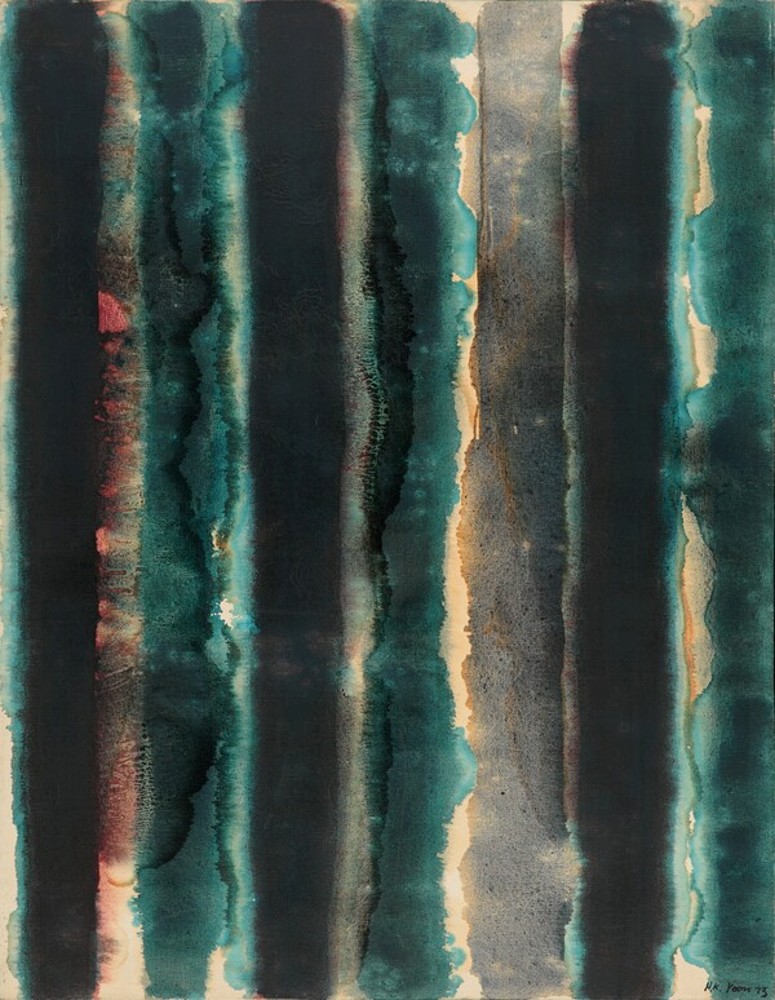
Yun Hyong-keun, Untitled, 1973, Oil on cotton, 145 x 112 cm. Photo courtesy of PKM Gallery.
Yun Hyong-keun — Where Art and
Life Meet
Yun Hyong-keun’s exhibitions offer a rare
opportunity to encounter his paintings and then visit the house in which he
lived and worked.
《reimagine Yun Hyong-keun》 at PKM Gallery traces the evolution of Yun’s practice from the
1970s through the 2000s, bringing together approximately 30 works, including
large-scale paintings and works on hanji.
From the 1970s onward, Yun (1928–2007)
developed his ‘Cheonji-mun’ (“Gate of Heaven and Earth”) paintings by
repeatedly allowing burnt umber and ultramarine blue to soak into the surface,
helping to shape a major current within Korean Dansaekhwa.
In his paintings, pigment does not sit on
the surface so much as permeate the fabric. The colors overlap without fully
merging, while descending vertical fields of dark color and the empty spaces
between them create tension and equilibrium. Although the compositions are
reduced to minimal color and form, they contain a profound accumulation of
material, time, and traces of repeated action.
Beginning with representative works from
the 1970s, when the ‘Cheonji-mun’ paintings became established, the
exhibition also presents lyrical early paintings and later works that move
toward even greater restraint. Archival materials focus on the home and studio
that formed the ground of Yun’s life and practice.
Yun is now one of the most internationally
recognized figures associated with Korean Dansaekhwa. His work is held in major
museum collections, including MMCA and Leeum Museum of Art, Tate Modern in
London, the Chinati Foundation in Marfa, the Art Institute of Chicago, and the
Museum of Contemporary Art Tokyo.
The experience extends beyond the gallery.
On September 1, 《Yun Hyong-keun House》 in Seogyo-dong, Seoul, will open to the public for the first time.
The house stands on land first allocated to
Yun’s father-in-law, Kim Whanki, as part of a government housing program in
1963. Yun lived there from 1967. In 1983, after demolishing the original house,
he commissioned a new building designed by his younger brother Yun Do-keun,
then a professor of architecture at Hongik University. Yun himself took an
active role in the architectural process, contributing ideas about the function
and form of the space and the choice of materials.
The conservation and restoration project
sought to preserve not only the architectural structure and finishes, but also
the original arrangement of the artist’s furniture, ceramics, books, and
household objects. The ground floor houses the studio, artworks, an archive
room, and a video room, while the living room, kitchen, and master bedroom
upstairs retain traces of family life.
For Yun, art was not separate from life.
The act of making a painting, the care with which he selected and arranged
objects, and the way he organized his home and studio all belonged to a single
aesthetic order.
Seeing Yun’s restrained paintings in the
gallery and then entering the domestic and working spaces in which they emerged
reveals dimensions of his art that cannot be fully understood through the
art-historical category of Dansaekhwa alone.
Exhibition Information 1
Exhibition: 《reimagine
Yun Hyong-keun》
Dates: August 26–October 3, 2026
Venue: PKM Gallery and PKM+
Address: 40 Samcheong-ro 7-gil, Jongno-gu,
Seoul
Hours: Tuesday–Sunday, 10:00 a.m.–6:00 p.m.
Last admission: 5:30 p.m.
Website: PKM Gallery, 《reimagine Yun Hyong-keun》
Exhibition Information 2
Venue: 《Yun
Hyong-keun House》
Open to the public: September 1–October 17,
2026
Address: 19-17 Wausan-ro 21-gil, Mapo-gu,
Seoul
Admission: KRW 20,000
Sessions: 11:00 a.m., 1:00 p.m., 2:30 p.m.,
and 4:00 p.m.
Visit format: Maximum eight visitors per
session; approximately 60 minutes; all sessions accompanied by a docent
Reservations: Advance booking required
Website: PKM Gallery, 《Yun Hyong-keun House》
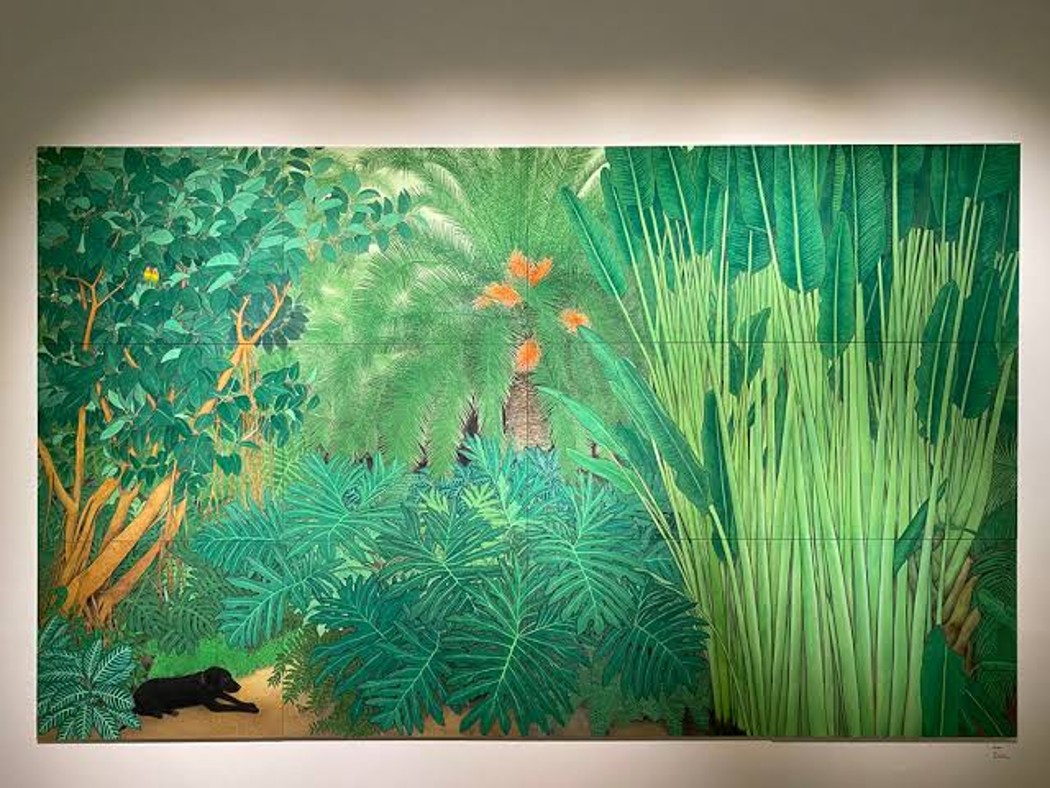
New works from the ‘Towards’ series, depicting the artist’s garden and the sea in Jeju, flowers and fruit, and her dog Leo.
Kim Bohie: 《TOWARDS: There Was Light》 — Nature
Reimagined through Light and Time
During Seoul Art Week, Gallery Hyundai in
Samcheong-dong presents Kim Bohie’s solo exhibition 《TOWARDS: There Was Light.》
For more than four decades, Kim has closely
observed nature and translated its rhythms of life and time into painting. The
garden and sea, trees and flowers, fruit and animals she encounters in Jeju
recur throughout her work.
Her paintings, however, are not
naturalistic reproductions of the landscapes before her. Nature, observed over
time, is reconfigured through memory and imagination. Plants, sea, and sky seen
from different viewpoints and at different moments overlap within a single
picture, while light and color that could not coexist in an actual landscape
create a new order.
This is Kim’s first solo exhibition in
Korea in four years, following 《the Days》 at the Jeju Museum of Contemporary Art in 2022. It is also her
first solo exhibition at Gallery Hyundai in 38 years, since 《The Third Kim Bohie Solo Exhibition》 in
1988.
The exhibition features approximately 30
paintings, including new works from the Towards series depicting the
artist’s garden and the sea in Jeju, flowers and fruit, and her dog Leo. Of
particular note is the opportunity to see the monumental painting The
Days (2022)—presented in the Unlimited sector at Art Basel in
Basel in 2026—again in Seoul.
The Days unfolds the morning sea, night sky, earth, and plants across one
continuous pictorial field. Rather than capturing a landscape at a specific
moment, the work condenses the course of a day and the cycles of nature into a
single scene. Standing before it, viewers encounter a landscape in which light
and color from different times of day flow into one another.
Kim has neither simply inherited the
conventions of traditional Korean painting nor uncritically adopted Western
painterly forms. On canvas and hanji, she repeatedly applies and dries layers
of pigment mixed with water and animal glue, developing the absorption and
empty space of East Asian painting into the color fields and expanded surfaces
of contemporary painting. The accumulated layers of color gradually permeate
the picture plane, creating her work’s distinctive depth and density.
What matters in Kim’s painting is not
merely what she depicts. More important is how several kinds of time converge
within a single work: the time spent looking at nature, the time in which
landscape becomes a mental image through memory, and the time required to
reconstruct it on the surface.
The subtitle “There Was Light”
evokes a moment of creation, when light appears in darkness and the world
begins to reveal itself. Here, light is both the physical condition that makes
nature visible and a painterly element that connects color and time, disparate
beings and landscapes, within a single image.
The exhibition title also incorporates ‘Towards’,
the name Kim has long used for the series. Rather than signifying arrival at a
final destination, “Towards” suggests a gaze and an attitude continually
directed beyond what is already there. Just as the artist’s vision moves from
seed to garden, from garden to sea, and from a small living presence nearby to
the space beyond the horizon, her paintings never settle into a single,
finished landscape.
Kim’s practice is often described simply as
“paintings of Jeju’s nature,” but this exhibition invites a broader reading.
The nature she paints is less a beautiful landscape belonging to a particular
region than a living world continually transformed by light and time, life and
memory.
If Yoo Youngkuk reconfigured mountains
through line, plane, and color to create a distinctive language of Korean
abstraction, Kim has opened another horizon in modern Korean painting by
extending the materials and sensibilities of Korean painting into the expanded
field of contemporary painting.
Exhibition Information
Exhibition: 《Kim
Bohie: TOWARDS: There Was Light》
Dates: August 26–October 18, 2026
Venue: Gallery Hyundai
Address: 14 Samcheong-ro, Jongno-gu, Seoul
Works: Approximately 30 paintings,
including new works from the ‘Towards’ series and 〈The Days〉 (2022)
Hours: Tuesday–Sunday, 10:00 a.m.–6:00 p.m.
Closed: Mondays
Website: Gallery Hyundai, 《TOWARDS: There Was Light》
Together, these seven exhibitions span
different generations, media, and aesthetics in Korean art. Yoo Youngkuk and
Yun Hyong-keun reveal how Korean modern art transformed abstraction—an
international language—into distinct visual worlds, while Kim Bohie carries the
materials and sensibilities of Korean painting into the expanded field of
contemporary painting.
Do Ho Suh and Koo Jeong A extend the idea
of space beyond physical architecture or place to encompass memory and
movement, perception and energy. Yang Ah Ham traces the relationship between
social systems and the individual through long-term research and narrative
structures, while Kim Heecheon addresses new forms of perception and identity
in an era when digital technology has already become part of reality.
If Kiaf and Frieze Seoul present the
current state of global contemporary art in a brief yet concentrated form,
Seoul’s museums and exhibition spaces reveal the histories and changing
trajectories of Korean art.
The singular appeal of Seoul Art Week lies
in the way global contemporary art intersects with the layered history of
Korean art within a single city.