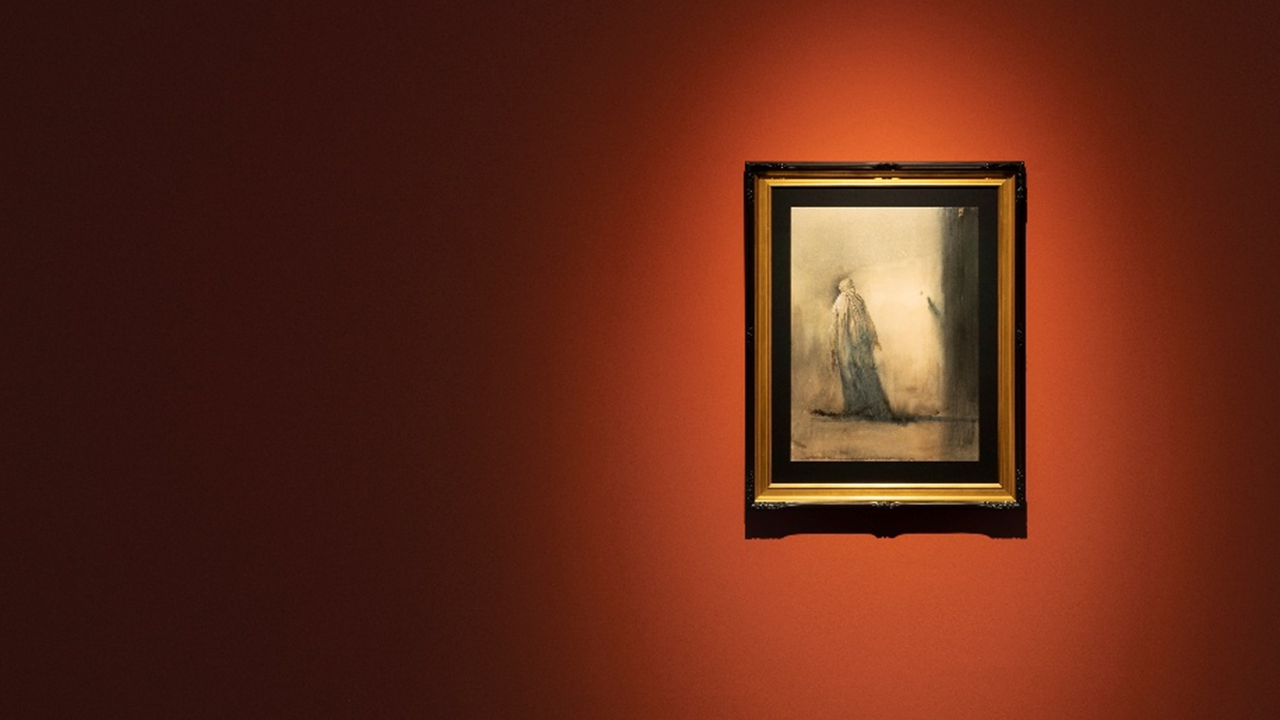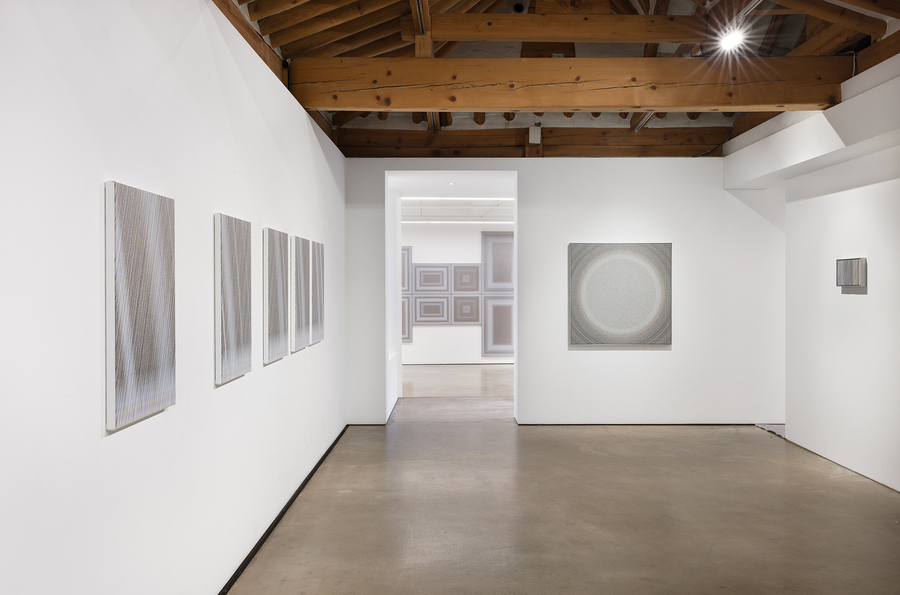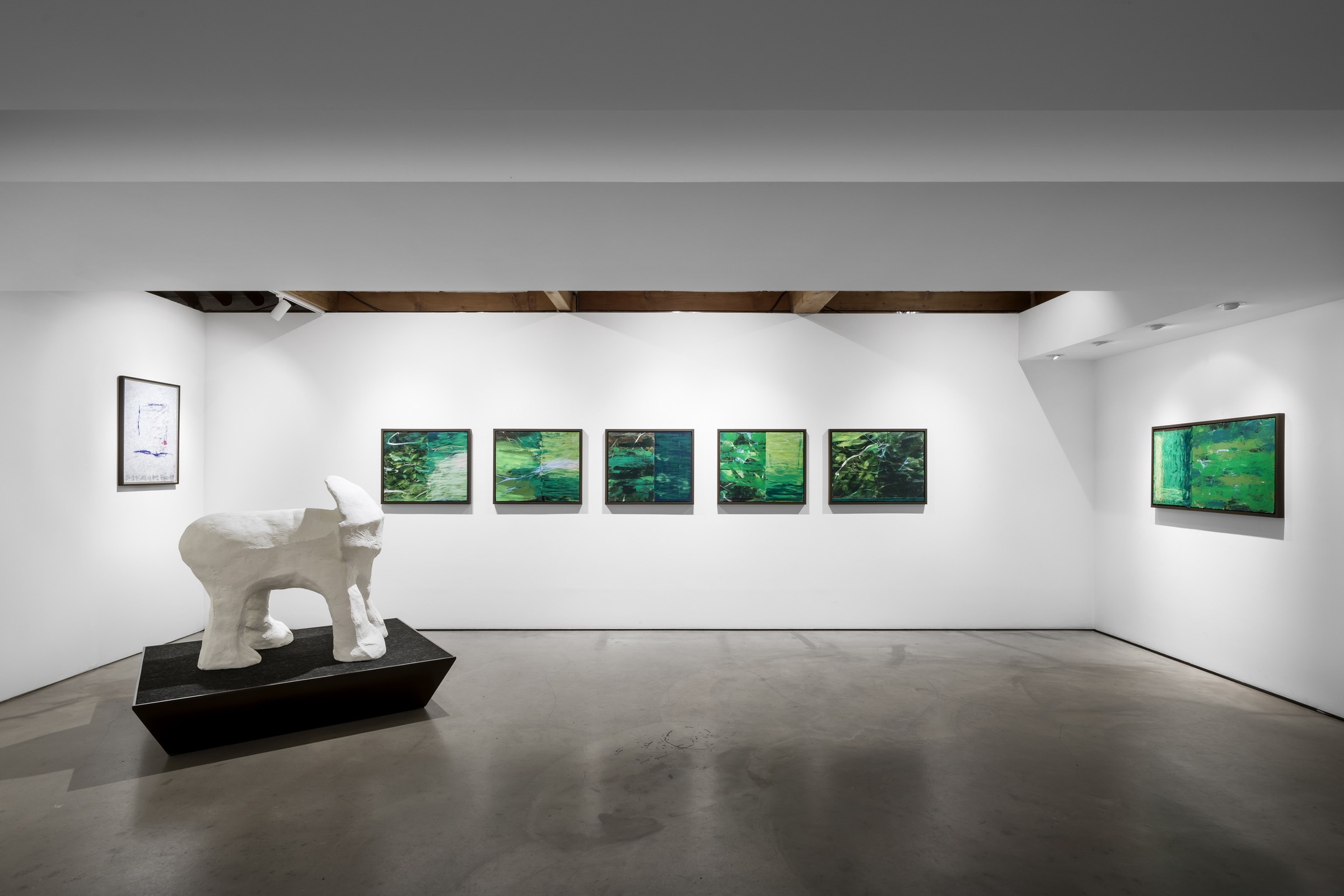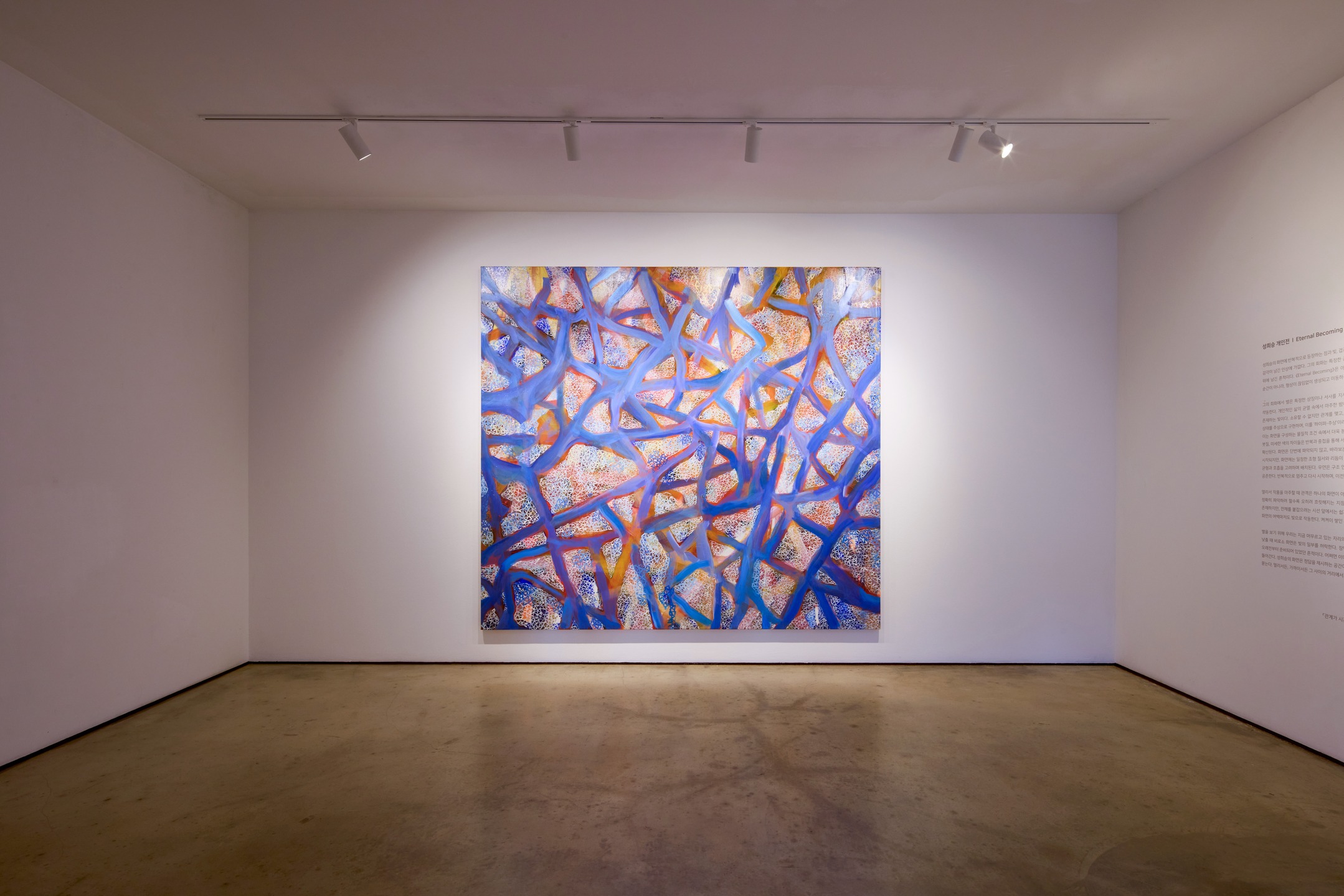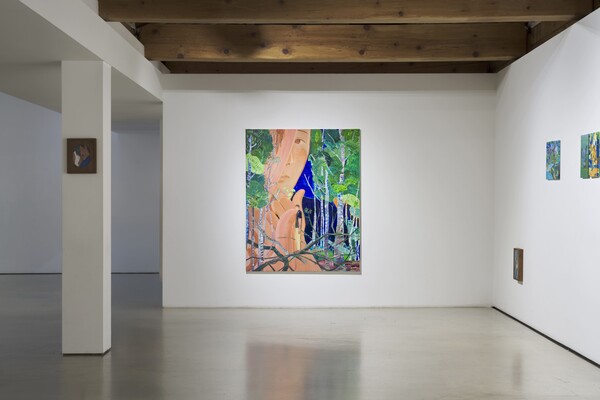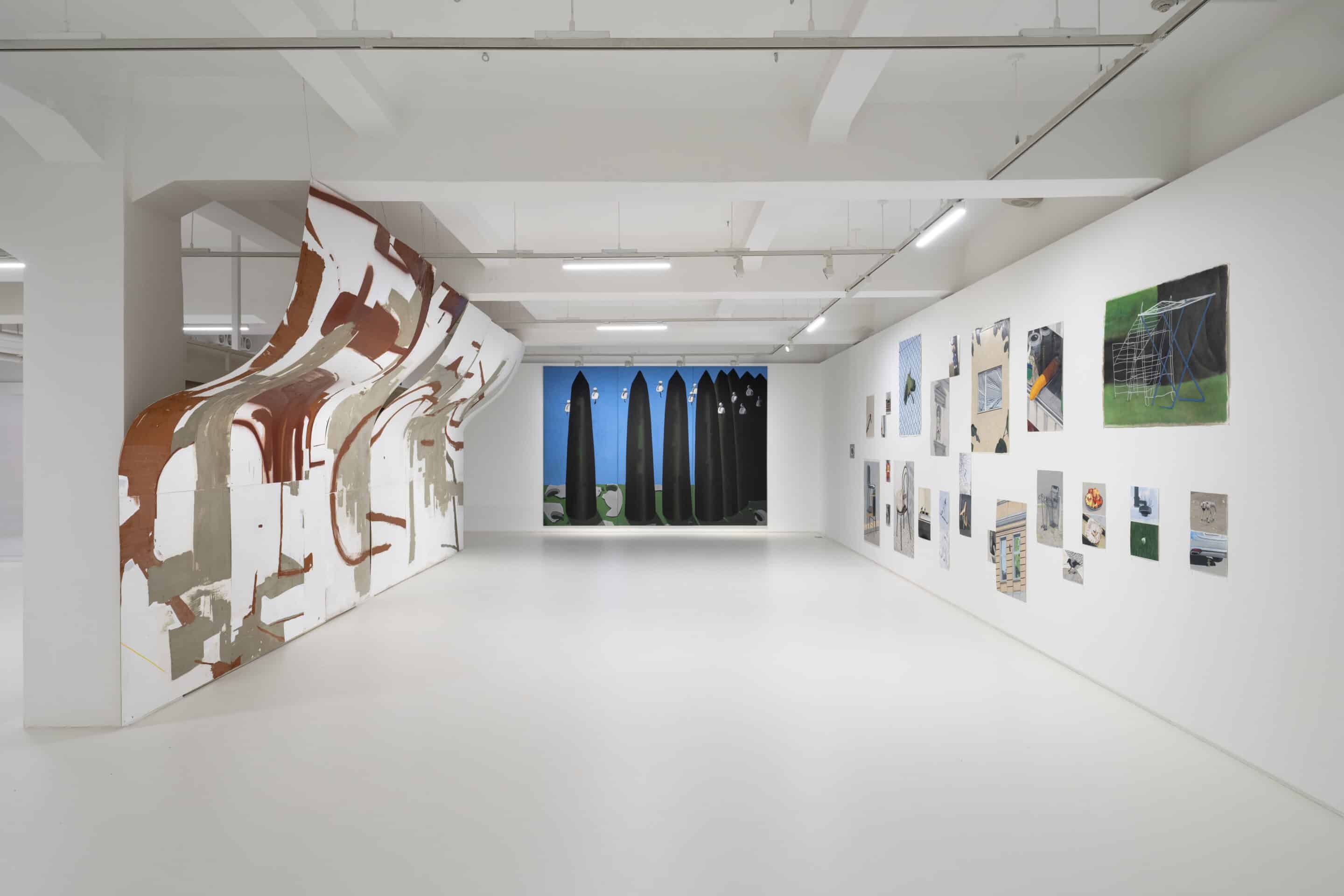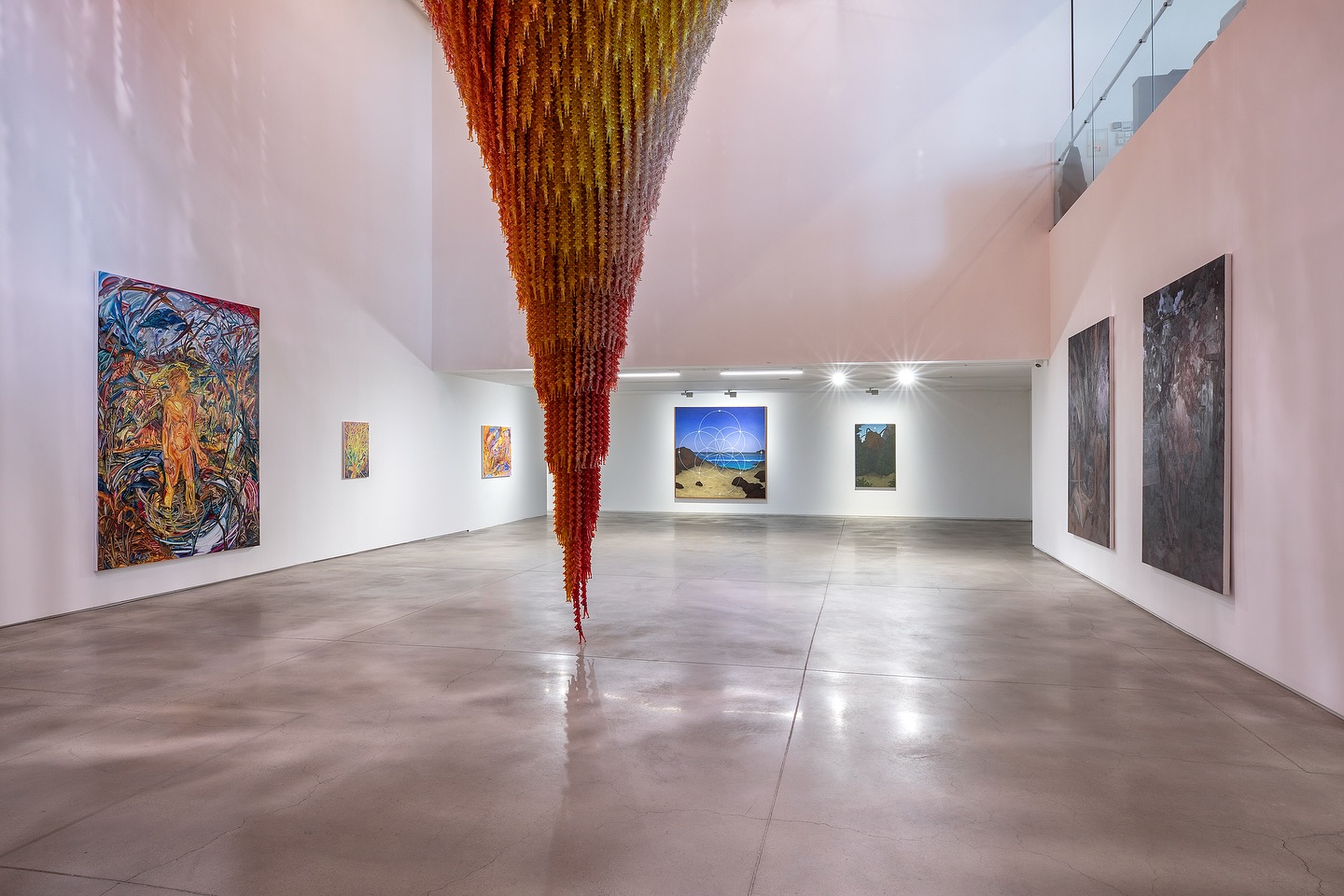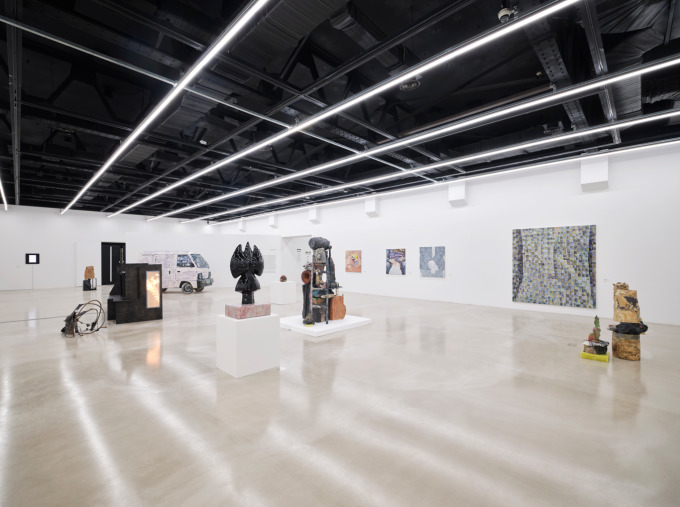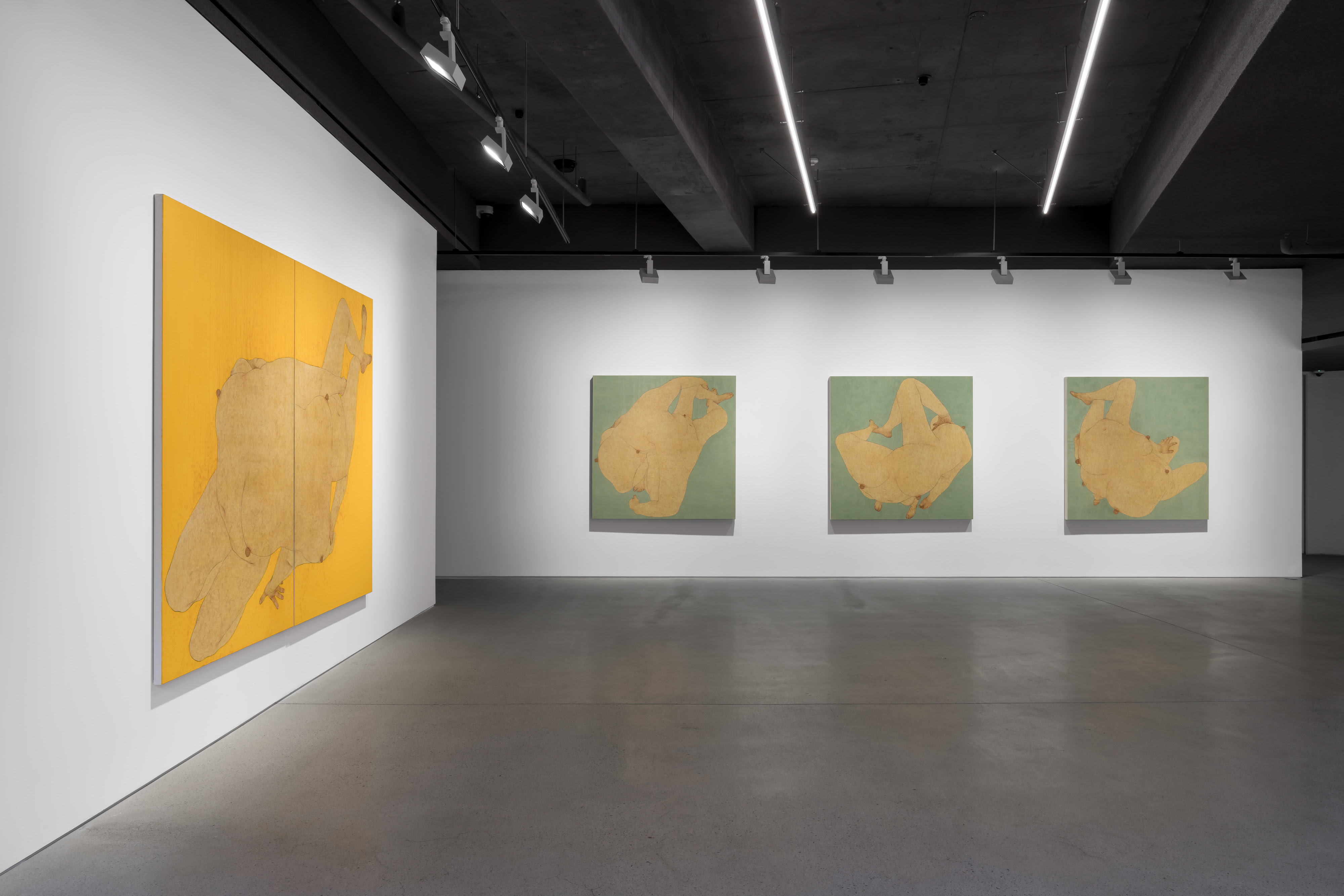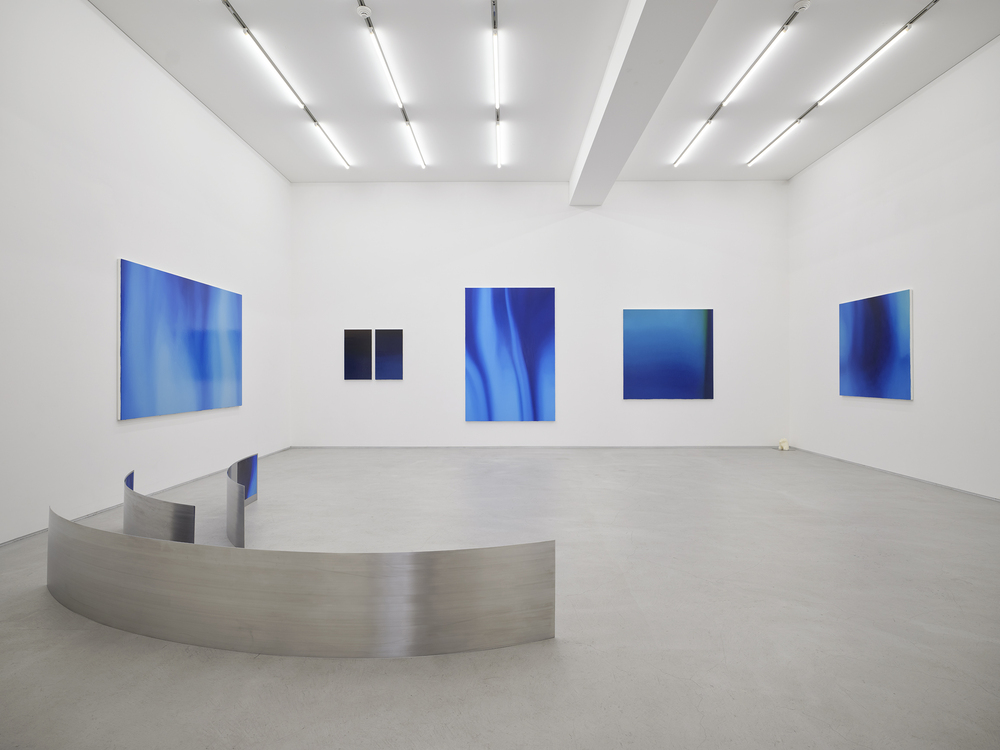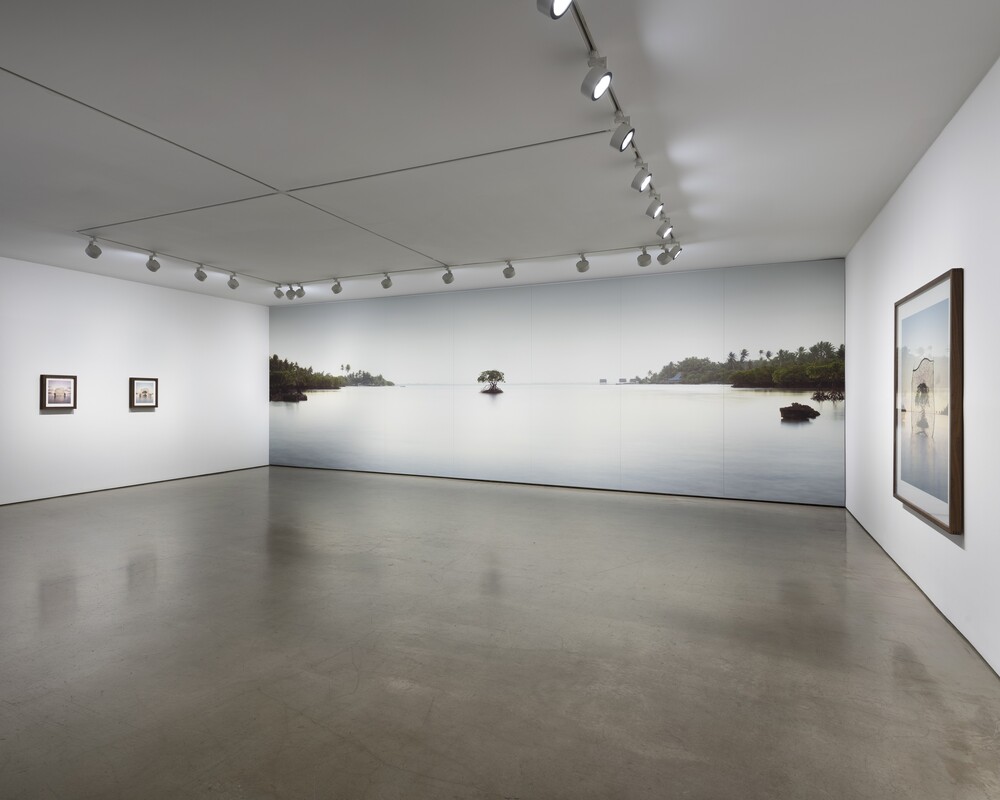

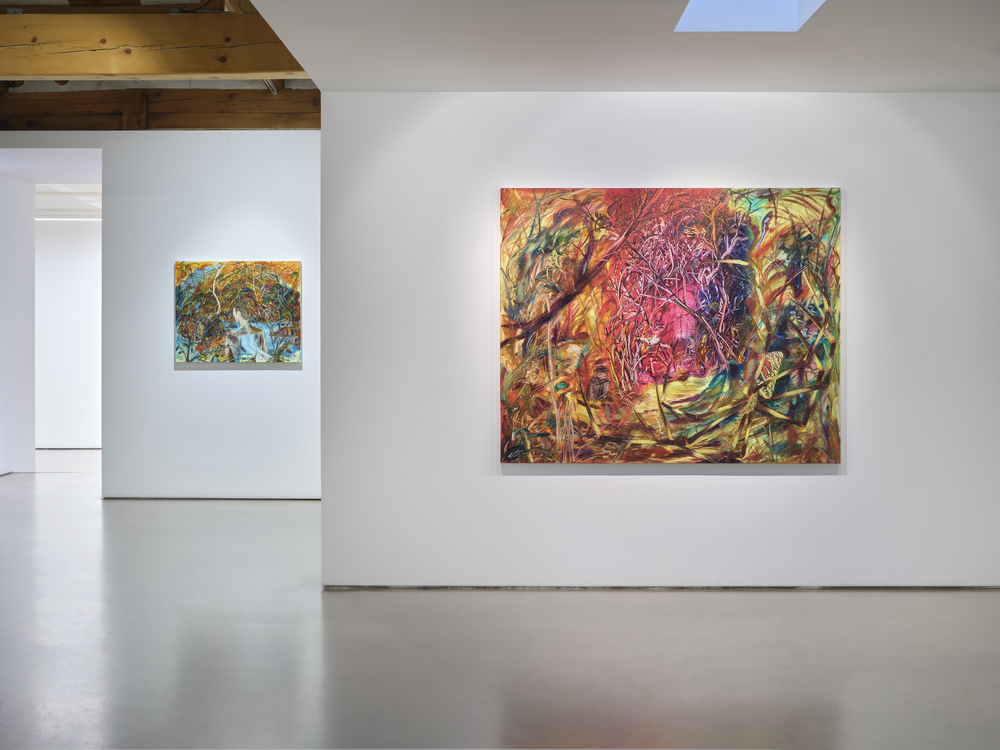
Installation view of 《The Darkness of Milk》 © Hakgojae Gallery
Hakgojae Gallery presents 《The Darkness of Milk》, a solo exhibition by Gwangsoo PARK (b. 1984), on
view through December 5.
Centered on a sense of longing for what has disappeared, the
exhibition brings together new paintings shaped by the interplay of memory and
imagination.
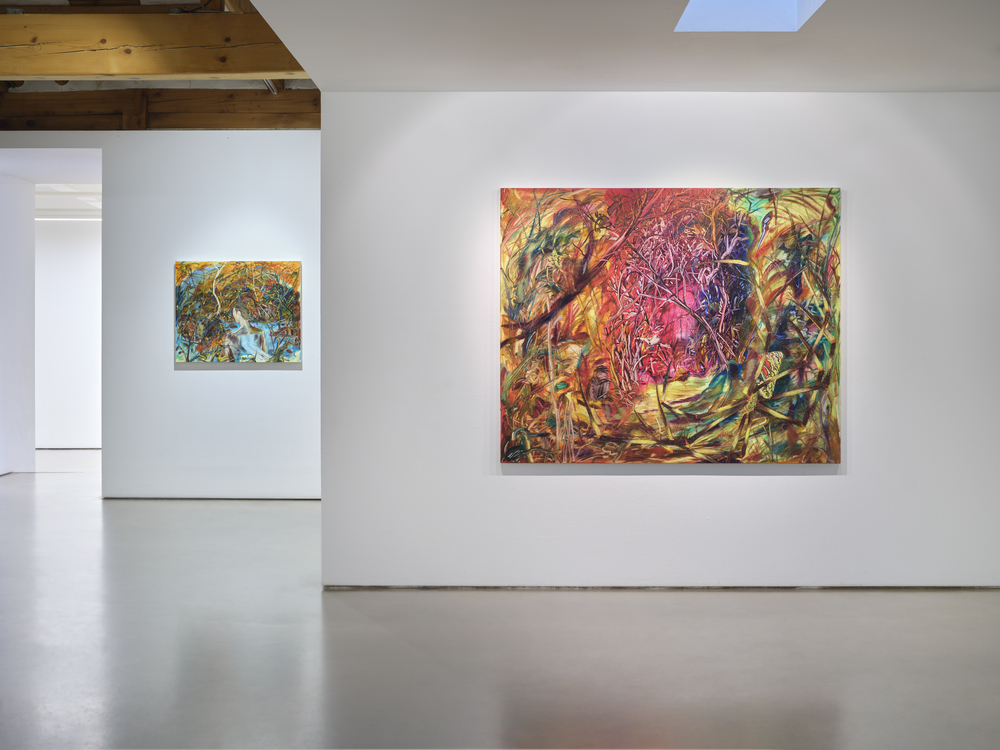
Drawing on the natural landscapes of Cheorwon, where he spent his
childhood, and his personal experiences, PARK juxtaposes subjects from
different moments in time within a single pictorial space. Familiar forms take
on unexpected appearances, giving rise to uncanny scenes that could not exist
in reality.
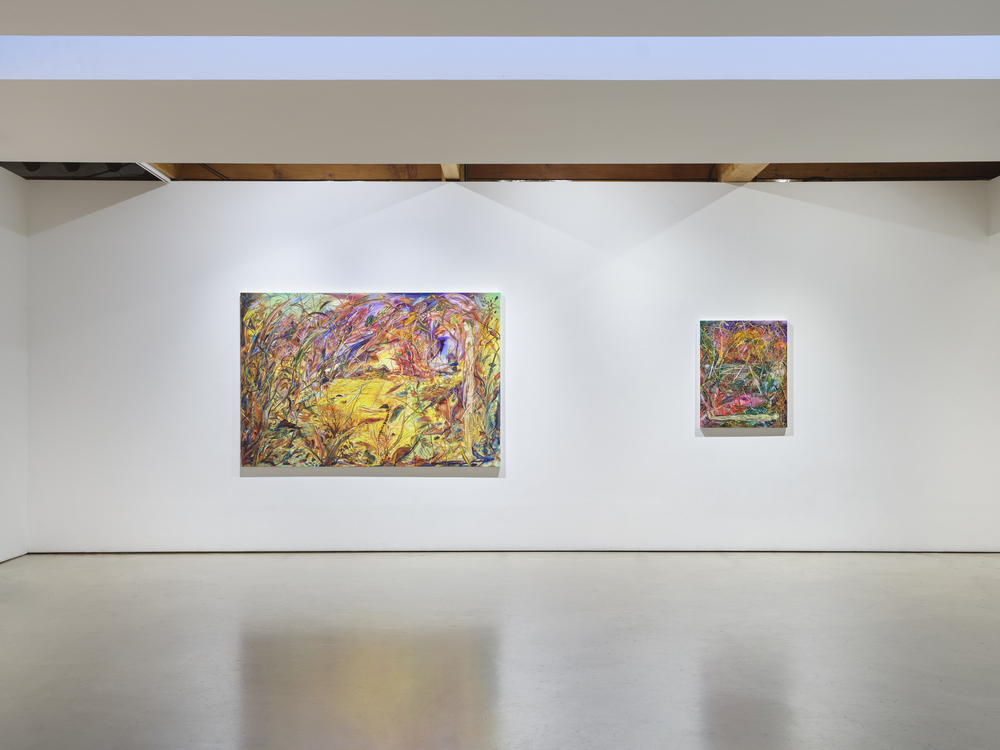
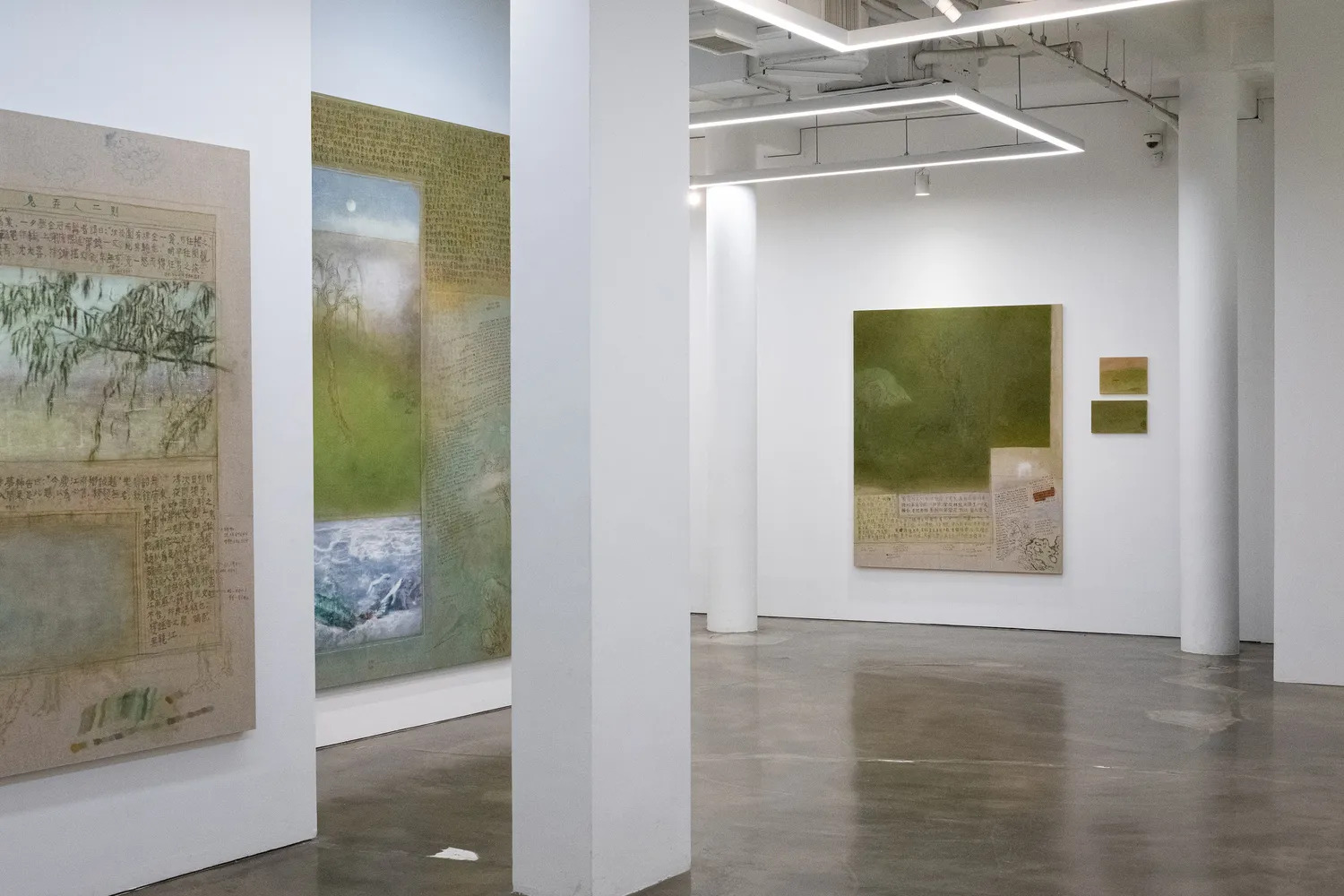
Installation view of 《The Darkness of Milk》 © Hakgojae Gallery
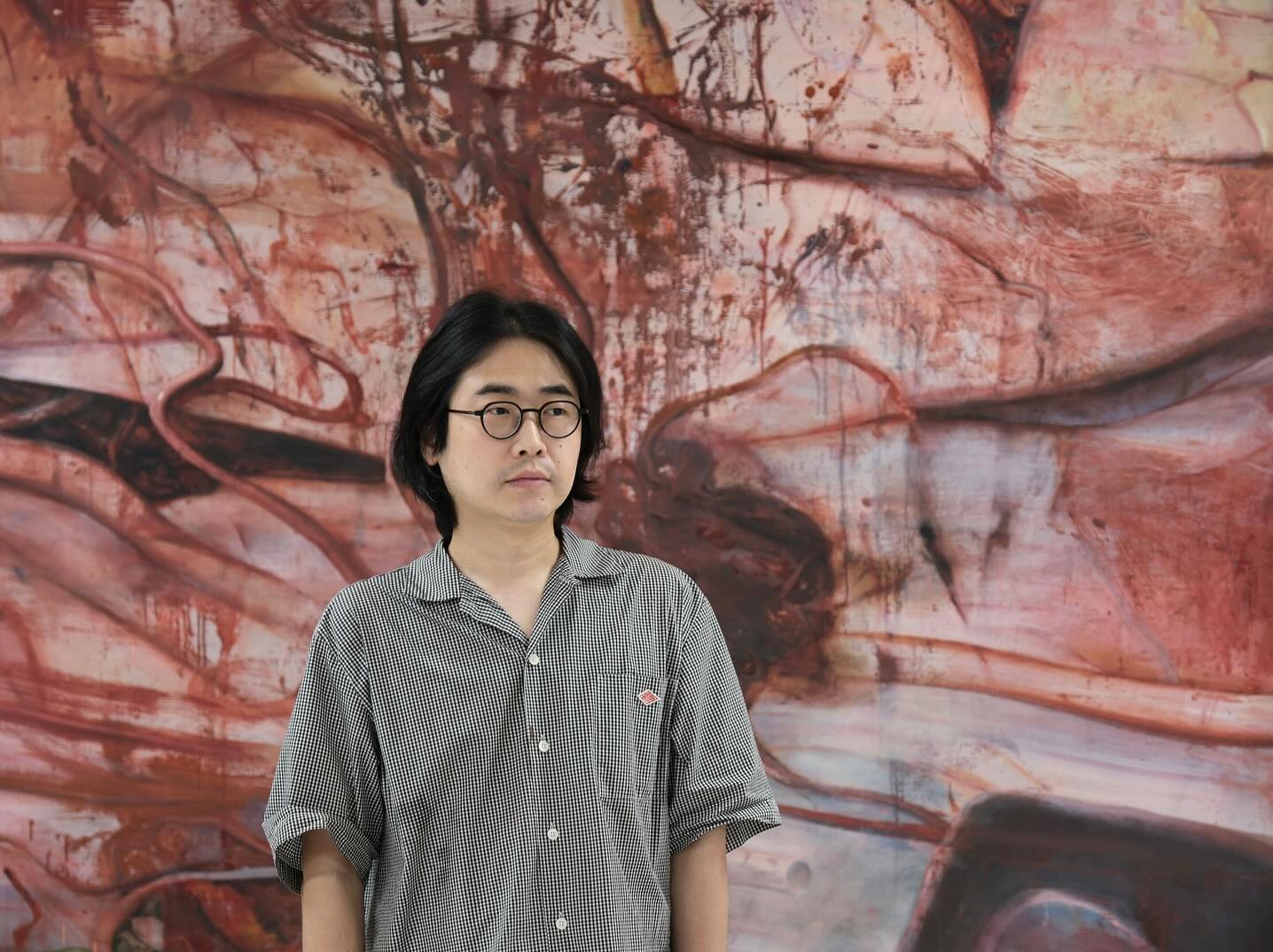
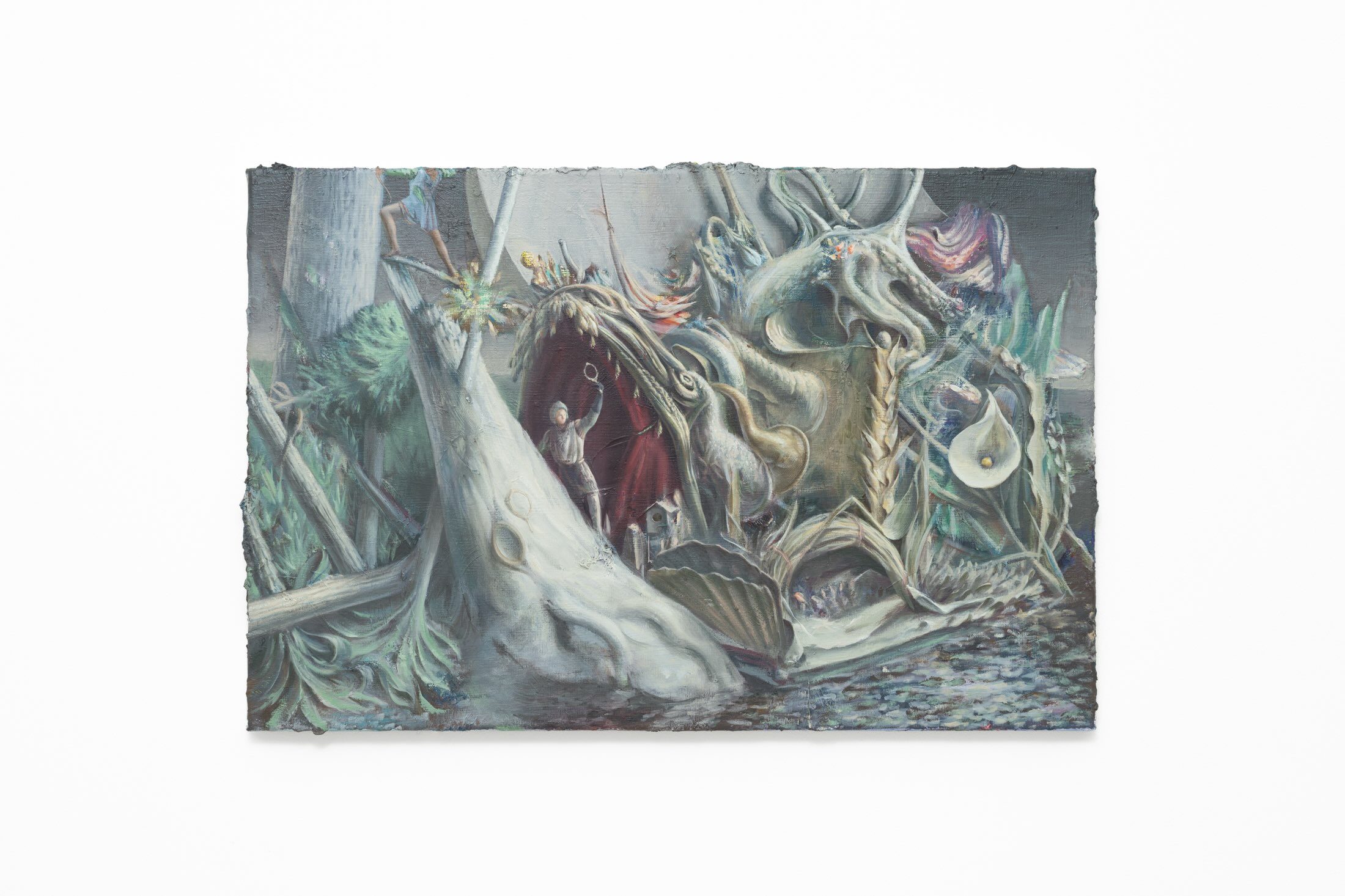
In this exhibition, PARK gives concrete form to impossible
situations that previously existed only in his imagination. A body becomes
land, while a brain separated from the body floats in the sky. Events from long
ago coexist with sensations of the present, and nature and the human body
borrow one another's forms to become entirely different beings.
Individual subjects appear clearly defined, yet the logic behind
their coexistence remains elusive. In these paintings, where chronological
order and conventional spatial relationships are disrupted, seemingly unrelated
events become connected through unexpected circumstances. As scattered
fragments emerge simultaneously, the familiar world begins to appear strange.
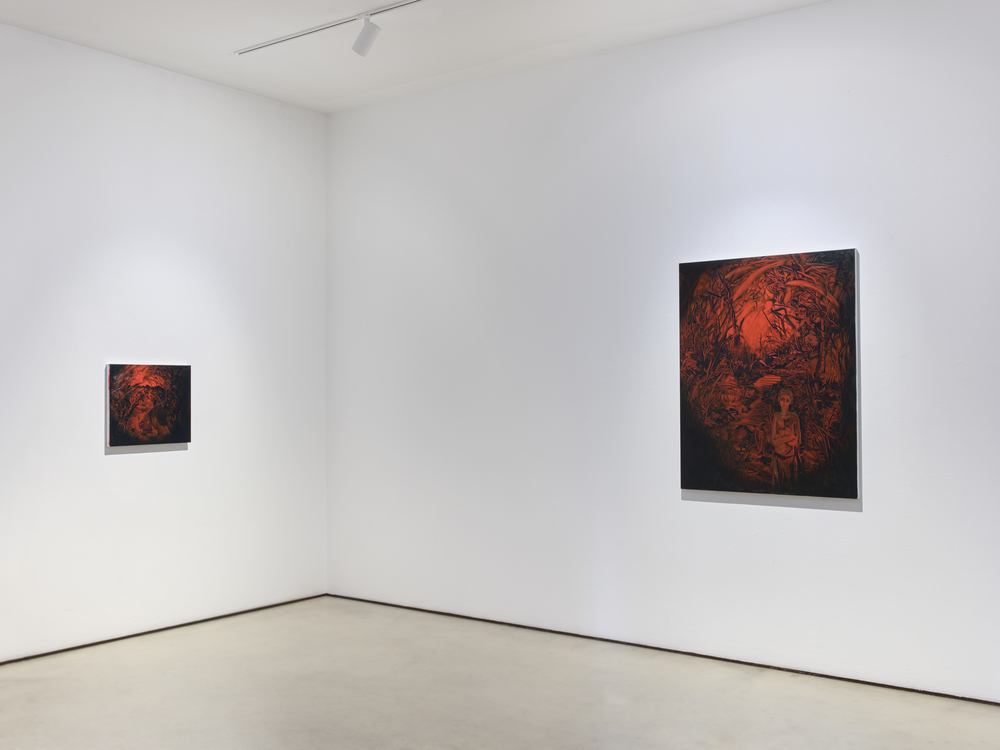
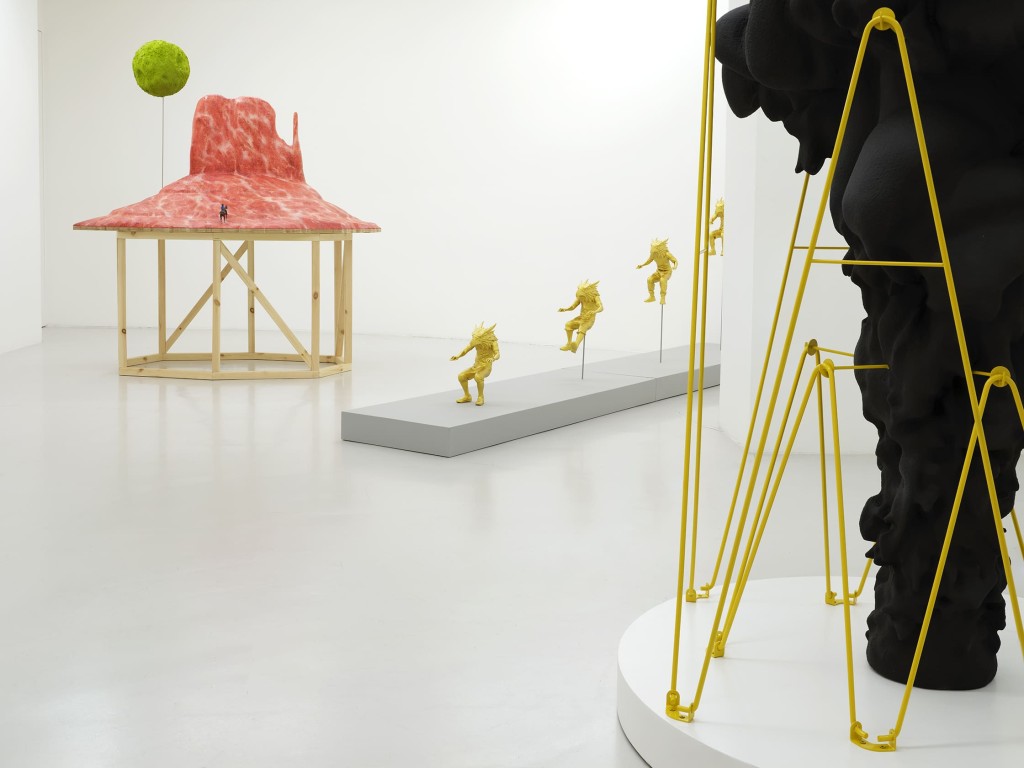
Installation view of 《The Darkness of Milk》 © Hakgojae Gallery
The exhibition title, “The Darkness of Milk,” draws inspiration
from philosopher Gaston Bachelard's La Terre et les Rêveries du repos
(Earth and Reveries of Repose, 1948). Beginning with the thick, opaque
whiteness of milk, Bachelard imagines the darkness that might lie beneath it,
exploring a material depth that cannot be revealed through visible qualities
alone.
Similarly, PARK transforms the reality he has seen and experienced
into new landscapes through memory and imagination. In his paintings,
familiarity and strangeness, tranquility and unease coexist within a single
landscape, inviting us to view what we have taken for granted from a different
perspective.
Here, darkness is not an object of fear, but an unknown realm that
opens up the possibility of imagining a world we have yet to encounter.
Ultimately, 《The Darkness
of Milk》 invites us to imagine another world that may
exist beyond familiar reality.