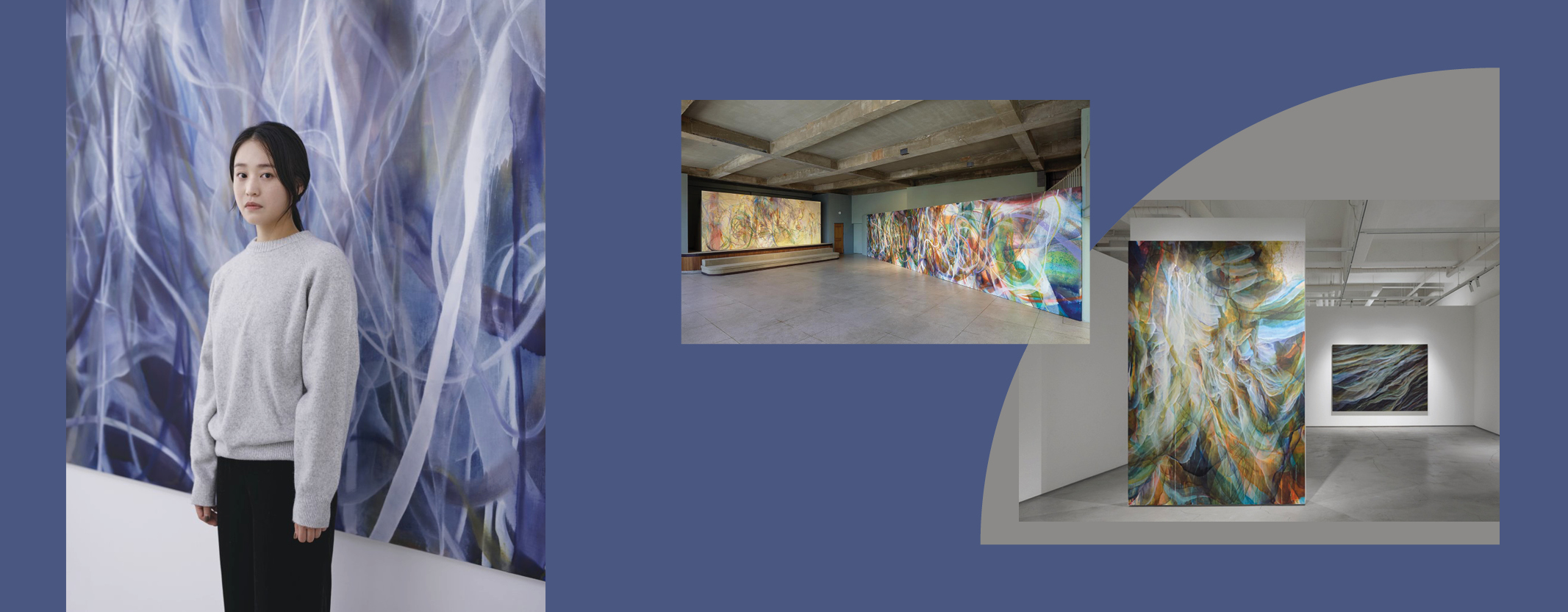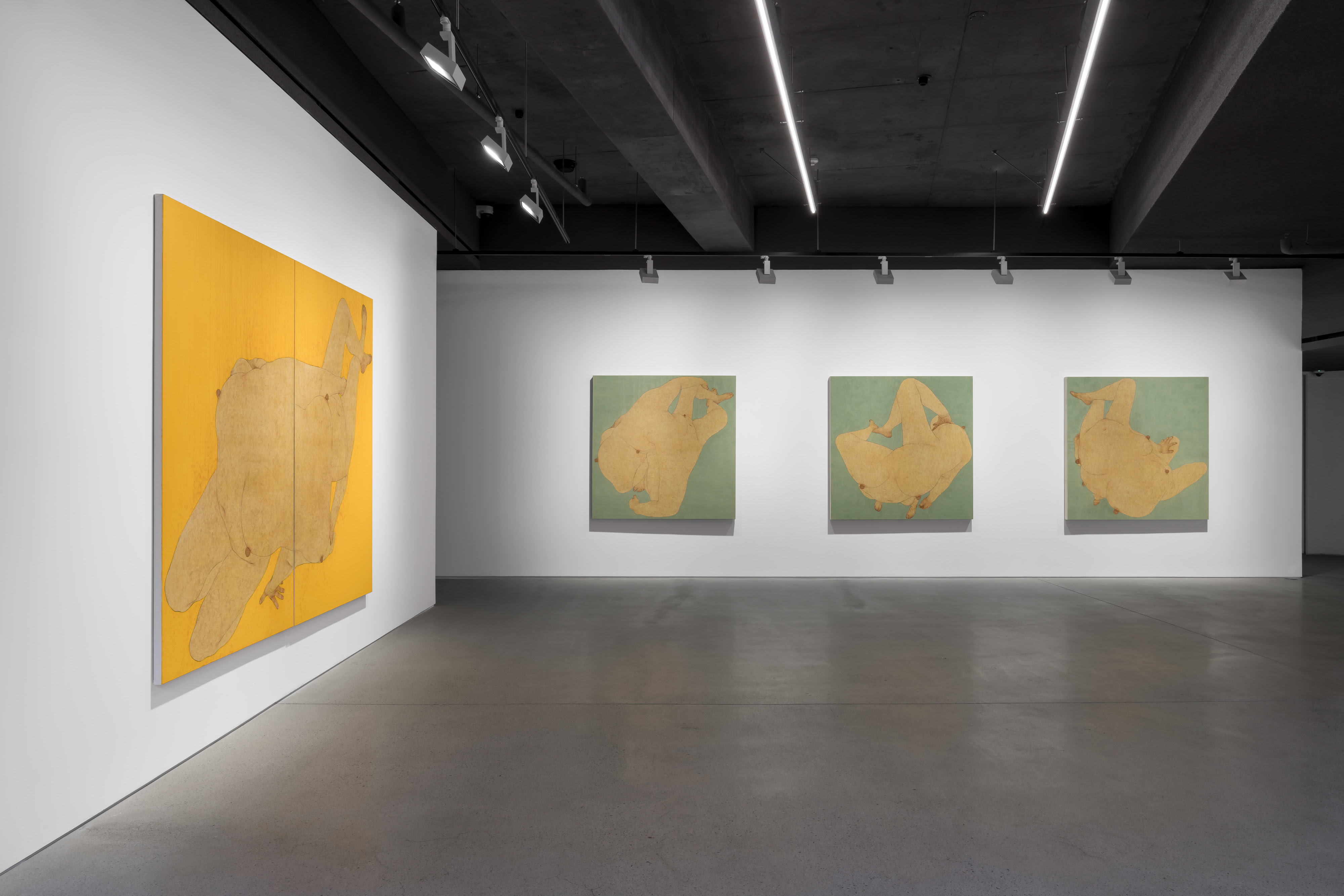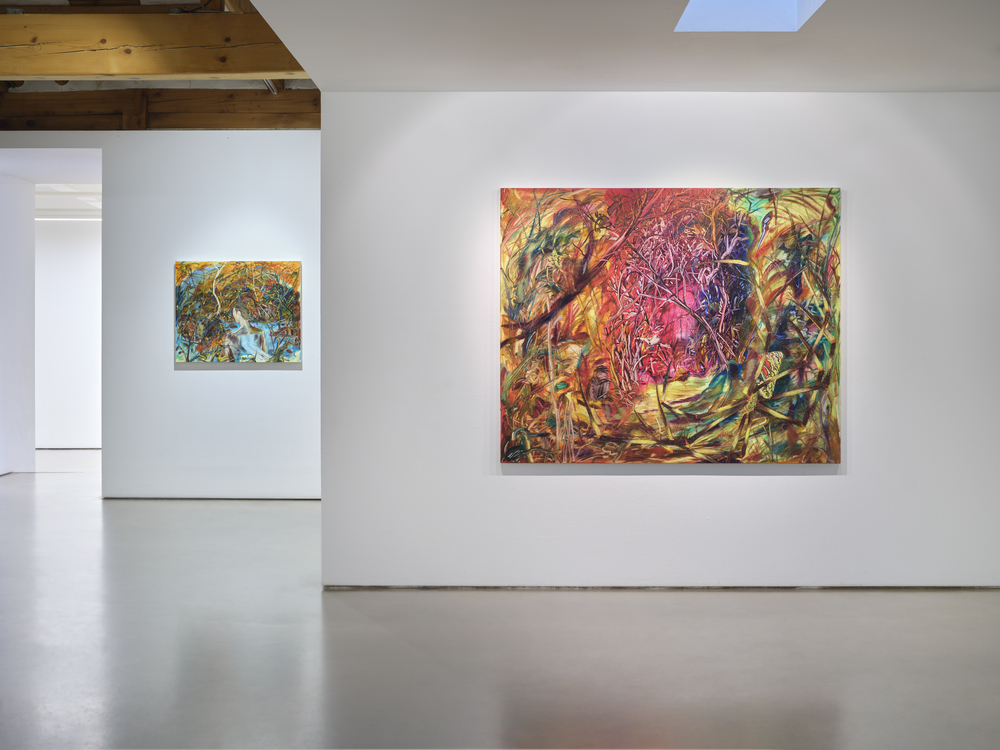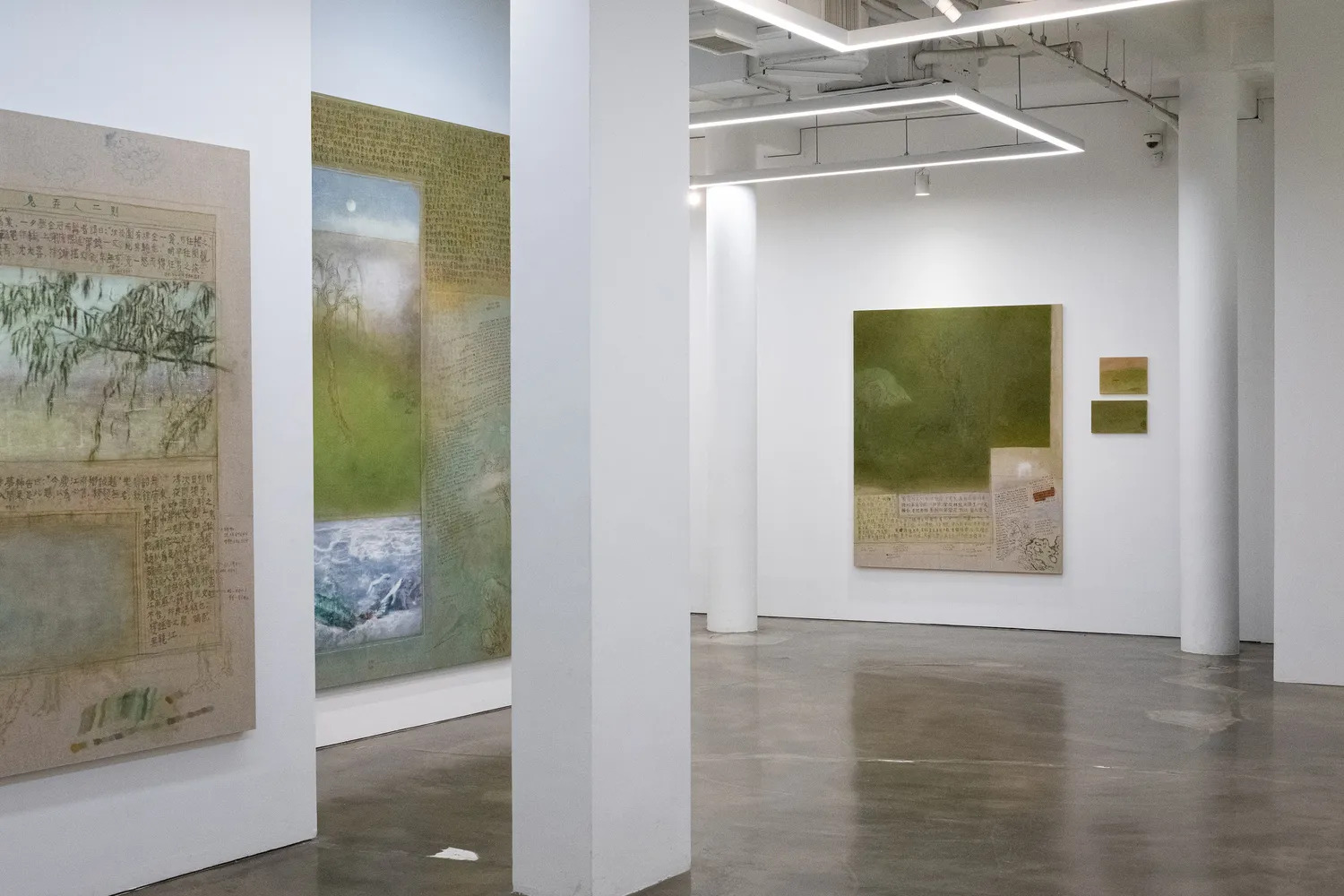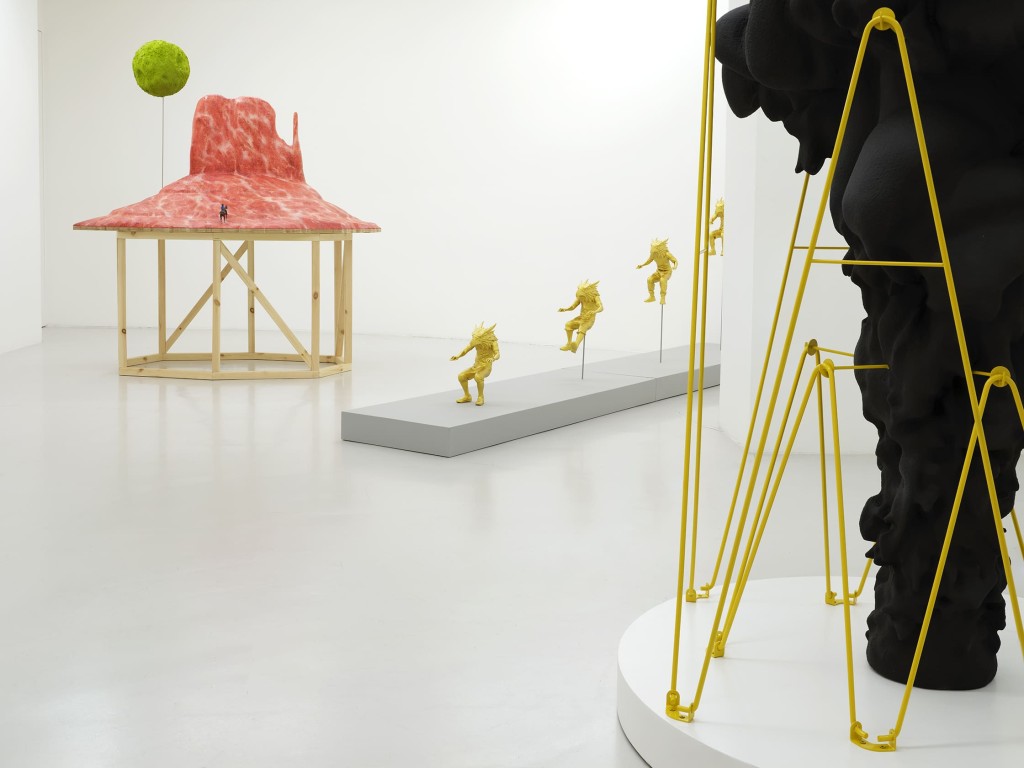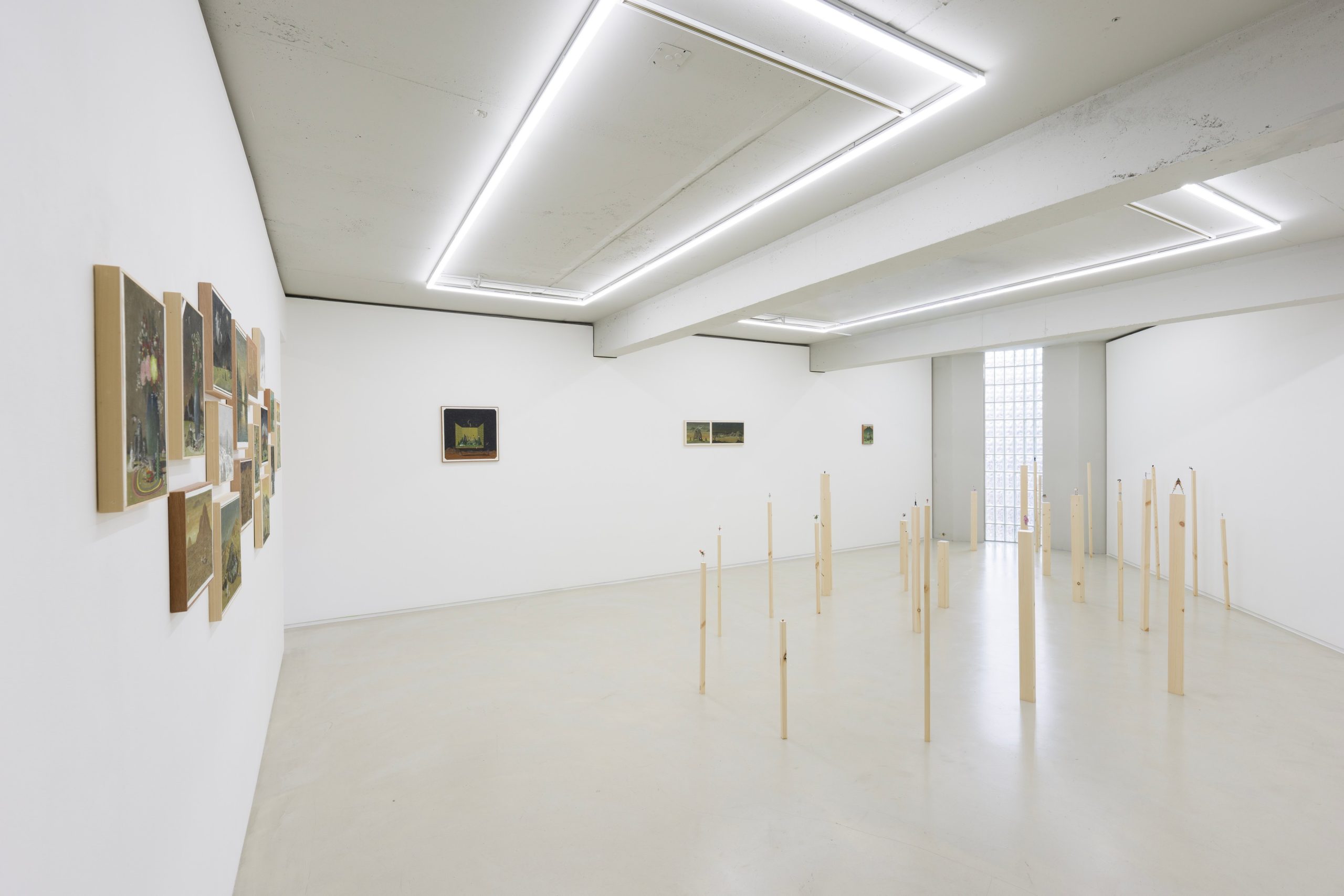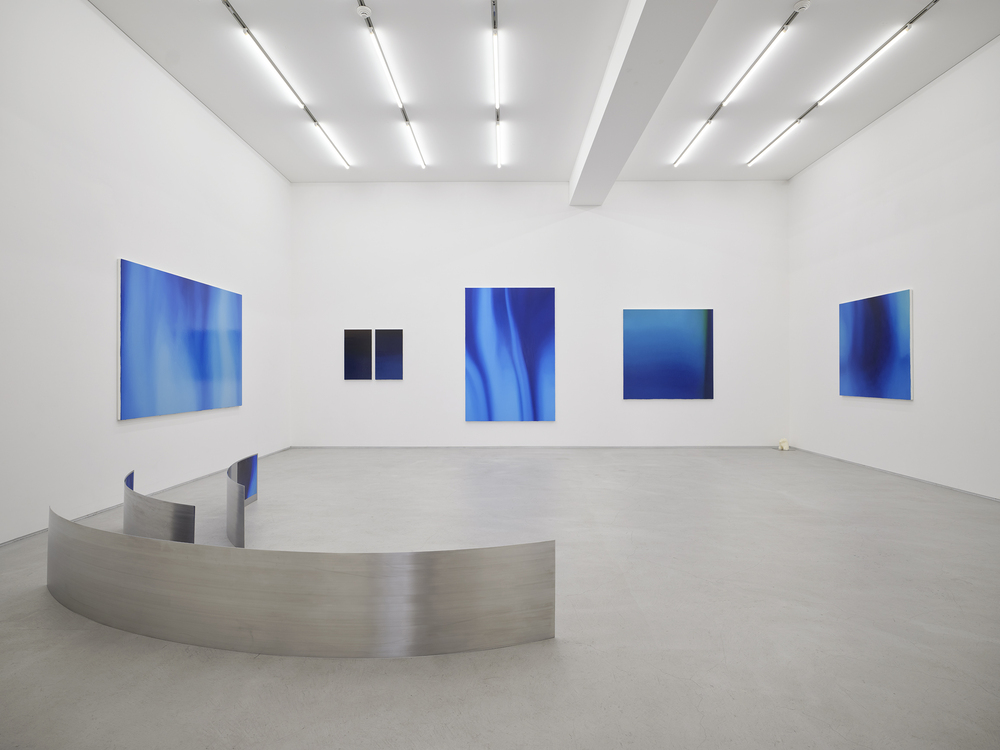

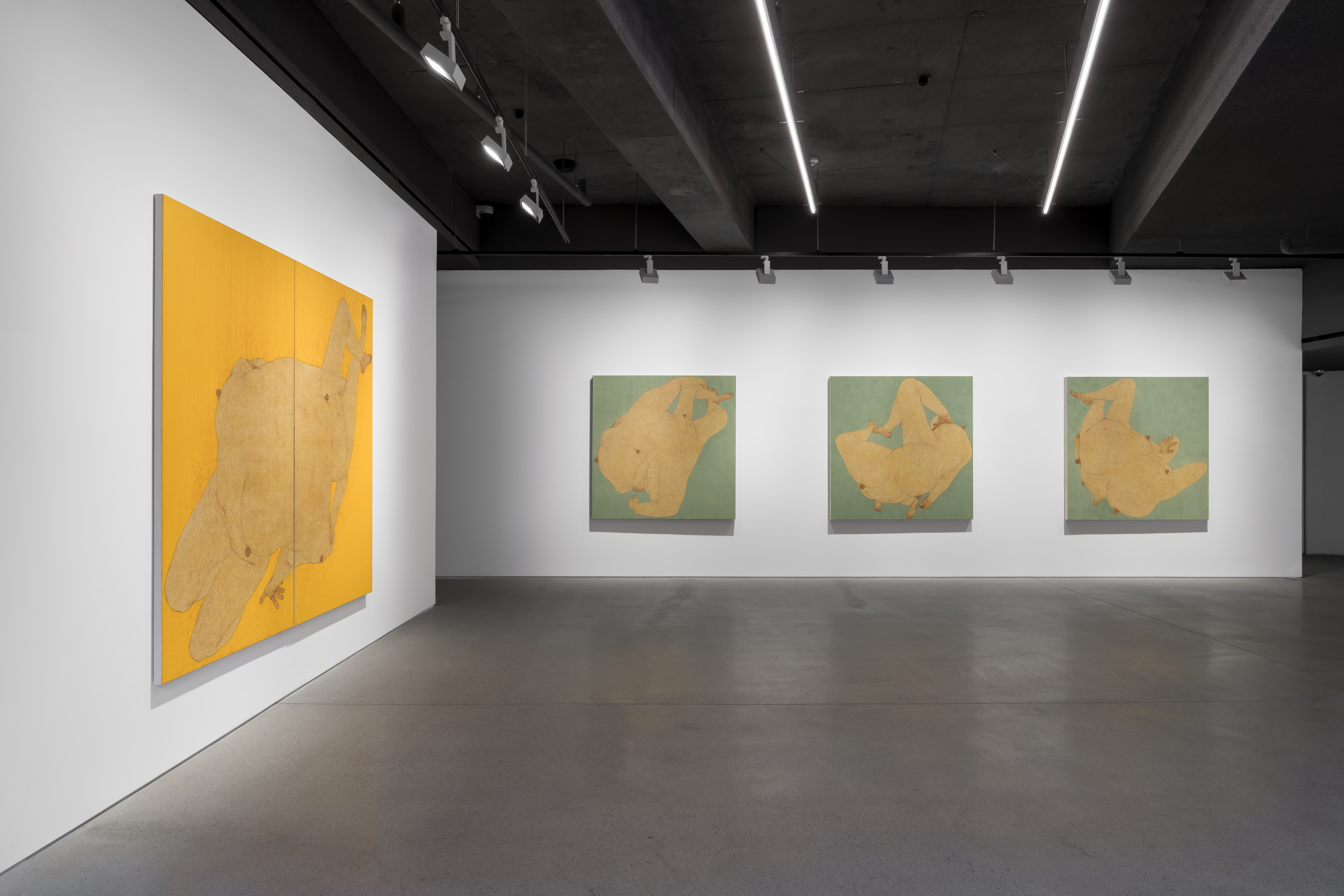
Installation view of 《Floating Islands》 © Seung Ah Paik. Courtesy of the artist, Gladstone, and Gratin, New York. Photo: Jeon Byungcheol.
Gladstone Seoul presents 《Floating Islands》, a solo
exhibition of new works by Korean-born artist Seung Ah Paik, on view through
January 9, 2027.
The exhibition brings together eleven large-scale, multi-panel
paintings from Paik’s ongoing ‘Self Configuration’ series.
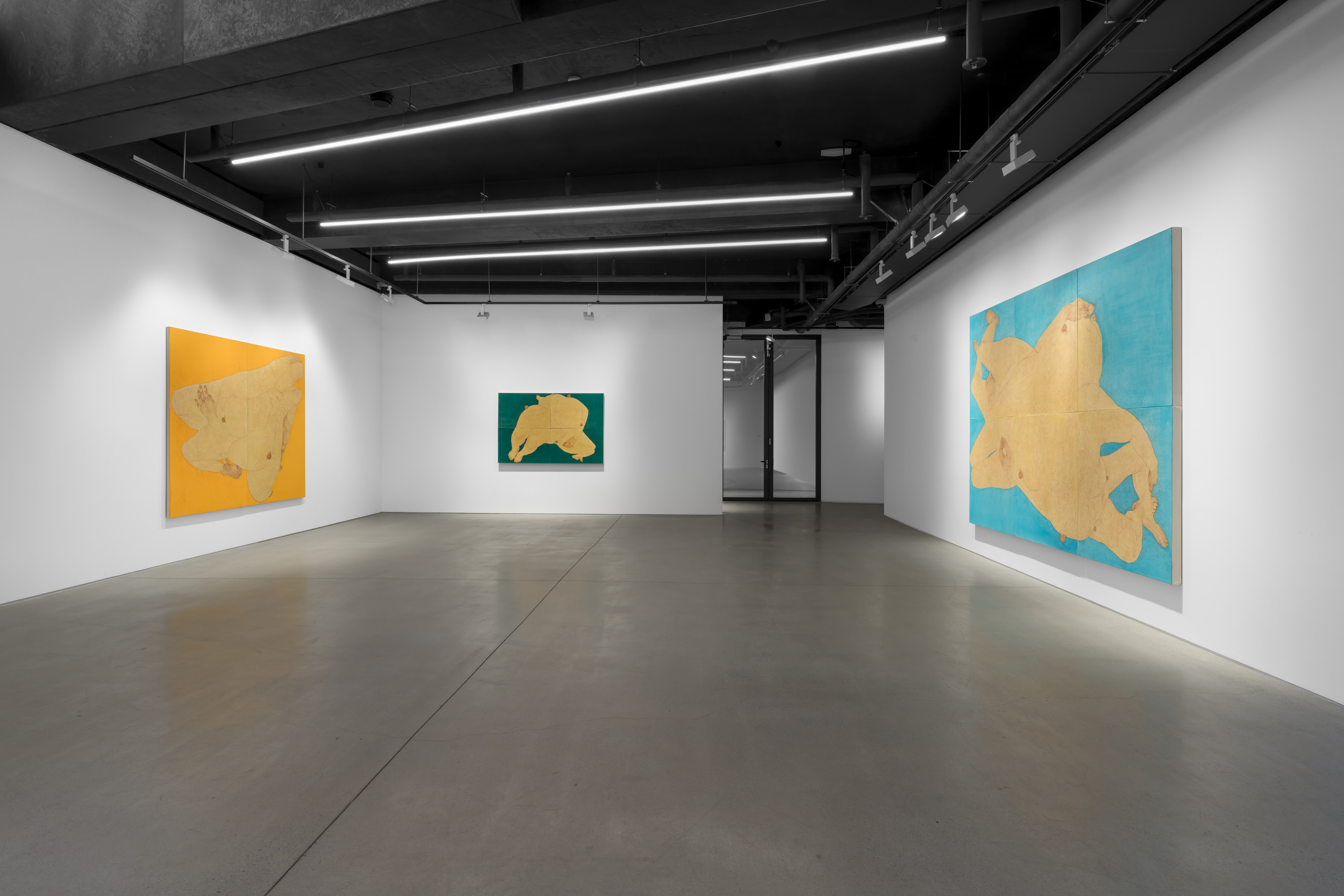
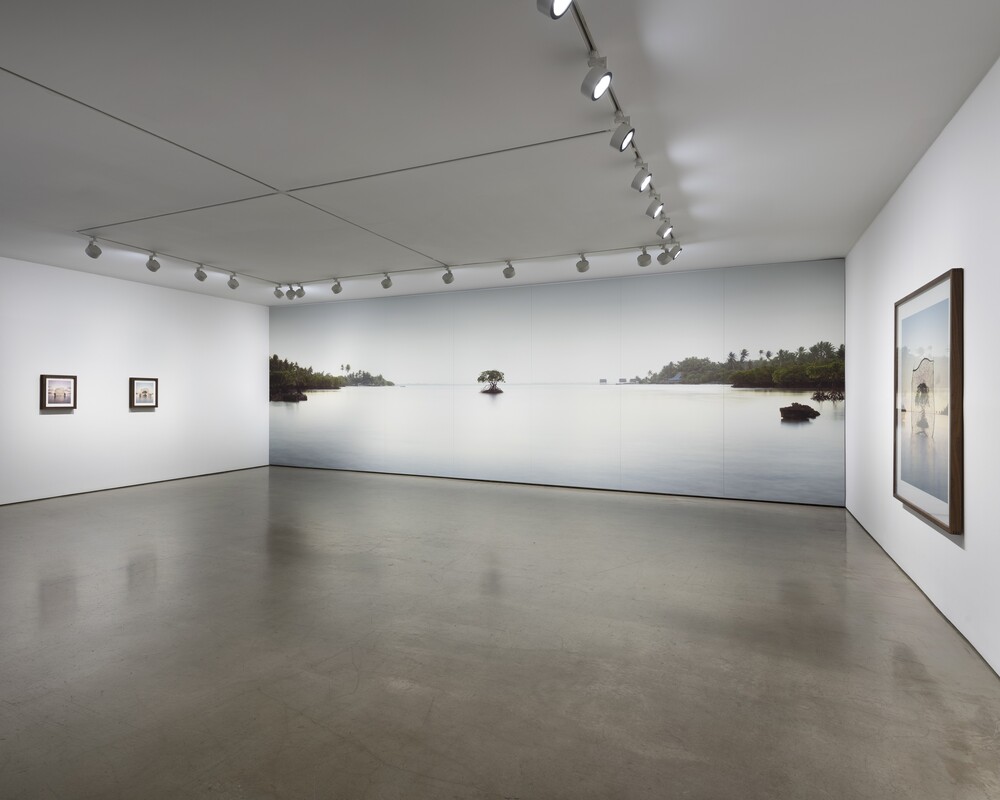
Installation view of 《Floating Islands》 © Seung Ah Paik. Courtesy of the artist, Gladstone, and Gratin, New York. Photo: Jeon Byungcheol.
Paik’s paintings take her own body and field of vision as their
subject. Working from hundreds of photographs of herself taken from a downward
point of view, she brings together multiple first-person views of her body,
layering fragments of limbs and torsos into compositions in which boundaries
between individual forms become difficult to distinguish.
Her face remains absent, as it falls outside her direct field of vision,
while her right hand is often missing because it holds the camera.
Drawing on traditional portraiture techniques from Korea’s Joseon
Dynasty and the floating perspective found in East Asian landscape painting,
Paik reconstructs her body from multiple viewpoints into composite images. She
approaches the canvas as an extension of her own skin, depicting folds,
wrinkles, and other physical details as traces of time and experience.
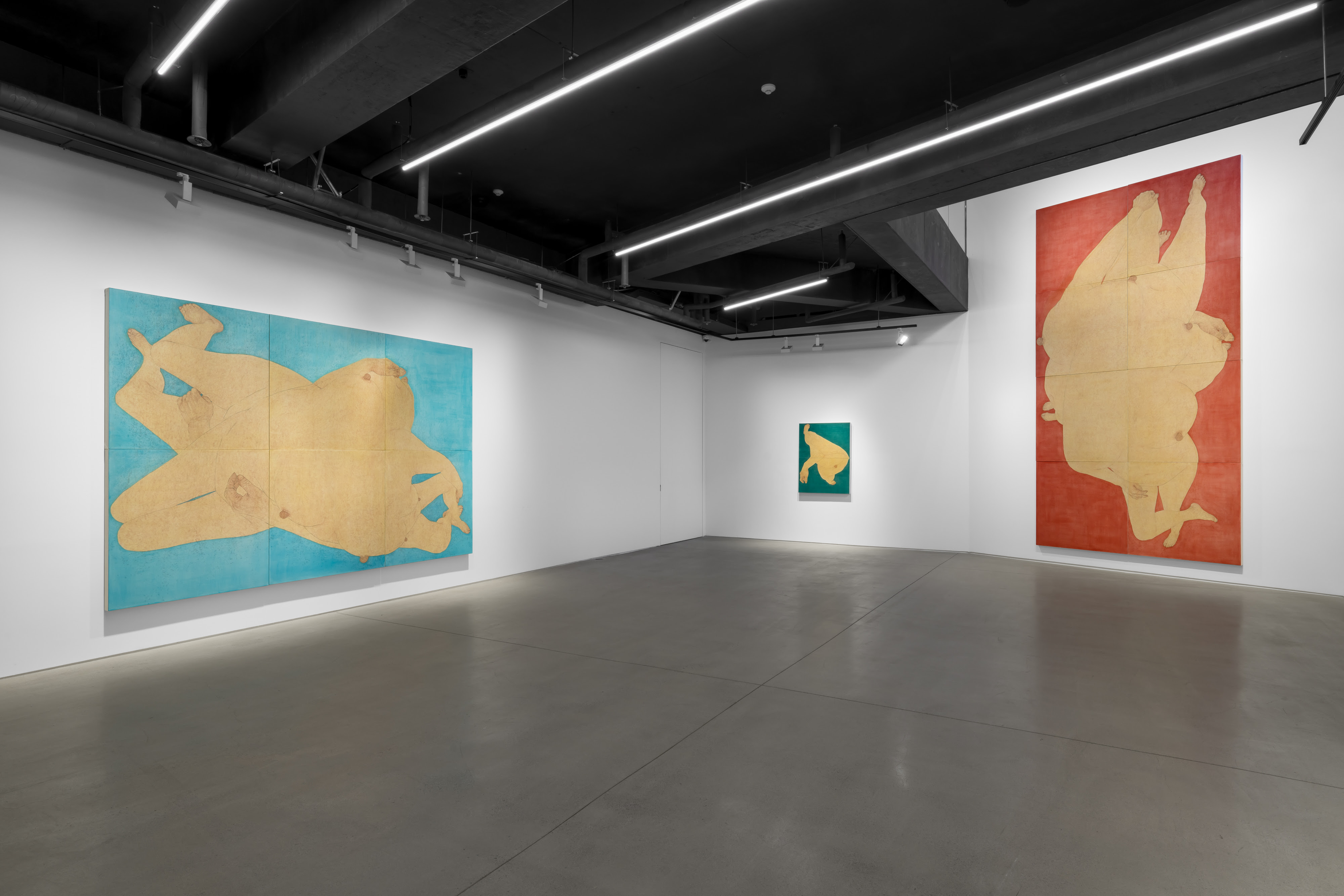
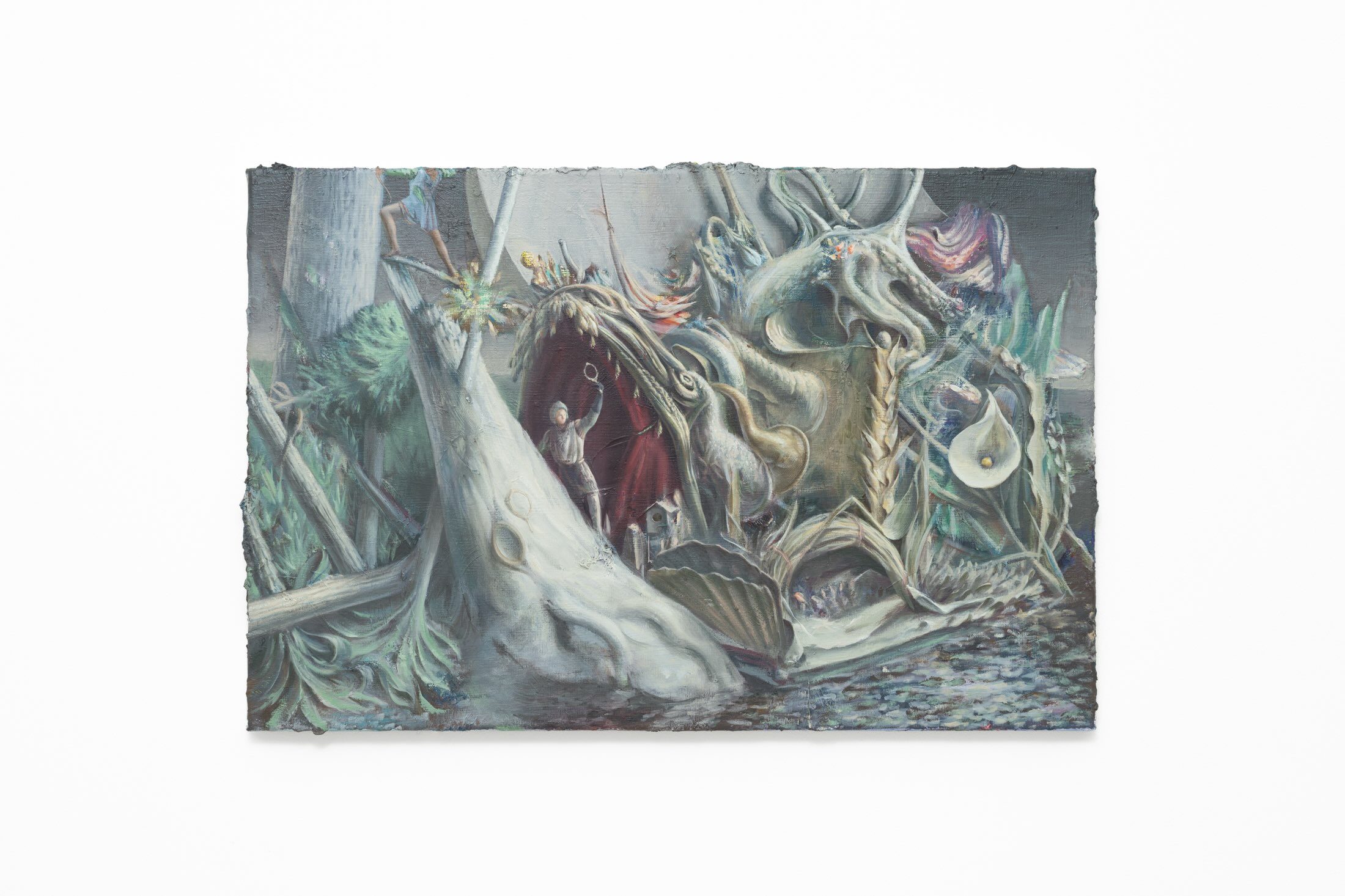
Installation view of 《Floating Islands》 © Seung Ah Paik. Courtesy of the artist, Gladstone, and Gratin, New York. Photo: Jeon Byungcheol.
In this way, Paik considers her paintings both portraits and
landscapes, exploring how familiar parts of the body can become unfamiliar when
viewed from different angles or placed in unexpected relationships.
In 《Floating
Islands》, Paik continues to develop the compositions of
her earlier paintings, in which individual fragments of the body were often
dispersed across the canvas. In these new works, the fragments are brought
closer together, forming larger, more connected shapes that no longer follow
the structure of a recognizable human figure.
Set against broad, flat fields of color, these assembled forms
emerge through a process of rearranging photographic images and adjusting their
scale and position. The backgrounds do not depict specific locations or
environments; instead, Paik selects colors intuitively, considering their
relationship to the figures and the overall composition.